Tag: US dollar

  • Intraday update: Pakistani rupee plunges to historic low of Rs290 against dollar amid political turmoil

    Intraday update: Pakistani rupee plunges to historic low of Rs290 against dollar amid political turmoil

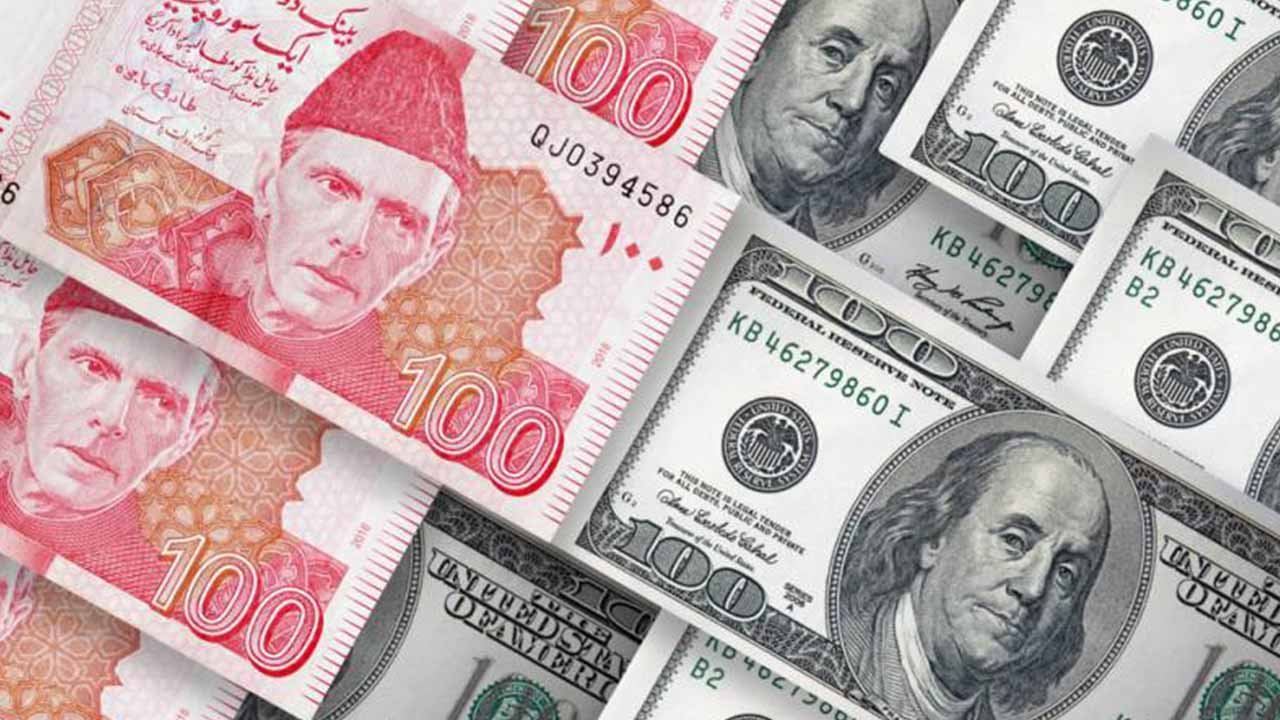
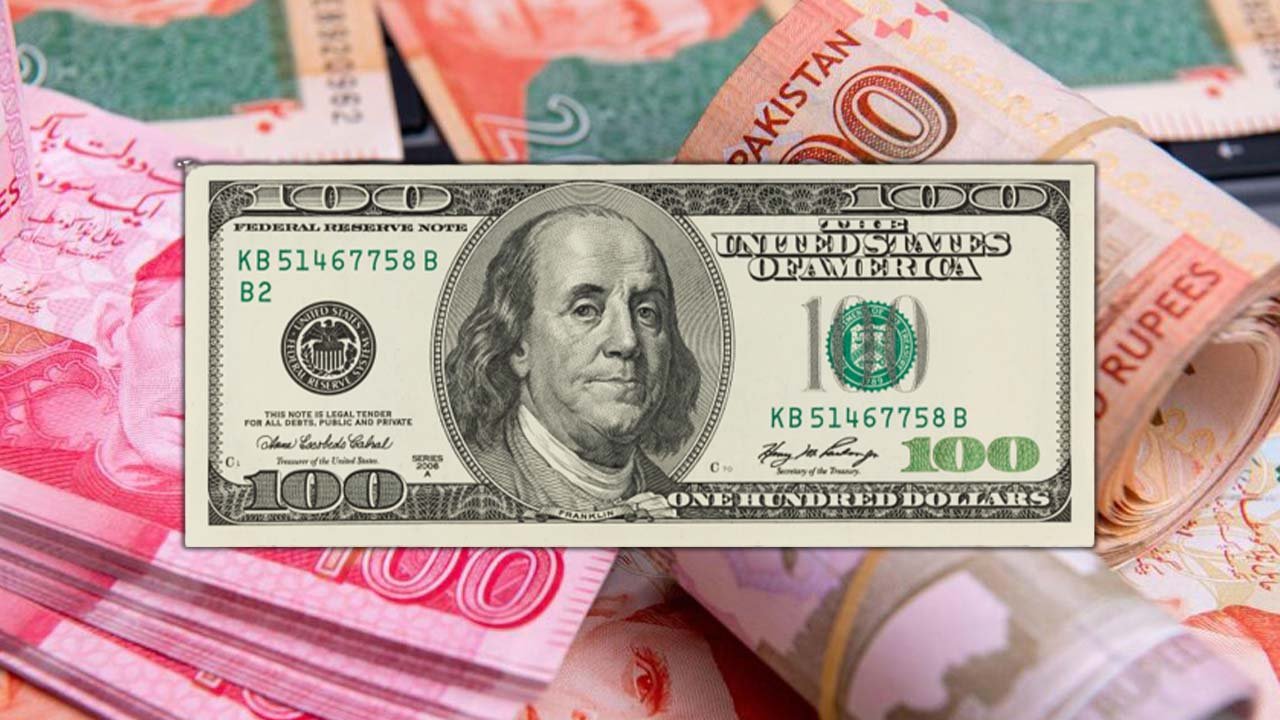
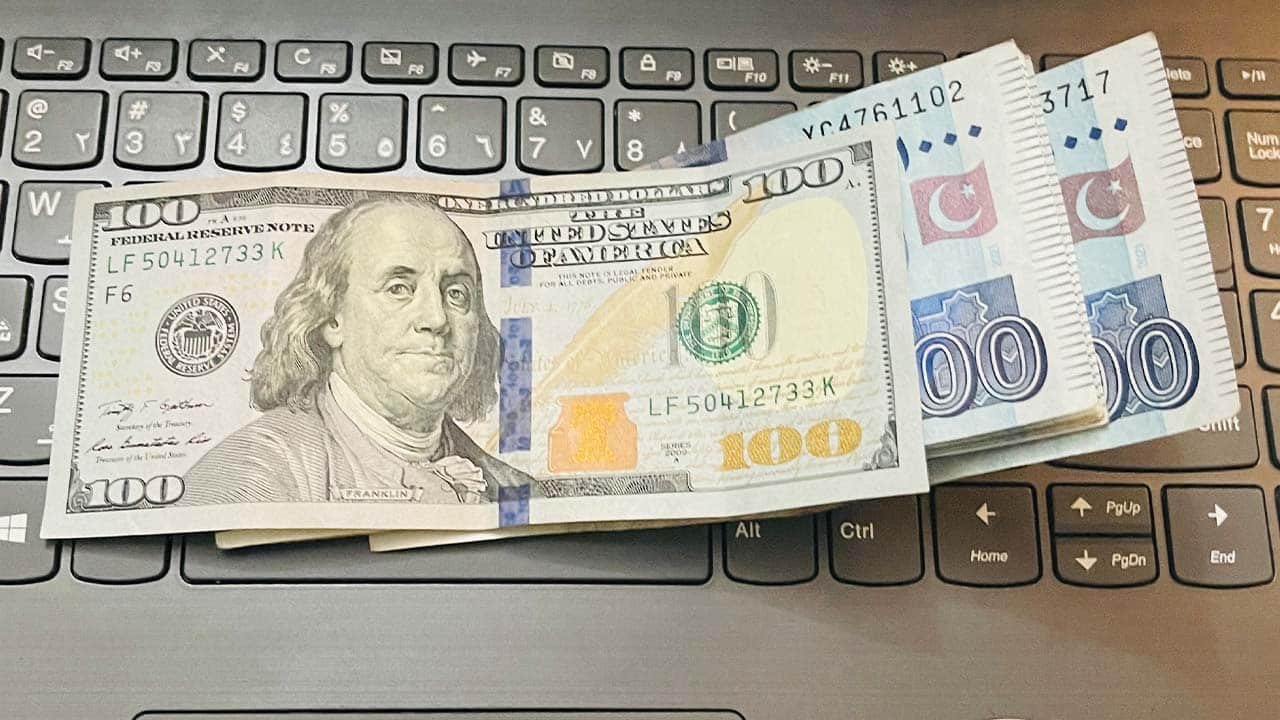
    On Wednesday, the Pakistani rupee (PKR) reached a historic low against the US dollar, falling to Rs290 during intraday trading at the interbank foreign exchange market. This decline is a major setback to Pakistan’s economy, as the rupee lost Rs5.16 in a single day compared to the previous day’s closing rate of Rs284.84.

    The previous record low of Rs288.43 was set in April. The sharp decline in the Pakistani rupee raises concerns about the country’s financial stability, and several factors have contributed to this depreciation.

    The arrest of former Prime Minister Imran Khan on corruption charges has led to increased uncertainty and added pressure on the Pakistani rupee. This political turmoil has negatively impacted investor confidence and the value of the local currency.

    Furthermore, the uncertain status of the International Monetary Fund (IMF) loan programme has further exacerbated the decline of the Pakistani rupee. Although the government had anticipated an installment of $1.2 billion under the Extended Fund Facility (EFF) program, delays in loan disbursement and recent developments in negotiations have raised concerns about Pakistan’s ability to meet its financial obligations. These doubts have put additional strain on the rupee’s value.

    Currency experts are closely monitoring these developments and expressing caution about the future outlook of the Pakistani rupee. The government must take decisive measures to stabilize the currency and restore investor confidence. This may involve implementing effective economic policies, addressing corruption concerns, and ensuring a more transparent and predictable investment environment.

    It is crucial for the Pakistani government to engage in constructive dialogue with the IMF to secure the much-needed loan program. Demonstrating a commitment to fiscal discipline, structural reforms, and good governance can potentially alleviate concerns surrounding the economy and enhance the rupee’s value in the international market.

    While the situation appears challenging, it is important to note that currency fluctuations are not unique to Pakistan. Several emerging economies have faced similar issues in recent years. The government’s response and its ability to address the underlying causes of the rupee’s depreciation will be critical.
  • IMF loan delay continues to impact Pakistani rupee

    IMF loan delay continues to impact Pakistani rupee

    During trading on Wednesday, the Pakistani rupee experienced a slight decrease against the US dollar, with a depreciation of almost 0.06 per cent in the inter-bank market. At around 12:45 pm, the currency was being traded at Rs284.06, which is a decline of Re0.16.

    This comes after the rupee had previously regained some ground against the US dollar on Tuesday, settling at Rs283.9 in the inter-bank market. The International Monetary Fund (IMF) Extended Fund Facility (EFF) has been stalled since last year, and market participants are waiting for its resumption.

    Experts have suggested that the reduced demand for US dollars can be attributed to the increase in inflows from workers’ remittances and a decline in import payments. Globally, the dollar saw some stability on Wednesday after being influenced by bond market volatility. Investors closely monitored US economic indicators, Federal Reserve commentary, and corporate earnings for indications about the path for interest rates.

    The dollar index, which measures the greenback against six major peers, rose by 0.11 per cent to 101.83 in Asian trading, following a 0.36 per cent decline on Tuesday that reversed the 0.54 per cent increase from the previous session.

    Oil prices, which serve as a significant indicator of currency parity, declined on Wednesday as the market considered potential interest rate hikes from the Federal Reserve. Such hikes could slow growth and dampen oil consumption, offsetting the impact of falling US inventories and strong Chinese economic data.

  • Gold price hits new record high of Rs218,300 per tola as Pakistani rupee crashes

    Gold price hits new record high of Rs218,300 per tola as Pakistani rupee crashes

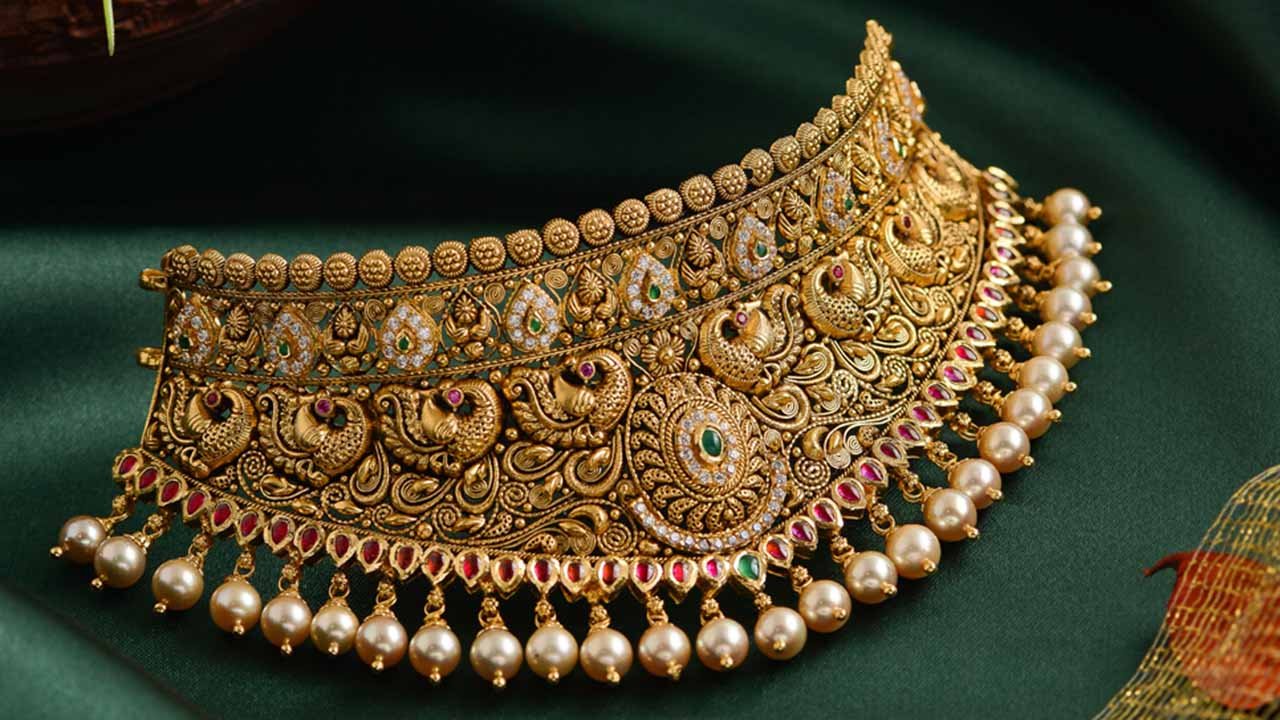
    The price of gold in Pakistan has surged to an all-time high, surpassing the Rs218,000 mark, as the country’s local currency slumped to a historic low against the US dollar. The All-Pakistan Sarafa Gems and Jewellers Association (APSGJA) has released data showing that the price of gold (24 carats) rose by Rs600 per tola and Rs514 per 10 grammes, settling at Rs218,300 and Rs187,157, respectively.

    The rise in the price of the yellow metal was in line with the movement of the rupee, which fell Rs1.34 or 0.46 per cent to Rs288.43 against the US dollar in the interbank market, and an increase in weekly inflation. Weekly inflation rose 0.92 per cent week-on-week and 44.49 per cent year-on-year during the seven-day period ending on April 6, as the prices of sugar and chicken surged due to Ramadan and likely hoarding.

    Gold is often seen as a hedge against inflation and its value increases as the purchasing power of the dollar declines, as well as due to seasonal demand during the holy month of Ramadan. During the week, investors’ attention shifted towards the precious metal as economic tensions continue to rise amid the International Monetary Fund (IMF) reviewing external financing commitments from friendly countries before it releases bailout funds. According to Geo, the delay in the revival of the programme has had a negative impact on the currency market, which in turn is bolstering demand for gold.

    The APSGJA also mentioned that the price of gold in Pakistan is Rs5,000 per tola “undercost” as compared to the Dubai market, indicating that the Pakistani gold market is currently cheaper than the global market.

    Meanwhile, silver prices in the domestic market have also surged to historic highs, with an increase of Rs40 per tola and Rs34.30 per 10 grams, settling at Rs2,520 and Rs2,160.5, respectively. In the international market, the price of gold dropped by $1 per ounce, settling at $2,001.

  • Pakistani rupee falls to historic low of Rs288.43 against dollar

    Pakistani rupee falls to historic low of Rs288.43 against dollar

    On Wednesday, the Pakistani rupee (PKR) reached a new record low, falling to Rs288.43 against the US dollar in the interbank market.

    The State Bank of Pakistan (SBP) reported that the rupee slid by Rs1.34 against the greenback before closing at Rs288.43. Meanwhile, the Forex Association of Pakistan (FAP) has reported that the selling rate of the dollar in the open market was recorded at Rs295.

    This comes after the rupee had closed at Rs287.09 per US dollar the day before, with the greenback trading at over Rs291 in the open market. Additionally, on April 5, the rupee had closed at Rs287.85 per US dollar, while the greenback was trading at over Rs293 in the open market.

    Experts suggest that the drop in the rupee’s value can be attributed to various factors such as economic challenges, political uncertainty, and depleting foreign exchange reserves.

    It is worth noting that a staff-level agreement between the International Monetary Fund (IMF) and Pakistan was scheduled to take place on February 9.

  • Gold price soars to an all-time high of Rs217,700 per tola amid economic tensions

    Gold price soars to an all-time high of Rs217,700 per tola amid economic tensions

    The price of gold has soared to an all-time high following a significant slump in the rupee against the dollar, with the country struggling to secure external financing. The data released by the All-Pakistan Sarafa Gems and Jewellers Association (APSGJA) shows that the price of gold (24 carats) has spiked by Rs3,100 per tola and Rs2,656 per 10 grammes, settling at Rs217,700 and Rs186,643 respectively.

    The gold rush is in line with the movement of the rupee, which has fallen 2.44 or 0.85 per cent against the US dollar in the interbank market, and an increase in weekly inflation. Inflation has shot up 0.92 per cent week-on-week and 44.49 per cent year-on-year during the seven-day period that ended on April 6th. Prices of sugar and chicken have surged due to Ramzan, and hoarding has caused a likely uptick in inflation.

    Gold is often seen as a hedge against inflation, increasing in value as the purchasing power of the dollar declines. Plus, it’s the season of Ramzan, which brings with it a surge in demand for the precious metal. Investors’ attention has shifted towards gold as economic tensions continue to rise, with the International Monetary Fund (IMF) reviewing external financing commitments from friendly countries before it releases bailout funds. The delay in the revival of the program has negatively impacted the currency market, which is boosting demand for gold.

    The APSGJA also noted that the price of gold in Pakistan is Rs5,000 per tola “undercost” compared to the Dubai market. Thus, the Pakistani gold market is cheaper than the global market. Meanwhile, silver prices in the domestic market have also jumped to historic highs, increasing by Rs30 per tola and Rs25.72 per 10 grams to settle at Rs2,480 and Rs2,126.20, respectively.

    In the international market, the price of gold dropped $6 per ounce, settling at $2,002. Nevertheless, gold’s rise in Pakistan is set to bring a lot of excitement to the local market.

  • Gold price in Pakistan hits new record high of Rs214,500 per tola

    Gold price in Pakistan hits new record high of Rs214,500 per tola

    Tuesday saw a historic moment for Pakistan as the price of gold soared to an all-time high, hitting Rs214,500 per tola (11.66 grammes). The cause of this surge was multifaceted, with the global market’s uptrend playing a part, alongside the rupee’s historic low against the US dollar in the interbank trade.

    The rupee had plummeted to a never-before-seen low of Rs287.29 against the US dollar in the interbank market, and the surge in gold prices was a reflection of this movement. The ripple effect was felt across the country as traders scrambled to adjust to the new reality of the local bullion market.

    In a surge that grabbed headlines across Pakistan, the price of 24-carat gold soared to an all-time high on Tuesday, hitting Rs214,500 per tola and Rs183,900 per 10 grams, according to the All-Pakistan Sarafa Gems and Jewellers Association (APSGJA). It was a clear reflection of the rupee’s movement, which had plummeted to a historic low of Rs287.29 against the US dollar in the interbank market, as well as an uptrend in global markets.

    As inflation rates in Pakistan reached a nearly all-time high of 35.4 per cent in March, people felt the pinch of rising consumer prices on their budgets, prompting them to turn to gold. This precious commodity has always been considered a hedge against inflation, with its value increasing as the purchasing power of the dollar declines. During the two-day period from Monday to Tuesday, gold gained Rs5,200 per tola.

    Economic tensions have been on the rise, with the International Monetary Fund (IMF) scrutinizing external financing commitments from friendly countries before releasing bailout funds. The delay in the revival of the program had a negative impact on the currency market, which, in turn, fueled demand for gold. Investors’ attention turned to this precious commodity as a safe haven in these uncertain times.

  • Seasonal demand: Gold price increases by Rs5,600 to Rs207,500 per tola

    Seasonal demand: Gold price increases by Rs5,600 to Rs207,500 per tola

    On Friday, gold prices in Pakistan experienced a significant increase due to seasonal demand and the rush to purchase the precious metal during Ramadan and the upcoming wedding season.

    According to data from the All-Pakistan Sarafa Gems and Jewellers Association (APSGJA), the price of 24-carat gold surged by Rs5,600 per tola and Rs4,801 per 10 grammes to settle at Rs207,500 and Rs177,898, respectively.

    In recent sessions, the price of gold had decreased due to a decline in international prices and the appreciation of the Pakistani rupee against the US dollar. However, the bullion sparkled once again on Friday as local markets reopened following a day off for Pakistan Day.

    The price of gold in Pakistan is strongly influenced by the rupee-dollar parity since almost all of the country’s gold demand is met through imports, with traders following international prices to set rates. The metal is imported by jewelers against the US dollar and UAE dirham before its price is converted into rupees.

    The APSGJA also noted that the price of gold in Pakistan was Rs12,000 per tola cheaper than in the Dubai market, indicating that the Pakistani gold market was currently less expensive than the global market.

    Meanwhile, in the international market, gold prices continued to rise on Friday, buoyed by a drop in Treasury yields after the US Federal Reserve hinted at a possible end to its monetary tightening cycle. The per-ounce price settled at $1,997 after a significant increase of $58.

    The longer-term prospects for gold remain positive due to expectations of a pause in US interest rate hikes. In addition, silver prices in the domestic market rose by Rs20 per tola and Rs17.15 per 10 grammes, settling at Rs2,220 per tola and Rs1,903.29 per 10 grammes, respectively.

  • Pakistani rupee reverses marginal gains, closes at Rs281.61 against US dollar

    Pakistani rupee reverses marginal gains, closes at Rs281.61 against US dollar

    On Monday, the Pakistani rupee faced renewed pressure against the US dollar, declining by 0.30 per cent in the inter-bank market after posting marginal gains on Friday. According to the State Bank of Pakistan (SBP), the rupee settled at Rs281.61, representing a decrease of Re0.84.

    Despite the rupee having found some relief on Friday with a 0.54 per cent appreciation in the inter-bank market, the currency had depreciated by 0.82 per cent against the US dollar during the previous week.

    The SBP has received inflows from China, which have provided support to critical levels of foreign exchange, but concerns over the delay in the International Monetary Fund (IMF) programme have continued to impact sentiment.

    Miftah Ismail, former Federal Finance Minister, suggested on Sunday that Pakistan should ensure 15 per cent tax on Gross Domestic Product (GDP) and 15 per cent exports to GDP in order to avoid the need for IMF programs.

    Internationally, the US dollar experienced a sharp decline on Monday due to the sudden collapse of Silicon Valley Bank (SIVB). The US government announced various measures on Monday to mitigate the impact of the bank’s collapse, including ensuring access to deposits for SVB customers and depositors of New York’s Signature Bank.

  • Pakistani rupee gains against US dollar amidst hopes for IMF deal

    Pakistani rupee gains against US dollar amidst hopes for IMF deal

    Pakistani rupee on Monday gained against the US dollar due to two key developments: the country secured $500 million from the Industrial and Commercial Bank of China and there was optimism around a potential deal with the International Monetary Fund (IMF).

    During intraday trading, the local currency witnessed an increase of Rs3.46 against the greenback in the interbank market, with the exchange rate at around 11:45 pm being Rs275.

    However, last week the rupee made even greater gains against the US dollar. The State Bank of Pakistan reported a 2.38 per cent appreciation, equivalent to Rs6.63, in the interbank market, with the local unit closing at Rs278.46 on Friday.

    According to the General Secretary of the Exchange Companies Association of Pakistan (ECAP), Zafar Paracha, the hype around the earlier dollar appreciation was caused by the country’s financial institutions and international players manipulating rates.

    Paracha noted that the destabilized currency damages Pakistan’s image and discourages foreign direct investment and local investors. He anticipated that with the IMF agreement and inflows from friendly countries, the dollar should remain in the range of Rs260 to Rs265.

    He also highlighted that Pakistan’s political condition has been impacting the dollar rates, which is a new phenomenon. He mentioned that increasing Pakistan’s tax base, not tax rates, is crucial, and the government should reduce expenditures and subsidies given to elites.

    According to Geo, there is hope for a deal with the IMF, with a government official expressing optimism about striking a deal, and another official expecting to reach a staff-level agreement with the IMF in the coming days, although the Fund has not provided a timeframe for finalizing the agreement.