Tag: US Federal reserve

  • Local market witnesses marginal gain in 24-karat gold prices

    Local market witnesses marginal gain in 24-karat gold prices

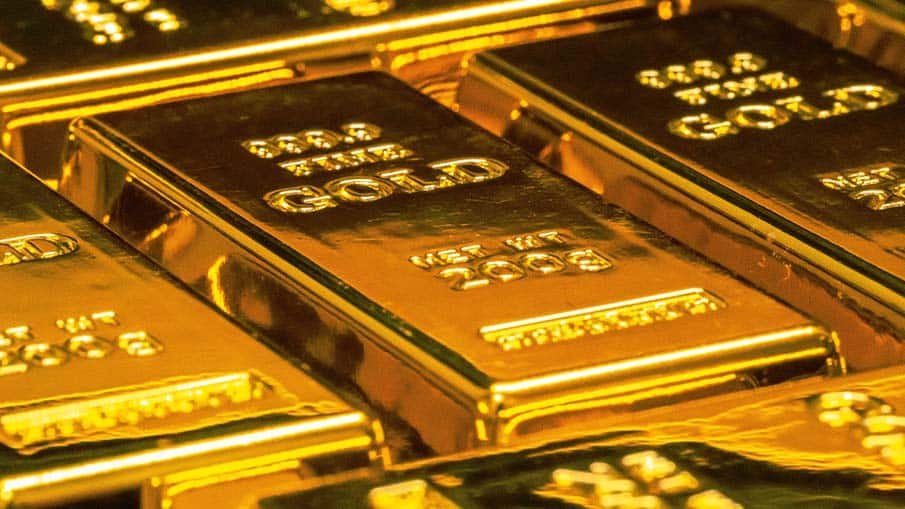
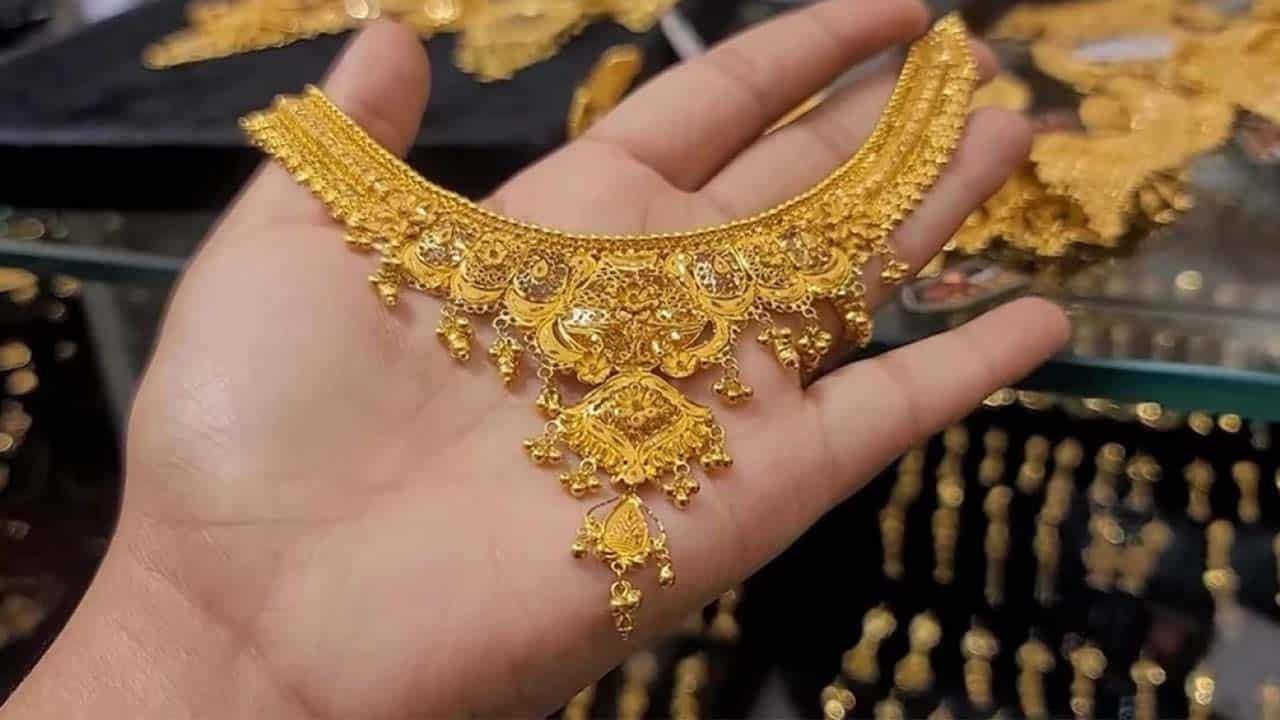
    On Tuesday, the 24-karat gold market demonstrated resilience, with a subtle uptick of Rs150 per tola, settling at Rs214,450 per tola.

    According to the Karachi Sarafa Association, the price for 10 grammes of 24-karat gold reached Rs183,856, reflecting a marginal gain of Rs128 compared to the preceding session.

    Simultaneously, the price of 10-gramme 22-karat gold experienced a modest rise, reaching Rs168,535.

    Contrary to the gold market’s movements, silver prices remained steadfast, exhibiting no change.

    The 24-karat silver maintained its position at Rs2,580 per tola, while the 10-gramme silver was traded at Rs2,211.93.

    It is noteworthy that the domestic gold market faced a downturn last week, attributed to a decline in international prices.

    International spot gold, on the other hand, hovered around $2,021, marking a 0.2 per cent change compared to the preceding session.

    As the market watches these fluctuations, all eyes are set on the forthcoming minutes from the Federal Reserve’s January policy meeting, scheduled for release on Wednesday.

    The outcome of this meeting is poised to have a considerable impact on the trajectory of both domestic and international precious metal markets.
  • Political instability, IMF loan conditions threaten Pakistan’s economic growth

    Political instability, IMF loan conditions threaten Pakistan’s economic growth

    In January, Pakistan experienced a boost in economic activity, thanks to the financial aid provided by the International Monetary Fund (IMF), as reported by Bloomberg Economics Tracker.

    However, there are three key developments that may impact future economic conditions.

    Firstly, the aftermath of the inconclusive February 8 election has resulted in persistent political instability, presenting a potential obstacle to new investments.

    Secondly, there is a likelihood of more stringent conditions associated with additional IMF loans. Lastly, there is an increasing probability that the State Bank of Pakistan will delay rate cuts.

    Despite the challenges, January saw a positive trend with a 0.9 per cent increase in economic activity compared to December, breaking a four-month contraction streak.

    The injection of IMF loans and eased trade restrictions contributed to this improvement, enabling increased purchases of essential import supplies.

    Looking ahead, the unresolved election outcome may prolong political uncertainty, affecting potential investments.

    The recent hike in gas prices on February 15 will likely drive inflation higher, further reducing the chances of a March rate cut.

    Considering these developments, Bloomberg Economics is considering revising its growth outlook.

    While Bloomberg currently predicts 2.1 per cent GDP growth through June 2024 (up from a 0.2 per cent contraction in the previous fiscal year), the consensus estimate is 2.5 per cent, and the IMF forecasts 2 per cent.

    It’s essential to note that the Bloomberg Economics monthly tracker assesses inflation-adjusted indicators of activity.

  • Seasonal demand: Gold price increases by Rs5,600 to Rs207,500 per tola

    Seasonal demand: Gold price increases by Rs5,600 to Rs207,500 per tola

    On Friday, gold prices in Pakistan experienced a significant increase due to seasonal demand and the rush to purchase the precious metal during Ramadan and the upcoming wedding season.

    According to data from the All-Pakistan Sarafa Gems and Jewellers Association (APSGJA), the price of 24-carat gold surged by Rs5,600 per tola and Rs4,801 per 10 grammes to settle at Rs207,500 and Rs177,898, respectively.

    In recent sessions, the price of gold had decreased due to a decline in international prices and the appreciation of the Pakistani rupee against the US dollar. However, the bullion sparkled once again on Friday as local markets reopened following a day off for Pakistan Day.

    The price of gold in Pakistan is strongly influenced by the rupee-dollar parity since almost all of the country’s gold demand is met through imports, with traders following international prices to set rates. The metal is imported by jewelers against the US dollar and UAE dirham before its price is converted into rupees.

    The APSGJA also noted that the price of gold in Pakistan was Rs12,000 per tola cheaper than in the Dubai market, indicating that the Pakistani gold market was currently less expensive than the global market.

    Meanwhile, in the international market, gold prices continued to rise on Friday, buoyed by a drop in Treasury yields after the US Federal Reserve hinted at a possible end to its monetary tightening cycle. The per-ounce price settled at $1,997 after a significant increase of $58.

    The longer-term prospects for gold remain positive due to expectations of a pause in US interest rate hikes. In addition, silver prices in the domestic market rose by Rs20 per tola and Rs17.15 per 10 grammes, settling at Rs2,220 per tola and Rs1,903.29 per 10 grammes, respectively.

  • Highest single-day fall: Gold price drops by Rs9,000 to Rs201,500 per tola

    Highest single-day fall: Gold price drops by Rs9,000 to Rs201,500 per tola

    As the rupee marginally strengthened against the US dollar and investors closely followed the US Federal Reserve’s interest rate rise decision and policy outlook, the price of gold in Pakistan saw its worst one-day decline.

    The price of gold (24 carats) fell by Rs9,000 per tola and Rs7,716 per 10 grammes to settle at Rs201,500 and Rs172,754, respectively, according to data issued by the All-Pakistan Sarafa Gems and Jewellers Association (APSGJA).

    The jewellers’ association also claimed that local gold in Pakistan was “overcost” by Rs2,500 per tola when compared to the bullion market in Dubai.

    The price of gold has fallen as demand has decreased as investors appear to have abandoned the safe-haven commodity in favour of the dollar, which is now freely available on the open market following the lifting of the dollar cap.

    As a result of the events surrounding the negotiations with the International Monetary Fund (IMF), the Pakistani rupee began to show signs of recovery today, rising by about Rs2 to settle at Rs267.89.

    However, investors were only buying gold bars, not jewellery, which had lowered goldsmiths’ profit margins and put the labour force at risk of losing jobs as jewellery manufacturers turned to other careers in the lack of work.