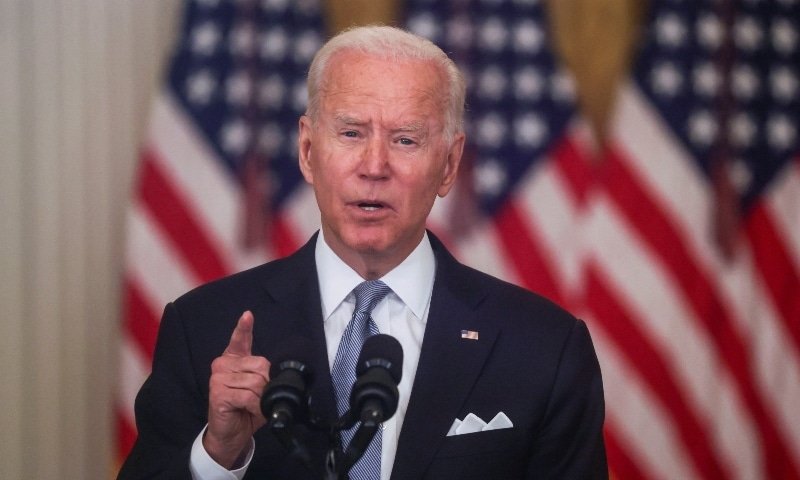
United States (US) President Joe Biden blamed the Taliban takeover in Afghanistan on Afghan political leaders who fled the country and the unwillingness of the US-trained Afghan army to fight the militant group.
In his speech, Biden said that the US troops could not defend a nation whose leaders “gave up and fled”, as did Afghan President Ashraf Ghani.
“I stand squarely behind my decision. After 20 years, I have learned the hard way that there was never a good time to withdraw US forces,” Biden said in a televised address from the White House.
While Biden said he took responsibility for the fate of the US mission, he lashed out at the former Afghan government and military commanders who were put in place, organised, and supported by Washington over the last 20 years.
Instead of standing up to the advancing Taliban — a highly experienced guerrilla force but more lightly armed than the US-supplied Afghan army — the government fled.
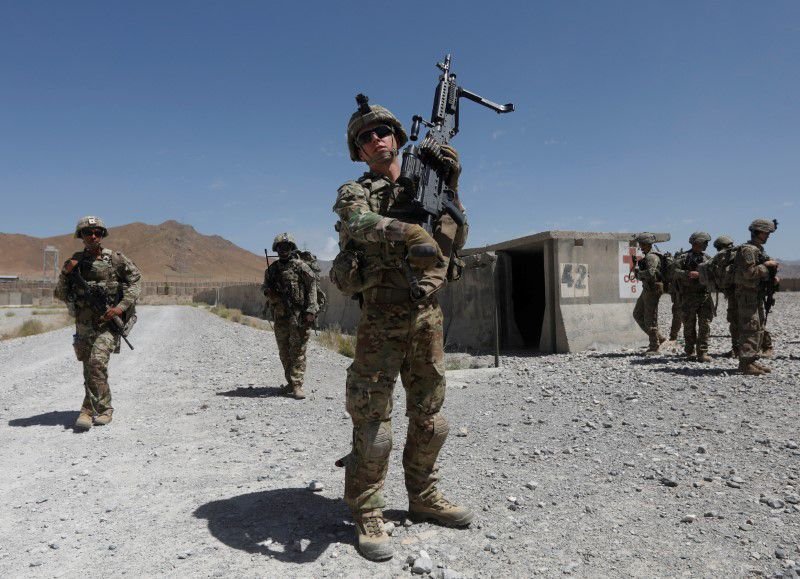
“We gave them every chance to determine their own future. We could not provide them with the will to fight for that future,” Biden said, adding he could no longer ask US soldiers to risk their lives in the country, 20 years on.
“Our mission in Afghanistan was never supposed to have been nation-building. It was never supposed to be creating a unified, centralised democracy.”
“American troops cannot and should not be fighting in a war and dying in a war that Afghan forces are not willing to fight for themselves,” said the US president.
“We gave them every chance to determine their own future. We could not provide them was the will to fight for their future,” added Biden.
“If Afganistan is unable to mount any real resistance at the Taliban now, there is no chance that one more year, five more years or 20 more years the US military boots on the ground would have made any difference,” said Biden.
Biden said that the political leaders were unable to stand for their own people. He said that the leaders were unable to negotiate for the future of their people when the chips were down.
Biden acknowledged that the Taliban’s speed in retaking the country was unexpected.
“The truth is: This did unfold more quickly than we anticipated. So what’s happened? Afghanistan’s political leaders gave up and fled the country. The Afghan military gave up, sometimes without trying to fight,” Biden said.
“Our true strategic competitors, China and Russia, would love nothing more than the United States to continue to funnel billions of dollars in resources and attention into stabilizing Afghanistan indefinitely,” he said.
Biden said he was “left again to ask of those who argue that we should stay: how many more generations of America’s daughters and sons would you have me send to fight Afghans — Afghanistan’s civil war — when Afghan troops will not?”
“I will not repeat the mistakes we made in the past,” said Biden.
President Ashraf Ghani of Afghanistan fled the country as the Taliban entered Kabul, amidst severe criticism from his opponents, saying that now is not the time for him to leave his country as the dreaded Taliban come back to rule once more.
The Taliban declared that the war in Afghanistan was over after its fighters swept into the capital, Kabul, and President Ashraf Ghani fled the country on Sunday.