Tag: US troops

  • ‘Cannot defend a nation whose leaders gave up and fled’: US President

    ‘Cannot defend a nation whose leaders gave up and fled’: US President

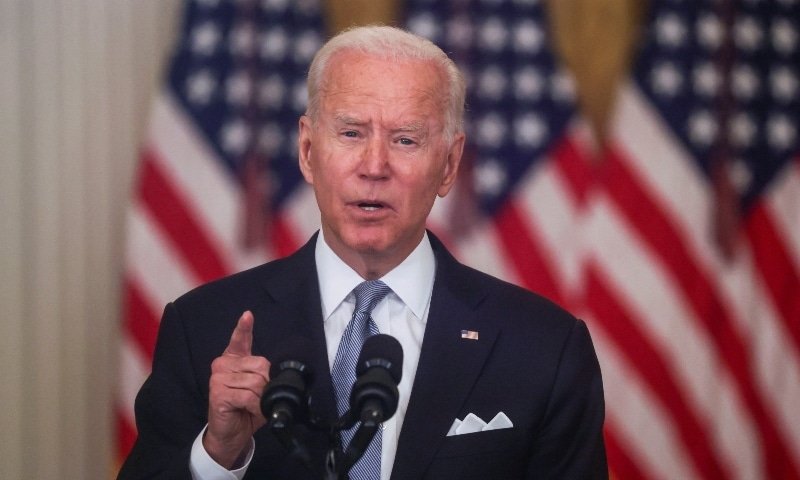
    United States (US) President Joe Biden blamed the Taliban takeover in Afghanistan on Afghan political leaders who fled the country and the unwillingness of the US-trained Afghan army to fight the militant group.

    In his speech, Biden said that the US troops could not defend a nation whose leaders “gave up and fled”, as did Afghan President Ashraf Ghani.

    “I stand squarely behind my decision. After 20 years, I have learned the hard way that there was never a good time to withdraw US forces,” Biden said in a televised address from the White House.

    While Biden said he took responsibility for the fate of the US mission, he lashed out at the former Afghan government and military commanders who were put in place, organised, and supported by Washington over the last 20 years.

    Instead of standing up to the advancing Taliban — a highly experienced guerrilla force but more lightly armed than the US-supplied Afghan army — the government fled.

    “We gave them every chance to determine their own future. We could not provide them with the will to fight for that future,” Biden said, adding he could no longer ask US soldiers to risk their lives in the country, 20 years on.

    “Our mission in Afghanistan was never supposed to have been nation-building. It was never supposed to be creating a unified, centralised democracy.”

    “American troops cannot and should not be fighting in a war and dying in a war that Afghan forces are not willing to fight for themselves,” said the US president.

    “We gave them every chance to determine their own future. We could not provide them was the will to fight for their future,” added Biden.

    “If Afganistan is unable to mount any real resistance at the Taliban now, there is no chance that one more year, five more years or 20 more years the US military boots on the ground would have made any difference,” said Biden.

    Biden said that the political leaders were unable to stand for their own people. He said that the leaders were unable to negotiate for the future of their people when the chips were down.

    Biden acknowledged that the Taliban’s speed in retaking the country was unexpected.

    “The truth is: This did unfold more quickly than we anticipated. So what’s happened? Afghanistan’s political leaders gave up and fled the country. The Afghan military gave up, sometimes without trying to fight,” Biden said.

    “Our true strategic competitors, China and Russia, would love nothing more than the United States to continue to funnel billions of dollars in resources and attention into stabilizing Afghanistan indefinitely,” he said.

    Biden said he was “left again to ask of those who argue that we should stay: how many more generations of America’s daughters and sons would you have me send to fight Afghans — Afghanistan’s civil war — when Afghan troops will not?”

    “I will not repeat the mistakes we made in the past,” said Biden.

    President Ashraf Ghani of Afghanistan fled the country as the Taliban entered Kabul, amidst severe criticism from his opponents, saying that now is not the time for him to leave his country as the dreaded Taliban come back to rule once more.

    The Taliban declared that the war in Afghanistan was over after its fighters swept into the capital, Kabul, and President Ashraf Ghani fled the country on Sunday.
  • Afghanistan may seek India’s military assistance if talks with Taliban fail: Afghan ambassador

    Afghanistan may seek India’s military assistance if talks with Taliban fail: Afghan ambassador

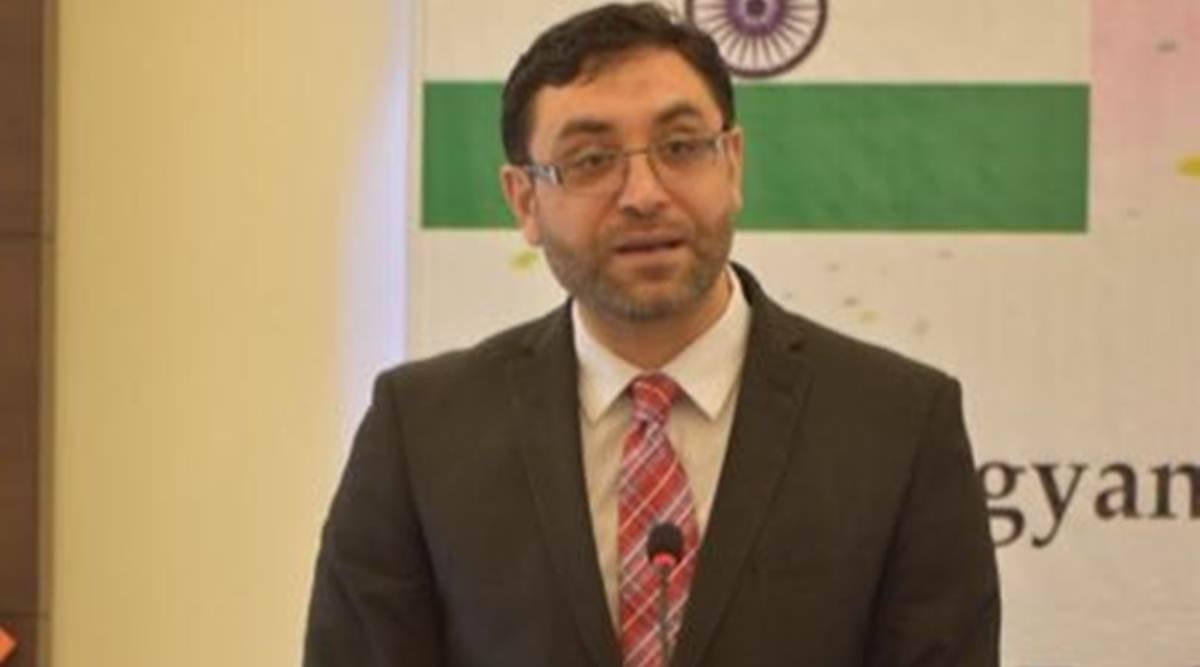
    The government of Afghanistan may, at some point in the future, seek India’s military assistance if talks with the Taliban fail amid the withdrawal of US troops from there, Afghan Ambassador to India, Farid Mamundzay, has said in an interview to NDTV.

    “Should we not get to a stage in the peace process with the Taliban, then maybe a time (will come) where we would be seeking India’s military assistance, more military assistance in the years ahead,” said Farid.

    “We are not seeking India’s assistance with sending troops to Afghanistan. Their footprint in Afghanistan to fight our war would not be needed at this stage,” he clarified.

    The current situation in Afghanistan is “very dire” and “very problematic”, with the government forces actively fighting the Taliban in around 150 of the 376 districts, the Ambassador said.

    In another interview given to The Indian Express, Farid said, “We are faced with economic hardship,” reports Khaleej Times.

    “The Covid-19-induced lockdowns and the crisis had made deteriorating life even more jeopardised for the general public. We are going through a very difficult time,” he added.

    “Messages that India would continue to support Afghanistan should Taliban become part of the mainstream society again,” he explained. “India would continue to assist Afghanistan in education, politically, diplomatically. Those would go a long way I hope with the Taliban,” added Farid.

    Mamundzay avoided responding to queries related to tensions between India and Pakistan and its spillover in Afghanistan. He said Afghans were to a large extent independent and they decided for themselves.

    “But Pakistan holds a considerable amount of influence and leverage with the Taliban, who again is part of Afghan society,” explained the diplomat.

    “And our requests to Pakistan have always been to use, and productively utilise their influence to bring Taliban to the negotiating table, to make them agree to a process which would make this region prosper. We understand that Pakistan may not fully control the Taliban, but they have a good influence over them. And that influence should be used for, at least, on making this region peaceful and prosperous.”

  • ‘No smoking, shaving’: Afghan Taliban’s first orders

    The Taliban issued their first orders in the form of letter to a local imam after capturing a remote district in Afghanistan’s north, which says that women cannot go to the bazaar without a male companion, among other directives, AFP has reported.

    As per Sefatullah, 25, a resident of Kalafgan district, the letter said “women can’t go to the bazaar without a male companion, and men should not shave their beards,” adding that whoever breaks the rules “will be seriously dealt with”.

    Last month, the Afghan Taliban took Shir Khan Bandar, a northern customs post that connected the country to Tajikistan over a US-funded bridge that spanned the Panj river.

    Sajeda who worked in a local factory told AFP that after Shir Khan Bandar fell, the Taliban “ordered women not to step out of their homes”.

    “There were many women and young girls doing embroidery, tailoring and shoe-making … The Taliban’s order has now terrified us,” she added further.

    The letter issued in the name of the Taliban’s cultural commission says, “All imams and mullahs in captured areas should provide the Taliban with a list of girls above 15 and widows under 45 to be married to Taliban fighters.”

    However, the Taliban denied issuing any such letter.

    “These are baseless claims,” said Zabihullah Mujahid, a spokesman for the Afghan Taliban.

  • Afghan Taliban want China’s friendship, say will not interfere in Chinese affairs

    After seizing about one-third of Afghanistan’s districts, the Taliban this week swept through the northeastern Badakhshan province, reaching the mountainous border with China’s Xinjiang region, reports The Wall Street Journal.

    These days, the Taliban go out of their way to ease China’s concerns, eager to secure Beijing’s acquiescence to their rule.

    “The Taliban want to show China goodwill,” said Qian Feng, head of research at the National Strategy Institute of Tsinghua University in Beijing. “They hope that China can play a more important role, especially after America pulls out its troops.”

    With the American military withdrawal nearly complete, China is also becoming increasingly powerful in the Central Asian states that border Afghanistan to the north.

    “We care about the oppression of Muslims, be it in Palestine, in Myanmar, or in China, and we care about the oppression of non-Muslims anywhere in the world. But what we are not going to do is interfere in China’s internal affairs,” said a senior Taliban official in Doha, Qatar.

    Another official, Taliban spokesman Suhail Shaheen, pointed out that the Islamist group pledged in the February 2020 Doha deal with Washington to not let the country’s territory be used against other nations and to not accept any refugees or exiles outside the framework of international migration law.

    “We will not allow anyone whether it is an individual or an entity — to use the soil of Afghanistan against the United States, its allies, or any other country, and that includes China,” Shaheen said.

    While caring about the plight of the Uyghurs of Xinjiang, the Taliban will seek to help their fellow Muslims through political dialogue with Beijing, he added. “We do not know the details. But if we have the details, we will show our concern,” he said. “If there are some problems with the Muslims, of course, we will talk with the Chinese government.”

  • Pak ready to partner for peace in Afghanistan, we will not host US bases: PM for WaPo

    Pak ready to partner for peace in Afghanistan, we will not host US bases: PM for WaPo

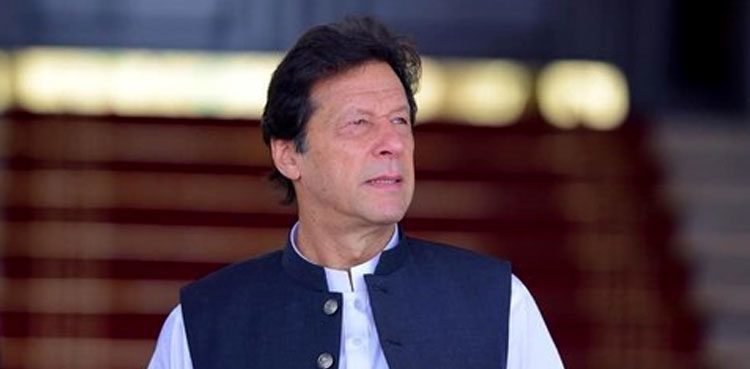
     Prime Minister Imran Khan, in an opinion piece for The Washington Post, wrote that Pakistan is ready to be a US partner for peace in Afghanistan, but will not host US bases and avoid risking further conflict.

    “We simply cannot afford this. We have already paid too heavy a price. Meanwhile, if the US, with the most powerful military machine in history, couldn’t win the war from inside Afghanistan after 20 years, how would America do it from bases in our country?”

    He added that Pakistan was ready to be a partner for peace in Afghanistan with the US. “But as US troops withdraw, we will avoid risking further conflict,” wrote PM Khan.

    He said that Pakistan and the US have the same interest in that long-suffering country: a political settlement, stability, economic development and the denial of any haven for terrorists.

    “We oppose any military takeover of Afghanistan, which will lead only to decades of civil war, as the Taliban cannot win over the whole of the country, and yet must be included in any government for it to succeed.”

    Highlighting how Pakistan has suffered from the wars in Afghanistan, PM Khan wrote, “More than 70,000 Pakistanis have been killed. While the US provided $20 billion in aid, losses to the Pakistani economy have exceeded $150 billion.”

    “After joining the US effort, Pakistan was targeted as a collaborator, leading to terrorism against our country from the Tehreek-i-Taliban Pakistan and other groups. US drone attacks, which I warned against, didn’t win the war, but they did create hatred for Americans, swelling the ranks of terrorist groups against both our countries,” wrote the premier.

    Arguing against giving military bases to the Central Intelligence Agency (CIA) for action inside Afghanistan, he said if the United States, with the most powerful military machine in history, couldn’t win the war from inside Afghanistan after 20 years, how would America do it from the bases in Pakistan?

    The prime minister also mentioned the benefits the region would get after peace in Afghanistan and Pakistan’s desire for increased trade and connectivity with Central Asia for an economic uplift.

    “This is why we have done a lot of real diplomatic heavy lifting to bring the Taliban to the negotiating table, first with the Americans, and then with the Afghan government,” PM Khan wrote, highlighting Pakistan’s efforts for peace.

    “We know that if the Taliban tries to declare a military victory, it will lead to endless bloodshed. We hope the Afghan government will also show more flexibility in the talks, and stop blaming Pakistan, as we are doing everything we can short of military action.”

    The premier concluded by saying that promoting economic connectivity and regional trade was the key to lasting peace and security in Afghanistan, adding that further military action was “futile”.

    “If we share this responsibility, Afghanistan, once synonymous with the ‘Great Game’ and regional rivalries, could instead emerge as a model of regional cooperation.”