Tag: US

  • ‘Will you shut up, man?’ and much more from Trump vs Biden presidential debate

    From “will you shut up, man?” to “elections have consequences”, following are some of the quotes making news after Tuesday’s United States (US) 2020 presidential debate between Republican President Donald Trump and Democratic challenger Joe Biden.

    The polling is scheduled for November 3.

    SUPREME COURT NOMINATION:

    Trump, asked by moderator Chris Wallace about whether U.S. appeals court Judge Amy Coney Barrett should be nominated to the Supreme Court before the election: “We won the (2016) election. Elections have consequences.

    “We have the Senate and we have the White House and we have a phenomenal nominee respected by all.

    “ […] I think that she (Barrett) will be outstanding. She will be as good as anybody who has ever served on that court. We won the election and therefore we had the right to choose her.”

    Biden: “We should wait, we should wait and see what the outcome of this election is.”

    Trump: “As far as a say is concerned, the American people have already had their say. … I’m not elected for (just) 3-1/2 years.”

    Responded Biden: “He’s elected until the next election. […] The election’s already started.”

    HEALTHCARE:

    Biden, told by Trump he had adopted former Democratic presidential rival Bernie Sanders’ “socialised medicine” proposals, said of the president: “Everybody here knows he’s a liar. […] You picked the wrong guy on the wrong night at the wrong time.”

    “[…] Folks, do you have any idea what this clown’s doing? I tell you what, he is not for anybody needing healthcare.”

    After Trump explained his healthcare proposal, Biden said: “He has no plan for healthcare. … The fact is this man has no idea what he’s talking about.”

    DEALING WITH THE CORONAVIRUS PANDEMIC:

    Biden to Trump: “You should get out of your bunker and get out of the sand trap and … the golf course and go in the Oval Office and (put) together Democrats and Republicans, and fund what needs to be done now to save lives.”

    Trump to Biden: “You didn’t think we should’ve closed our country (to China) because you thought it was terrible.”

    “… We’ve done a great job. But I tell you, Joe, you could never have done the job we’ve done. You don’t have it in your blood.”

    Biden on Trump’s leadership on the pandemic: “He panicked or he looked at the stock market. … A lot of people died, and a lot more (are) going to die unless he gets a lot smarter a lot quicker.”

    Responded Trump: “There’s nothing smart about you, Joe.”

    RACE RELATIONS:

    Biden on Trump: “This is a president who has used everything as a dog whistle to try to generate racist hatred, racist division.”

    Trump to Biden, citing the then-senator’s support for the 1994 crime bill: “You’ve treated the Black community about as bad as anybody in this country.”

    Biden: “Yes, there’s a systemic injustice in this country in education and work and in law enforcement and the way in which it is enforced.”

    LAW ENFORCEMENT AND URBAN UNREST:

    Trump: “The top 10 cities and just about the top 40 cities are run by Democrats in many cases, radical left, and they’ve got you wrapped around their finger, Joe, to a point where you don’t want to say anything about law and order. And I’ll tell you what the people of this country want and demand law and order, and you’re afraid to even say it.”

    Biden said Trump had done nothing to calm the protests. “He just pours gasoline on the fire.”

    Responding to Trump attacking him on the suburbs, Biden said: “He wouldn’t know a suburb unless he took a wrong turn. I know suburbs.”

    WHITE SUPREMACISTS:

    Wallace: “Are you willing tonight to condemn white supremacists and militia groups and to say that they need to stand down and not add to the violence or the number of these cities as we saw in Kenosha, and as we’ve seen in Portland?”

    Trump: “I would say almost everything I see is from the left-wing, not from the right. … I’m willing to do anything. I want to see peace.”

    Wallace: “Then do it, sir.”

    Biden: “Do it, do it. Say it.”

    Trump: “You want to call them. What do you want to call them? Give me a name.”

    Biden, referring to a right-wing group: “Proud Boys.”

    Trump: “Proud Boys, stand back and stand by.”

    CLIMATE CHANGE AND THE ENVIRONMENT:

    Trump: “I believe that we have to do everything we can to have immaculate air, immaculate water, and do whatever else we can that’s good.”

    Biden: “The first thing I will do, I will rejoin the Paris Climate Accord.”

    ELECTION INTEGRITY:

    Biden encouraged mail-in voting by saying Trump does it, too. “He sits behind the Resolute Desk (in the White House) and sends his ballot to Florida.”

    Biden: “He cannot stop you from being able to determine the outcome of that election. … If I win, that will be accepted. If I lose, that will be accepted.

    “If we get the votes, he’s going to go. He can’t stay in power.”

    Trump: “Don’t tell me about a free transition. This is going to be a fraud like you’ve never seen. This is not going to end well.”

    Biden: “You will determine the outcome of this election. Vote, vote, vote. If you’re able to vote early in your state, vote early. If you’re able to vote in person, vote in person – whatever way is the best way for you. Because he cannot stop you from being able to determine the outcome of this election.”

    Asked by Wallace if he would urge his supporters to stay calm and pledge not to declare victory until the election is certified, Trump said: “I’m urging my supporters to go into the polls and watch very carefully.”

    Trump: “If I see tens of thousands of ballots being manipulated, I can’t go along with it. They cheat.”

    Biden: “The fact is I will accept it and he will too. You know why? Because once the winner is declared after all the ballots are counted, all the votes are counted. That’ll be the end of it.”

    INTERRUPTIONS:

    At one point when Trump was interrupting him, Biden said: “Will you shut up, man? This is so unpresidential.”

    Wallace to Trump: “I think the country would be better served if we allowed both people to speak with fewer interruptions. I’m appealing to you, sir, to do that.”

    Trump, referring to Biden, responded: “And him, too.”

    Wallace: “Well, frankly you’ve been doing more interrupting.”

    WATCH THE FULL DEBATE HERE:
  • Imran Khan paid more tax than US President Donald Trump

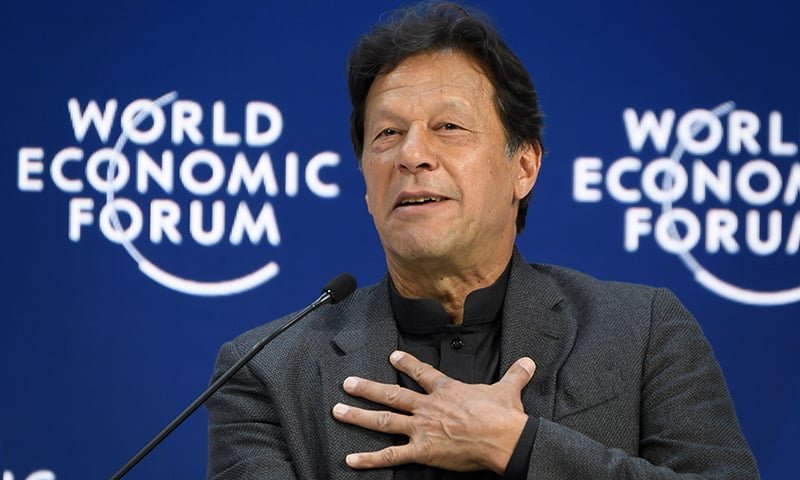
    In light of a recent New York Times report and the tax details of parliamentarians revealed by Pakistan’s Federal Board of Revenue (FBR), it has emerged that Prime Minister (PM) Imran Khan’s mere Rs0.2 million in taxes was more than business tycoon and United States (US) President Donald Trump’s federal taxes during his first year in office.

    The directory, published on the official website of FBR, contains tax details of elected representatives belonging to six different assemblies; National Assembly of Pakistan, Senate of Pakistan, Balochistan Assembly, Khyber Pakhtunkhwa Assembly, Sindh Assembly and Punjab Assembly. 

    According to the information released, former PM and Pakistan Muslim League-Nawaz (PML-N) leader Shahid Khaqan Abbasi was the highest taxpayer, as he paid a staggering amount of Rs241,329,362 in taxes.

    The premier in 2018 — his first year in office — paid Rs282,449 in taxes whereas President Trump paid just $750 (Rs124,290 as of 2020) in federal income tax during his first year as president.

    Trump, who in 2016 suggested reports of tax avoidance showed he was ‘smart’, denounced the findings as ‘completely fake news’. The New York Times said that of the 18 years its reporters examined, Trump had paid no income tax at all in 11 of them.

    While there is no comparison between the taxes paid by the two leaders from Pakistan and the US, it merits a mention that both were equally criticised for alleged tax evasion.

    As for Abbasi, his paid taxes were twice as much as the entire cabinet of the ruling Pakistan Tehreek-e-Insaf (PTI) paid.

    Industries and Production Minister Hammad Azhar and Petroleum Division Minister Omar Ayub were the top two tax payers in the cabinet, contributing Rs59.4 million and Rs26 million to the exchequer respectively.

  • Coronavirus: Pakistan out of list of 100 safest countries, Switzerland on top, India 56th safest, worst-hit US 58th

    Coronavirus: Pakistan out of list of 100 safest countries, Switzerland on top, India 56th safest, worst-hit US 58th

    In a detailed study of 200 countries, Switzerland has been found to be the safest place on earth to escape the ongoing coronavirus pandemic while Pakistan is no longer among the 100 safest places, falling down to the 148th rank — amongst the riskiest group of countries.

    India ranks 56th in the COVID-19 ranking by Deep Knowledge Group. The first tier comprises a list of 20 most safe countries while those in the fourth tier are amongst the riskiest lot.

    The study focuses on nations and their safety capability against the pandemic.

    Top 10 safest countries from coronavirus:

    1) Switzerland

    2) Germany

    3) Israel

    4) Singapore

    5) Japan

    6) Austria

    7) China

    8) Australia

    9) New Zealand

    10) South Korea

    The United States (US), which has the highest number of coronavirus cases in the world, was ranked 58th on the list.

    By the time this report was filed, Pakistan had a total number of 113,702 COVID-19 cases with at least 2,255 deaths.

    Punjab had the most number of infections (43,460) with Sindh trailing behind at 41,303 cases. The number of infections in Khyber Pakhtunkhwa (KP), Balochistan and Islamabad stood at 14,527, 7,031 and 5,963, respectively. Gilgit-Baltistan (GB) had a total 974 cases while the number in Azad Jammu & Kashmir (AJK) stood at 444.

  • Racism at home

    Racism at home

    Being away from my country, I am having a difficult time processing world affairs, especially the killing of George Floyd, which has left many around the world, including me, speechless, angry and stunned. To all the black people who have long and continue to suffer the systematic oppression in Western countries, especially in the United States (US), I stand with all of you.

    I don’t understand or can gauge your pain, but in silence, words, and action, I am with you.

    Respecting the suffering of African-Americans, I would like to bring to limelight the racial stigmas related to being black or a dark-toned person in Pakistan.  For hundreds of years, having a dark complexion has been looked down upon in South Asian countries. Pakistanis are no less, where a dark skin shade is culturally wired in our brains as synonymous with poverty, illiteracy, and slavery.

    I won’t be overstating that all of us have been racist at some point in our life, be it casually, unintentionally, or knowingly. To me, it seems that we are in a race to be whiter than white people. For us, our sense of pride is skyrocketed when someone compliments our facial colour and delivery of the English language. As a result, we adopt practices that corrupt society at large and infuses it with just not racism but injustice too.   

    “It is just not the educational system, but this racism is systematic and deep-rooted in our societies, for which we are equally responsible. There are racial slurs pretty standard such as “Kalia,” “Kali,” or “Kalu” to disrespectfully address someone with a dark skin tone. As if their measurement of respect comes with the shade of your body.”

    I am sure, like many others, I had a strange experience of unintentional racism through our education system. We were repeatedly lectured on how Islam treats everyone equally. The guiding example of Prophet Muhammad (PUBH) was quoted now and then, on how despite resistance from Arab society, he (PUBH) appointed Bilal ibn Rabah to call the first prayers, but in the same breath, our very teachers favour kids with a fairer skin tone. Those kids were likely to become your teachers’ favorite students. I also heard remarks such as, “OMG! You are so beautiful because you are white” or rejoining the classes after the summer break; one teacher unforgivingly remarked, “What have you done during your summer break, you have become so black!”

    It is just not the educational system, but this racism is systematic and deep-rooted in our societies, for which we are equally responsible. There are racial slurs pretty standard such as “Kalia,” “Kali,” or “Kalu” to disrespectfully address someone with a dark skin tone. As if their measurement of respect comes with the shade of your body. It doesn’t stop there; brown parents want a fairer daughter-in-law for their son, which helps them boost their societal pride as if she is a commodity or a showpiece.  In the same bid, women are obliged to use fairness creams so that they can wed their prince charming.

    I have always had a difficult time coping with advertisements prescribing color change possibility with-in 20 days of regular use. To add further, I knew someone who went to the US for higher education and wanted to marry an African-American. The family back in Pakistan didn’t approve of the marriage, objecting to her appearance. Similarly, I think of all women in Pakistan whose wedding proposals are causally rejected, on being dark. The amount of trauma and stress it leaves the person with, is unexplainable.

    “I can write a long speech about how I support the black lives movement in the US, but my head continues to bow down in shame because the ones in Pakistan are treated far worse.”

    I, however, am still speaking from a privileged position of being a man and can hardly relate to the suffering of women in Pakistan. 

    We often criticise US authorities for the handling of black people, but it is worse here in Pakistan. From security guards to cab drivers, the initial mental framework of respect is proportional to someone’s fairness. These and many other instances add up to racism at all levels in Pakistan. I can write a long speech about how I support the black lives movement in the US, but my head continues to bow down in shame because the ones in Pakistan are treated far worse. I, therefore, pick to criticise my own country and culture, with an ambition to change myself and the people around me in understanding that somebody’s colour should not be a measurement of their ability, intelligence, worth or respect.

    Please remember when you lash out at white people with #blacklivesmatter hashtags on your digital channels. Use your presence to be the voice of those who are unheard or racially abused in Pakistan. Whatever inspires you in your life, be it religion, science, or culture, let’s reform our vocabulary and lifestyle, and celebrate people beyond their color, ethnicity, race or gender.

  • Trump in bunker, blackout at White House, curfews across country: What you should know about ugly US protests

    Trump in bunker, blackout at White House, curfews across country: What you should know about ugly US protests

    Violent protests have erupted across the United States (US) since after the death of George Floyd who died in police custody, sparking outrage over police brutality, especially the treatment of African-Americans at the hands of authorities.

    With people across the country taking to streets, shaking the States to its core as some protests turn ugly, here is everything you need to know about it.

    WHO WAS GEORGE FLOYD?

    On May 25, George Floyd, a 46-year-old African-American man suspected of passing a counterfeit $20 bill, died in Minneapolis city of Minnesota after a white cop, Derek Chauvin, pressed his knee to Floyd’s neck for almost nine minutes while the suspect was handcuffed face down in the street.

    Two other officers further restrained Floyd while a fourth prevented onlookers from intervening.

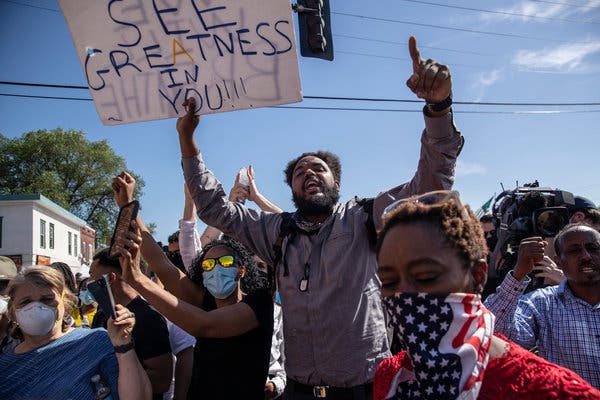
    View Pictures of the George Floyd Protests Nationwide - The New ...

    During the final three minutes, Floyd was motionless and had no pulse, but officers made no attempt to revive him and Chauvin kept his knee on Floyd’s neck even as arriving emergency medical technicians attempted to treat him.

    VIRAL VIDEOS & CRIMINAL COMPLAINT:

    Several bystanders took videos of the incident, which were widely circulated and broadcast along with security-camera footage from nearby businesses; two of the officer’s body cams footage has, however, not yet been released.

    [GRAPHIC WARNING]

    A criminal complaint later filed against Chauvin stated that Floyd repeatedly said he could not breathe while standing outside a police car, resisted getting in the car, and intentionally fell down; he went to the ground face down and, after Chauvin placed his knee on Floyd’s neck, Floyd repeatedly said “I can’t breathe”, “mama” and “please”.

    POSTMORTEM EXAMINATION:

    Two autopsies determined the manner of Floyd’s death to be a homicide. The Hennepin County medical examiner’s autopsy found that Floyd died from cardiac arrest during the application of “neck compression”, also noting as significant conditions “arteriosclerotic and hypertensive heart disease; fentanyl intoxication; and recent methamphetamine use”.

    George Floyd: State, private autopsies agree death a homicide ...

    An independent autopsy commissioned by Floyd’s family found that the “evidence is consistent with mechanical asphyxia as the cause” of death, with neck compression restricting blood flow to the brain, and back compression restricting breathing.

    OFFICERS’ FATE & PROBE:

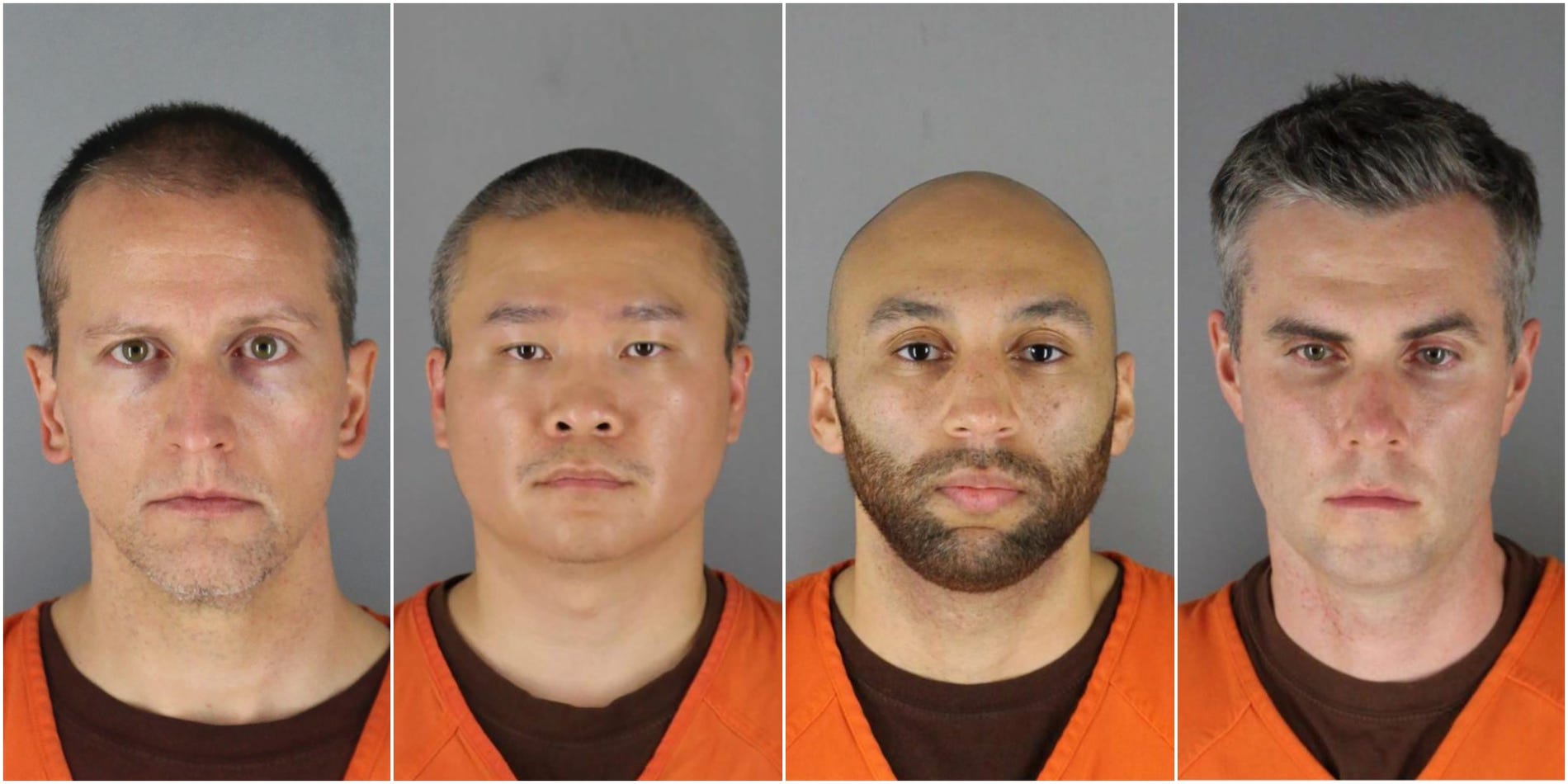
    All four officers were fired the day after the incident. On May 29, Chauvin was charged with third-degree murder and second-degree manslaughter while on June 3, Minnesota attorney general amended Chauvin’s charges to include second-degree murder, and the other three officers were charged with aiding and abetting second-degree murder.

    Murder charges filed against all four officers in George Floyd's death

    The Federal Bureau of Investigation (FBI) is conducting a federal civil rights investigation at the request of the Minneapolis Police Department, and the Minnesota Bureau of Criminal Apprehension is also investigating.

    WIDESPREAD PROTESTS:

    After Floyd’s death, demonstrations and protests against use of excessive force by police officers and lack of police accountability were held globally.

    Protests in the Minneapolis–Saint Paul area were initially peaceful on May 26, and became violent as a police precinct and two stores were set on fire, and many stores were looted and damaged. Some demonstrators skirmished with police, who fired tear gas and rubber bullets.

    Tens of thousands of people have demonstrated, mainly peacefully, across the US for the ninth night while one of the largest protests, joined by Floyd’s relatives, took place in his hometown of Houston, Texas.

    Many defied curfews in several cities, imposed after violence and looting in some districts.

    With the episode drawing reactions from across the world, from global leaders, including the Canadian president among others, the Pope has also issued a call for racism not to be ignored.

    “We cannot tolerate or turn a blind eye to racism,” he said, but also condemned the violence.

    Police stations and other buildings have been set ablaze, government establishments and offices of media organisations among other prominent structures across the country have been vandalised, and grocery, as well as luxury stores, looted.

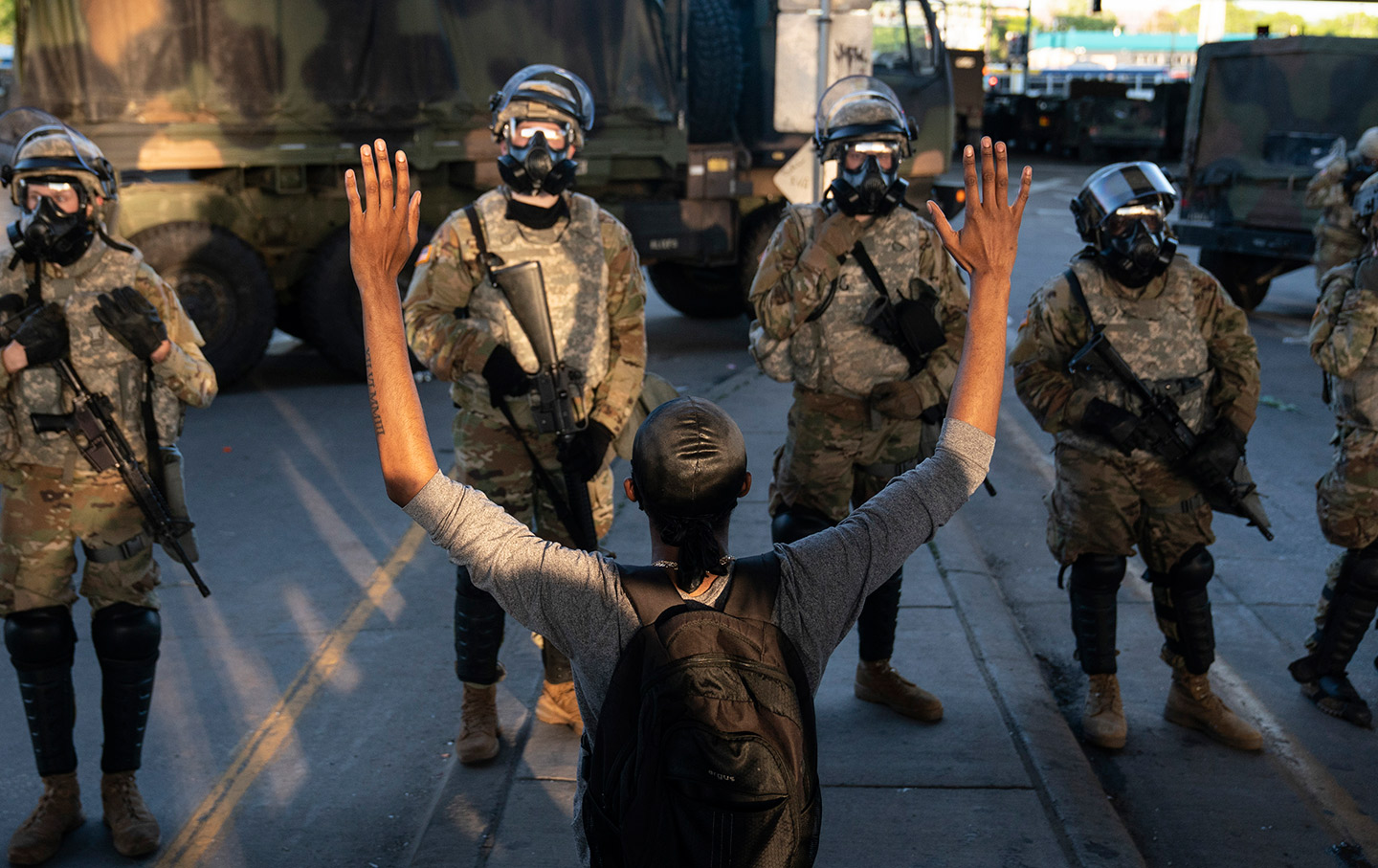
    While military has now been deployed after President Donald Trump’s warning to protesters, support for protesters and against the regime is widespread.

    Exclusive: The US Military Is Monitoring Protests in 7 States ...

    Cops, at places, have also been spotted lending support to peaceful protests.

    TRUMP IN BUNKER, BLACKOUT AT WHITE HOUSE:

    As part of the protests, the White House was also almost attacked. The president spent nearly an hour in an underground bunker at the White House last week when hundreds of protesters gathered outside the mansion.

    The bunker, also known as the Presidential Emergency Operations Center (PEOC), has been used on rare occasions to secure US presidents in times of peril.

     Meanwhile, a photo of blackout at White House also started making rounds on the internet with people calling it a “powerful symbol” of Trump’s “lack of leadership”.

    Trump has announced that he is taking “immediate presidential action” to put an end to the raging violence in the country.

    He even cited his own oath of protecting the country along with the Americans days after referring to angry demonstrators as “thugs”.

  • Much-awaited coronavirus drug ‘fails in first trial’

    Much-awaited coronavirus drug ‘fails in first trial’

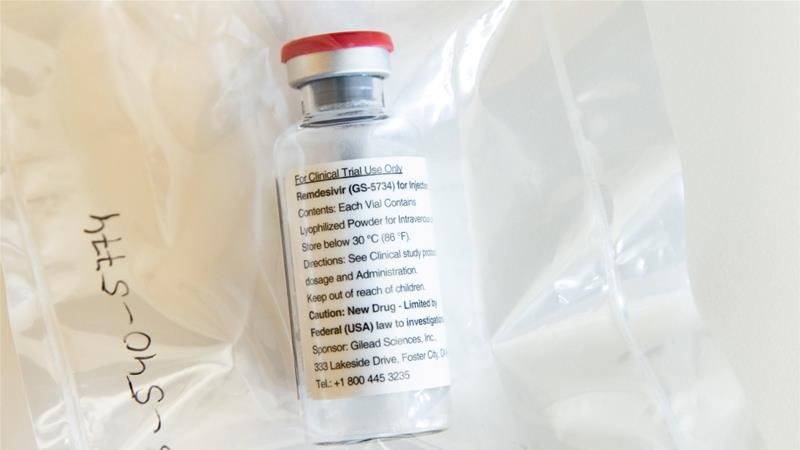
    A potential antiviral drug for the coronavirus has reportedly failed in its first randomised clinical trial, Financial Times reported.

    According to reports, there had been widespread hope that remdesivir could treat the new coronavirus — COVID-19 — that has left at least 191,000 people dead and 2.7 million infected across the globe.

    But a Chinese trial showed that the drug had not been successful, according to draft documents accidentally published by the World Health Organization (WHO).

    The drug did not improve patients’ condition or reduce the pathogen’s presence in the bloodstream, it said.

    Researchers studied 237 patients, giving the drug to 158 and comparing their progress with the remaining 79. The drug also showed significant side effects in some, which meant 18 patients were taken off it.

    Interest in the drug, had been high as there are currently no approved treatments or preventive vaccines for COVID-19, and doctors are desperate for anything that might alter the course of the disease that attacks the lungs and can shut down other organs in extremely severe cases.

    The United States (US) firm behind the drug, Gilead Sciences, is testing it in multiple trials, and highly anticipated trial results from a study involving 400 patients hospitalised with severe cases of the illness are expected later this month.

    It says the WHO documents mischaracterised the study.

    Remdesivir, which previously failed as a treatment for Ebola, is being tried against COVID-19 because it is designed to disable the mechanism by which certain viruses, including the new coronavirus, make copies of themselves and potentially overwhelm their host’s immune system.

  • ‘Pakistan, the friend in need’: Millions of COVID-19 drugs to be exported to US, UK, KSA, others

    ‘Pakistan, the friend in need’: Millions of COVID-19 drugs to be exported to US, UK, KSA, others

    Special Assistant to the Prime Minister (SAPM) on Information and Broadcasting Dr Firdous Ashiq Awan has announced the federal cabinet’s decision to send chloroquine tablets — an anti-malarial medicine that some studies found has a strong antiviral effect on COVID-19 — to “friendly nations” to help them in their time of need.

    Addressing a press conference after the weekly cabinet meeting, she said that one million chloroquine tablets will be sent to Saudi Arabia and the United States each, 500,000 to Turkey and Italy each, five million to the United Kingdom, 700,000 to Kazakhstan and 300,000 to Qatar.

    Firdous revealed that leaders of some countries had called Prime Minister Imran Khan and expressed a desire to import the tablets from Pakistan following some encouraging results in treating the coronavirus.

    “Pakistan has always been asking these countries for something or the other. So, for the sake of humanity and to improve Pakistan’s credibility and face value, this is a good chance to help them in this time of need,” she said.

    She also said that Pakistan had some 40 million tablets in stock and possessed the raw material to make even more.

  • US all-praise for Pakistani Americans for serving communities amid coronavirus outbreak

    US all-praise for Pakistani Americans for serving communities amid coronavirus outbreak

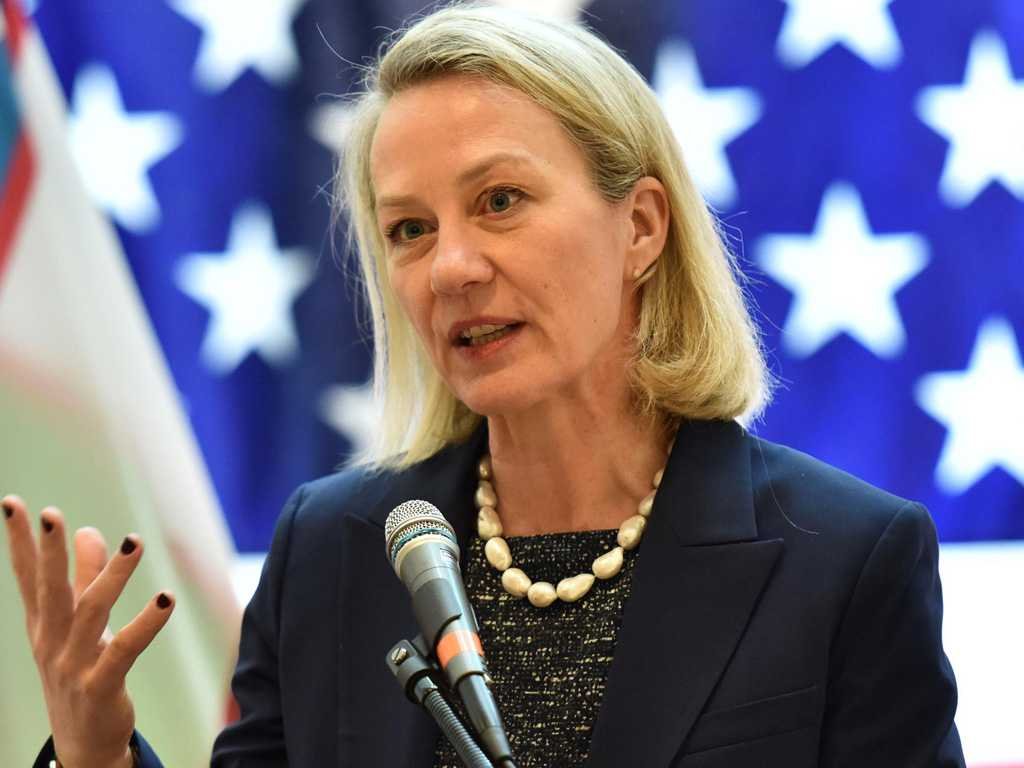
    Alice Wells, principal deputy assistant secretary of the United States’ (US) Bureau of South and Central Asian Affairs, has appreciated Pakistani Americans for serving communities both in the country and back home during the persisting global health crisis of coronavirus.

    The diplomat took to social media to laud Pakistan-born Americans for providing food and assistance in the US, as well as supporting healthcare professionals in their native country.

    The tweet comes days after the US announced that it will give a $1 million grant to Pakistan under the USAID programme to help improve monitoring and rapid response against the COVID-19.

    “The US-Pakistan government partnership is helping fight COVID-19. The US government is responding to COVID-19 in Pakistan with [an] initial $1 million funding to bolster monitoring and rapid response,” Wells had said at the time, adding that Islamabad and Washington were longstanding partners in tackling global health challenges.

  • ‘Won’t deny Nawaz met establishment officials from UK, US’

    ‘Won’t deny Nawaz met establishment officials from UK, US’

    Pakistan Muslim League-Nawaz (PML-N) leader Rana Sanaullah has said that he won’t deny former prime minister (PM) Nawaz Sharif’s meeting with officials from establishments of the United Kingdom (UK) and the United States (US).

    The former premier had last month held a meeting with a “mystery man” at his London residence. PML-N President Shehbaz Sharif had brought the man for a meeting with his elder brother Nawaz. The man, who had covered his face, had held a meeting with Nawaz for around 40 minutes until he was guided out the back door of Avenfield Apartments.

    A British journalist of Pakistani origin had, however, recorded a video of the mysterious visitor who didn’t utter a word in response to any questions asked about the meeting. With the video making headlines, speculations regarding the person’s identity had run rife.

    “I won’t deny these meetings. I am not in a position to comment as I have no permission of the party for it,” Sanaullah said when asked about such reports as he spoke to journalists outside the Lahore High Court (LHC) on Tuesday.

    “Shehbaz Sharif intends to return home in March,” he further said, adding that the PML-N president would return after the cardiac surgery of ailing ex-PM and his brother Nawaz in London.

    To another question, the PML-N leader said a legal team was holding consultations for extension in bail term of Nawaz as he seeks medical treatment abroad despite jail term after conviction in a corruption case against him.

  • Pakistan declared world’s most affordable country to live in

    Pakistan has been declared the world’s most affordable country to live in, while Bangladesh is the most expensive country in South Asia and Switzerland the most expensive in the world.

    CEOWORLD — one of the world’s leading business magazines for high-level executive professionals and business leaders — has declared Pakistan the world’s most affordable country to live in, followed by Afghanistan, India, Syria, Uzbekistan, Kyrgyzstan and Tunisia, Dhaka Tribune reported.

    Source: CEOWORLD

    Meanwhile, European countries were prominent on the list of most expensive ones. Of the top 20 nations, nine were in Europe, five in Asia, one in North America and Africa each, two in the Caribbean and two in Oceania. 

    Norway ranks second in the list of the world’s most expensive countries to live in, followed by Iceland, Japan, Denmark, Bahamas, Luxembourg, Israel, Singapore and South Korea.

    A little further down in the list, there is the United States (US) at the 20th position, the United Kingdom (UK) at 27th, Saudi Arabia at 57th and Russia at 82nd.

    The rankings are based on five major metrics — cost of living, rent, groceries, eating out and purchasing power. To identify the world’s most and least expensive countries to live in, the magazine collected and reviewed data from dozens of studies, numbers of consumer price index, cost of living index and numerous national and international media reports. 

    The data was then compiled into an index, using the notoriously expensive city of New York City (NYC) as a benchmark. New York was given an index score of 100. So a country with a score higher than 100 is more expensive than New York, while below signals less expensive.