Russia is reportedly building a nuclear space weapon that can disband the world’s commercial and government satellites, raising alarm bells across the world and especially in USA.
American spy agencies are divided on whether Moscow would go so far, but the concern is urgent enough that Secretary of State Antony J. Blinken has asked China and India to try to talk Russia down, reports The New York Times.
A new “national security threat” debate has taken over the United States Congress, indicating that Russia is reportedly building a nuclear space weapon that has the potential to disband a large portion of the world’s commercial and government satellites by producing a massive energy wave.
This would disable all communication lines affecting cell phones, paying bills, as well as the internet.
While not much is known about the weapon at this point, the system is described as a potential “space-based nuclear weapon” in several sources.
However, it’s unclear if this refers to a nuclear bomb or a nuclear-powered gadget.
White House National Security Communications Advisor John Kirby said the US is closely monitoring this Russian activity.
President Joe Biden asserted: “There is no nuclear threat to the people of America or anywhere else in the world with what Russia is doing.”
According to the New York Post, Russian spokesman Dmitry Peskov dodged the claims and responded by suggesting that the propaganda was a ruse to whip up support in Congress to take action.
He said: “It is obvious that the White House is trying, by hook or by crook, to encourage Congress to vote on a bill to allocate money; this is obvious.”
The President of the United States of America, Joe Biden, has cautioned, “If you harm an American, we will respond,” as US forces attacked more than 80 targets in Iraq and Syria in a wide-ranging air assault on sites belonging to Iran-linked fighter groups and Tehran’s Revolutionary Guard.
Today, at my direction, U.S. military forces struck targets in Iraq and Syria that the IRGC and affiliated militia use to attack U.S. forces.
We do not seek conflict in the Middle East or anywhere else in the world.
But to all those who seek to do us harm: We will respond.
The US president said the strikes had been launched in retaliation for the drone strike that killed three US troops in Jordan earlier in the week, adding: “Our response began today. It will continue at times and places of our choosing,” reports The Guardian.
The US military’s Central Command said it had struck with more than 125 bombs in an attack that took place around midnight local time in what was described as the first of multiple attacks against the groups.
“US military forces struck more than 85 targets, with numerous aircraft to include long-range bombers flown from the United States,” Centcom said in a statement. The raids were aimed at facilities believed to be controlled by Iran’s Islamic Revolutionary Guards Corps (IRGC) Quds Force and affiliated militia groups.
John Kirby, the White House national security spokesman, said the strikes lasted about 30 minutes. “These responses began tonight. They’re not going to end tonight. So there will be additional responses. There will be additional action that we will take, all designed to put an end to these attacks and to take away capability by the IRGC.”
The 85 targets were grouped in seven different locations: four in Syria and three in Iraq, according to US officials. Lt Gen Douglas Sims, director for operations on the joint staff, said the timing of the strikes was determined by the weather.
CENTCOM Statement on U.S. Strikes in Iraq and Syria
At 4:00 p.m. (EST) Feb. 02, U.S. Central Command (CENTCOM) forces conducted airstrikes in Iraq and Syria against Iran’s Islamic Revolutionary Guards Corps (IRGC) Quds Force and affiliated militia groups. U.S. military forces… pic.twitter.com/HeLMFDx9zY
“The initial indications are that we hit exactly what we meant to hit with a number of secondary explosions associated with the ammunition and logistics locations,” Sims said, although this could not be verified.
On Thursday, the US said it blamed Islamic Resistance in Iraq, a coalition of Iran-linked militias, for the deadly drone attack last weekend on the remote Tower 22 logistics base in Jordan, near the border with Syria and Iraq. Three US army reservists were killed after living quarters were struck at night and more than 80 wounded.
100 days back, on October 7, 2023, Hamas took Israel by surprise in a move that came as a consequence of more than seventy years of occupation, killings, destruction, and displacement of the Palestinians.
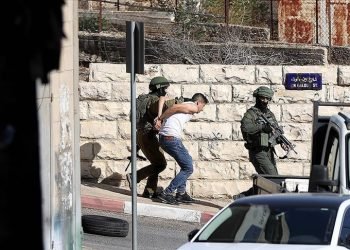
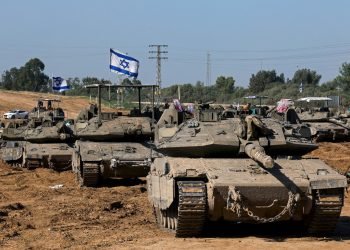
Israel took this instance of response as an excuse to go all out in attempts to exterminate Gazans from their land: On October 8, Israeli prime minister Benjamin Netanyahu declared war against Hamas and butchered, internally displaced, detained, and tortured thousands of Palestinians in Gaza as well as the Occupied West Bank.
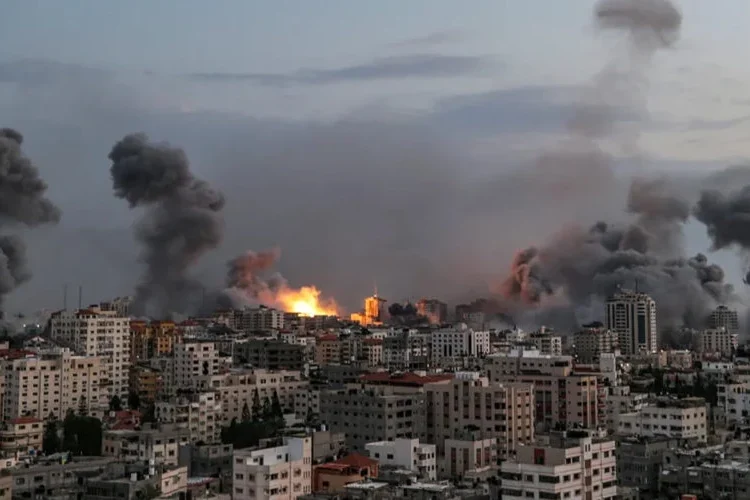
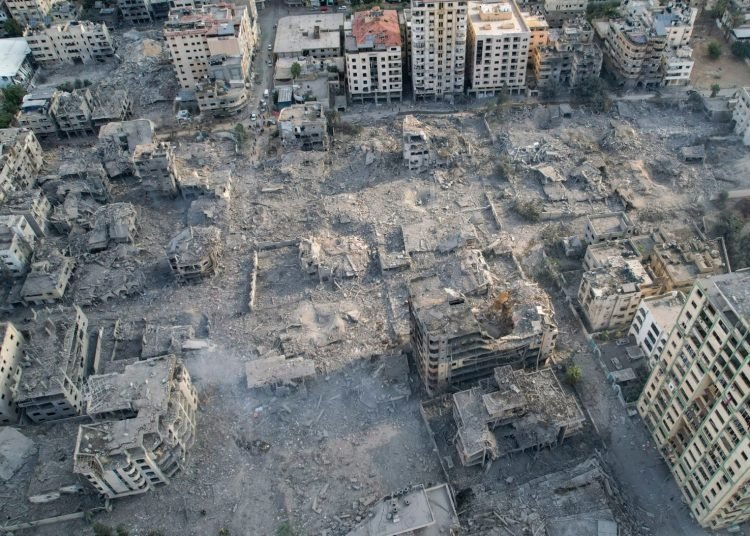
Since October 7 alone, more than 23,600 people have been killed and more than 58,000 wounded in Israeli attacks on Gaza.
Widespread use of and access to social media across the world has exposed Israeli atrocities against the Palestinians more than ever. A number of Palestinians have been reporting from the targeted strip, giving the world insights to the heights of atrocities touched by the Israeli military.
As the Irish lawyer Blinne Ní Ghrálaigh, representing South Africa in the International Court of Justice (ICJ) in The Hague on January 11 deemed it as “The first genocide in history where its victims are broadcasting their own destruction in real time in the desperate, so far vain hope that the world might do something.”
Nonetheless, the international community has collectively failed to ensure a ceasefire amidst all the loss and blatant violation of human rights..
While the breaches and enormities by Israel are innumerable and immeasurable to say the least, here are some of the most important moments and developments to have taken place the past 100 days.
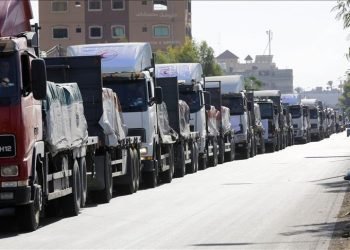
Israel had declared a “complete siege” on Gaza on October 9 2023, hindering the supply of electricity, food, water and fuel into the strip. While a few aid trucks were permitted on 21 October 2023, the aid has been inadequate, and starkly lower than the quantity sent before October 2023.
Additionally, fuel imports are “well below the minimum requirements for essential humanitarian operations”.
The UN Secretary-General has asserted that the level of destruction in Gaza is now so catastrophic that “[t]he conditions for the effective delivery of humanitarian aid no longer exist . . . But even if sufficient supplies were permitted into Gaza, intense bombardment and hostilities, Israeli restrictions on movement, fuel shortages, and interrupted communications, make it impossible for UN agencies and their partners to reach most of the people in need.”
No Facilities
The majority of Gazan hospitals are out of order due to the Israeli air raids and the blockade. According to WHO, 15 out of Gaza’s 36 hospitals are partially functional; nine in the south and six in the north.
Additionally, there is lack of electricity, desalination facilities, and bakeries to shut down and contributed to telecommunications blackouts.
Looming Fears of Famine and Diseases
Credit: Reuters
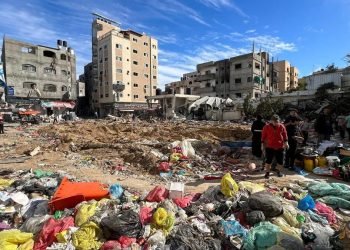
Due to lack of health facilities and access to water and sanitation, WHO has warned that Gaza is now heading towards proliferation of disease. As of January 1, nearly 200,000 respiratory infections and tens of thousands of cases of scabies, lice, skin rashes, and jaundice were reported whereas the number of diarrhoea cases among children under five has increased 20-fold since October 7.
Additionally, the World Health Organization has warned that “[a]n unprecedented 93% of the population in Gaza is facing crisis levels of hunger, with insufficient food and high levels of malnutrition” and that “[a]t least 1 in 4 households are facing ‘catastrophic conditions’:
“Israeli forces are deliberately blocking the delivery of water, food and fuel, while wilfully impeding humanitarian assistance, apparently razing agricultural areas, and depriving the civilian population of objects indispensable to their survival,” Human Rights Watch has stated.
Internally Displaced
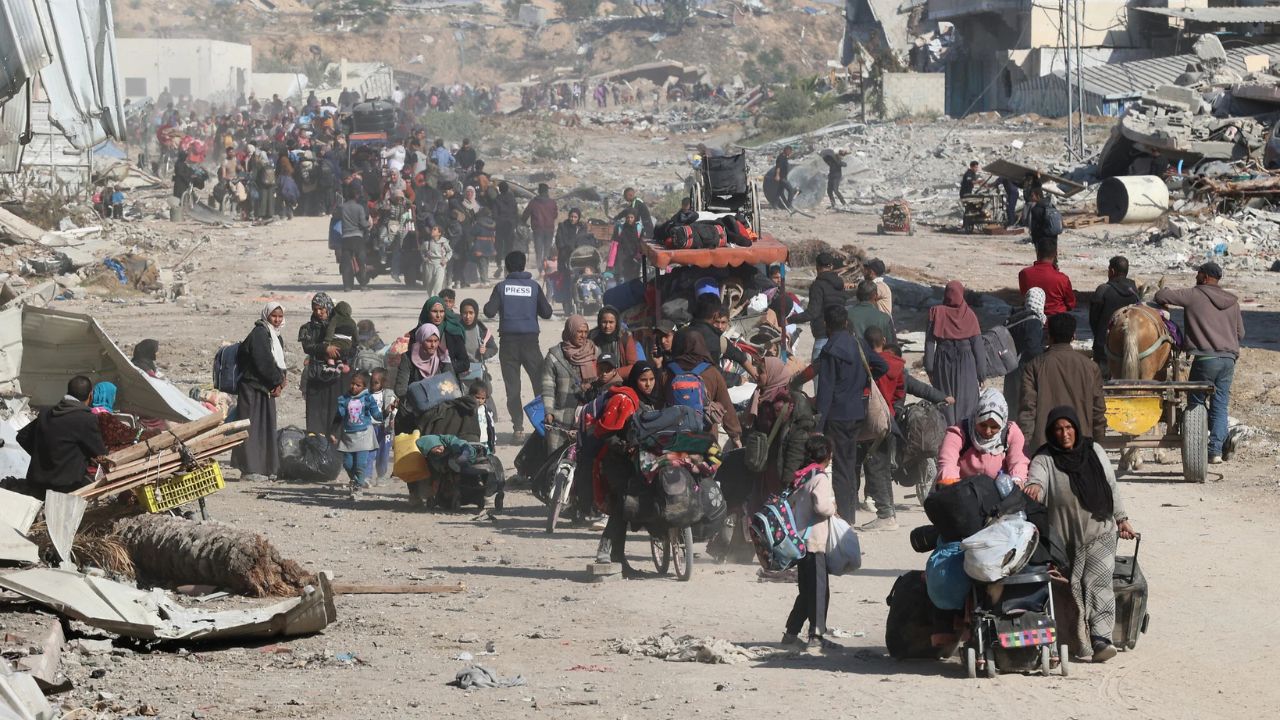
Among the total population of 2.3 million, 1.9 million Palestinians — approximately 85 per cent of the total population — have been internally displaced. People living in Northern Gaza were initially forced to flee their homes on short notice for “safety” to the south, but they were bombed again in the so-called safe south, and were once again forced to flee to
further south or the south west, and have been to live in makeshift tents with no water, sanitation or other facilities.
This situation has thus been declared as the Second Nakba as it resembles the ethnic cleansing of Palestinians by the Israelis in 1948.
Women of Gaza
Credit: Al Jazeera
The United Nations has estimated 50,000 pregnant women presently living in Gaza, with more than 180 births taking place every day despite the lack of health facilities.
Similarly, women have also resorted to norethisterone tablets (that are usually prescribed in times of severe menstrual bleeding, endometriosis, and painful periods) as they are internally displaced, living in poor conditions among a large number of people with no privacy, and having no access to water or menstrual hygiene products like sanitary napkins and/or tampons.
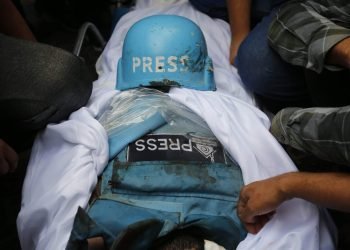
November was deemed as the deadliest month for journalists when at least 50 were killed. According to the Committee to Protect Journalists (CJP), as of January 11, 79 journalists and media workers have been killed among whom are 72 Palestinian, 4 Israeli, and 3 Lebanese whereas three journalists are reported missing and 21 arrested.
Additionally, multiple assaults, threats, cyberattacks, censorship, and killings of family members have also been recorded.
Moreover, literary figures like Heba Abu Nada and Dr Refaat Alareer, who were vocal against Israel, have also been killed in targeted attacks.
Hostages
Hamas took Israeli hostages on October 7 in order to prompt Israel to return Palestinian hostages who have been in Israeli captivity since years.
While Israel has portrayed Hamas as barbaric, Israeli hostages released have had different stories to tell. Danielle Aloni and her daughter Emilia were held hostage by Hamas for 49 days and on their release on November 24, Aloni wrote a “thank you” letter to Hamas saying, “I thank you from the bottom of my heart for your extraordinary humanity shown towards my daughter, Emilia.”
Similarly, in an interview, Hin and Ajam, another mother-daughter duo, told that they were kept together and that the militants were respectful to them, taking every precaution to make them comfortable.
On the contrary, Palestinians have returned from Israeli captivity physically and mentally tortured while some have reportedly died in detention.
Back in December, Israeli troops even “mistakenly” killed three Israeli hostages in the course of combat with Hamas in the Gaza Strip on Friday.
As of January 11, the arrests of Palestinians in the Occupied West Bank reached up to 5,810 since October 7.
According to figures released in December, at least 8,800 Palestinians, including 80 women, were held at Israeli prisons.
These arrests are reportedly “marked by abuse, severe beatings, and threats against detainees and their families, in addition to widespread acts of sabotage and destruction of citizens’ homes”. Many are even targeted and shot by the Israeli soldiers.
Additionally, in November 2023, it was reported that around 390,000 Palesinians jobs were lost — 182,000 in Gaza and 208,000 in the occupied West Bank.
In December, the US State Department approved the emergency sale to Israel of nearly 14,000 rounds of tank ammunition — a sale of 13,981 high-explosive 120mm tank cartridges and related equipment worth $106.5 million.
The State Department said the secretary of state had determined that “an emergency exists that requires the immediate sale to the Government of Israel” of the weaponry, thereby waiving the normal requirement of Congressional review.
Israel vs Middle East
Since the war began, Hezbollah, a close ally of the Palestinian group Hamas, and Israel have been engaged in intense fighting.
In December, The United States announced a 10-nation coalition to end Houthi attacks on ships transiting the Red Sea, with Britain, France, Bahrain and Italy among countries joining the “multinational security initiative.”
The U.S. and British Air Force, in fact, have launched airstrikes against Yemen in retaliation which the American president Joe Biden called it a success, adding that he will “not hesitate to direct further measures to protect our people and the free flow of international commerce as necessary.”
On the other hand, Israel and Hezbollah have been exchanging fires across the Lebanese border, the West Bank since 7 October.
On Day 60 since October 7, United Nations Secretary-General António Guterres, in a rare move, invoked Article 99 of the UN Charter “to bring to the attention of the Security Council a matter, which in my opinion, may aggravate existing threats to the maintenance of international peace and security.” He also reiterated his call in the letter he sent to the rotating president of the Council for a “humanitarian ceasefire” and urged the Council to “avert a humanitarian catastrophe.”
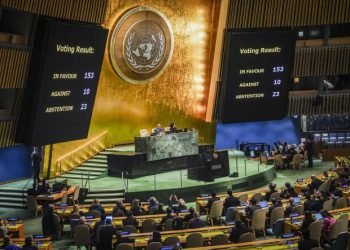
Nonetheless, like any other UN action, it was merely a political move with no legal implications — same as the UN Resolutions calling for a ceasefire in Gaza the past few months since October 7. With more than 100 countries voting in support of the ceasefire, the resolution ended in vain since the US and a couple of its allies chose to vote against it.
On the other hand, while powerful Muslim countries have sided with Palestine, their support has, however, been shallow. For instance, in November, the Saudi Minister of Investment, Khalid bin Abdulaziz al-Falih, remarked that the Kingdom was still willing to consider normalising relations with Israel, depending on a peaceful solution to the Palestinian issue. And when asked if Saudi Arabia would use economic devices like oil to push for a ceasefire in the Gaza Strip, he reportedly laughed and replied: “This is not on the table today. Saudi Arabia is trying to achieve peace through talks that seek peace.”
South Africa vs Israel
Credit: Al Jazeera
South Africa filed a case in the International Court of Justice (ICJ) in The Hague, Netherlands, asking the court to look into the genocide being committed by Israel against Palestinians.
The imposition of charges did not only pertain to the crimes perpetrated during the last few months since October 7 that have killed more than 23,000 people till now, but also the 75-year long apartheid, 56-year hostile occupation, and 16-year blockade on Gaza.
Israel was accused of committing genocidal acts during their military operations which included mass killings of Palestinians, bodily and mental harm, forced displacement and food blockade, destruction of the healthcare system, and preventing Palestinian births.
It is, however, pertinent to note, that while this case can take years, an “interim measure” intended to halt Israel’s attack in Gaza can be taken “within weeks”. If the interim measure is implemented, Israel will be legally obligated to put an end to its offences. And while the “court’s rulings are final”, it has no authority to impose them, nonetheless.
On the other hand, if the court does not implement an interim measure, “it could still decide it has jurisdiction and proceed with the case”.
Post-war Gaza Plans
Israel’s defence minister publicly presented proposals for the post-war administration of Gaza i.e. after it has dismantled Hamas’s “military and governing capabilities” and secured the return of hostages.
According to the minister, after the objectives are achieved — for which the proposal sets no timeline — Palestinian “civil committees” will begin assuming control of the territory’s governance.
“Hamas will not govern Gaza, (and) Israel will not govern Gaza’s civilians,” the plan said, while offering little concrete detail.
“Palestinian bodies will be in charge, with the condition that there will be no hostile actions or threats against the State of Israel.”
American and British forces have launched fresh raids on Yemen’s capital, Houthi rebel forces confirmed on Saturday, a day after the allies carried out dozens of strikes on the country.
The latest raids targeted Al-Dailami airbase in Sanaa, which has been under Houthi control since 2014, a statement released on their official media stated. “The American-British enemy is targeting the capital, Sanaa, with a number of raids,” Al-Masirah TV posted on X, formerly Twitter, citing its correspondent in Sanaa.”The American-British aggression targeted the Al-Dailami base in the capital, Sanaa,” it added.
Raids on Yemen follow weeks of Houthi attacks on Israel’s ships in the commercial Red Sea in protest against the war on Gaza.
The strike on a Houthi radar site comes a day after scores of attacks across the country heightened fears that Israel’s aggression on Gaza could engulf the whole Arab region.
The Houthis warned that US and British interests were “legitimate targets” after the initial strikes. Britain, the United States and eight allies said strikes carried out on Friday had aimed to “de-escalate tensions”, but the Houthis vowed to continue their attacks. Hussein al-Ezzi, the rebels’ deputy foreign minister, said the United States and Britain would “have to prepare to pay a heavy price”.
The rebels have controlled much of Yemen since a civil war erupted in 2014 and are part of the “axis of resistance” against Israel and its allies.
Violence involving these groups in Yemen, Lebanon, Iraq, and Syria has surged since the war in Gaza began in early October.
BREAKING: Massive United States fleet of warships seen off the coast of Yemen.
The mainstream media does not want you to SHARE this!
UN chief Antonio Guterres called on all sides “not to escalate” in the interest of regional peace and stability, his spokesman Stephane Dujarric said.
The UN Security Council held an emergency meeting on Friday, days after adopting a resolution demanding the Houthis immediately stop their attacks.
At the meeting, US Ambassador Linda Thomas-Greenfield warned that no ship was safe from the threat posed by Houthis to shipping in the Red Sea.
Russian ambassador Vassili Nebenzia denounced the “blatant armed aggression” against the entire population of the country.
Red Sea attacks and the politics of the Middle East
The Houthis have intensified attacks on what they deem Israeli-linked shipping in the Red Sea- through which 12 percent of global maritime trade normally passes- since October 7.
The United States and Britain launched strikes on Friday that targeted nearly 30 locations using more than 150 ammunitions, US General Douglas Sims said, updating earlier figures, and President Joe Biden said he did not believe there were civilian casualties.
Biden called the strikes a successful “defensive action” after the “unprecedented” Red Sea attacks and said he would act again if the Houthis continued their “outrageous behaviour”.
British Prime Minister Rishi Sunak said the Houthis’ breach of international law warranted the “strong signal”, with his government publishing its legal position justifying the strikes as lawful and “proportionate”.
Nasser Kanani, spokesman for Iran’s foreign ministry, said the Western strikes would fuel “insecurity and instability in the region” while “diverting” attention from Gaza.
The Houthis fired “at least one” anti-ship ballistic missile in retaliation on Friday that caused no damage, according to Sims.
The United States said it did not seek conflict with Iran, with National Security Council spokesman John Kirby telling MSNBC there was “no reason” for an escalation.
Middle Eastern leaders voiced concern at the violence, with Turkish President Recep Tayyip Erdogan describing the strikes on Yemen as disproportionate and saying: “It is as if they aspire to turn the Red Sea into a bloodbath.”
Saudi Arabia said it “is following with great concern the military operations” and called for “self-restraint and avoiding escalation”. The kingdom is trying to extricate itself from a nine-year war with the Huthis, though fighting has largely been on hold since a truce in early 2022.
Palestinian freedom fighting group Hamas said it would hold Britain and the United States “responsible for the repercussions on regional security”.
‘Death to America’
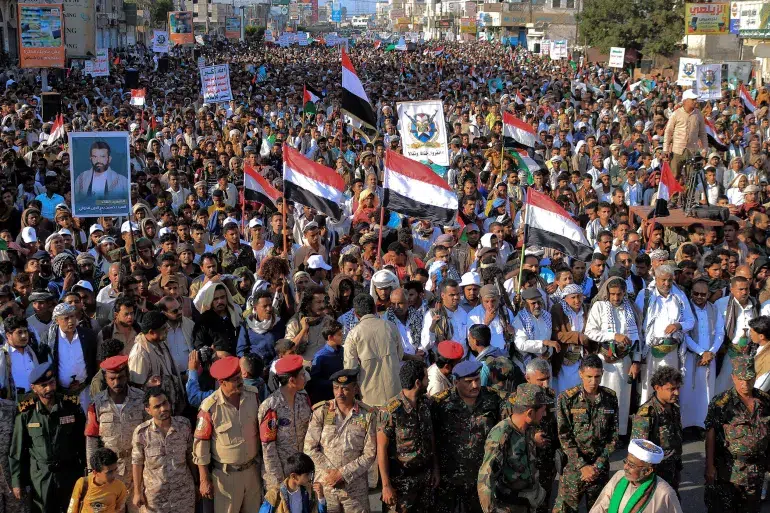
Hundreds of thousands of people, some carrying Kalashnikov assault rifles, gathered in Yemen’s capital Sanaa on Friday to protest, many waving Yemeni and Palestinian flags and holding portraits of Huthi leader Abdulmalik al-Huthi, an AFP journalist reported.
5 million people protested in Yemen today. Does The United States and Israel know what they got themselves into? This is terrifying, pic.twitter.com/MBRw9f8X5r
In Tehran, hundreds rallied against the United States, Britain, and Israel, burning the three countries’ flags outside the UK embassy while voicing support for Gazans and Yemenis, an AFP correspondent reported.
In Gaza, Palestinians lauded Houthi support and condemned Britain and the United States. “No one is standing with us but Yemen,” said Fouad al-Ghalaini, one of hundreds of thousands of Palestinians left homeless by Israel’s bombardment of Gaza City
India’s Mukesh Ambani lost the title of Asia’s richest man after almost a year. He has been replaced by Gautam Adani who once again became Asia’s richest man after cracking a deal worth over half a billion dollars for the Adani group.
It should be noted that in January 2023, American short-selling company Hindenburg said in a report that Adani Group has been involved in stock market manipulation and fraud accounting for decades. It called Gautam Adani the biggest fraudster in corporate history.
Gautam Adani’s wealth declined after the report, pushing him to the bottom of the list of the world’s richest people in 2023, while Mukesh Ambani took the title of Asia’s richest person.
But in recent days, the Supreme Court of India has issued an order that there is no need for a new investigation on Hindenburg’s allegations. Gautam Adani’s assets consequently increased and now he has once again become the richest man in Asia.
According to a Bloomberg report on January 4, Gautam Adani’s net worth increased by $7.7 billion to $97.6 billion, after which he overtook Mukesh Ambani to become Asia’s richest man. Ambani currently owns $97 billion.
Gautam Adani started 2023 as the third richest person in the world with $119 billion and then went down after a steady decline in wealth. Now, a year later, he has become the richest person in Asia and the 12th richest person in the world.
Syed Mohammad Ali wrote in an article for The Express Tribune that the deal with the USA is part of the greater scheme of countering China’s growing influence in the region. Half a billion dollars is a sign of the restoration of confidence for the Adani conglomerate-backed Colombo seaport project in Sri Lanka.
“This American deal with Adani seems compelled by growing great power competition across South Asia. The US government intends to use its International Development Finance Corporation to counter the Chinese Belt and Road Initiative in the Indo-Pacific, and its investment in Sri Lanka is part of that plan,” asserts Ali. Adani is closely linked to Prime Minister Narendra Modi and he has long been accused of benefitting from this friendship for the growth of his business. Like Modi, Adani has emerged unscathed from a potentially devastating storm of alleged wrongdoings. And both these men have the US to thank for helping them not only survive but thrive, due to America’s own vested interests, Ali explains.
Iran blamed Israel and the United States on Wednesday for twin bomb blasts that killed more than 100 people in the country’s south, ripping through a crowd commemorating Revolutionary Guards general Qassem Soleimani four years after his death in a US strike.
The two explosions – labelled a “terrorist attack” by state media and regional authorities – came amid high Middle East tensions over the Israel-Hamas war in Gaza and the killing of a Hamas senior leader in Lebanon on Tuesday.
The unclaimed attacks, which sparked fears of a widening conflict in the region, rattled global markets, where oil prices jumped more than three percent and sparked global condemnation.
“Washington says USA and Israel had no role in terrorist attack in Kerman, Iran. Really? A fox smells its own lair first,” the Iranian president’s political deputy, Mohammad Jamshidi, wrote on X, formerly Twitter.
“Make no mistake. The responsibility for this crime lies with the US and Zionist regimes (Israel) and terrorism is just a tool,” he added.
The United States had earlier rejected any suggestions that it or ally Israel were involved while Israel declined to comment.
“The United States was not involved in any way … We have no reason to believe that Israel was involved in this explosion,” State Department spokesman Matthew Miller said.
Asked about the blasts, Israeli army spokesman Daniel Hagari said: “We are focused on the combat with Hamas”.
Iran’s supreme leader Ayatollah Ali Khamenei blamed “evil and criminal enemies” of the country for the attack and vowed a “harsh response”.
President Ebrahim Raisi, who scrapped a visit to Turkey on Thursday, condemned the “heinous” crime as Iran declared Thursday a national day of mourning.
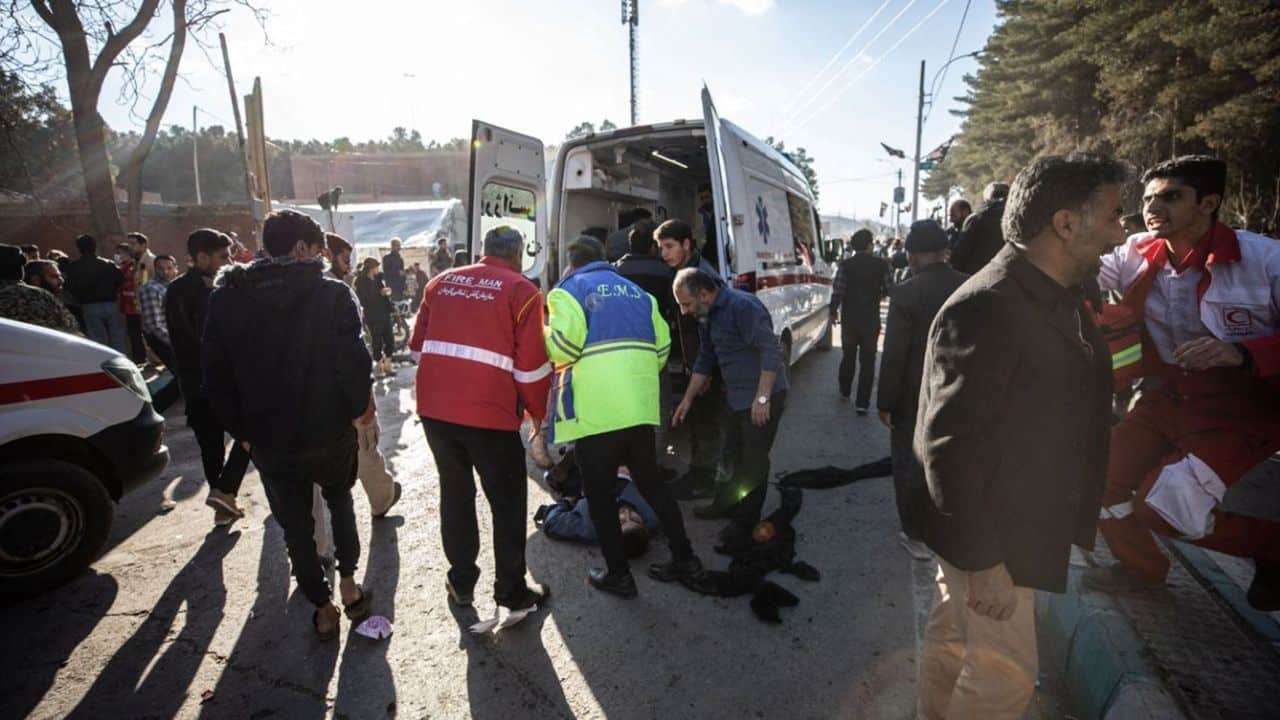
The blasts, about 15 minutes apart, struck near the Martyrs Cemetery at the Saheb al-Zaman Mosque in Kerman, Soleimani’s southern hometown, as supporters gathered to mark his killing in a 2020 US drone strike in Baghdad.
Tehran’s official news agency IRNA quoted Interior Minister Ahmad Vahidi as saying that “according to forensic statistics, the number of martyrs from this incident has been announced as 84 so far”.
The death toll was also confirmed by the head of Iran’s emergency services, Jafar Miadfar, who said an earlier tally of 95 was due to the fact that some bodies had been dismembered and counted “several times”.
Miadfar said 284 people had been injured and “195 are still hospitalised”.
Three paramedics who rushed to the scene after the first explosion were among those killed, said Iran’s Red Crescent.
IRNA said the first explosion took place around 700 metres from Soleimani’s grave while the other was around 1 kilometre away.
Tasnim news agency, quoting what it called informed sources, said that “two bags carrying bombs went off” and “the perpetrators … apparently detonated the bombs by remote control”.
Online footage showed panicked crowds scrambling to flee as security personnel cordoned off the area.
‘Shocking cruelty’
State television showed bloodied victims lying on the ground and ambulances and rescue personnel racing to help them.
“We were walking towards the cemetery when a car suddenly stopped behind us and a waste bin containing a bomb exploded,” an eyewitness was quoted as saying by the ISNA news agency.
“We only heard the explosion and saw people falling.”
By nightfall, crowds returned to the Martyrs Cemetery in Kerman chanting: “Death to Israel” and “Death to America”.
In Tehran, thousands gathered at the Grand Mosalla Mosque to pay tribute to Soleimani.
“We condemn today’s bitter terrorist incident … I hope the perpetrators of the crime will be identified and punished for their actions,” Soleimani’s daughter, Zeinab, said.
Soleimani headed the Quds Force, the foreign operations arm of the Islamic Revolutionary Guards Corps, overseeing military operations across the Middle East.
The United Nations, European Union, and several countries including Saudi Arabia, Jordan, Germany and Iraq denounced the blasts.
UN chief Antonio Guterres “strongly condemns” the blasts, his office said, and the EU said: “This act of terror has exacted a shocking toll of civilian deaths and injuries.”
The EU’s top diplomat, Josep Borrell, said that he spoke to Iranian Foreign Minister Hossein Amir-Abdollahian to “convey condolences” and “condemned this terrorist attack in the strongest terms and expressed solidarity with the Iranian people”.
Russian President Vladimir Putin wrote to Raisi and Khamenei that “the killing of peaceful people visiting the cemetery is shocking in its cruelty and cynicism”.
Iran ally Hamas denounced the “criminal attack” while the Saudi foreign ministry in Riyadh voiced “solidarity with Iran in this painful event”.
The blasts came a day after Hamas deputy leader Saleh al-Arouri – an Iran ally – was killed in a strike, which Lebanese officials blamed on Israel, in a southern Beirut suburb that is a stronghold of Iran-backed armed group Hezbollah.
Wednesday’s bomb blasts were Iran’s deadliest since a 1978 arson attack at the Cinema Rex in the southwestern city of Abadan, which killed at least 377 people, according to AFP archives.
Previous plots
Iran has long fought a shadow war of killings and sabotage with archenemy Israel while also battling various jihadist and other militant groups.
In September, the Fars news agency reported that a key “operative” affiliated with the Islamic State (IS) group, in charge of carrying out “terrorist operations” in Iran, had been arrested in Kerman.
In July, Iran’s intelligence ministry said it had disbanded a network “linked to Israel’s spy organisation” that had been plotting “terrorist operations” across Iran, IRNA reported.
The alleged plots included “planning an explosion at the grave” of Soleimani, it said.
Soleimani, whom Khamenei years ago declared a “living martyr”, was widely regarded as a hero in Iran for his role in defeating IS in both Iraq and Syria.
Long seen as a deadly adversary by the United States and its allies, Soleimani was one of the most important powerbrokers across the region, setting Iran’s political and military agenda in Syria, Iraq and Yemen.
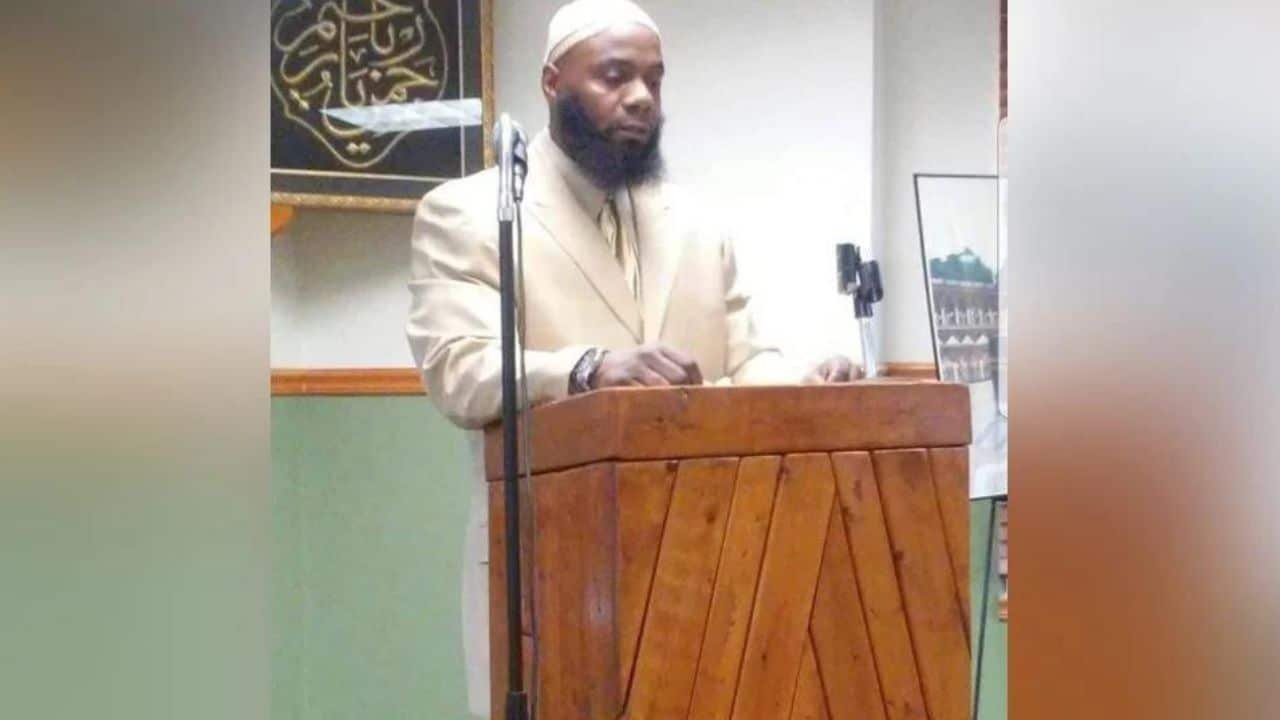
An imam who was shot Wednesday outside a mosque in New Jersey has died, the US state’s attorney general said, adding that the killing did not initially appear to be driven by “bias” or domestic terrorism.
The shooting was reported at Masjid Muhammad-Newark at South Orange Avenue.
Imam Hassan Sharif was shot multiple times near a mosque in Newark, just west of New York, before being taken to hospital where he later died, New Jersey Attorney General Matt Platkin said.
“We do not yet know the motivation for this crime (but) the evidence collected thus far does not indicate that this was an act motivated by bias, or an act of domestic terrorism,” said Platkin.
He added that “in light of global events, and with a rise in bias that many communities are experiencing across our state — particularly the Muslim community — there are many in New Jersey right now who are feeling a heightened sense of fear.”
The state is home to 300,000 Muslim Americans, he said.
Since the outbreak of the War on Gaza, there has been an increase in Islamophobic and anti-Semitic attacks across the United States.
The Essex County prosecutor, Ted Stephens, confirmed Sharif was shot more than once, and that “it does not appear the imam was the victim of a bias crime or that this is related to terrorism.”
“We are dedicated to bringing justice for the imam’s family,” said Stephens, who called it a “dastardly crime.”
Famous Muslim scholar Dr. Omar Suleiman posted about the death of the Imam and paid tribute to him as a beloved Imam of the Newark Community.
Inna lillahi wa inna ilayhi rajioon.
Imam Hassan Sharif, a beloved Imam of the Newark community, was shot and killed outside of his masjid. We ask Allah SWT to grant him Al-Firdaws and to grant his family patience. May Allah protect our communities and imams. pic.twitter.com/xhnxQdK5l0
The United States Transportation Security Administration (TSA) earlier confirmed that Sharif had worked as a security screener at Newark airport since 2016.
“We are deeply saddened to learn of his passing and send our condolences to his family, friends and colleagues,” said Lisa Farbstein, a TSA spokeswoman.
Images published by the New Jersey chapter of the Council on American-Islamic Relations (CAIR) showed police vehicles deployed outside the Masjid Muhammad-Newark, a two-story yellow and green complex.
Our New Jersey chapter’s Communications Manager Dina Sayedahmed: “We are deeply concerned about this incident and pray for the speedy recovery of the imam.”https://t.co/oYAcyR7k92
In a statement, CAIR described Sharif as “a beacon of leadership and excellence.”
“As always, and irrespective of this specific incident, we advise all mosques to keep their doors open but remain cautious, especially given the recent spike in anti-Muslim bigotry,” the organization said.
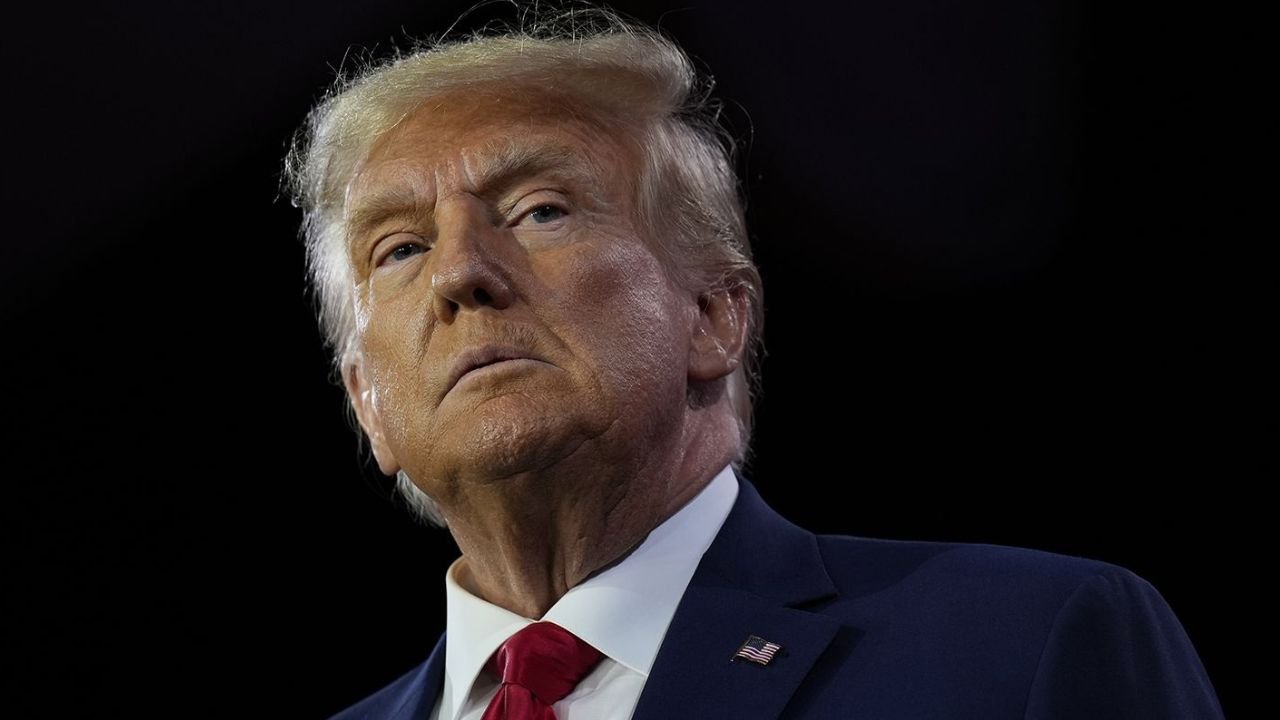
Colorado’s Supreme Court has issued a verdict so sting that former United States President Donald Trump is ineligible to run for the White House because of his role in the January 6, 2021, attack on the Capitol by his supporters, and should be removed from the state’s primary ballot.
While the ruling only applies to Colorado, it is the first time in US history that Section 3 of the 14th Amendment, which bars from public office anyone who “engaged in insurrection”, has been used to disqualify a presidential candidate. It comes as courts in other states consider similar legal actions.
“A majority of the court holds that President Trump is disqualified from holding the office of President under Section Three of the Fourteenth Amendment to the United State’s Constitution,” the Colorado high court wrote in its four-three majority decision.
“Because he is disqualified, it would be a wrongful act under the Election Code for the Colorado Secretary of State to list him as a candidate on the presidential primary ballot.
“We do not reach these conclusions lightly,” they added.
Trump has claimed he is the victim of political persecution.
“We are mindful of the magnitude and weight of the questions now before us,” the Colorado justices said. “We are likewise mindful of our solemn duty to apply the law, without fear or favor, and without being swayed by public reaction to the decisions that the law mandates we reach.”
A lower court earlier found that while Trump incited an insurrection, he could not be barred from the ballot because it was unclear that the 14th Amendment was intended to cover the presidency.
Washington (AFP) – The United States said Tuesday it would refuse visas for extremist Israeli settlers behind a wave of violence against Palestinians in the West Bank, as it also asked Israel to do more to spare civilians in Gaza.
The visa measures amount to a rare concrete repercussion by the United States against Israelis in the nearly two-month-old war, in which President Joe Biden has nudged the US ally privately but also promised strong support.
“We have underscored to the Israeli government the need to do more to hold accountable extremist settlers who have committed violent attacks against Palestinians in the West Bank,” Secretary of State Antony Blinken said in a statement.
“As President Biden has repeatedly said, those attacks are unacceptable,” he said.
Blinken said the United States would refuse entry to anyone involved in “undermining peace, security or stability in the West Bank” or who takes actions that “unduly restrict civilians’ access to essential services and basic necessities.”
“Instability in the West Bank both harms the Israeli and Palestinian people and threatens Israel’s national security interests. Those responsible for it must be held accountable,” Blinken said.
State Department spokesman Matthew Miller said that dozens of settlers, who were not publicly named, would be affected. The visa ban also applies to their immediate family members.
Restrictions on entering the United States will not apply to extremist settlers who are US citizens.
Wave of violence
Hamas militants stormed out of Gaza into Israel on October 7, killing around 1,200 people, mostly civilians, and taking around 240 hostages, according to Israeli officials.
In response, Israel vowed to destroy Hamas and has carried out air strikes and a ground offensive that have killed around 15,900 people, mostly women and children, according to the Hamas-run health ministry.
Even though Hamas does not control the West Bank, some 250 Palestinians have been killed there by Israeli soldiers and settlers since October 7, according to a Palestinian government tally.
The Palestinian Authority holds limited autonomy in the West Bank where Palestinians have complained of impunity over attacks and harassment carried out by settlers, some of whom have been serving in the Israeli military as forces are shifted to Gaza.
Prime Minister Benjamin Netanyahu is in a coalition with far-right parties that strongly support Jewish settlement of lands seized in 1967, construction that is considered illegal under international law.
Blinken visited both Israel and the West Bank last week just as a pause ended between Hamas and Israel.
The State Department said that Israel has shown “improvement” in targeting its strikes in Gaza as it voiced concern about a repeat of the widespread bombing at the start of the war.
“We will continue to monitor what’s happening and will continue to press them to do everything they can to minimize civilian harm,” said Miller, the State Department spokesman.
The United States has also promised more than $100 million in humanitarian aid to the Palestinians but has faced strong criticism in much of the Arab world for its diplomatic and military support of Israel.
J Street, the left-leaning pro-Israel US group that is frequently critical of Netanyahu, praised the visa restrictions as an “important first step.”
It said that the Biden administration should specifically restrict two far-right ministers in Netanyahu’s cabinet, Minister for National Security Itamar Ben-Gvir and Finance Minister Bezalel Smotrich.
Before entering politics, Ben-Gvir hung a portrait in his living room of Baruch Goldstein, the US-born settler who killed 29 Palestinian worshippers at a mosque in the West Bank city of Hebron.
The Biden administration has returned to the traditional US and international position of opposing settlements, although until now its stance has largely been rhetorical.
Previous president Donald Trump switched course, with Blinken’s predecessor Mike Pompeo dropping objections to settlements and visiting one late in his term.
Washington (AFP) – An Indian national has been charged with plotting to assassinate a Sikh separatist leader on US soil, the Justice Department said on Wednesday, alleging an Indian government official was also involved in the planning.
The Justice Department unsealed murder-for-hire charges against Nikhil Gupta, 52, “in connection with his participation in a foiled plot to assassinate a US citizen” of Indian origin in New York City, it said in a statement.
The man allegedly targeted in the killing “is a vocal critic of the Indian government and leads a US-based organization that advocates for the secession of Punjab,” a northern Indian state with a large population of Sikhs.
An Indian government official, directing the plan from India, worked with Gupta and others based around the world, the US government said.
Gupta, who lives in India, was arrested by authorities in the Czech Republic under US extradition orders.
The news comes after the White House said last week it was treating an alleged plot to assassinate a Sikh separatist on American soil with “utmost seriousness,” and had raised the issue with the Indian government.
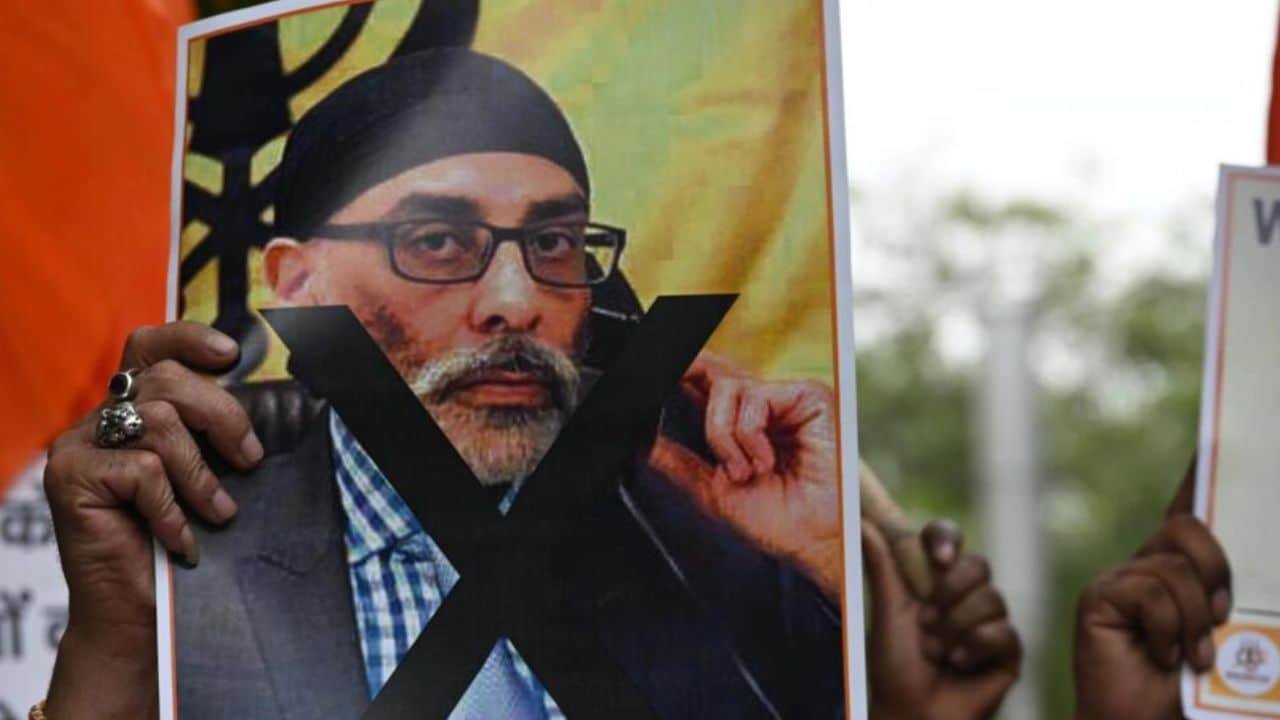
The Financial Times reported that same day that US authorities had thwarted a conspiracy to kill Gurpatwant Singh Pannun, a US and Canadian citizen.
After Wednesday’s news broke, Pannun said in a statement that “the attempt on my life on American soil is the blatant case of India’s transnational terrorism which has become a challenge to America’s sovereignty and threat to freedom of speech and democracy.”
The Justice Department, which did not identify the target of the alleged assassination attempt on Wednesday, said that Gupta was recruited into the effort in May 2023.
Canada and India had a major diplomatic row after Canadian Prime Minister Justin Trudeau in September linked New Delhi to the killing of Canadian citizen Hardeep Singh Nijjar, also a Sikh separatist, in June.
New Delhi called the Canadian allegations “absurd.”
But Trudeau said Wednesday that “the news coming out of the United States further underscores what we’ve been talking about from the very beginning, which is that India needs to take this seriously.”
“The Indian government needs to work with us to ensure that we’re getting to the bottom of this,” he said.
Pannun said that “first by assassinating Nijjar in Canada and then attempting to assassinate me on US soil, India under [Prime Minister Narendra] Modi has extended to the foreign soils its policy of violently crushing the Sikhs movement for right to self-determination.”
The US Justice Department said that after Nijjar’s killing, Gupta told undercover US officials that there was “now no need to wait” on killing the New York City target.
An Indian government spokesman on Wednesday said that the United States has “shared some inputs pertaining to nexus between organized criminals, gun runners, terrorists and others.”
“We had also indicated that India takes such inputs seriously since they impinge on our national security interests,” the statement said, adding that a “high-level Enquiry Committee” was established on November 18 “to look into all the relevant aspects of the matter.”