Tag: Uzbekistan

  • Pakistan ‘least prepared country’ for digital education

    Pakistan ‘least prepared country’ for digital education

    Among the developing member countries of the Asian Development Bank (ADB), Pakistan ranks as the least prepared nation for digital education, according to the ADB’s report titled “Towards Mature Digital Education Ecosystems, the Digital Education Readiness Framework.” 

    The report underscores several areas where Pakistan needs improvement, including low internet connectivity (only 34.1 per cent of households are connected), slow fixed broadband speeds, high fixed line broadband costs, and limited rural electricity access.

    In contrast, Uzbekistan stands out as the most prepared country for digital education, closely followed by Indonesia. On the flip side, Pakistan is the least ready, with Fiji following suit. 

    Across all five evaluation pillars, the “Providers” category shows the lowest performance, with six out of the ten DMCs categorised as “initial” in readiness, including Cambodia, Bangladesh, the Kyrgyz Republic, Mongolia, Pakistan, and Fiji (in descending order of scores). The remaining four countries are classified as “emerging” in readiness, comprising Indonesia, the Philippines, Viet Nam, and Uzbekistan.

    The gap between the model country’s normalised score and the highest-scoring country is a significant 45 points. While the 10 DMCs manage to keep mobile broadband costs relatively low as a per centage of GNI per capita, there is considerable variation in fixed broadband costs. 

    Cambodia, Indonesia, and Pakistan emerge as the least affordable in this aspect, while Bangladesh, Mongolia, and Uzbekistan offer more cost-effective solutions.

    In terms of urban electricity access, most countries excel, with nearly 100 per cent of urban households having access to electricity. Rural electricity access in the 10 DMCs ranges from 90 per cent to 100 per cent, with Pakistan lagging behind at just 41.3 per cent of rural households lacking access to electricity.

    Households with TV coverage are relatively high across the board, averaging 81.7 per cent. Cable TV subscriptions per 1,000 individuals vary from low to moderate among the countries studied, with Pakistan having the highest subscription rate.

    Pakistan’s National Education Policy for 2017–2025 focuses on enhancing ICT access in schools, using ICT to improve teaching quality and student learning, and developing complementary ICT approaches. However, it lacks clarity on access to devices.

    Teacher training in ICT skills, particularly for online education delivery, is lacking. Although teachers do create their own educational content, it tends to be basic, such as documents and presentations. Internet quality varies, with schools having some limitations in handling heavier content, while higher education and TVET teachers enjoy better quality.

    Institutional support for teachers in delivering online education requires improvement, particularly in schools, where paper-dependent systems are prevalent. Students in Pakistan exhibit reasonable proficiency in digital skills, but access to devices at home is limited, with smartphone access being the primary means.

    The utilisation of private EdTech platforms for conducting classes or interacting with students is quite low among teachers. Pakistan also has a relatively small share of ICT graduates among tertiary education graduates.

    Pakistan, as a partner state of the Global Partnership for Education (GPE), has utilised GPE grants for tech tools to deploy teachers where needed and introduced apps for teacher attendance in certain regions. These initiatives aim to support distance learning across the country.
  • India invites Pakistani FM Bilawal Bhutto-Zardari to SCO

    India invites Pakistani FM Bilawal Bhutto-Zardari to SCO

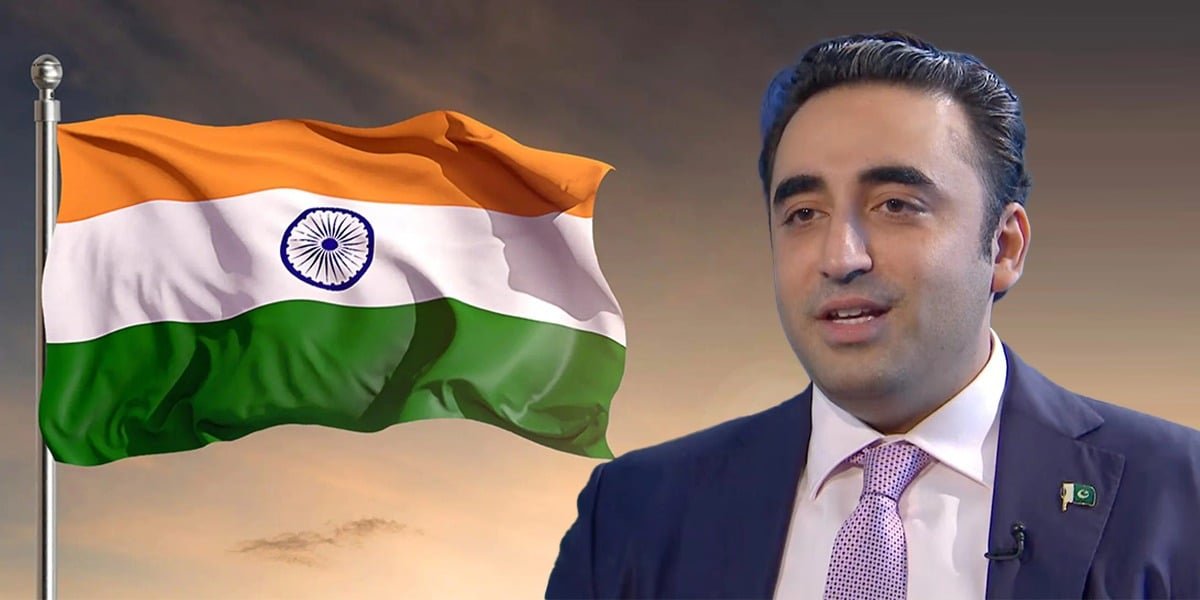
    In a surprise move, India has invited Pakistan’s Foreign Minister (FM) Bilawal Bhutto-Zardari to attend an upcoming meeting of the Shanghai Cooperation Organisation (SCO) scheduled to be held in Goa in May, The Indian Express has reported.

    The invitation to the meeting of SCO ministers has been sent by the office of S Jaishankar, the Minister for External Affairs and has been forwarded by the Indian High Commission in Islamabad.

    Were Bilawal Bhutto-Zardari to accept the invitation, the visit would mark the first visit of a Foreign Minister to India in 12 years. The last minister to visit the neighbouring country was Hina Rabbani Khar who travelled to India in July 2011.

    The unexpected development comes a few weeks after Prime Minister (PM) Shehbaz Sharif expressed hope that relations between the two arch rivals will improve. In an interview with a UAE-based media outlet, the Pakistani Premier asked for “sincere and serious” talks with India.

    The SCO moot in Goa will also be attended by China, Russia, Kazakhstan, Kyrgyzstan, Tajikistan and Uzbekistan.

  • Pakistan aims to build $8.2 billion rail link with Uzbekistan

    Pakistan aims to build $8.2 billion rail link with Uzbekistan

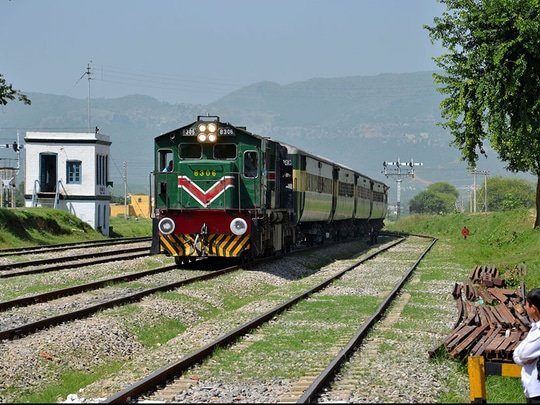
    Pakistan plans to build a rail link with Uzbekistan in an attempt to expand relations with Central Asian states. The project will roughly cost $8.2 billion.

    The decision to build the rail link was disclosed in a meeting of the Senate Standing Committee on Railways which was held at the Old PIPS Hall in the Parliament Lodges, reports SAMAA.

    The meeting was chaired by Senator Deputy Chairman Mirza Muhammad Afridi. The meeting was attended by Senator Dost Muhammad, Senator Shahadat Awan, Senator Mushtaq Ahmad, Railways Ministry Secretary Zafar Ranjha, and other concerned officers.

    During the meeting, Ranjha said that the government is deliberating on an Afghan Transit project which will link Pakistan with Uzbekistan.

    Uzbek Ambassador to Pakistan, Oybek Usmanov met with Finance minister Ishaq Dar in Islamabad on Saturday. During the meeting, he apprised the Uzbek Ambassador of the potential investment avenues in Pakistan.

    The Uzbek ambassador expressed the Uzbek government’s strong desire to improve trade, investment, and business relations with Pakistan on a variety of fronts.

  • ‘Jimmy Jimmy Aja Aja’, other desi songs played at Shangai Cooperation Organisation

    ‘Jimmy Jimmy Aja Aja’, other desi songs played at Shangai Cooperation Organisation

    Shanghai Cooperation Organisation (SCO) came to an end on Friday in Samarkand, Uzbekistan where at one point, eight world leaders attended the summit to the sounds of 80s Bollywood songs.

    A video was posted by journalist Sidhant Sibal on Thursday in which Indian songs “Jimmy Jimmy Aja Aja” and “I’m a disco dancer” were being played to welcome the SCO delegates.

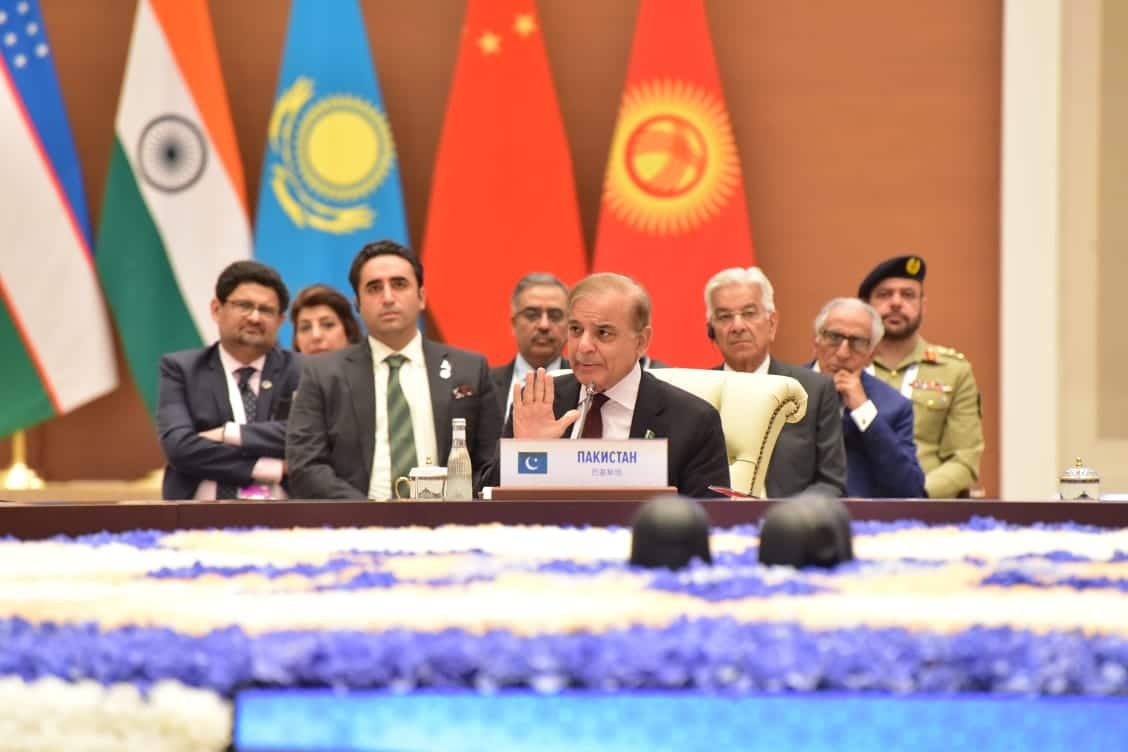
    This year’s summit was hosted by Uzbekistan from September 15-16. Many historic meetings took place at the SCO including the one between Pakistan PM Shehbaz Sharif and Russian President Vladimir Putin for the first time. Other memorable moments included PM Shehbaz interacting with officials in Tajiki, before starting a formal meeting with the country’s president.

    A highly anticipated meeting between Chinese President Xi Jinping and Putin also took place. Xi called Putin his “old friend”, but the mutually endorsing speeches of the two authoritarian heavyweights were muted.

    As expected, Indian PM Narendra Modi and his Pakistani counterpart Shehbaz Sharif did not have a one-on-one meeting as relations between the rival neighbors remained cold.

  • PM Shehbaz uses international platform to plead for action against climate change

    PM Shehbaz uses international platform to plead for action against climate change

    Prime Minister (PM) Shehbaz Sharif talked about the ongoing climate change devastation that has been caused by unprecedented floods across Pakistan at Shangai Cooperation Organisation (SCO) summit in Samarkand, Uzbekistan.

    In his speech, the premier stressed that his country’s contribution to the global carbon commission is only 1 per cent. “Our carbon emission is less than one per cent. Yet nature had this in store for us,” Shehbaz Sharif said.

    Moreover, he urged the world to formulate a well-thought-out and sustainable plan to prevent devastating episodes of climate change destruction in the future. “We are going to stand on our own feet but will this be the last time a country is going to fall victim to this devastation”, he asked, as he appealed to the SCO to “build a wall” against the menace of climate change.

    He concluded his speech by reaffirming Pakistan’s “strong and unwavering commitment” to advancing the objectives of the SCO.

    At the international forum, the premier urged the leaders not to ignore Afghanistan at this time.

    He stated that the world would have to work together to support all “good initiatives” in Afghanistan. “It will be a big mistake if we ignore Afghanistan this time around”, he warned.

    Moreover, PM Shehbaz asked the international community to support efforts to build a sustainable Afghan economy. “Unfreezing Afghanistan’s financial assets remains a crucial need in this regard”, he stressed.

    PM Shehbaz meets Chinese President Xi Jinping

    On Friday, PM Shehbaz met Chinese President Xi Jinping at SCO in Uzbekistan.

    In an official statement, the Chinese foreign ministry said that during the meeting, Xi pointed out that China and Pakistan are close neighbours “linked by mountains and rivers and with a shared future”.

    The two countries have all along stood with each other through thick and thin. No matter how the international situation evolves, China and Pakistan are always each other’s trustworthy strategic partners, the statement added.

    President Xi stressed that the two sides must continue to firmly support each other, foster stronger synergy between their development strategies, and harness the role of the Joint Cooperation Committee of the China-Pakistan Economic Corridor (CPEC) to ensure smooth construction and operation of major projects.

    On Thursday, Defence Minister Khawaja Asif said that PM Shehbaz had “very successful” talks with Russian President Putin and Chinese President Xi.

    “Both of them have officially invited Shehbaz Sharif to visit their countries. The prime minister has accepted both invitations. There will be a visit to China in November 2022,” the minister confirmed in a tweet.

    Earlier, it was reported that PM Shehbaz would meet Xi Jinping, the Chinese President. However, no plans have been announced of a meeting between the Pakistani Prime Minister and his Indian counterpart Narendra Modi, who is also attending the SCO.

    Shehbaz Sharif was also scheduled to meet Kazakhstan President Kassym-Jomart Tokayev later in the day.

    On Thursday, the prime minister met with Russian President Vladimir Putin, Turkish President Recep Tayyip Erdogan and Iran’s Ebrahim Raisi. He also met with the president of Tajikistan and Kagystan.

    Shehbaz Sharif declared his meetings with the world leaders on Thursday as “productive”.

    “It was a long but productive day in Samarkand. In my meetings with leaders of friendly countries, we agreed on enhancing trade and investment. I explained the flood ravages due to climate change. Food and energy shortages present a real challenge to our shared development agenda,” he tweeted.

    During the meeting with Putin, the Russian president said that pipeline gas supplies to Pakistan are possible, and that part of the necessary infrastructure is already in place.

    After the meeting with Putin, the premier also held a bilateral meeting with Tajikistan’s President Emomali Rahmon.

    The two leaders held wide-ranging talks covering all aspects of mutually beneficial bilateral cooperation, including regional and international issues.

    Shehbaz Sharif thanked Tajikistan for its support to flood affectees in Pakistan and shared details of the devastation caused by the massive floods.

    Since becoming a full member of SCO in 2017, Pakistan has been actively contributing and participating in the activities of the organisation.

  • Aik aur language: Shehbaz interacts with diplomats in Tajiki

    Aik aur language: Shehbaz interacts with diplomats in Tajiki

    Prime Minister (PM) Shehbaz Sharif on Thursday, September 15, reached Samarkand, Uzbekistan, to attend the annual meeting of the Shanghai Cooperation Organisation’s (SCO) Council of Heads of State (CHS) during a two-day visit.

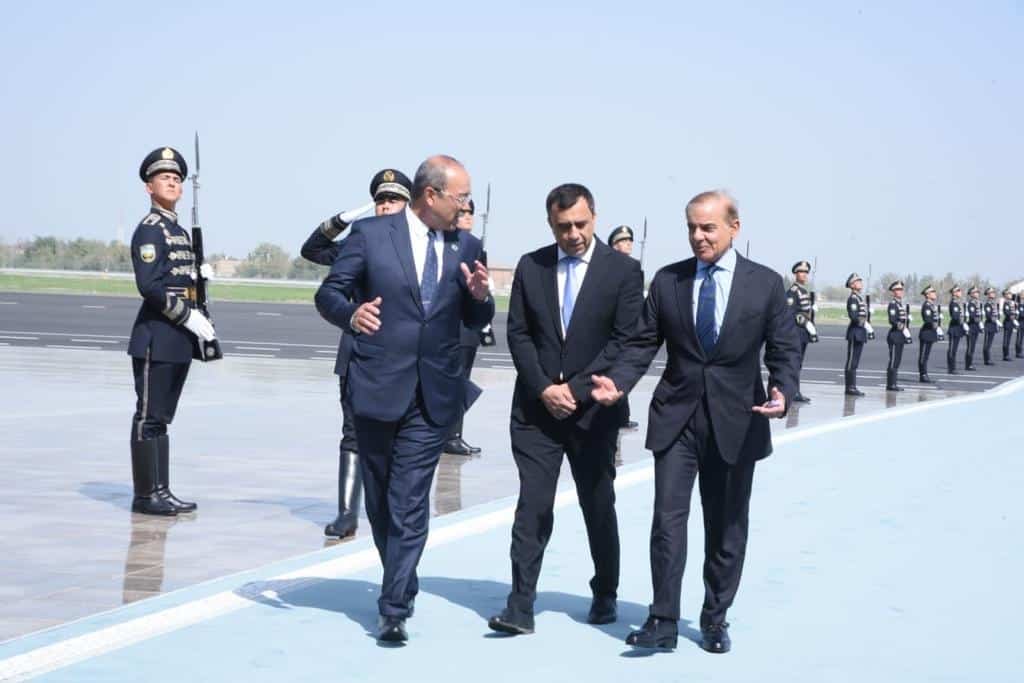
    Finance Minister Miftah Ismail, Foreign Minister Bilawal Bhutto Zardari and Defence Minister Khawaja Asif are also accompanying the premier. Uzbekistan PM Abdulla Aripov received Shehbaz Sharif upon his arrival at the airport.

    On the first day of his two-day visit, the Prime Minister will hold separate meetings with Uzbekistan President Shavkat Mirziyoyev and Tajikistan President Emomali Rahmon.

    The Prime Minister is expected to meet other world leaders including Russian President Vladimir Putin, Turkiye President Recep Tayyip Erdogan, Iranian President Ebrahim Raisi, Belarusian President Alexander Lukashenko, and Kyrgyz President Sadyr Japarov.

    PM Shehbaz met President of Tajikistan H.E Emamoli Rahmon in Samarqand, Uzbekistan.

    PM Shehbaz also interacted with officials in Tajiki, before starting the formal meeting with the president. PM’s Focal Person on Digital Media, Muhammad Abubakar Umer, shared the video on his Twitter account.

    Read more: Exclusive: You will not believe how many languages PM Shehbaz Sharif can speak

    The premier and Russian President H.E Vladimir Putin shook hands ahead of their meeting in Uzbekistan.

    Prime Minister Shehbaz Sharif also met President of Iran, Ebrahim Raisi in Samarqand, Uzbekistan.

    Before the summit, there was speculation that Indian Prime Minister (PM) Narendra Modi, who is also attending the summit, would hold bilateral talks with his Pakistani counterpart.

    However, Foreign Office Spokesman Asim Iftikhar told Dawn thar PM Shehbaz had no plans to meet Modi.

    It is being said that a brief courtesy meeting between the two was possible, however, they would not be holding talks as none of the sides had sought a meeting.

  • Indian PM Modi to attend regional summit along with PM Shehbaz

    Indian Prime Minister (PM) Narendra Modi and Pakistani Premier Shehbaz Sharif will take part in Shanghai Cooperation Organisation (SCO) summit which is due to take place on September 15 and 16 in Samarkand, Uzbekistan.

    New Delhi has not yet specified whether Modi would hold bilateral talks with his Pakistani counterpart, Russian President Vladimir Putin or Chinese President Xi Jinping.

    Earlier, in the SCO foreign ministers’ meeting, all of the ministers reiterated that the heads of SCO states would attend the summit.

    Foreign Minister (FM) Bilawal Bhutto, who had attended the meeting in Tashkent, said that a bilateral meeting between the Pakistani and Indian leaders is not scheduled.

    “There are no plans of any meetings between Indian and Pakistani prime ministers in September”, Bilawal revealed, adding that both India and Pakistan are part of the SCO and the two countries are only engaged in the context of the broad-based activities of the organisation.

    The foreign minister had said: “India is our neighbouring country. While one can decide on a lot of things, one cannot choose its neighbours, therefore, we should get used to living with them.”

    Other than this, it has been reported that Russian Putin and Chinese Xi would meet at the summit. China has refused to condemn Moscow’s invasion of Ukraine and has ramped up purchases of Russian oil.

  • PM Shehbaz likely to meet Narendra Modi at SCO summit

    PM Shehbaz likely to meet Narendra Modi at SCO summit

    Prime Minister (PM) Shehbaz Sharif is expected to have a meeting with his Indian counterpart Narendra Modi at the Shanghai Cooperation Organisation (SCO) summit, reports The News.

    The summit is scheduled to be held on September 15 and 16 in Samarkand, Uzbekistan.

    PM Shehbaz is likely to meet the country heads of China, Russia and Iran as well.

    Foreign Minister (FM) Bilawal Bhutto-Zardari attended  a meeting of the SCO FMs on July 28.

  • Olympian Talha Talib writes to weightlifting federation after positive dope test

    Olympian weightlifter Talha Talib has written a letter to the Pakistan Weightlifting Federation (PWF) after his dope test was found to be positive.

    In his letter to PWF, Talha wrote: “he had no idea about the presence of a prohibited substance in his body,” stating that he would “never even think of violating doping rules.”

    He further said: “he could have made an unintentional mistake, which could be due to lack of knowledge, and for that, he tenders apology to everyone ”.

    On April 8, Talha Talib failed to get a negative result of the dope test on which he got banned from taking part in the Birmingham Commonwealth games and the Olympics.

    Prior to this, Talha Talib won the country’s first-ever medal at the World Weightlifting Championship last year in Uzbekistan by winning a Bronze in the snatch event in the 67kg category. He has come into the limelight when he missed two points to get a medal for Pakistan in the last Olympics.