Tag: vaccination

  • Saudi Arabia says COVID-19 vaccination is ‘must’ for 2021 Hajj

    Saudi Arabia says COVID-19 vaccination is ‘must’ for 2021 Hajj

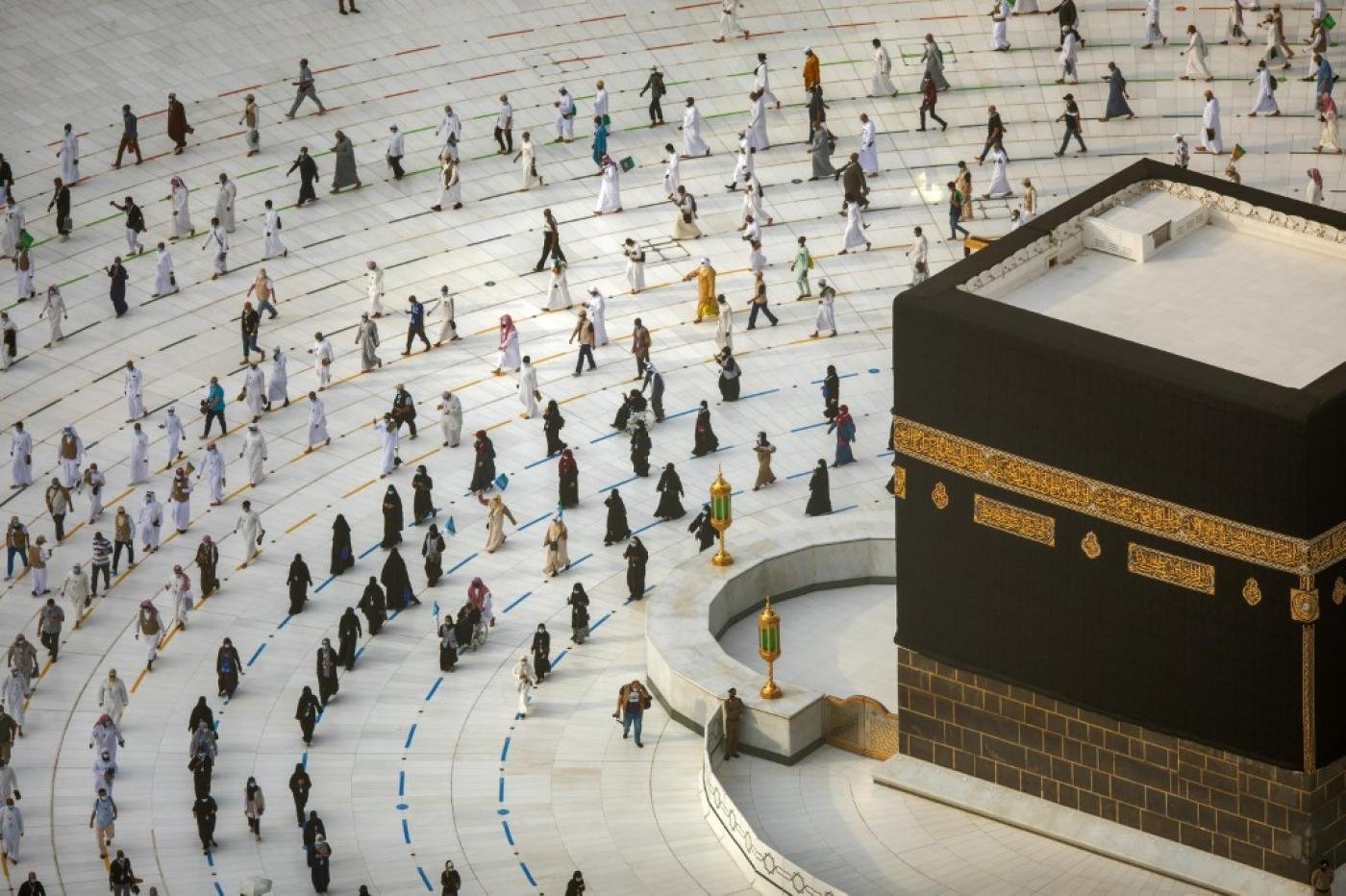
    Saudi Arabia’s Ministry of Health has said that only people who have been vaccinated against COVID-19 will be allowed to attend Hajj this year.

    “The COVID-19 vaccine is mandatory for those willing to come to Hajj and will be one of the main conditions [for receiving a permit],” read a statement signed by the Minister of Health.

    In 2020, the Kingdom reduced the number of pilgrims to around 1,000 to avoid the spread of the coronavirus barring Muslims from around the world from the rite for the first time in modern times.

    In the same notification, Saudi Minister of Health Dr Tawfiq al-Rabiah said the government must be prepared to “secure the manpower required to operate the health facilities in Mecca and Medina”.

    These facilities will be stationed at entry points for pilgrims, he said, in addition to a formation of a vaccination committee for pilgrims within Saudi Arabia.

  • ‘Fully vaccinated people can skip COVID-19 quarantines’

    ‘Fully vaccinated people can skip COVID-19 quarantines’

    People who have been fully vaccinated with two doses of either the Pfizer/BioNTech or Moderna vaccine against COVID-19 can skip quarantine if they are exposed to someone infected with the virus, the US Centers for Disease Control and Prevention (CDC) said Wednesday.

    However, the disease control body clarified that this doesn’t mean they should stop taking precautions, it’s just not necessary for them to go into isolation.

    “Fully vaccinated persons who meet criteria will no longer be required to quarantine following an exposure to someone with COVID-19,” the CDC said in an update.

    “Vaccinated persons with an exposure to someone with suspected or confirmed COVID-19 are not required to quarantine if they meet all of the following criteria,” the CDC added.

    The criteria for the vaccination is to have both shots with at least two weeks gap. That’s because it takes two weeks to build full immunity after the second dose of vaccine.

    But the CDC says it’s not known how long protection lasts, so people who had their last shot three months ago or more should still quarantine if they are exposed. They also should quarantine if they show symptoms, the CDC said.

    “This recommendation to waive quarantine for people with vaccine-derived immunity aligns with quarantine recommendations for those with natural immunity, which eases implementation,” the CDC said. The agency will update guidance if there is any further development.

    People who have been vaccinated should still watch for symptoms for 14 days after they have been exposed to someone who is infected, the CDC added.

    The body further said that everyone, vaccinated or not, needs to follow all other precautions to prevent the spread of the virus because it’s possible that even vaccinated people could harbour the virus in their noses and throats, and pass it to others.

    “At this time, vaccinated persons should continue to follow current guidance to protect themselves and others, including wearing a mask, staying at least 6 feet away from others, avoiding crowds, avoiding poorly ventilated spaces, covering coughs and sneezes, washing hands often, following CDC travel guidance, and following any applicable workplace or school guidance, including guidance related to personal protective equipment use or SARS-CoV-2 testing,” the agency said.

    Vaccines prevent symptomatic illness but they have not yet been shown to prevent asymptomatic illness, the CDC noted. While people with no symptoms can spread coronavirus, the CDC said, “symptomatic and pre-symptomatic transmission is thought to have a greater role in transmission than purely asymptomatic transmission.”

    Plus, the benefits of not unnecessarily forcing people into lockdown for two weeks may outweigh the risks of transmission in these cases, the CDC said.

  • Sindh health official suspended after out-of-turn vaccination of PML-N leader’s daughter

    Sindh health official suspended after out-of-turn vaccination of PML-N leader’s daughter

    The Sindh government has suspended a senior health official over out-of-turn vaccination of Pakistan Muslim League-Nawaz (PML-N) leader and former Sindh governor Muhammad Zubair’s daughter and son-in-law against COVID-19.

    As per the details, Sindh Health Minister Dr Azra Pechuho took notice of the incident after the couple posted on social media pictures of them receiving the vaccination shots.

    Reports quoted provincial government sources as saying that Karachi East Deputy District Health Officer Dr Anila was suspended as coronavirus vaccines were administered to acquaintances at other centres as well.

    A three-member committee has been formed to report its findings to the Sindh health minister within 72 hours.

    “If Mohammad Zubair had his family administered the vaccines privately then there is nothing wrong in it,” Information Minister Shibli Faraz told SAMAA TV.

    “But if it were the government-procured vaccines, then this was not the right thing to do,” he added.

    Earlier, a team of the National Command and Operation Centre (NCOC) led by Dr Faisal Sultan also met Sindh health officials and Planning Minister Asad Umar on Sunday.

    It directed the Sindh government to only vaccinate frontline health workers for now.

    The Sindh government on Friday had announced launching COVID-19 vaccination programme in 10 districts of the province and unveiled a detailed phase-wise plan to inoculate people, beginning with 170,000 frontline health workers.

    According to Dawn, In addition to the 82,359 doses to be received from the Centre, the provincial government also shared its plan for the procurement of the vaccine on its own though federal authorities are yet to respond to its request for permission for the procurement.

    “We are starting the vaccination from Wednesday [next],” Sindh Information Minister Syed Nasir Hussain Shah at a press conference. He was accompanied by a member of the Sindh vaccination taskforce and provincial lawmaker Qasim Soomro.

    Shah said 10 districts had been identified in Sindh where COVID-19 jabs would be provided. “This programme will be initiated in all the seven districts of Karachi along with Hyderabad, Jamshoro and Shaheed Benazirabad.

  • Will Pakistan get enough COVID-19 vaccines?

    Will Pakistan get enough COVID-19 vaccines?

    “If we are lucky to find a vaccine at $6-10 per dose, we would need a total of $540 to 900 million to acquire 90 million doses. Notwithstanding the existing allocation of $150 million and some vaccines as aid, it means that we are going to need much more money.”

    Will Pakistan get enough COVID-19 vaccines?

    Before we answer this question, we need to know how many vaccines we need. Pakistan has set a target to vaccinate 70 million people, out of its population of more than 220 million, to achieve “herd immunity”. Most of the COVID-19 vaccines in the market require two doses to be administered to each person. This means that we need at least 140 million doses, not taking into account any wastage.

    The next question we should ask is how many different vaccines there are in the market. So far, at least seven vaccines have been approved, out of which five have been approved for use outside their country of approval, including those by Pfizer, Moderna, Oxford-AstraZeneca, Sinopharm and Sputnik V. A number of other vaccines are in advanced stages of approval, including those by Johnson & Johnson, Novovax, CanSino and Bharat Biotech.

    Pakistan’s choice of vaccine will depend on three factors: price, storage and transportation requirement, and availability.

    The approximate per-dose price for Pfizer is $20, Moderna $10-50 (depending upon the quantity ordered), for Sputnik V less than $10, and for AstraZeneca $3-4. The price of Sinopharm’s vaccine is unknown but news reports suggest around $145 for two doses (or roughly $72.5 per dose). The price of Sinopharm seems excessive and it is not clear if Pakistan can get a discounted rate.

    The vaccines by Pfizer and Moderna need ultra-low temperatures to be stored. For instance, Pfizer’s vaccine needs to be stored at -75˚C, whereas that of Moderna needs -20˚C. This poses a serious challenge for developing countries like Pakistan, which have unreliable or mostly absent cold chains. Therefore, this handicap would prevent the wide usage of these vaccines in Pakistan. On the other hand, the Russian and Chinese vaccines as well as the one by AstraZeneca can be stored at standard refrigerator temperatures, making them much more suitable for us.

    The availability of vaccine, however, poses the most significant challenge. The manufacturers of all these vaccines have mostly booked their entire capacity for 2021 already. Some of them are now planning to further ramp up their capacity very quickly. Even the companies that are still in the final stage of vaccine trials have started to book orders from customers around the world.

    Looking at price and storage requirements, the Oxford-AstraZeneca vaccine seems to be the most suitable choice for Pakistan. However, AstraZeneca has gone into a partnership with Serum Institute of India for the supply of this vaccine to our entire region – South Asia. There is no reason to believe that Serum Institute would not prioritise Indian requirements over export orders. The rivalry between India and Pakistan is not going to help either. Sources suggest that while Serum Institute has indicated availability of the vaccine for exports by the third quarter of 2021, the volume that it would be able to provide to Pakistan remains unclear. There is also a chance that this stipulated timeline is not followed.

    This leaves Pakistan with the Chinese and Russian vaccines only.

    Incidentally, this is not a Pakistan-specific problem and instead a challenge faced by all low-income countries, which are struggling to acquire sufficient quantities of vaccine. Out of a total of 7.2 billion doses booked so far, 5.2 billion have been booked by high or upper middle-income countries, whereas 2 billion doses have been booked by lower middle-income countries, including 1.5 billion by India alone. So far, the low-income countries have booked no significant volumes of the vaccine.

    Nevertheless, it does not absolve the state of its responsibility to provide enough vaccines for its citizens and that too in a timely fashion.

    What has Pakistan done so far in this regard?

    We have so far adopted a three-pronged strategy. Firstly, we have joined the COVAX alliance, which is aimed at facilitating equitable access to COVID-19 vaccine. Secondly, the government is developing its own plan to acquire the vaccine and administer it through the public sector healthcare system. And lastly, the government has allowed the private sector to import the vaccine so that they can also provide them to those who can afford.

    COVAX is an alliance formed through efforts of the UN, WHO and GAVI. The Alliance is planning to make 2 billion doses available by the end of 2021 for high-risk and vulnerable populations. Out of this, 1.3 billion doses will be financed by donors and provided to 92 low and lower-middle income countries including Pakistan, targeting up to 20 per cent of their population, while the rest of 700 million doses will be made available to 80 wealthier nations that have joined COVAX, on a self-financed basis. Although COVAX, owing to its sheer size, has been able to secure some sizeable contracts for vaccine supply, it is not clear if it will be able to meet its ambitious target within the stipulated time. So far, COVAX has committed 50 million doses to Pakistan, which still leaves us with another 90 million doses to procure to meet the target of 140 million vaccine doses.

    For government’s own vaccine procurement, Pakistan has so far allocated $150 million to provide vaccines for the most vulnerable 5 per cent of the population. Reportedly, the government is also negotiating with development partners to get another $100 million. So far, the government has only confirmed booking for one million doses of the Sinopharm vaccine. In addition, China has also announced providing 0.5 million doses to Pakistan free of cost. These 1.5 million doses would be enough only for 750,000 people or 1 per cent of the targeted population.

    The price of the Chinese contract is unknown but if it’s anywhere close to $72.5 for a dose, then it would have taken $72.5 million or almost half the allocated amount. If, however, the Chinese have given the vaccine on a discount, it might have left us with more money.

    Although the government’s permission to allow private sector import of the vaccine is a good step, it is unlikely that the private sector would get a significant vaccine supply in 2021.

    If we are lucky to find a vaccine at $6-10 per dose, we would need a total of $540 to 900 million to acquire 90 million doses. Notwithstanding the existing allocation of $150 million and some vaccines as aid, it means that we are going to need much more money.

    Pakistan needs to act fast, mobilise financing and secure supply contracts from Chinese, Russians and those manufacturers that are in advanced stage of trials to get a timely supply of the vaccine. Then comes the challenge of vaccinating the massive target of 70 million people.

    In short, Pakistan may get enough vaccine, but it is likely to take more than a year. Given the current situation, it seems that Pakistan is not likely to meet its vaccination target before the second half of 2022.

  • HRCP concerned over govt’s decision of asking private sector to import COVID-19 vaccine

    HRCP concerned over govt’s decision of asking private sector to import COVID-19 vaccine

    The Human Rights Commission of Pakistan (HRCP) has expressed serious concern over the federal government’s decision to ask provinces and the private sector to import the coronavirus vaccine.

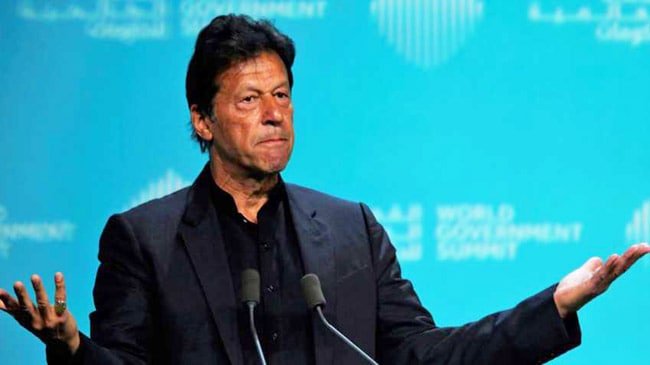
    As per the details, with the Cabinet Committee on Procurement of COVID-19 Vaccine briefing Prime Minister (PM) Imran Khan on efforts being made to engage more pharmaceutical companies for procurement, HRCP has said that the government’s decision in this regard was not the right step.

    “It is the responsibility of the federal government to provide vaccines at heavily subsidised rates to the poor masses which form a majority of the country’s population,” read a statement by the rights watchdog.

    “The people of lower-income groups are struggling hard to survive the unprecedented economic crisis unleashed by misplaced priorities and pro-rich policies of the federal government. The foreign aid received and funding allocated for fighting the pandemic must be used transparently and spent on vaccinating the citizens,” the HRCP said.

    It also expressed concern after reports appearing in the electronic and social media that some of the agents in Karachi had started pre-booking of AstraZeneca vaccine for Rs 20,000 per dose.

    Earlier, the PM was informed that two vaccines had been registered for emergency use and efforts for fast-track registration of more vaccines were under way.

    He was also told that that the vaccine would be available within the first quarter of the current year.

  • Teachers should receive vaccine priority: UNICEF

    Teachers should receive vaccine priority: UNICEF

    The head of the UN children’s agency, UNICEF, has said that teachers should be among those given priority access to the COVID-19 vaccines.

    “The Covid-19 pandemic has wreaked havoc on children’s education around the globe. Vaccinating teachers is a critical step towards putting it back on track,” Unicef chief Henrietta Fore said in a statement.

    Teachers should be “prioritised to receive the Covid-19 vaccine, once frontline health personnel and high-risk populations are vaccinated,” she said.

    “This will help protect teachers from the virus, allow them to teach in person and ultimately keep schools open.”

    According to UNICEF, at the peak of the first wave of the pandemic at the end of April, “school closures disturbed the learning of almost 90% of students worldwide.”

    Assuming that schools are not the main driver of community transmission, Unicef said in its statement that unfortunately, classes currently remain closed for “nearly one in five schoolchildren globally — or 320 million children.”

    We must “do everything in our power to safeguard the future of the next generation. This begins by safeguarding those responsible for opening that future up for them,” Fore said.

    “The consequences of extended, missed or impaired education are steep, especially for the most marginalized. The longer children remain out of school, the less likely they are to return, and the more difficult it is for their parents to resume work,” she said.

  • PM approves funds for purchase of COVID-19 vaccine

    PM approves funds for purchase of COVID-19 vaccine

    Prime Minister (PM) Imran Khan has approved funding for the advance purchase of the COVID-19 vaccine, according to a statement released by the Ministry of National Health Services Regulation on Thursday.

    The Health Ministry said that the prime minister has shown special interest in ensuring quality vaccines at the earliest and has approved funding in this regard. The ministry said the government has developed a COVID-19 vaccine strategy in response to global best practices.

    According to the statement, under this strategy, the government has prioritised the groups most likely to be the initial recipients of a potential vaccine. It said an expert committee on the COVID-19 vaccine has been working on technical oversight and review of safety and efficacy data coming in from trials.

    Earlier, Special Assistant to the Prime Minister on Health Dr Faisal Sultan confirmed that the PM has approved funds to purchase the possible vaccines of COVID-19 in advance. The funds were approved after the Ministry of National Health Services Regulations and Coordination had written a letter to PM Imran Khan for advance booking of coronavirus vaccines.

    Earlier on November 4, it was learnt that the health ministry has recommended purchases of potential coronavirus vaccines under last-stage trials and allocation of $100 million funds for its advance booking.

    The ministry recommended allocation of $100 million in funds for the purchases of vaccines on an emergency basis for around 10 million nationals. In its first phase, the vaccines will be made available for elderly citizens and health workers.

  • VIDEO: CM Buzdar wants Punjab to beat the world in introducing coronavirus vaccine

    VIDEO: CM Buzdar wants Punjab to beat the world in introducing coronavirus vaccine

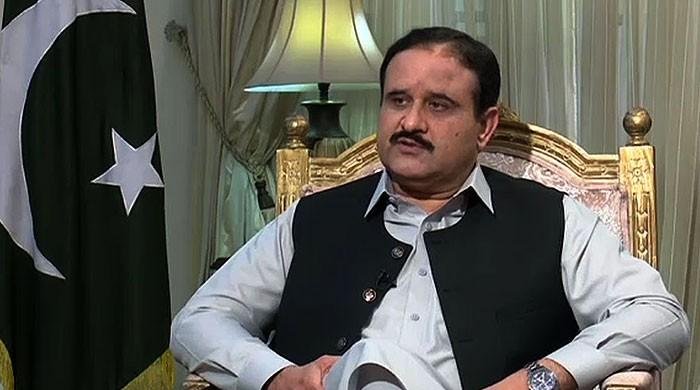
    Punjab Chief Minister (CM) Usman Buzdar has said that the province is doing “groundbreaking research” as the global coronavirus pandemic continues to spread and he wants Pakistan to become the first country in the world to introduce vaccination for COVID-19.

    Even the most effective containment strategies have only slowed the spread of the respiratory disease while some 35 companies and academic institutions around the world are racing to create a vaccine that can prevent people from getting sick as COVID-19 leaves around 940,000 people infected globally with at least 47,000 fatalities.

    While the number of confirmed cases in Pakistan stands at 2,252 with at least 32 deaths and 107 recoveries, Buzdar’s Punjab is the worst-hit with 845 infections and Sindh is trailing behind at 709.

    “Pakistan could become the first country to prepare a vaccine for coronavirus with Punjab taking the lead in this regard,” the provincial chief executive said during a press conference in Lahore on Tuesday. “I will assure them [experts] that I will exhaust all available resources for the research.”

    WATCH VIDEO:

    Earlier, the Punjab CM had directed experts to accelerate research activities for the eradication of coronavirus.

    A meeting chaired by the provincial chief executive told that four study groups had been formed and research had been started under the supervision of the University of Health Sciences (UHS).

    CM Buzdar directed the experts to make fruitful efforts to deal with coronavirus as soon as possible. He was informed that a BSL-3 Lab had started working at Jinnah Hospital and Pakistan Kidney and Liver Institute (PKLI).

    The experts briefed the meeting that COVID-19 found in Pakistan was quite different from the coronavirus found in Wuhan and Iran.

  • Govt launches ‘Sehat Tahaffuz’ helpline to provide health-related information

    Govt launches ‘Sehat Tahaffuz’ helpline to provide health-related information

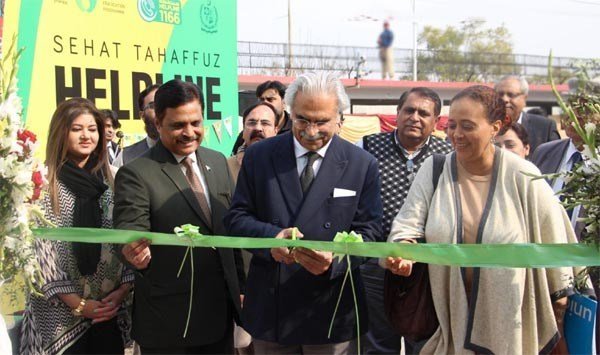
    Special Assistant to the Prime Minister on Health, Dr Zafar Mirza introduced the ‘Sehat Tahaffuz’ helpline ‘1166’ at a ceremony in Islamabad to provide health-related information services to the public.

    As per reports, through the helpline, people will be able to get instant assistance to their queries and concerns, particularly related to polio and routine immunization services.

    The helpline will also provide information and address queries of parents related to the vaccine. It will be active from eight in the morning to twelve midnight daily.

    Pakistan remains one of the last two countries in the world, alongside Afghanistan, where the poliovirus is still prevalent.

    There is a strong national and international commitment to eradicate polio. It is a collective responsibility to ensure all children are protected and vaccinated against the poliovirus.