Tag: Vaccine

  • Unvaccinated Novak Djokovic owns biotech firm developing Covid drug

    Unvaccinated Novak Djokovic owns biotech firm developing Covid drug

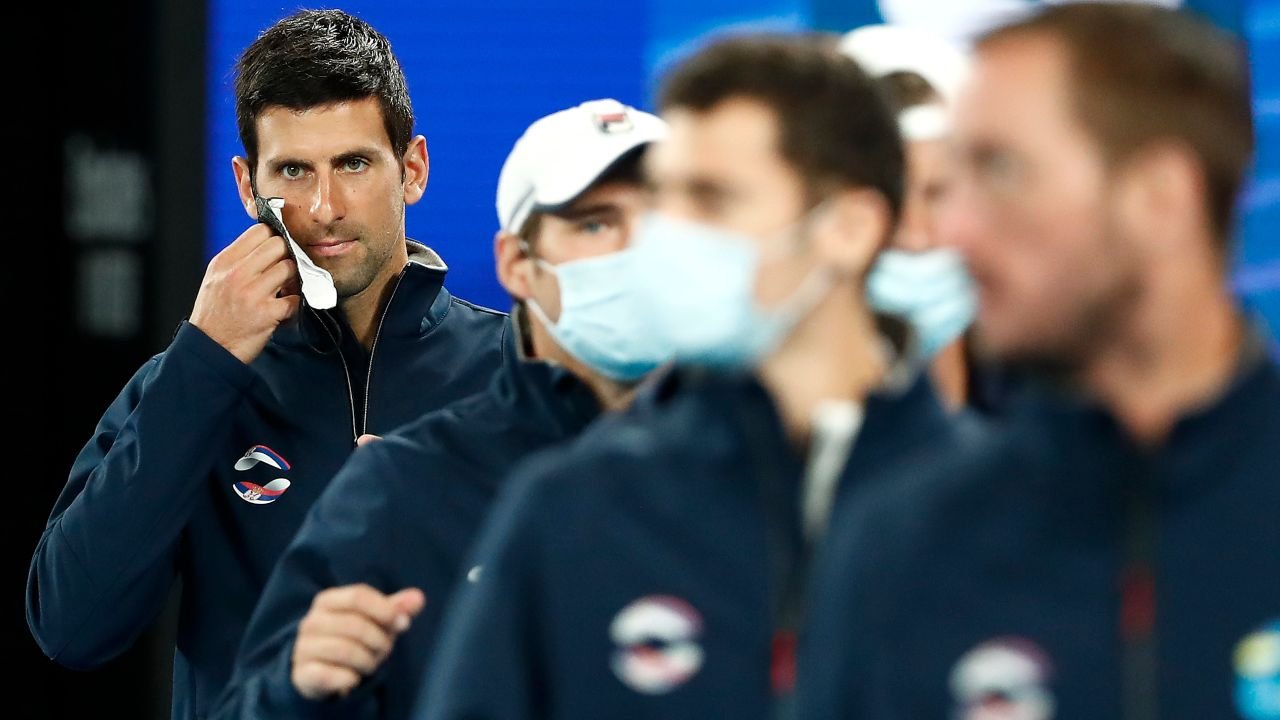
    Serbian tennis player Novak Djokovic owns a majority stake in a biotechnology firm, which is working on a way to immunise people against Covid without a vaccine. The Serbian tennis star has been vocal in his opposition to jabs, and appears to be actively invested in finding a way for others like himself to be protected without the need for a needle.

    It was revealed by Reuters on Wednesday that Djokovic has purchased an 80% share of QuantBioRes, which is headquartered in Copenhagen.

    The firm is working on a way to counter the virus without the need for people to get the vaccine against coranavirus.

    The company’s chief executive Ivan Loncarevic told Reuters that Djokovic made the investment more than a year ago, clarifying that it was not a response to his recent saga in Australia.

    He subsequently told the Financial Times that he had not spoken to Djokovic, who has won more than $150m in prize money, since November and that the tennis star was “not anti-vax”.

    Djokovic travelled to Australia at the start of the month with the plan of taking part in the Australian Open, but was held at the airport in Melbourne over a visa issue.

    Eventually, the day before the tournament began, the Federal Court upheld the Australian government’s decision and deported the world number one tennis player.

    Djokovic, who may also be barred from defending his French Open title in Roland Garros in May after the French government ruled on Monday that all athletes will have to be vaccinated in order to attend and compete in sporting events, acquired his stake in the company in June 2020.
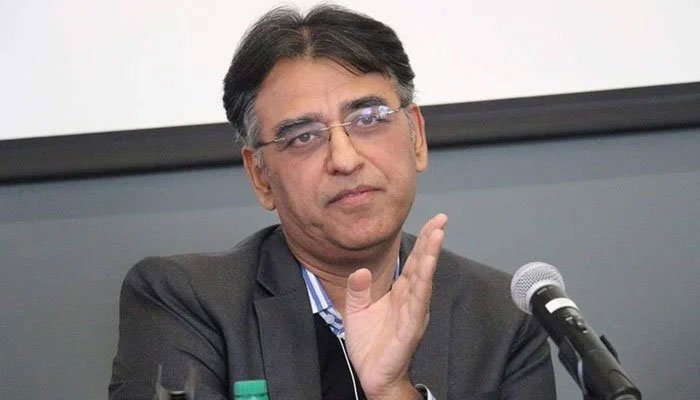

  • Omicron Variant: ‘Need for vaccination even more urgent,’ says Asad Umar

    Omicron Variant: ‘Need for vaccination even more urgent,’ says Asad Umar

    Minister for Planning, Development and Special Initiatives and head of the National Command and Operation Centre (NCOC), Asad Umar, has stressed upon the need of getting vaccinated with the arrival of the Omicron variant. “With arrival of omicron variant the need for vaccination even more urgent. So far 8 crore 75 lakh Pakistani’s have taken at least one dose and 6 crore people are fully vaccinated,” the minister wrote in a tweet.

    On December 13, the NCOC confirmed the first case of the Omicron variant in Pakistan.

    NCOC also stressed upon the importance of getting vaccinated to stay safe from new variants.

  • WHO looking forward to oral, nasal Covid-19 vaccines

    The World Health Organization’s (WHO) chief scientist said Tuesday she was looking forward to the “second generation” of Covid-19 vaccines, which could comprise nasal sprays and oral versions, AFP reported.

    Soumya Swaminathan said such vaccines could have benefits over the current crop as they would be easier to deliver than injections and could even be self-administered.

    Swaminathan said there were 129 different candidate vaccines that have got as far as clinical trials and are being tested on humans — while a further 194 are not yet in the phase in their development and are still being worked on in laboratories.

    “This covers the entire range of technologies,” she told a live interaction on WHO social media channels.

    “They’re still in development. I’m sure some of them will prove to be very safe and efficacious and others may not.”

    “There could be advantages to some of the second-generation vaccines… clearly if you have an oral vaccine or an intra-nasal vaccine this is easier to deliver than an injectable.”

    Soumya Swaminathan added, “Ultimately we’ll be able to choose the ones that are most appropriate. If not for Covid-19, we’re going to use these platforms for other infections in the future.”

    “If there’s a local immune response then it will take care of the virus before it even goes and establishes itself in the lungs and starts causing a problem,” she said.

    WHO has only given emergency use authorisation to seven Covid-19 vaccines: those created by Pfizer/BioNTech, Moderna, AstraZeneca, Johnson & Johnson, Sinopharm, Sinovac and last week Bharat Biotech.

    “None of the vaccines are 100%. Nobody has ever claimed that the vaccines are going to be 100% protective. But 90% is a wonderful amount of protection to have, compared to zero,” Swaminathan said.

    “Till now, with the vaccines that we have approved, there has not been any signal which has been so worrying that we need to say, well, we need to re-think this vaccine.”

    More than 7.25 billion vaccine doses have been administered around the world, according to an AFP count

  • WHO approves world’s first Malaria vaccine

    The World Health Organization (WHO) has endorsed the widespread rollout of the first malaria vaccine with the experts hoping that it could save tens of thousands of children’s lives each year across Africa.

    Hailing it as “an historic day”, WHO Director-General Dr Tedros Adhanom Ghebreyesus said that after a successful pilot programme in three African countries, the RTS,S vaccine should be made available more widely.

    The WHO recommendation is for RTS,S – or Mosquirix – a vaccine developed by British drugmaker GlaxoSmithKline.

    “This is a vaccine developed in Africa by African scientists and we’re very proud,” said Ghebreyesus.

    According to European Medicines Agency, Mosquirix is a vaccine that can be administered to children aged 6 weeks to 17 months to help protect against malaria.

     It also helps protect against infection of the liver with the hepatitis B virus, but European Medicines Agency warns that the vaccine should not be used only for this purpose.

    The vaccine was developed by GlaxoSmithKline in 1987. However, it does face challenges: Mosquirix requires up to four doses, and its protection fades after several months.

    Still, scientists hope that the vaccine could have a major impact against malaria in Africa.

    Since 2019, 2.3 million doses of Mosquirix have been administered to infants in Ghana, Kenya and Malawi in a large-scale pilot programme coordinated by WHO.

  • Kubra Khan shares emotional experience as she tests positive for Covid’19

    Kubra Khan shares emotional experience as she tests positive for Covid’19

    Actor Kubra Khan has tested positive for Covid-19 after basking in the glory of fan’s appreciation for her performance as Mashal in Farooq Rind’s Hum Kahan Ke Sachay Thay.

    The Daldal star took to Instagram to share the news, “We as human beings have the funniest scales to measure what’s a big or a small deal,” she wrote. “We are waltzing around this world given temporarily to us, taking everything and everyone for granted. Something as many would say ‘as small as smelling the morning tea’ or ‘breathing in a normal rhythm’…it’s basic, normal isn’t it?”

    “I tested positive for Covid-19 a little while ago. And all these ‘small things’ didn’t feel so small anymore. Grateful to Allah (SWT) I am on a road to recovery now. This morning I smelt a hint of my tea and bawled out in tears out of gratitude to Allah. In the past week I had chicken karahi, Nutella cake, chocolate brownies, all my favourites in front of me. I couldn’t taste or even smell any of them. All that we work for weren’t able to lift me up, except for the ‘small thing’ of smelling chai that Allah (SWT) made possible,” she wrote.

    “I guess what I’m trying to say is it’s important to strive to live your best life and become the best version of yourselves. I do it myself and it’s normal to complain about ‘the big things’. ‘Paisa, kapra aur makaan‘ [Money, clothes and housing]. I do that too but do not disregard the luxuries we’ve been given by Allah ( SWT). Gratitude changed my life. Realising the ‘small things are the real big deals’ changed my life. So here I am, in a shirt that I haven’t changed in the past three days, makeup-less, filterless and energy-less but Grateful to the max. Allah is Great,” added Kubra.

    On the work front, Kubra can be seen currently in Hum TV’s drama Hum Kaha Kay Sachy Thay.

    Kubra Khan talks about her equation with Mahira Khan

  • ‘Hospital inflow & critical care patients at highest level’, says Asad Umar

    Minister for Planning, Development and Special Initiatives, Asad Umar has said that critical patients admitted in hospitals due to covid-19 are at “highest level.”

    “As seen globally, impact of indian delta variant in Pakistan also shows that it spreads faster & increases chances of patients to need hospitalization,” wrote the minister in a tweet.

    “Right now both hospital inflow & critical care patients at highest level since start of covid,” he added.

    Asad also requested people to, “please follow sop’s & vaccinate.”

    Read more- No public transport after Oct 15 unless fully vaccinated: Asad Umar

    As per the National National Command and Operation Centre (NCOC), Pakistan recorded 4,103 cases of Covid-19 on September 2 in the country.

  • Pakistan responds to UK’s concerns amid Red List travel ban

    Pakistan responds to UK’s concerns amid Red List travel ban

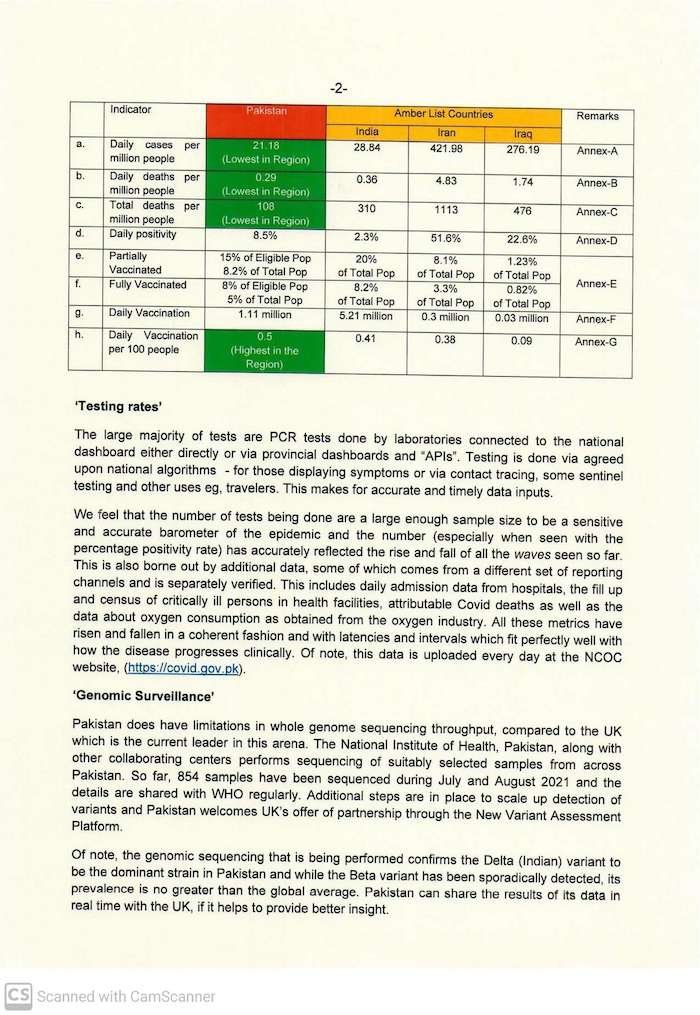
    The Pakistan government has responded to the United Kingdom (UK) government’s reasons for keeping the former on its travel Red List in a detailed letter written by Special Assistant to the Prime Minister (SAPM) on Health Dr Faisal Sultan.

     Federal Minister for Human Rights Shireen Mazari shared the letter on Twitter and said, “The table exposes claims of UK govt, clearly it has been a political decision.”

    Mazari further tweeted, “UK’s Conservative govt with a strong Indophiles’ presence playing discriminatory politics against Pakistan on Covid.”

    Dr Sultan in his letter writes that Pakistan has “no interest in allowing” its nationals who pose a health risk to other societies to travel abroad. He said this is a shared global objective.

    Dr Sultan presented a table comparing key indicators from Pakistan and some other countries in the region, which currently sit on the Amber List, to illustrate what he referred to as “obvious disparities”. He said that when looking at countries’ track record of managing the epidemic, “numbers alone, without context, can be deceptive”.

    The SAPM explained how the Polymerase chain reaction (PCR) tests in Pakistan were being conducted and highlighted that testing is done through “agreed-upon national algorithms”. He explained how it makes for “accurate and timely data inputs”.

    “We feel that the number of tests being done is a large enough sample size to be a sensitive and accurate barometer of the epidemic and the number, especially when seen with the percentage positivity rate, has accurately reflected the rise and fall of all the waves seen so far,” Dr Sultan wrote.

    SAPM agreed that Pakistan does have limitations in whole-genome sequencing throughput, compared to the UK, which is the current leader in this arena. So far 854 samples have been sequenced during July and August 2021 and the details are shared with the World Health Organisation (WHO) regularly.

  • Two-week lockdown likely to be imposed in Sindh

    Two-week lockdown likely to be imposed in Sindh

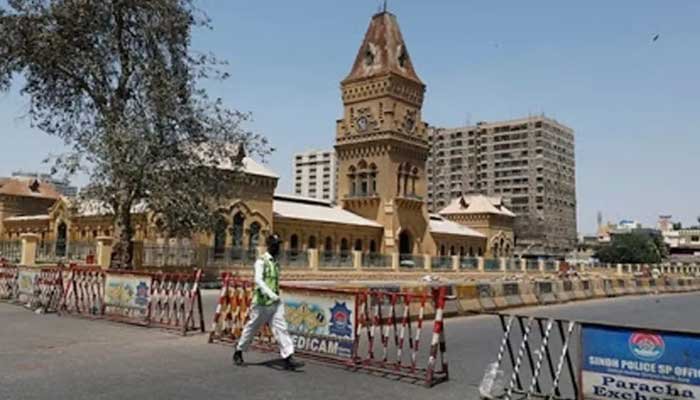
     A decision on whether a two-week lockdown will be imposed in Karachi or not will be taken today during the provincial task force on coronavirus meeting at the Cheif Minister (CM) House on Friday.

    The Sindh health department has recommended clamping a two-week complete lockdown to contain the spread of the pandemic in Karachi as the positivity rate has gone beyond an alarming 30 per cent in the megacity.

    Given the unsettling circumstances of the COVID-19 cases in Karachi, the task force has received a strong proposal to impose a complete lockdown in the metropolis.

    Medical experts and the health department suggested halting inter-city and intra-city commute for two weeks.

    It has been proposed that the educational institutes also remain closed for two weeks.

  • Covid positivity rate jumps to 7.5 per cent in Pakistan

    Covid positivity rate jumps to 7.5 per cent in Pakistan

    The National Command and Operation Centre (NCOC) reported that the Covid-19 positivity rate is currently 7.51 per cent.

    President Dr Arif Alvi urged citizens to “get serious”. “Cases have shot up post-Eid. I was expecting and warning about it as I saw carelessness in [the] streets, bazaars, [and at] weddings and mosques,” he said.

    President Alvi urged Pakistanis to get vaccinated. “Don’t let the recent gains towards stability [be] sacrificed on the alter of neglect. You are a rising nation, so the important test is to rise to the occasion,” he added.

    The number of deaths from coronavirus in the country has risen to 23,048 after 32 more people died in the last 24 hours and the total number of cases has reached 108,446.

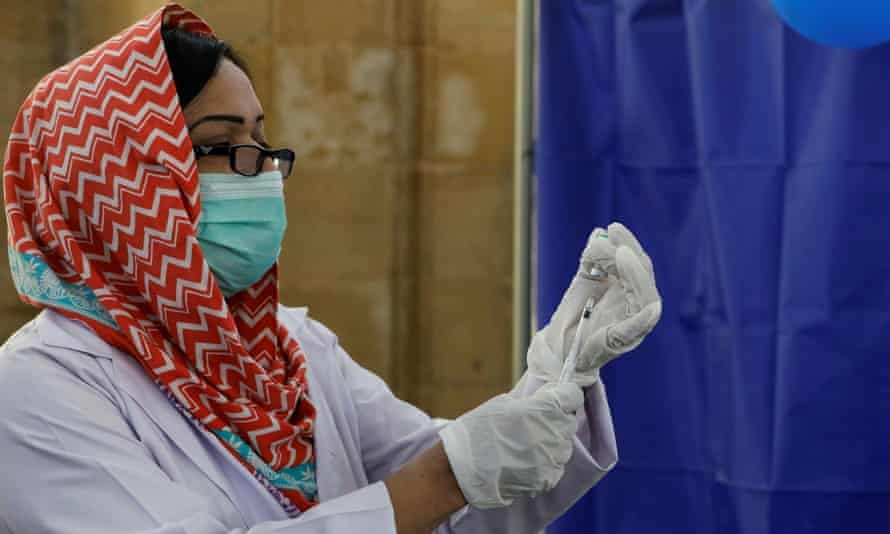
  • Pakistan receives more than 1.2 million doses of AstraZeneca vaccine

    Pakistan has received more than 1.2 million doses of AstraZeneca vaccine as part of the global COVAX initiative, Express Tribune has reported.

    Sajid Shah, spokesperson of the Heath Ministry, told The Express Tribune that more than 1.2 million doses of the vaccine have reached Islamabad.

    In May, Pakistan received first shipment of the AstraZeneca vaccine.

    During the last 24 hours, Pakistan administered 513,292 doses of the vaccines. So far, 22,735,993 doses have been administered in Pakistan.

    Minister for Planning, Development, and Special Initiatives Asad Umar on Friday said unvaccinated people were seven times more likely to contract the coronavirus than those inoculated.