Tag: vandalism

  • Imran Khan, others acquitted in two vandalism cases

    Imran Khan, others acquitted in two vandalism cases

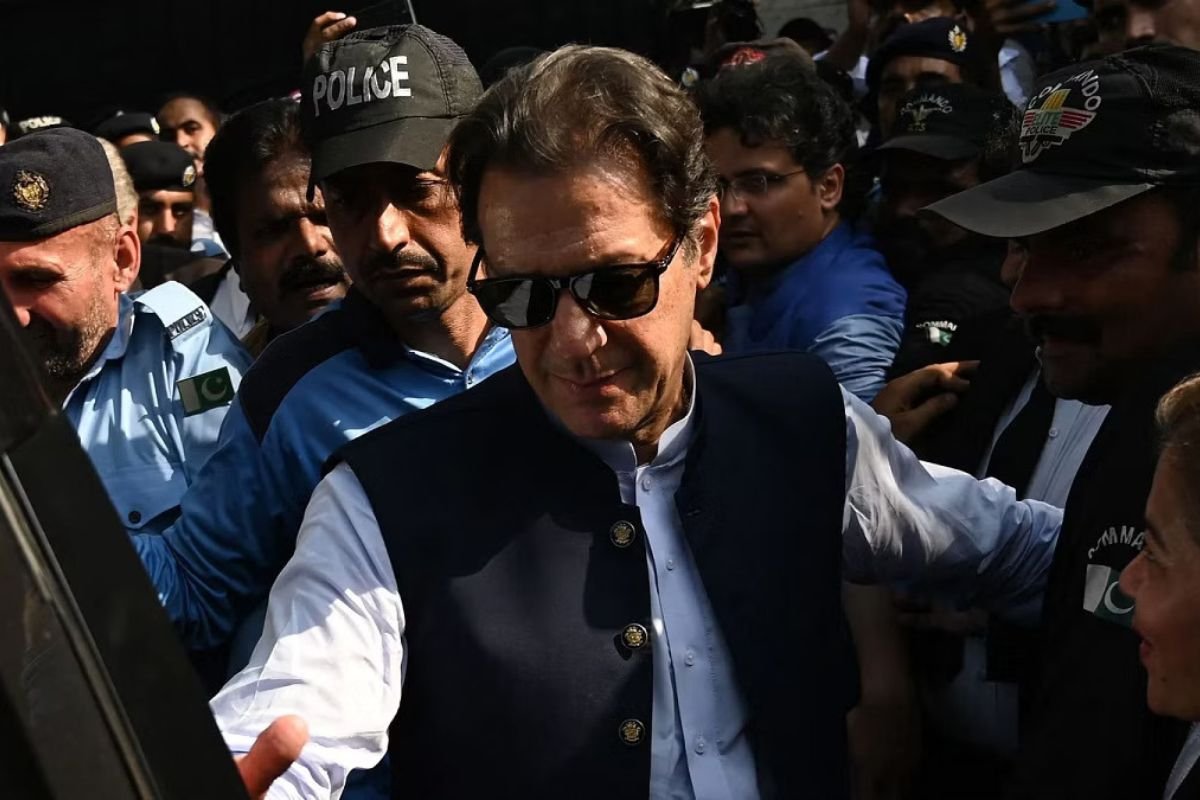
    Founder Pakistan Tehreek-e-Insaf (PTI) Imran Khan and other leaders of his party were acquitted by the district and sessions court on Monday in two cases related to vandalism.

    Other leaders of the party who were acquitted include Zartaj Gul, Ali Nawaz Awan, Faisal Javed, Shah Mahmood Qureshi, Qasim Suri, Raja Khurram Nawaz, Shireen Mazari, Saifullah Niazi, Asad Umar and Awami Muslim League chief Sheikh Rashid Ahmad.

    These particular cases were registered in the Kohsar and Karachi Company police stations under the violation of Section 144.

    The court had earlier reserved its verdict in the Long March vandalism case.

    Khan’s legal representatives spoke with journalists and stated that the cases against Khan were based on political vengeance.

    “No evidence of vandalism found against PTI founder during the long march,” he said, adding that the Islamabad administration did not issue any notification to enforce Section 144 in the capital city.
  • Delhi’s Zafar Mahal mausoleum vandalised by miscreants

    Delhi’s Zafar Mahal mausoleum vandalised by miscreants

    Zafar Mahal, a historical monument in Delhi’s Mehrauli village, has been vandalized by unknown miscreants in India, damaging part of the jaali (lattice screen) in front of the tombs of three Mughal emperors and Bahadur Shah Zafar’s empty tomb.

    The incident was reported by Sunit Arora, a journalist, who visited the site. He was informed by the guard that the vandalism took place eight days ago, and no action has been taken by the authorities so far.

    Zafar Mahal is an ASI (Archaeological Survey of India) protected monument and is one of the last remnants of the architectural legacy of the Mughals in India. The palace is associated with the festival of Sair-e-Gul Faroshan, initiated by Bahadur Shah Zafar, to honour the Sufi saint Khwaja Qutubuddin Bakhtiar Kaki, whose dargah is also located nearby.

    However, Zafar Mahal is in a state of neglect, with minimal maintenance and frequent vandalism. The jaali, which is now spoilt, was a fine example of the Pachin Kari (inlay work) technique.

    Indian tombs of Mughal emperors, including Akbar Shah II, Shah Alam II, and Mirza Fakhruddin, also stand in a deteriorated condition inside the Mehrauli Archaeological Park.

    Art historian William Dalrymple criticised the ASI for its neglect.

    Twitter user Tamjeed Ahmed said that, “ASI earlier said they will restore Zafar Mahal in October but they never did!”

    However, poet Rafiq Kathwari, was reminded of Babri Mosque, as he said, “If they can do Babri, the worst is yet to be.”

    Another user pointed out that “unfortunately, far too many Indian visitors are extremely disrespectful of our ancient monuments”.

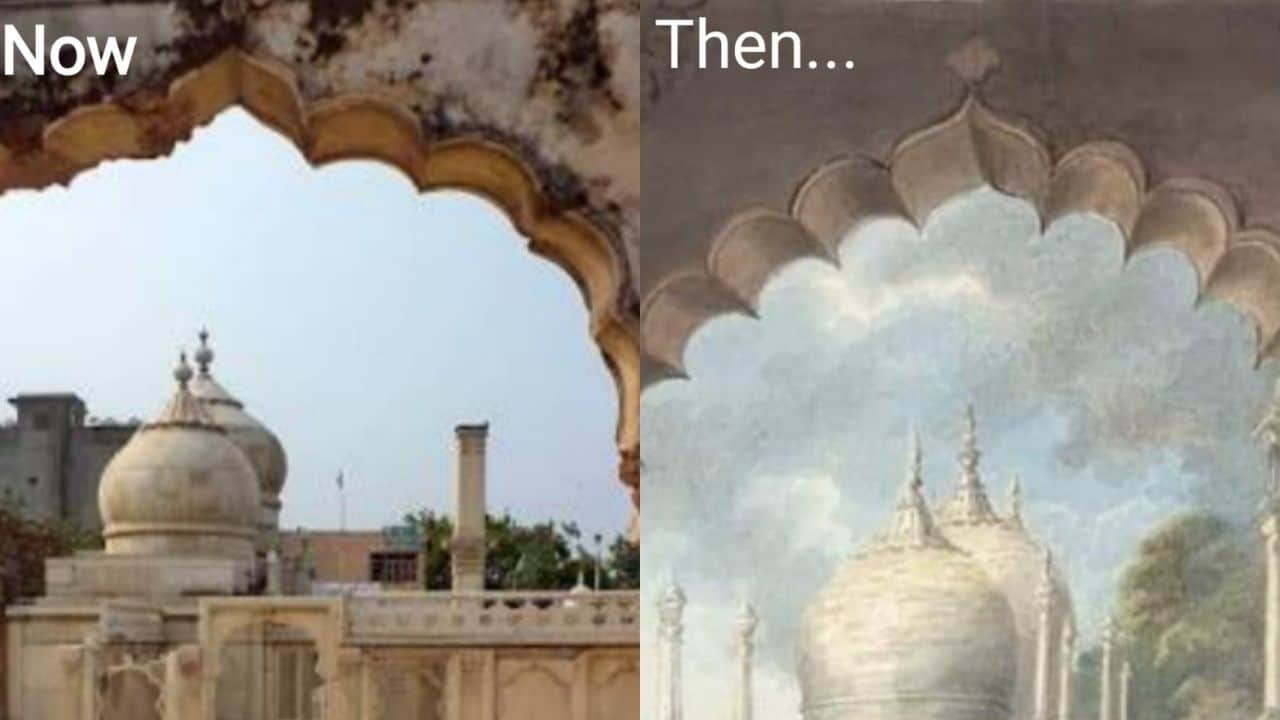
    Meanwhile, a user posted a pictorial comparison of the tomb of the past and the present.

  • Swedish environment activists vandalise Monet painting in protest

    Swedish environment activists vandalise Monet painting in protest

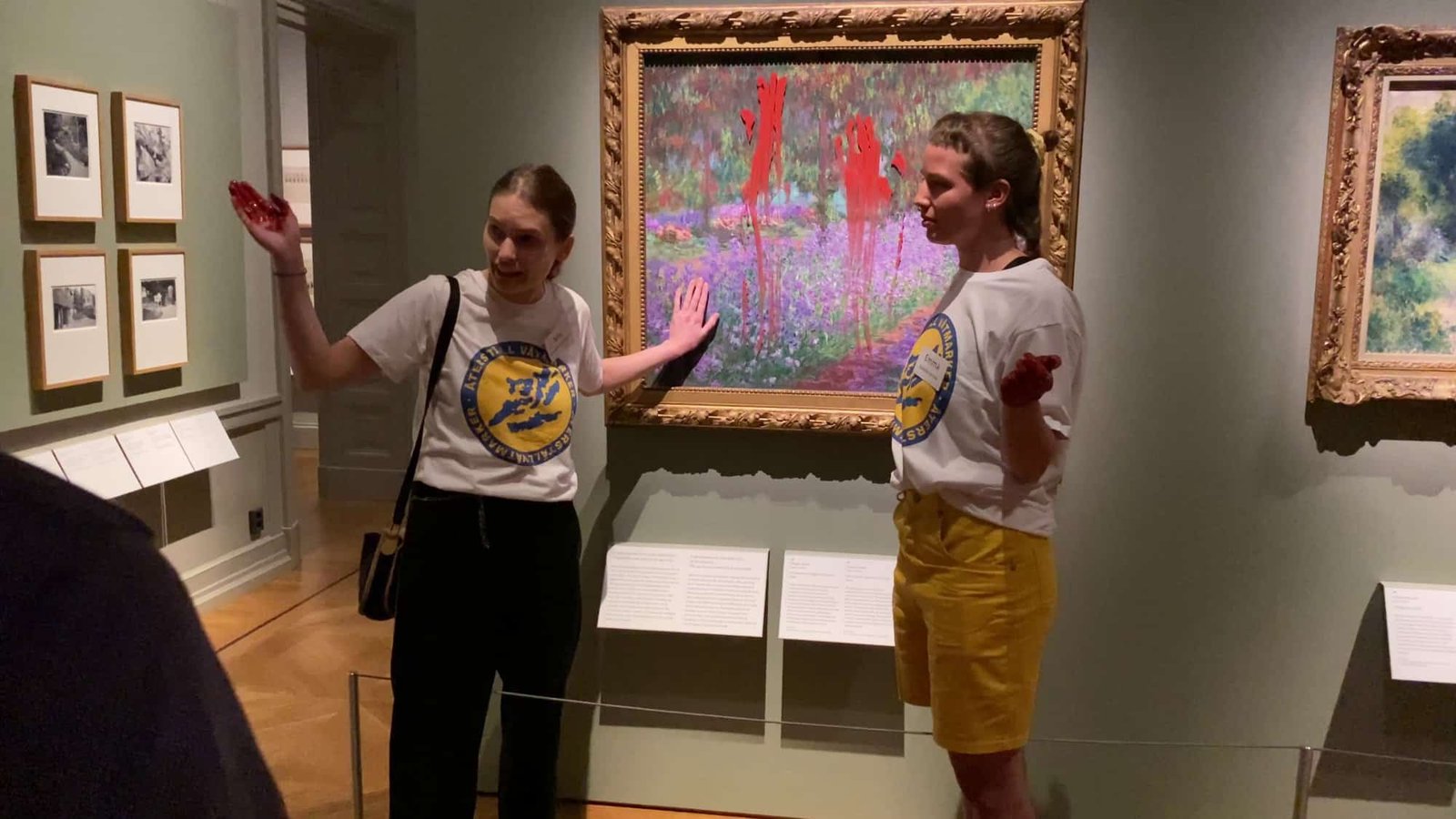
    Environment activists smeared red paint and glued their hands to the protective glass on a Claude Monet painting at Stockholm’s National Museum on Wednesday, June 14.

    The two women, aged 25 and 30, were arrested after the attempted vandalism. The organisation Återställ Våtmarker, meaning “Restore the Wetlands” claimed responsibility for the stunt.

    In a video, the two women can be heard chanting: “The climate situation is urgent” and “our health is threatened”. Spokesperson of Återställ Våtmarker, Helen Wahlgren, explained in an interview with AFP that this was in protest of the Swedish government allegedly not respecting its international climate commitments.

    Wahlgren also pointed out that a climate catastrophe is “also a health crisis” with “millions of people already dying from the climate disaster”.

    Återställ Våtmarker said “gorgeous gardens like those in Monet’s painting will soon be a distant memory”.

    Monet’s “The Artist’s Garden at Giverny” (1900) is currently being examined by the museum’s conservation team to see if it has been damaged.

    The museum said it was “naturally” opposed to actions that risk damaging works of art. The acting Chief Curator, Per Hedstrom, said cultural heritage has great symbolic value, and claimed it was “unacceptable” to attack it regardless of the purpose.

    Climate-Induced Vandalism of Masterpieces:

    Monet is not the first great painter to have his work vandalised by climate change activists. Last year, major paintings by the likes of Vincent van Gogh, Johannes Vermeer and Gustav Klimt caught the wrath of climate change activists.

    Cans of tomato were splattered over Van Gogh’s “Sunflowers”. At another Dutch museum, a man glued his head to Vermeer’s “Girl with a Pearl Earring.” In Austria, protestors threw red and brown slime – meant to represent blood and oil – at Klimt’s “Death and Life”.

    Never before have so many purported fine art masterpieces been vandalised in such a short amount of time. It raises the question of whether or not the destruction of art is an effective vehicle for protest.

    All of the paintings involved were undamaged, as reported by the museums that house them.

  • Teen arrested for vandalising Ranjeet Singh statue at Lahore Fort

    Lahore police have arrested a teenager for vandalising a statue of Maharaja Ranjeet Singh, who ruled Punjab in the 19th century, installed in front of the Haveli of Rani Jindan at Lahore Fort.

    Police said that the boy Zaheer — a resident of Harbanspura — was inspired by the speeches of late firebrand cleric Khadim Rizvi. As per the teenager, Ranjeet Singh killed Muslims and converted Badshahi Mosque into a stable, adding that these reasons compelled him to destroy the statue of the Sikh ruler.

    It was learned that Zaheer broke the arm in an attempt to damage the statue. He was caught by the security guards on the spot, who stopped him from further damaging the statue.

    A Walled City of Lahore Authority (WCLA) spokesperson said that a case has been lodged against the suspect at the Tibbi City police station. Strict action will be taken against the accused, it said, adding that the statue would be repaired by the WCLA at earliest.

    The nine-foot-tall statue of Ranjeet Singh, who died in 1839, was unveiled in June 2019 on his 180th death anniversary. The statue, made of cold bronze, depicts the emperor sitting on a horse with a sword in his hand. Popularly known as Sher-e-Punjab, Maharaja Ranjit Singh ruled over the Sikh empire in the Punjab region in the early half of the 19th century. 

    After almost decade-long infightings, his empire came to an end in 1848 with the colonisation of Punjab by the East Indian Company.