Tag: vegetable prices

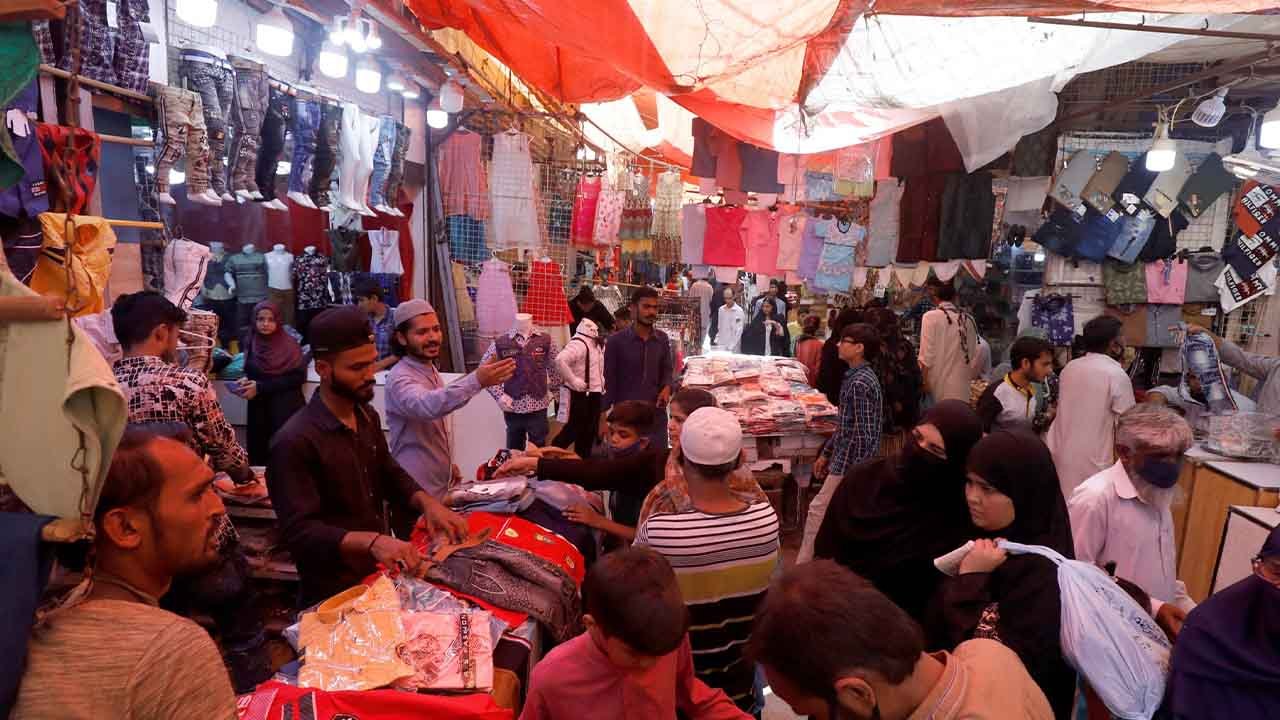
  • Shopkeepers arrested, fined in Lahore for selling above govt-set prices

    Shopkeepers arrested, fined in Lahore for selling above govt-set prices

    The Lahore district administration has intensified its efforts against overpricing, resulting in significant fines and the arrest of two individuals.

    Under the directives of District Commissioner Lahore Syed Musa Raza, assistant commissioners carried out surprise inspections at over 1,700 locations. These inspections led to the registration of eight cases and the imposition of fines totaling Rs1.1 million for 187 violations.

    The crackdown primarily targeted shopkeepers who were selling essential food items at prices higher than the government-mandated rates. This issue has been a growing concern in Pakistan, where overcharging by vendors exacerbates the financial strain on consumers already struggling with high inflation. The situation is particularly dire for low-income earners, who find it increasingly difficult to afford basic necessities.

    Assistant Commissioner Model Town, Sahibzada Muhammad Yousaf, conducted price inspections at various tandoors and shops, imposing fines of Rs25,000 for violations. Similarly, Assistant Commissioner Shalimar, Anam Fatima, sealed a tandoor during inspections in Tajpura and Harbanspura.

    In the Band Road Saggian area, Assistant Commissioner City, Rai Babar, inspected several shops and tandoors, issuing warnings and fines to multiple owners. Assistant Commissioner Raiwind, Zainab Tahir, carried out inspections at Raiwind Mandi and Rehri Bazaar Bhatta Chowk, fining two shopkeepers on the spot following consumer complaints.

    Authorities have mandated that all stalls and shops prominently display government-issued rate lists. Strict action will be taken against those who fail to comply. Following directives from the Chief Minister of Punjab, the administration has made it clear that there will be zero tolerance for overpricing.

    In a related development, the price of table eggs in Lahore has surpassed Rs300 per dozen, reaching Rs301. Despite no significant change in demand or production costs, egg prices have steadily increased in recent weeks. Conversely, the price of broiler chicken meat has decreased by Rs18 per kilogramme, settling at Rs577 per kilogramme after a brief downward trend.

    Weekly inflation eases slightly, but challenges remain

    Short-term inflation in Pakistan eased slightly by 0.10 per cent to a 27-month low of 16.69 per cent for the week ending August 22, 2024, compared to the same period last year. According to data from the Pakistan Bureau of Statistics (PBS), the decline was primarily driven by lower prices of tomatoes, which fell by 21.96 per cent, and wheat flour, which dropped by 2.77 per cent.

    However, the prices of several essential items, including eggs (up 6.10 per cent), pulse gramme (up 6.05 per cent), and potatoes (up 2.41 per cent), continued to rise. The PBS data showed that out of 51 tracked items, 21 experienced price increases, nine saw decreases, and 21 remained stable during the week.

    On a year-on-year basis, inflation was up by 16.69 per cent, with significant increases in the prices of gas charges (up 570 per cent), onions (up 79.51 per cent), and pulse gramme (up 51.34 per cent). Despite some declines in the prices of wheat flour, electricity charges, and certain cooking oils, the overall inflationary trend remains a significant concern for consumers.

    As the government continues its crackdown on overpricing, the broader challenge of managing inflation and ensuring affordability for essential goods remains critical for the well-being of Pakistan’s population.
  • Weekly inflation rises as prices of essential food items increase

    Weekly inflation rises as prices of essential food items increase

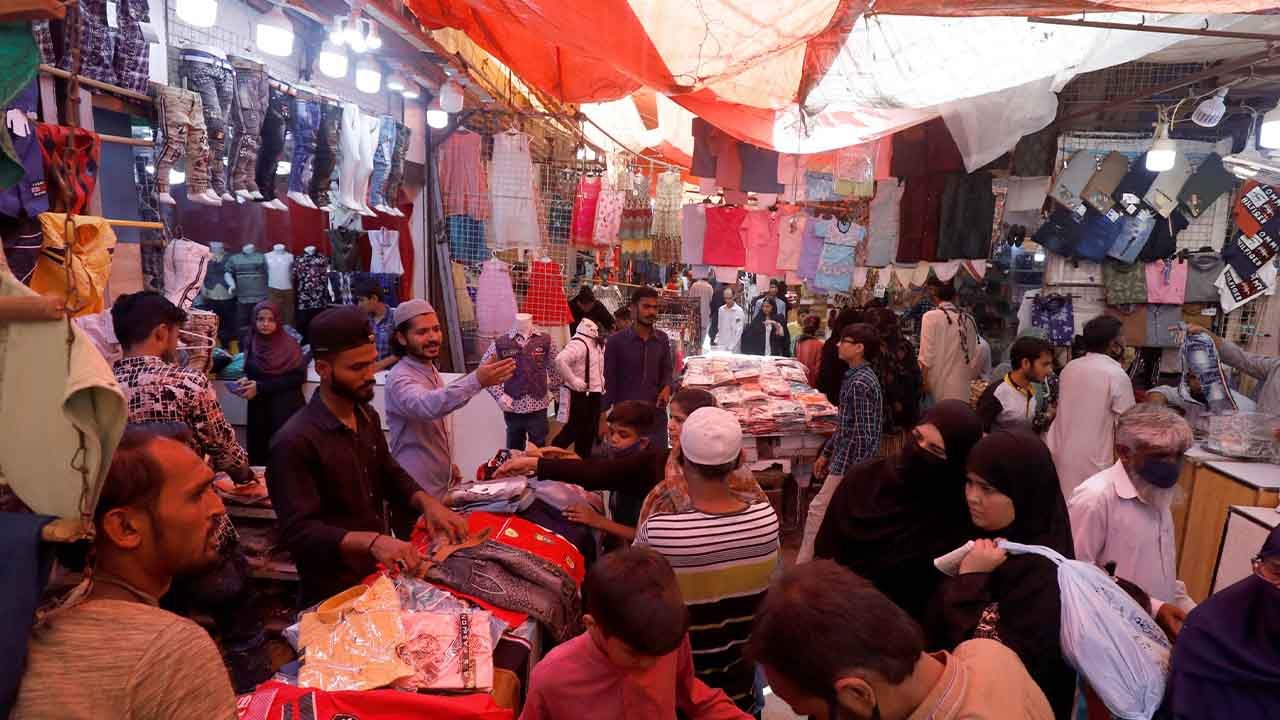
    The Weekly Sensitive Price Indicator (SPI) for the Combined Group witnessed a 0.45 per cent increase week over week (WoW) during the week ending June 6, 2024.

    This surge marks a significant 21.69 per cent rise YoY compared to the corresponding period last year, as per data unveiled by the Pakistan Bureau of Statistics (PBS).

    The Combined Index stood at 309.91, showcasing a slight uptick from 308.52 the previous week, and a notable increase from 254.67 recorded a year ago.

    Among the 51 items monitored, the week saw prices of 19 items (37.26 per cent) soar, 14 items (27.45 per cent) witness a decline, while prices of 18 items (35.29 per cent) remained stable. Notable increases were observed in the prices of Onions (33.21 per cent), Tomatoes (15.34 per cent), Bananas (4.93 per cent), Pulse Gram (3.69 per cent), and Potatoes (2.62 per cent).

    Conversely, significant decreases were noted in the prices of Bread (3.02 per cent), Garlic (2.00 per cent), Wheat (-1.99 per cent), Petrol (1.74 per cent), and Pulse Masoor (1.43 per cent).

    The weekly SPI percentage change across income groups revealed a universal uptick, ranging between 0.33 per cent and 0.81 per cent. The lowest income group experienced the steepest weekly rise of 0.81 per cent, contrasting with a 0.33 per cent rise in the highest income group.

    On an annual basis, analysis of SPI changes across income segments indicated a consistent increase, ranging from 15.26 per cent to 25.04 per cent. Yearly SPI for the Lowest Income Group surged by 15.26 per cent, while the highest income group recorded a 19.45 per cent increase.

    In terms of specific commodities, the average price of Sona urea stood at Rs4,746 per 50 kg bag, marking a marginal 1.04 per cent decline from the previous week, yet reflecting a substantial 56.01 per cent increase compared to last year’s prices.

    Meanwhile, the average Cement price reached Rs1,255 per 50 kg bag, showing a 1.40 per cent increase from the prior week and a noteworthy 9.82 per cent surge compared to last year’s prices.

  • Annual inflation in Pakistan jumps to 38.63% after weekly increase of 0.82%

    Annual inflation in Pakistan jumps to 38.63% after weekly increase of 0.82%

    The sensitive price indicator (SPI) hit an annualised high of 38.63 per cent due to a lack of perishable goods brought on by severe rains, and weekly inflation increased by 0.82 per cent for the seven days ending August 4, 2022.

    The base for most cooked meals in the country is an onion and tomato. Onions increased in price from Rs75.41/kg to Rs94.2/kg while tomatoes increased from Rs74.07/kg to Rs82.91/kg.

    Data from the Pakistan Bureau of Statistics (PBS) indicates that the increase is attributable to the increased price of diesel (109.15 per cent), onions (107.95 per cent), pulse masoor (106.71 per cent), petrol (88.94 per cent), cooking oil 5 litre (74.44 per cent), mustard oil (73.89 per cent), chicken (73.42 per cent), vegetable ghee 1 kg and 2 kg (72.26 and 70.48 per cent), washing soap (62.62 per cent), pulse gramme (59.07 per cent), electricity for Q1 (52.61 per cent), gents sponge slippers (52.21 per cent), pulse maash (46.01 per cent) and garlic (41.16 per cent).

    According to The News, consumers are struggling with soaring food and fuel prices. Hi-speed diesel was being sold last August 5 for Rs117.58 per litre, but it is now Rs245.92 per litre.

    Various items in the SPI basket are given varying weightages. The goods with the heaviest weights in the bottom quintile are milk (17.5449 per cent), electricity (8.3627 per cent), wheat flour (6.1372 per cent), sugar (5.1148 per cent), firewood (5.0183 per cent), long cloth (4.2221 per cent), and vegetable ghee (3.2833 per cent).

    While the cost of firewood and electricity remained consistent, the cost of milk, wheat flour, sugar, long fabric, and vegetable ghee 2.5kg increased. Vegetable ghee 1kg saw a decrease in price.

    SPI is made up of 51 necessities that were gathered from 50 markets spread over 17 cities across the nation.

    Out of 51 goods, 33 (64.71 per cent) of the prices rose during the week, 4 (7.84 per cent) of the prices fell, and only 14 (27.45 per cent) of the prices kept the same.

    The price of onions increased by 24.92 per cent, tomatoes by 11.93 per cent, pulse moong by 5.72 per cent, pulse mash by 5.28 per cent, potatoes by 5.03 per cent, pulse masoor by 4.43 per cent, diesel by 3.78 per cent, pulse gramme by 2.69 per cent, eggs by 2.44 per cent, powdered milk by 1.61 per cent, gur by 1.53 per cent, LPG by 1.49 per cent, salt by 1.46 per cent, and garlic by 1.30 per cent on a WoW basis.

  • Pakistan’s inflation hits 21.32 per cent in June 2022

    Pakistan’s inflation hits 21.32 per cent in June 2022

    In June 2022, Pakistan’s yearly inflation rate reached a 13-year high of 21.3 per cent, up from 9.7 per cent in June 2021 and 13.8 per cent in May 2022, according to the most recent data made public recently by the Pakistan Bureau of Statistics (PBS).

    According to PBS, monthly CPI-based inflation rose by 6.3 per cent in June 2022 as opposed to a 0.4 per cent increase the month before and a 0.3 per cent decrease in June 2021.

    Compared to increases of 14.1 per cent a month prior and 17.6 per cent a year prior, the Sensitive Price Index (SPI) inflation on a YoY basis increased by 21.7 per cent in June 2022. On a month-over-month basis, it increased by 6.2 per cent in June 2022 compared to a 0.6 per cent increase the previous month and a (-)0.4 per cent decrease in June 2021.

    The Consumer Price Index (CPI) reached 21.3 per cent on a year-over-year (YoY) basis as Pakistan’s economy battles a widening current account deficit brought on by a high import bill, rising inflation has become a major concern.

    In an effort to combat economic headwinds, the State Bank of Pakistan (SBP) increased the key interest rate by 150 basis points to 13.75 per cent earlier in May. At the time, the central bank predicted that as electricity and fuel subsidies are eliminated, inflation is likely to spike briefly, remain high through FY23, and then drop precipitously in FY24, according to Brecorder.

    The SBP is currently scheduled to decide the key interest rate at its upcoming Monetary Policy Committee meeting on July 7.

    On the other hand, the current administration increased the price of petroleum products in an effort to resurrect the International Monetary Fund (IMF) programme, which is anticipated to drive up inflation even further.

    The government announced a late-night price increase for petroleum products on Thursday, raising the ex-depot price of gasoline to Rs248.74 per liter (after an increase of Rs14.85) and diesel to Rs276.54 (after a hike of Rs13.23).

    CPI inflation in urban areas

    In contrast, year-over-year CPI inflation in urban areas increased by 19.8 per cent in June 2022 as opposed to increases of 12.4 per cent in May 2022 and 9.6 per cent in June 2021.

    In June 2022, it increased by 6.2 per cent month over month, compared to a 0.3 per cent increase the month before and a 0.4 per cent decline in June 2021.

    CPI inflation in rural areas

    In contrast to the previous month’s increase of 15.9 per cent and the increase of 9.7 per cent in June 2021, the CPI inflation rate in rural areas increased by 23.6 per cent on an annual basis in June 2022.

    Comparing June 2022 to June 2021, it increased by 6.6 per cent month over month, compared to increases of 0.6 per cent and 0.1 per cent, respectively.

  • Vegetable vendor arrested for selling vegetables at low rates

    A vegetable vendor in Lahore has been arrested for selling vegetables at low rates. As per details, no state-mandated price list was displayed at his shop.

    The FIR states that the vegetable vendor had been selling okra (bhindi) for Rs73 per kg instead of Rs95, tomatoes (tamatar) for Rs25 per kg instead of Rs50, eggplants (baingan) for Rs52 per kg instead of Rs60, bitter melons (karailay) for Rs52 per kg instead of Rs90, and onions (pyaaz) at Rs33 per kg instead of Rs40.

    https://twitter.com/arshdchaudhary/status/1409211106027966464?s=21

    The case was registered under the Price Control Acts 1958 and 1977 at the Raiwind City Police Station on the directions of Special Magistrate Chaudhry Kashif Bashir against the vegetable vendor, Waqas Majeed.

    Special Assistant to the Prime Minister for Political Communication Dr Shahbaz Gill has urged authorities to take action against the magistrate.


  • VIDEO: ‘Peas being sold for Rs5/kg,’ claims Imran govt

    VIDEO: ‘Peas being sold for Rs5/kg,’ claims Imran govt

    As rising vegetable prices spell misery for people under the Pakistan Tehreek-e-Insaf (PTI) government, Special Assistant to the Prime Minister (SAPM) for Information and Broadcasting Dr Firdous Ashiq Awan has claimed that peas are being sold in the market for only Rs5 per kilogram (kg).

    “Another grower, [Federal Minister for Aviation] Ghulam Sarwar Khan Sahab has told [me] that 20kg pea bags are being sold at the rate of Rs5/kg,” she said while addressing a press conference.

    WATCH VIDEO:

    Statement from PM Imran Khan’s aide, who seems to be totally unaware of the persisting sky-high vegetable prices in the country, made headlines a day after the premier’s finance adviser, Dr Abdul Hafeez Sheikh, told reporters that tomatoes were being sold for as low as Rs17 per kg across Karachi.

    “In Karachi, in the sabzi mandi (produce market), tomatoes are being sold for Rs17 per kg”.

    When some of the reporters present at the scene told him that tomatoes were, in fact, being sold at Rs240 per kg, he refuted saying “people were lying”.

    “That’s what is being run on the television,” Imran’s adviser noted, to which one of the reporters said, “But on the TV, it says tomatoes are being sold for Rs240 a kg.”

    Another journalist responded with a fresh personal story, “Sir, I myself bought tomatoes for Rs300 a kg.”

    “Oh but I am agreeing that prices of many commodities need to be controlled. Agriculture [industry] has seasonality,” the PM’s adviser explained, as someone from behind persistently tried to stop the person holding the phone from recording the video.