Tag: violence

  • No stability until May 9 Perpetrators brought to justice: Pak Army

    No stability until May 9 Perpetrators brought to justice: Pak Army

    The Pakistan Army on Thursday reiterated the call for bringing to justice the planners, perpetrators, abettors, and facilitators of the May 9 riots for the “collective good of the country”.

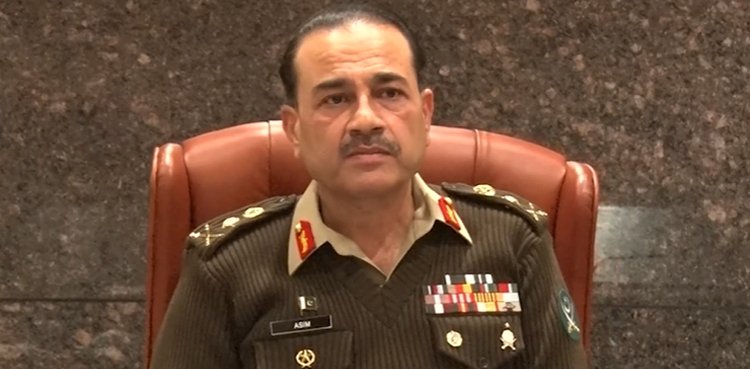
    According to the Inter-Services Public Relations (ISPR), the military’s resolve was communicated during the 83rd Formation Commanders Conference at the General Headquarters (GHQ) presided by Chief of Army Staff (COAS) General Syed Asim Munir.

    “Digital terrorism unleashed against state institutions, especially Pakistan’s armed forces, is being carried out with the help of external facilitators to achieve nefarious political objectives,” said the presser.

    Furthermore, the military leadership believed that there are efforts to sow discord between the state institutions and the Pakistani nation.

    The conference concluded with the determination that, “All threats to the security and stability of the country will be thwarted with the full support of a proud nation.”

  • Pakistan’s Sufi festivals reclaim spirit after violence

    Pakistan’s Sufi festivals reclaim spirit after violence

    Shah Jiwana (Pakistan) (AFP) – Rhythmic drums and spirited dancing are once again bringing life to the shrines of Pakistan’s saints, where festivals were long stifled by jihadist violence.

    As the harvest season ends and schools finish for the summer, villagers climb atop tractor trolleys, buses and rickshaws to head to the annual celebrations at Sufi shrines dotted across the country.

    “Those who cannot meet during the rest of the year reunite at the fair,” said Muhammad Nawaz, a farmer from Punjab province at the annual “mela” to honour saint Shah Jiwana in Jhang city in May.

    “These fairs and Punjab’s culture share a profound connection, one of love and brotherhood.”

    Fairgrounds, musicians, traditional wrestlers and motorcycle acrobats delight pilgrims lit by lanterns of all colours — but always under the watchful eye of hundreds of police officers.

    Centuries-old Sufi orders across the Islamic world have millions of followers, from Turkey to South Asia, and their beliefs are rooted in mysticism and a devotion to saints.

    Many orthodox hardliners consider Sufi beliefs heretical, however, and Sunni militant groups such as the Pakistani Taliban and Islamic State have carried out bloody attacks at shrines and festivals.

    In Pakistan, the attacks led authorities to ban festivals or limit their activities until recently.

    “The goal was to avoid risking public lives,” said Alloudin Mehmood, a government official at Bari Imam shrine in Islamabad, targeted by a 2005 suicide bombing that killed 19 people.

    Security has dramatically improved after several military operations, allowing celebrations to slowly return.

    “Only after receiving security clearance was the festival permitted last year, ending a 16-year hiatus,” Mehmood added.

    The event was shortened from five days to three, with mobile phone signals suspended for security reasons.

    ‘Culture is resilient’

    The landscape of rural Pakistan is adorned with thousands of Sufi shrines, varying in size from grand edifices to modest structures, each steeped in a tapestry of associated legends.

    Particularly in Punjab and Sindh, saints, commonly referred to as “Pirs,” are revered and miracles attributed to their spiritual presence.

    “These shrines have endured threats and persecution,” said anthropologist and author Zulfiqar Ali Kalhoro.

    “Culture always has a remarkable resilience, capable of absorbing shocks and persevering through challenging times.”

    The annual celebrations commemorate the anniversaries of a saint’s death and symbolise the spiritual union between devotees and the divine.

    “Pilgrims find solace, healing, release and entertainment at these events that celebrate the ‘friends of God’,” said Carl W. Ernst, who has authored several books on Sufism.

    Sufism has inspired some of Pakistan’s most beloved artists, writers and musicians.

    Sufi shrines often attract marginalised groups, including transgender women and drug addicts.

    “We are never as well-received as at festivals,” Khusbhoo, a transgender woman, told AFP.

    Come to the fair

    At the Shah Jiwana shrine, devotion gives way to entertainment in the late afternoon.

    A juice seller belts out a famous Punjabi song: “Forget about your responsibilities for a while; let’s head to the fair instead.”

    Thousands turn to the fields to witness traditional games such as Kabaddi, a rough contact sport where opponents slap each other around the face, and tent pegging, a more graceful display of horsemanship.

    Against the neon background of the fairgrounds, 16-year-old stunt girl Fatima Noor prepares her motorbike.

    Defying both gravity and social taboos, she circles the “wall of death” to the amazement of the crowd — a chance to earn some money for her family.

    “These fairs must be held, because we do not have any other employment opportunities,” she said.

    Eighteen-year-old Hamid Ijaz delighted in the celebrations, disrupted for much of his childhood.

    “Because of how widespread hate and sectarianism are in our country, it’s crucial to organise events like these where people can come together and foster love,” he told AFP.
  • Sudan facing ‘inferno’ of violence, crushing aid holdups: UN

    Sudan facing ‘inferno’ of violence, crushing aid holdups: UN

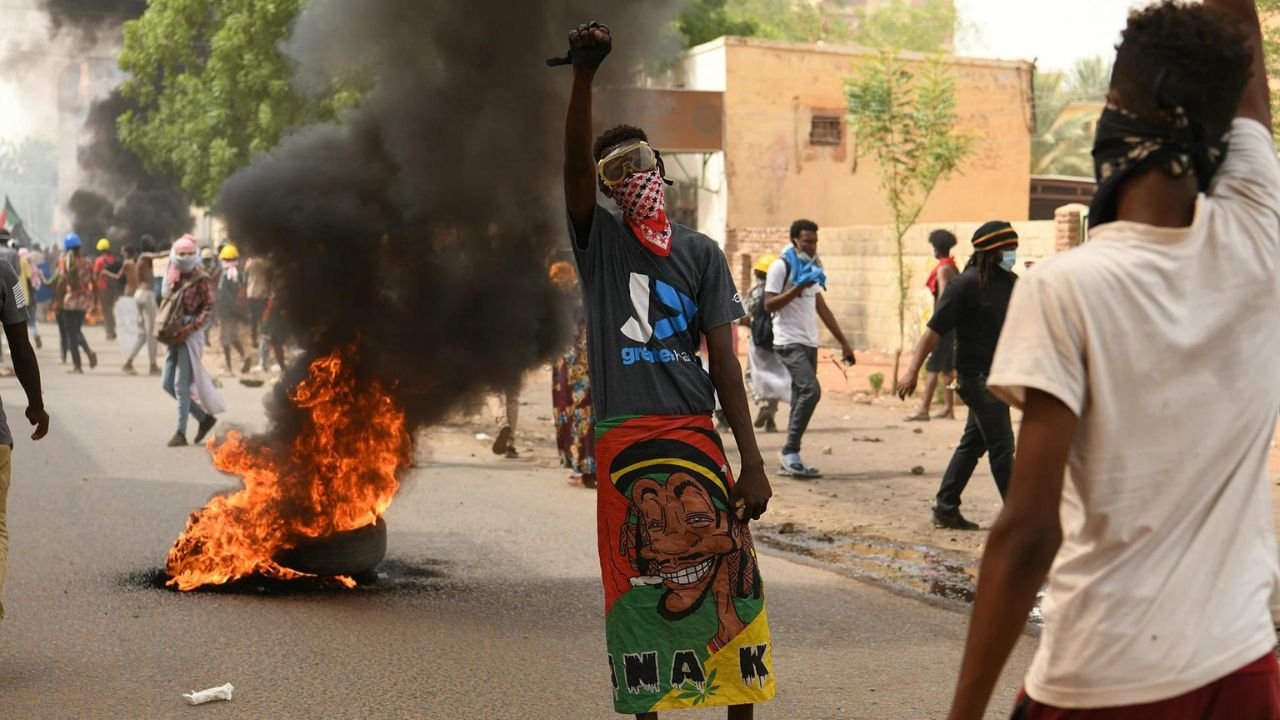
    Residents of conflict-hit Sudan are “trapped in an inferno of brutal violence” and increasingly at risk of famine due to the rainy season and blocked aid, the UN’s humanitarian coordinator for the country warned Wednesday.

    Tens of thousands of people have died and millions have been displaced since war broke out in April 2023 between the army and the paramilitary Rapid Support Forces (RSF).

    “Famine is closing in. Diseases are closing in. The fighting is closing in and there’s no end in sight,” Clementine Nkweta-Salami told a press conference.

    The grim situation is only expected to worsen, with “just six weeks before the lean season sets in, when food becomes less available, and more expensive.”

    Noting that more than four million people are facing potential famine, Nkweta-Salami added that the onset of the country’s rainy season means that “reaching people in need becomes even more difficult.”

    The area’s planting season also “could fail if we aren’t able to procure and deliver seeds for farmers,” she said.

    And “after more than a year of conflict, the people of Sudan are trapped in an inferno of brutal violence.”

    “In short, the people of Sudan are in the path of a perfect storm that is growing more lethal by the day,” Nkweta-Salami warned, adding that the humanitarian community needs “unfettered access to reach people in need, wherever they are.”

    The United Nations has expressed growing concern in recent days over reports of heavy fighting in densely populated areas as the RSF seeks control of El-Fasher, the last major city in the western Darfur region not under its control.

    “Right now the humanitarian assistance they rely on can’t get through,” Nkweta-Salami said.

    More than a dozen UN trucks loaded with medical equipment and food, which left Port Sudan on April 3, have still not reached El Fasher, she said, “due to insecurity and delays in getting clearances at checkpoints.”

    abd/mdl/bfm/nro

    © Agence France-Presse

  • Faisalabad: New revelations coming up in minor housemaid assault case

    Faisalabad: New revelations coming up in minor housemaid assault case

    Important details are coming to light in the death of 11-year-old Ayesha allegedly at the hands of house owners in Faisalabad.

    Ayesha, an 11-year-old domestic worker who was killed by violence in Faisalabad, got hired four months ago for a salary of 5,000 per month in a house belonging to a female lecturer in Naimat Colony.

    Ayesha was beaten up on the allegations of theft to such an extent that she succumbed to her injuries and died.

    Her parents have said that when they reached the Civil Hospital, they saw that their daughter was badly injured. They also revealed that they are being pressured by the influential suspects to reconcile, but they want them to be punished severely. Three of them are in police custody.

    The police has informed Geo News that the girl was hired three to four months ago, while the child was beaten up a week ago. Further investigation is going on.

    Previously, a horrific incident of violence against a young housemaid came to light in Faisalabad over the weekend. A 10-year-old maid died at the hands of her employers, reported Aaj TV.

    The incident took place in Faisalabad’s Naimat Colony area, where a 10-year-old domestic worker died due to violence, after which the employers were detained and an investigation started. Three people, including two women, have been named in the case and all the suspects have been arrested.

    Ayesha, 10, had been serving as house help in the house of Fazl-ur-Rehman, Suneela Tufail, and Raheela Tufail. The mother of the girl has said that she was not allowed to meet the child for three months. She was only informed about the death of the child.

    According to the police, the female owner reached the civil hospital last night with the body of the girl. There were marks of violence on the girl’s body. The owner claimed that these were the marks of allergy on the girl’s body but the parents of the girl registered the case of death by violence in the police station.
    The police spokesperson said that more facts will come out after the autopsy.

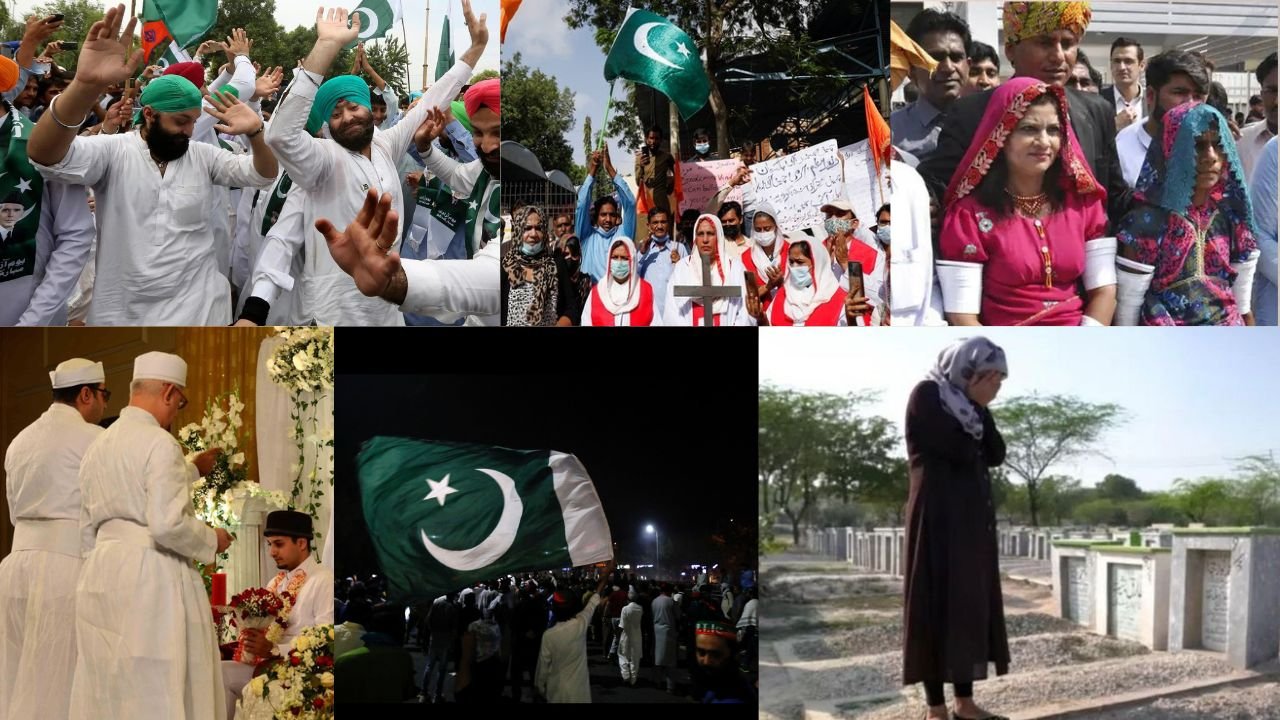
  • How many registered religious minority voters are in Pakistan?

    How many registered religious minority voters are in Pakistan?

    As per the recent province-wise religion report of the Election Commission of Pakistan (ECP), there are 30 lac, 78 thousand, 3 hundred and 6 voters from religious minorities in Pakistan.

    Out of 40 thousand 781 minority voters in Khyber Pakhtunkhwa 3516 are Bahai, 220 Buddist, 28080 Christian, 4209 Hindu, 723 Parsi, 1149 Ahmadi, and 2884 Sikh.

    In former Federally Administered Tribal Areas (FATA) there are 3539 religious minority voters out of which 400 are Bahai, 41 Buddist, 1446 Christian, 669 Hindu, 16 Parsi, 23 Ahmadi, and 944 Sikh.

    For 12 lac 59 thousand 303 minority voters in Punjab, 18102 are Bahai, 786 Buddist, 1057071 Christian, 73456 Hindu, 262 Parsi, 108538 Ahmadi, and 1088 Sikh.

    In Sindh, there are 16 lac 80 thousand 582 minority voters, out of which 7269 are Bahai, 495 Buddist, 228552 Christian, 1423276 Hindu, 2787 Parsi, 16668 Ahmadi, and 1535 Sikh.

    Balochistan has 44 thousand 930 minority voters, out of which 1387 are Bahai, 1387 Buddist, 18702 Christian, 18702 Hindu, 265 Parsi, 549 Ahmadi, and 272 Sikh.

    In the Federal Capital, there are 44 thousand 783 minority voters, out of which 242 are Bahai, 41 Buddist, 40518 Christian, 276 Hindu, 16 Parsi, 3677 Ahmadi, and 13 Sikh.

    Although elections are not happening in Gilgit Baltistan and Azad Jammu and Kashmir in February 2024, ECP did share detailed data of these areas too.

    Out of 653 minority voters in Gilgit Baltistan, 472 are Bahai, 5 Buddist, 147 Christian, 8 Hindu, 16 Ahmadi, 5 Sikh, and none from the Parsi community.

    Azad Jammu and Kashmir has 3735 minority voters out of which 1083 are Bahai, 23 Buddist, 987 Christian, 45 Hindu, 13 Parsi, 1580 Ahmadi, and 4 Sikh.

    As Pakistan gears up for nationwide parliamentary elections in February 2024, a significant portion of the population, the Ahmadiyya community, faces disenfranchisement due to discriminatory provisions in the electoral law.

    Current electoral regulations in Pakistan effectively exclude Ahmadis from the voting process based on their religious beliefs.

    To register as voters, members of the Ahmadiyya community are compelled to either renounce their faith or accept placement in a distinct electoral list categorizing them as “non-Muslim.”

    However, self-identification as Muslim is a fundamental tenet of Ahmadiyya religious belief.

    This exclusionary practice has resulted in the denial of voting rights for Ahmadis, who comprise over 500,000 individuals in Pakistan.

    Despite their significant numbers, Ahmadis find themselves unable to participate in local, provincial, and national elections.

    It is noteworthy that in 2002, Pakistan discontinued an electoral system that segregated Muslims and non-Muslims into separate categories for registration and voting.

    However, discriminatory measures persist, particularly affecting the Ahmadiyya community’s ability to exercise their

    The government also created a separate category for Ahmadis. Since then, all Pakistani citizens have voted according to a single electoral list except the Ahmadis, who vote on a separate list.

  • ‘Cheap knockoff of Kabir Singh’: Viral clip from Danish Taimoor’s new drama has Twitter in fits

    ‘Cheap knockoff of Kabir Singh’: Viral clip from Danish Taimoor’s new drama has Twitter in fits

    Once more, Danish Taimoor’s dramas are providing meme fodder for the internet. A clip from the actor’s series ‘Rah e Junoon’ is trending after drawing comparisons between Danish’s character and a well known misogynist, Bollywood villain Kabir Singh. This led to many mocking the show by calling it ‘Kabir Singh from Daraz’.

    This led to Internet users coming with all sorts of hilarious quips to roast the clip.

    Really Danish where’s the range! Give us something other than toxic university boy roles

    Twitter users are done with Danish Taimoor’s tasteless choice of scripts. He made the internet laugh with a scene from ‘Kaisi Teri Khudgarzi’ where it looks like the hero gets off on the miserable cries of his lover.

    And then in ‘Ishq Hai’, Danish thought what’s a better way to make yourself a hero on screen than kidnapping a woman, threatening to shoot yourself if she doesn’t marry you?

  • 6 more deaths despite the ceasefire in Kurram Agency

    6 more deaths despite the ceasefire in Kurram Agency

    The sectarian clashes between the two groups in Kurram have claimed six more lives taking the death toll to 55 in nine days. A total of 105 people are injured. 

    Despite the efforts made by the local jirgas of the ceasefire the clashes between different other groups have erupted, pushing the region to be blocked from the rest of the world with no services of communication and internet along with lack of law and order.

    A ceasefire has been made between Sadda and Balish Khel while the fights between eight other group is still going on.  

    Read more: Kurram Agency’s sectarian clashes leave 50 dead before peace-deal

  • Newlyweds murdered in mosque in honour killing

    Newlyweds murdered in mosque in honour killing

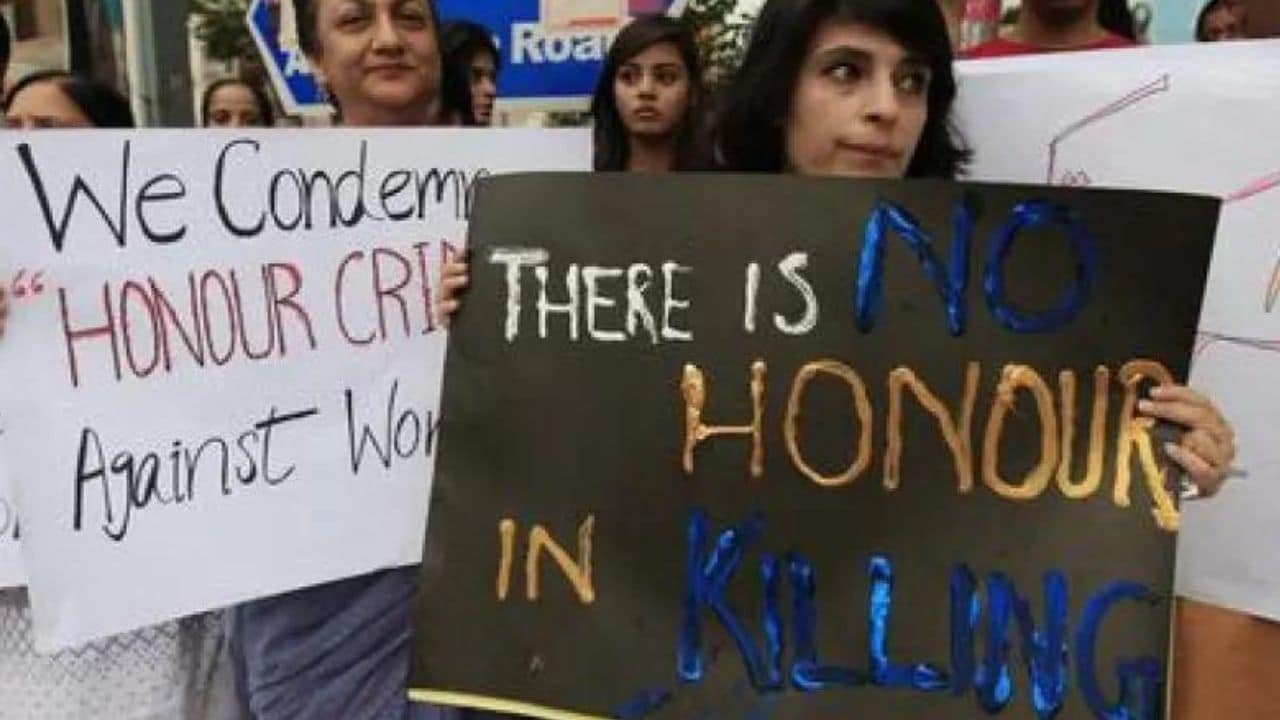
    A newlywed couple was shot dead inside a mosque in Jehlum on Wednesday in what is suspected to be a case of honour killing.

    Rehman Rasool and Safia recently eloped to get married of their own free will. They were then called in by the girl’s family for reconciliation. Sensing the possible threat, the two of them took refuge in a mosque’s courtyard but got gunned down by the family, nevertheless.

    The unfortunate incident happened on Wednesday in the outskirts of Pind Dadan Khan where the two of them took sanctuary in a mosque adjacent to the motorway. The killers managed to escape.

    A local shephard informed the police of the murder. The bodies were taken to Tehsil Headquarters Hospital for a post-mortem examination.

    Raids have been carried out to arrest the suspects while an investigation has also been launched

  • Pakistan’s security forces lost 386 personnel in 2023: report

    Pakistan’s security forces lost 386 personnel in 2023: report

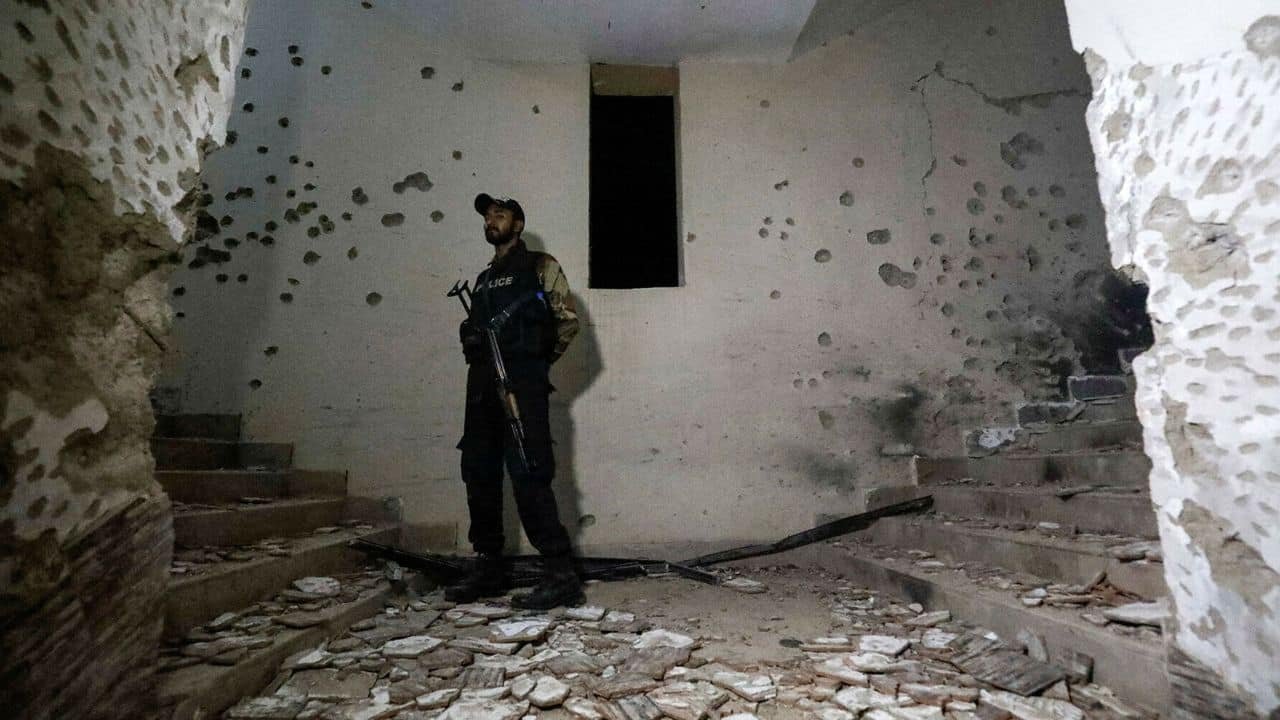
    A recent Security Report released by the Center for Research and Security Studies (CRSS) reveals that Pakistan’s security forces lost at least 386 personnel, including 137 army soldiers, in the first nine months of the ongoing year, marking an eight-year high as the country continues to battle militant violence.

    The Islamabad-based think tank’s report states, “Over the past five years, there has been a consistent and alarming surge in violence in Khyber Pakhtunkhwa (KP) and Balochistan provinces. Equally greater concern is the collective percentage of violence-related fatalities recorded in these two provinces which indicates a disturbing upward trend over the last five years; together, they suffered 72% of all fatalities in 2019, and this unsetting figure surged to a staggering 92% in the first 9 months of 2023.”

    There has been a trend of brutal attacks against religious congregations in the country, with more than 60 people losing their lives in two separate bombing incidents at a mosque and a gathering to mark the Prophet Muhammad’s (PBUH) birth anniversary on Friday.

    “Pakistan’s security forces lost at least 386 personnel, 36 percent of all fatalities – including 137 army and 208 police personnel – in the first 9 months of 2023, marking an eight-year high as the country continues to battle proxy terrorism, largely in Khyber Pakhtunkhwa and Balochistan,” the Center for Research and Security Studies (CRSS) said in its report released on Saturday.

    “With 1087 violence-related fatalities recorded so far during the year, the outlaws suffered 368 (34 percent), followed by civilians with 333 (31 percent) fatalities,” it added.

    The CRSS maintained there had been a consistent and alarming increase in violence in the two Pakistani western provinces over the past five years.

    Experts attribute the recent increase in militant violence and security forces casualties in Pakistan to the change of government in neighboring Afghanistan, saying it emboldened militant groups in Khyber Pakhtunkhwa and fueled separatist violence in Balochistan.

  • 15-year-old British school girl murdered while trying to protect friend

    15-year-old British school girl murdered while trying to protect friend

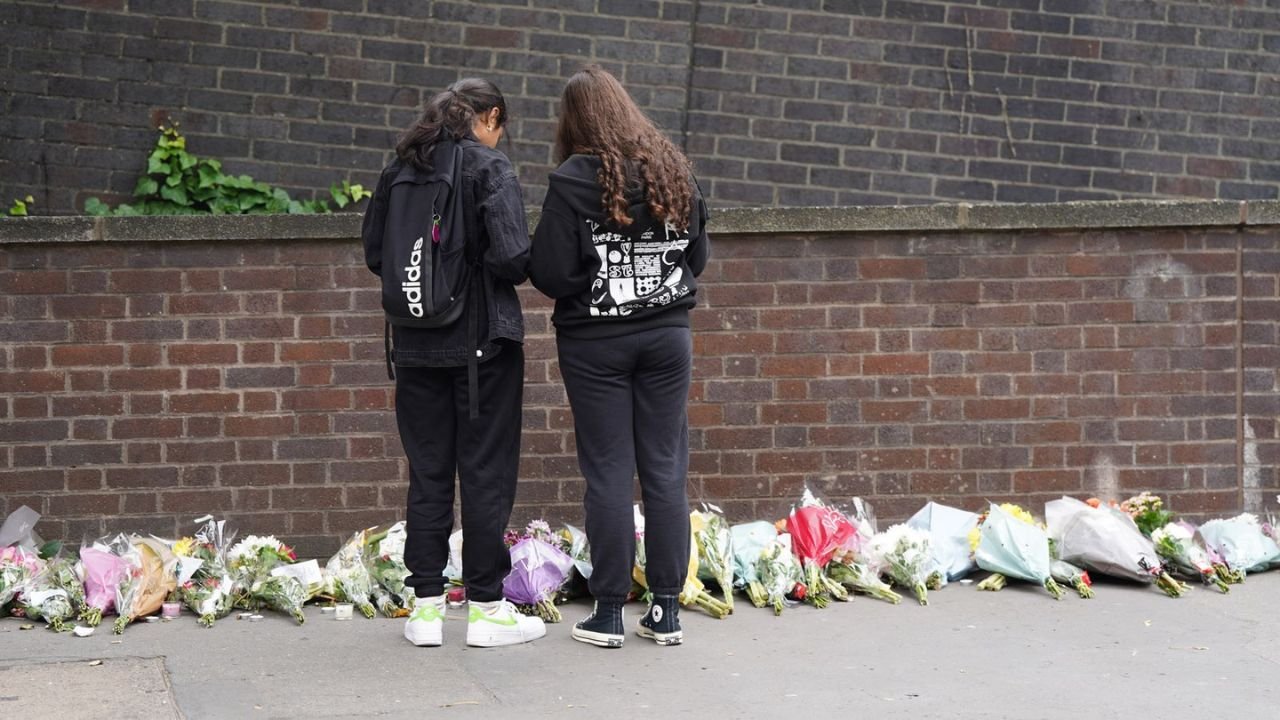
    A 15-year-old school girl has been stabbed to death in South London by a 17-year-old boy on Wednesday when she was on her way to school. According to the Evening Standard, the crime took place near Croydon’s Whitgift shopping sector, when the boy arrived at a bus stop to give flowers to his former girlfriend- a friend of the victim.

    The friend rejected the flowers after which an argument rose between the two, leading to the victim intervening. The murderer then pulled out a foot-long knife and stabbed her to death.

    The Metropolitan Police arrested the murderer within 75 minutes in New Addington and placed him under custody. Met Police Commissioner Sir Mark Rowley called the murder “senseless” and “impossible to comprehend”, adding that officers arrived within two minutes at the scene of the crime to provide first aid to the victim.

    The BBC reported Mayor of London, Sadiq Khan, said that he was “absolutely heartbroken” by the murder, stressing that he would remain in touch with the Met Police commissioner.

    Friends and family members of the victim have described the school girl as a bright pupil who had a promising future ahead of her. Family friend Adama Dumbuya, told Sky News the victim was a lovely little girl.

    “It’s just really sad. She was such a lovely little girl. I’m a parent myself. She was just really lovely the few times I’ve met her. She’s just a very nice girl and very polite.”

    The victim’s aunt Marian described her as an aspiring lawyer:

    “She went to a private school paid by my sister and had a great future ahead of her. She wanted to be a lawyer. She also loved gymnastics and doing her hair. We are a big family and will support each other. We are devastated.”

    “We can’t comprehend the heartbreak of the last 24 hours. She went to school and didn’t come home. It hasn’t sunk in. My sister is not feeling good, this is a tragedy.”