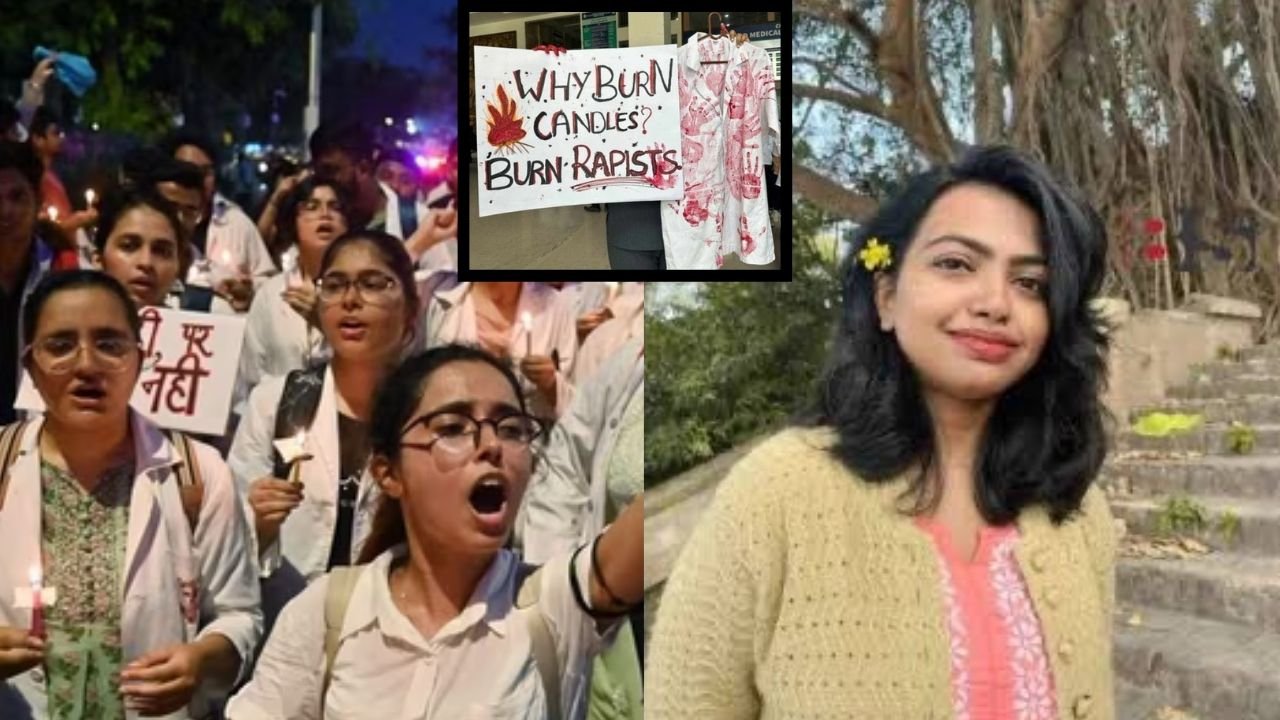
The rape and murder of a female doctor has sparked protests and clashes all over India. Protestors, mostly women, are enraged by the growing number of crimes against women in the country.
Here is the timeline of this high-profile murder case:
Doctor Moumita Debanath, 31, a postgraduate trainee at a local Kolkata hospital, was raped and murdered on the night of August 8. Her bruised body was found inside the seminar hall of the hospital.
Local police told her family that the death was caused by suicide on August 9. As the family came to collect the body, they were denied access. When they eventually did get to her remains, they found the body unclothed.
Autopsy details reveal that the Moumita was raped and brutally tortured with 14 major injuries. The cause of death was manual strangulation. The report also highlights that the body had clear signs of sexual assault, most prominently her pelvic girdle being severely damaged due to forceful penetration.
The police used CCTV footage to arrest the suspect, identified as Sanjay Roy, a civic assistant who was placed in police custody on remand until August 23.
Doctors and civil society initiated protests, asking the authorities to take action. Meanwhile, the doctor’s family expressed their distrust of the State police. They met Mamta Banerjee, the Chief Minister of West Bengal, who assured them of the urgency of concluding the investigation.
On August 11, the government transferred the superintendent of the hospital in Kolkota over reported lapses leading to the horrific rape and murder.
On August 12, the principal of the hospital stepped down from his post. Subsequently, the Federation of Resident Doctors Association (FORDA) announced a nationwide halt to elective services. Protests escalated all around the country, with women chanting “Reclaim the Night” in the protests. They were joined by a large number online as the templates of justice for the victim and the growing number of cases of violence against women in the country were widely shared.
The incident made waves internationally when a mob of unidentified men vandalised the hospital’s emergency department on the night of August 15. Media reports claim that the mob comprised of around 7,000 people. They attacked the crime scene in the hospital, smashed the CCTV camera and damaged public property. The mob also clashed with the protesting women echoing the demand of reclaiming the night. Eye-witnesses claim that the whole attack was backed by the government.
The Kolkata High Court also criticised Mamta’s government for its failure to control the situation.
Only 19 individuals involved in the mob have been arrested until now.
Other medical associations also announced nationwide withdrawal as a sign of protest, prompting Prime Minister Narendra Modi to address the matter in the Independence Day speech: “An immediate investigation and strict punishment against those who commit such monstrous crimes against women is important to instil confidence in society.”
Against the backdrop of a huge number of crimes against female doctors and paramedic staff Indian Medical Association sought PM Modi’s “intervention” in the Kolkata doctor rape case.
Victim Dr Moumita’s family was recently interviewed by NDTV India, in which her father expressed her disappointment over the investigation so far. “Early on I had full faith in her (Mamata Banerjee), but now no. She is asking for justice but what is she saying that for? She can take charge of that, she is doing nothing,” he said.
The victim’s aunt shared how she was about to get married, and all she wanted was to get a gold medal.
Big fish theory
Additionally, Indian media recently coined the “big fish theory” regarding the case. Mint India reported that friends of the victim have revealed that she was under immense pressure of working for long hours.
One of her colleagues asked how the accused, Sanjay Roy, got to know of the victim’s presence in the seminar hall. “Roy could be a part of a plot hatched by a big fish. She was targeted. How did the civic volunteer know she was alone in the seminar hall at that time?” the colleague said.
Another colleague claimed the victim was trying to expose the possible drug siphoning racket in her department. “She might have known too much about something,” he said.
The media also reported that her family shared that she was not happy at her job, yet nothing is confirmed, and the investigation is underway.
However, protests have erupted all over the country, reminding journalists of protests after the 2012 Delhi gang-rape case when a 22-year-old Nirbhaya was gang raped in a bus in Delhi. Her mother, Asha Devi, talked to AlJazeera and said, “Whenever such an incident happens, people start bringing up Nirbhaya. But what have we learnt from the Nirbhaya incident and the movement that followed in her support? What changes were brought to our legal system? And what actions have we taken after the laws were amended after the Nirbhaya incident? We are still living in 2012.”
Supreme Court of India has taken a sou motu of the Kolkata rape case and the hearing is to be held on August 20.