Tag: voting

  • Educated Pakistani women barred from voting by their husbands

    Educated Pakistani women barred from voting by their husbands

    Perched on her traditional charpai bed, Naeem Kausir says she would like to vote in Pakistan’s upcoming election — if only the men in her family would let her.

    Like all the women in her town, the 60-year-old former headmistress and her seven daughters — six already university-educated — are forbidden from voting by their male elders.

    “Whether by her husband, father, son or brother, a woman is forced. She lacks the autonomy to make decisions independently,” said Kausir, covered in a veil in the courtyard of her home.

    “These men lack the courage to grant women their rights,” the widow told AFP.

    Although voting is a constitutional right for all adults in Pakistan, some rural areas in the socially conservative country are still ruled by a patriarchal system of male village elders who wield significant influence in their communities.

    In the village of Dhurnal in Punjab, spread across crop fields and home to several thousand people, men profess myriad reasons for the ban of more than 50 years.

    “Several years ago, during a period of low literacy rates, a council chairman decreed that if men went out to vote, and women followed suit, who would manage the household and childcare responsibilities?” said Malik Muhammad, a member of the village council.
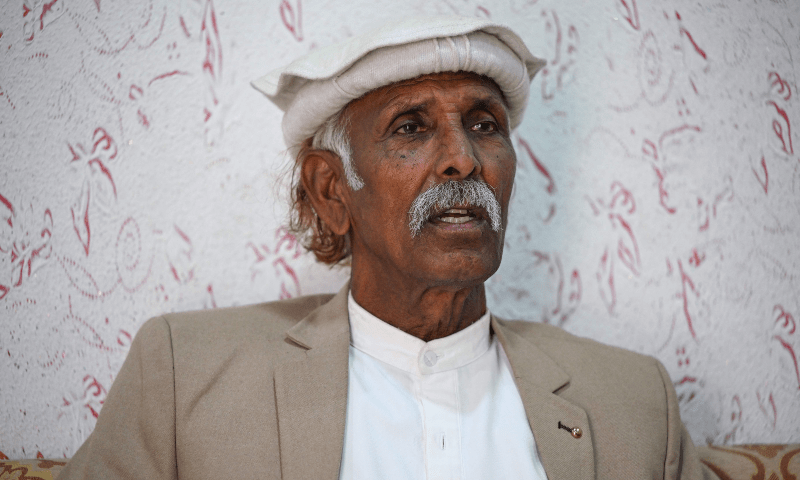
    In this photograph taken on January 29, 2024, Malik Muhammad, a member of the village council, speaks during an interview with AFP in Dhurnal of Punjab. — AFP

    In this photograph taken on January 29, 2024, Malik Muhammad, a member of the village council, speaks during an interview with AFP in Dhurnal of Punjab. — AFP

    “This disruption, just for one vote, was deemed unnecessary,” he concluded.

    Muhammad Aslam, a shopkeeper, claims it is to protect women from “local hostilities” about politics, including a distant occasion that few seem to remember in the village when an argument broke out at a polling station.

    Others told AFP it was simply down to “tradition”.

    The Election Commission of Pakistan (ECP) has stressed that it has the authority to declare the process null and void in any constituency where women are barred from participating.

    In reality, progress has been slow outside of cities and in areas that operate under tribal norms, with millions of women still missing from the electoral rolls.

    The elders in Dhurnal rely on neighbouring villages to fill a government-imposed quota which maintains that 10 percent of votes cast in every constituency must be by women.

    Those who are allowed to vote are often pressured to pick a candidate of a male relative’s choice.

    In the mountainous region of Kohistan in Khyber Pakhtunkhwa province home to almost 800,000 people, religious clerics last month decreed it un-Islamic for women to take part in electoral campaigns.

    Fatima Butt, a legal expert and a women’s rights activist, said women are allowed to vote in Islam, but that religion is often exploited or misunderstood in Pakistan.

    “Regardless of their level of education or financial stability, women in Pakistan can only make decisions with the ‘support’ of the men around them,” she said.

    Pakistan famously elected the world’s first Muslim woman leader in 1988 — Benazir Bhutto, who introduced policies that boosted education and access to money for women, and fought against religious extremism after military dictator Zia ul-Haq had introduced a new era of Islamisation that rolled back women’s rights.

    However, more than 30 years later, only 355 women are competing for national assembly seats in Thursday’s election, compared to 6,094 men, the election commission has said.

    Pakistan reserves 60 of the 342 National Assembly seats for women and 10 for religious minorities in the Muslim-majority country, but political parties rarely allow women to contest outside of this quota.

    Those who do stand often do so only with the backing of male relatives who are already established in local politics.

    “I have never seen any independent candidates contesting elections on their own,” Zara Butt added.

    Forty-year-old Robina Kausir, a healthcare worker, said a growing number of women in Dhurnal want to exercise their right to vote but they fear backlash from the community if they do — particularly the looming threat of divorce, a matter of great shame in Pakistani culture.
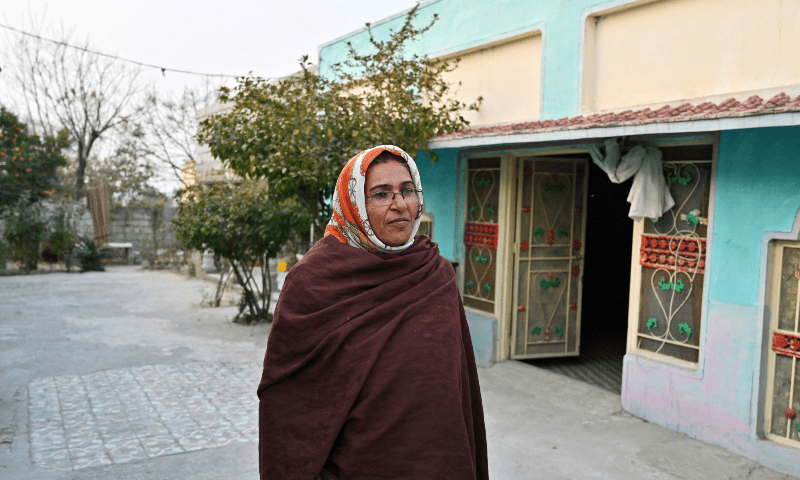
    In this photograph taken on Jan 29, 2024, Robina Kausir, a healthcare worker, looks on during an interview with AFP in Dhurnal of Punjab. — AFP
    In this photograph taken on Jan 29, 2024, Robina Kausir, a healthcare worker, looks on during an interview with AFP in Dhurnal of Punjab. — AFP

    She credits part of the shift to access to information as a result of the rising use of smartphones and social media.

    “These men instil fear in their women — many threaten their wives,” she told AFP.

    Robina, backed by her husband, is one of the few prepared to take the risk.

    When cricketing legend Imran Khan swept to power in the 2018 election, Robina arranged for a minibus to take women to the local polling station.

    Only a handful joined her, but she still marked it as a success and will do the same on Thursday’s election.

    “I was abused but I do not care, I will keep fighting for everyone’s right to vote,” Robina said.

  • More than 10 million users think Elon Musk should step down as Twitter’s CEO

    More than 10 million users think Elon Musk should step down as Twitter’s CEO

    Less than two months after taking over as CEO of the social media network, Elon Musk faced outrage from Twitter users who voted in a poll for him to resign.

    According to the poll the billionaire started on Sunday night, almost 57.5 per cent of votes were in favour of Musk stepping down as the CEO of Twitter, while 42.5 per cent were opposed. There were over 17.5 million voters.

    Musk said on Sunday that he would follow the poll’s findings, although he did not specify when he would resign if the results called for it.

    In premarket trade, shares of Tesla Inc., the electric vehicle manufacturer that Musk leads, were up roughly 3 per cent at $154.70.

    The poll is the most recent development in Musk’s chaotic time in office as Twitter CEO since October, which has included firing thousands of employees and members of top management at a rapid clip, haggling over how much to charge for Twitter Blue, a subscription service, and restoring banned accounts like that of former US President Donald Trump.

  • PML-N wins PP-84 Khushab by-poll

    PML-N wins PP-84 Khushab by-poll

    Pakistan Muslim League-Nawaz’s (PML-N) Moazzam Sher Kallu has won the PP-84 Khushab by-election with a significant margin. Kallu came out on top with 73,081 votes and retained the seat that was vacated after the death of PML-N lawmaker Malik Muhammad Waris Kallu in March.

    Pakistan Tehreek-e-Insaf’s (PTI) Ali Hussain Baloch was the runner-up with 62,903 votes. Kallu’s margin of victory is 10,178 votes.

    PML-N President Shehbaz Sharif congratulated the public and winning candidate Moazzam Sher Kallu. “The people of Khushab have rejected the wheat and sugar thieves,” Sharif was quoted

    Maryam Nawaz celebrated the Khushab victory on Twitter. She said “people in every city have declared Nawaz Sharif’s victory” and derided those who wanted to “minus Nawaz Sharif”.

    “Look at the works of Allah! Only Nawaz Sharif is left [standing], while everyone else has been cut out,” added Maryam.

    A total of eight candidates stood in the race. Besides the PML-N and PTI candidates, PPP’s Ghulam Habib Ahmed was in the running, as well the banned TLP’s Asghar Ali. The independents included Amjad Raza, Aurangzeb, Imran Haider Khan, and Ilyas Khan Azad.

    The Election Commission of Pakistan (ECP) said in a statement that “no untoward situation of law and order has been reported at the polling station”.

    Chairman PPP Bilawal Bhutto Zardari congratulated the President PML-N Shehbaz Sharif, for the win in PP-84 by-polls.

  • ECP accepts Miftah Ismail’s plea for a vote recount

    ECP accepts Miftah Ismail’s plea for a vote recount

    The Election Commission of Pakistan (ECP) on Tuesday reserved the verdict on PML-N’s Miftah Ismail’s plea for a vote recount in the NA-249 by-poll. The ECP accepted Ismail’s request for a vote recount . All parties have been summoned to the RO’s office on May 6 for a vote recount.

    Ismail had written a letter to Chief Election Commissioner, seeking a vote recount in NA-249 after he lost the poll by 683 votes. PPP’s Mandokhel had won the NA-249 By-Election.

    A four-member commission of the ECP headed by Chief Election Commissioner Sikandar Sultan Raja heard the plea.

    PML-N’s counsel Salman Akram Raja in his argument stated that a large number of Form 45 were not duly signed by the presiding officers, while agents of PML-N were also not given Form 46. Raja demanded the ECP to initiate an inquiry on the irregularities surfaced in the Karachi by-poll.

    The PPP’s counsel Latif Khosa opposed the re-polling in the constituency and said that it is not enough to say that irregularities were made. “You should highlight where irregularities were reported,” Khosa added.

    After hearing from both sides, the chief election commissioner announced the judgement.