Tag: VPN

  • Firewall, VPN blockage necessary to save youth: Tahir Ashrafi

    Firewall, VPN blockage necessary to save youth: Tahir Ashrafi

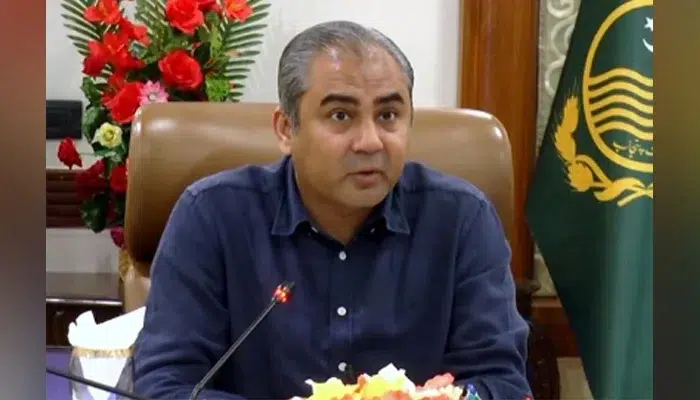
    Chairman Pakistan Ulema Council Hafiz Tahir Ashrafi, while addressing Ulema-e-Mashaikh Convention on November 13, said that “Firewall and blocking of VPNs are necessary steps to save the youth.”

    “You have to take all these steps, including blocking apps, VPNs, or installing firewall if you want to save the younger generation,” said the state-affiliated religious scholar.

    Authorities in Pakistan have taken dramatic steps to control social media, including thee blockage of X (formerly Twitter). Ironically, the Prime Minister of Pakistan also uses X regularly to share his views, which isn’t possible without the use of VPNs.

    In September 2024, the Pakistan Telecom Authority (PTA) clarified that virtual private networks (VPNs) in the country would not be blocked.


    As the government decided to ban the social media platform X in February, the use of VPNs by local internet users witnessed a significant increase in 2024.

    A report by Top10VPN, an independent VPN review website, stated that the demand for proxy networks increased by 131 per cent on Feb 19, two days after X was blocked.

    “Recent news circulating in media about PTA to block VPNs, it is clarified that VPNs are not being blocked in Pakistan,” PTA said in a statement.

    “However, PTA is encouraging all IT companies, software houses, freelancers and banks, etc, to register their IPs for using VPNs so that in case of any disruption, the internet services to these entities are not affected.”

    Users have also complained about the slowdown of the internet ever since the government undertook trial runs of firewall technology, while information technology minister Shaza Fatima Khawaja said during a press conference in August that the “use of VPNs was the reason for the slowdown of internet services across the country.”

    However, contrary to the PTA’s earlier clarification, users have reported problems accessing VPNs since last week. ProPakistani reported that their sources confirmed, “unregistered VPNs are being blocked through a firewall and are temporarily blocked for whitelisting.”

    After a controversy over blocking virtual private networks (VPNs) and growing public anger in Pakistan, the Pakistan Telecommunication Authority (PTA) Wednesday rolled out a streamlined process for legitimate users to register their VPNs.

    The PTA held a consultation session on the VPN registration framework yesterday. Representatives from the Ministry of IT & Telecommunication (MoIT&T), the Pakistan Software Export Board (PSEB), and the Pakistan IT Association (P@SHA) attended the session.


    According to a statement issued by the PTA, the session aimed to foster a secure environment for the IT and e-commerce sectors in Pakistan.


    “The PTA introduced a streamlined VPN registration process, allowing legitimate users to register their VPNs through a new online platform at ipregistration.pta.gov.pk,” the statement further said.


  • PTA rolls out new registration portal for VPN users

    PTA rolls out new registration portal for VPN users

    After a controversy over blocking virtual private networks (VPNs) and growing public anger in Pakistan, the Pakistan Telecommunication Authority (PTA) Wednesday rolled out a streamlined process for legitimate users to register their VPNs.

    The move came days after the national regulator started the process of blocking unregistered VPNs in the country to regulate internet security and ensure the safety of users.

    VPNs are widely used around the world to access content that may be inaccessible or blocked for internet users in their home country. In Pakistan, VPNs are frequently used to access X, among other restricted websites.

    The PTA held a consultation session on the VPN registration framework yesterday. Representatives from the Ministry of IT & Telecommunication (MoIT&T), the Pakistan Software Export Board (PSEB), and the Pakistan IT Association (P@SHA) attended the session.

    According to a statement issued by the PTA, the session aimed to foster a secure environment for the IT and e-commerce sectors in Pakistan.

    “The PTA introduced a streamlined VPN registration process, allowing legitimate users to register their VPNs through a new online platform at ipregistration.pta.gov.pk,” the statement further said.

    The regulatory authority claimed that this simplified framework “supports uninterrupted access for IT companies, freelancers, and other stakeholders, reinforcing PTA’s commitment to Pakistan’s expanding digital economy”.

    During the session, participants also addressed concerns about the potential use of VPNs for illegal activities.


  • ‘Please do something,’ students push Hamid Mir to file petition against internet disruption

    ‘Please do something,’ students push Hamid Mir to file petition against internet disruption

    The month of August has been the worst for the digital space in Pakistan since February 2024.

    The tech industry has expressed serious concerns about the internet slowdown, warning that it could cost the debt-ridden nation up to $300 million.

    Amid the ongoing issues, senior journalist Hamid Mir took the matter to the Islamabad High Court (IHC), filing a petition through Advocate Imaan Mazari against the internet slowdown.

    Mir argued on behalf of the journalist community, which is struggling to perform its duties due to reliance on connectivity and communication. He further noted that the issue impacts those in e-commerce, students, freelancers, and others.

    The petition also highlights that no prior consultation or deliberation took place between the government and relevant stakeholders before the installation of the firewall, which has contributed to the ongoing struggles of the business and tech community.

    This lack of transparency has fueled doubts and rumours about the nature of the firewall.

    But did Hamid Mir file the petition solely because of the struggles faced by journalists?

    “Frankly speaking, I filed the petition after receiving messages from many students who said they could not leave Pakistan but were finding it difficult to study here,” Mir told The Current, revealing that internet disruptions have also impacted students pursuing online studies, prompting them to seek intervention from the authorities — which Mir decided to do on their behalf.

    “I also face pressure from my own family, who cannot stay in this country anymore. They have asked me to do something to restore internet and social media if we are to remain here,” he explained, reflecting on the growing discontent among the youth.

    Given the current circumstances, the petition argues that installation cannot proceed without consulting relevant stakeholders and that only “reasonable restrictions” may be imposed by law, based on the “principles of necessity and proportionality.”

    The respondents are also asked to provide reports on the firewall’s objectives, status, and impact on citizens’ rights, including details on internet surveillance. Meanwhile, the petition calls for halting the firewall installation and ensuring uninterrupted internet access for citizens until the issue is resolved.

  • ‘It’s not possible’; Reporting in internet-challenged Pakistan

    ‘It’s not possible’; Reporting in internet-challenged Pakistan

    With the primary shift from newspapers to television channels and now to digital media applications, the dissemination of information has become increasingly competitive for newsrooms, with the latest updates just a click away.

    “Delays can be managed with newspapers, but today everything is in your hands—specifically, mobile phones,” says Raees Ansari, Bureau Chief of Geo News in Lahore.

    “Every single second is crucial in reporting now; some footage needs to be sent and put on air instantly. But due to poor network conditions and slow WhatsApp, content is not being sent on time, which is affecting our professional activities,” he reveals.

    Over the past week, internet users across Pakistan have reported network disruptions, with WhatsApp, Facebook, and Instagram experiencing slowdowns, hindering online activities. The Pakistan Telecommunication Authority (PTA) has denied any connection between these issues and the alleged firewall installation.

    Since the ban on X (formerly Twitter) on February 17, 2024, many have turned to Virtual Private Networks (VPNs). The ongoing disturbances, however, have complicated internet usage, which is crucial for a number of professions.

    Sumaira Raja, an investigative reporter, who is mostly found out on the field, complains of encountering issues with not only the internet but also phone signals which often prevents her from conveying news on time.

    “I also experience delays with receiving beepers, as head office frequently reports that the number is not available due to poor signals. This situation makes it very difficult to do my job. I’ve tried using a VPN, but it hasn’t worked,” Raja says.

    Sports journalist Faizan Lakhani recalls when javelin champion Arshad Nadeem returned to Pakistan on August 17 after winning the gold medal at the Paris Olympics, all the visuals sent through WhatsApp by reporters were delayed, and they struggled to download them unless they used a VPN.

    “This situation is very challenging and affects our workflow. When reporters are working on a story or covering an event, they need to stay connected with the desk. We usually rely on voice notes to pass instructions, but since we started encountering this issue, we are struggling with that method too,” he says.

    “We have been told that the network disruption is because of the firewall installation. While things are becoming easier around the world, it has been getting harder for us. Everything is happening with the help of technology and the current situation is a major challenge.” says Ansari.

    What’s happening?

    A highly placed source in the IT industry identifies that filtering of content delivery networks (CDNs) through Firewall is causing content to be routed via internet backbone rather than CDNs.

    “This means that around 4 TBs of internet traffic previously served through CDNs, hosted in Pakistan, is becoming ineffective. When all traffic goes on backbone bypassing CDNs, it’s causing massive slowdown at many western destinations that’s happening now,” he explains.

    Recently, Fiverr, an online marketplace for freelance services, warned clients that Pakistani freelancers may experience delays due to internet issues and the use of VPNs to change their locations.

    “Brace for impact. God save the internet in Pakistan”, says the IT expert.

    Background

    It all started on February 17, 2024, about a week into the new government, when X (formerly Twitter) was banned.

    Initially, amid the uproar, the government remained silent on the matter while the Pakistan Telecommunication Authority (PTA) seemed aloof until the High Courts of Sindh and Islamabad intervened. The PTA eventually admitted that the ban on X was imposed on the orders of the Ministry of Interior based on reports from intelligence agencies.

    The government eventually justified the ban by attributing it to national security concerns, citing ‘digital terrorism‘ and online propaganda as among the threats.

    Earlier in August, Provincial Information Minister Azma Bokhari stated that the government is not against social media but wants to focus on rules and regulations, which, if enforced, could lead to the removal of the ban on X.

    The disruption has now extended beyond X, affecting other widely used apps along with the internet.

    Ironically, since the February 2024 election, the new government has emphasised the need to grow the tech industry in Pakistan.

    In March, Lahore Knowledge Park (a science park) was handed over to the Punjab Central Business District Development Authority with the approval of Chief Minister Punjab Maryam Nawaz, with the goal of establishing Pakistan’s largest IT city.

    In June, Prime Minister Shehbaz Sharif visited Shenzhen— the tech hub in China— in hopes of future collaboration. Ironically, he posted on X (Twitter), expressing how “impressed” he was by the “city’s skyline and development that symbolizes modern-day China.”

    Given the lack of proper infrastructure in the country amid burgeoning surveillance, how will Pakistan evolve in the rapidly transforming digital world? It remains to be seen – but likely we won’t be able to download it.

  • Mohsin Naqvi seeks to review social media laws amid nationwide X disruption

    Mohsin Naqvi seeks to review social media laws amid nationwide X disruption

    Interior Minister Mohsin Naqvi has sought a review of social media laws to prevent misuse, as the popular social networking platform X has been disrupted nationwide for over a month.

    X, formerly Twitter, is not accessible to millions of Pakistani citizens without a VPN, getting suspended before the February 8 general elections.

    “Social media laws should be envisaged,” Naqvi said while speaking to journalists in Lahore on Tuesday, adding that “social media is being misused. Social media regulations have been implemented across the globe.”

    Mohsin Naqvi also said that it is necessary to maintain a difference between freedom of expression and spreading propaganda. “Everyone has the right to freedom of speech; however, it should not be misused.”

    The interior minister also said smear campaigns against politicians, the judiciary, and other national institutions should be stopped, further adding that there should be the implementation of social media laws in the country.

  • IT minister denies involvement in internet suspension resulting in billion-rupee losses

    IT minister denies involvement in internet suspension resulting in billion-rupee losses

    Following the internet blackout in Pakistan, Federal Minister for Information Technology and Telecommunication Syed Amin-ul-Haque distanced his ministry from the blockage, stating that they were not taken into confidence.

    According to Geo, Haque revealed that mobile internet services were suspended without the Ministry of IT’s consultation. Since 2017, the Pakistan Telecommunication Authority (PTA) has not been under the Ministry of IT, and the PTA has been operating independently.

    The minister explained that blocking social media websites or the internet was not the solution to any issue, and he urged people to be open-minded rather than resorting to using a VPN to access blocked sites.

    Haque suggested that instead of completely blocking the internet, it could be blocked in specific areas. He emphasized that the IT sector suffered losses of billions of rupees due to internet blockages.

    The suspension of mobile broadband and restricted access to Twitter, Facebook, and YouTube occurred after violent protests arose in response to the Rangers personnel arresting Pakistan Tehreek-e-Insaf (PTI) Chairman Imran Khan from the Islamabad High Court. At least ten people died, and dozens sustained injuries during the days-long protests.

    After almost a seven-day suspension, the government restored access to social media platforms such as Twitter, YouTube, and Facebook. The suspension was recommended by the interior ministry and is the longest continuous shutdown in a country that often suspends communication as a tool to quell unrest. Telecom operators suffered an approximate revenue loss of Rs820 million, which was a significant blow to the sector as the economy remained in a fragile state.

    Additionally, the government blocked major social media platforms, including Twitter and Facebook, while YouTube services were slower to control the spread of disinformation.

  • Microsoft to add a built-in VPN in Edge browser to improve privacy

    Microsoft to add a built-in VPN in Edge browser to improve privacy

    Microsoft is adding a free built-in virtual private network (VPN) option to its Edge browser in order to boost security and privacy.

    The tech giant is presently testing the Cloudflare-powered VPN service, dubbed ‘Edge Secure Network,’ and says it will roll it out to the public as part of a security upgrade.

    When enabled, Edge Secure Network should encrypt users’ online traffic so that internet service providers are unable to acquire browsing data that you’d prefer to keep secret, such as health-related searches or merely weird questions.

    Users will be able to mask their location by browsing the web using a fake IP address, according to the new capability. Users will be able to access content that is restricted in their country, such as Netflix or Hulu shows.

    Read more: Instagram is testing ‘pin’ feature for posts

    While the functionality is still under development and not yet accessible for early testing, Microsoft has provided instructions on how people can get a sneak peek.

    This means that it will first be available through one of the Microsoft Edge Insider channels, which users may download and join here.