Tag: wages

  • Plan under consideration to increase govt officials’ salaries by 5 to 15 per cent

    Plan under consideration to increase govt officials’ salaries by 5 to 15 per cent

    In an attempt to lessen the impact of inflation, the government is considering raising salaries by 5 to 15 per cent in the upcoming fiscal year’s budget, according to The News, following the Pay and Pension Commission’s inability to submit a report ahead of the next budget, which led to the prime minister’s decision to grant another extension.

    The deadline for submitting the Commission’s recommendation is being extended to June 30, 2022, as per a statement released by the Finance Division.

    According to top official sources, the former PTI-led government gave a 15 per cent allowance to officials in grades 1 to 19, effective March 1, 2022.

    The new Shehbaz Sharif-led administration, on the other hand, pledged a 10 per cent rise in the pension and a 25,000-per-month minimum wage.

    A Finance Ministry official stated that in the future budget, pay for grades 1 to 19 may be boosted by another 5-10 per cent as an adhoc allowance. Employees in grades 20 to 22 could see a pay raise of 10 per cent to 15 per cent.

    In addition, due to increased inflationary pressures, the government may boost pensions by 5-10 per cent. The Regulation Wing of the Ministry of Finance has completed its internal work in this regard. It was also resolved to form a Pay and Pension Commission, which would make recommendations.

    The commission was established by the PTI-led government in April 2020, and its chairman was former Secretary of Finance Abdul Wajid Rana. He resigned, however, and former bureaucrat Nargis Sethi was named Chairperson of the Pay and Pension Commission. She later quit as well.

    The Pay and Pension Commission was then chaired by Zafar Ahmed Khan, who was chosen by the government. So far, the commission has requested two extensions but has yet to present its recommendations.

    The text box was included in the Pay and Pension Commission’s terms of reference, which included studying the adequacy of the existing basic pay scale system and evaluating the current salaries of government employees.

    Read more: Petrol quota for ministers, govt officials in Sindh lowered by 40 per cent

    It also includes making recommendations for streamlining existing classification from BPS 1-22, studying the separation of existing basic pay scales for dedicated departments, occupations/cadres, reviewing special scales such as management grades, management position scales (MP Scales), special professional pay scales (SPPS); project pay scales, and proposing measures for uniformity and improvement, reviewing admissible regular allowances, special incentives, and all other supplementary pay scales.

    The panel was tasked with identifying current shortcomings in the Pension Scheme and making recommendations for a corrective revision along with ensuring the current model’s long-term viability and recommending a system with clear timelines that is more efficient and sustainable given the available resources.  
  • Crisis-hit Sri Lanka has enough petrol left for one day, PM warns

    Crisis-hit Sri Lanka has enough petrol left for one day, PM warns

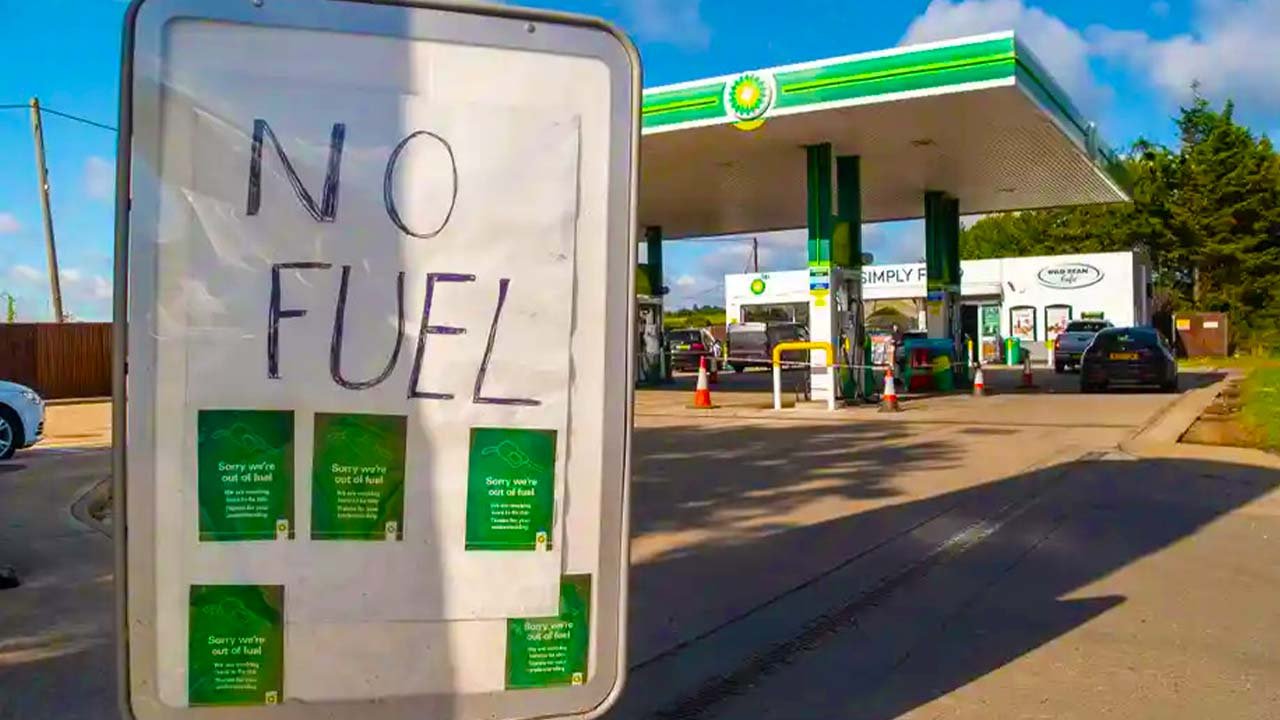
    As the country suffers its greatest economic crisis in more than 70 years, Sri Lanka’s new Prime Minister (PM) declared that the country is headed to its last day of petrol stock.

    PM Ranil Wickremesinghe said the country urgently needed $75 million in foreign currency to pay for crucial imports in a televised address. In order to pay government salaries, he claims the central bank will have to print money.

    Sri Lankan Airlines, which is owned by the government, may be privatised, according to PM Wickremesinghe.

    The pandemic, soaring energy prices, and populist tax cuts have all wreaked havoc on the island nation’s economy. Medicines, fuel, and other essentials were in low supply due to a chronic shortage of foreign cash and rising inflation.

    Auto rickshaws, the city’s most popular mode of transportation, and other vehicles have been queuing at gas stations in Colombo.

    The country has enough petrol for one day at the time. Mr Wickremesinghe, who was appointed Prime Minister last week, cautioned that the next few months will be the hardest of our lives.

    He noted that shipments of petrol and diesel using an Indian credit line could provide fuel supplies in the coming days.

    Mr Wickremesinghe stated that the nation’s central bank will have to print money to assist the government in meeting its salary bill and other obligations.

    The PM stated that he is forced to allow the printing of money against his will in order to pay state employees and purchase vital products and services. However, the nation must keep in mind that printing money causes the local currency to depreciate.

    Read more: CNG prices pushed to Rs140 per kg for sales tax collection

    As part of his efforts to stabilise the country’s finances, he advocated selling out Sri Lankan Airlines. In the fiscal year ended March 2021, the airline lost 45 billion rupees ($129.5 million; £105 million).

  • Labourers demand increase in monthly wages, pensions

    Labourers demand increase in monthly wages, pensions

    On May 15, the provincial president of the Muttahida Labour Federation (MLF) in Peshawar, Muhammad Iqbal stated that the current price hikes had made life difficult for poor workers but the government had remained silent.

    He remarked that the provincial and federal governments should enhance monthly wages and the Employees’ Old-Age Benefit Institution pension in relation to the country’s current price hikes and inflation, speaking during a protest gathering staged in honour of May Day here at Shobra Chowk.

    The leader was of the view that workers had played a critical part in the country’s progress, but that each subsequent government had crushed them under one excuse or another. He claimed that the government and investors had teamed up to close down industrial units in the province as part of a well-planned plot.

    Read more: Pakistan’s textile exports surge by 30 per cent

    Iqbal said that the authorities should take measures to protect the rights of lower-paid strata and labourers in order to ease their lives.

  • Federal Govt teachers demand pay raise, promotion

    Federal Govt teachers demand pay raise, promotion

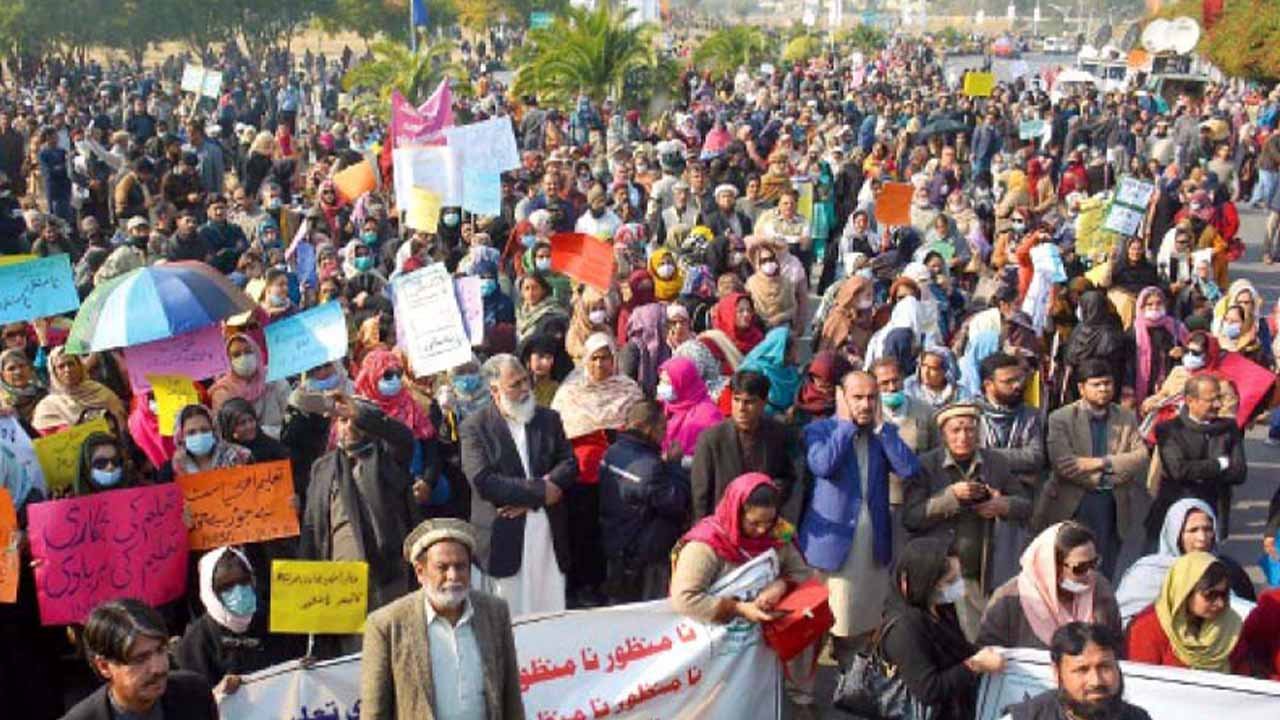
    Federal government employees have warned to hold another sit-in in the federal capital if their demands for salary increments and promotions are not met by May 23.

    They voiced the statement during a rally in front of Parliament House organised by the All-Government Employees Grand Alliance (AGEGA), where a significant number of teachers showed up, responding to the Federal Government College Teachers Association’s call (FGCTA).

    Dr Nazir Ahmed Bhutta, the FGCTA’s General Secretary, urged the government to fulfill its promise made last year in February.

    As per the agreement, all perks or allowances should be combined with basic salaries, employees should be given timely promotion and raise, including pay and pension adjustments should be implemented to minimise wage discrepancy.

    Professor Tahir Bhatti, president of the FGCTA (local unit of H-9 College), demanded the return of the Saturday weekly off for government employees who, he claimed, couldn’t afford to work six days a week due to a large increase in fuel prices in recent months.

    To preserve electricity, he believes the government should proclaim Saturday as a holiday.

    Professor Farhan Azam, senior vice-president of the FGCTA, noted that the remuneration of employees in different departments differed significantly, causing resentment among lesser-paid staff of the same grade. He proposed that professionals of the same status should have the same pay and privileges.

    Rehman Bajwa, AGEGA’s chief coordinator, cautioned that if the employees’ demands were not met by May 23, they would take to the streets after speaking with their management.

  • Nepra approves Rs1.29 hike in cost per unit for Karachi residents

    On account of monthly Fuel Cost Adjustments (FCA), the National Electric Power Regulatory Authority (NEPRA) raised the cost per unit of power for Karachi residents by Rs1.29.

    It held a public hearing at its headquarters on Karachi Electric’s (KE) request to hike the power tariff under the FCA by Rs3.45 per unit for February. Chairman Tauseef H. Farooqi chaired the public meeting, which was also attended by officials Rafiq Ahmed Sheikh and Engineer Maqsood Anwar Khan.

    According to the officials, KE’s monthly FCA is decided at Rs1.29 per unit based on data analysis.

    The Chairman inquired about Karachi’s load-shedding status and if KE has a gas procurement deal with the Sui Southern Gas Company (SSGC) to address the fuel crisis.

    Load management is only done on feeders with a low recovery rate, according to the latter’s officials, and consumers only have to experience one to one-and-a-half hours of load shedding every day.

    Chairman Farooqui stated that KE’s technology needs to be modernised, and that there should be no load-shedding for bill-paying customers and locations where billing is timely.

    He also mentioned that the NEPRA has posted phone numbers on its website for inhabitants of the city to report any forced load-shedding by any power utility.

    According to the briefing delivered at the meeting, KE’s customers were charged Rs3.28 per unit in January under the FCA. Similarly, the FCA for February was decided to be Rs1.99 lesser than the January billing.

    Muhamad Tanveer, who is a representative of the Karachi Chamber of Commerce (KCCI), denied the FCA, citing that customers are already paying for the January hike and that the FCA should not be transferred to them.

    After reviewing the facts, the NEPRA issued a thorough judgment declaring that the FCA is only levied and set for the month in concern and that it is variable with each hearing depending on the fuel costs for that month.