Tag: war

  • Kamala Harris ‘will not be silent’ on suffering in Gaza

    Kamala Harris ‘will not be silent’ on suffering in Gaza

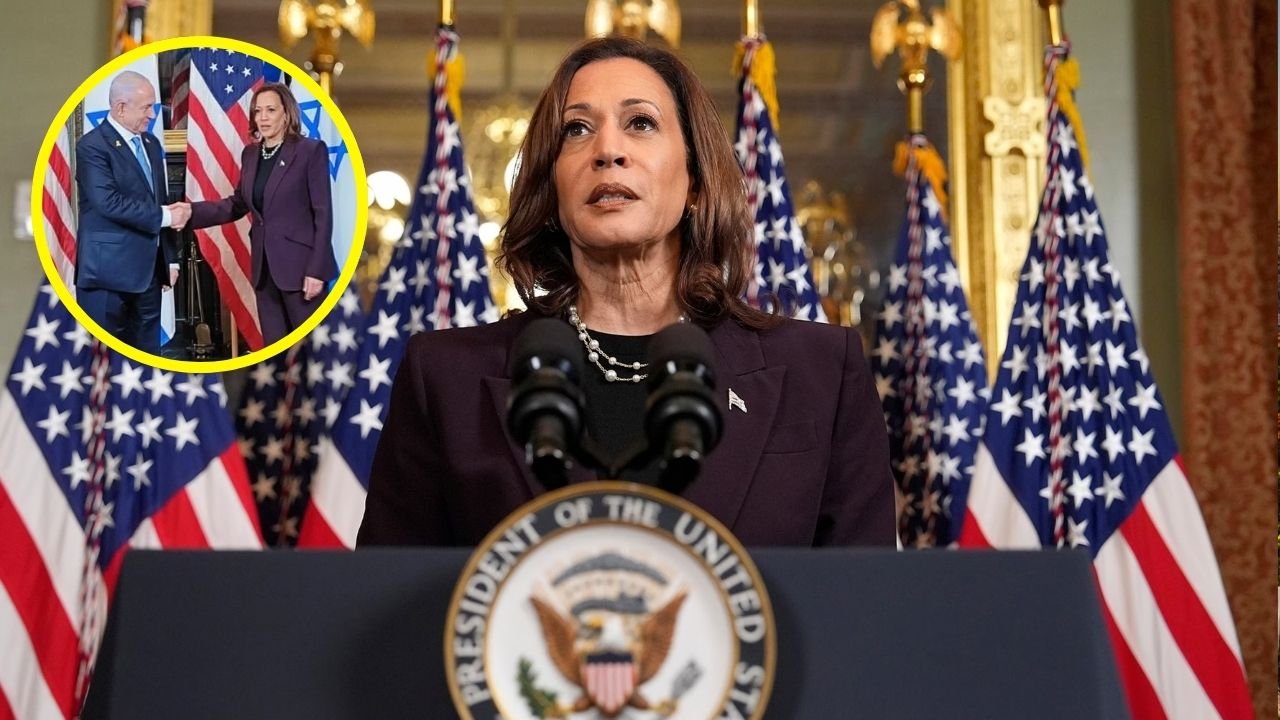
    United States Vice President Kamala Harris, who is now running for candidacy in the upcoming presidential election, has asserted that she will not remain “silent” on the suffering in Gaza.

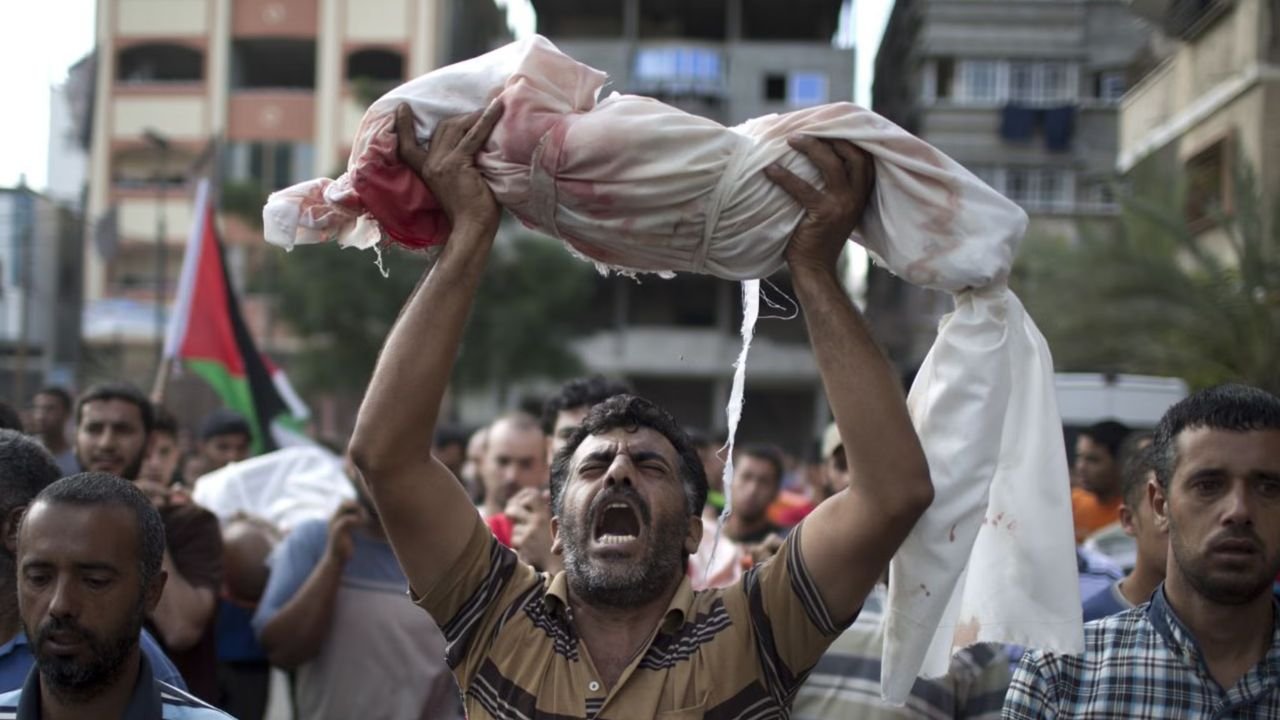
    “What has happened in Gaza over the past nine months is devastating. The images of dead children and desperate hungry people fleeing for safety, sometimes displaced for the second, third or fourth time,” Harris said while speaking to reporters following her meeting with Israeli Prime Minister Benjamin Netanyahu in Washington DC.

    At the same time, she maintained that “Israel has a right to defend itself”, deeming Hamas as a “brutal terrorist organisation” that led to the “war” and had carried out ‘“horrific acts of sexual violence”.

    Harris later added that “We cannot look away in the face of these tragedies [in Gaza]. We cannot allow ourselves to become numb to the suffering and I will not be silent.”

    She also urged the creation of a Palestinian state, further calling for Netanyahu and Hamas to accord a ceasefire and hostage release deal to end a war that has killed “far too many” civilians.

    “As I just told Prime Minister Netanyahu, it is time to get this deal done,” she said.

  • Twitter going to war over Fawad’s Bollywood project

    Twitter going to war over Fawad’s Bollywood project

    Fawad Khan, the acclaimed Pakistani actor, is rarely involved in controversies but recently became the center of one following the recent announcement of his return to Bollywood after an eight-year hiatus.

    Known for his roles in films like Khoobsurat and Kapoor & Sons, Khan’s decision to work alongside actress Vaani Kapoor has sparked heated discussions across social media platforms.

    The news of Khan’s comeback, first reported yesterday, has drawn a barrage of reactions, with many expressing disappointment and frustration. Critics on Twitter and other forums have voiced concerns over Khan’s choice to resume his Bollywood career, citing ongoing political tensions between India and Pakistan as a backdrop to their discontent. While many Indians are thrilled about his return, Pakistanis have been more critical, leading to mixed reactions overall.

    Writer Sadaf Haider shared her thoughts on X (formerly Twitter) about Fawad Khan’s Bollywood comeback. She wrote:

    “Fawad Khan: I love him, I hate him, I love him, I hate him. He has everything except Humayun’s confidence. But Fawad, I always fail at hating you. Okay, go ahead and work with a C-grader. We’ll endure it – we have no choice.”

    Here are more tweets below:

  • Israeli official confirms Netanyahu dissolves war cabinet

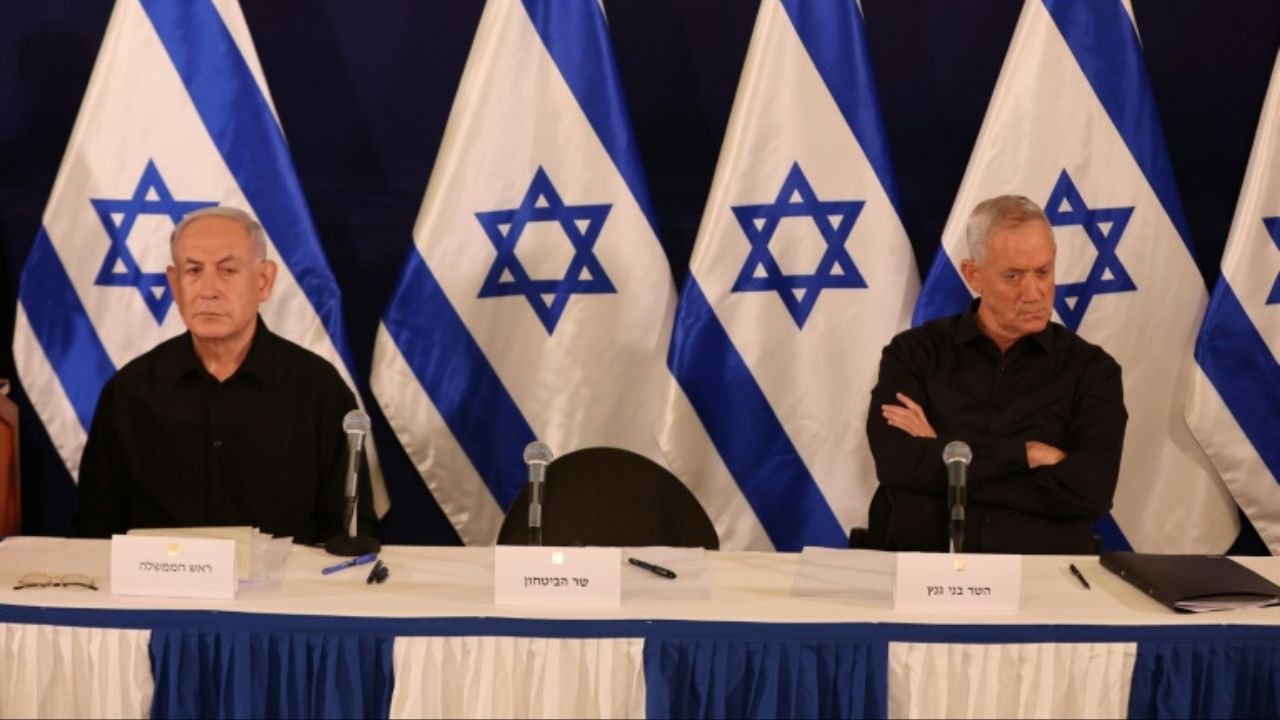
    An Israeli government spokesman on Monday said Prime Minister Benjamin Netanyahu had dissolved the war cabinet following the resignation earlier this month of centrist leader Benny Gantz.

    David Mencer, spokesman at the prime minister’s office, told reporters the war cabinet was a “prerequisite” for former army chief and defence minister Gantz to join a unity government.

    “So with Mr Gantz leaving government, there is no need for the cabinet. Its duties will be taken over by the security cabinet”, a pre-existing body, on matters regarding the war between Israel and Hamas in the Gaza Strip, he said.

    Israeli media said the move, which was not expected to trigger any major policy shift, was meant to counter pressure from far-right politicians seeking a greater say in decision-making.

    The war cabinet was formed after Gantz had left the opposition to join Netanyahu’s government following Hamas’s October 7 attack on Israel.

    Another member of Gantz’ party, also a former military chief, Gadi Eisenkot, had also agreed to join the government on condition that a war cabinet be formed, according to Israeli officials.

    Eisenkot left the war cabinet along with Gantz.

    “It means that the security cabinet will meet more often. The security cabinet is the body responsible for making decisions (related to the war) anyway,” said an Israeli official on condition of anonymity because he was not authorised to speak on the issue.

    Defence Minister Yoav Gallant, National Security Adviser Tzachi Hanegbi and Strategic Affairs Minister Ron Dermer, who were all part of the war cabinet, also sit on the security cabinet — which ratifies decisions regarding the war including truce and hostage release negotiations.

    Gantz announced his resignation on June 9 after failing to get Netanyahu to approve a post-war plan for Gaza.

    Israeli media reported that Netanyahu dissolved the war cabinet to avoid including far-right coalition members in the sensitive forum, fearing harm to relations with Western allies such as the United States.

    Mencer declined to answer when asked if Netanyahu’s decision aimed to rebuff his far-right partners and tighten his grip over decision-making.

    National Security Minister Itamar Ben Gvir and Finance Minister Bezalel Smotrich, who are both security cabinet members and opposed to a truce before Hamas is “eliminated”, had put pressure on Netanyahu to add them to the war cabinet.

    Israel’s genocide against Palestinians in Gaza has killed at least 37,347 people, also mostly civilians, according to the health ministry in the territory.

  • UN probe accuses Israel of crimes against humanity

    UN probe accuses Israel of crimes against humanity

    A UN investigation concluded on Wednesday that Israel has committed crimes against humanity during the genocide in Gaza, including that of “extermination”, while saying Israeli and Palestinian armed groups have both committed war crimes.

    The independent Commission of Inquiry’s report is the United Nations’ first in-depth investigation into the events following October 7.

    It found that Israel had committed war crimes, crimes against humanity and violations of international humanitarian law (IHL) and international human rights law (IHRL).

    The report noted “a widespread or systematic attack directed against the civilian population in Gaza.”

    “The commission found that the crimes against humanity of extermination; murder; gender persecution targeting Palestinian men and boys; forcible transfer; and torture and inhuman and cruel treatment were committed,” it added.

    Israel rejected the conclusions by accusing the UN commission of “systematic anti-Israeli discrimination”.

    Israel intensified its attacks in Gaza after Hamas’s October 7 attack.

    The commission found that in that attack, members of the military wings of Hamas and other Palestinian armed groups and Palestinian civilians committed war crimes, as well as violations and abuses of IHL and IHRL.

    Militants seized 251 hostages, of which 116 remain in Gaza, though the Israeli army says 41 of them are dead.

    The Israeli army launched a devastating offensive on the Gaza Strip that has left more than 37,000 people dead, the majority of them civilians, according to the territory’s health ministry.

    The unprecedented Commission of Inquiry was established by the UN Human Rights Council in May 2021 to investigate alleged violations of IHL and IHRL in Israel and the Palestinian territories.

    Since October 7, the three-member commission has focused on Israeli geocide against Palestinians in Gaza.

    “It is imperative that all those who have committed crimes be held accountable,” said the commission’s chair Navi Pillay, a former UN rights chief and an ex-International Criminal Court judge.

    “Israel must immediately stop its military operations and attacks in Gaza.

    “Hamas and Palestinian armed groups must immediately cease rocket attacks and release all hostages. The taking of hostages constitutes a war crime.”

    ‘War crimes’ in October attack

    The commission concluded that members of Hamas, other Palestinian armed groups and civilians participating in the October 7 attack “deliberately killed, injured, mistreated, took hostages and committed sexual and gender-based violence”.

    These acts were committed against civilians and members of the Israeli security forces.

    “These actions constitute war crimes and violations and abuses of IHL and IHRL,” it said.

    The commission further said it found “significant evidence on the desecration of corpses, including sexualised desecration, decapitations, lacerations, burning, severing of body parts and undressing”.

    “Women were subjected to gender-based violence during the course of their execution or abduction. Women and women’s bodies were used as victory trophies by male perpetrators.”

    Many children who witnessed their relatives being killed were “also filmed for propaganda purposes”, with the commission finding it “particularly egregious that children were targeted for abduction”.

    The report said Israeli authorities “failed to protect civilians in southern Israel on almost every front”.

    Israel’s ‘starvation’ of Gaza

    In their actions in Gaza, the commission found the Israeli authorities “responsible for the war crimes of starvation as a method of warfare, murder or wilful killing, intentionally directing attacks against civilians and civilian objects, forcible transfer, sexual violence, torture and inhuman or cruel treatment, arbitrary detention and outrages upon personal dignity”.

    Starvation will affect the Gaza population, particularly children, “for decades to come”, the report said, while “the siege it imposed… constitutes collective punishment and reprisal against the civilian population, both of which are clear violations of IHL.”

    In the West Bank, the commission found that Israeli forces committed acts of sexual violence, torture and inhuman or cruel treatment and outrages upon personal dignity, “all of which are war crimes”.

    Israel’s government and forces “permitted, fostered and instigated a campaign of settler violence against Palestinian communities” in the territory, the commission added.

    The report is based on interviews with victims and witnesses conducted remotely, and in Turkey and Egypt, and through studying thousands of verified open-source items, satellite imagery and forensic medical reports, the commission said.

    “Israel obstructed the commission’s investigations and prevented its access to Israel and the Occupied Palestinian Territory,” it added.

    The report is due to be presented to the UN Human Rights Council next week.

    rjm/rlp/lb

    © Agence France-Presse
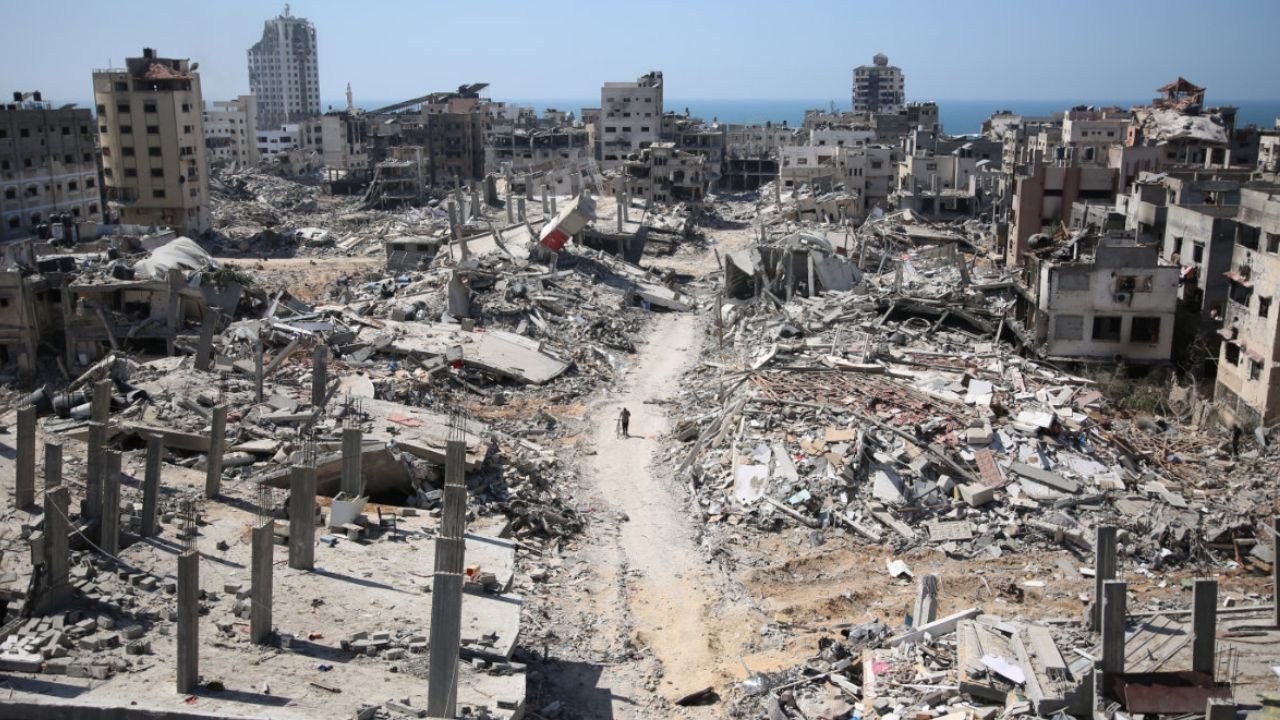
  • 37 million tonnes of debris in Gaza could take years to clear: UN

    37 million tonnes of debris in Gaza could take years to clear: UN

    There are some 37 million tonnes of debris to clear away in Gaza once the Israeli offensive is over, a senior official with the UN Mine Action Service said Friday (Apr 26).

    And unexploded ordnance buried in the rubble would complicate that work, said UNMAS’ Pehr Lodhammar, who has run mine programmes in countries such as Iraq.

    It was impossible to say how much of the ammunition fired in Gaza remained live, said Lodhammar.

    “We know that typically there is a failure rate of at least 10% of land service ammunition,” he told journalists in Geneva.

    “What we do know is that we estimated 37 million tonnes of debris, which is approximately 300 kilos of debris per square metre,” he added.

    Starting from a hypothetical number of 100 trucks, that would take 14 years to clear away, he said.

    Lodhammar was speaking as UNMAS launched its 2023 annual report Friday.

    The war in Gaza between Israel and Hamas erupted when the Palestinian militant group Hamas launched an unprecedented attack on Israel on Oct 7.

    The attack resulted in the deaths of 1,170 people in Israel, according to an AFP tally based on official Israeli figures.

    Israel vowed to eliminate Hamas, and its ensuing military offensive in Gaza has killed at least 34,356 people, most of them women and children, according to the health ministry in the Hamas-run territory.

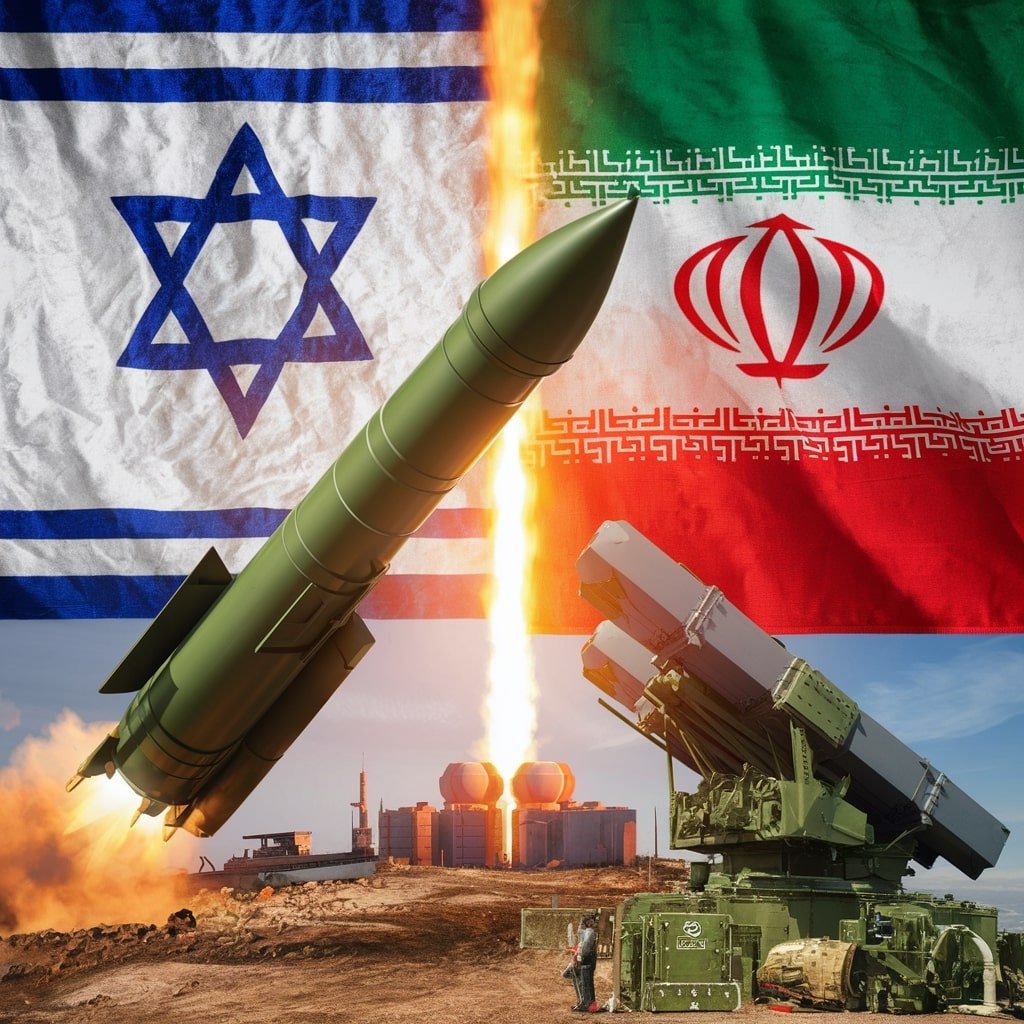
  • Israel reportedly attacks Iran

    Israel reportedly attacks Iran

    Iranian state media has stated that the country’s air defence systems brought down three drones over the central city of Isfahan.

    According to latest development, the Iranian news agency Tasnim has cited “informed sources” as saying that “there are no reports of an attack from abroad against Isfahan or any other part of Iran”.

    Separately, an Iranian analyst argued on state television that mini-drones were flown by “infiltrators from inside” the country, according to Al Jazeera.

    The International Atomic Energy Agency says it can confirm that there has been no damage to Iran’s nuclear sites.

    Meanwhile, US media, citing senior US officials, also reported that Israeli missiles had hit an Iranian site.

    Iranian air defence systems were activated and flights across several areas including Tehran and Isfahan were suspended.

    Regional tensions rose following Iran’s retaliatory strike on Israel after an attack on its diplomatic premises in Syria.

    There are fears of all-out confrontation after Iran had been warning Israel that it would respond strongly to any aggression.

  • Gaza ceasefire deal close, says Blinken

    Gaza ceasefire deal close, says Blinken

    US Secretary of State Antony Blinken has announced that the parties involved in the Israel assault on Gaza are close to reaching an agreement on a ceasefire in the besieged strip.

    In remarks given to Arab media outlets, Blinken emphasised the importance of putting a stop to the dire situation to pave the way for a better future for Gaza.

    Addressing Israel’s current offensive, Blinken stated that the US opposes Tel Aviv’s intention to carry out a large-scale ground assault on Rafah.

  • Syria war death toll over 507,000, 13 years on

    Syria war death toll over 507,000, 13 years on

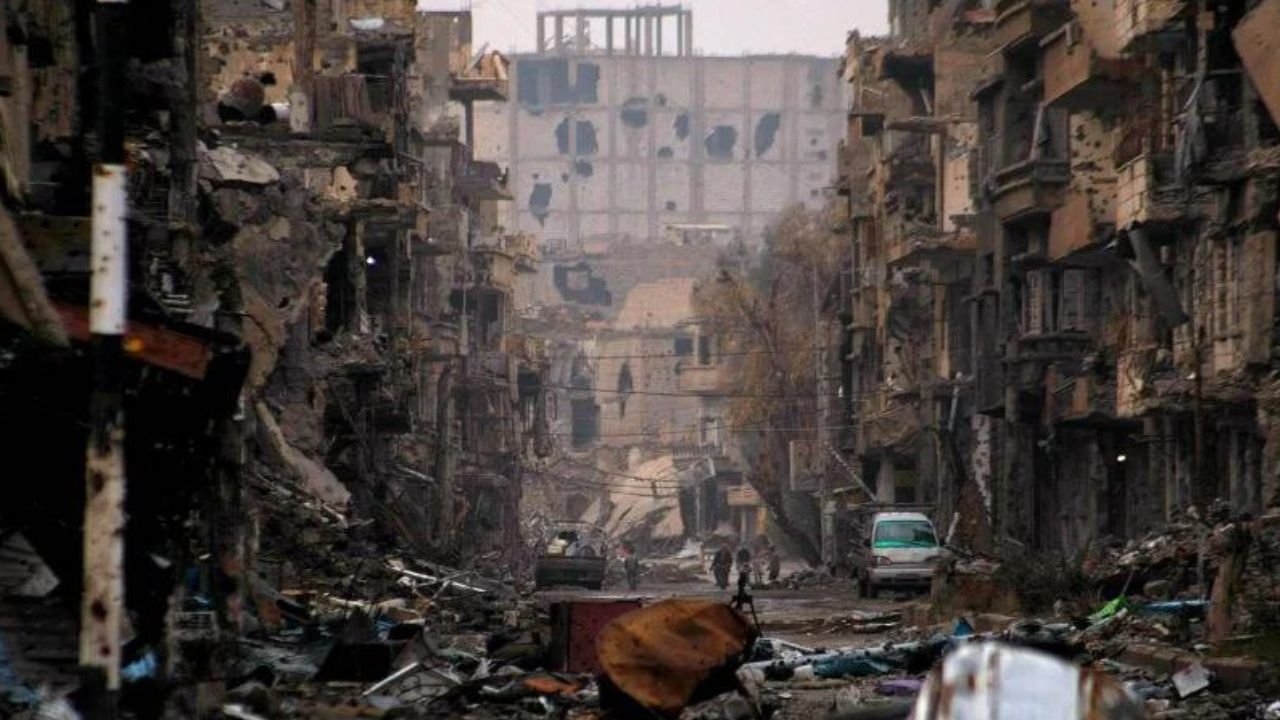
    Syria’s war has killed more than 507,000 people, a war monitor said Thursday ahead of the 13th anniversary of the conflict which has displaced millions at home and abroad.

    The government’s brutal suppression of an uprising that erupted on March 15, 2011, triggered a full-scale civil war that drew in foreign armies and international jihadists.

    The Syrian Observatory for Human Rights, a Britain-based monitor, said more than 164,000 civilians, including more than 15,000 women and 25,000 children, have been killed.

    More than 343,000 combatants, including army soldiers, fighters from pro-Iran groups, Kurdish-led forces and Islamic State group jihadists, are also among the dead, added the Observatory, which has a network of sources across the country.

    The overall figure has risen from around 503,000 last March, with the frontlines mostly quietening in recent years.

    Syrian President Bashar al-Assad has gradually clawed back territory lost early in the fighting with help from allies Iran and Russia, but large swathes of the north remain outside government control.

    The United Nations has said that this year, 16.7 million people in Syria require some type of humanitarian assistance or protection, “the largest number since the beginning of the crisis in 2011”.

    The war has ravaged Syria’s economy, infrastructure and industry, while Western sanctions have added to the country’s woes.

    Syria is home to around 7.2 million internally displaced people, the UN says, with a devastating earthquake that struck Turkey and Syria in February last year compounding the problem.

    Ninety percent of the population is living in poverty, but UN humanitarian official David Carden said last week that funding challenges could affect aid deliveries and services.

    Suhair Zakkout, Damascus-based spokesperson for the International Committee of the Red Cross, said 13 years of war have had “devastating consequences” on Syrians across the country, causing “unimaginable pain”.

    “Syria has a full generation… who has only witnessed the loss, the displacement, the war, and they know nothing but these things,” Zakkout said.

    Humanitarian organisations are working “to sustain the minimum level of the basic services” such as water and health so that “they don’t collapse”, Zakkout said.

    UN-facilitated efforts towards a political process remain stalled.

    Special envoy Geir Pedersen said last month that Moscow and Damascus had rejected holding talks in Geneva, the venue for previous negotiations aimed at forging a new constitution for Syria.

    Last year, Syria returned to the Arab League, marking Assad’s return to the regional fold after a suspension of more than a decade.

  • Tensions in Israel war cabinet as genocide in Gaza rages on

    Tensions in Israel war cabinet as genocide in Gaza rages on

    Jerusalem (AFP) – Israel’s war cabinet, seen as a symbol of national unity in the assault on Gaza, has been shaken by political rivalry between Prime Minister Benjamin Netanyahu and centrist Benny Gantz, analysts say.

    A former military chief and ex-defence minister, Gantz visited Washington Monday before heading to London on Wednesday for high-level talks in a trip which was not authorised by Netanyahu.

    It served to highlight the deep divisions between the two men as international pressure mounts on Israel over the growing humanitarian crisis in the Gaza Strip, with the genocide entering its sixth month.

    Gantz’s visit to the United States — Israel’s staunchest ally — shows that “his level of trust in Netanyahu is very low,” said Yohanan Plesner, president of the Israel Democracy Institute think tank.

    It demonstrates he wanted to present an alternative view to Washington, he added.

    Gantz, who left the political opposition to join the war cabinet after Hamas’s October 7 attacks in southern Israel, has been at odds with Netanyahu on how to win the release of hostages and draw up an exit strategy from the conflict.

    But his trip to Washington has raised attention in Israel, and drew strong criticism from ministers of Netanyahu’s right-wing party Likud.

    “It looks like some kind of subversion,” said Transport Minister Miri Regev, adding Gantz is “working behind the prime minister’s back.”

    Dudi Amsalem, Israel’s regional cooperation minister and Netanyahu ally, said that Gantz had joined the wartime government “to create unity in an emergency, not to be a Trojan horse”.

    ‘Hate each other’

    “Tensions were always there,” between these “two people who hate each other,” said Reuven Hazan, a political science professor at Jerusalem’s Hebrew University.

    Five members make up the war cabinet, with Netanyahu, Gantz and Defence Minister Yoav Gallant seen as the main players.

    Hazan said Gantz travelled to Washington and London in a bid to demonstrate that he has the right profile to be a potential future prime minister.

    He met with US Vice President Kamala Harris a day after she delivered some of the most stinging US criticism of Israel since the war began calling for an “immediate ceasefire”.

    She also voiced the US administration’s concerns over the humanitarian crisis in Gaza, and “urged Israel to take additional measures” to increase the flow of aid.

    Israel has vowed to eliminate Hamas after its October 7 attack.

    The withering Israeli bombardment of Gaza has left more than 30,700 people dead in five months of war, and caused widespread destruction. UN agencies have also warned of the growing threat of famine as aid has struggled to reach those in need in Gaza.

    US President Joe Biden and Netanyahu are in an “open conflict” as the White House presses the Israeli leader not to “continue with a massive civilian casualties in Gaza” and “without knowing what to do the day after” the war, said Hazan.

    Gantz ‘comfortable counterpart’

    “Gantz is not where Netanyahu is, he is closer to the American position” on the war’s aftermath, said Hazan.

    He’s a “more comfortable counterpart” for Washington, “is more open to dialogue with moderate partners in the region” and over the role that the Palestinian Authority could play in Gaza after the war, Plesner added.

    Last week Gantz applauded Gallant’s proposal to reform military service in order to include ultra-Orthodox Jews, who are currently exempted for religious reasons.

    But the announcement shook Israeli politics to its core and was perceived in some Israeli media as a challenge from Gallant to Netanyahu, with both belonging to the same party.

    The proposal was a political bombshell and forces the prime minister into a tight corner, as the two main parties representing ultra-Orthodox Jews could topple his precarious coalition at any moment.

    Netanyahu is working on “avoiding an early election” that would benefit Gantz at any cost, said Plesner.

    Recent polls suggest that if there is an election, Gantz’s party will win the largest number of seats.

    “If there is one issue that might get out of hand and lead to a collapse of the coalition (it) is the issue of recruitment of ultra-Orthodox”, Plesner said.

    Gantz has to time his exit from the government in a way that makes Israelis feel he is “looking out for Israel’s interests” and create a perception that “Netanyahu is only looking at his personal interests,” said Hazan.

  • Prince William calls for an end to war on Gaza

    Prince William calls for an end to war on Gaza

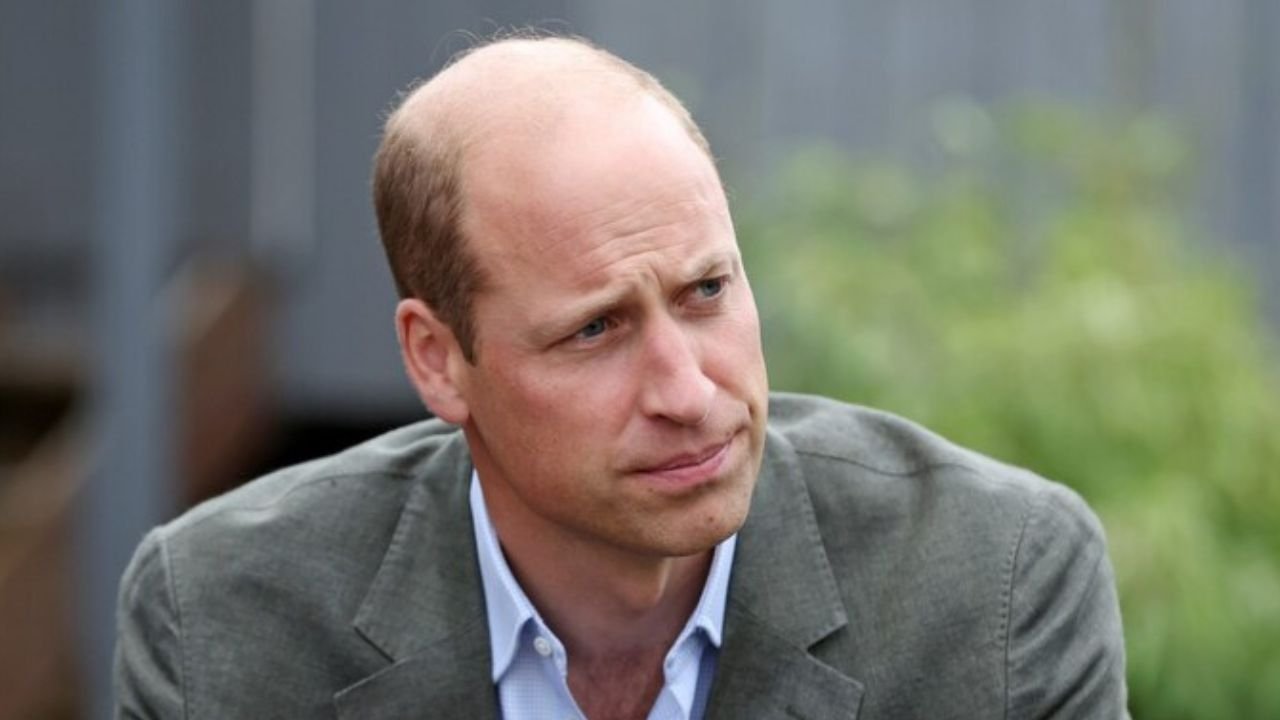
    The British Prince William has said that the “sheer scale of human suffering” had brought home the need for peace in an enclave “where too many have been killed”, reports Al Jazeera.

    In a rare, direct intervention for a member of the royal family, William, the heir to the British throne, said it was critical that aid gets through to those who need it in Gaza.

    “Sometimes, it is only when faced with the sheer scale of human suffering that the importance of permanent peace is brought home,” he said in a statement.

    The 41-year-old visited the British Red Cross headquarters in London on Tuesday to hear about their work supporting people affected by war in the Middle East.

    “I, like so many others, want to see an end to the fighting as soon as possible,” he said. “There is a desperate need for increased humanitarian support to Gaza. It’s critical that aid gets in and the hostages are released.”

    Previously, the heir apparent of the British throne, Prince William, was reportedly set to commence a number of royal engagements in order to “recognise the human suffering” as a result of Israeli operations on Gaza and in the Middle East.

    Kensington Palace has said that the future King will also take into consideration increasing anti-Semitism around the world.

    He is set to meet with humanitarian workers in the region while also visiting a synagogue to listen to the youth countering anti-Semitism.

    “The prince and princess were profoundly concerned by events that unfolded in late 2023 and continue to hold all the victims, their family and friends in their hearts and minds,” his office said.