Tag: war on gaza

  • Hamas announces ‘national unity’ deal with Palestinian rivals

    Hamas announces ‘national unity’ deal with Palestinian rivals

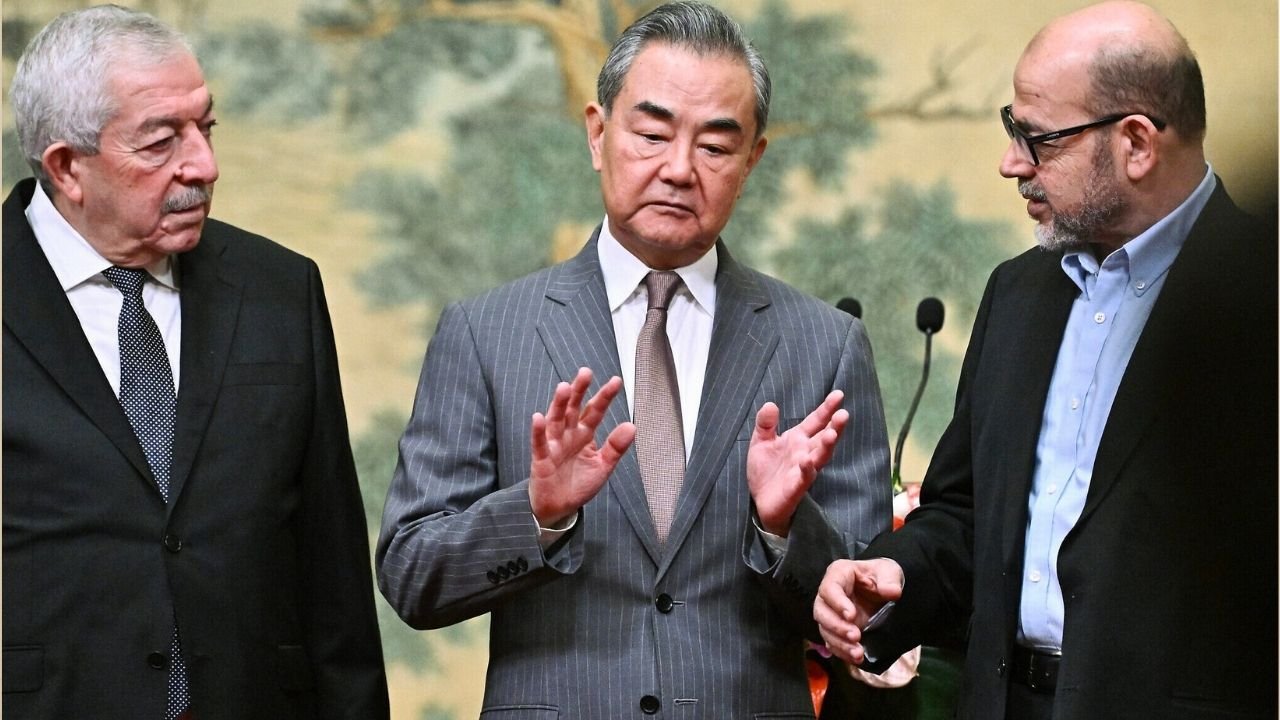
    Hamas announced Tuesday it had signed an agreement in Beijing with other Palestinian organizations, including rivals Fatah, to work together for “national unity”, with China describing it as a deal to rule Gaza together once the war ends.

    Chinese Foreign Minister Wang Yi, who hosted senior Hamas official Musa Abu Marzuk, Fatah envoy Mahmud al-Aloul and emissaries from 12 other Palestinian groups, said they had agreed to set up an “interim national reconciliation government” to govern post-war Gaza. “Today we sign an agreement for national unity and we say that the path to completing this journey is national unity. We are committed to national unity and we call for it,”

    Abu Marzuk said after meeting Wang and the other envoys. The announcement comes more than nine months into the genocide.

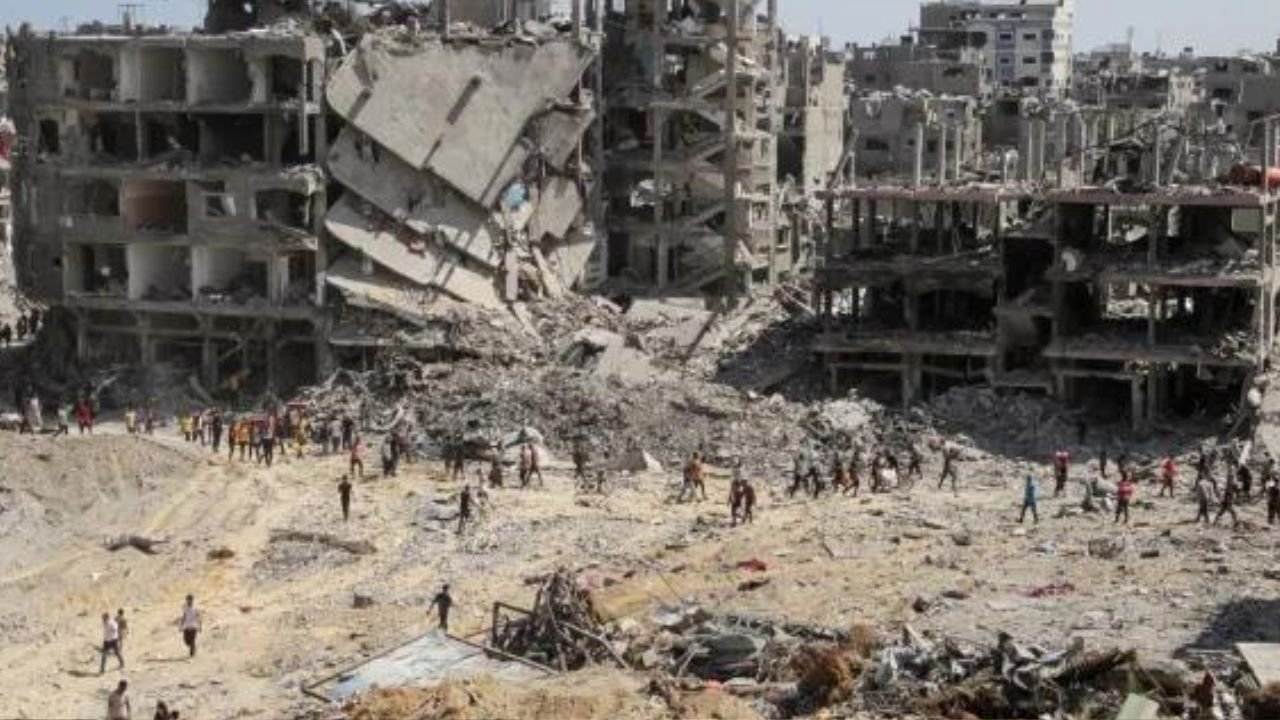
    Israel’s retaliatory military campaign in Gaza has killed more than 39,000 people, also mostly civilians, according to data from the health ministry in Gaza.

    The relentless fighting has plunged Gaza into a severe humanitarian crisis. China has sought to play a mediator role in the conflict, which has been rendered even more complex due to the intense rivalry between Hamas, which rules the Gaza Strip, and Fatah, which partially governs the occupied West Bank.

    Israel has vowed to keep fighting until it destroys Hamas, and world powers, including key Israeli backer the United States, have scrambled to imagine scenarios for the governance of Gaza once the war ends. As Tuesday’s meeting wrapped up in Beijing, Wang said the groups had committed to “reconciliation”.

    “The most prominent highlight is the agreement to form an interim national reconciliation government around the governance of post-war Gaza,” Wang said following the signing of the “Beijing Declaration” by the factions in the Chinese capital.

    “Reconciliation is an internal matter for the Palestinian factions, but at the same time, it cannot be achieved without the support of the international community,” Wang said. China, he added, was keen to “play a constructive role in safeguarding peace and stability in the Middle East”. Beijing, Wang said, called for a “comprehensive, lasting and sustainable ceasefire”, as well as efforts to promote Palestinian self-governance and full recognition of a Palestinian state at the UN.

    Hamas and Fatah have been bitter rivals since Hamas fighters ejected Fatah from the Gaza Strip after deadly clashes that followed Hamas’s resounding victory in a 2006 election.

    Fatah controls the Palestinian Authority, which has partial administrative control in the Israeli-occupied West Bank. Several reconciliation bids have failed, but calls have grown since October 7, with violence also soaring in the West Bank, where Fatah is based.

    China hosted Fatah and Hamas in April, but a meeting scheduled for June was postponed. China has historically been sympathetic to the Palestinian cause and supportive of a two-state solution to the Israeli-Palestinian conflict.
  • Maldives to ban Israeli tourists

    Maldives to ban Israeli tourists

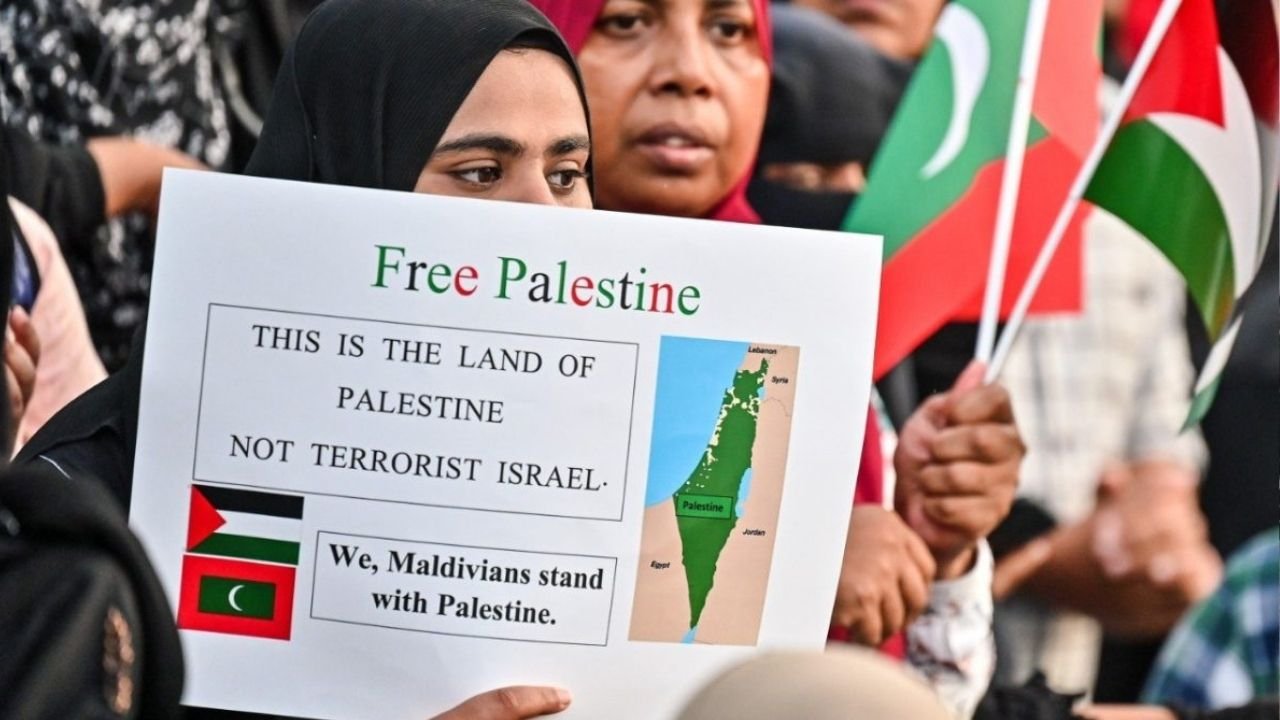
    MALE: The Indian Ocean nation of the Maldives will ban Israelis from the luxury tourist hot spot, the office of the president said on Sunday, announcing a national rally in “solidarity with Palestine”.

    The Maldives, a tiny Islamic republic of more than 1,000 strategically located coral islets, is known for its secluded sandy white beaches, shallow turquoise lagoons, and Robinson Crusoe-style getaways.

    President Mohamed Muizzu has “resolved to impose a ban on Israeli passports,” a spokesman for his office said in a statement, without giving details of when the new law would take effect.

    Muizzu also announced a national fundraising campaign called “Maldivians in Solidarity with Palestine”.

    The Maldives had lifted a previous ban on Israeli tourists in the early 1990s and moved to restore relations in 2010. However, normalisation attempts were scuttled following the toppling of President Mohamed Nasheed in February 2012.

    Opposition parties and government allies in the Maldives have been putting pressure on Muizzu to ban Israelis, as a sign of protest against the Gaza attack.

    Official data showed the number of Israelis visiting the Maldives dropped to 528 in the first four months of this year, down 88 percent compared to the corresponding period last year.

    In response to the ban, an Israel Ministry of Foreign Affairs spokesman urged citizens to avoid travel to the Maldives.

  • Israel pounds Gaza after Biden outlines ceasefire plan

    Israel pounds Gaza after Biden outlines ceasefire plan

    Israeli forces hammered Rafah in southern Gaza with tanks and artillery on Saturday, hours after US President Joe Biden said Israel was offering a new roadmap towards a full ceasefire.

    Shortly after Biden’s announcement, Israeli Prime Minister Benjamin Netanyahu insisted his country would still pursue the war until it had reached all its aims.

    He reiterated that position on Saturday, saying that “Israel’s conditions for ending the war have not changed: the destruction of Hamas’s military and governing capabilities, the freeing of all hostages and ensuring that Gaza no longer poses a threat to Israel”.

    A permanent ceasefire without those conditions being met was “a non-starter”, he said.

    Hamas, meanwhile, said it “views positively” the plan laid out by Biden.

    In his first major address outlining a possible end to the conflict, the US president said Israel’s three-stage offer would begin with a six-week phase that would see Israeli forces withdraw from all populated areas of Gaza.

    It would also see the “release of a number of hostages, including women, the elderly, the wounded, in exchange for (the) release of hundreds of Palestinian prisoners”.

    Israel and the Palestinians would then negotiate during those six weeks for a lasting ceasefire — but the truce would continue while the talks remained underway, Biden said.

    The US leader urged Hamas to accept the Israeli offer. “It’s time for this war to end, for the day after to begin,” he said, in comments echoed by British Foreign Secretary David Cameron.

    Israel insists on war aims

    US Secretary of State Antony Blinken called his counterparts from Jordan, Saudi Arabia and Turkey on Friday to press the deal.

    UN chief Antonio Guterres “strongly hopes” the latest development “will lead to an agreement by the parties for lasting peace”, his spokesman Stephane Dujarric said.

    German Foreign Minister Annalena Baerbock said the Israeli offer “provides a glimpse of hope and a possible path out of the war’s deadlock”, while EU chief Ursula von der Leyen welcomed a “balanced and realistic” approach to end the bloodshed.

    Saudi Arabia stressed its “support for all efforts aimed at an immediate ceasefire” and the withdrawal of Israeli troops. 

    Indonesia, meanwhile, said it was ready to send “significant peacekeeping forces” as well as medical personnel to Gaza if a ceasefire is agreed.

    But Netanyahu took issue with Biden’s presentation of what was on the table, insisting on Friday the transition from one stage to the next in the proposed roadmap was “conditional” and crafted to allow Israel to maintain its war aims.

    “The prime minister authorised the negotiating team to present an outline for achieving (the return of hostages), while insisting that the war will not end until all of its goals are achieved,” Netanyahu’s office said.

    “The exact outline proposed by Israel, including the conditional transition from stage to stage, allows Israel to maintain these principles.”

    Israel has repeatedly vowed to destroy Hamas since the Palestinian militant group attacked southern Israel on October 7.

    Rafah Massacre

    Israel sent tanks and troops into Rafah in early May, ignoring concerns over the safety of displaced Palestinian civilians sheltering in the city on the Egyptian border.

    On Saturday, residents reported tank fire in the Tal al-Sultan neighbourhood in west Rafah, while witnesses in the east and centre of Rafah described intense artillery shelling.

    “From the early hours of the night until this morning, the aerial and artillery bombardment has not stopped for a single moment”, a resident from west Rafah told AFP on condition of anonymity.

    “There are a number of occupation (Israeli) snipers in high-rise buildings overseeing all areas of Tal al-Sultan… making the situation very dangerous”, the resident added.

    There was also shelling and gunfire from the Israeli army in Gaza City, in the north of the Palestinian territory, according to an AFP reporter.

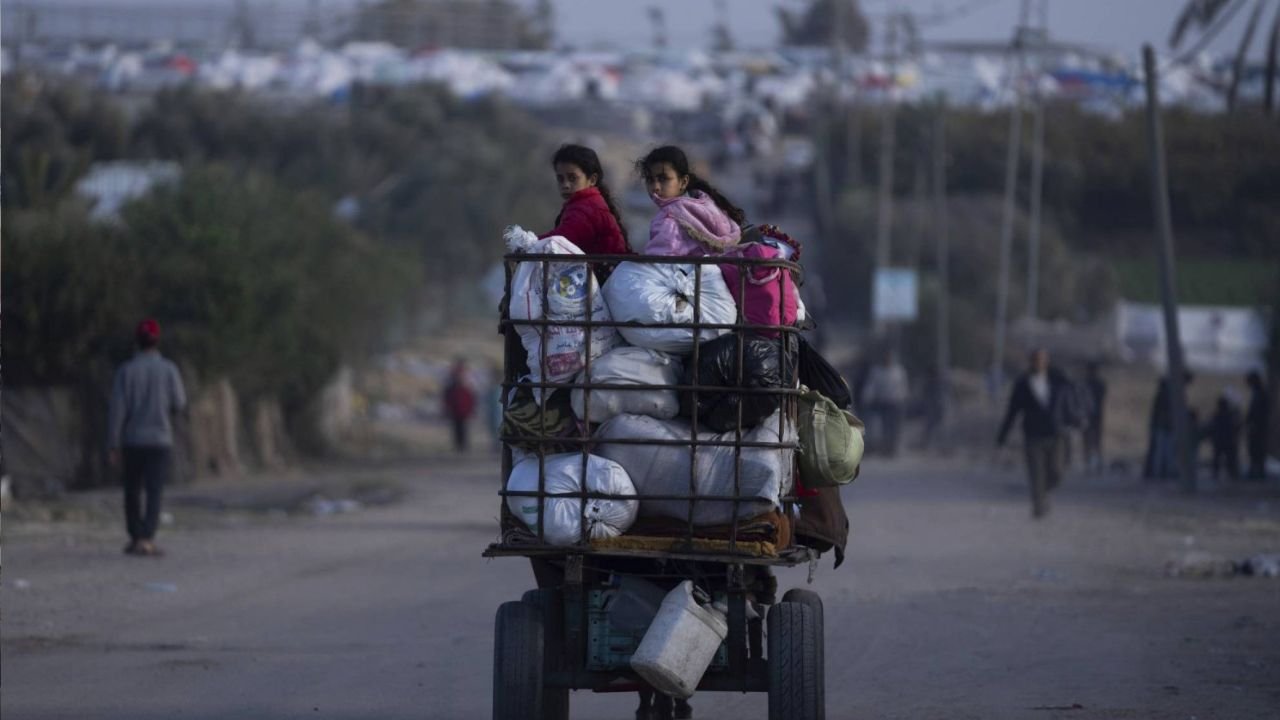
    Before the Rafah offensive began, the United Nations said up to 1.4 million people were sheltering in the city.

    Since then, one million have fled the area, the UN agency for Palestinian refugees, UNRWA, has said.

    The Israeli seizure of the Rafah crossing has further slowed sporadic deliveries of aid for Gaza’s 2.4 million people and effectively shuttered the territory’s main exit point.

    ‘Everything is ashes’

    Israel said last week that aid deliveries had been stepped up.

    But Blinken acknowledged on Friday that the humanitarian situation was “dire” despite US efforts to bring in more assistance.

    The World Food Programme said daily life had become “apocalyptic” in parts of southern Gaza since Israel began its assault on Rafah in early May.

    The genocide in Gaza has killed at least 36,379 people in Gaza, mostly civilians, according to the Hamas-run territory’s health ministry.

    In northern Gaza, witnesses said that after carrying out a three-week operation in the town of Jabalia and its neighbouring refugee camp, troops had ordered residents of nearby Beit Hanun to evacuate ahead of an imminent assault.

    The Israeli army said troops “completed their mission in eastern Jabalia and began preparation for continued operations in the Gaza Strip”.

    Jabalia shopkeeper Belal al-Kahlot said there was nothing left of his store after the Israeli operation. “Everything is ashes.”

    The Israeli military announced the deaths of two soldiers in Gaza, taking to 294 the number of Israeli troops killed since the start of ground operations in late October.

  • GCU students protest against American band concert

    GCU students protest against American band concert

    Students of Government College University (GCU) held Palestinian flags while protesting against a US Consulate-sponsored concert of the American band Raining Jane in Lahore.

    University administration canceled the concert after the students protested by raising the Palestinian flag at the US Consulate concert.

    In videos that emerged from the protest, it can be seen that students remained undeterred and raised the popular slogan, ‘From the river to the sea, Palestine will be free.”

    GCU Vice Chancellor Dr. Shazia Bashir told Dawn that all the demands of the students were accepted and the event was postponed.
    She said no disciplinary action was taken against any of the students.

  • Asma Jahangir Conference receives flak for expelling pro-Palestinian protestors

    Asma Jahangir Conference receives flak for expelling pro-Palestinian protestors

    Asma Jahangir Conference that was held in Lahore over the weekend was disrupted by protests of pro-Palestine students during the German Ambassador’s speech. The Ambassador was there to speak about civil rights. He was interrupted by students calling him out for his country being complicit in the genocide by Israel in the Gaza Strip. To this, the ambassador responded, ‘If you want to shout, go out!’”. The students were reportedly expelled from the event.

    The move was heavily criticised by netizens all over the internet.

    Founder of Digital Rights Foundation Nighat Dad spoke at the conference and condemned the act of expelling students as she said, “What happened yesterday should not be taken lightly, as this sets a very wrong example”.

    Ikram Ullah Maseed criticised the organizers of the conference by saying, “Shameful betrayal of Asma Jahangir’s legacy. If radical voices aren’t welcome, why hold the conference?”

    Senator Allama Raja Nasir called out the organizers of the conference for blatantly banning the voices of dissent. “Germany’s systematic suppression of pro-Palestinian voices, including the banning of prominent speakers like former Greek Finance Minister Yanis Varoufakis, exposes a shameful bias and undermines the very foundations of democratic discourse.”

    Journalist Arafat Mazhar who was one of the first to share the videos of the German Ambassador shutting down the protestors recently tweeted that, “Twitter has completely banned me from retweet or comments of on the video of German ambassador shouting at civil rights activist at the asma jahangir human rights conference”

    The protesting students, who belonged to Progressive Students’ Collective, released a statement calling out the German Ambassasor for speaking about human rights while the German government is supporting Israel in its aggression and genocide in Gaza.

  • Baby girl born after pregnant mother martyred died

    Baby girl born after pregnant mother martyred died

    The daughter of a pregnant woman who was martyred in the Israeli attack at Rafah in the occupied Palestinian territory of Gaza, has also died.

    Last week, a pregnant woman, Sabrin Al-Sakini, her husband and three-year-old daughter were martyred as a result of the Israeli attack in the Rafah area of Gaza. The doctors saved the daughter of Sabrin Al-Sakini by performing an emergency operation and the new-born girl was named ‘Shaheed Sabreen’s daughter’.

    The doctors who took care of the baby girl said that the weight of the baby girl at the time of birth was 1.4 kg and that her condition was improving. However, according to the British Broadcasting Corporation, the newborn girl died yesterday and was buried next to her mother.

    More than 34,000 people have been martyred as a result of the ongoing Israeli aggression in Gaza since October 7, 2023, including more than 14,000 children and more than 9,000 women.

  • Iran launches drone attacks on Israel in response to attack on consulate in Syria

    Iran launches drone attacks on Israel in response to attack on consulate in Syria

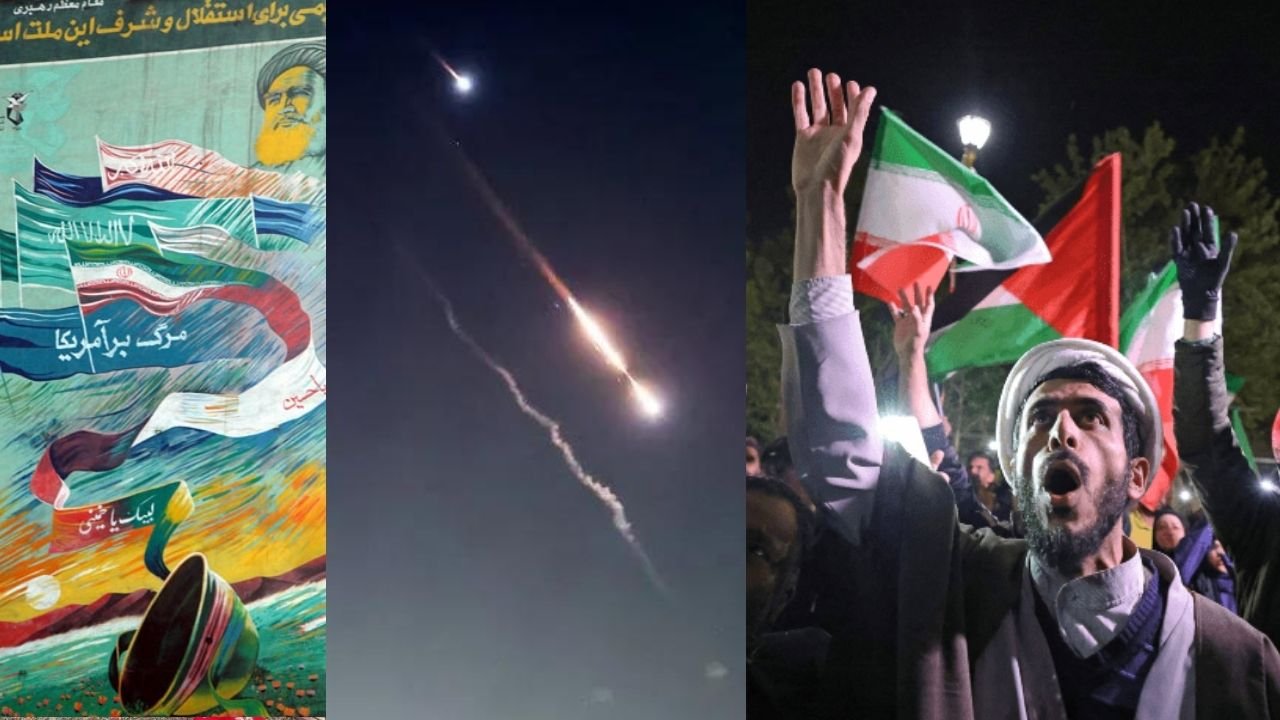
    Iran has launched more than 200 drones and missiles on Israel in an unprecedented attack late on Saturday “in response” to a deadly airstrike on its Damascus consular annexe earlier this month.

    Iran’s allies also carried out coordinated attacks on Israeli positions as sirens sounded in many places and blasts were heard in the skies above Jerusalem early on Sunday.

    Iran had vowed to strike back in retaliation for a deadly April 1 air strike on its Damascus consular annexe while America had warned repeatedly in recent days that the retaliation was imminent.

    Iran’s Islamic Revolutionary Guards Corps (IRGC) launched “extensive” drone and missile strikes — as part of what they called the Operation ‘True Promise’ against “certain targets” inside Israel.

    “Iran launched UAVs from its territory towards the territory of the state of Israel,” military spokesman Daniel Hagari said in a televised statement.

    Videos emerged as people in Jerusalem sought cover and flooded the roads. “As you can see it’s empty, everybody is running home,” said Eliyahu Barakat, a 49-year-old grocery shop owner in Jerusalem’s Mamilla neighbourhood.

    US President Joe Biden expressed “ironclad” support for Israel after an urgent meeting with his top security officials on the current attack against Israel.

    Hundreds of Iranians gathered in Tehran’s Palestine Square, waving Iranian and Palestinian flags to celebrate the unprecedented military action against Israel.

    On the other hand, Israeli military official said, “So far, we’ve intercepted the vast majority of incoming missiles,” Hagari said.
    The army said it had scrambled dozens of fighter jets to intercept “all aerial threats”.

    Iran’s allies in the region joined the attack with Yemen’s Houthi rebels also launching drones at Israel, according to security agency Ambrey, and Lebanon’s Hezbollah movement announcing rocket fire at Israeli positions in the annexed Golan Heights.

    The official Irna news agency said the attack had dealt “heavy blows” to an air base in the Negev desert, but the Israeli army said there had only been minor damage.

    US help for Israel neutralizing all the attacks

    The Iranian mission to the United Nations warned Washington to keep out of Iran’s conflict with Israel. “It is a conflict between Iran and the rogue Israeli regime, from which the US MUST STAY AWAY!” it said.

    Despite Tehran’s warning not to get involved, US forces took part in shooting down drones aimed at Israel.

    Biden said in a later statement that the United States had “helped Israel take down nearly all of the incoming drones and missiles”, but appeared to guide the key US ally away from retaliating against Tehran by saying Israel had now shown its strength.

    The US president said he had called Israeli Prime Minister Benjamin Netanyahu to reaffirm Washington’s “ironclad” support for Israel, after recent tense relations over Israel’s offensive in Gaza.

    “I told him that Israel demonstrated a remarkable capacity to defend against and defeat even unprecedented attacks — sending a clear message to its foes that they cannot effectively threaten the security of Israel,” he said.

    He said he had ordered US military aircraft and ballistic missile defence destroyers to the Middle East in recent days, as the likely threat following a presumed Israeli strike on Iranians in Damascus became clear.


    Matter of a ‘truce’ in Gaza

    The Gaza crisis began October 7 and has claimed lives of more than 33 thousand in Gaza.

    In the main central city of Deir al-Balah, fire burned in the rubble of a destroyed mosque. Israel’s military “demanded that the whole area be evacuated” before it was “wiped out in minutes”, said Abdullah Baraka, a witness.

    In nearby Nuseirat refugee camp, Abd Thabet said residents had been warned to evacuate on Friday evening ahead of a large explosion that caused “massive destruction”.

    Hamas said it had submitted its response to a Gaza truce plan presented by US, Qatari and Egyptian mediators at talks in Cairo this week.

    The Palestinian group said it was sticking to its previous demands, insisting on “a permanent ceasefire” and the “withdrawal of the occupation army from the entire Gaza Strip”.

    During the October attack, Hamas seized about 250 hostages, 129 of whom Israel says remain in Gaza, including 34 the army says are dead.

    The Israeli prime minister’s office accused Hamas of sabotaging efforts for an exchange of hostages for prisoners. “Hamas to this day has refused any deal and any compromise proposal,” it said.

  • How humanitarian aid reaches war-torn Gaza

    How humanitarian aid reaches war-torn Gaza

    Most aid bound for war-ravaged Gaza arrives overland from neighbouring Egypt but Israel and UN agencies clash on how much actually makes it inside the Palestinian territory.

    The volume of aid entering Gaza by road each day through the Rafah crossing from Egypt is insufficient, aid workers say, blaming rigorous Israeli inspections at least in part.

    With no truce in sight to pause the Israel-Hamas war, here is a look at how aid currently reaches Gaza and what alternatives are being weighed to alleviate the crisis in the besieged Palestinian territory.

    First stop: Egypt

    Most Gaza-bound goods arrive by sea in the Egyptian ports of Port Said or El-Arish.

    El-Arish is closer to Gaza but also smaller, and was quickly overwhelmed by the volume of shipments arriving, aid groups say.

    Israeli authorities, who have blockaded Gaza since Hamas took sole control of the Palestinian territory in 2007, require that all aid entering Gaza be inspected by them.

    The main inspection area for goods is Kerem Shalom in southern Israel, not far from the Rafah crossing.

    Another inspection area exists in Nitzana, on the Israeli-Egyptian border about 40 kilometres (25 miles) to the southeast.

    Long wait for trucks

    Before reaching the inspection areas, many aid trucks wait for days at the Egyptian side of the Rafah checkpoint.

    Once inspected, goods that are cleared to enter by Israel are unloaded from the mostly Egyptian trucks in the zone between Egypt and Gaza.

    The supplies are then loaded onto separate vehicles, driven by Gazans working for aid groups, for distribution inside the Palestinian territory.

    Cumbersome screenings are a major reason shortages are so glaring, aid workers say.

    Israel blames a lack of sufficient capacity on the Palestinian side to distribute the aid once it gets in.

    In recent days, Israel took issue with UN figures on the number of trucks entering Gaza, accusing UN Palestinian refugee agency UNRWA of counting only trucks it had processed, not those processed by Israel.

    Heading north

    For months, aid groups and foreign governments including top ally the United States have urged Israel to reopen border crossings into the north of Gaza, where the humanitarian crisis is most severe.

    Israel announced that six World Food Programme (WFP) aid trucks entered the north directly from its territory in early March, in what it described as a “pilot project”.

    The trial was not extended, however, and aid convoys bound for northern Gaza must travel the length of the territory negotiating battlegrounds, Israeli bombardments and mobs of desperate civilians.

    In March, the WFP said one of its convoys had been blocked by Israeli forces inside Gaza before it could reach the north.

    After turning back, the agency said the convoy was looted by a “crowd of desperate people”.

    According to Israeli authorities, 28 trucks reached northern Gaza on Wednesday.

    They were among 298 trucks that Israel said entered Gaza on Wednesday, still far below the number aid groups say is needed to sustain the territory’s 2.4 million people.

    Under pressure from the international community, Israel announced on April 5 that it would open a new crossing directly into northern Gaza, without specifying its exact location or when it would open.

    By air and by sea

    In a bid to get round the logjam, several Arab and European governments, later joined by Washington, began carrying out aid airdrops over Gaza, particularly the north.

    But the airdrops have proved controversial, with multiple deaths among civilians on the ground who were crushed by aid crates when parachutes failed to open, or drowned trying to reach others accidentally dropped in the sea.

    There has also been an attempt to establish a maritime aid corridor from the Mediterranean island of Cyprus but it has largely fizzled out after seven aid workers were killed by Israeli fire on April 1 as they unloaded food from the second flotilla to make the crossing.

    Even though the Cypriot government insists it has not given up on the aid corridor, no further crossings are currently planned after the US and Spanish charities behind the first two suspended their operations in the region.

    UN agencies have in any case said repeatedly that road convoys are the only practical way of meeting Gaza’s needs.

  • Stop the war on Gaza; thousands in Israel call for end to war on Palestinian Land Day

    The protesters, led by Arab members of the Israeli parliament, marched through the northern town of Deir Hanna waving Palestinian flags and carrying banners reading: “Stop the war on Gaza”.

    Most of the demonstrators were Arab citizens of Israel-Palestinians who evaded displacement during the 1948 war that led to Israel’s creation and who, with their descendants, now constitute around 21 percent of its population.

    A smaller contingent of Jewish Israelis joined the rally, some carrying signs reading: “Jews and Arabs refuse to be enemies”.

    Land Day commemorates protests and a strike on March 30, 1976 against a decision by the Israeli authorities to seize large swathes of land in the northern Galilee region.

    Israeli police fired at demonstrators, killing six people, and the government plan was subsequently dropped.

    “On this day 48 years ago, our people thwarted the project to confiscate our lands with their protests… and they embodied an important and prominent milestone in history,” Deir Hanna town council chief Saeed Hussein said in a speech in its main square.

    “48 years have passed, yet the machine of death and displacement persists… the attempt to erase our national identity and seize our lands continues.”

    Israel’s Arab citizens suffer higher rates of unemployment, poverty, and crime than Jewish Israelis.

    Community leader and former lawmaker Mohammed Barakeh said Israeli Arabs were still facing “displacement and repression”.

    “This flesh that burns in Gaza is ours and the women murdered in Gaza are our sisters,” he said, denouncing what he described as a “genocide” in the Palestinian territory.

    Since the war broke out nearly six months ago, Israel’s Arab citizens say they have experienced growing hostility from the government and from other Israelis.

    The war began on October 7 resulted in 1,160 deaths in Israel, mostly civilians, according to an AFP tally of Israeli official figures.

    Israel’s retaliatory campaign has killed at least 32,705 people, mostly women and children, according to Gaza’s health ministry.

    Eyal, a 33-year-old Jewish Israeli activist, said he joined the rally in solidarity with Arabs.

    “We demand an end to the massacres by the Israeli government in Gaza and an end to the war on Gaza,” he said, asking to be identified by his first name only.

  • ‘Shame on you Biden’; Pro-Palestine protestors interrupt glamorous presidential fundraiser

    ‘Shame on you Biden’; Pro-Palestine protestors interrupt glamorous presidential fundraiser

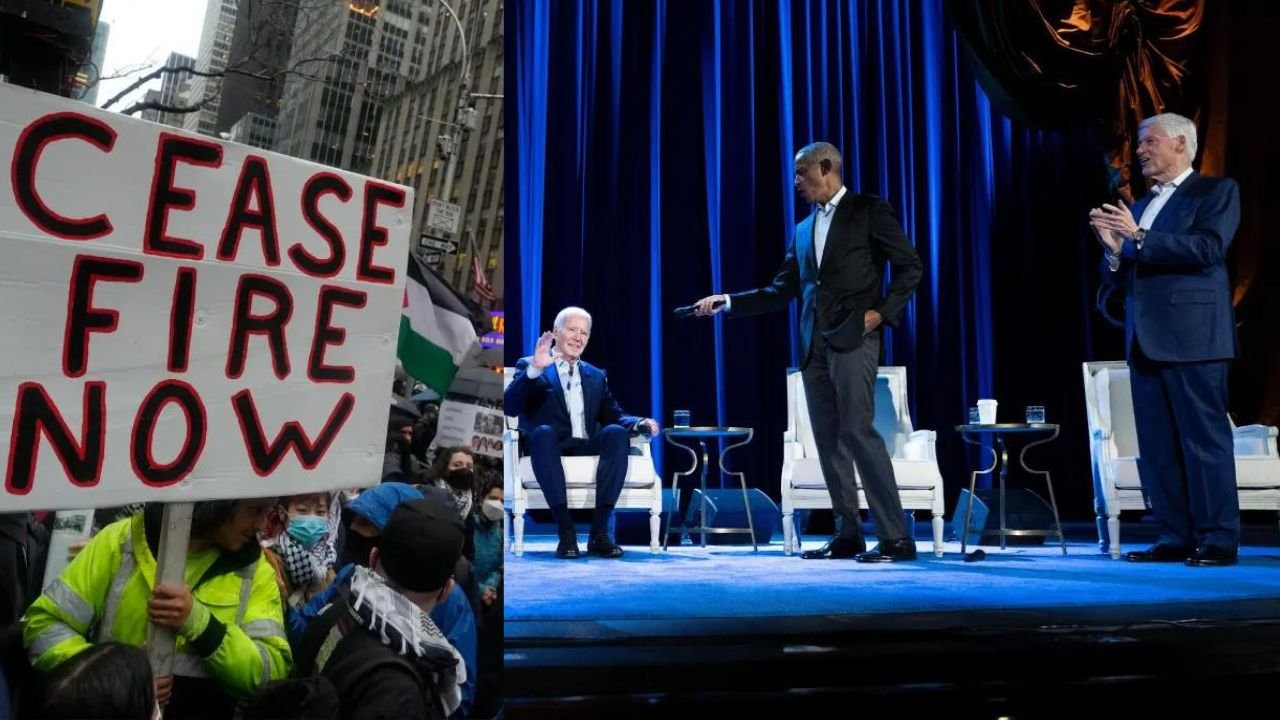
    Pro-Palestine protesters interrupted President Joe Biden‘s conversation with his predecessors, Barack Obama and Bill Clinton, at a glamorous fundraiser in New York for the Presidential re-election campaign.

    The disruption isn’t surprising, given that many of Biden’s events have seen protestors calling for a ceasefire in the war on Gaza. This time, according to a pool report, one of the protesters was yelling obscenities about a nuclear war with Russia. Other protesters interrupted over the situation in Gaza.
    Once the show began, Biden, Obama, and Clinton were each interrupted multiple times by Gaza protesters inside the hall, laying bare the unrest within the Democratic Party that hangs over the election.

    “Blood on your hands,” some yelled, at one point prompting Obama to snap back. “You can’t just talk and not listen. That’s what the other side does.”

    Video clips show pro-Palestinian demonstrators accosting people on the street in New York City after they attended the reelection fundraiser for US President Joe Biden.

    Biden exclaimed, “There are too many innocent victims, Israeli and Palestinian. We’ve got to get more food and medicine, supplies into the Palestinians. But we can’t forget, Israel is in a position where its very existence is at stake. You have to have all those people. They weren’t killed. They were massacred. They were massacred.” This enraged the protestors as they started calling out the President.

    “How dare you talk about the innocent deaths of Palestinians. Palestinians are dying right now because of your actions,” a protestor was seen yelling as he was taken into custody by the security.

    Another woman was seen shouting, “Shame on you Joe Biden”.

    A leading New York pro-Palestinian group, Within Our Lifetime, was among those organizing protests, billed as the “Flood Manhattan For Gaza” rally.
    The group issued a call to supporters ahead of the fundraiser, writing on X: “GENOCIDE JOE HAS GOT TO GO! Protesting genocide Joe, Barack Obama, and Bill Clinton outside their democratic fundraiser at Radio City Music Hall!,” reports USA Today.

    In an interview with Al Jazeera, a protestor named Cheryl was seen saying, “I won’t be voting for Biden, for sure, I mean, even if he stopped the war right now, just for what the Palestinian people have suffered, I can’t”.