Tag: Wealth

  • Girls prefer wealth over love: Agha Ali

    Girls prefer wealth over love: Agha Ali

    Rejoice ladies, Agha Ali understands us better than we do ourselves. The actor recently came up with the gem that women prioritize wealth and luxury over love and loyalty.

    Aren’t we lucky that he understands us so thoroughly?

    In a recent TV appearance, Agha Ali reflected on past mistakes, admitting to saying things in interviews that he shouldn’t have and leaving out important details.
    “I’ve learned from my mistakes and am working on rebuilding myself after feeling broken,” he said, emphasizing his commitment to honesty in interviews, aiming to show his true self to the public.
    And then he did, with the misogynistic comments about women.

    Addressing rumors about his character, he clarified, “I’m not a playboy anymore.”
    Speaking on modern relationships, Ali remarked that many women today prioritize financial security and a luxurious lifestyle over love and loyalty.
    “Money can get you anything in this world, even a partner,” he observed.
    Ali’s advice to men was straightforward: “First, earn money, buy a house and a car, then think about love and relationships.”

    On a serious note, while his advice to men about being financially secure is pertinent, the rest of his comments about women are quite problematic.

    In a society dominated by men, it is not a bad thing for women to think about their financial future neither should they be shamed for doing so.

  • Bill Gates to drop off the world’s rich list

    Bill Gates to drop off the world’s rich list

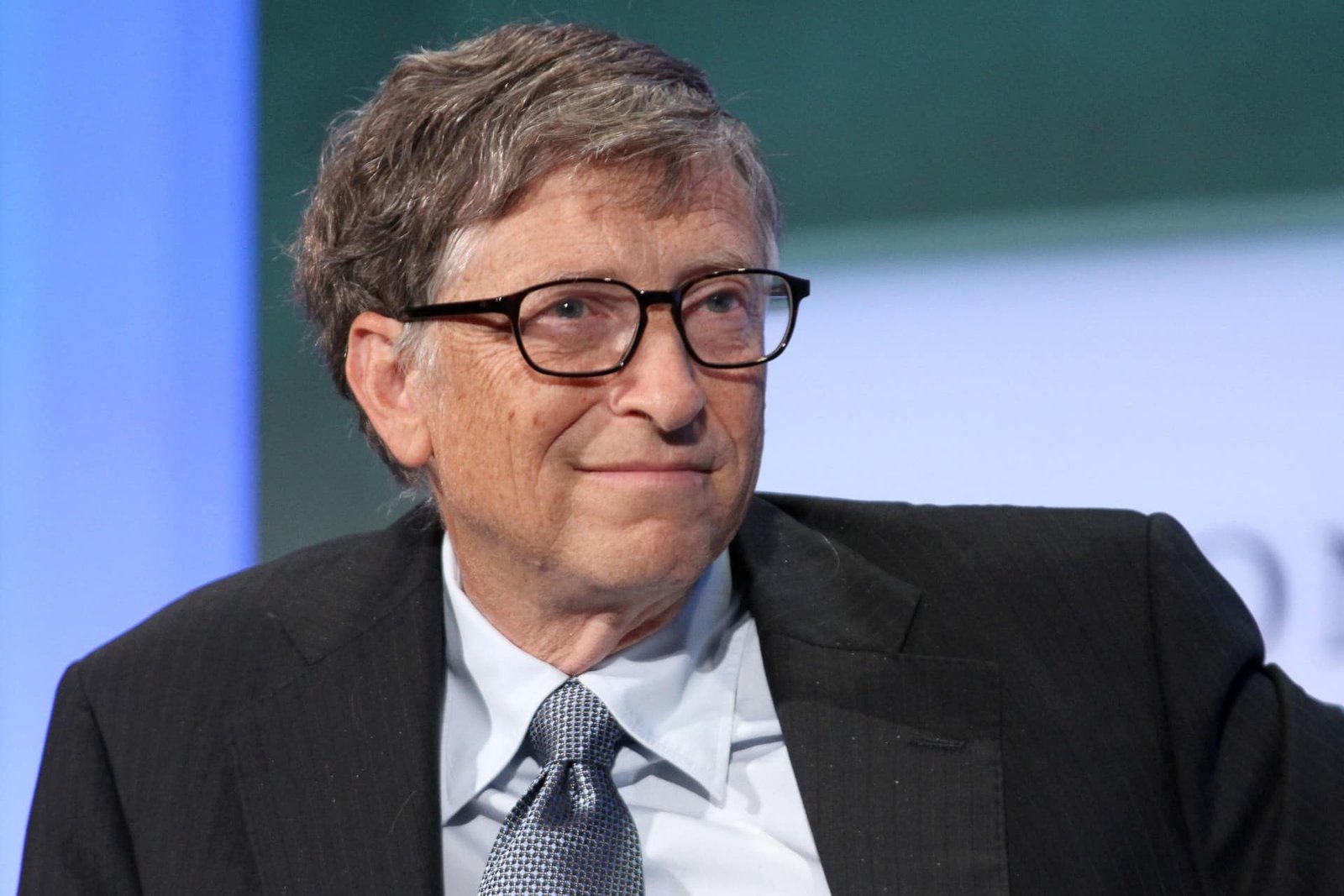
    Microsoft co-founder and billionaire Bill Gates has announced that he is planning to give away all his wealth, adding that he will eventually “drop off” the world’s rich list. Gates first pledged to give away his wealth back in 2010.

    Gates, the fourth richest man in the world according to the Bloomberg Billionaire Index, plans to donate all his wealth to the Gates Foundation and will eventually be leaving the world’s rich list. Till date, he along with his ex-wife have donated more than $50 billion to the Gates Foundation, which is one of the world’s largest charity organisations that focuses on providing healthcare and education to individuals around the world. In 2020, they funded work in over 130 countries.

    Bill Gates announced that he would transfer $20 billion to the Gates Foundation this month.

    “I have an obligation to return my resources to society in ways that have the greatest impact for reducing suffering and improving lives. And I hope others in positions of great wealth and privilege will step up in this moment too.”

    Bill Gates held Forbes‘ title of the richest person in the world between 1995 and 2010, and again from 2013 to 2017.

  • Residential buildings make up 80 per cent of Pakistanis’ wealth: Study

    Residential buildings make up 80 per cent of Pakistanis’ wealth: Study

    Almost 80 per cent of the wealth accumulated by Pakistani households by the time they are 60 to 65 years old is made up of residential buildings, according to a recent World Bank study.

    Between the ages of 25 and 65, the net worth of the typical Pakistani household increases by 60 months’ worth of consumption (5 years).

    According to a DAWN report, residential housing makes up the majority of this growth, whereas other types of wealth like land, durables, business and farm values, and financial assets stagnate over time. Early in life, asset accumulation is slower; it picks up between the ages of 40 and 65.

    According to a study titled “Life Cycle Savings in a High-Informality Setting — Evidence from Pakistan” published earlier this week, financing elderly consumption will be a significant challenge in the future due to a combination of factors including population ageing, deteriorating family and village risk-sharing networks, and low formal pension coverage.

    When compared to other investment options, real estate and land are a safe bet, as evidenced by the fact that households save primarily in these areas. According to the study, housing may be a way to permanently store resources in a way that makes them difficult for other family members to steal or use against them.

    According to the study, it might also be a result of a lack of access to other reliable, safe, and high-return long-term saving options. Participation in alternative saving methods may be hindered by low levels of financial literacy, numeracy, and familiarity with formal banking institutions.

    The study emphasised that Pakistan has expanded financial inclusion much more slowly than other nearby countries and that these barriers must be removed.

    Despite being a safe investment, housing is relatively illiquid, which depletes funds for short-term consumption smoothing. Only 3 per cent of Pakistani adults (15 and older) report being able to rely on savings for emergency funds, while 49 per cent claim it is impossible to come up with emergency funds.

    According to 41 per cent of people ages 15 and older, family or friends are typically the primary source of emergency funds; 25 per cent report borrowing for medical expenses.

    Theoretically, policies that permit more real estate assets to be used as collateral for loans made through formal financial institutions could lessen the need for liquid precautionary savings and free up funds for retirement savings. However, these programmes might also promote excessive debt and result in evictions.

    Scarcity of other secure, liquid savings options may also restrict the income potential of self-employment. Although self-employed people have similar levels of education to wage workers, they are typically older. Nearly half of self-employed people lack education.

    Given that the majority of self-employed businesses are started with their own capital, the older age of the self-employed may indicate that the first working years are spent acquiring start-up capital. Only 11 per cent of people aged 15 and older, according to Findex surveys, borrow money to launch or grow a business.

    According to the study, expanding options for secure long-term savings outside of the housing through the use of government-sponsored or subsidised old-age savings instruments could lead to greater independence in old age and lessen the burden on younger families.

    The study found that the average net worth accumulation accelerates around the age of forty, roughly in the middle of the working years. We demonstrate that active saving likely plays a significant role, even though some of this accumulation may reflect patterns in inheritances.

    Around that time, household income growth starts to outpace household consumption growth, and the saving rate rises by 20 percentage points between ages 40 and 65. This suggests that people in that age range may benefit most from programmes designed to encourage formal saving.
  • Farah Khan: the new ‘Richie Rich’, report

    Farah Khan: the new ‘Richie Rich’, report

    The wealth of Farah Khan has grown exponentially during the three and a half years of rule of Pakistan Tehreek-e-Insaf (PTI) at the Centre and in Punjab.

    Farah Khan is a close friend of the first lady of Pakistan, Bushra Bibi. Her wealth grew four times from Rs231 million in 2017 to Rs971 million in 2021. Her filing for the tax year 2018 was nil, reports Fakhar Durrani for The News.

    The News investigations reveal that Farah Khan’s fortune increased ever since the premier appointed Usman Buzdar as Chief Minister Punjab. 

    “Farah, as per the documents, also availed the whitening of black money scheme (Tax Amnesty Scheme) in 2019 during Prime Minister (PM) Imran Khan’s government and declared assets worth Rs328 million under the Tax Amnesty Scheme 2019.”

    “The total assets of Farah Khan reached Rs699,137,839 inside Pakistan, Rs15,749, 479 outside Pakistan in the form of a flat in the UAE. Hence the total assets inside and outside Pakistan were recorded at Rs714,887,318. The net assets were reported as Rs697,502,318.”

    Umar Cheema in his special report for The News writes, “Farah’s penchant for luxury items is also evident from her bid to buy a luxury car, Porsche, which she got booked through Porsche’s Pakistani dealer and paid a part amount of it (Rs33 million) as advance. This she declared in the nomination papers she submitted for the Senate election in March 2021. Later, Farah pulled out from the Senate race.”

    “Her Birkin bag whose price is stated to be around $90,000 has been in the news. Her picture of holding the bag while sitting in a chartered plane is in circulation. The purse made by the French luxury brand Hermès is prepared on order. One can’t just get it by visiting a store. The order has to be placed months in advance,” writes Cheema.

  • Tesla’s CEO Elon Musk to join Twitter board after investing $2.9 billion in the platform

    Tesla’s CEO Elon Musk to join Twitter board after investing $2.9 billion in the platform

    Elon Musk, the world’s richest man, has been chosen for Twitter’s board of directors, just one day after it was confirmed that he is the social media platform’s largest shareholder, holding a 9.2 per cent stake.

    On April 5, Twitter’s CEO Parag Agrawal said he was excited to announce Musk’s membership to the company’s board of directors. 

    Tesla’s CEO, whose personal wealth is assessed to be $289 billion, about $100 billion greater than the second richest person on the planet, Amazon founder Jeff Bezos, has a history of publishing controversial tweets.

    Musk was a “passionate believer and intense critic” of the platform, according to Agrawal, and it was exactly what Twitter needed to render it stronger in the long run.

    Surprisingly, Musk has a Twitter following of more than 80 million, and he was already looking forward to collaborating with the company “to make big improvements” to the social media platform in the near future.

    Twitter on Tuesday stated that Musk had agreed to serve as a class two director with a term terminating at the company’s annual meeting of shareholders in 2024.

    Musk bought a nearly $3 billion (£2.3 billion) share in Twitter on Monday, which is more than four times the 2.25 per cent share held by the platform’s co-founder, Jack Dorsey.

    However, Musk would not be able to own more than 14.9 per cent of Twitter’s outstanding shares, either alone or as part of a group, for as long as he was a board member and for 90 days later, according to the firm.

    The CEO of Tesla and SpaceX, who ranks among the Top 10 most popular users on Twitter with 80.4 million followers, paid $2.89 billion for the stake on Friday at Twitter’s closing share price.

    Twitter shares rose another 5 per cent Tuesday morning after soaring more than 27 per cent on Monday after reports of Musk’s stock purchase.