Tag: Weather

  • Indian capital records highest-ever temperature of 49.9 Celsius

    Indian capital records highest-ever temperature of 49.9 Celsius

    New Delhi (AFP) – Temperatures in India’s capital have soared to a record-high 49.9 degrees Celsius (121.8 Fahrenheit) as authorities warn of water shortages in the sprawling mega-city.

    The India Meteorological Department (IMD), which reported “severe heat-wave conditions”, recorded the temperatures on Tuesday at two Delhi suburbs stations at Narela and Mungeshpur.

    The weather bureau said the temperatures were nine degrees higher than expected.

    Forecasters predict similar temperatures Wednesday for the city of more than 30 million people, issuing a red alert warning notice for people to take care.

    In May 2022, parts of Delhi hit 49.2 degrees Celsius (120.5 Fahrenheit), Indian media reported at the time.

    India is no stranger to searing summer temperatures.

    But years of scientific research have found climate change is causing heatwaves to become longer, more frequent and more intense.

    ‘Water scarcity’

    New Delhi authorities have also warned of the risk of water shortages as the capital swelters in headache-inducing heat — cutting supplies to some areas.

    Water Minister Atishi Marlena has called for “collective responsibility” in stopping wasteful water use, the Times of India newspaper reported Wednesday.

    “To address the problem of water scarcity, we have taken a slew of measures such as reducing water supply from twice a day to once a day in many areas,” Atishi said, the Indian Express reported.

    “The water thus saved will be rationed and supplied to the water-deficient areas where supply lasts only 15 to 20 minutes a day,” she added.

    The IMD warned of the heat’s impact on health, especially for infants, the elderly and those with chronic diseases.

    Many blame the soaring temperatures on scorching winds from Rajasthan state, where temperatures on Tuesday were the hottest in the country, at 50.5 degrees Celsius.

    Rajasthan’s desert region of Phalodi holds the country’s all-time heat record, hitting 51 degrees Celsius in 2016.

    At the same time, West Bengal state and the northeastern state of Mizoram have been struck by gales and lashing rains from Cyclone Remal, which hit India and Bangladesh on Sunday, killing more than 38 people.

    Bangladesh’s Meteorological Department said the cyclone was “one of longest in the country’s history”, blaming climate change for the shift.


  • World sweltered as April smashed global heat records

    World sweltered as April smashed global heat records

    April marked another “remarkable” month of record-breaking global air and sea surface temperature averages, according to a new report by the EU’s climate monitor published on Wednesday.

    The abnormally warm conditions came despite the continued weakening of the El Nino weather phenomenon that contributes to increased heat, said the EU’s Copernicus Climate Change Service, pointing to human-caused climate change for exacerbating the extremes.

    Record heat

    Since June last year, every month has been the warmest such period on record, according to Copernicus.

    April 2024 was no exception, clocking in at 1.58 degrees Celsius above the 1850-1900 pre-industrial average.

    “While unusual, a similar streak of monthly global temperature records happened previously in 2015/16,” Copernicus said.

    The average temperature over the last 12 months was also recorded at 1.6C above pre-industrial levels, surpassing the 1.5C target set by the 2015 Paris Agreement to limit global warming.

    The anomaly does not mean the Paris target has been missed, which is calculated over a period of decades.

    But it does signal “how remarkable the global temperature conditions we are currently experience are”, Copernicus climatologist Julien Nicolas told AFP.

    Last month was the second warmest April ever recorded in Europe, as was March and the entire winter period.

    Diverging extremes

    Swathes of Asia from India to Vietnam have been struck by scorching heat waves in recent weeks, while southern Brazil has suffered deadly flooding.

    “Each additional degree of global warming is accompanied by extreme weather events, which are both more intense and more likely,” Nicolas said.

    Diverging extremes in the form of floods and droughts peppered the planet in April.

    Much of Europe saw a wetter April than usual, although southern Spain, Italy and the western Balkans were drier than average, Copernicus reported.

    Heavy rain resulted in flooding over parts of North America, Central Asia and the Persian Gulf.

    While eastern Australia was hit with heavy rains, the bulk of the country experienced drier than normal conditions, as did northern Mexico and around the Caspian Sea.

    Warmer oceans

    The natural El Nino pattern, which warms the Pacific Ocean and leads to a rise in global temperatures, peaked earlier this year and was headed towards “neutral condition” in April, Copernicus said.

    Still, the average sea surface temperatures broke records in April for the 13th consecutive month.

    Warming oceans threaten marine life, contribute to more humidity in the atmosphere and puts at risk its crucial role in absorbing planet-heating greenhouse gas emissions.

    Climate forecasts suggest the second half of the year could even see a transition to La Nina, which lowers global temperatures, Nicolas said, “but conditions are still rather uncertain”.

    The end of El Nino does not mean an end to high temperatures.

    More records

    “The extra energy trapped into the ocean and the atmosphere by increasing concentrations of greenhouse gases will keep pushing the global temperature towards new records,” Copernicus director Carlo Buontempo said in a statement.

    The UN already in March warned that there was a “high probability” that 2024 would see record temperatures, while 2023 capped off a decade of record heat, pushing the planet “to the brink”.

    It was “still a little early” to predict whether new records would continue to be broken, Nicolas said, given that 2023 was exceptional.

  • April temperatures in Bangladesh hottest on record

    April temperatures in Bangladesh hottest on record

    Bangladesh last month saw the hottest average April temperatures since the country began keeping weather records in 1948, a senior forecaster told AFP on Wednesday.

    “2024 was the hottest April since 1948 in terms of hot days and area coverage in the country,” Bangladesh Meteorological Department senior forecaster Muhammad Abul Kalam Mallik said.

    Bangladesh remains in the grips of a suffocating heatwave that prompted authorities to close schools nationwide, with temperatures not expected to moderate until Thursday.

    “This year the heatwave covered around 80 percent of the country. We’ve not seen such unbroken and expansive heatwaves before,” Mallik said.

    Mallik said the 30-year average daily temperature for April between 1981 and 2010 was 33.2 degrees Celsius, but this year weather stations around the country recorded temperatures of between two and eight degrees higher.

    He added that Bangladesh had not seen the usual pre-monsoon April thunderstorms which normally cools the South Asian nation ahead of summer.

    “Bangladesh gets an average 130.2 millimetres of rain in April. But this April we got an average of one millimetre of rain,” he said.

    Mallik said the bureau was checking data to confirm whether this year marked record low rainfalls for April.

  • Several flights canceled, delayed due to bad weather

    Several flights canceled, delayed due to bad weather

    Several flights of Pakistan International Airlines (PIA) were canceled and delayed due to overcast skies across much of the country.

    The cancelled flights included PIA flight 503 from Karachi to Gwadar, and PK 768 from Karachi to Islamabad, while flight PK 308 from Karachi to Islamabad was delayed.

    Similarly, a flight from Iraq to Karachi could not operate due to the tense situation between Iran and Israel.

    The arrival of the flight from Istanbul to Karachi is expected at 5:30 pm, while the flight from Karachi to Istanbul is also delayed by several hours.

    An Airblue flight from Karachi to Lahore was also cancelled.

  • When is rain expected in Lahore?

    When is rain expected in Lahore?

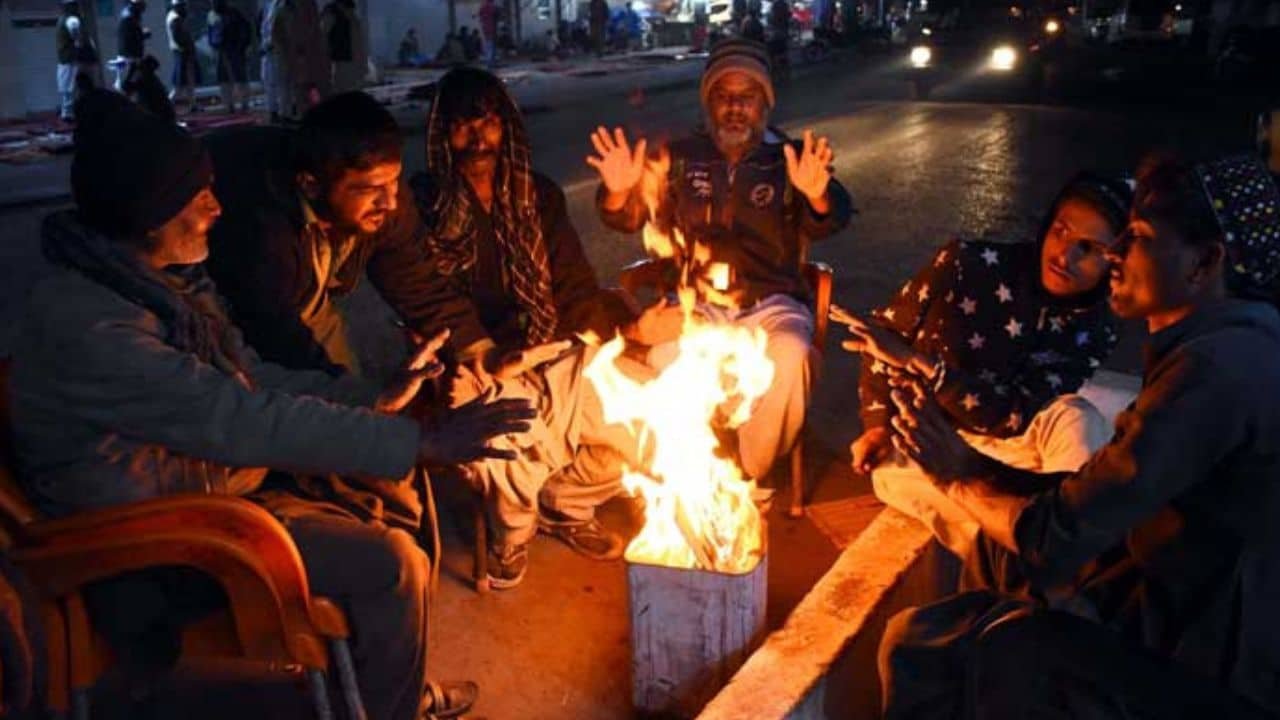
    Lahore is experiencing bone-chilling cold as the smog-choked city waits for rain. The Meteorological Department has predicted that rains will start on January 15, reports City 42.

    According to Chief Meteorologist Muhammad Aslam, there is no possibility of rain in Lahore this week, however, a spell will start after January 15. In the next few days, the weather will remain cold and dry, which is likely to drop temperatures in the city.

    Karachi recorded the coldest night of the season with the temperature dropping to 12 degree Celsius. It is expected to get colder in the coming days as the temperature is expected to drop as low as 10 C in the coming days while the maximum temperature is likely to rise between 25 C to 27°C, reports Geo.

    On the other hand, a severe cold wave in the country continued to cause fog in the plains while snow falls on the mountains. In Skardu, temperatures dropped to -8 C.

    The plains of Punjab, Upper Sindh, and Khyber Pakhtunkhwa continue to be shrouded in fog. In North Balochistan, rain fell in some places while it snowed in the mountains.

  • Much-awaited wintery winds about to hit Karachi

    Much-awaited wintery winds about to hit Karachi

    Karachi experienced the coldest night of the season so far after the temperature dropped to 13.5°C in the port city on December 8. The temperature is likely to drop further in the coming days as a new wave of cold winds will enter the country from December 15, reports Geo.

    According to weather analyst Owais Haider, the minimum temperature is expected to remain at 12 to 14°C during the next ten days in Karachi. Winds blowing in from the Northeast will worsen air quality. However, there is no chance of rain in the next 10 days, while humidity levels will remain between 50 to 60 percent during the day, he said.

    According to the monthly report issued by the Meteorological Department, normal to slightly above rainfall (snowfall over the high mountain) is likely to happen in most parts of the country, particularly the central parts of Khyber Pakhtunkhwa, during the current month.

    It said nearly normal precipitation is likely over most parts of the country particularly Sindh during January.

    “In February 2024, normal to slightly above normal precipitation is expected over most parts of the country particularly the upper Punjab and Khyber Pakhtunkhwa,” the report said.

  • Anti-smog crackdown intensifies: Rs129 million fines issued to violators

    The Lahore High Court (LHC) has been apprised through a comprehensive report detailing the robust measures taken by the Punjab government to address the smog issue. The report highlights the imposition of fines totalling Rs129 million on violators as a strong deterrent against activities contributing to air pollution.

    The report outlines that 6,700 units were sealed for violating smog-related restrictions. Over a three-month period, authorities inspected approximately 60,000 small and large units, resulting in the closure of more than 6,700 units due to violations.

    During this crackdown, 540 cases were registered against those contributing to smog, leading to the arrest of 118 individuals.

    The report highlights the sealing of 735 smoke-emitting factories in the Lahore division and the closure of 187 brick kilns during the smog control initiative.

    Fines amounting to Rs8.6 million were imposed for burning crop residue, and 216 cases were registered against those setting fire to crop stubble.

    Despite these efforts, the air quality index (AQI) of Lahore, initially recorded at a hazardous level of 371 in the morning, later dropped to around 211 in the afternoon. This shift caused Lahore to fall to the third position on the list of the world’s most polluted cities, a noteworthy change from its consistent first and second positions in recent months due to high levels of air pollution.

    Specifically, Polo Ground Cantt and Phase 8 DHA were identified as the most polluted areas within the city, with AQIs of 291 and 259, respectively.

  • Cold rainy weekend ahead for Sindh and Balochistan

    Cold rainy weekend ahead for Sindh and Balochistan

    The Metrological Department has predicted rain in areas of Sindh and Balochistan.

    Punjab is to have overcast conditions in the plain regions but it will largely be covered with smog and fog earlier in the day.

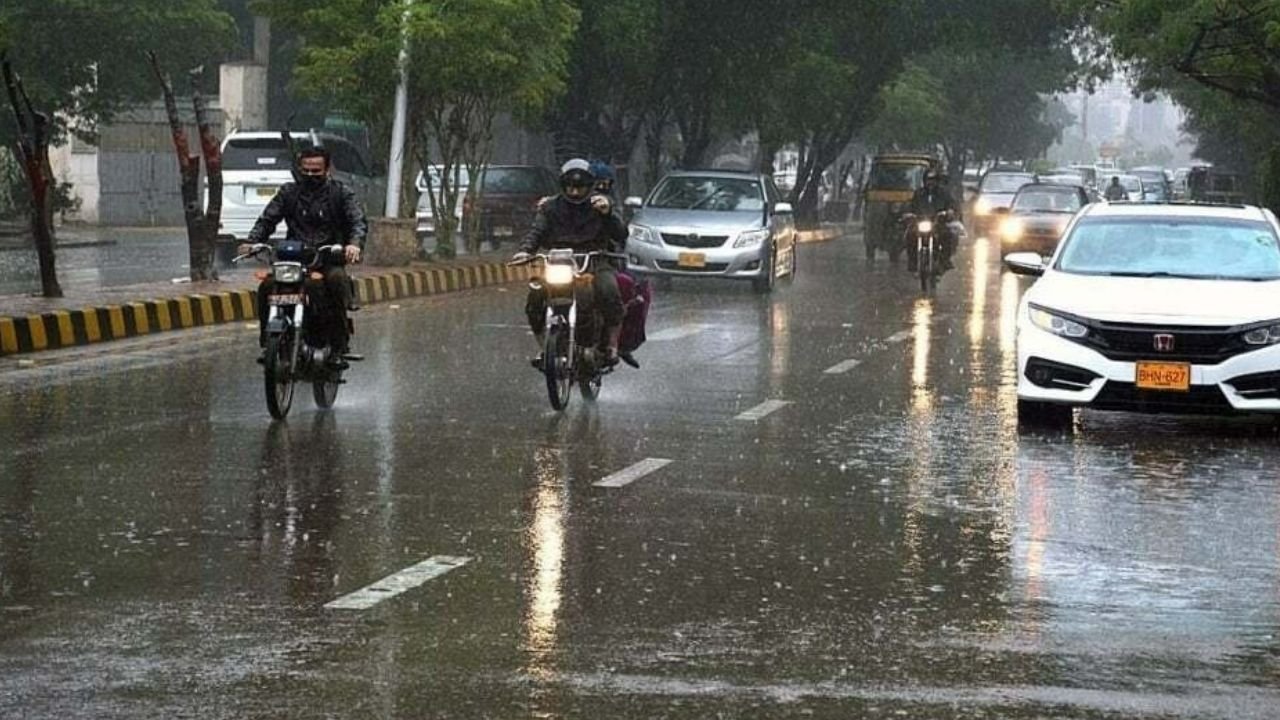
    Tharparker, Umarkot, Badeen, Mirpurkhas, and Thatta will face heavy rain with thunderstorms. Light rain is possible in Karachi and Jamshoro as well.

    The Meteorological Department has said that a system of winds has entered the country from the west which will cause gales in the western and southern regions of Balochistan along with thunderstorms.

  • Weather: Karachi to have a light rainfall

    Weather: Karachi to have a light rainfall

    Breaking the streak of hot weather in Karachi and Southern Sindh, winds from the West will bring light rainfall in different parts of the city along with the lowering of temperature. 

    The Meteorological Department has stated that this system of winds will cause a light shower of rain in Tesar Town, Kathor, M-9 motorway, Gulshan e Maymar, and Malir Highway. 

    However, the central part of the city will not experience any downpours. 

  • Weather Report: Rains and snowfall to descend from the west

    Weather in the country is about to change as highlighted by weather expert Jawad Memon. A system from the western region of Iran will enter the country via Balochistan between October 16 to 21, Memon said.

    The system will bring rains to different parts of the country including Punjab, and central and upper Sindh regions. Drizzle might take place in southern Sindh, especially in Karachi. Moreover, this will prompt the first snowfall of the season in the northern areas.

    He further added that the second system will cause more than usual rains in the coming winter season.