Tag: Weather

  • Wet autumn or dry winter? The forecast is here

    Wet autumn or dry winter? The forecast is here

    Last week’s spell of rain helped bid farewell to summers. So, what’s next? Will we have more rains to make autumn a wet one? Or are we heading for our traditional dry winters?

    Read on for details.

    One last spell of monsoon is about to hit the upper parts of Pakistan and will likely impact the entire country.
    A weather advisory issued by the Pakistan Meteorological Department (PMD) said that the westerly rain-producing wave is likely to enter upper regions of the country on the evening or night of Thursday, September 28.

    Under the system, moderate to heavy rains with wind and thunderstorms is expected in Chitral, Dir, Swat, Shangla, Buner, Mansehra, Kohistan, Abbottabad, areas of Kashmir including Neelum valley, Muzaffarabad, Poonch, Hattian, Bagh, Haveli, Sudhanoti, Kotli, Bhimber, Mirpur, and areas of Gilgit Baltistan including Diamir, Astore, Ghizer, Skardu, Hunza, Gilgit, Ghanche, Shigar from September 28 to 30.

    Isolated spells of rain and thunderstorm with hailstorms are also expected in Kohat, Peshawar, Mardan, Swabi, Nowshera, Haripur, Kurram, Waziristan, Bannu, Dera Ismail Khan, Murree, Galliyat, Islamabad, Rawalpindi, Attock, Chakwal, Jhelum, Mianwali, Sargodha, Khushab, Faisalabad, Toba Tek Singh, Jhang, Mandi Bahauddin, Hafizabad, Gujranwala, Gujrat, Sialkot, Narowal, Lahore, Kasur, and Sheikhupura between September 28 and 29.

    Meanwhile, Zhob, Barkhan, Layyah, Bhakkar, Dera Ghazi Khan, Okara, Pakpattan, Sahiwal, Multan, Bahawalpur and Bahawalnagar are also expected to witness similar weather conditions during the said period.
    Moreover, snowfall is expected over the high mountains of the upper areas of Khyber Pakhtunkhwa, Kashmir, and Gilgit-Baltistan during this period.

    Under the possible impacts, the Met Office has also predicted a significant drop in the temperature in the areas affected by the spell.
    PMD advised farmers and tourists to manage their crop activities and remain cautious to avoid any untoward situation during the period, respectively.

    Meanwhile, the general public has been advised to stay at safe places during windstorms, lightning, and downpours as loose structures like electric poles, solar panels, billboards etc. may be damaged by the gusts.

  • Major weather change on its way in Pakistan

    The Pakistan Meteorological Department (PMD) has issued a forecast for heavy rainfall spanning from September 22 to September 24, affecting various regions of the country. Read the story to see if it will rain in your city or not.

    Met Office has confirmed that weak to moderate moist currents from the Arabian Sea are likely to penetrate in upper parts of the country from September 22, 2023. A westerly wave is also likely to affect the upper parts on September 22.

    Under the influence of this weather system rain/wind-thundershowers (with few moderate to heavy falls) are expected in:

    Kashmir (Neelum valley, Muzaffarabad, Poonch, Hattian, Bagh, Haveli, Sudhanoti, Kotli, Bhimber, Mirpur)

    Gilgit Baltistan (Diamir, Astore, Ghizer, Skardu, Hunza, Gilgit, Ghanche, Shigar)

    Punjab: Murree, Galliyat, Islamabad, Rawalpindi, Attock, Chakwal, Jhelum, Mandi Bahauddin, Hafizabad, Gujranwala, Gujrat, Sialkot, Narowal, Lahore, Kasur, Sheikhupura.

    Chitral, Dir, Swat, Shangla, Buner, Kurram, Mansehra, Kohistan, Abbottabad, Haripur, Kohat, Peshawar, Mardan, Swabi and Nowshera from 22nd to 24th September with occasional gaps.

    Rain/wind-thundershower is also expected in Lakki Marwat, Dera Ismail Khan, Bannu, Karak, Waziristan, Mianwali, Sargodha, Khushab, Faisalabad, Toba Tek Singh, Jhang, Bhakkar, Layyah, Dera Ghazi Khan, Multan and Bahawalnagar on 23rd & 24th September with occasional gaps.

    Possible Impacts:

    Moderate to heavy falls may cause urban flooding in low-lying areas of Lahore, Gujranwala, and Rawalpindi on the said dates.

    Moderate to heavy rains may trigger landslides in the vulnerable areas of Murree, Galliyat, Kashmir, Gilgit Baltistan, Chitral, Dir, Swat, Kohistan, Shangla, Buner, Mansehra & Abbottabad from September 22-24.

    Farmers are advised to manage their crop activities accordingly. Tourists and travelers are advised to remain cautious to avoid any untoward situation during the period.

    Wind thunderstorms may damage loose structures like electric poles, solar panels, etc. The general public is advised to stay at safe places during windstorms/lightning/moderate/heavy rains.

  • Libya floods: 3,000 dead, 10,000 missing

    Libya floods: 3,000 dead, 10,000 missing

    Around 3,000 people have died while 10,000 are missing and 20,000 people have been displaced since heavy floods have hit eastern Libya, multiple international news outlets have said.

    Aid is being sent to Benghazi via plane carrying 14 tonnes of supplies and medical personnel even though the hard-hit areas are still difficult to reach.

    Additionally, relief convoys are being sent from west to east in divided Libya as the eastern region has been deemed a disaster zone by the internationally recognised Tripoli government.

    However, according to Al-Jazeera, “Authorities have struggled to reach Derna, because roads leading to the city are destroyed or cut off by flooding.” Moreover, communications with the city have been broken off, hindering information collection on casualties and damage.

    According to the Benghazi administration, more than 1,000 bodies have been recovered from the Mediterranean city of Derna.

    Storm Daniel

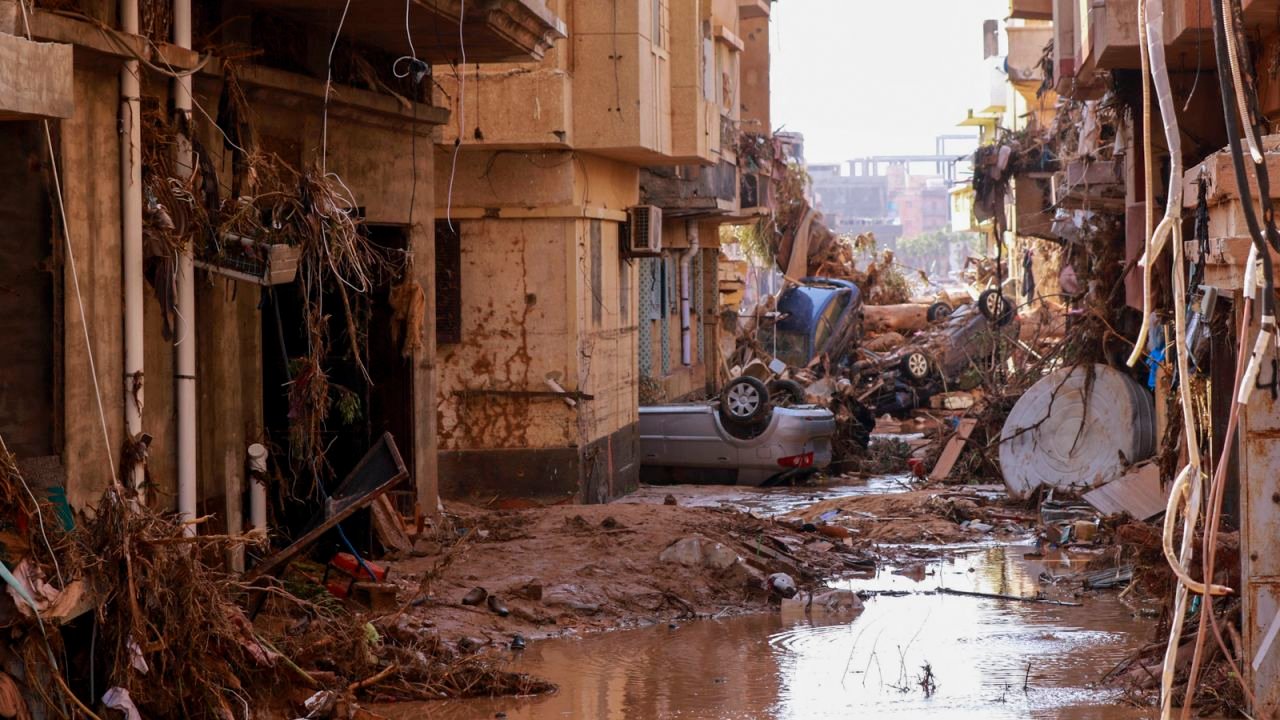
    Storm Daniel hit eastern Libya on Monday, leaving a path of destruction in its wake. Two dams on the Wadi Derna River were destroyed and consequently, millions of cubic metres of water swept through the area.

    Al-Jazeera also spoke with National Council on Libya-US Relations who stated that “About 4sq km [1.5sq miles] at the heart of the city have been eroded completely.”

    Moreover, Tamer Ramadan, a member of International Federation of Red Cross and Red Crescent Societies delegation to Libya, referred to the issue of dealing with the flood that is “beyond the capabilities of the government, of the national society, of the people” and that assistance from international actors would be needed.

    Benghazi Minister of Civil Aviation Hichem Chkiouat managed to visit Derna and spoke with Reuters, “Bodies are lying everywhere – in the sea, in the valleys, under the buildings.”

    “I am not exaggerating when I say that 25 percent of the city has disappeared,” he added.

  • Another monsoon spell to hit Punjab from Sunday

    As many districts in Punjab deal with intense heat, the Provincial Disaster Management Authority (PDMA) has predicted rainfall in the coming days.

    As stated by the Provincial Disaster Management Authority (PDMA), the weather will remain hot and humid across the majority of Punjab. Nevertheless, the province is anticipated to experience monsoon rains from August 13 to 16.

    Substantial rainfall is forecasted for Sialkot, Narowal, Shakargarh, Lahore, Gujranwala, Gujrat, and Mandi Bahauddin. Additionally, there’s likelihood of rain accompanied by thunderstorms in Rawalpindi, Attock, Jhelum, Chakwal, Murree, and Galliat.

    The PDMA has affirmed that water levels in the Chenab, Ravi, Jhelum, and Sutlej rivers are within normal range, while Taunsa along the Indus River is experiencing minor floods. Tarbela and Mangala dams are currently at 95 percent of their capacity.

    Simultaneously, the Pakistan Meteorological Department (PMD) has predicted hot and humid conditions across most parts of the country in the next 24 hours. However, there’s an expectation of rain, wind, or thundershowers in northeastern Punjab, the Potohar region, Islamabad, upper Khyber Pakhtunkhwa, and Kashmir. In the central and southern parts of the country, there are chances of strong winds capable of raising dust.

  • Kahaan baarish horehi hai? Apple, why are you doing this to us

    Kahaan baarish horehi hai? Apple, why are you doing this to us

    Despite a pleasant first week, this May is not being kind to Lahoris, with the temperature currently at 42°C which has left us without no option but to stay inside with ACs on 24/7.

    But, this is not the case as per the weather App on our iPhones. According to the application, while all of us are burning in this garmi, a thunderstorm is happening. We have just one question. Where are the rainy clouds?

    Social media users have also taken to Twitter to express their frustration.

    https://twitter.com/Xxrishrana/status/1660516708954828802?s=20

    According to a report, a searing heat wave that gripped parts of South Asia in April this year was made at least 30 times more likely by climate change.

    The climate change-fueled heat caused deaths, widespread hospitalizations, damaged roads, sparked fires and led to school closures in the region.

  • Cold snap kills least 160 people in Afghanistan

    Cold snap kills least 160 people in Afghanistan

    Afghan authorities have reported on Thursday that more than 160 people have died this month from the cold, as the country goes through the most severe winter season in more than a decade.

    Villagers in the country have spoken of their inability to pay for fuel to heat their houses in well-below-freezing conditions.

    “162 people have died due to cold weather since January 10 until now,” said Shafiullah Rahimi, a spokesperson for the Minister of Disaster Management.

    Temperatures have dipped to as low as -34 degrees Celsius (-29.2 degrees Fahrenheit).

    Even in the early days of winter, medical specialists noticed a significant increase in the number of young children suffering from severe pneumonia and other respiratory ailments. The ailments are partially attributable to rising poverty, which hinders individuals from appropriately heating their houses.

  • What caused Pakistan’s greatest flood in a decade?

    What caused Pakistan’s greatest flood in a decade?

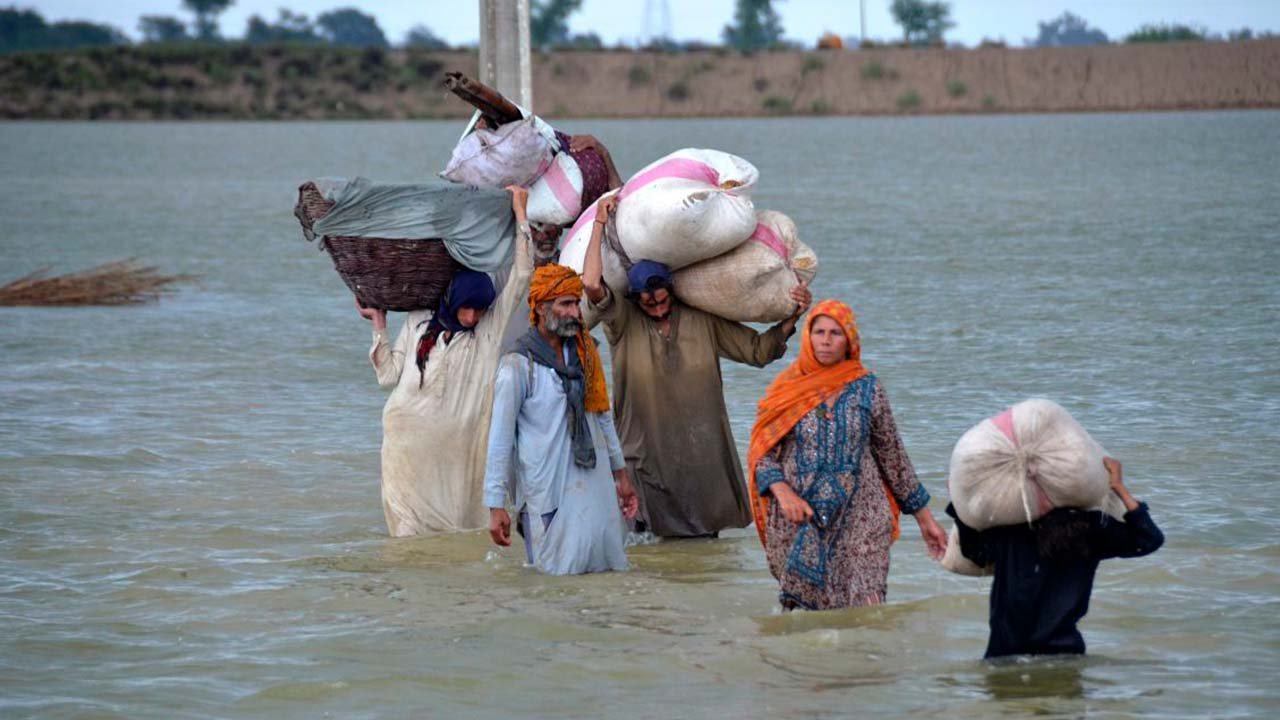
    Floods in Pakistan have affected millions of people, drowned hundreds, and prompted the government to proclaim a national emergency.

    Nearly 1,000 people have died since June, according to the National Disaster Management Authority (NDMA). People are looking for shelter as torn tents fill the streets of Sukkur.

    Around 15,500 people sacrificed everything in the 1,000-kilometer-long coastal area patch of Sindh’s Thatta district.

    The flood water has swallowed up people’s entire life savings, earned after years of hard work, meant to get their kids educated.

    The locals are concerned that the standing water may spread waterborne diseases. There hasn’t been any relief for residents expecting to return home to see what can be salvaged because it has been raining all week in Sindh province.

    Many houses in the city’s center have sustained damage, leaving only the walls standing.

    Over 300 people have died as a result of the floods in the province of Sindh alone. People set up tents along the narrow alleyways in any remaining dry area because further rain is predicted.

    About 15 per cent of the population, or 33 million people, were affected by the floods, according to Prime Minister (PM) Shehbaz Sharif on Friday.

    The nation has pleaded for greater international assistance, as PM met with ambassadors from other countries in Islamabad.

    He claimed that this season’s flood losses were on par with those from the floods of 2010–2011.

    The country is currently experiencing its eighth monsoon cycle, whereas typically there are only three to four cycles of rain, according to climate minister Sherry Rehman.

    She claimed that the proportions of super flood torrents are startling.

    Numerous monsoon cycles that have hit Pakistan since the start of summer have destroyed more than 400,000 homes.

    The Office for the Coordination of Humanitarian Affairs (OCHA), the UN organization in charge of disaster relief, announced on Thursday that at least 184,000 people had been relocated to relief camps.

    The rains have notably affected Sindh, which has seen nearly eight times its normal August rainfall. Southern Pakistan has been severely hit.

    On Thursday, Ms. Rehman claimed that officials had requested a million tents to house the refugees.

    What led to Pakistan’s floods?

    Extreme weather conditions or rains brought on by climate change are to blame for the recent floods that have affected Pakistan. Some floods originate in inland regions because of excessive rain, whereas others happen at the seashore because of sea-level rise, causing devastation in coastal districts.

    High tides in the sea cause heavy flooding primarily in coastal locations. Because of the daily rise in global temperature, this is related to climate change.

    There are two main causes of the floods: The experts noted that sea-level rise is a result of expanding saltwater caused by glacier and Arctic sea ice melting as well as cyclones and heavy rains brought on by warming ocean temperatures.

    Seawater intrusion inland has been caused by a significant sea-level rise of 1 millimeter along coastal Sindh recorded over hundreds of years. Communities in coastal regions, where economic activity is concentrated, are significantly impacted by invasive sea water.

    Experts have noted that the storms that have occurred more frequently and with greater severity in the Arabian Sea over the past 50 years as a result of climate change have an economic impact on urban areas like Karachi, Badin, and Thatta.

    According to a research, the primary causes of sea incursion include thermal expansion, freshwater inflows, physical forces, monsoon fluctuation, and ocean current variance.

    As seawater warms, the top layers of the ocean release some heat into the sky, while the lower layers hold onto this heat for a longer time and in greater amounts. As a result, saltwater gradually warms up due to a process known as thermal expansion.

    According to a study, freshwater inflow from melting glacial layers, ice sheets, and sea ice contributes to sea level rise. Freshwater input also rises as a result of the hydrogen cycle brought on by the warming of the oceans and surface areas.

    The scenario of subsidence and lifting also affects sea level without changing the volume of ocean water. This is caused by tectonic activities such extraction for oil, gas, and water.

    A direct connection between climate change and variations in monsoon rainfall. In recent years, Pakistan has had numerous instances of extreme monsoon rainfall and flooding.

    Regional ocean currents, which transfer a lot of water from one place to another, do not alter the volume but have an impact on sea level in another place.

  • Islamabad’s air quality improves as pollutants found below permissible limits

    Islamabad’s air quality improves as pollutants found below permissible limits

    The air quality in the federal capital was rated as satisfactory and clean due to the proportion of air pollutants being under acceptable limits on Sunday.

    Owing to the persistent rainy weather and the low volume of traffic on the roads, the air quality in Islamabad was assessed as being healthy because suspended particles and the pollutants’ ratio were both within the allowed levels in the atmosphere. The Pak-EPA has gathered the air quality data, which is based on three intervals of eight hours of data collection from various sites and monitors air pollutants ratio for 24 hours.

    The Pak-EPA data showed that the contaminants were below the allowable thresholds of national environmental quality (NEQs) requirements throughout the three data monitoring intervals, keeping the air quality high.

  • Annual inflation in Pakistan jumps to 38.63% after weekly increase of 0.82%

    Annual inflation in Pakistan jumps to 38.63% after weekly increase of 0.82%

    The sensitive price indicator (SPI) hit an annualised high of 38.63 per cent due to a lack of perishable goods brought on by severe rains, and weekly inflation increased by 0.82 per cent for the seven days ending August 4, 2022.

    The base for most cooked meals in the country is an onion and tomato. Onions increased in price from Rs75.41/kg to Rs94.2/kg while tomatoes increased from Rs74.07/kg to Rs82.91/kg.

    Data from the Pakistan Bureau of Statistics (PBS) indicates that the increase is attributable to the increased price of diesel (109.15 per cent), onions (107.95 per cent), pulse masoor (106.71 per cent), petrol (88.94 per cent), cooking oil 5 litre (74.44 per cent), mustard oil (73.89 per cent), chicken (73.42 per cent), vegetable ghee 1 kg and 2 kg (72.26 and 70.48 per cent), washing soap (62.62 per cent), pulse gramme (59.07 per cent), electricity for Q1 (52.61 per cent), gents sponge slippers (52.21 per cent), pulse maash (46.01 per cent) and garlic (41.16 per cent).

    According to The News, consumers are struggling with soaring food and fuel prices. Hi-speed diesel was being sold last August 5 for Rs117.58 per litre, but it is now Rs245.92 per litre.

    Various items in the SPI basket are given varying weightages. The goods with the heaviest weights in the bottom quintile are milk (17.5449 per cent), electricity (8.3627 per cent), wheat flour (6.1372 per cent), sugar (5.1148 per cent), firewood (5.0183 per cent), long cloth (4.2221 per cent), and vegetable ghee (3.2833 per cent).

    While the cost of firewood and electricity remained consistent, the cost of milk, wheat flour, sugar, long fabric, and vegetable ghee 2.5kg increased. Vegetable ghee 1kg saw a decrease in price.

    SPI is made up of 51 necessities that were gathered from 50 markets spread over 17 cities across the nation.

    Out of 51 goods, 33 (64.71 per cent) of the prices rose during the week, 4 (7.84 per cent) of the prices fell, and only 14 (27.45 per cent) of the prices kept the same.

    The price of onions increased by 24.92 per cent, tomatoes by 11.93 per cent, pulse moong by 5.72 per cent, pulse mash by 5.28 per cent, potatoes by 5.03 per cent, pulse masoor by 4.43 per cent, diesel by 3.78 per cent, pulse gramme by 2.69 per cent, eggs by 2.44 per cent, powdered milk by 1.61 per cent, gur by 1.53 per cent, LPG by 1.49 per cent, salt by 1.46 per cent, and garlic by 1.30 per cent on a WoW basis.

  • More rains expected from August 10-13: Met Department

    More rains expected from August 10-13: Met Department

    The Pakistan Meteorological Department has predicted more monsoon rains from August 10 to August 13.

    According to a statement issued by the PMD, rains and thundershowers are expected in Kashmir, Islamabad, Gilgit-Baltistan, Punjab, Khyber-Pakhtunkhwa, Sindh and parts of Balochistan from August 10-13.

    The PMD has also warned that rains can cause flash flooding in different cities including Islamabad, Rawalpindi, Shakargarh, Sialkot, Narowal, Abbottabad, Mansehra, Dir, Karak, Lakki Marwat, Bannu and Kashmir.

    In addition, the PMD has warned of urban flooding in Karachi, Thatta, Badin, Hyderabad, Dadu, Jamshoro, Sukkur, Larkana, Shaheed Benazirabad and Mirpurkhas due to heavy rains.

    The Met Department has advised travellers and tourists to remain more cautious during the forecast period.