Tag: whatsapp

  • Ali Amin Gandapur, Shakil Khan accused each other of corruption on WhatsApp

    Ali Amin Gandapur, Shakil Khan accused each other of corruption on WhatsApp

    Chief Minister Khyber Pakhtunkhwa (KPK) Ali Amin Gandapur and former KPK Minister of Communication and Works Shakil Khan exchange bitter words in the Pakistan Tehreek e Insaf (PTI) parliamentarian Whatsapp group.

    Both exchanged harsh words for an hour and accused each other of corruption at midnight around 1 PM, sources have told Geo News.

    Shakil Khan derided the CM for his perceived lack of authority and promptly resigned from the ministry in the WhatsApp group. Gandapur responded equally swiftly, stating, ”I had already dismissed you.”

    Both deleted their messages after advise from assembly members and ministers.

    Shakil Khan resigned from the ministry while Gandapur termed his performance unsatisfactory.

  • ‘It’s not possible’; Reporting in internet-challenged Pakistan

    ‘It’s not possible’; Reporting in internet-challenged Pakistan

    With the primary shift from newspapers to television channels and now to digital media applications, the dissemination of information has become increasingly competitive for newsrooms, with the latest updates just a click away.

    “Delays can be managed with newspapers, but today everything is in your hands—specifically, mobile phones,” says Raees Ansari, Bureau Chief of Geo News in Lahore.

    “Every single second is crucial in reporting now; some footage needs to be sent and put on air instantly. But due to poor network conditions and slow WhatsApp, content is not being sent on time, which is affecting our professional activities,” he reveals.

    Over the past week, internet users across Pakistan have reported network disruptions, with WhatsApp, Facebook, and Instagram experiencing slowdowns, hindering online activities. The Pakistan Telecommunication Authority (PTA) has denied any connection between these issues and the alleged firewall installation.

    Since the ban on X (formerly Twitter) on February 17, 2024, many have turned to Virtual Private Networks (VPNs). The ongoing disturbances, however, have complicated internet usage, which is crucial for a number of professions.

    Sumaira Raja, an investigative reporter, who is mostly found out on the field, complains of encountering issues with not only the internet but also phone signals which often prevents her from conveying news on time.

    “I also experience delays with receiving beepers, as head office frequently reports that the number is not available due to poor signals. This situation makes it very difficult to do my job. I’ve tried using a VPN, but it hasn’t worked,” Raja says.

    Sports journalist Faizan Lakhani recalls when javelin champion Arshad Nadeem returned to Pakistan on August 17 after winning the gold medal at the Paris Olympics, all the visuals sent through WhatsApp by reporters were delayed, and they struggled to download them unless they used a VPN.

    “This situation is very challenging and affects our workflow. When reporters are working on a story or covering an event, they need to stay connected with the desk. We usually rely on voice notes to pass instructions, but since we started encountering this issue, we are struggling with that method too,” he says.

    “We have been told that the network disruption is because of the firewall installation. While things are becoming easier around the world, it has been getting harder for us. Everything is happening with the help of technology and the current situation is a major challenge.” says Ansari.

    What’s happening?

    A highly placed source in the IT industry identifies that filtering of content delivery networks (CDNs) through Firewall is causing content to be routed via internet backbone rather than CDNs.

    “This means that around 4 TBs of internet traffic previously served through CDNs, hosted in Pakistan, is becoming ineffective. When all traffic goes on backbone bypassing CDNs, it’s causing massive slowdown at many western destinations that’s happening now,” he explains.

    Recently, Fiverr, an online marketplace for freelance services, warned clients that Pakistani freelancers may experience delays due to internet issues and the use of VPNs to change their locations.

    “Brace for impact. God save the internet in Pakistan”, says the IT expert.

    Background

    It all started on February 17, 2024, about a week into the new government, when X (formerly Twitter) was banned.

    Initially, amid the uproar, the government remained silent on the matter while the Pakistan Telecommunication Authority (PTA) seemed aloof until the High Courts of Sindh and Islamabad intervened. The PTA eventually admitted that the ban on X was imposed on the orders of the Ministry of Interior based on reports from intelligence agencies.

    The government eventually justified the ban by attributing it to national security concerns, citing ‘digital terrorism‘ and online propaganda as among the threats.

    Earlier in August, Provincial Information Minister Azma Bokhari stated that the government is not against social media but wants to focus on rules and regulations, which, if enforced, could lead to the removal of the ban on X.

    The disruption has now extended beyond X, affecting other widely used apps along with the internet.

    Ironically, since the February 2024 election, the new government has emphasised the need to grow the tech industry in Pakistan.

    In March, Lahore Knowledge Park (a science park) was handed over to the Punjab Central Business District Development Authority with the approval of Chief Minister Punjab Maryam Nawaz, with the goal of establishing Pakistan’s largest IT city.

    In June, Prime Minister Shehbaz Sharif visited Shenzhen— the tech hub in China— in hopes of future collaboration. Ironically, he posted on X (Twitter), expressing how “impressed” he was by the “city’s skyline and development that symbolizes modern-day China.”

    Given the lack of proper infrastructure in the country amid burgeoning surveillance, how will Pakistan evolve in the rapidly transforming digital world? It remains to be seen – but likely we won’t be able to download it.


  • Is WhatsApp dead in Pakistan?

    Is WhatsApp dead in Pakistan?

    Have you been experiencing difficulties using social media platforms, especially WhatsApp, over the past several days?

    Social media users across Pakistan have been struggling with slow internet speeds, affecting video calls, downloads, and messaging.

    According to Downdetector.pk, a real-time monitoring service for internet and social media outages, there have been reports of slow service for WhatsApp and Instagram since last Friday in cities including Karachi, Islamabad, Lahore, and Faisalabad.

    In July, users also faced issues with Instagram and WhatsApp. One possible reason for these disruptions is the testing of a new firewall intended to block certain content on various social media platforms.

  • Social media apps including WhatsApp experiencing slowdowns yet again

    Social media apps including WhatsApp experiencing slowdowns yet again

    Users across various cities in Pakistan are dealing with drastically slow internet. Reports indicate that messaging apps like WhatsApp are also facing slowdowns.

    People are encountering issues with messages not being downloaded on WhatsApp.

    Geo news reports that according to Down Detector, a website that monitors social media app performance, WhatsApp, Facebook, and Instagram are among the platforms that have been slow.

  • ‘Beep Pakistan’ should not be compared to WhatsApp, says government

    ‘Beep Pakistan’ should not be compared to WhatsApp, says government

    Minister of State for Information Technology (IT) Shaza Fatima Khawaja has clarified that the soon-to-be-introduced instant messaging application ‘Beep Pakistan’ should not be compared with WhatsApp.

    The National Information Technology Board (NITB) developed ‘Beep Pakistan’ and began its trial in August 2023 under the then-Information Technology Minister Aminul Haq.

    Government officers and Ministry of Information Technology experts have been using the application for the past year, and it is still being tested.

    Recently, complaints about slow internet speeds and difficulties running WhatsApp led to rumours on social media that the government plans to introduce ‘Beep Pakistan’ as an alternative to WhatsApp.

    However, Minister of State Shaza Fatima Khawaja has clarified that ‘Beep Pakistan’ is not intended as a public alternative to WhatsApp but will serve as an alternative at the government level.

    In an interview with the Arab broadcaster Al Jazeera, Shaza Fatima emphasised that it is incorrect to consider ‘Beep Pakistan’ as an alternative to WhatsApp or to compare the two.

    She stated that the government does not intend to present ‘Beep Pakistan’ as an alternative to third-party applications.

    According to the Minister of State, the app is still being tested within the Ministry of Information Technology, and in the second phase, testing will extend to more federal ministries.

    Shaza explained that ‘Beep Pakistan’ will be introduced as an official instant messaging application. The government will ensure its privacy and will use the app exclusively for government affairs.

    The app will function similarly to WhatsApp, but all services and data will remain under the control of the Government of Pakistan.

    The Government of Pakistan has also recently issued orders to implement electronic and e-systems in ministries and institutions to reduce time and costs associated with paper-based processes.

  • What is the story behind the recent WhatsApp disruption in Pakistan?

    What is the story behind the recent WhatsApp disruption in Pakistan?

    Pakistan Telecommunication Authority (PTA) has downplayed the ongoing issues with WhatsApp services being faced by users in Pakistan, attributing it to a possible “technical glitch”, Geo News has reported.

    Problems arose a few days ago when users reported difficulty in sending and receiving media files, such as voice notes, photos, and videos, on WhatsApp using their mobile networks.

    Complaints included media files either taking too long to download or not downloading at all, with some users receiving the following message from WhatsApp: “Couldn’t download document. Try again. If the problem keeps happening, try connecting to Wi-Fi.”

    In the last 24 hours, Downdetector, a global platform that monitors problems with websites and online applications, has continued to receive reports regarding WhatsApp’s outages in Pakistan.

    Telecom companies confirmed the issue to Geo News but did not comment further on the reasons behind it.

    Interestingly, Usama Khilji, the director of Bolo Bhi, an advocacy forum for digital rights in Pakistan, suggested that the WhatsApp disruptions could be linked to the recent installation of the government firewall.

    Khilji added that the complete lack of transparency regarding the firewall system being installed was “criminal.”

    PTA spokesperson Malahat Obaid denied any issues with WhatsApp, saying, “There is no issue with WhatsApp or any social media apps currently. In case anyone has experienced any such issue lately, it may be due to some technical glitch.”

  • Apple drops WhatsApp, Threads from China app store on official order: report

    Apple drops WhatsApp, Threads from China app store on official order: report

    Beijing (AFP) – Apple has removed the Meta-owned WhatsApp and Threads from its App Store in China following an order from the country’s top internet regulator, Bloomberg reported Friday citing the tech giant.

    Beijing engages in some of the world’s most extensive internet censorship, with web users in mainland China unable to access everything from Google to many foreign apps without using a virtual private network.

    “We are obligated to follow the laws in the countries where we operate, even when we disagree,” said Apple in a statement, according to Bloomberg.

    “The Cyberspace Administration of China (CAC) ordered the removal of these apps from the China storefront based on their national security concerns,” said Apple, referring to China’s internet regulator.

    “These apps remain available for download on all other storefronts where they appear.”

    A Meta spokesperson referred AFP to Apple, which did not immediately respond to a request for comment.

    The CAC and the Ministry of Industry and Information Technology — another top Chinese internet regulatory body — also did not immediately respond.

    China is a key market for Apple, which last year topped the country’s smartphone market for the first time.

    But thorny issues of censorship and national security have long hounded the US-based firm’s operations in China as Beijing and Washington engage in a fierce battle for technological supremacy.

    In January, China said it had cracked Apple’s encrypted AirDrop communication service, which had once given protesters a vital channel for sharing information during the major 2019 pro-democracy protests in Hong Kong.

    State-backed experts said in January that they had devised a way to reveal an iPhone’s encrypted device log, allowing them to then identify an AirDrop user’s phone number and email accounts.

    Many online platforms that are popular in much of the world — including Google, Facebook, X, WhatsApp and TikTok — are blocked in mainland China.

    But savvy iPhone users in China have still been able to download banned platforms through Apple’s app store, then use a VPN to get around the restrictions.

    Removing WhatsApp and Threads from the Chinese app store will greatly complicate the ability of new iPhone users to access the apps.

    The latest development comes a day before a scheduled vote in the US House of Representatives to force the wildly popular video app TikTok to sever all links with its Chinese parent ByteDance.

    US officials have raised concerns in recent years over potential national security and privacy threats posed by TikTok, despite repeated assurances by the firm that it presents no risks to the American public.

    Beijing has frequently lashed out against US restrictions on Chinese tech, claiming they are a pretext to contain the country’s economic rise.

  • NADRA WhatsApp channel to provide accurate information to citizens

    NADRA WhatsApp channel to provide accurate information to citizens

    The National Database and Registration Authority (NADRA) has launched a WhatsApp channel to provide updated and factual information to citizens.

    The aim is to counter the spread of misinformation and to prompt trust between the government authority and citizens.

    According to a NADRA spokesperson, the launch of the WhatsApp channel for public service organisations is a modern initiative with, “Real-time messaging capabilities enable NADRA to swiftly communicate updates and guidance to citizens.”

    Spokesman NADRA also said that all possible efforts will be made to provide timely and immediate information.

    You can access Nadra’s WhatsApp using this link: https://whatsapp.com/channel/0029VaH7JG2I1rckS9XnTg23

  • Having trouble with renewing your passport? There’s a WhatsApp number you can contact for help

    Having trouble with renewing your passport? There’s a WhatsApp number you can contact for help

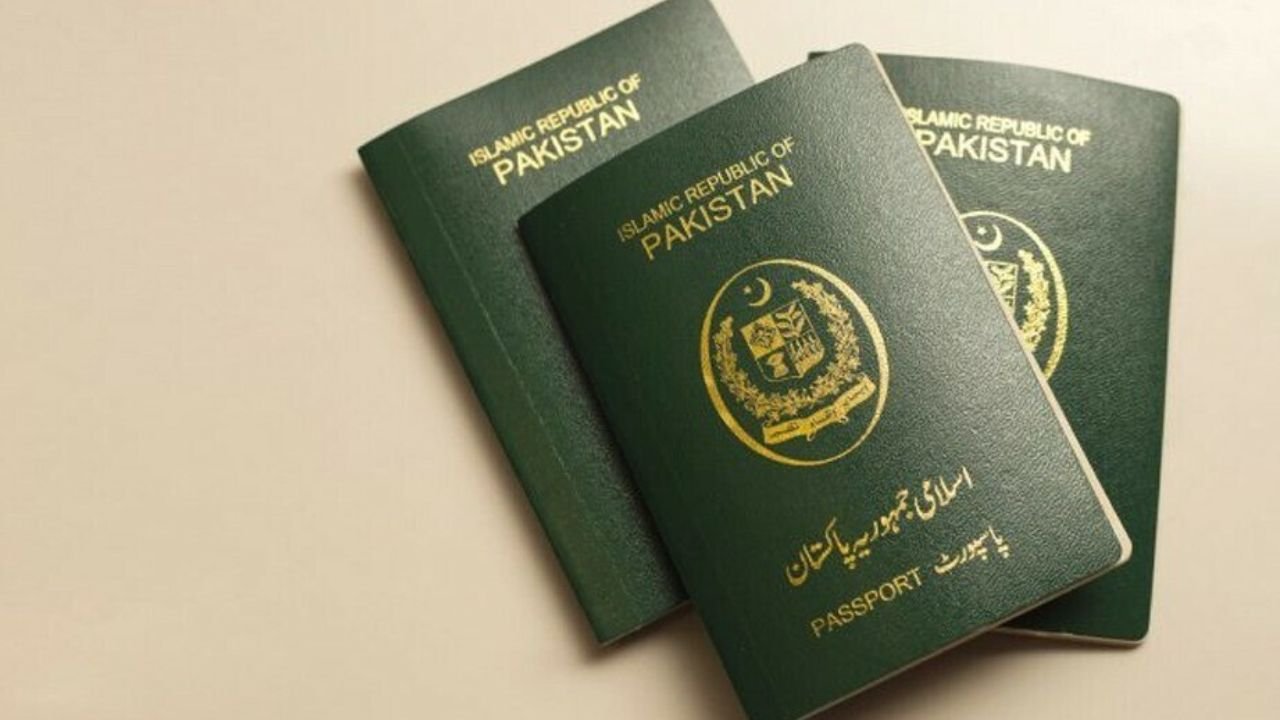
    The Department of Immigration and Passports has released a phone number and WhatsApp number for complaints and awareness on the issuance or renewal of passports.

    Afzal Nadeem Dogar’s report in Geo states that the Director General of Immigration and Passports, Mustafa Jamal Qazi, explained that due to his efforts, the issuance of passports is going on as usual. However, if the public has any problems, they should call phone numbers 0519107072 and 0519107072 to register their complaints or get information.

    According to DG Immigration and Passports, in case of delays in receipts or printing of passports, citizens should send a photo of their passport token receipt to WhatsApp number 03368566685 so that their complaint can be redressed.

    To read more: Why aren’t you getting your passport?