
Tag: Wheat Prices

  • Punjab food department ceases wheat quota subsidy 

    Punjab food department ceases wheat quota subsidy 

    The Punjab Food Department has decided to discontinue a substantial subsidy programme linked to the allocation of government wheat quotas. 

    Officials responsible for this matter have informed the media that the government has set the price of wheat at Rs3,900 per maund, with the distribution of wheat from the government quota to flour mills commencing on October 15th.  

    Within the framework of the government quota, wheat will be made available to 1,000 operational flour mills at a rate of Rs4,450 per maund.  

    In the wake of the issuance of government wheat quotas, a 20-kilogramme bag of flour will be retailed at Rs2,600, while in the open market, the same 20-kilogramme bag of flour is currently selling for Rs2,750.  

    These officials have also disclosed that the Punjab Food Department currently maintains a wheat stockpile of over 40 lakh tonnes.  

    Read more: IMF urges Pakistan to increase taxation on the rich and ‘protect the poor’ 

    In June, the Punjab Food Department had temporarily halted the allocation of wheat quotas to flour mills, opting instead to conduct wheat auctions in accordance with the regulations set forth by the Public Procurement Regulatory Authority (PPRA).  

    As reported by ARY News, the Punjab Food Secretary mentioned that mill owners are eligible to participate in these auctions.  

    Furthermore, the provincial government is contemplating the provision of direct subsidies on flour, with these measures aimed at curbing any irregularities associated with the allocation of wheat quotas. 
  • Wheat prices soar in Lahore, hitting Rs5,100 per 40kg bag

    Wheat prices soar in Lahore, hitting Rs5,100 per 40kg bag

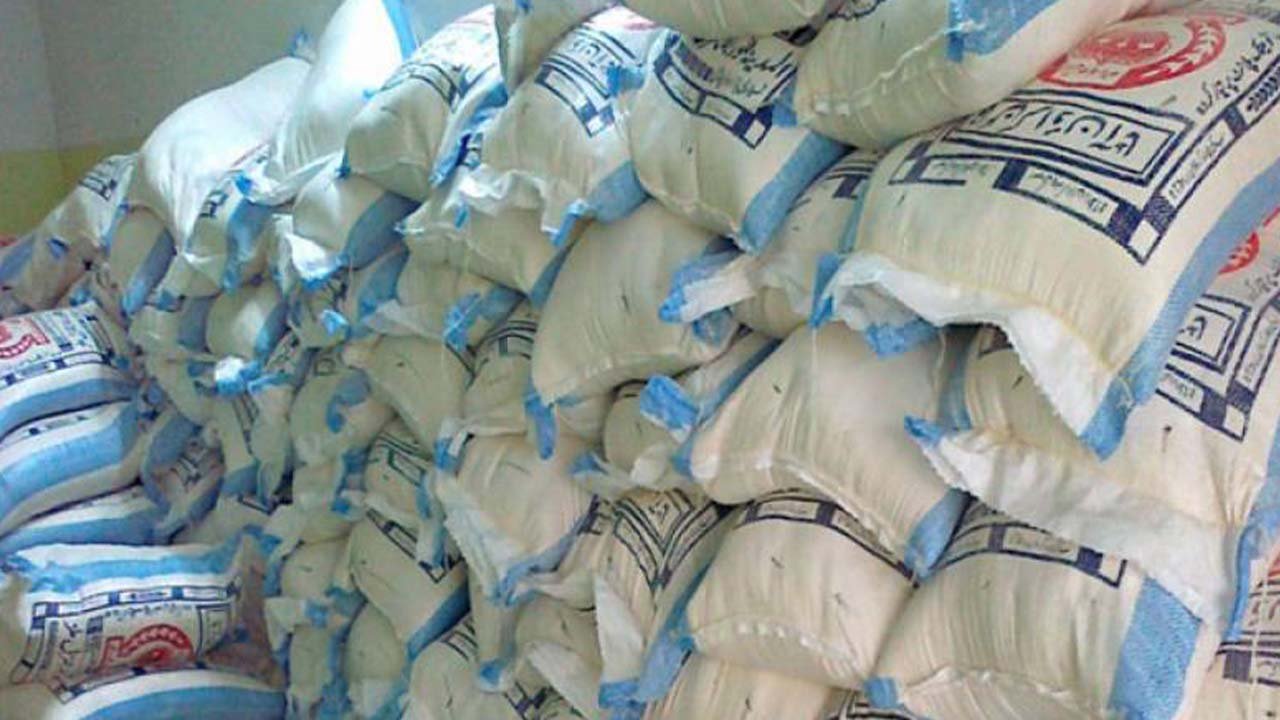
    In Lahore, the price of a 40kg bag of wheat has surged to Rs5,100, which is significantly higher than the government’s fixed rate of Rs3,900. The leader of the flour mills association has stated that the government’s rate is not being implemented in the market.

    As a result of the increase in wheat prices, the price of a 20kg bag of flour has risen to Rs2,750, as opposed to the government’s fixed rate of Rs2,316.

    The flour millers have explained that they are unable to sell the wheat at lower rates after procuring it at an exorbitant price from the open market.

    Last month, officials from the Punjab Food Department foiled an attempt to smuggle wheat and flour to Afghanistan. More than 70 containers loaded with wheat and flour were being smuggled to Afghanistan from Rawalpindi Motorway.

    During the inspection, district food authority officials seized 46 containers loaded with wheat and 16 containers of flour. The wheat and flour were being transported from Punjab to Afghanistan, despite a ban on wheat transportation from the province. The containers were sealed and 16 people were booked in connection with the incident.

  • Supply of free flour for underprivileged cannot be questioned, says Lahore High Court

    Supply of free flour for underprivileged cannot be questioned, says Lahore High Court

    Lahore High Court has ruled that the government is responsible for providing free flour to those living below the poverty line and unable to purchase it themselves, and therefore the supply of free flour cannot be challenged in court. The court also stated that the supply of free flour under the government’s “Ramzan package” is a policy decision that cannot be interfered with by the court. This ruling came in response to a petition filed by a bar member challenging the government’s fixation of the wheat price at Rs3,900 per 40 kg.

    LHC dismissed the petition, stating that the government has the authority to fix prices and take necessary measures to cater to the needs of the people. The court also observed that the fixation of prices of commodities such as wheat by the government falls within the policy-making domain of the government and that this function must be performed keeping in mind various factors such as the availability of stocks and demand and supply.

    The court further noted that the government’s power to fix prices cannot be ordinarily interfered with by the court in its constitutional jurisdiction and that in the absence of any law or policy, the court cannot issue directions to respondents to provide flour or wheat to consumers at subsidised rates. The court also stated that the government’s purchase and sale of wheat, provision of wheat to flour mills, subsidised value, and framing of policy to provide flour at a particular rate or free of cost to deserving people of the society are all within the policy-making domain of the government.

    The court held that the government’s fixation of the wheat price was within its jurisdiction and powers, and that the government’s decision to fix the price was made after considering various factors, including regulating market forces. According to Brecorder, the court observed that the government’s power to fix prices cannot be challenged by petitioners who do not have access to the relevant data or the capability to determine various aspects of the price-fixing criteria.

    In conclusion, the court ruled that the government has the authority to fix the price of wheat and that the supply of free flour to those in need is a policy decision that cannot be challenged in court. The court also noted that the fixation of prices of commodities falls within the policy-making domain of the government and must be performed in consideration of various factors and that the court cannot interfere with the government’s power to fix prices in its constitutional jurisdiction.