Tag: WHO

  • Pakistan to increase surveillance after WHO declares monkeypox as global health emergency

    Pakistan to increase surveillance after WHO declares monkeypox as global health emergency

    In light of the World Health Organisation’s (WHO) declaration that the monkeypox outbreak is “a global health emergency”, the health ministry has warned all the provincial governments to keep a watch out for any suspected monkeypox cases.

    Minister for Health Abdul Qadir Patel on Sunday said that the government has decided to increase surveillance.

    “All the national and provincial health authorities have been advised to remain on high alert for any suspected case of monkeypox,” Patel said in a statement. “Instructions have been issued to stakeholders, especially border health services for strict monitoring at all points of entry.”

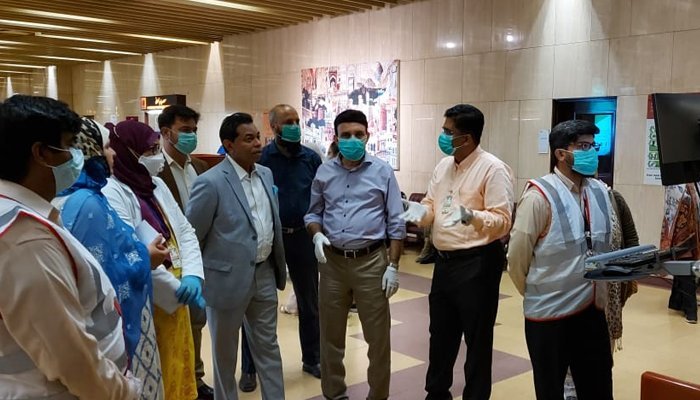
    He said that at all ports of entry, an efficient surveillance system had been built on a scientific foundation. All incoming travellers would be subject to screening, especially those from African nations, he added.

    On July 23, WHO declared the monkeypox outbreak a global health emergency. WHO now sees this virus as a significant enough threat that a global response is needed to prevent it from spreading.

  • Red alert: WHO, UNICEF say largest decline in childhood vaccinations in almost 30 years

    Red alert: WHO, UNICEF say largest decline in childhood vaccinations in almost 30 years

    The largest sustained decline in childhood vaccinations in approximately 30 years has been recorded in official data published by the World Health Organization (WHO) and the United Nations International Children’s Emergency Fund (UNICEF).

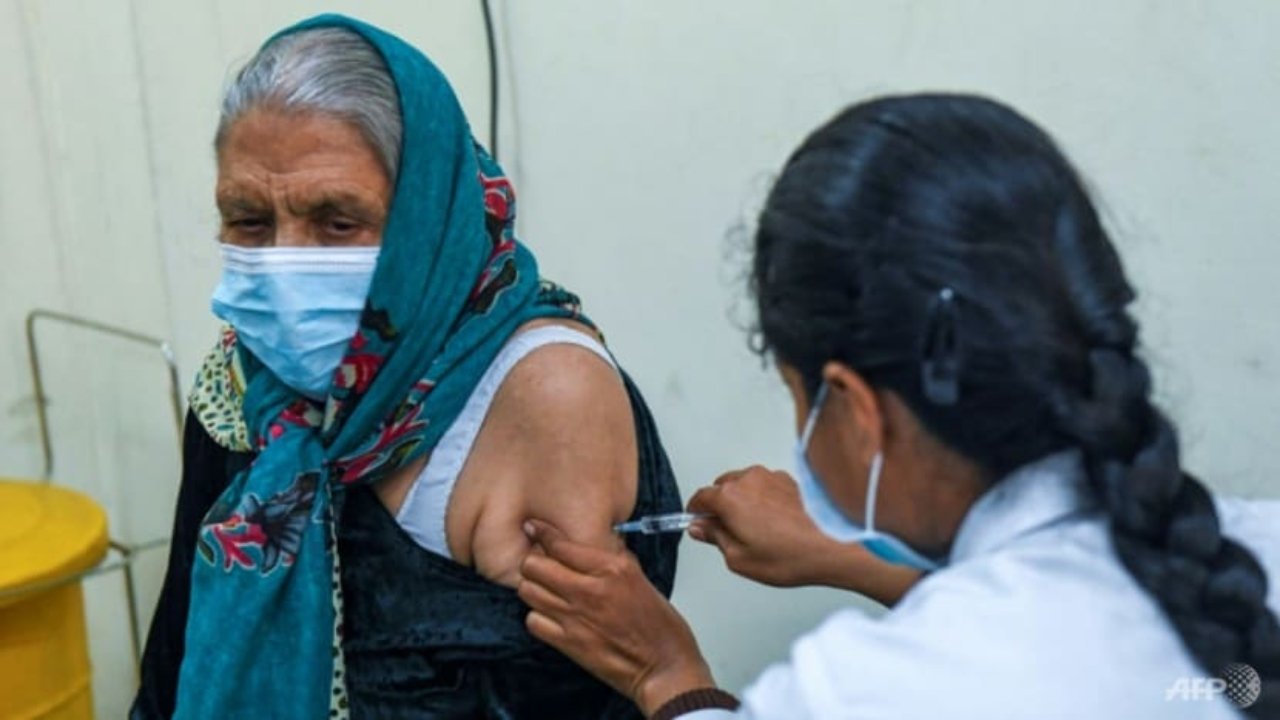
    According to WHO, 18 million children did not receive a single vaccine in 2021, which is the largest decline in 29 years, due to Covid-related disruptions, emergencies and misinformation. Around 25 million children around the world missed out on routine vaccinations in 2021, which is two million more than those who missed out in 2020 and six million more than in 2019, highlighting the growing number of children at risk from devastating but preventable diseases. The percentage of children who received three doses of the vaccine against diphtheria, tetanus and pertussis (DTP3) – a marker for immunisation coverage within and across countries – fell 5 percentage points between 2019 and 2021 to 81 per cent.

    The decline was due to many factors including an increased number of children living in conflict and fragile settings, increased misinformation and Covid-related issues such as service and supply chain disruptions.

    However, Pakistan returned to pre-pandemic levels of vaccination coverage due to high-level government commitment and significant catch-up immunisation efforts. WHO and UNICEF applauded Pakistan’s efforts to achieve this in the midst of a pandemic, when healthcare systems and health workers were under significant strain.

    “This is a red alert for child health. We are witnessing the largest sustained drop in childhood immunisation in a generation. The consequences will be measured in lives,” said Catherine Russell, UNICEF Executive Director.

    “While a pandemic hangover was expected last year as a result of Covid-19 disruptions and lockdowns, what we are seeing now is a continued decline. Covid-19 is not an excuse. We need immunisation catch-ups for the missing millions or we will inevitably witness more outbreaks, more sick children and greater pressure on already strained health systems,” added Russell.

  • Air pollution reduces life expectancy by two years worldwide: Report

    Air pollution reduces life expectancy by two years worldwide: Report

    A recent study revealed that microscopic air pollution, mostly generated by the combustion of fossil fuels, affects life expectancy by more than two years globally.

    According to a report by the University of Chicago’s Energy Policy Institute, if fine particulate matter levels across South Asia reached World Health Organization criteria, the typical individual would live five years longer.

    The severe lung and heart illness caused by so-called PM2.5 pollution reduce life expectancy by eight years in the Indian states of Uttar Pradesh and Bihar, home to 300 million people, and by a decade in the capital city of New Delhi.

    PM2.5 pollution penetrates deep into the lungs and reaches the circulation, with a diameter of 2.5 microns or smaller, nearly the same as a human hair. It was declared a cancer-causing substance by the United Nations in 2013.

    According to the WHO, the concentration of PM2.5 in the air should not exceed 15 micrograms per cubic metre in any 24-hour period, or 5 mcg/m3 on an annual basis.

    The WHO strengthened these guidelines last year, the first revision since air quality guidance was established in 2005, in response to accumulating evidence of harmful health effects.

    In the Air Quality Life Index report, lead researcher Crista Hasenkopf and colleagues stated, “Clean air pays back in additional years of life for individuals all over the world.” “Reducing global air pollution to WHO recommendations permanently would add 2.2 years to average life expectancy.”

    Almost every inhabited region on the planet exceeds WHO limits, but not more so than Asia: Bangladesh, India, Nepal, and Pakistan all exceed WHO guidelines by 15-fold, 10-fold, and nine-fold, respectively.

  • Google launches dedicated suicide helpline for Pakistanis

    Google launches dedicated suicide helpline for Pakistanis

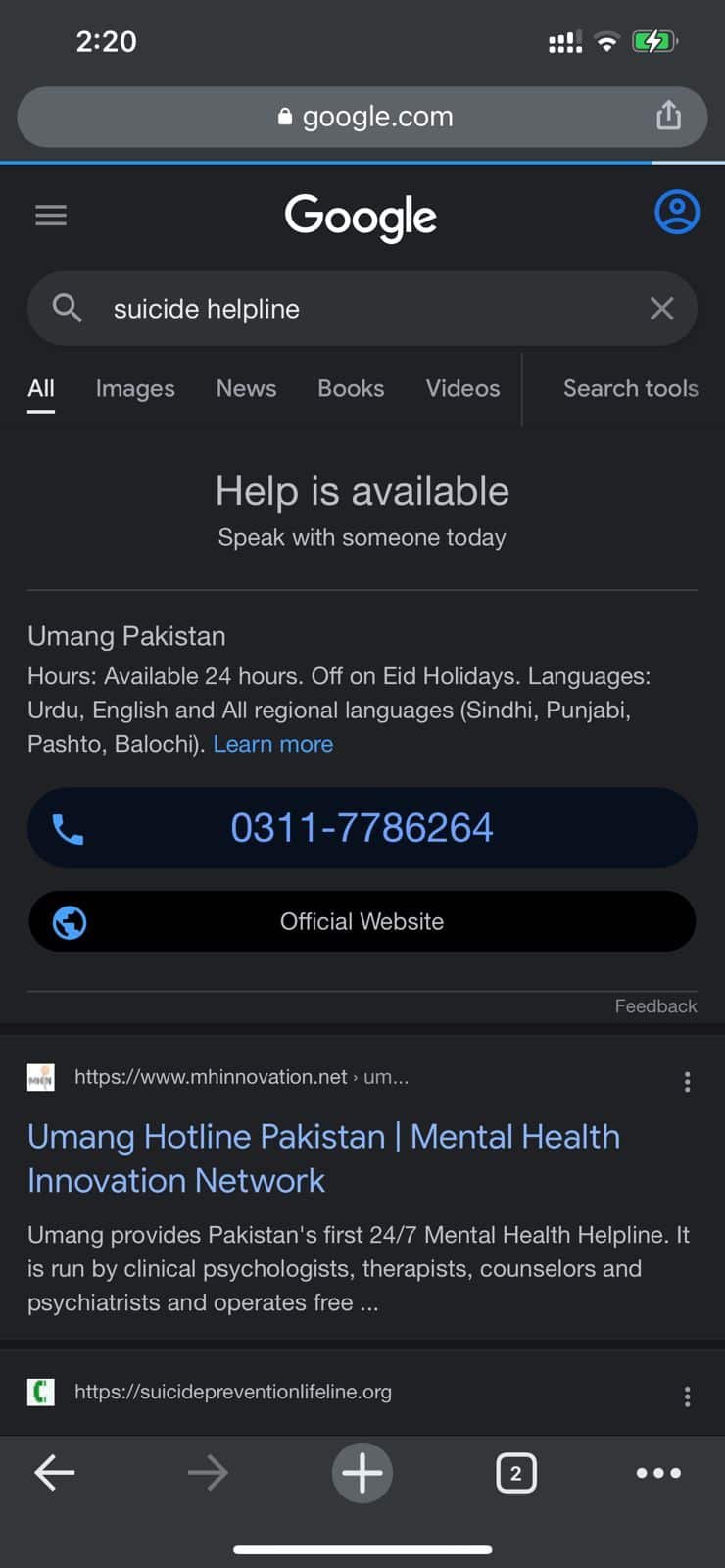
    The internet giant, Google has introduced a suicide hotline one box for Pakistan, which allows users to connect immediately with a suicide helpline at the top of the search results page.

    The hotline termed ‘Umang Pakistan’ will now be displayed to anyone in Pakistan seeking suicide-related queries such as “suicide-support” and “how can I commit suicide”.

    The implementation of this special service will aid worried Pakistanis in recovering from whatsoever hardship they are enduring. The hotline will assist stressed individuals and provide solutions to alleviate the anxiety that they are currently encountering.

    Suicide ratio in Pakistan

    Umang is a mental health helpline recognised by the World Health Organization (WHO) that provides support to Pakistanis who are contemplating or planning suicide due to any reason.

    The relationship between Umang and Google, according to Google, intends to help address Pakistan’s growing suicide rate. Keeping in view WHO estimates, Pakistan has between 130,000 and 270,000 attempted suicide cases per year.

    Meanwhile, Google Trends shows that topics like “anxiety,” “depression,” and “suicide” all spiked in the 2020-21 era in the country, according to the internet company.

    This search update is currently available on both desktop and mobile devices, including Android and iOS, and here’s how it appears in the google search:

  • Monkeypox outbreak primarily spreading through sex: WHO officials

    Monkeypox outbreak primarily spreading through sex: WHO officials

    Monkeypox, a potentially fatal disease that has seen an alarming surge in cases in North America and Europe over the last three weeks,  can be spread through close contact. According to the World Health Organization (WHO), the most recent surge in cases appears to have been spread among men who have sex with other men, emphasising that anyone can contract monkeypox.

    “While the virus itself is not a sexually transmitted infection, which are generally spread through semen and vaginal fluids, the most recent surge in cases appears to have been spread among men who have sex with other men,” said WHO officials.

    “Many diseases can be spread through sexual contact. You could get a cough or a cold through sexual contact, but it doesn’t mean that it’s a sexually transmitted disease,” said Andy Seale, a strategic advisor with WHO’s HIV, hepatitis and sexually transmitted infections programme.

    Read more- Monkeypox outbreak primarily spreading through sex: WHO officials

    According to the US Centers for Disease Control and Prevention, monkeypox is a disease caused by a virus that is related to smallpox but is less severe. According to findings in Africa, monkeypox can kill up to 1 in 10 people who develop the disease.

  • Nearly everyone on earth is breathing polluted air: WHO report

    The World Health Organization (WHO) announced Monday that 99 per cent of people on Earth breathe air that comprises numerous contaminants, citing poor air quality for millions of deaths each year.

    According to new data from the UN health organization, air pollution affects every part of the globe, albeit the problem is far worse in developing nations.

    “Almost the entire global population (99 percent) breathes air that exceeds WHO air quality limits, and threatens their health,” the organization said in a statement.

    WHO had already established that about 90 per cent of the world’s population was impacted in its previous report from 2018, but it has subsequently expanded its boundaries.

    According to the WHO, the evidence base for the harm caused by air pollution is quickly advancing, and even low levels of certain air pollutants can cause serious illness.

    Despite UN statistics suggesting that pandemic lockdowns and travel restrictions improved air quality for a short time in 2021, WHO warned that air pollution continues to be a major threat.

    The WHO report includes data on air quality from over 6,000 cities and communities in 117 countries. Keeping in view the frightening statistics, the organisation emphasised the need to immediately limit the usage of fossil fuels.

  • WHO experts say repeating booster shots not appropriate

    WHO experts say repeating booster shots not appropriate

    World Health Organisation experts warned on Tuesday that repeating booster doses of the original Covid vaccines is not a viable strategy against emerging variants.

    “A vaccination strategy based on repeated booster doses of the original vaccine composition is unlikely to be appropriate or sustainable,” the WHO Technical Advisory Group on Covid-19 Vaccine Composition (TAG-Co-VAC) said in a statement.

    It said preliminary data indicates that the existing vaccines were less effective at preventing symptomatic Covid disease in people who have contracted the new Omicron variant, currently spreading like wildfire around the world.

    It recommended developing vaccines that not only protect people against falling seriously ill but could also better prevent infection and transmission in the first place.

  • New strain of Coronavirus detected in France, investigation underway

    New strain of Coronavirus detected in France, investigation underway

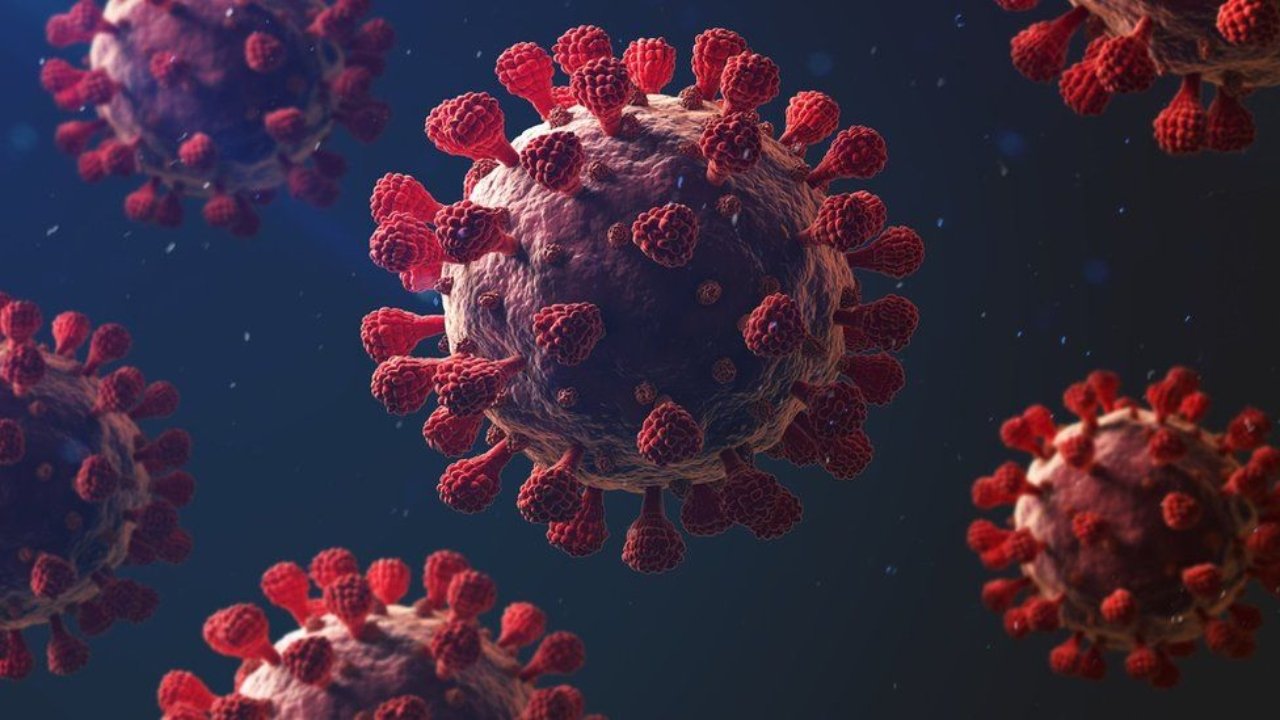
    French scientists have identified a new variant of coronavirus with 46 mutations, named IHU or variant B.1.640.2. It infected 12 people in Southeast France.

    According to the hospital, IHU Mediterranee in Marseille, the strain of coronavirus was detected in early December in a traveller who returned to France from the African country, Cameroon who reportedly infected 12 people. This new strain has more mutations than the omicron variant of coronavirus.

    The paper was published in a preprint server for Health Sciences, medRxiv, in which researchers found that “46 mutations” have not been spotted in any other countries nor recognised by the World Health Organisation (WHO).

    The authors of the paper said, “subsequent detection … of three mutations in the spike gene to screen for variants … did not correspond to the pattern of the delta variant involved in almost all SARS-CoV-2 infections at that time.”

    It is not yet decided by scientists if the new strain is infectious as compared to the omicron variant though it has more mutation than omicron.

    An epidemiologist and fellow at the Federation of American Scientists, Feigl Ding said, “What makes a variant more well-known and dangerous is its ability to multiply because of the number of mutations it has in relation to the original virus.”

    He continued, “This is when it becomes a ‘variant of concern’ — like omicron, which is more contagious and more past immunity evasive. It remains to be seen in which category this new variant will fall.”

    Earlier, Israel detected the first case of Florana disease which is a double infection of covid and influenza on December 30, 2021.

  • UN chief condemns travel restrictions, calls it ‘travel apartheid’

    UN chief condemns travel restrictions, calls it ‘travel apartheid’

    United Nations (UN) Secretary-General, Antonio Guterres said on Wednesday that a travel ban imposed because of the Covid pandemic that cuts off any one country or region as “not only deeply unfair and punitive – they are ineffective.”, report Geo News.

    Guterres said that tests should continually be performed on travelers to reduce the threat of transmission in other parts of the world.

    He further added, “We have the instruments to have safe travel. Let’s use those instruments to avoid this kind, of allow me to say, travel apartheid, which I think is unacceptable.”

    The new variant of the coronavirus, which was previously identified as B.1.1.529 infection was reported to the World Health Organization (WHO) from South Africa on November 24 and named it Omicron.

    Several countries, including Pakistan, have completely banned flights from some countries in Africa.

    In African countries, the rate of vaccination was recorded as very low which Guterres has previously alarmed the world about. The main reason for the lack of vaccination was the inequality distribution of vaccines and low immunisation rates which became “a breeding ground for variants.”

    The annual meeting was also held between the United Nation and African Union to solve the concern of the travel ban.

    Speaking from the Joint-Conference with UN Secretary-General, African Union Commission Chair Moussa Faki Mahamat also said that the travel ban cannot be justified.

  • Deadly Omicron-new variant of Covid, raises alarm

    The new variant of the coronavirus was reported to the World Health Organization (WHO) from South Africa on November 24. It was declared a new variant “of concern” and named it Omicron, reports the BBC.

    On Friday, this variant was identified as the B.1.1.529 infection which was collected from a specimen on November 9. The cases in the majority of the provinces of South Africa were found to be increasing drastically. Only 24 per cent of the population of South Africa received the vaccination. The situation in the southern Africa region is alarming as the new variant, Omicron also emerged in Botswana, Belgium, Hong Kong, and Israel.
    “This variant has been detected at faster rates than previous surges in infection, suggesting that this variant may have a growth advantage,” the WHO said in a statement.

    Several countries banned or restricted travel to and from southern Africa including Australia, Japan, India, Iran, and Brazil. United Kingdom (UK) also restricted travelers from South Africa, Namibia, Zimbabwe, Botswana, Lesotho, and Eswatini unless they are UK or Irish nationals.

    Experts also claimed that it is too early to confirm the impact of the variant on vaccinated people and the rate of transmission.

    United States of America (USA) Infectious Disease Chief Dr Anthony Fauci said, “Until it’s properly tested. We don’t know whether or not it evades the antibodies that protect you against the virus.”