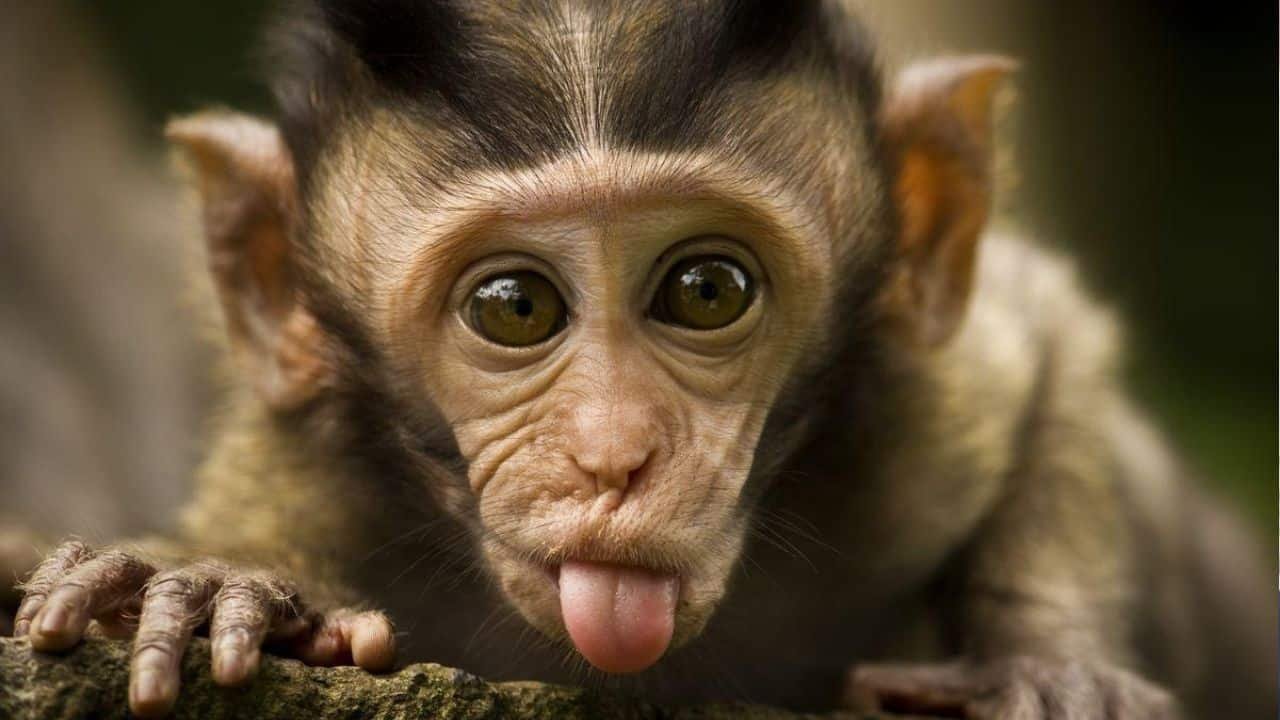
A dramatic incident unfolded at the city court in Karachi when a baby monkey managed to escape while being brought alongside 13 other monkeys by the Sindh Wildlife Department, reported Geo News.
Two individuals responsible for transporting the monkeys were arrested by the authorities for violating provincial wildlife laws. The suspects were brought before the district and sessions court on Thursday, which fined them Rs100,000 and ordered to hand over the baby monkeys to the zoo.
The monkeys were being kept in wooden mango crates, and one clever little monkey managed to escape the confines of its container. The baby monkey sought refuge on a tree, proving to be quite elusive due to its small size and agility, making it challenging for the rescue team to catch. The Sindh Wildlife Department stated that they would continue their rescue operation the next day (Friday), which is today, in an effort to capture the baby monkey still at large in the city court area.
The department had recovered them during a search of a passenger bus arriving in Karachi from Charsadda. The monkeys were suspected to have been illegally captured from the forests in Charsadda.
Authorities are working diligently to ensure the safety and welfare of these rescued monkeys, aiming to return them to their natural habitats or appropriate care facilities.
In the late hours of Thursday, the Islamabad Wildlife Management Board (IWMB) confirmed that a leopard that was on the loose in a private housing society in Islamabad was contained.
The lone male common leopard captured from DHA was sedated and brought safely to IWMB’s rescue & rehab centre. The leopard is now awake & roaming inside it’s enclosure. There were NO fatalities. Everyone is safe and sound! @WildlifeBoard@ClimateChangePKpic.twitter.com/LHdGthjds5
A total of total injuries has been reported so far by the officials.
Leopard on the loose in DHA Islamabad
On Thursday, a leopard injured people by entering DHA Islamabad who tried to capture it.
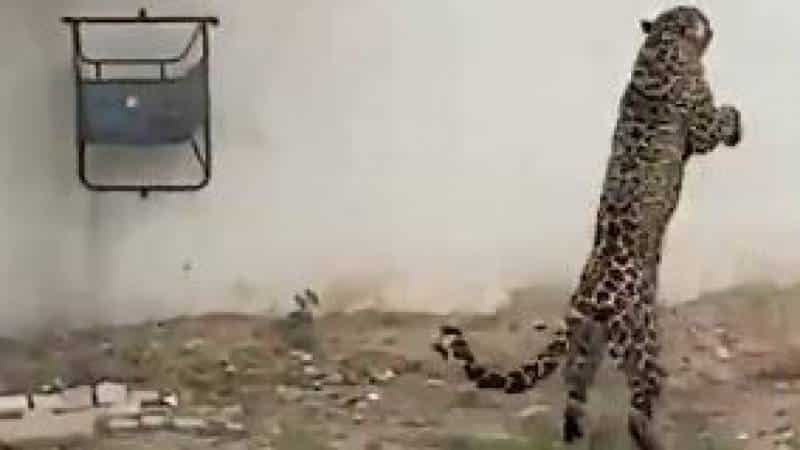
The wild animal entered an under-construction house in Phase II of the society late on Thursday afternoon. Videos filmed by residents on social media show the animal evading attempts to capture it and jumping on walls.
The Islamabad Wildlife Board and Assistant Commissioner Zukhruf Fida Malik issued instructions to residents to stay indoors till the animal is captured.
The Wildlife Board also specified that they are using a trapper to try and capture the big cat.
Leopards are indigenous to parts of Islamabad and neighbouring areas including Murree and Nathiagali. They are a protected species in the Margalla Hills.
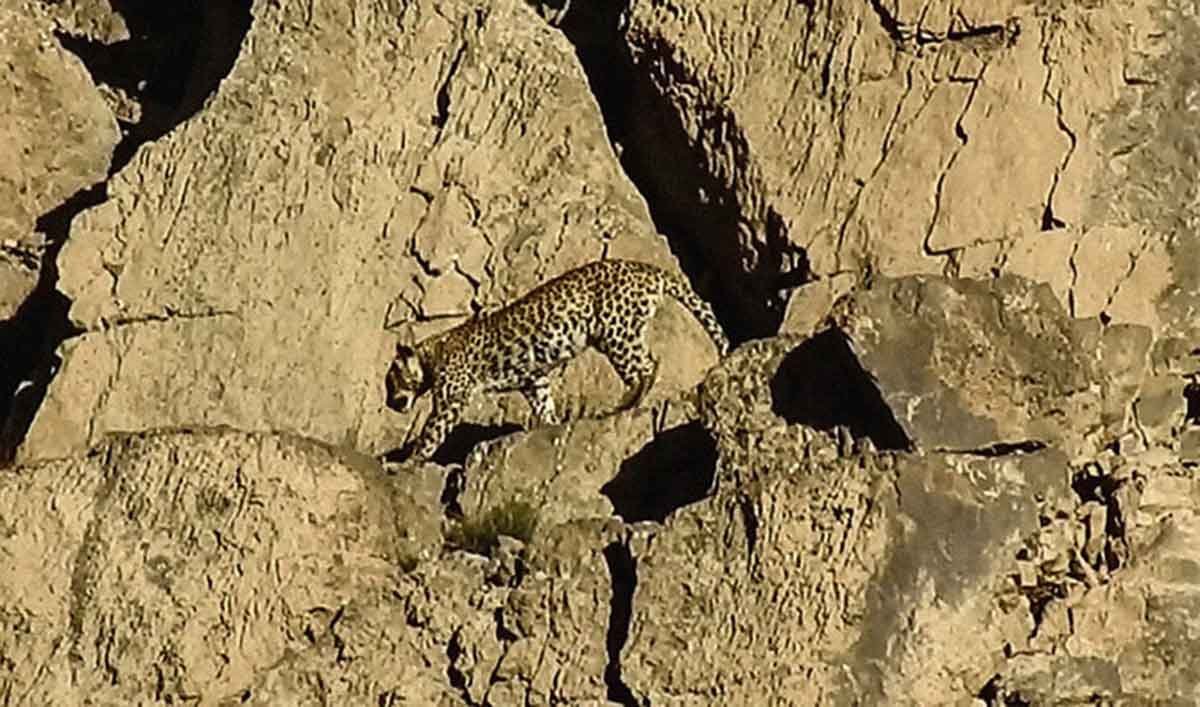
A pair of rare Persian leopards sighted in Pakistan for the first time last year have been filmed and photographed in the wild, officials said Friday.
Sharifuddin Baloch, a senior conservation official in Balochistan province, said the pair were first spotted by rangers on Mount Chaltan in the Hazarganji Wildlife Park six months ago.
Adult leopards are solitary in the wild and pair only to mate.
“We equipped our staff with cameras and binoculars to film the pair and take photos,” Baloch said. “This month our staff succeeded.”
Persian leopards are a panther sub-species native to Turkey, Iran, Afghanistan and the Caucasus. They are extremely rare, however, and listed by the International Union for Conservation of Nature (IUCN) as endangered.
Fewer than 1,000 are believed to exist in the wild, with another 200 in captivity.
“We are taking steps to protect the rare species,” Baloch told AFP, adding officials were sharing data with the IUCN.
Video shot by park officials shows one of the leopards beautifully camouflaged on a rugged, rocky hillside until it stands up and pads away.
Baloch said there was no previous record of the creature ever being sighted in Pakistan.
Panthera tilliana is bigger and has a different spot pattern to the more common Indian leopard (panthera fusca) found across Pakistan.
Pakistan is also home to vulnerable snow leopards (panthera uncia) in the northern Himalayas.
The Lahore Zoo administration has decided to euthanise a pair of lions because they are suffering from a terminal illness.
According to reports, the administration considering their health conditions has decided to put them to rest, as the pair has reached their maximum age limit.
“Both of them are ill from the past several days and could not be treated or cured,” said an official of the zoo, adding that x-ray and ultrasound reports of the pair present proof of their poor health conditions.
The official further said that “a tiger, brown bear and a zebra are also suffering from a crippling disease and a decision to euthanise them will be taken in the next meeting.”
Earlier, in February, two white tigers cubs aged three months died in Lahore Zoo. They were reportedly suffering from COVID-19.
Meanwhile, this is not the first incident of mistreatment of animals by zoo authorities in Pakistan. In December 2020, Peshawar Zoo lost its fourth giraffe in 2020, just a few days after a black bear’s death.
On the other hand, Islamabad’s Marghazar Zoo — which drew international condemnation for its treatment of lonely elephant Kaavan — shut down in December 2020 after its final occupants Babloo and Suzie were relocated to Jordan.
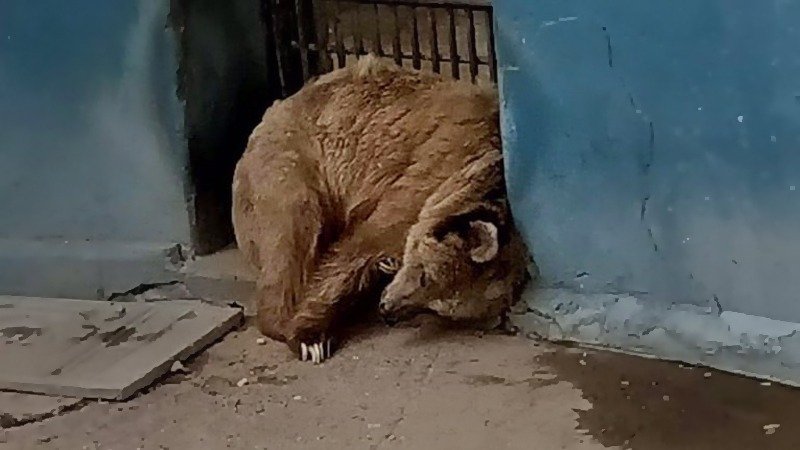
The Sindh High Court has ordered the Karachi Metropolitan Corporation (KMC) and Karachi Zoo administration to shift Rano from her 25-foot wide Victorian ‘grotto’ pit to another open cage, reportedly 500 times bigger than her current enclosure.
According to a report in Samaa News, the court ordered authorities to immediately shift the 20-year-old Syrian brown bear, who has been living a solitary life for the last three years. The instructions, recommended by a five-member team formed to evaluate the condition of the bear and the zoo, were passed on an interim basis until a final decision is taken.
It has been reported that the new cage is spread over 2,100 square feet and is on ground level, unlike her previous enclosure which was an underground pit. However, it too requires some improvisations.
@spar_pk speaking after court hearing on Rano. As an interim measure, while the lawyers from the Sindh Govt asked for more time, @spar_pk lawyers pushed and got an order to relocate Rano immediately to an adjacent space which is an above ground cage, pic.twitter.com/xwWBrSr9vE
Rano’s plight had sparked nationwide protests in the summer following which 38 people signed a petition filed in the Sindh High Court by Barrister Mohsin Shahwani on October 1, 2020. In the application, the petitioners had highlighted the animal’s plight and had alleged that the bear was not being well taken care of and was not being fed on time. The petition has demanded Rano be sent back to Skardu so that she can be among her own.
In the successive hearing on October 5, the court had instructed KMC to install an air-cooler inside Rano’s enclosure to provide her some relief. It also ordered authorities to present the zoo’s budget and details of details, expressing anger over the fact that there was only one doctor for all animals at the zoo.
According to animal experts, Rano is suffering from emotional and psychological distress which is why she is often seen panting heavily and roaming in circles. The Society for the Protection of Animal Rights (SPAR) is hopeful that Rano, in her new temporary cage, is able to move around easily, explore and play with items of an enrichment program, be able to see zoo activities, birds, trees and other animals and have a less lonely, stressed life.
For now.Till the next hearing.We will follow up with the Karachi Zoo management to ensure the new space is as per her needs,as defined in the report we submitted which was discussed in court today along with the reports of the previous court appointed committee. Source @spar_pk
Meanwhile, Islamabad’s Marghazar Zoo — which drew international condemnation for its treatment of lonely elephant Kaavan — shut down on December 16 after its final occupants Babloo and Suzie were relocated to a sanctuary inJordan.
As per details, the Himalayan brown bears suffer from psychological problems due to living in a substandard enclosure, with the female Suzie undergoing major surgery in the summer after a tumour was removed from her chest. Local vets were unable to stitch up seven inches open cut in the centre of her chest and she developed an infection. Four Paws vets, who arrived in August, operated on Suzie again and cleaned the infected wound. This was also the reason why sanctuaries within Pakistan refused to take them in.
“She is now recovering and healthy. Both bears are doing well physically now that we have put them on a better nutritional diet of fruits and vegetables. Suzie had diarrhoea all the time because she was mostly fed milk,” a spokesperson for Four Paws, Marion Lombard had told local media outlets.
Several celebrities including Hamza Ali Abbasi and Mehwish Hayat have called for zoos across the country to be shut down given the mistreatment of animals there.
Mehwish Hayat has requested authorities to close all zoos across the country, saying “animals are born free”.
Sharing a news article about the relocation of animals from Islamabad Marghazar Zoo, Mehwish commented: “In a country where we’re still fighting for human rights, animal rights are a long way off.”
Hinting towards Kaavan’s recent relocation to Cambodia after an intense campaign led by US pop icon Cher, Mehwish further wrote: “Why do we only take action when foreign celebrities get involved?”
“This is so embarrassing,” she added.
In a country where we’re still fighting for human rights,animal rights are a long way off. But come on,why do we only take action when foreign celebrities get involved?This is so embarrassing.Animals are born free- the authorities must shut these zoos now!https://t.co/jY6MzNXu7W
Meanwhile, Islamabad Zoo’s last remaining animals Bubloo and Suzie are all set to leave for Jordan on December 17. The Islamabad High Court in its order had stated that the zoo was not fit enough for animals and had requested authorities to move all animals there to temporary sanctuaries.
We are happy that the Ministry of Climate Change & the IWMB took yet another decision in favour of animal welfare. This week we will bring the bears to its Jordanian sanctuary Al Ma’Wa for Nature and Wildlife, which is run together by Princess Alia Foundation.
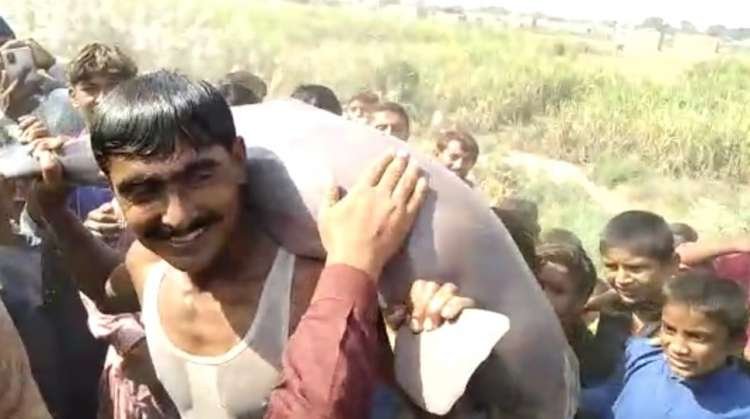
Villagers from Sindh’s Nawabshah district allegedly killed a rare Indus River Dolphin, also known as the blind dolphin. According to journalist Amar Guriro, who shared a video from the incident on social media, the dolphin was stranded in Gujjar Canal when the villagers caught it. In the video shared by Guriro, the villagers can be seen celebrating the man who caught the dolphin.
The official Twitter handle of the Sindh Wildlife Department also shared details about the incident and said that a criminal case is being registered against those involved in the incident.
Under Section 9 & 21 of Sindh Wildlife Act 2020, a criminal case is being registered. The punishment of such an act is up to 3 years in prisonment and a fine of up to Rs 5 Lac. 3/3
Later, they announced that the “offender whose unlawful act of trapping Indus Dolphin that stranded in a minor irrigation canal has been arrested with the help of Sindh Police.”
Under the provisions of Sindh Wildlife Protection Act 2020 passed recently by Sindh Assembly the it shall be a “Summary Trial” before the honourable Court of District & Sessions Judge. Punishment prescribed is of either description up to 5 yrs with fine up to 2.5 lac rupees.
According to WWF-Pakistan, the Indus River dolphin is one of the world’s most endangered freshwater river dolphins. Currently, there are only about 2000 dolphins in the waters of the Indus.
Despite facing many threats due to the impacts of dams, pollution, low river flows and bycatch, the numbers of this critically endangered mammal in the Indus River in Pakistan have #increased to almost 2,000 today.
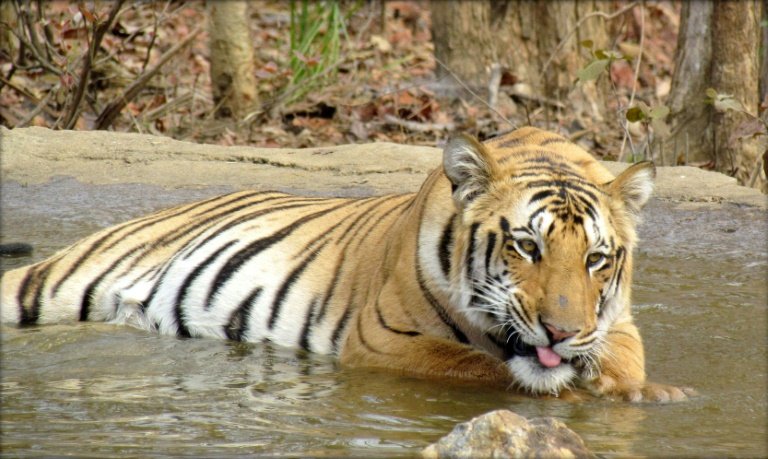
A tiger accused of killing three people will spend the rest of its life in captivity, Indian officials said Sunday, saying the big cat was “too dangerous” to be allowed to roam free.
According to AFP, the five-year-old male predator, also blamed for attacking cattle, had embarked on a trek more than 500 kilometres (310 miles) long from western Maharashtra state to central India’s Betul district in Madhya Pradesh state in 2018.
“We gave it several chances to re-wild but it habitually went into human habitations,” said Madhya Pradesh’s chief wildlife warden, S.K. Mandal.
“The only option left was to put it in captivity to ensure both the tiger and humans are safe.”
The tiger — dubbed the “vagabond” or “nomad” by some local media — was first trapped in December 2018 after its long journey and held in captivity for two months.
The big cat was eventually fitted with a tracking collar and shuttled between a tiger reserve and a national park.
Officials however said it repeatedly strayed and hunted near human settlements, attacking cattle and endangering humans.
Finally the tiger was tranquilised and sent to a zoo in Madhya Pradesh capital’s Bhopal on Saturday.
Officials said the decision to capture the adult tiger was taken a few months ago, but was delayed due to the novel coronavirus lockdown.
“It will take sometime for him to adjust to the new environment. We will be monitoring his behaviour,” Bhopal’s Van Vihar National Park director, Kamlika Mohanta shared.
“As of now it will remain in solitary confinement. A decision to put it on display at the zoo or send it to a (fenced) safari will be taken later.”
Human encroachment on tiger habitats have increased in recent decades in the nation of 1.3 billion people, leading to deadly conflicts with the animals.
Nearly 225 people were killed in tiger attacks between 2014 and 2019, according to government figures.
More than 200 tigers were killed by poachers or electrocution between 2012 and 2018, the data showed.
India is home to around 70 percent of the world’s tigers. Last year, the government said the tiger population had risen to 2,967 in 2018 from a record low of 1,411 in 2006.
WARNING: This article may contain graphic images which may be distressing for some people
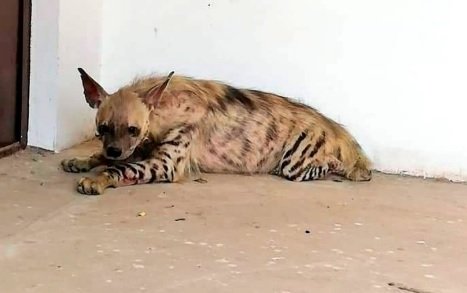
The DI Khan police have rescued an endangered striped hyena, which was captured by some locals to take part in a dog fight, Khyber Pakhtunkhwa MPA Faisal Amin Khan has shared. The hyena, which has been identified as a female, has been sent to Peshawar for treatment before it can be released back into the wild.
Khan also shared that hyena was being cared for and that Chief Conservator Wildlife KP is “personally taking care” of the injured animal.
He has open/soil surface outside but being kept here for a couple of days for easier handling/dressing wounds, Mohsin Sb Chief Conservator Wildlife KP is personally taking care of it
According to Deputy Commissioner DI Khan’s official Twitter account, the hyena was caught by some tribal locals and their hunting dogs.
اسسٹنٹ کمشنر ردازندہ، محکمہ وائلڈ لائف ڈیرہ اور ضلعی پولیس ڈیرہ کی بروقت کاروائی، قبائلی تحصیل درازندہ کے علاقہ کھوئی بہارہ میں کوہی پیور کے مقام پر مقامی افراد اور ان کے شکاری کتوں کے ہتھے چڑھ جانے والے جنگلی جانور ”لگڑ بگڑ” کو بازیاب کرواکر علاج معالجے کے لئے پشاور بھیج دیا۔ pic.twitter.com/JoJ3iNJJFE
— Deputy Commissioner DIKhan (@dcdikhan) May 30, 2020
From the limited details available, it can be understood that the animal had been captured by the locals to take part in a dog fight.
The whole village had gathered for the dog fight, only 5/6 policemen & wildlife staff was there, it’s an extremely secluded corner bordering Balochistan so saving the animal was priority one, will get culprits eventually
Sir the whole village was there dog fight was about to start, give credit to Police, Levies & Wildlife staff who risked their lives being only 5 or 6 in number & still saved the animal, it’s easy to tap on keyboards than actually risking ur skin for a cause
The matter of the captive hyena had come to light after a Twitter account dedicated to saving Pakistan’s wildlife “from the threats of hunting, loss of habitat and pesticides” raised alarm and shared videos of people capturing the hyena. Sharing the location of the incident, they had urged the authorities to take swift action and rescue the animal.
Meanwhile, conservationist Javed Mahar shared some characteristics of the rare animal, called lagar bagar in the local language, and said that they are mostly found in Sindh along the Kirthar National Park.
Stripped hyenas prefer scavenging rather than hunting The perception of community (i) it is killer (ii) ride of witch (ڏائڻ جي سواري) is absolutely wrong. They r beautiful creatures &companions of evolutionary survival process They r found in Sindh along Khirthar National Park https://t.co/ZcOz9NNwdf
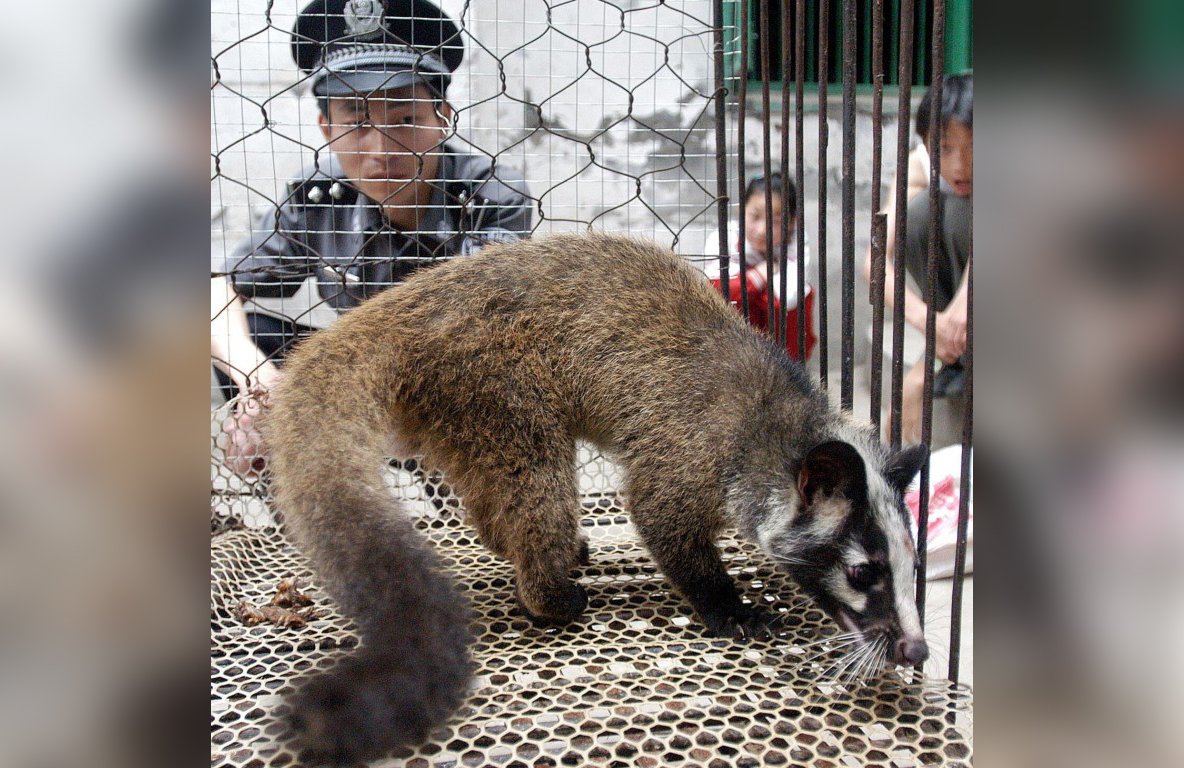
The city at the centre of the coronavirus crisis — Wuhan — has banned the eating of wild animals and Chinese farmers are being offered cash to quit breeding exotic animals. Both moves come amid mounting pressure for China to crack down on the illegal wildlife trade blamed by many for the pandemic that has killed more than 330,000 people and left over 5 million infected.
The local administration in Wuhan, the city of about 11 million people in China’s central Hubei province where cases of the new coronavirus were first recorded late last year, announced that the eating of all wild animals was officially banned.
The city also banned virtually all hunting of wild animals within its limits, declaring Wuhan “a wildlife sanctuary,” with the exception of government-sanctioned hunting for “scientific research, population regulation, monitoring of epidemic diseases and other special circumstances”.
Wuhan also imposed strict new controls on the breeding of all wild animals, making it clear that none could be reared as food. City officials said the local administration would take part in the wider national scheme to buy wild animal breeders out.
The national plan is the first time Chinese authorities have pledged to buy out breeders in an attempt to curb exotic animal breeding, animal rights activists say.
China had already banned the sale of wild animals for food as the new coronavirus — COVID-19 — spread around the world, citing the risk of diseases spreading to humans, but the trade remains legal for other purposes, including research and traditional medicine.
The virus that causes COVID-19 is widely believed to have passed from bats to people, possibly via another species, before spreading worldwide.