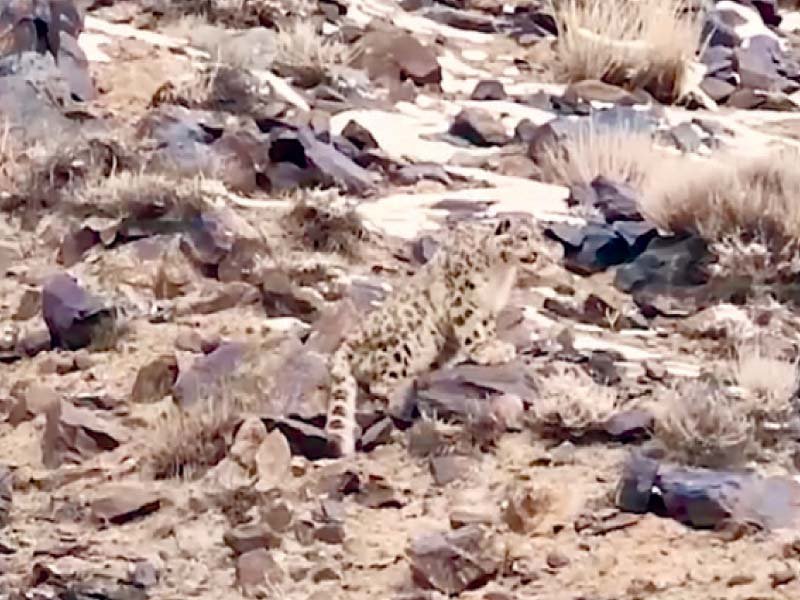
The World Wildlife Fund-Pakistan (WWF-P) released rare footage of a snow leopard hunting a Himalayan ibex in Khunjerab National Park, located at a distance of approximately 15 kilometres from the Pakistan-China border.
The footage was released on March 3 to mark the annual World Wildlife Day. According to details, the video is aimed to raise awareness about wildlife protection and threats to their survival.
The gripping video shows a snow leopard silently chasing a herd of Himalayan ibex on steep cliffs. After successfully hunting an ibex, the snow leopard can be seen feasting on it. Two other cats joined the leopard later.
The video was recorded by wildlife photographer Muhammad Osama.
According to Osama, he followed the herd of the ibex in severe cold, with the temperature as low as – 18 degrees Celsius, looking for fresh snow leopard pugmarks.
“Capturing this hunt was once in a lifetime experience as it involved hours of tireless tracking, climbing mountains and withstanding freezing cold temperatures,” he said.
WWF-P director general Hammad Naqi Khan also expressed hope that the video would help in raising awareness about wildlife in Pakistan and the need to guard it.
He said wildlife in Pakistan and in the rest of the world faced increasing threats due to deforestation and human encroachment, which led to habitat degradation, while new threats such as unsustainable infrastructure and climate change were also emerging.
As a result, the survival of wildlife, such as snow leopards, Indus River dolphins, common leopards, pangolins, brown bear and white-backed vultures, hangs in the balance, he added.
Khan requested the government to ensure that existing protected areas in the country were restored so that wildlife could flourish in healthy landscapes.
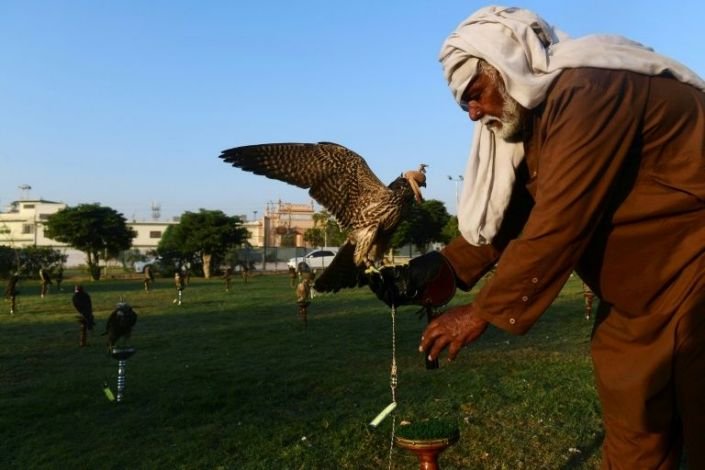
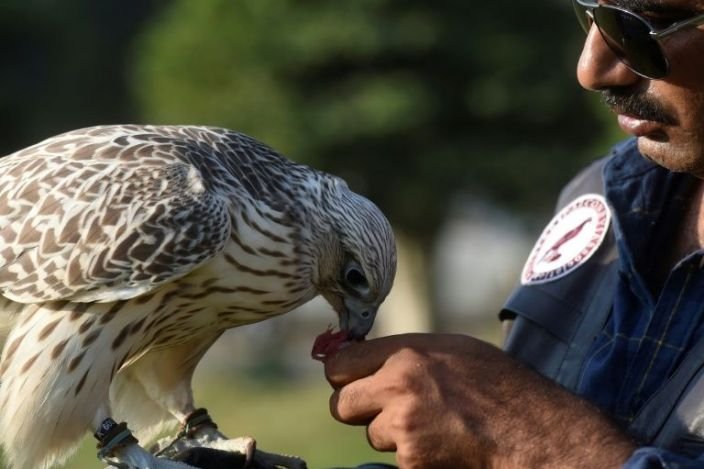
Since learning to capture birds as a teen, Muhammad Rafiq has amassed a small fortune in Pakistan trapping and trafficking falcons — including some endangered species — for wealthy Gulf Arabs.
A single falcon can fetch up to tens of thousands of dollars on the black market, which allowed Rafiq to renovate his family home.
“Every season, dealers come from Karachi and leave their contacts with us, and we call them back if we catch something,” said the 32-year-old, from a nearby coastal village.
He recently trapped a peregrine falcon on a one-week hunting mission.
“I desperately needed money,” he told AFP. “And God has listened to me.”
For years, Pakistan has stood at the nexus of the falcon trade, both as a source of the birds of prey, and then as a destination to hunt with them.
Falcon poaching is officially banned, but demand for the birds is rising, according to the World Wildlife Fund in Pakistan.
It estimates that up to 700 falcons were illegally smuggled out of the country last year alone, often by organised criminal networks.
Their destination is normally Gulf countries, where falconry is a treasured tradition.
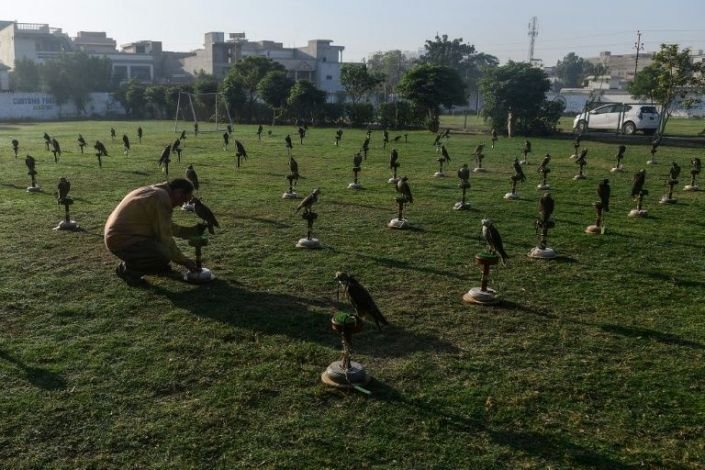
Owners treat the birds “like their own children”, said Margit Muller, the director of Abu Dhabi’s falcon hospital, which treats 11,000 falcons annually, a number that has more than doubled in the past 10 years.
One conservationist told AFP an Arab falconer usually owns around five to six hundred birds, most of which will be captured in the wild in Pakistan or Mongolia.
Wild birds are prized over those bred in captivity because they are believed to be better hunters, though there is no evidence to support those claims.
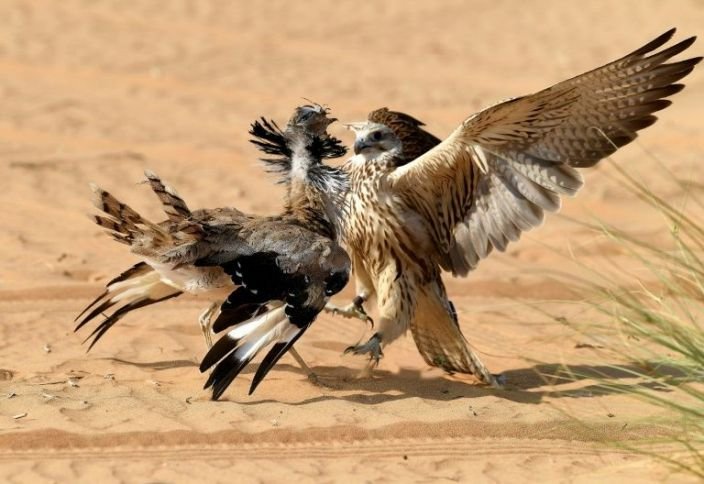
Every winter, lavish hunting parties from the Gulf flock to Pakistan’s sprawling deserts, where they are given permits to use their falcons to hunt the houbara bustards, a migratory bird wrongly prized as an aphrodisiac and classified as vulnerable by conservationists.
These excursions have cast a spotlight on the deep ties between Pakistan and its allies in the Gulf. For decades, the Gulf states have propped up Islamabad’s ramshackle finances with generous loans, with one of the expectations being that they can continue to use Pakistan as a hunting playground.
Saudi Crown Prince Mohammed bin Salman and two other royals were granted permission to catch bustards by Prime Minister Imran Khan’s government in December last year, a soft diplomacy tactic that Khan had openly disagreed with when he was in the opposition.
The government also presents falcons as gifts to world leaders.
“Our officials are working like pimps for the Arabs,” a government official requesting anonymity told AFP.
A brief ban on the bustard hunts was overturned in 2016 by the Supreme Court, but conservationists are now pushing for the export of falcons to be regulated in an ongoing case at the Islamabad High Court.
Every year, falcons escape the harsh Siberian winter and fly thousands of miles to warmer regions, including southern Pakistan.
During the migratory season, wildlife traffickers descend on villages along the Arabian Sea coastline, offering fishermen cash to briefly abandon their boats and try their hand at poaching.
“We pay them in advance, send food to their families and if they catch a bird that is precious, we happily give them motorbikes,” said one trafficker who spoke to AFP on the condition of anonymity.
A range of tactics can be employed — sticky liquids, net traps or, most commonly, using smaller birds as bait.
Poachers especially target the peregrine falcon, whose populations remain stable — but also the saker, which is endangered.
Bob Dalton, a veteran falcon conservationist, helped oversee the rehabilitation of dozens of falcons seized by Pakistani authorities in October, with officials estimating the cache to be worth well over $1 million.
“The illegal trade is growing, there is more money being spent, more pursuit from the Gulf,” he told AFP.
“With the exception of one or two species, most falcon populations are in decline or on the point of being unstable.”
With ongoing efforts to curtail rampant poaching failing, some officials in Pakistan have suggested regulating the falcon trapping market, inspired by a scheme involving another rare native species, the markhor — an elusive mountain goat with striking twisted horns found in Pakistan’s mountainous north.
Every year, foreigners shell out tens of thousands of dollars for a handful of trophy hunting permits, providing a financial incentive for communities to prevent poaching. Naeem Ashraf Raja, the director of the biodiversity at the ministry of climate change, said markhor numbers have rebounded as a result of this controversial conservation method.
With hunting parties set to descend on Pakistan again over the next few months, Kamran Khan Yousafzai, the president of Pakistan’s Falconry Association, said the country desperately needs to implement a sustainable wildlife programme.
“Arab falconers can’t resist coming to Pakistan. They have been coming to these hunting grounds for generations, and unless they face any real problems, they are not going to search for new destinations.”
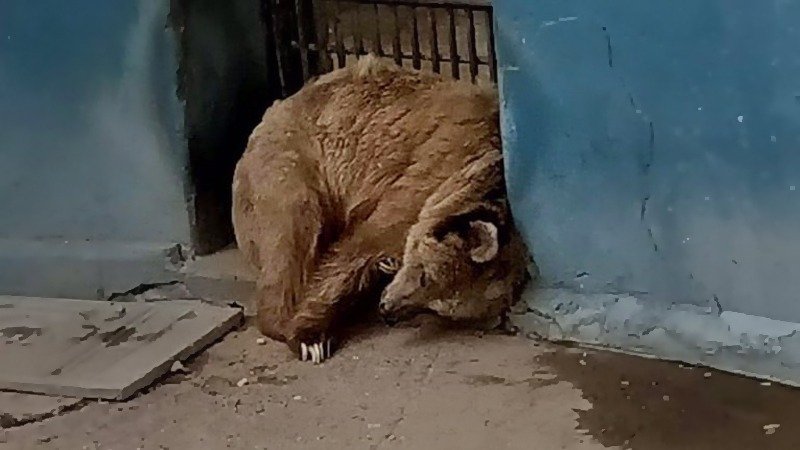
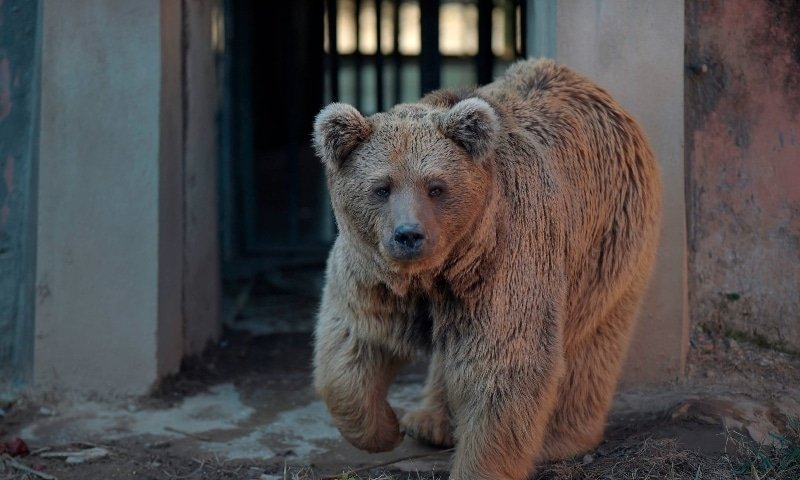
The Sindh High Court has ordered the Karachi Metropolitan Corporation (KMC) and Karachi Zoo administration to shift Rano from her 25-foot wide Victorian ‘grotto’ pit to another open cage, reportedly 500 times bigger than her current enclosure.
According to a report in Samaa News, the court ordered authorities to immediately shift the 20-year-old Syrian brown bear, who has been living a solitary life for the last three years. The instructions, recommended by a five-member team formed to evaluate the condition of the bear and the zoo, were passed on an interim basis until a final decision is taken.
It has been reported that the new cage is spread over 2,100 square feet and is on ground level, unlike her previous enclosure which was an underground pit. However, it too requires some improvisations.
@spar_pk speaking after court hearing on Rano. As an interim measure, while the lawyers from the Sindh Govt asked for more time, @spar_pk lawyers pushed and got an order to relocate Rano immediately to an adjacent space which is an above ground cage, pic.twitter.com/xwWBrSr9vE
Rano’s plight had sparked nationwide protests in the summer following which 38 people signed a petition filed in the Sindh High Court by Barrister Mohsin Shahwani on October 1, 2020. In the application, the petitioners had highlighted the animal’s plight and had alleged that the bear was not being well taken care of and was not being fed on time. The petition has demanded Rano be sent back to Skardu so that she can be among her own.
In the successive hearing on October 5, the court had instructed KMC to install an air-cooler inside Rano’s enclosure to provide her some relief. It also ordered authorities to present the zoo’s budget and details of details, expressing anger over the fact that there was only one doctor for all animals at the zoo.
According to animal experts, Rano is suffering from emotional and psychological distress which is why she is often seen panting heavily and roaming in circles. The Society for the Protection of Animal Rights (SPAR) is hopeful that Rano, in her new temporary cage, is able to move around easily, explore and play with items of an enrichment program, be able to see zoo activities, birds, trees and other animals and have a less lonely, stressed life.
For now.Till the next hearing.We will follow up with the Karachi Zoo management to ensure the new space is as per her needs,as defined in the report we submitted which was discussed in court today along with the reports of the previous court appointed committee. Source @spar_pk
Meanwhile, Islamabad’s Marghazar Zoo — which drew international condemnation for its treatment of lonely elephant Kaavan — shut down on December 16 after its final occupants Babloo and Suzie were relocated to a sanctuary inJordan.
As per details, the Himalayan brown bears suffer from psychological problems due to living in a substandard enclosure, with the female Suzie undergoing major surgery in the summer after a tumour was removed from her chest. Local vets were unable to stitch up seven inches open cut in the centre of her chest and she developed an infection. Four Paws vets, who arrived in August, operated on Suzie again and cleaned the infected wound. This was also the reason why sanctuaries within Pakistan refused to take them in.
“She is now recovering and healthy. Both bears are doing well physically now that we have put them on a better nutritional diet of fruits and vegetables. Suzie had diarrhoea all the time because she was mostly fed milk,” a spokesperson for Four Paws, Marion Lombard had told local media outlets.
Several celebrities including Hamza Ali Abbasi and Mehwish Hayat have called for zoos across the country to be shut down given the mistreatment of animals there.
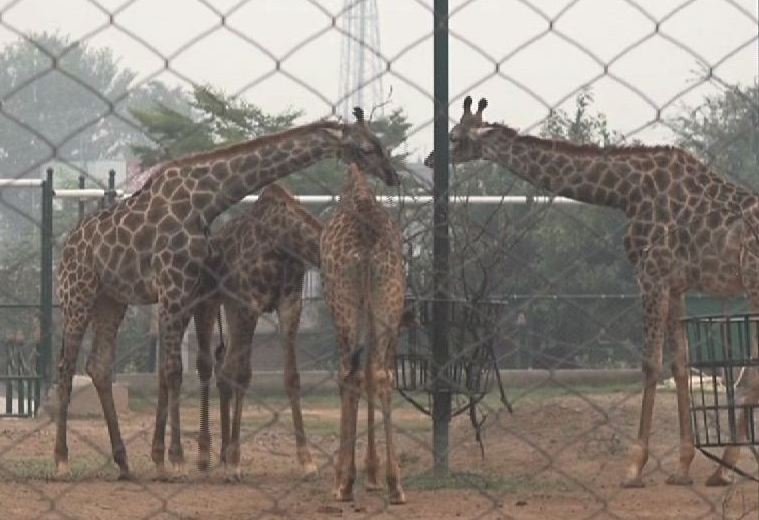
Peshawar Zoo lost its fourth giraffe in 2020 on Monday, just a few days after a black bear’s alleged death.
According to details, the male giraffe had been suffering from an intestinal infection for one week and was under treatment in the zoo. Zoo officials said that samples were collected from the dead body and sent to the National Veterinary Laboratory, Islamabad, and Veterinary Research Institute, Peshawar, for examination and to ascertain the exact cause of the death.
A three-year-old giraffe was earlier found dead in June, while the other two died in April and May.
“The earlier three died of shooting diarrhoea while this one now had a somewhat different cause of death,” stated Project Director of the Peshawar Zoo, Ishtiaq Wazir. “We had provided antibiotics to the giraffe but it did not recover,” added the official.
He further said that giraffes are fragile animals and the symptom of their disease appears at the time when preventive intervention cannot succeed in treating them.
Officials said the zoo was left with two female giraffes only.
Animal rights activists have been campaigning for the condition of animals kept in Peshawar zoo. A petition about issues of the Peshawar zoo, including animal deaths and qualification of staff members, especially veterinarians, is also pending with the Peshawar High Court.
Islamabad zoo shuts down after last animals moved
Meanwhile, Islamabad’s Marghazar Zoo — which drew international condemnation for its treatment of lonely elephant Kaavan — shut down on Wednesday after its final occupants Babloo and Suzie were relocated to Jordan.
Babloo
The two Himalayan bears were the last to leave the Islamabad facility, almost three weeks after the country’s only Asian elephant was flown to a wildlife sanctuary in Cambodia.
“The Islamabad zoo is now completely closed for both public and officials,” said Saleem Shaikh, a spokesman for Pakistan’s ministry of climate change.
Mehwish Hayat has requested authorities to close all zoos across the country, saying “animals are born free”.
Sharing a news article about the relocation of animals from Islamabad Marghazar Zoo, Mehwish commented: “In a country where we’re still fighting for human rights, animal rights are a long way off.”
Hinting towards Kaavan’s recent relocation to Cambodia after an intense campaign led by US pop icon Cher, Mehwish further wrote: “Why do we only take action when foreign celebrities get involved?”
“This is so embarrassing,” she added.
In a country where we’re still fighting for human rights,animal rights are a long way off. But come on,why do we only take action when foreign celebrities get involved?This is so embarrassing.Animals are born free- the authorities must shut these zoos now!https://t.co/jY6MzNXu7W
Meanwhile, Islamabad Zoo’s last remaining animals Bubloo and Suzie are all set to leave for Jordan on December 17. The Islamabad High Court in its order had stated that the zoo was not fit enough for animals and had requested authorities to move all animals there to temporary sanctuaries.
We are happy that the Ministry of Climate Change & the IWMB took yet another decision in favour of animal welfare. This week we will bring the bears to its Jordanian sanctuary Al Ma’Wa for Nature and Wildlife, which is run together by Princess Alia Foundation.
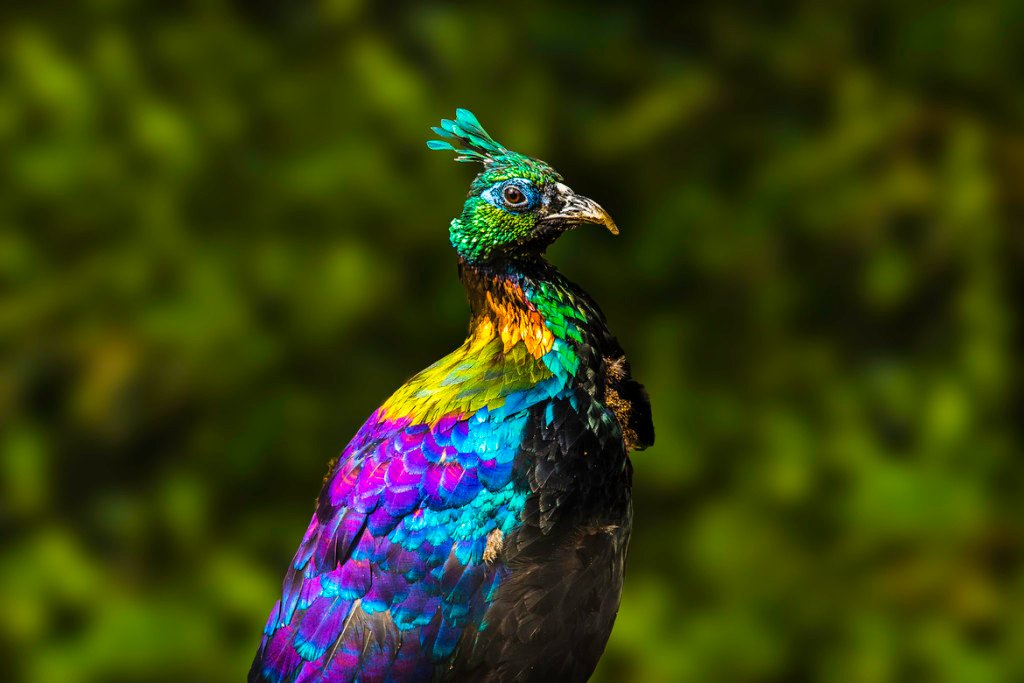
The Environment Ministry of Khyber Pakhtunkhwa has fined a man Rs 40,000 for illegally hunting a rare pheasant in Parachinar.
Special Assistant to Prime Minister on Climate Change Malik Amin Aslam, shared the news on social media, saying that “PTI believes in wildlife preservation through strict enforcement of the new Wildlife Protection Act.”
He lauded authorities for apprehending and penalising the person for his crime within a day of illegally hunting this “rare and beautiful Monal Pheasant”.
According to details, the Himalayan Monal is a pheasant native to Himalayan forests and shrublands. It is native to the KP province and has been recorded in Kaghan, Palas Valley, and Azad Kashmir. The main threat to the species is poaching, as the crest is valuable. It is thought to bring status to its wearer and is a symbol of authority.
Meanwhile, Federal Minister for Science and Technology Chaudhry Fawad Hussain and senior PML-N leader Khawaja Asif condemned the act of illegal hunting the rare bird.
“So upsetting,” said Fawad, while Asif called the act “despicable”.
So upsetting how can you kill such beautiful bird? Punishments yes but such fellows needs some Taleem aur tarbiat n moral education… bohat hi koi Chawal admi hai https://t.co/aUww7fX4hz
Villagers from Sindh’s Nawabshah district allegedly killed a rare Indus River Dolphin, also known as the blind dolphin. According to journalist Amar Guriro, who shared a video from the incident on social media, the dolphin was stranded in Gujjar Canal when the villagers caught it. In the video shared by Guriro, the villagers can be seen celebrating the man who caught the dolphin.
The official Twitter handle of the Sindh Wildlife Department also shared details about the incident and said that a criminal case is being registered against those involved in the incident.
Under Section 9 & 21 of Sindh Wildlife Act 2020, a criminal case is being registered. The punishment of such an act is up to 3 years in prisonment and a fine of up to Rs 5 Lac. 3/3
Later, they announced that the “offender whose unlawful act of trapping Indus Dolphin that stranded in a minor irrigation canal has been arrested with the help of Sindh Police.”
Under the provisions of Sindh Wildlife Protection Act 2020 passed recently by Sindh Assembly the it shall be a “Summary Trial” before the honourable Court of District & Sessions Judge. Punishment prescribed is of either description up to 5 yrs with fine up to 2.5 lac rupees.
According to WWF-Pakistan, the Indus River dolphin is one of the world’s most endangered freshwater river dolphins. Currently, there are only about 2000 dolphins in the waters of the Indus.
Despite facing many threats due to the impacts of dams, pollution, low river flows and bycatch, the numbers of this critically endangered mammal in the Indus River in Pakistan have #increased to almost 2,000 today.
At least 513 animals are reported to have gone “missing” from Islamabad’s Marghazar Zoo.
According to a report in The Express Tribune, the Islamabad Metropolitan Corporation (IMC), which was managing the zoo in July 2019, in a report had stated that there were a total of 917 animals of and birds of different species present at the zoo at the time. In May, the Islamabad High Court (IHC) handed over the zoo’s management to the Islamabad Wildlife Management Board (IWMB) with directions to shift the animals in the zoo to shelters.
Following the IHC’s orders, the handover documents dated July 16, 2020, and signed by the Zoo Deputy Director Dr Bilal Khilji, Ministry of Climate Change Biodiversity Director Naeem Ashraf Raja and the takeover authority, IWMB Chairman Dr Anisur Rehman, showed that only 404 animals have been handed over to the new management.
A comparative analysis of the reports showed that the numbers of animals in both reports are different. While some animals decreased in numbers or went missing, others such as the Barking Deer or Hog Deer showed an increase.
As per the details available, the population of the spotted deer fell from 12 to 11 in a year, while the Chinkara Gazelle decreased from seven to three. Similarly, the Black Buck Gazelle fell from four to three, Urials from 11 to four, Nilgai (Blue Bull) from 18 to 16, Zebras from five to four, Mallard Ducks from 108 to 74 and Rose Ringed Parakeet from 136 to 30.
Meanwhile, common doves, which were counted at 255 last year, completely disappeared from the handover document.
While it is not clear as to what happened to these missing animals, a report quoting sources said that the animals have either died or have been stolen.
A few weeks earlier, the Islamabad Zoo’s management had come under fire for burning two lions to death while attempting to force them out of their cage so they could be transported to a sanctuary in Lahore. Animals at the zoo are being relocated to temporary sanctuaries after the IHC while hearing Kaavan’s case, ruled that the zoo is not fit enough for them and lacks the necessary facilities.
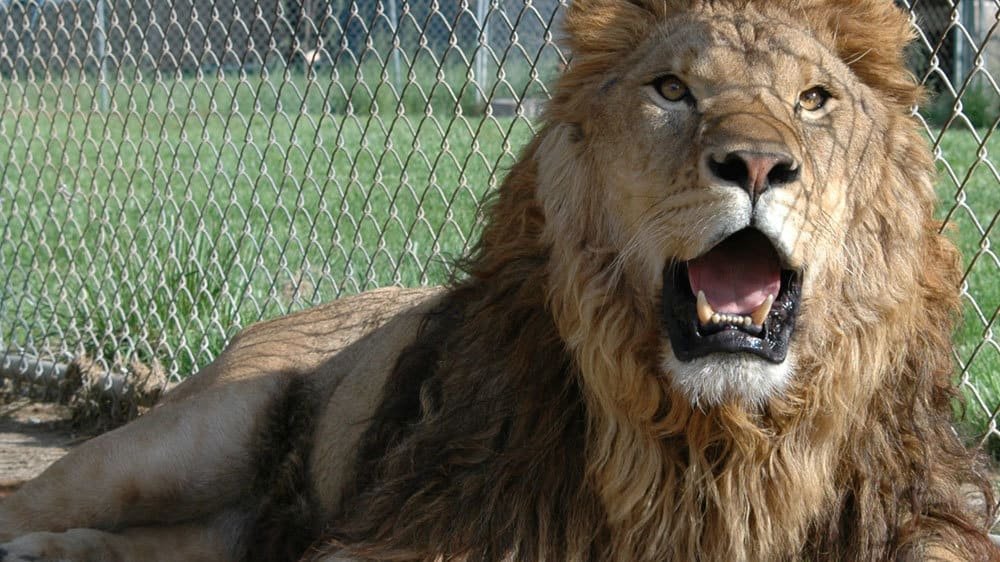
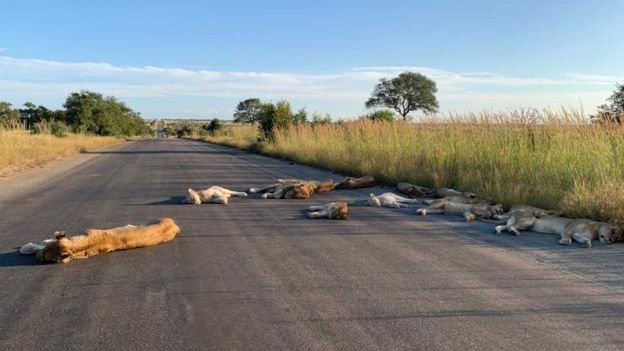
Five lions are on the loose near Gulshan-e-Hadeed in Karachi after they escaped from a private farmhouse.
According to reports, five out of six lions escaped from a farmhouse and attacked the dogs of that place.
After escaping, the lions entered a nearby seminary spreading fear and panic among the citizens. Residents of the area called Bin Qasim police and wildlife authorities to handle the situation.
Provincial Wildlife Conservator Javed Ahmed Mehar reached the area to manage the efforts to find and catch the escaped lions. While speaking to a local media outlet he said, “We sent our experts to the area as soon as we received reports of lions’ escape.”
He lamented that keeping lions at the farmhouse is an illegal activity but there is no definitive law forbidding people from keeping wild animals at their place.
“Sindh Assembly has passed a law to regulate the presence of wild animals at private places, however, it is yet to be enacted,” he said while remembering that last year one person was also seen roaming with a lion on a Karachi street.
After an hour-long search operation, wildlife experts finally caught the lions.
The provincial wildlife conservator said that they have called the lions’ owner on Wednesday (today) to take action against him.
Meanwhile, the owner of the lions, while speaking to Independent Urdu, dismissed the reports and said that this was all a fake news.
“Only one of my animals got out of the cage,” said the owner.
He claimed that though the lions did escape their cages, they did not go out of their vicinity.
“All our animals are tamed and do not harm anyone,” he added. “We will be charged for the negligence of one of our workers.”
“We have a farm and have a permit for that,” he explained further. “The license is not been renewed because we did not find it appropriate to visit the office due to coronavirus.”
“Wildlife department official visited the place last night and recorded all evidence.”