Tag: windows 7

  • 50 keyboard shortcuts every Windows user should know

    50 keyboard shortcuts every Windows user should know

    Keyboard shortcuts can help you stay focused, lessen repeated effort, and greatly boost your productivity. For instance, you may select text and use the shortcut Ctrl+C to copy it. The shortcut is quicker than lifting your hands off the keyboard, using the mouse to highlight, right-clicking, choosing copy, and then putting them back on the keyboard.

    There are several keyboard shortcuts offered in Windows, but you do not need to master them all. Just the ones that will make your life simpler and increase productivity should be kept in mind.

    These are the major keyboard shortcuts that every Windows user needs to be familiar with:

    Keyboard shortcut Action
    Ctrl + A Select all content.
    Ctrl + C (or Ctrl + Insert) Copy selected items to clipboard.
    Ctrl + X Cut selected items to clipboard.
    Ctrl + V (or Shift + Insert) Paste content from clipboard.
    Ctrl + Z Undo an action, including undelete files (limited).
    Ctrl + Y Redo an action.
    Ctrl + Shift + N Create new folder on desktop or File Explorer.
    Alt + F4 Close active window. (If no active window is present, a shutdown box appears.)
    Ctrl + D (Del) Delete selected item to the Recycle Bin.
    Shift + Delete Delete the selected item permanently, skipping Recycle Bin.
    F2 Rename selected item.
    Esc Close current task.
    Alt + Tab Switch between open apps.
    PrtScn Take a screenshot and stores it in the clipboard.
    Windows key + I Open Settings app.
    Windows key + E Open File Explorer.
    Windows key + A Open Action center.
    Windows key + D Display and hide the desktop.
    Windows key + L Lock device.
    Windows key + V Open Clipboard bin.
    Windows key + Period (.) or Semicolon (;) Open emoji panel.
    Windows key + PrtScn Capture a full screenshot in the “Screenshots” folder.
    Windows key + Shift + S Capture part of the screen with Snip & Sketch.
    Windows key + Left arrow key Snap app or window left.
    Windows key + Right arrow key Snap app or window right.

    Desktop shortcuts

    On Windows, you can use these keyboard shortcuts to open, close, navigate, and perform tasks more quickly throughout the desktop experience, including the Start menu, Taskbar, Settings, and more.

    Keyboard shortcut Action
    Windows key (or Ctrl + Esc) Open Start menu.
    Ctrl + Arrow keys Change Start menu size.
    Ctrl + Shift + Esc Open Task Manager.
    Ctrl + Shift Switch keyboard layout.
    Alt + F4 Close active window. (If no active window is present, a shutdown box appears.)
    Ctrl + F5 (or Ctrl + R) Refresh current window.
    Ctrl + Alt + Tab View open apps.
    Ctrl + Arrow keys (to select) + Spacebar Select multiple items on desktop or File Explorer.
    Alt + Underlined letter Runs command for the underlined letter in apps.
    Alt + Tab Switch between open apps while pressing Tab multiple times.
    Alt + Left arrow key Go back.
    Alt + Right arrow key Go forward.
    Alt + Page Up Move up one screen.
    Alt + Page Down Move down one screen.
    Alt + Esc Cycle through open windows.
    Alt + Spacebar Open context menu for the active window.
    Alt + F8 Reveals typed password in Sign-in screen.
    Shift + Click app button Open another instance of an app from the Taskbar.
    Ctrl + Shift + Click app button Run app as administrator from the Taskbar.
    Shift + Right-click app button Show window menu for the app from the Taskbar.
    Ctrl + Click a grouped app button Cycle through windows in the group from the Taskbar.
    Shift + Right-click grouped app button Show window menu for the group from the Taskbar.
    Ctrl + Left arrow key Move the cursor to the beginning of the previous word.
    Ctrl + Right arrow key Move the cursor to the beginning of the next word.
    Ctrl + Up arrow key Move the cursor to the beginning of the previous paragraph
    Ctrl + Down arrow key Move the cursor to the beginning of the next paragraph.
    Ctrl + Shift + Arrow key Select block of text.
    Ctrl + Spacebar Enable or disable Chinese IME.
    Shift + F10 Open context menu for selected item.
    F10 Enable app menu bar.
    Shift + Arrow keys Select multiple items.
    Windows key + X Open Quick Link menu.
    Windows key + Number (0-9) Open the app in number position from the Taskbar.
    Windows key + T Cycle through apps in the Taskbar.
    Windows key + Alt + Number (0-9) Open Jump List of the app in number position from the Taskbar.
    Windows key + D Display and hide the desktop.
    Windows key + M Minimize all windows.
    Windows key + Shift + M Restore minimized windows on the desktop.
    Windows key + Home Minimize or maximize all but the active desktop window.
    Windows key + Shift + Up arrow key Stretch desktop window to the top and bottom of the screen.
    Windows key + Shift + Down arrow key Maximize or minimize active desktop windows vertically while maintaining width.
    Windows key + Shift + Left arrow key Move active window to monitor on the left.
    Windows key + Shift + Right arrow key Move active window to monitor on the right.
    Windows key + Left arrow key Snap app or window left.
    Windows key + Right arrow key Snap app or window right.
    Windows key + S (or Q) Open Search.
    Windows key + Alt + D Open date and time in the Taskbar.
    Windows key + Tab Open Task View.
    Windows key + Ctrl + D Create new virtual desktop.
    Windows key + Ctrl + F4 Close active virtual desktop.
    Windows key + Ctrl + Right arrow Switch to the virtual desktop on the right.
    Windows key + Ctrl + Left arrow Switch to the virtual desktop on the left.
    Windows key + P Open Project settings.
    Windows key + A Open Action center.
    Windows key + I Open Settings app.
    Backspace Return to the Settings app home page.
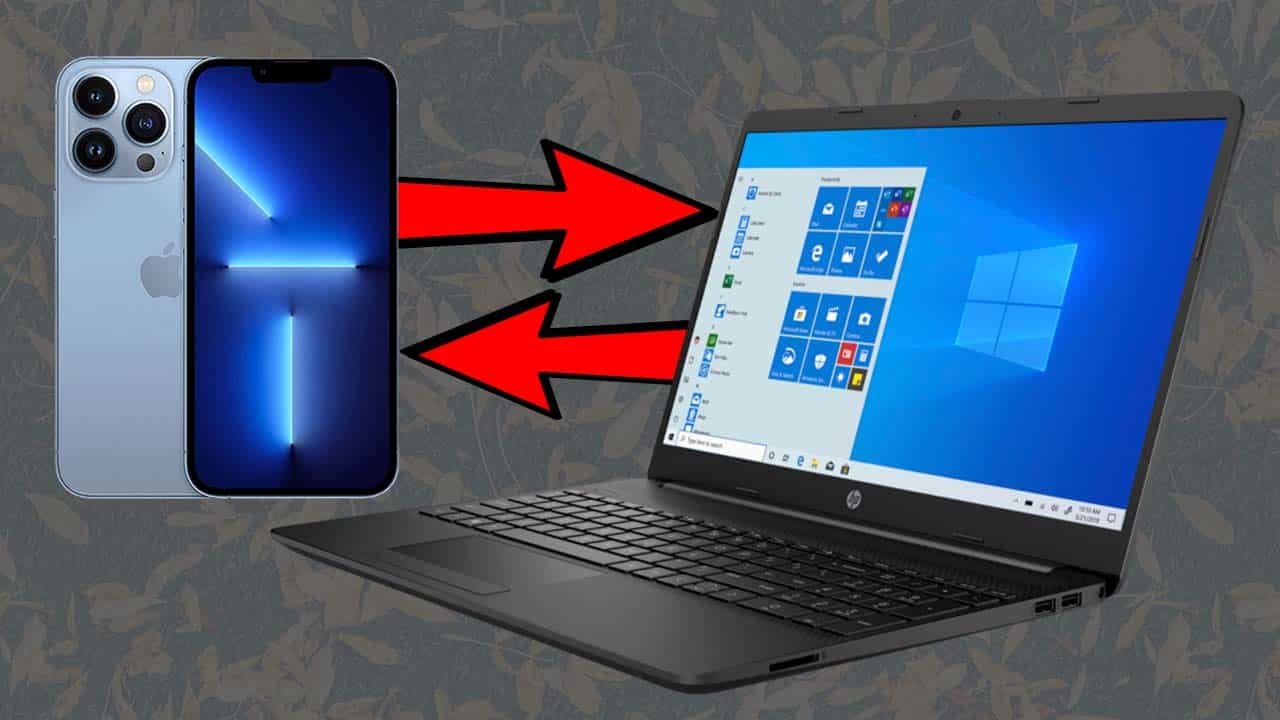
  • Here are some of the easiest ways to transfer data from an iPhone to Windows PC

    Here are some of the easiest ways to transfer data from an iPhone to Windows PC

    Sometimes the process of transferring data from an iPhone to a Windows PC is so hard that you start to question why you spent so much money on this flashy Apple flagship.

    If there isn’t a lot of data stored on the iPhone, transferring data from the iPhone to a PC may not be a problem. While those who have thousands of photos and 4K videos may experience bothersome issues, since the iPhone’s compatibility with a Windows PC is not too friendly.

    You can transfer photos and videos from an iPhone to a Windows PC using the techniques listed below:

    Apple iTunes

    There are two ways, USB or Wi-Fi, to sync your music, videos, photos, contacts, calendars, and device backups through your iTunes account.

    Sync Apple iTunes via USB

    Open iTunes. Make sure you’ve got the most recent version.

    1. Connect your iPhone to your PC via USB. You will see a device appear in the upper left corner of iTunes under Connected Devices.
    2. Click on the mobile icon.
    3. Click Settings on the left side of iTunes to see the categories of content you can sync.
    4. Select the content, then click on Sync in iTunes.
    5. In the lower right corner of iTunes, click Apply. Automatic synchronisation will be activated. Your devices will now sync whenever you connect via USB and have iTunes open.

    Windows AutoPlay

    Want to have more control over the location of your PC backup of your iPhone’s files? Grab the USB cable once more and give Windows AutoPlay a try.Plug in your iPhone via USB.

    • Open the Settings menu on your PC and click Devices.
    • Click on AutoPlay on the left side of the screen.
    • Click on Choose AutoPlay Defaults to tell your PC where to put your photos, files and music.

    Import photos and videos through Windows Photos app

    If none of these methods work for you, you can open the Windows 10 pictures app and choose to import from device after connecting your phone to your computer.

    • Turn your phone on and unlock it. Your PC will not detect the device if it is locked.
    • On your PC, click the Start button and then click Photos to open the Photos app.
    • Select Import > From a USB device, then select the device. You can choose the items you want to import and where you want to save them. Give detection and transfer some time.

    Third-party softwares

    There are two third-party tools that can simplify the process of transferring and syncing data between your iPhone and PC:

    • You can manage the files on your iPhone and export or import your data between the two devices using EaseUS’s MobiMover. When connected up, you may configure it to back up your phone with a single click. Your data can be transferred across two separate iPhones as well.
    • Similar automatic wireless device syncing capabilities are offered by iMazing. Your data, apps, and preferred settings can all be transferred when upgrading to a new version of the iPhone.
  • PC running slow? Here are some easiest fixes

    PC running slow? Here are some easiest fixes

    A slow computer can make life much more difficult than it has to be, whether you’re using it for business or for entertainment. When you can hardly open a window, load a website, or even start up your system, slow performance speed can make your computer worthless.

    Spending a few minutes working through some tried-and-true troubleshooting procedures can make life easier if you’ve recently been experiencing issues.

    The following steps will help your PC perform smoothly:

    Delete unnecessary images or files.

    Sifting through the files and images on your computer might be overwhelming, but by deleting the ones you no longer use, you can speed up the process and prevent your computer from halting or crashing. Clearing out old images, erasing files on desktops, or moving huge files to online backup, are small and sensible methods to help your PC run quicker.

    If the process feels burdensome, break it down and take out 30 minutes each day to delete everything unnecessary. You may quickly identify any temporary files or apps sapping your PC’s storage.

    Get an external SSD/HDD

    If you take a lot of pictures, you might even want to think about external storage, like Portable SSD. It is ideal for safely saving a large number of your necessary high-resolution videos and photographs rapidly.

    Empty Recycle Bin

    Unwanted files will remain in the recycle bin after you have erased them because they are still there. You should routinely empty your recycle bin because it can be taking up space on your computer that could be better used elsewhere.

    The more capacity you have on your hard drive, the better your PC will perform. Your computer will also accumulate temporary files, but you may easily get rid of them. The steps are as follows for Windows 10 and 11:

    1. From the Start menu, select Settings
    2. Go to Storage
    3. Open ‘This PC’ and select the hard drive
    4. Click on Temporary Files
    5. Under Recycle Bin, click Empty Recycle Bin
    6. In Temporary Files, click Delete Temporary Files
    7. Under Downloads, select View Downloads and delete unwanted downloads

    Get more RAM

    You might need to add more RAM if your computer is displaying error warnings and files are taking a long time to load. Although this is distinct from the total amount of storage on your hard drive, adding more RAM will improve your computer’s multitasking abilities.

    Adding RAM can help if you frequently run many programmes at once (opens in a new tab). Installing at least 16GB and 32GB RAM from reputable manufacturers is a good idea. This will help in quicker startups, fewer delays, and smooth app switching.

    Install an anti-virus

    Malware infections can cause a computer to run slower than usual. Additionally, you can have unexpected pop-up warnings, a noisy computer, and erratically starting apps. However, the malware won’t always be so obvious.

    According to Microsoft, running anti-virus and anti-malware software and keeping it updated is the best way to deal with infections and harmful software. For instance, Windows 11 includes Windows Security, which will check your computer for viruses and other harmful software.

    Defragment disk

    In contrast to a solid state drive (SSD), a hard disc drive (HDD) stores data in discrete chunks across the disc. As a result of use and time, relevant data can become dispersed across the entire disc. When you start a software or app, the system then needs more time to locate each piece of data and put it back together for use. Your HDD’s defragmentation can expedite this procedure.

    Click the Windows button or Start menu, choose Control Panel, then System and Security to defragment your hard drive. Defragment your hard drive by selecting it under Administrative Tools.

    Since SSDs use a completely different technology than HDDs, they do not require defragmentation.

    Disable programs that auto-start

    On your computer, certain apps are configured to launch automatically when Windows does. Even though it’s not always simple to know which ones are active, having too many operate concurrently can cause delays.

    In order to prevent start-up apps from starting automatically, you must manually change the settings on your computer.

    Disable constant anti-virus checks

    You may have observed your system performing slowly when Task Manager was open, and that your antivirus programme frequently occupies a position towards the top of the list. While continually scanning your computer for viruses and malware, antivirus software can cause your system to sluggishly operate.

    Read more: 12 important things you need to know before buying a used iPhone

    Schedule your antivirus programme to run at times when you’re not likely to be using your computer, such as overnight or during your lunch break, rather than letting it scan whenever it pleases. Depending on the programme you use, you can modify the scan schedule.

    No matter what model or generation of PC you are using, by following these instructions you can significantly improve your PC’s performance. Unless you’re still on a Core 2 duo.

  • Windows 7 is officially out of support from Microsoft

    Windows 7 is officially out of support from Microsoft

    Last month, Microsoft shut down Windows 7 completely. Even then, a large number of people are still using the same operating system, but should immediately upgrade to better versions for a number of reasons. 

    Windows 7 users are receiving troublesome bugs since the shutdown. The first bug broke the operating system’s wallpapers and internet browser but a recent one is much more dangerous. 

    Some users have been reporting a new bug that prevents them from shutting down or rebooting their PC, claiming that “you don’t have permission to shut down this computer”. The source of this bug is still unknown. 

    Windows 7 is officially out of support and Microsoft may never fix this bug, but some hope still remains as they did make an exception to the rule when they patched the wallpaper bug a few days ago.

    It is recommended that all users upgrade their operating systems and even their old devices. When a new technology is introduced, companies start focusing on their contemporary products to improve users’ experience.