Tag: women empowerment

  • ‘Real men do not stop women from excelling,’ says Yasir Hussain

    ‘Real men do not stop women from excelling,’ says Yasir Hussain

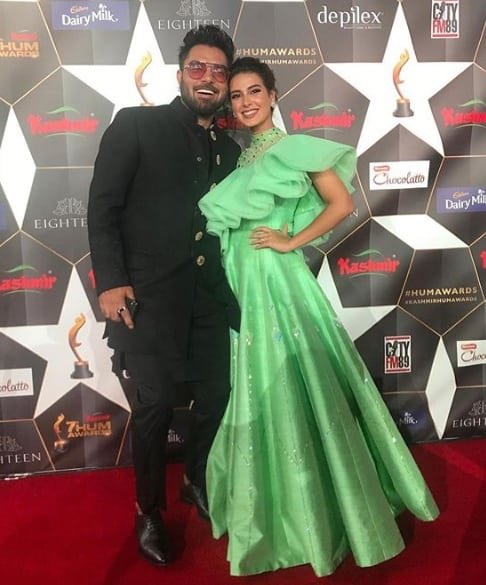
    Yasir Hussain, who never shies away from expressing his love for wife Iqra Aziz, has publicly appreciated his wife and mother-in-law for being empowered women.

    “My beautiful wife Iqra with her proud mother Asiya Aziz (Pakistan’s first female Careem driver) sitting in her daughter’s new car,” said Yasir, while posting a picture of the duo.

    “Powerful aurton k chehry pe alag hi glow hota hai (powerful women glow differently),” said the actor further, adding: “Apni maon, behnon, betiyon aur biwi ko roknay walay insecure hotay hain, mard nahi (Those who stop their mothers, sisters, daughters and wives [from excelling] are insecure. They are not real men).”

    Replying to Yasir’s post, Iqra said: “And this is why I fall for you all over again.”

    Iqra’s mother was Pakistan’s first female cab driver in Karachi and raised two girls as a single parent.

    Meanwhile, Iqra on several occasions has opened up on her relationship with Yasir saying that he is her biggest support and encourages her to achieve her goals.

    “I chose Yasir because he always speaks the truth and does not differentiate among people,” the actor had said. “He respects everyone and gives them their due credit. In addition to this, he knows how to respect a woman. After my mother and sister, no one has given me more confidence than him.”

    She further said: “This is important in these times that a man, your husband, supports you in your work, your dreams and wishes to see you succeed in your life.”
  • Pakistan State Oil hires female employees

    Pakistan State Oil hires female employees

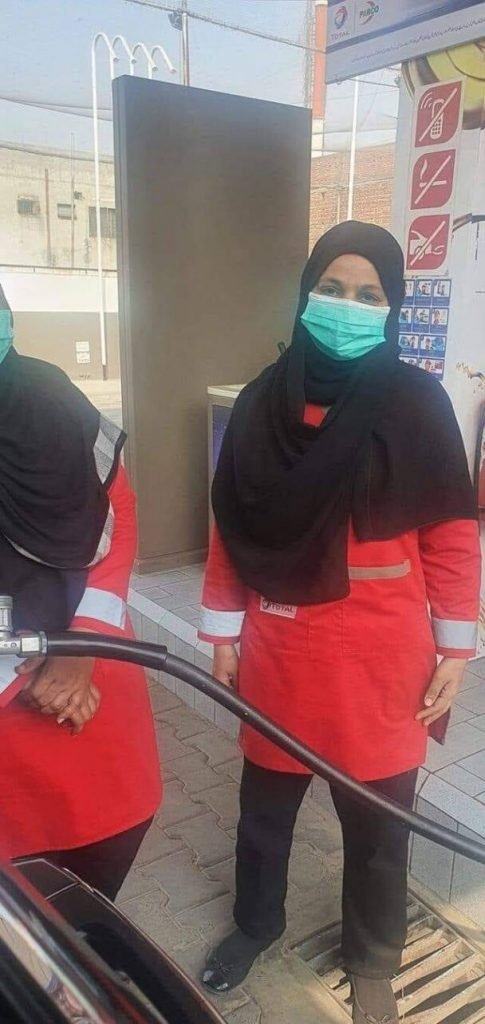
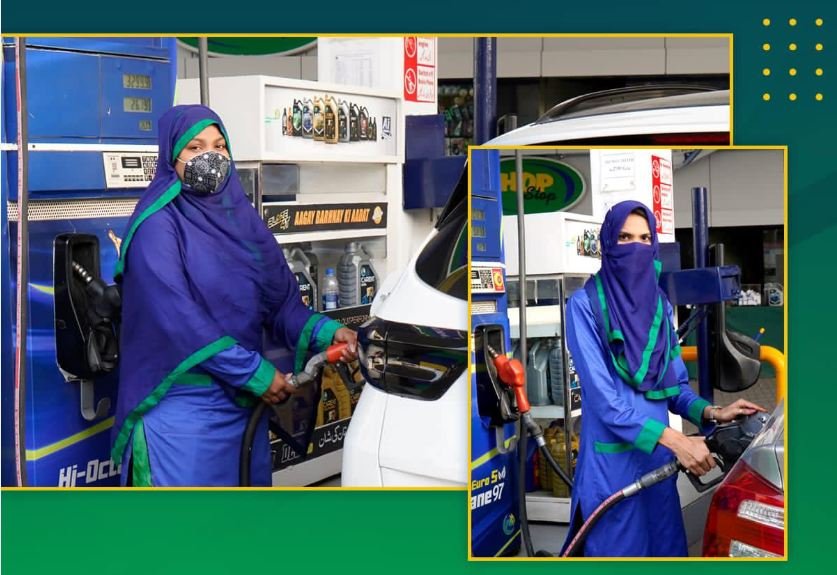
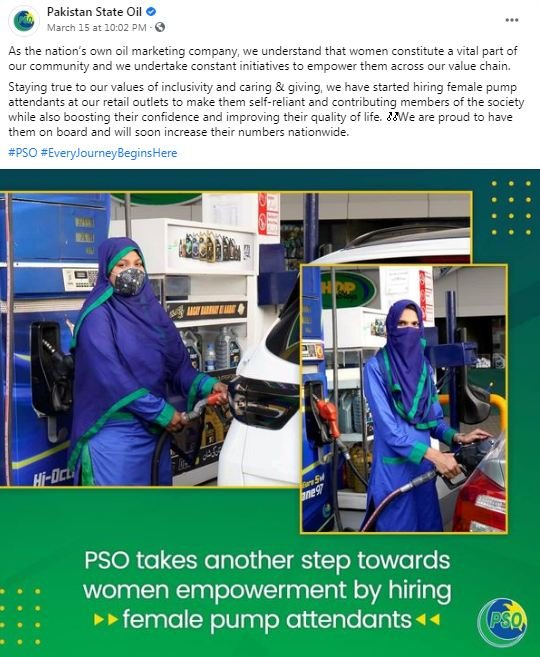
    To keep up with changing times, the Pakistan State Oil (PSO) has started hiring female filling station attendants. Sharing the news on Facebook, PSO highlighted the importance of workplace diversity.

    The Pakistani petroleum corporation shared pictures of the female employees on social media stating that the step aims to empower Pakistani women.

    “As the nation’s own oil marketing company, we understand that women constitute a vital part of our community and we undertake constant initiatives to empower them across our value chain,” said the company.

    PSO further said that they are “proud to have them on board” and that they plan to “increase their number”.

    Earlier, Total Parco had also taken the initiative of hiring female gas station attendants.

  • Endangering innocent lives

    Endangering innocent lives

    Aurat March has rattled many a misogynist over the years. Women out on the streets, marching for their rights and raising their voice is somehow considered ‘vulgar’ and ‘obscene’. This year, though, what the anti-women brigade did was unforgivable. By their false and malicious propaganda, they have put the lives of thousands of women at stake.

    Last week, a doctored video of Aurat March was widely shared on social media. Some men from mainstream media with a large following on social media platforms like Twitter shared the video without verifying it. Their tweets amplified the propaganda against Aurat March organisers and participants so much so that the banned terrorist outfit Tehreek-e-Taliban Pakistan (TTP) issued a threat to the women and told them to “fix their ways”. It is indeed criminal how a doctored video and false propaganda was carried out about the Aurat March even on the media where the flag of the Women Democratic Front was falsely misrepresented as the French flag, a poster about child sexual abuse and a video with slogans were misrepresented as being blasphemous. Right-wing groups took out rallies and threatened the Aurat March organisers as well as participants.

    Organisers of the Aurat March released a statement that said that the Aurat March faces severe backlash every year. “Our videos and posters are targeted and manipulated, spreading misinformation and maligning the March. This year, one of our videos was doctored and heinous allegations are being placed on us.” They demanded an immediate apology and retraction from all those who shared the doctored video as well as a retraction by all journalists and media houses that shared this disinformation.

    The Human Rights Commission of Pakistan (HRCP) said that this campaign was not just repugnant but an incitement to violence. “We demand that action be taken against all such persons.”

    It is a no-brainer why a majority of our society would propagate such false accusations against women. How dare women ask for their rights, how dare they fight for equality, how dare they raise their voice for issues related to women’s health, how dare they talk about sexual harassment and rape, how dare they talk about child abuse and child marriage, how dare they ask for the rights of the marginalised… how dare they? No wonder why Pakistan ranks so low on the gender gap index as well as other indicators related to gender. We have weaponised an entire society against women. There was so much outrage about a doctored video, the misrepresentation of a flag and a poster but have we ever seen such outrage over domestic violence, child marriage, rape, sexual harassment, lack of health facilities for women, child molestation, low wages for women workers, etc? No, we have not. Because our patriarchal society will only reserve this misplaced anger and outrage at women.

    Read more – ‘Ek hee dafaa sari aurton ko ban ker do’: Meesha Shafi defends Aurat March

    It is time that we all raise our voice against this dangerous and vicious campaign against Aurat March. Some from media have tendered an apology for sharing the doctored video and deleted their tweets but is a mere apology enough for putting the lives of thousands of women at risk with allegations of a topic as sensitive as blasphemy? These people must be held accountable. The government should not only provide protection to these women but must also take action against all those who took forward the false propaganda against Aurat March.

  • Women of the world, unite!

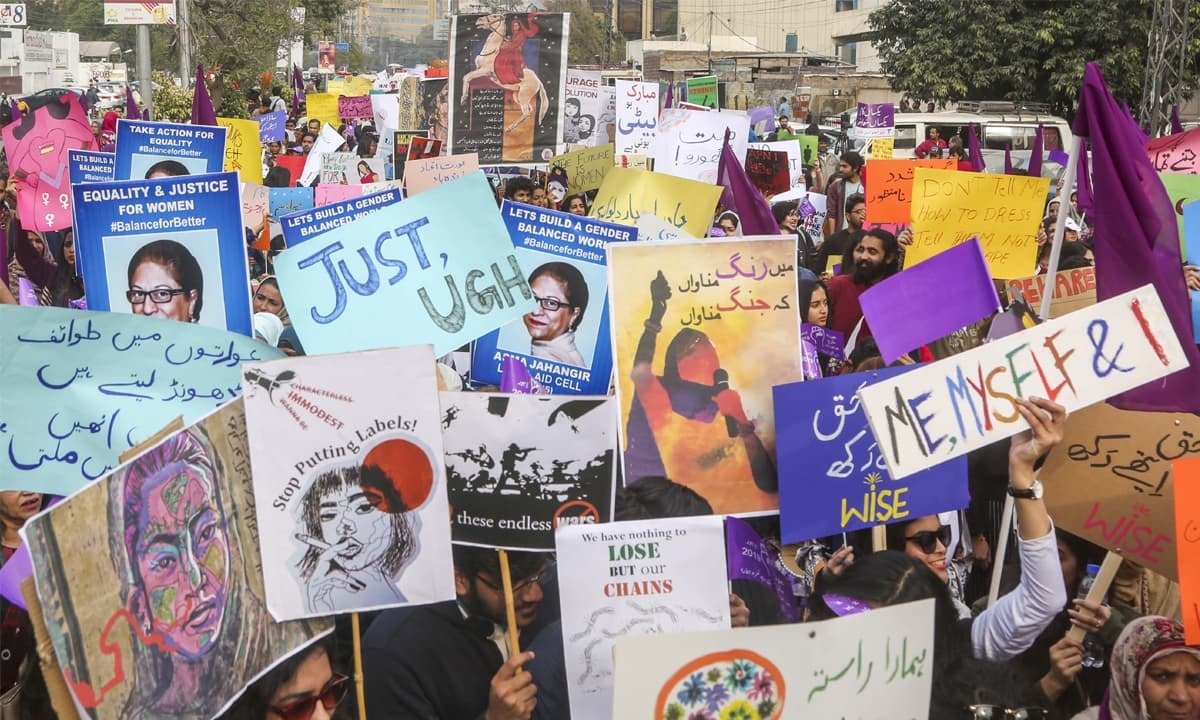
    Tomorrow is International Women’s Day, which is celebrated worldwide. In Pakistan, many events are organised to mark Women’s Day. Aurat March, which has been held since 2018, will be marked with rallies in several cities, including Lahore, Islamabad and Karachi.

    This year, Aurat March Lahore’s theme is women’s health and the issues faced by women and gender minorities. They are demanding that the health budget be increased to 5 per cent of the GDP. Aurat March organisers have highlighted how violence has always existed for women and gender minorities in Pakistan since before COVID-19 but the lockdowns and social isolation resulting from the pandemic have further exacerbated physical, emotional and sexual violence against them across the country.

    It is quite unfortunate that Pakistan ranks 151 out of 153 countries on the Global Gender Gap Index Report 2020 index, published by the World Economic Forum. The only two countries lagging behind Pakistan are Iraq and Yemen. This is not a surprise given the way our patriarchal society treats women. From blaming rape survivors to practices such as honour killing, vinni and swara (exchange of women, especially young girls, to settle disputes between families), child marriage, domestic violence and many other such anti-women practices, Pakistani society does not make life easy for women.

    Sexual harassment cases when reported or talked about are brushed under the carpet. We have seen how women don’t just face offline harassment and violence but online harassment of women has increased manifold. It is but a manifestation of the anti-women bias in society. Women politicians, journalists and activists are targeted online on a regular basis. But it is good to see Pakistani women breaking these chains and raising their voices for women empowerment and their rights.

    From leading lights such as Fatima Jinnah, Benazir Bhutto, Asma Jahangir, Malala and many others who paved the way for women and young girls in our society, the struggle continues. It will take a long time to achieve equal rights for women but there is no reason to lose hope. We have seen that when women take a stand, it leads to the betterment of society at large.

    For an inclusive, tolerant and progressive Pakistan, women have to be treated as equal human beings. Women of the world, unite, for you have nothing to lose but your chains.

  • Aurat March Lahore announces ‘Charter of Demands’ for 2021

    Aurat March Lahore has unveiled its charter of demands for 2021. This year’s charter of demands is based on 15 points with a special focus on women’s healthcare, which is also the theme of this year’s march.

    As per the official Twitter account of Aurat March Lahore, the charter “is centred on our theme of healthcare which intersects with the issues of gender-based violence, the dehumanisation and sexualisation of our bodies, safety, environmental justice and our fraught relationship with the state.”

    “Some of our demands are immediate, some of them are from the state — but we recognise that our long-term struggle and means of emancipation lie outside the patriarchal state and exploitative economic system we’re currently in,” read the official statement.

    Earlier, the organisers of Aurat March Lahore released the poster and theme for this year’s march.

    Speaking exclusively to The Current, Shehzil Malik who designed the poster, talked about the thought process behind designing the poster.

    “To know more about women’s health crisis, I reached out to a friend who works in public health which really gave me an insight into the subject,” shared Malik.

    Aurat March is scheduled to take place on March 8 on the occasion of International Women’s Day.

    Meanwhile, expressing her views on the Aurat March, Sarah Khan in an exclusive interview with The Current said: “I think, instead of fight for the rights, we should educate our sons. Don’t teach your daughters to go to ‘Aurat March’, educate your sons and teach them that their mother is also a woman.

    “[A] woman is the one who runs the house, does the house chores and supports the man. If your wife is not helpful, then how will you be happy? Allah has already granted status to the woman, but I think men should be given the same rights. They deserve the same, not only women,” she added.

    On the other hand, actor Mahira Khan who attends the Aurat March every year revealed her reason for going to the event, saying: “I think it is necessary for me [to go to Aurat March] because I think when I do something, no matter how small it is, it leaves an impact.”

    “So when I go to Aurat March, what I’m actually trying to say is ‘Look, if you like me and if you think what I say means something if you think I that I’m on the right side of history, or whatever you think of me, this is also what I believe in, this is why I’m here,” she added.

  • The All Girl Band wins social media with new track ‘Mera Nahi Hai’

    The All Girl Band wins social media with new track ‘Mera Nahi Hai’

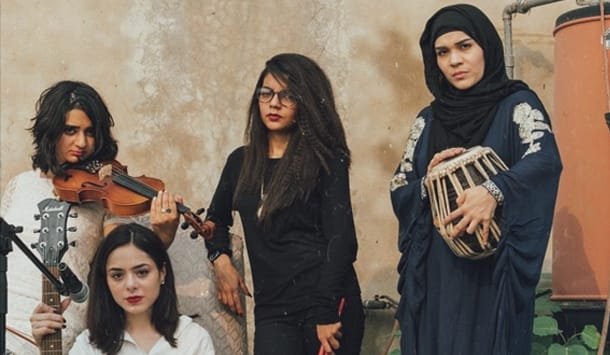
    The All Girl Band has taken over social media with hit new track Mera Nahi Hai.

    The band recently shot to fame, with music aficionados predicting that the girls will usher in a new era in the music industry. The girls’ newest success came after their latest track Mera Nahi Hai scored them an interview on Geo News’ morning show Geo Pakistan.

    According to details, the band includes Anna Salman Dar (lead vocalist and rhythm guitarist) Amal Nadeem (violinist) Mishal Faheem (drummer and percussionist) and Sumera Waris (tabla player) – four women in their 20’s, navigating their way through life whilst living their dreams.

    Speaking exclusively to The Current, The All Girls Band revealed that their band was formed on Nescafé Basement Season 4.

    “Xulfi, who was our mentor and producer on that show had this idea of having female musicians perform on a song called Love Me Again by John Newman. He held auditions all over Pakistan and 10 female musicians were selected,” shared the band, adding that the band now compromises of the above-mentioned four.

    When asked if the girls faced any resistance from their family or parents, the band said: “There was no hesitation from the families. Mishal and Sumera have a family background of musicians, so there was support from the immediate family.”

    They further shared that the band is the first female band of Pakistan that consists of female singers as well as female musicians.

    Meanwhile, check it out their new track below:

  • 8 Pakistani women among world’s ‘100 outstanding nurses and midwives’

    Eight women from Pakistan have been listed among the World’s 100 outstanding Nurses and Midwives.

    To acknowledge the work of nurses and midwives amidst a global pandemic, the World Health Organisation (WHO), United Nations Population Fund (UNFPA), Nursing Now, International Council of Nurses (ICN), International Confederation of Midwives (ICM), and Women in Global Health (WGH), have compiled a list of World’s 100 Outstanding Nurses and Midwives.

    The list features the achievements and contributions of nurses and midwives from 43 countries and across six global regions.

    The Ministry of Foreign Affairs also congratulated the women on being recognised for their work.

    Here are the details of five of the eight women who made it to the list :

    Rozina Karmaliani, Board & Management – Midwife Nurse

    Dr Rozina Karmaliani is a Professor and Interim Dean at the School of Nursing and Midwifery and joint faculty with the Department of Community Health Sciences at Aga Khan University (AKU). Dr Rozina Karmaliani has spent decades working to inspire and empower others. Her efforts are currently focused on improving adolescent health, the development and strengthening of research capacities, and the integration of research into education and practice.

    Samina Vertejee, Community Hero – Nurse

    Samina Vertejee is an Assistant Professor at Aga Khan University School of Nursing and Midwifery (AKUSONAM). She brings together her practical and academic expertise to effect policy change for the care of older people. Recognising the gap in knowledge needed to properly care for Pakistan’s ageing population, especially during the COVID-19 pandemic due to their unique vulnerabilities, Vertejee has taken up the challenge at the policy level to improve the welfare of the country’s growing number of older people.

    Saima Sachwani, Human Capital Development: Midwife Nurse

    Ms Sachwani is an Assistant Professor and Section Head of the Public Health Stream, Aga Khan University School of Nursing and Midwifery (AKUSONAM). As a determined public health advocate and educator, her current focus is on creating awareness about the role of nurses in helping achieve universal health coverage. She was the first in Pakistan to introduce simulation into the community health nursing curriculum, with a lasting positive impact on teaching.

    Yasmin Nadeem Parpio, Community Hero: Nurse

    Yasmin Nadeem Parpio is an Assistant Professor at Aga Khan University School of Nursing and Midwifery (AKUSONAM). Yasmin works tirelessly to strengthen nursing curricula and to optimise the learning experiences of nursing students. She is currently undertaking a PhD on the subject of how building social skills among adolescents can reduce stress and improve resilience and quality of life. She also works on a voluntary basis with the local geriatric population, arranging regular educational sessions and working on yearly activity plans, and has established a peer support group.

    Marina Baig, Innovation, Science & Health: MidwifeNurse

    Marina Baig is a senior instructor at the Aga Khan University (AKU) School of Nursing and Midwifery. Her work on the use of mobile health (mHealth) technology to improve antenatal care coverage and skilled delivery in rural settings is exemplary and could serve as an innovative strategy in improving maternal health outcomes. Her contributions in developing an interactive e-book on women-centred reproductive health care focused on family planning and post-abortion care has been recognised as another key development in midwifery education in Pakistan.

  • Meet the first-ever female PSP officer of Balochistan

    Meet the first-ever female PSP officer of Balochistan

    Women of “conservative” Balochistan have little space in the political, cultural, economic, or social fields. Conditions are even worse for Balochistan’s women in rural areas.

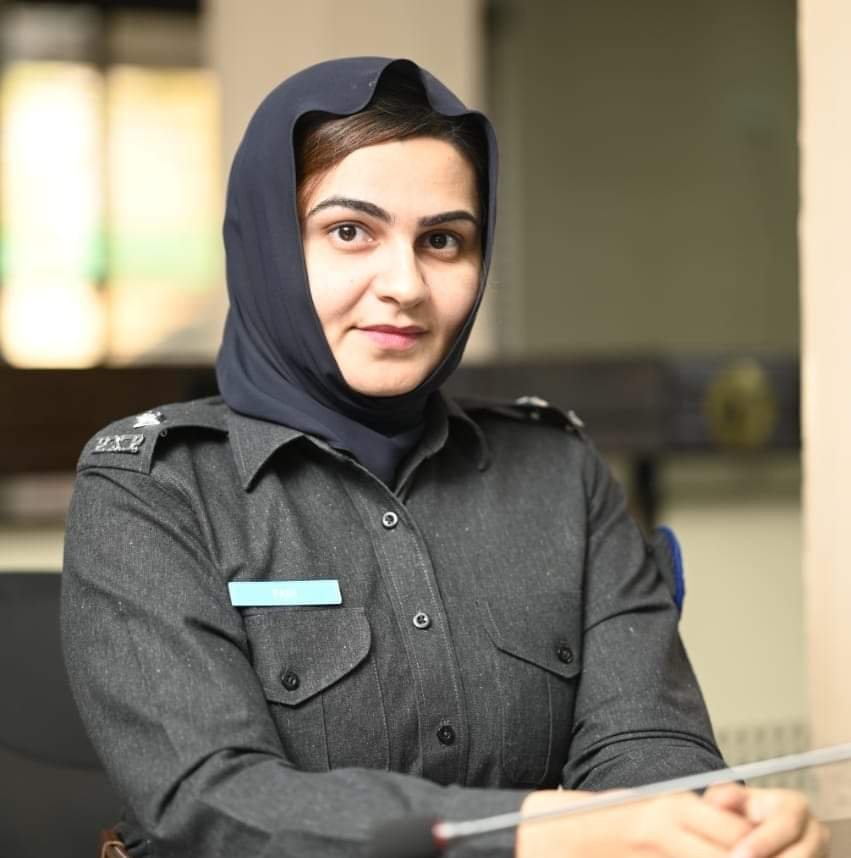
    Surviving all these hurdles, Pari Gul Tareen has been posted as Assistant Superintendent of Police (ASP) Quetta Cantt. Tareen is the first woman in the history of the province to be appointed to this post.

    She hails from the Pishin area of ​​Balochistan and is the first woman in the province to join the Police Service of Pakistan (PSP) after passing the Central Superior Services (CSS) exam.

    CHANGING TIMES:

    Tareen is, however, not the only one to have made the country proud in these changing times.

    Nigar Johar had earlier this year been promoted by the Pakistan Army to become the first woman lieutenant general.

    According to the military’s media wing, Johar, who hails from the Panjpeer area of Swabi district in Khyber Pakhtunkhwa (KP), also holds the accolade for becoming the first woman surgeon general of the Pakistan Army.

    Earlier, in 2017, Johar had become the third woman officer to reach the rank of major general.

    Swabi has produced a number of generals, but it was the first time that a woman had reached the said army rank.

  • Pakistani filmmaker wins gender equality award in Singapore

    Pakistani filmmaker wins gender equality award in Singapore

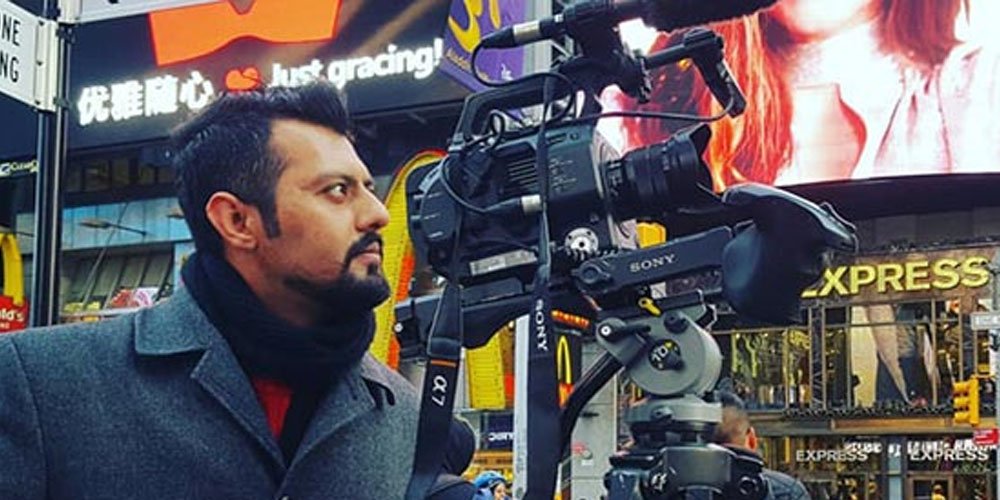
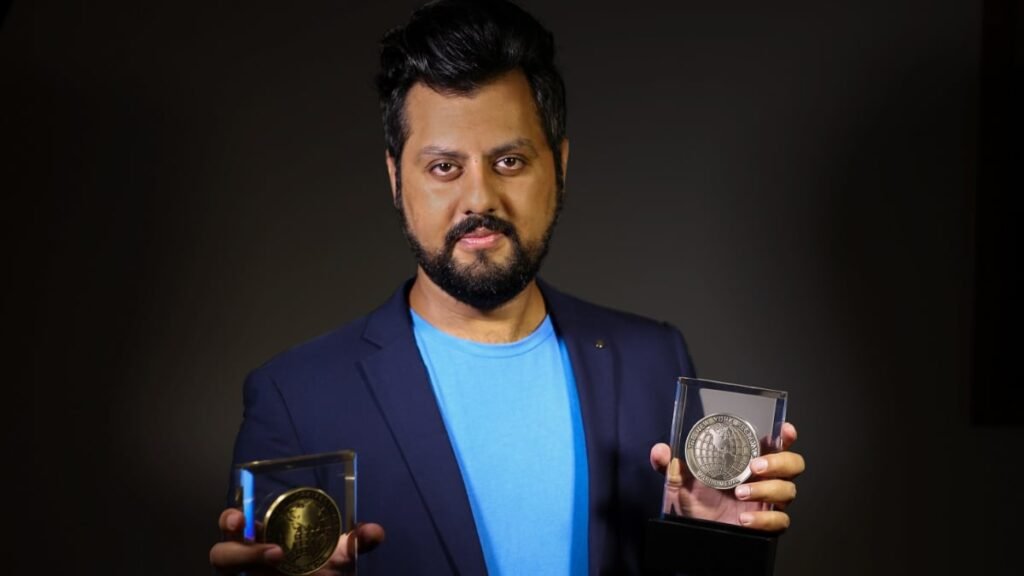
    Award-winning Pakistani filmmaker, Shehzad Hameed Ahmad was recently honored by the United Women of Singapore for supporting the cause of gender equality through his films.

    Over last 10 years, Shehzad has done significant work highlighting and supporting women causes and creating awareness for gender equality. Singapore-based Ahmad was awarded the Gender Equality Impact Change-maker (male individual) award.

    His work includes The Pakistani Four 2012, where he travelled across America to film the journey of four Pakistani American women, Flight of the Falcons 2015, were he filmed the inspiring journey of Pakistani school teacher and her two-room school in Gujranwala, where he highlighted the issues of girls’ education in rural areas of Pakistan.

    His work was being featured on TVF International, Toggle, Dawn News, National Geographic, TV Ontario, CAN and Crime and Investigation Channel, amongst others.

  • Women’s museum to be set up in Islamabad

    The National Commission on Status of Women (NCSW) and Higher Education Commission (HEC) have signed a principal agreement to set up a women’s museum in Islamabad.

    According to reports, the aim of establishing this museum is to preserve women movements throughout history and to provide a resource for newly enfranchised women to enter public life.

    The museum will support and protect education, research and training on the roles and contributions of women.

    NCSW is striving for the development of women’s libraries, museums and archives.