Tag: Women in Afghanistan

  • ‘We are not against education’, Taliban to open separate schools for girls

    ‘We are not against education’, Taliban to open separate schools for girls

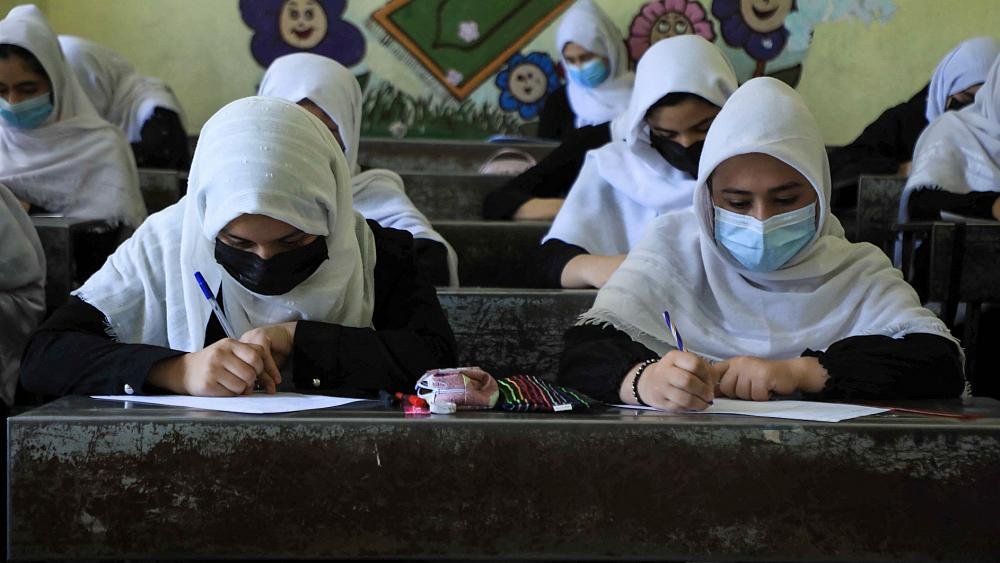
    The Taliban has said that they hope to open all schools for girls and women across the country after March 21.

    Zabihullah Mujahid, spokesperson and deputy Culture and Information Minister of Afghanistan said girls and boys must be completely segregated in schools. According to him, the biggest obstacle so far has been finding enough space where girls could stay while going to school. In heavily populated areas, there is not enough space to have separate classrooms for boys and girls.

    “We are not against education,” Mujahid stressed while talking to Associated Press (AP). He also said women are working in the health and education sector and at Kabul International Airport in customs and passport control. But didn’t comment that whether women would be allowed to return to work in government ministries.

    Since August, girls in most of Afghanistan have not been allowed back to school beyond grade 7. However, private universities in the capital Kabul are still operating.

    Earlier this month, the United Nations (UN) launched a $5 billion appeal for the war-torn country.
  • ‘Backward thinking dangerous for Pakistan’: Fawad on Taliban’s restrictions on Afghan women

    Federal Minister for Information and Broadcasting Fawad Chaudhry, while talking about the recent Taliban’s restrictions on Afghan women, stated that the Taliban’s ‘retrogressive thinking’ is dangerous for Pakistan, reports Dawn.

    While addressing a ceremony in Islamabad, the minister said, “Saying that women can’t travel alone or go to schools and colleges — this kind of retrogressive thinking is a danger for Pakistan.”

    “You see that two extremist regimes have cropped up on right [India] and left [Afghanistan] of Pakistan. On one side there is Afghanistan where the Taliban have arrived. We want to fully help the Afghan people”, he added.

    Fawad said, “We have had failures and successes but till now Pakistan is that bright hope in this region which while remaining amid these extremes can emerge out from them.”

    Chaudhry’s statement has come after Afghanistan’s Taliban authorities’ announcement about women who seek to travel long distances should not be offered transport if they are not wearing hijab or not accompanied by a close male relative.

    Furthermore, he pointed out that extremists in the country and said, “Quaid-e-Azam never saw Pakistan as a religious country and all these people who today on his name are fooling the people that the meaning of an Islamic country was a religious country — this was entirely not the case.”

    While talking about the Sialkot lynching incident, Fawad said, “You saw the whole of Pakistan was united and condemned that incident. This is happening every day in India with Muslims and no one is bothered.”

    Chaudhry stressed that Pakistan’s purpose was “preserving minority rights and safeguarding them”.

  • No transport for women travelling without hijab, male relative: Taliban

    Afghanistan’s Taliban leadership has announced that women who seek to travel long distances should not be offered transport if they are not wearing hijab and are not accompanied by a close male relative, reports Agence France-Presse (AFP).

    The guidance was issued on Sunday by the country’s Ministry for the Promotion of Virtue and Prevention of Vice. The ministry spokesman Sadeq Akif Muhajir told AFP: “Women travelling for more than 72 kilometers (km) should not be offered a ride if they are not accompanied by a close family member.”

    Previously, the government had also called on women TV journalists to wear hijabs while presenting. They also directed people to stop playing music in their vehicles.

    Taliban also banned women from acting in dramas due to which they received immense backlash.

    Since August, the Taliban have been imposing severe restrictions for women in the country despite promising the fulfillment of their rights.

    However, activists hope that the Taliban’s battle to gain international recognition and get aid flowing back into Afghanistan will lead to them making concessions to women.

  • Afghan women make up half of BBC’s 100 women list for 2021

    The British Broadcasting Corporation (BBC) has listed its 100 inspiring and influential women from around the world for 2021.

    This year’s theme – ‘women who are hitting “reset”, playing their part to reinvent our world after the global pandemic has forced so many of us to reassess the way we live.’

    This list is devoted to half of the women from one country – Afghanistan. As recent episodes in the country have made headlines and left millions of Afghans questioning their future, rights groups have spoken up in fear that women freedom could be eroded for the foreseeable future under the Taliban.

    From women who work for girls’ education in Afghanistan to the women who portrayed Afghan women in the movies. The list includes:

    Some of the Afghan women on the list are anonymous.

    From women who work for girls’ education in Afghanistan to the women who portrayed Afghan women in the movies. The list includes:

    Pashtana Durrani- a teacher dedicated to innovation in education with a focus on girls’ rights. She has established schools in Kandahar.

    Razia Barakzai- since the Taliban she has been actively involved in marches in Kabul.

    Leena Alam- is renowned for her appearances in feminist television shows in Afghanistan.

    Sahar Fetrat- feminist activist Sahar Fetrat was a young refugee.

    Basira Paigham- working for LGBTQ+ rights in Afghanistan.

    Roya Sadat- first female director to emerge from the Taliban era in Afghanistan.

  • ‘Women are not property,’ Taliban ban forced marriages

    The Taliban issued a decree that bans forced marriages in Afghanistan on Friday, saying women should not be considered “property” and must consent to marriage, reports Al Jazeera.

    It was annouced by Taliban Chief Hibatullah Akhunzada. The international community, which has frozen billions of dollars in funds for Afghanistan, has made women’s and human rights a key element of any future engagement with Afghanistan.

    The decree said, “Both women and men should be equal. No one can force women to marry by coercion or pressure.”

    However, it didn’t mention a minimum age for marriage, which previously was set at 16-years-old.

    The Taliban also allowed a window to re-marry after 17 weeks of her husband’s death. Moreover, the Taliban leadership has ordered Afghan courts to treat women fairly, especially widows seeking inheritance as next of kin.

    The development was hailed on social media by some social media users while most of them shared their concerns.

    https://twitter.com/Nedahalim/status/1466926067323523073?s=20

    During the Taliban’s previous rule from 1996 to 2001, it banned women from leaving the house without a male relative, full face and head covering and girls were made compulsory and restricted from getting education.

    However, now they claim that they have changed but many women, advocates and officials remain skeptical.

  • Musicians flee Afghanistan fearing Taliban

    Musicians flee Afghanistan fearing Taliban

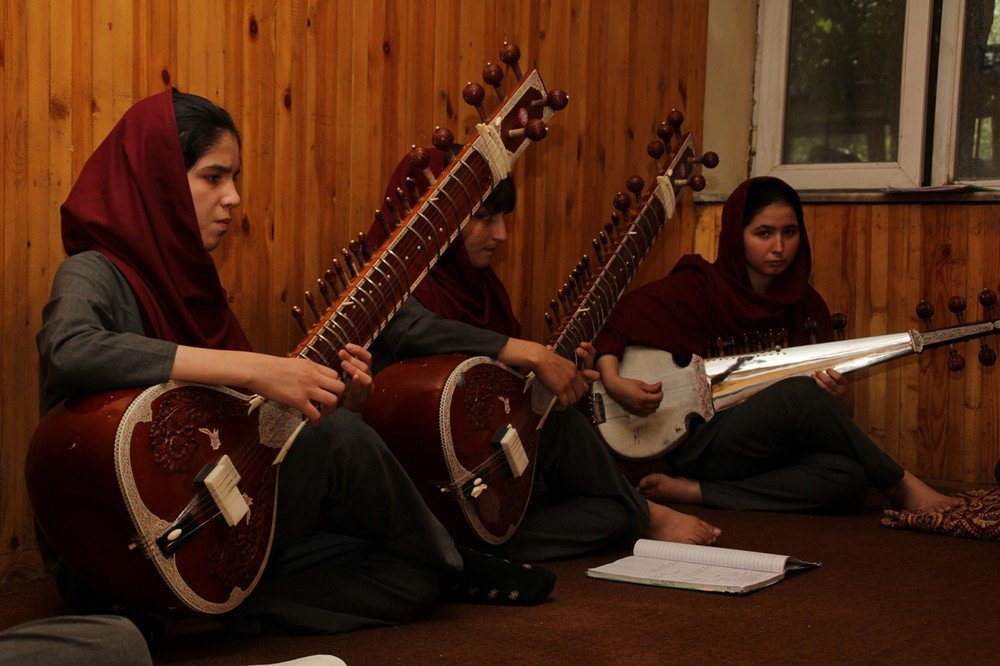
    More than 100 music students and teachers fled Afghanistan on Sunday from Kabul, fearing a crackdown on music by Taliban, New York Times reported.

    The musicians were affiliated with the Afghanistan National Institute of Music that became a target of the Taliban in part for its efforts to promote the education of girls. Ahmad Naser Sarmast, who opened the school in 2010, said that it’s a big step and a huge achievement that Afghan musicians have been rescued from the cruelty of Taliban. He now lives in Australia.

    Sarmast said that the group comprises of both women and girls and they are planning to fly to Portugal with the support of the government there.

    Supporters of the school, global network of artists, philanthropists, politicians, and educators, plan to continue to work to get the remaining musicians out of Afghanistan.

    “The mission is not complete,” said Sarmast. “It just began,” he added.

    Since August when the Taliban consolidated their control of the country, a large number of Afghan musicians have fled the country.

  • #DoNotTouchMyClothes: Afghan women reject Taliban’s dress code for women

    #DoNotTouchMyClothes: Afghan women reject Taliban’s dress code for women

    Afghan women have started an online campaign using the hashtag #DoNotTouchMyClothes to challenge the Taliban’s conservative female clothing rules. Many Afghan women shared pictures of their colourful traditional dresses.

    Dr Bahar Jalali, a former history professor at the American University in Afghanistan, used hashtags #DoNotTouchMyClothes and #AfghanistanCulture to reclaim Afghan women’s traditional clothes.

    While posting a picture of herself on Twitter in a green Afghan dress, she stated: “This is Afghan culture. I am wearing a traditional Afghan dress.”

    Referring to the women who wore long, fully veiled black gowns, covering their faces and hands at pro-Taliban rally, she tweeted: “No woman has ever dressed like this in the history of Afghanistan. This is utterly foreign and alien to Afghan culture. I posted my pic in the traditional Afghan dress to inform, educate, and dispel the misinformation that is being propagated by the Taliban.”

    After that, women across Afghanistan started posting pictures of themselves.

    This campaign was also in reaction to a video in which many women holding a pro-Taliban rally in the capital were seen saying that Afghan women wearing make-up and in modern clothes do not represent the Muslim Afghan women and we don’t want women’s rights that are foreign, reports BBC.

    Afghanistan’s Higher Education Minister Abdul Baqi Haqqani said that universities will be segregated and veils made mandatory for all female students. Earlier this month, the Taliban announced an all-male interim government.

  • Journalists question absence of women from Taliban’s ‘all male interim cabinet’

    Taliban announced the formation of its interim government on Tuesday. There was not even one woman among the 33 members.

    In their first press conference after the takeover of Kabul, spokesperson Zabihullah Mujahid had said the group would honour women and assured that it was ready to provide them with the opportunity to be “present in different government (structures) according to Islamic law and in accordance with our cultural values”, reports Dawn.

    In late August, the group had also said that they wanted an inclusive government (inclusion of other Afghan parties and groups) in the country.

    Later, International and Pakistani journalists started questioning the absence of women, with most not expressing any surprise.

    The acting body is stacked with veterans of Taliban’s hardline rule from the 1990s and the 20-year battle against the US.

    Sirajuddin Haqqani, who is on the FBI’s most-wanted list with a reward of up to $10 million, has been appointed to the key post of interior minister.

    The country will be led by Mohammad Hasan Akhund who is on a UN sanctions list and was previously the foreign minister and then deputy prime minister during the Taliban’s last stint in power from 1996-2001.