Tag: Women journalists

  • Women’s Day: Palestinian Journalists that we need to know about

    Women’s Day: Palestinian Journalists that we need to know about

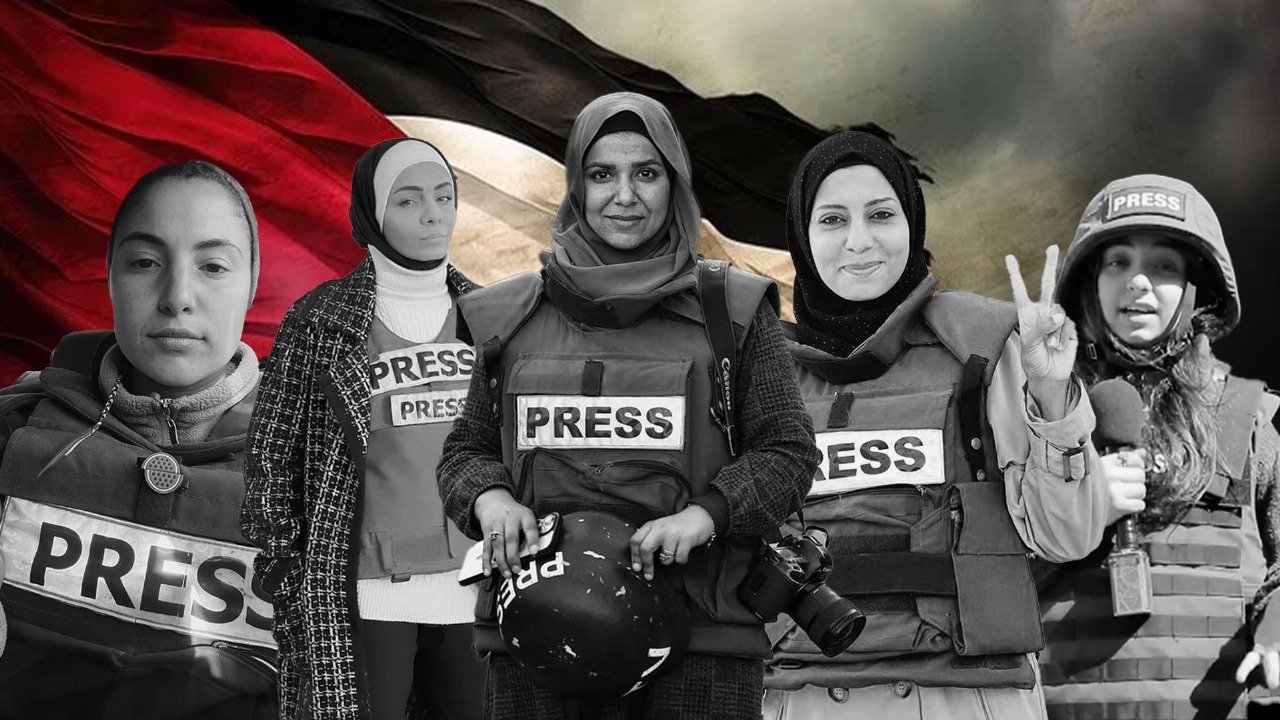
    Palestinian women in general and journalists, in particular, have set the bar with their resilience against what is now largely perceived as the most well-documented genocide of this century.

    This Women’s Day, the world paid tribute to their untiring efforts, yet it is important to mention here that it is not enough since the besieged strip has been wreaked for more than six months now.

    Palestinian journalists observed in real time the tragedy that women and children are experiencing due to the devastating war since October 7 last year.
    At least 63 women in Gaza are killed daily as a result of the Israeli war, with the majority being mothers, The UN Relief and Works Agency for Palestinian Refugees (UNRWA) reported on Friday.

    “On International Women’s Day, the women in Gaza continue to endure the consequences of this brutal war,” the agency shared. “At least 9,000 women have been killed, and many more are under the rubble,” the statement added.

    Hind Khoudary

    Hind Khoudary is one such face the world is now fully familiar with because of her on-ground reporting and the compassion she has shown over time. She was paid tribute to by her fellow journalist Ali Jadallah in an Instagram post where he praised her for her commitment to her profession and towards Gaza.

    However, he added, “As the ‘International Women’s Day’ is celebrated around the world on March 8th, Palestinian women start to work with the first hours of the day to provide for their families despite the difficulties experienced amid Israeli attacks.”

    Hind, 28-years-old, has been working in the media since 2017. In an interview with Anadolu, she pointed out that the current situation in the Gaza Strip affects all Palestinian women regardless of their professions.

    “While the world celebrates Women’s Day, Palestinian women are being displaced from their homes,” she said. “I am not just a journalist covering the war. Rather, I am a displaced person. I left my family and my husband and chose, despite the circumstances, to remain in Gaza and cover the war,” she added further.

    In one of her posts on Instagram, she shared how she doesn’t have clean clothes to wear anymore and how she struggles hard during her periods. “I am also wearing two pants above each other because I don’t have any joggers anymore. The last time I showered was ten days ago. On my period for the second time during the past 30 days and yet I am still standing despite all the cramps,” Hind wrote.

    Noor Hrazeen

    Noor is a TV presenter and a reporter who has been reporting about the ongoing situation in Gaza. She made a huge sacrifice by evacuating her children from Gaza just for them to be able to have food and water but she remained in Gaza to continue reporting about the havoc endured by Palestinians.

    In one of her posts, she wrote: “It’s hard to work in a location, where you know that there is dead bodies still stuck under the rubble. But it’s a story that should be told.”

    Roba Khaled

    Roba is a Palestinian journalist who has shown sheer commitment to her job even when her children were sick or when Israel was bombing buildings in real-time.

    Doaa Albaaz

    Doaa, 27, a photographer, reports the horrors befallen upon Gazans by the Israeli forces. “On International Women’s Day, we want to convey the image of women who are subjected to the most horrific massacres in Gaza,” she said in an interview with Anadolu.

    “During this war, the occupation targeted women, children, and innocent people,” she pointed out. “We lack everything, including privacy. There are no bathrooms, and we struggle to convey the real picture,” Baz asserted.

    Duaa Tuaima

    Duaa Tuaima is a photojournalist whose Instagram is a window that opens into the reality of the suffering in Gaza.

    She mostly documents the women and children of Gaza and how they are struggling to grapple with starvation and siege.

    Bisan Owda

    Bisan is another popular name. A storyteller and filmmaker by profession from northern Gaza, Bisan has been documenting the displacements, bombings, and genocide in Gaza from day one. Her vlogs and videos in collaboration with different platforms are raw and insightful. “Hi, this Is Bisan from Gaza and I am still alive” is the line she says at the beginning of every vlog and it is ironically sad and hopeful at the same time.

    In one of her videos, she featured an Israeli jet and said, “I grew up with this sound, it’s not new…”

    In another, she posted about living in fear since the war started. “For 150 days, I have been afraid of cement ceilings. I do not want to be crushed to death when a missile lands. I sleep in a tent, and I am like hundreds of thousands suffering cold at times, heat at times, and disease and hunger at other times,” she wrote in an Instagram post.

    Sumayya Wushah

    11-year-old war reporter Sumayya Wushah was featured in Al Jazeera’s videos as Gaza’s youngest journalist reporting about the destruction in a confident tone. She is inspired by Shireen Abu Akleh, the Al-Jazeera journalist who was killed by the Israeli army in 2022.

    The list could be longer. These journalists are inspiring women from all around the world for their strength and the cause they stand for.
  • On Women’s Day, the world did not forget Palestinian women

    On Women’s Day, the world did not forget Palestinian women

    Palestinian women took center-stage in internet discourse surrounding Women’s Day on Friday with artwork and rich tributes.

    Al-Jazeera wrote about the five most prominent women from Gaza. From doctors to activists, these are some of the women showing bravery amid Israel’s war on Gaza. These women include Bisan the journalist, Dr. Amira Al-Assouli who saved the life of a child from Israeli snipers by risking her own life, Nadina Abdullatif the child activist from Gaza, Deema Alswiti who caught the world’s attention after posting about her life in Gaza and Sara Alsaqqa, the first woman surgeon in Gaza who safely brought a child in the world while stuck in a room during Israeli bombing.

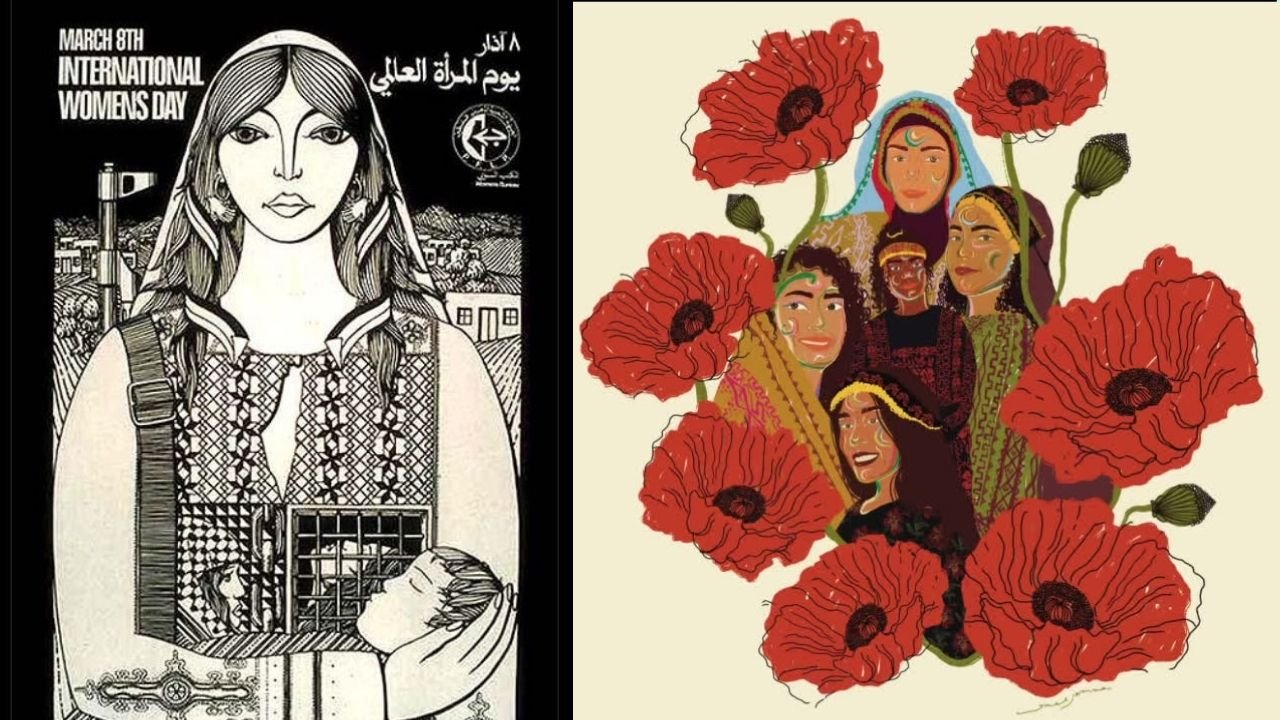
    Instagram digital art-related page Yael Jamina Illustration posted a beautiful art piece in “honour of the heroic women and girls of Palestine”.

    Palestinian-Greek athlete Samia Kallidis posted a heartfelt women’s day message for the women of Gaza and called out the world for the blatant hypocrisy.

    APAN, a Pro-Palestine Account on X, posted detailed profiles of Palestinian activists featuring Hind Khoudary, Ahed Tamimi, and Muna el’Kurd.

    Communist Pastors shared a women’s day poster with the caption, “The Palestinian woman: the guardian of the dream and the shield of the revolution.”

    A netizen shared a poster by award-winning artist Marc Rudin which was published by the Popular Front for the Liberation of Palestine in 1980.

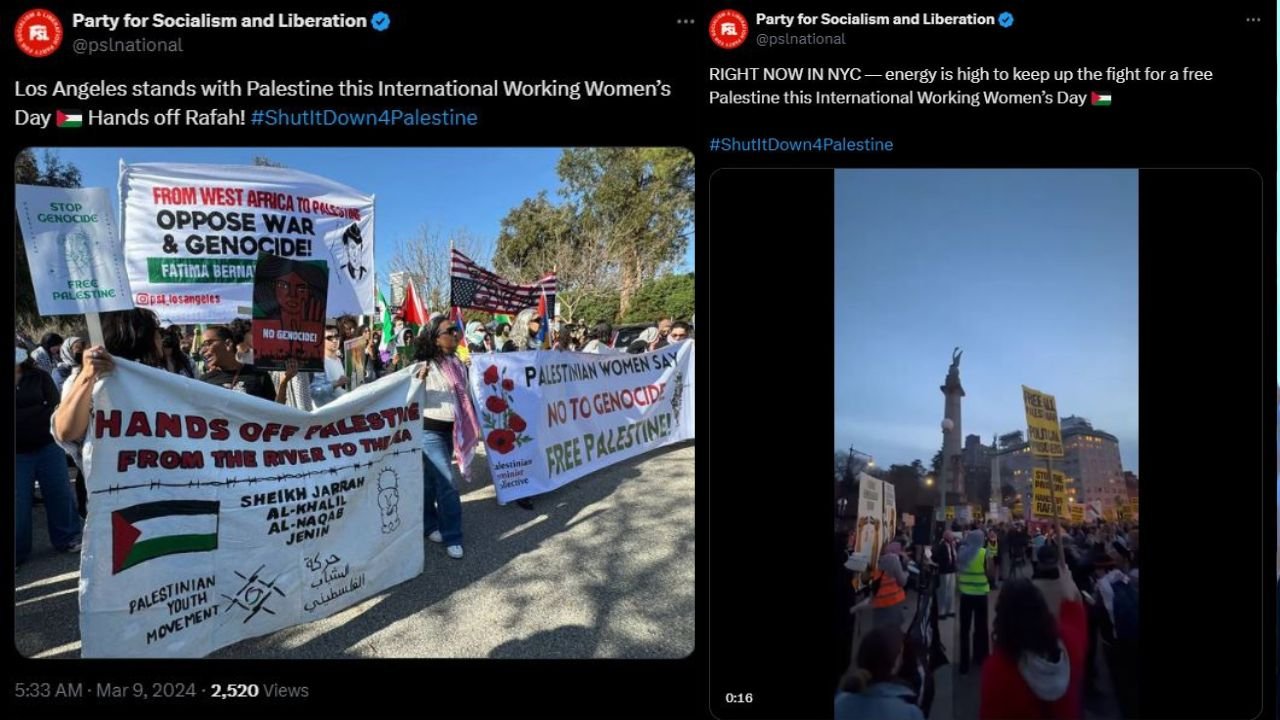
    Along with these beautiful art pieces, women all around the world took to roads for peaceful marches in commemoration of Women’s Day and raised slogans in solidarity with the oppressed women of Gaza.

  • Where are women in the Pakistani news media industry?

    Where are women in the Pakistani news media industry?

    In a groundbreaking study conducted by the Women Journalists Association of Pakistan (WJAP) and Freedom Network, the Pakistani media industry has been thrust into a state of gender emergency due to the stark under-representation of women journalists in newsrooms and the absence of gender-sensitive policies.

    Titled “Unequal Newsrooms: A Gender Audit of Pakistani Media Organizations,” the study was unveiled ahead of International Women’s Day on March 8th.

    The comprehensive gender audit surveyed 15 news organizations in Islamabad, focusing on workforce representation, organizational policies, anti-harassment measures, working conditions, and wages. Among the audited organizations were six TV channels, four newspapers, three news agencies, and two news websites.

    The audit findings reveal that the average share of women journalists at the news outlets is only 11 percent. Majority of news organisations have no woman journalists in a leadership position.

    Only two out of the 15 media houses have an anti-harassment inquiry committee despite a federal law making it mandatory for employers. Most media organizations do not offer paid maternity or paternity leave even though it is now legally required.

    The gender sensitivity assessment of the audit report found that overall around 75 percent of the 15 news outlets were gender blind, meaning their organisational policies and practices do not identify or address specific gender-based issues that can affect men, women, and other gender minorities differently at the workplace.

    The findings also revealed that the majority of the news organisations do not have documented policies regarding employee conduct, salaries, and promotions. At nearly half of the organisations, salaries are paid late, and the wages of female journalists are lower than their male counterparts at a quarter of the organisations.

    As per the study, almost 75 percent of news outlets did not have even one woman journalist in an influential or leadership role at their Islamabad offices. The remaining
    four outlets had at most two women journalists involved in news decision-making.

    In response, the study offers a set of recommendations directed at news organizations, media managers, civil society, journalist unions, and policymakers. These include implementing gender equality strategies in hiring, promotions, and workplace conduct, conducting capacity-building training and awareness on gender for journalists and newsrooms, demanding transparency in contracts and wage structures, and seeking legal recourse against violations of gender protection laws.

  • Women journalists from KP bag international awards

    Women journalists from KP bag international awards

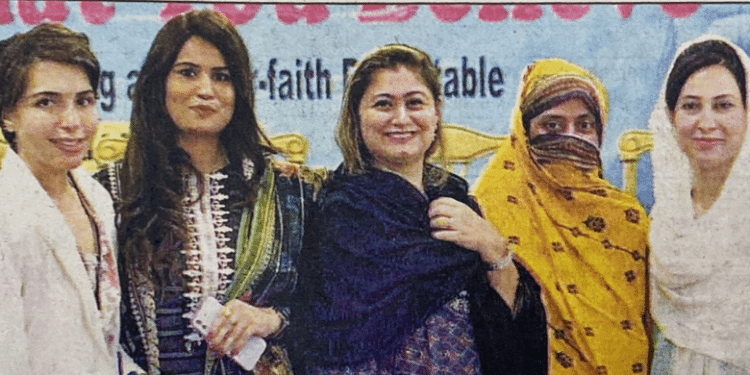
    Five women journalists from Khyber Pakhtunkhwa have won the grand jury and first runner-up prizes at the Women’s Empowerment and Religious Freedom Film Competition in Washington DC, USA.

    For her movie, “She Stood Against Religious Extremism”, Peshawar-based journalist Zeenat Khan won the main jury prize at the festival, with a $3,000 cash reward.

    Khalida Niaz won the first runner-up prize, and won a cash prize of $1,500 for her movie “Peace Promoters”.

    Talking to The Current, Khalida said, “Peace Promoters is a network established by two Muslim sisters who belong to Pesahwar. They have 200 members, which include Hindus, Muslims, Christians and people from other religions too. They go to places of worship of different religions to promote peace and religious harmony. They also try finding commonalities in different religions.”

    Khalid further said that although she has got the second position, this award is very precious to her as it made her feel rewarded for her nine-year long struggle in journalism.

    “This award is an example that women journalists can do reporting on every subject,” she said. “I believe this award will inspire other women of my area to do what they want.”

    “The area from where I come from is really backward. Women were not even allowed to study here for a long time, but things are gradually changing.”

    “When women of our area see someone getting recognition for their work, it gives them hope for their future.”

    “I want to dedicate this award to every woman, women who are working in different fields or women who are sitting at their homes but want to do something in their lives.”

  • Targeting women

    Targeting women

    A large group of Pakistani women in media have released a joint statement about organised trolling, abuse and harassment they face online. The statement says, “Vicious attacks through social media are being directed at women journalists and commentators in Pakistan, making it incredibly difficult for them to carry out their professional duties.”

    The statement further says that online attacks are instigated by government officials and then amplified by a large number of Twitter accounts, which declare their affiliation to the ruling party.

    They asked the government to restrain its members from repeatedly targeting women in the media, send out a clear message to all party members, supporters and followers, to desist from launching these attacks, whether directly or indirectly and, hold all such individuals within the government accountable and take action against them. #AttacksWontSilenceUs, the hashtag used by the women who released the statement, trended at No 1 on Twitter.

    Targeting women in media is easy as there are only about five percent of women who are journalists in Pakistan. They not only face vile abuse related to their gender, but they also face a barrage of allegations that they take ‘lifafa’ or are paid by Opposition parties. These bullying tactics are used to either silence them and/or discredit them. Last year, a report titled ‘Hostile Bytes – a study of online violence against women journalists’ by Media Matters for Democracy (MMfD) said that 95 percent of women journalists feel online violence has an impact on their professional choices, while 77 percent self-censor as a way to counter online violence. In the recent statement by women media practitioners, self-censorship was identified as a problem as well as hacking attempts of their social media accounts. The mental toll it must take on those who are at the receiving end of this constant abuse is another factor that leads to self-censorship.

    Targeting women is a worldwide phenomenon. In neighbouring India, the trend is quite similar. Amnesty International published a report earlier this year, which said that women politicians in India face a shocking scale of abuse on Twitter. “Women are targeted with abuse online not just for their opinions – but also for various identities, such as gender, religion, caste, and marital status.” It has also been seen how women journalists who do not toe the official government line in India are viciously trolled by the ‘Modi Bhakts’ on social media platforms, especially Twitter.

    The National Assembly’s Human Rights Committee has invited women media practitioners who released the statement to come and highlight their issues in a meeting on Tuesday. Federal Minister for Human Rights Shireen Mazari also lent her support to the women media practitioners in her tweets. It is important that these issues are raised at the right platforms so that Pakistani online spaces can be safe for women from all spheres of life. A civil discourse is the need of the hour instead of online abuse. We hope that those who are behind such campaigns can actually get past their political differences and ensure that online spaces are used for meaningful discourse instead of bullying.

  • ‘#AttacksWontSilenceUs’ trends at No 1 after women journalists release statement on online harassment

    ‘#AttacksWontSilenceUs’ trends at No 1 after women journalists release statement on online harassment

    Pakistani women journalists released a joint statement on attacks on women in media in Pakistan, which says that vicious attacks through social media are being directed at women journalists and commentators in Pakistan, making it incredibly difficult for them to carry out their professional duties.

    The statement was signed by journalists including Asma Shirazi, Nasim Zehra, Gharidah Farooqi, Amber Shamsi, Benazir Shah, Mehmal Sarfraz, Zebunnisa Burki, Alia Chughtai, Ayesha Bakhsh, Munizae Jahangir, Ramsha Jahangir, Alina Farooqi, Reem Khurshid, Najia Ashar and many more.

    “The target of these attacks are women with differing viewpoints and those whose reports have been critical of the Pakistan Tehreek-e-Insaf’s government, and more specifically its handling of the coronavirus pandemic. The online attacks are instigated by government officials and then amplified by a large number of Twitter accounts, which declare their affiliation to the ruling party. In what is certainly a well-defined and coordinated campaign, personal details of women journalists and analysts have been made public. To further discredit, frighten and intimidate us, we are referred to as peddlers of ‘fake news’, ‘enemy of the people’ and accused of taking bribes (often termed as ‘paid’ journalists or lifafas). In some instances, our pictures and videos have also been morphed.”

    The statement further says that women in the media are not only targeted for their work, but also their gender. “Our social media timelines are then barraged with gender-based slurs, threats of sexual and physical violence. These have the potential to incite violence and lead to hate crimes, putting our physical safety at risk. Lately, there have also been attempts to hack into the social media accounts of reporters and analysts, as well as limit our access to information. In some cases, journalists have been locked out of their social media accounts as a result of hacking attempts.”

    The statement said that women in the media, especially those on social media platforms, are finding it increasingly difficult to remain on these platforms and engage freely. Many now self-censor, refrain from sharing information, giving their opinion or actively engaging online. These sustained attacks undermine public trust in journalism and go against the basic tenets of democracy. It is a public right to access accurate and reliable information, especially during a public health emergency.

    “We are being prevented from exercising our right to free speech and participate in public discourse. When we self-censor, others are prevented from receiving information to form their views, which is a violation of their rights under Article 19-A. When attacks and threats are made against us, we do not enjoy the protection of the law as guaranteed under Article 4, and this is the direct result of the actions of those who hold positions in government and are affiliated with the PTI.”

    Women journalists have asked Human Rights Minister Shireen Mazari to fulfil her promise to take notice of threats against journalists and to address the climate of abuse, bullying, fear and censorship.

    Their demands from the government include:

    1) Immediately restrain its members from repeatedly targeting women in the media

    2) Send out a clear message to all party members, supporters and followers, to desist from launching these attacks, whether directly or indirectly

    3) Hold all such individuals within the government accountable and take action against them

    They also called upon the Standing Committees on Human Rights of the upper and lower house of parliament to take notice and hold the government accountable by ensuring they acknowledge, apologise and list the actions they will now take to put an end to such a threatening environment.

    It wasn’t later that the demands became the number one trend on Twitter in Pakistan, and PPP chief Bilawal Bhutto-Zardari tweeted that he has taken notice of threats to women journalists as chair of the NA Human Rights Committee and would like to invite all the signatories to brief the committee.

    As per the latest updates, the human rights minister has reacted to the trend, saying attacking women journalists for doing their job is disgusting.

    In a subsequent tweet, Mazari said she had once again spoken to the information minister and stressed the need for Journalist Protection Bill.