Tag: women rights

  • Lady health workers standing up for their rights

    Lady health workers standing up for their rights

    “Lady Health Workers (LHWs) should not be asked to do security duty during elections,” said Bushra Arain, Founder and Chairperson of the All Lady Health Workers’ Programme Union (ALPU).

    Acknowledging that other government workers are called in for duty, Bushra Arain pointed out that they are given easier tasks and are trained before the elections. “We are asked to do difficult duties and there is no security or training for LHWs,” she observed.

    As elections are near, Bushra Arain is worried that LHWs will be again asked to work during elections without protection or training.

    “LHWs are already soft targets, and elections in Pakistan are not safe, we worry for our safety,” emphasised Bushra.

    Rubina Ghaffar is an LHW in Karachi, and she was called on election duty in 2018.

    “Elections are near, and many of us are afraid that we will be put on security duty again,” said Rubina, “Last time we were tasked to do two things: count votes and provide security to the polling staff. We were not trained how to do this nor given any protective gear.”

    Rubina continued, “On the morning of election day, a group of us were driven to the polling station early in the morning. Our duty began at 6 am and ended only when we protested and demanded that we be allowed to go home. It was very late in the night”, Rubina said. “We were brought to the polling station in police vehicles but had to go home on our own late at night.”

    Rubina further said, “There was no security at the polling stations and although we were paid Rs4500 as compensation for the duty, it was not enough considering LHWs are already soft targets as we have seen. We were giving the voter list to tally with voters’ ID cards and tally the numbers.”

    She added, “Afterwards we counted the votes, this was checked by the relevant people. We not allowed to leave and were asked to keep sitting despite asking to leave. We were hungry and thirsty; we had not been provided anything throughout the day although the political workers were provided with lunch and tea. We couldn’t even order food as we were not allowed to step out of the polling stations. It was only after we protested, we were allowed to go home. It was quite late, and we had to travel back in small groups.”

    People living in urban areas are probably not interested in the lives and work of LHWs. They may not be disrespectful or disregard LHWs but since most of them don’t have any real interaction with them and may only meet them during a polio campaign, these women remain invisible and faceless to most of the urban population.

    LHWs don’t play an important role for urban dwellers their role is quite significant for slum dwellers in many cities, as well as rural areas where a large section of the population especially women rely on the basic health services LHWs provide. Many of these people have never received proper medical service and LHWs are their link to medicines and vaccinations.

    Former prime minister Benazir Bhutto launched the Lady Health Workers Programme in 1994 and at the end of the programme, LHWs were merged into the health sector. This was the logical step so that these trained community health workers could enhance health services to marginalised communities. However, instead of being beneficial for the LHWs, it only added to their problems.

    “When the LHW programme ended, LHWs were absorbed by the health department. This didn’t help to improve our status. Like other employees of this department, we were government servants but unlike them, we have no benefits like promotions, pensions, or increments. The main reason for this is that we don’t have a proper service structure under which we would be given these rights and benefits,” said Bushra.

    She added, “We are sent to all kinds of “special duties” including election and census duties, but we are not given any training or protection when we are doing security during elections. We worked throughout the pandemic without any protective gear or hand sanitisers. LHWs are vulnerable and we have lost many members to targeted terrorism., it is not fair to send us for election duty without proper training or protective gear.”

    Bushra further said she understands LHWs will be sent on special duties like other government employees, “Why aren’t we given benefits like other members of our department? Why isn’t our service structure made despite the Supreme Court’s orders in 2012? Why are we being deprived of our rights like increments, promotions, and pensions despite the court’s order? Many LHWs have retired without receiving benefits. And when we protest, we are beaten.”

    Elaborating on this, Maqsood Ahmed, trade unionist and trainer, said, “LHWs work in the most deplorable conditions. They do the work of doctors, nurses, counsellors, and community & social workers for marginalised communities. The LHWs do more than they should – this exploitation is only because their service structure has not been enforced.”

    He added, “In March 2013, the Supreme Court ordered that the service structure be made for LHWs, and they be regularised. And after the 18th Amendment, the devolution of 1,56,000 LHWs including supervisors, drivers, and accountants should have been done by the provinces but this has not been done till date.”

    “The Civil Servants Act governs government and public services. Different rules help to determine the number of leaves, pensions, promotions, and other benefits to the employee. Depriving LHWs of their service structure is in contravention of the Apex Court’s orders. Over time more than two to three thousand LHWs have retired increasing the workload. More LHWs should be hired as the population is increasing but this cannot be done until the service structure is made.”

    “If Bushra Arain and ALPU members don’t speak up for their rights no one else will help them,” said Maqsood Ahmed.

    Bushra added to this, “We will continue to speak up for our rights because no one is willing to give them to us despite the court’s order. Our union will keep fighting.”
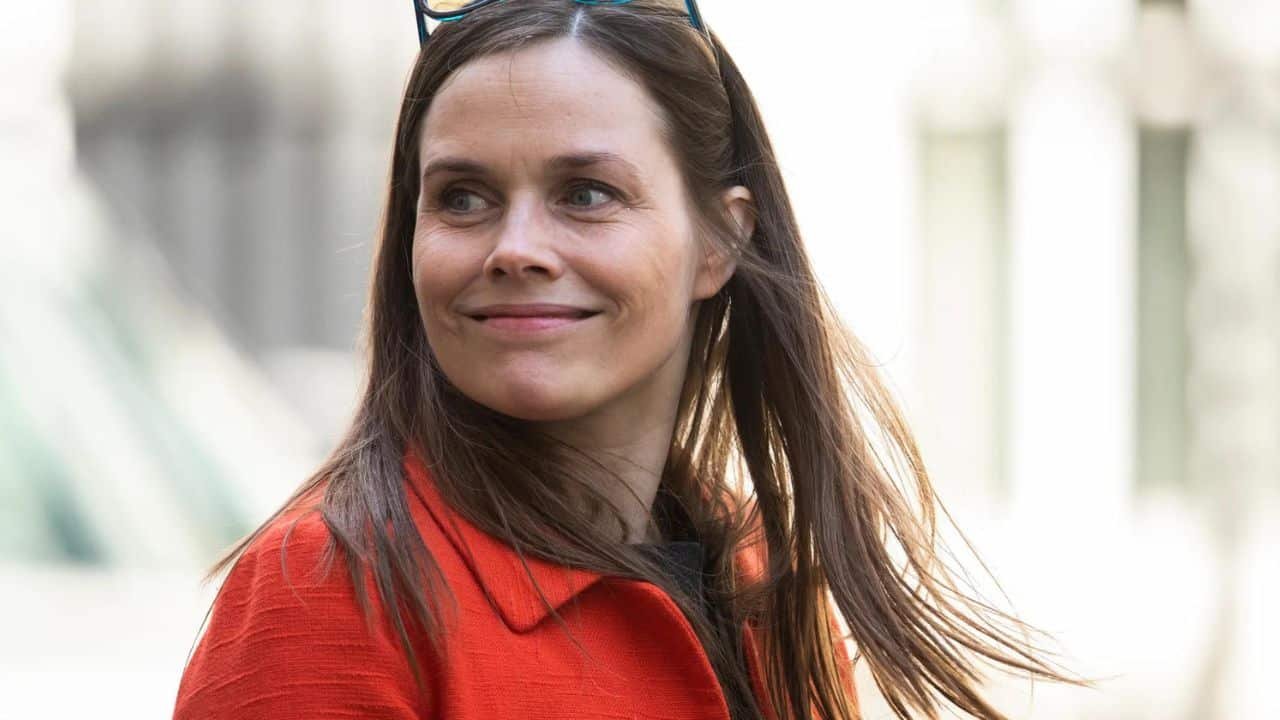
  • Iceland’s Prime Minister strikes over gender pay gap

    Iceland’s Prime Minister strikes over gender pay gap

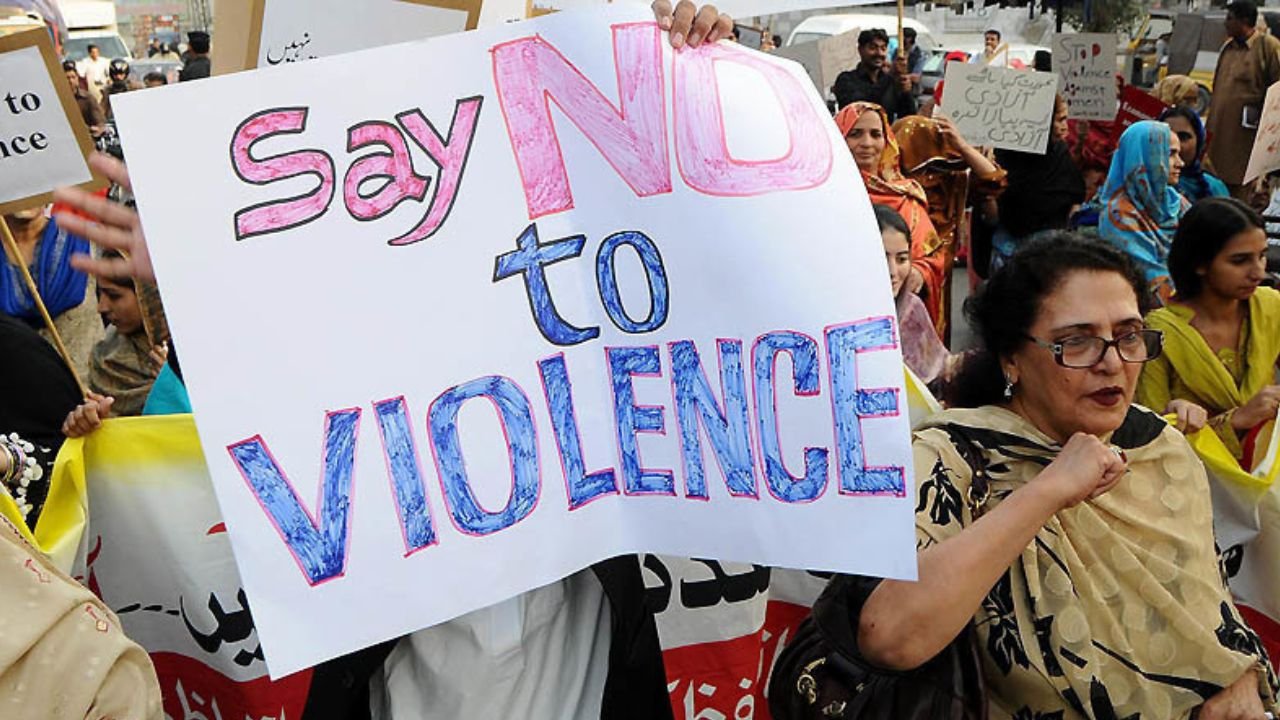
    Tens of thousands of women in Iceland, including the prime minister, walked off the job on Tuesday to demand equal pay and protest violence against women, organisers said.

    Iceland already tops a World Economic Forum (WEF) ranking for gender equality, but organisers said the country needed to make even more progress and lead by example.

    “We are keenly aware that we have not reached gender equality, and even though the situation may be better than other places, there is no reason to just call it a day,” Steinunn Rognvaldsdottir, one of the organisers of “Kvennafri” (Women’s Day Off), told AFP.

    The protest day has been called six times since 1975, this was only the second time that organisers made it a full-day strike, she added.

    The other times, women walked off the job at a symbolic hour after which they were technically no longer earning a salary compared to male colleagues.

    The average wage gap between men and women was 10.2 percent in 2021, according to Statistics Iceland.

    Around 90 percent of Iceland’s women took part in the first protest in 1975, “which was momentous”, Rognvaldsdottir said.

    Prime Minister Katrin Jakobsdottir was among those striking, her office told AFP.

    “She will not attend to official duties and in that regard today’s scheduled cabinet meeting has been moved to tomorrow,” a spokesman said.

    – ‘A present for mother-in-law’ –

    Tens of thousands of women gathered for a large demonstration in the afternoon at the main square of the capital Reykjavik, and protests were also planned in other towns around the country of 400,000 people.

    In Reykjavik, where 75 percent of city employees are women, 59 daycare centres and preschools were closed and all city services were affected by the strike.

    City employees taking part in the strike will not lose pay, the city said.

    Organisers of the movement said they expected men to take charge of the unpaid work that often falls to women.

    “For this one day, we expect husbands, fathers, brothers and uncles to take on the responsibilities related to family and home, for example: preparing breakfast and lunch boxes, remembering birthdays of relatives, buying a present for your mother-in-law, making a dentist appointment for your child.”

    “We always have to be on guard when it comes to our rights,” Lina Petra Thorarinsdottir, 45, told AFP.

    “In Iceland we are proud of what we have accomplished and I am thankful for the women that came before us,” said Thorarinsdottir, head of tourism at marketing group Business Iceland.

    But she said would continue to protest until women enjoyed “equal rights in full”.

    The strikers also wanted their protest to raise awareness of gender-based violence.

    “We still see that up to 40 percent of women have experienced some form of violence or will experience some form of violence in their lifetime,” Thorarinsdottir said.

    “The strike is for both equality when it comes to paid and unpaid work, it also has to do with violence against women and non-binary people,” she said.

    Fjola Helgadottir, a 41-year-old nurse, was unable to take part in Tuesday’s strike action.

    “I would have liked to participate in today’s protest but because we work in the children’s emergency room, we have to provide that service,” she told AFP.

    “The cause is extremely important.”

  • Iran sentences two women journalists for covering Mahsa Amini’s protests

    Iran sentences two women journalists for covering Mahsa Amini’s protests

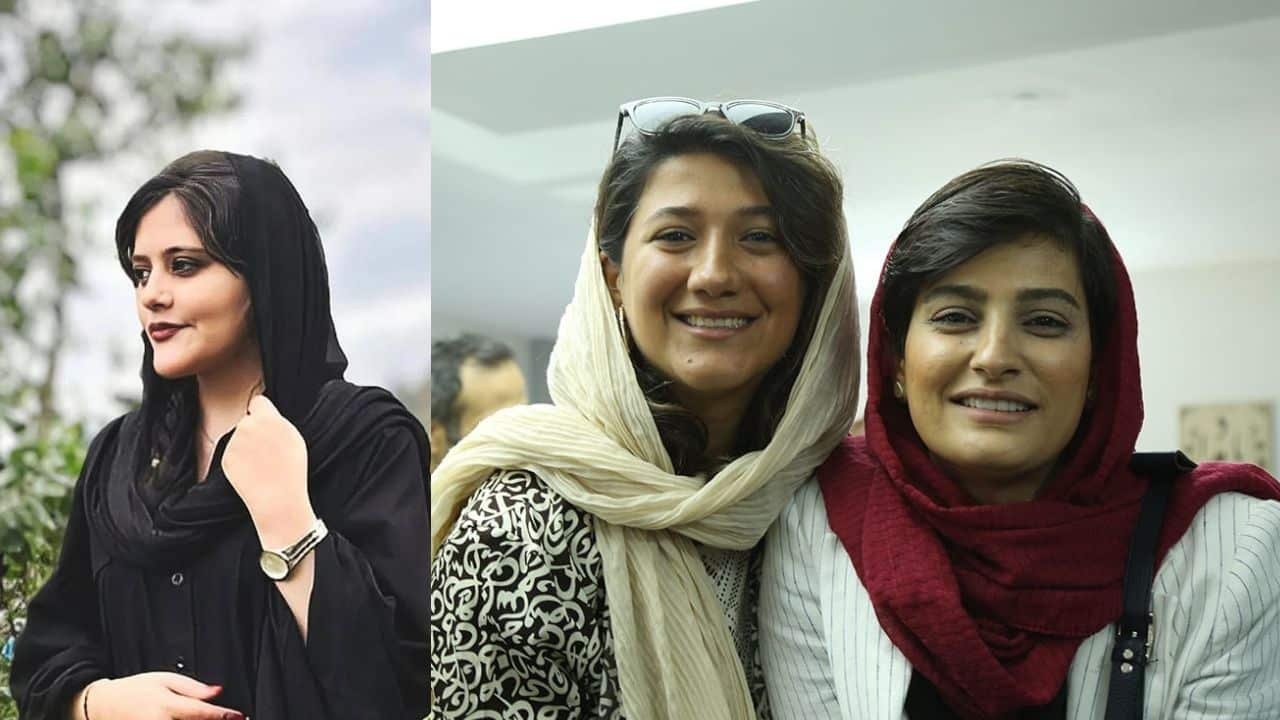
    Two female journalists in Iran have been sentenced to a long period of imprisonment on national security charges after they covered Mahsa Amini protests.

    In September 2022, 22-year-old Mahsa Amini was taken into custody by Iran’s morality police for violating ‘Islamic dress code’ and refusing to wear a hijab. She died in police custody. Huge protests then burst out across the country.

    Days after the protests, Niloofar Hamedi and Elaheh Mohammadi were arrested while their trials started in May.

    Both were reporting for reformist newspapers.

    Hamedi had posted an image on social media of Amini’s parents holding each other and crying at the hospital where she died, while Mohammadi reported on her funeral from Amini’s hometown.

    According to the official news website of the Iranian judiciary, Hamedi and Mohammadi will serve sentences of 13 years and 12 years in prison, respectively.

    Hamedi’s preliminary sentence is seven years in prison for “cooperating with the hostile government of the United States” whereas Mohammadi has received six years for the same offence.

    They both received an additional five years in prison for “collusion to commit crimes against the country’s security” and a one-year sentence for “propaganda against the establishment of the Islamic Republic of Iran”.

    Hamedi has also been sentenced to a two-year ban on “membership in political parties or groups, being active on social media, or working in media,” reports Al Jazeera.

    “In the cases of both aforementioned individuals, there is proven evidence of links with some entities and individuals linked with the US government, which was done knowingly and in following anti-security policies,” the judiciary website said.

    The sentences, however, are subjected to appeal and thus, can be reduced.

  • Husband kills wife for demanding divorce

    Husband kills wife for demanding divorce

    A man shot and killed his wife at his in-law’s house in Lahore after she asked for a divorce. Closed-circuit cameras recorded him opening fire and killing the woman.

    The incident took place in the area of Hanjarwal. Nasreen, who had been upset with her husband, Yusuf, and was staying at her parent’s house, had asked for a divorce a few days ago. The husband, in response, had refused.
    He then went to his in-laws house from Faisalabad, called his wife outside and then shot her dead.
    Relatives reveal that Nasreen was a mother of three children.

    Police have registered a case and started an investigation.

    SP Investigation Aqeela Naqvi says that the suspect is absconding since the incident but he will be arrested soon.

  • Claudia Goldin wins Nobel economics prize for work on women’s pay

    Claudia Goldin wins Nobel economics prize for work on women’s pay

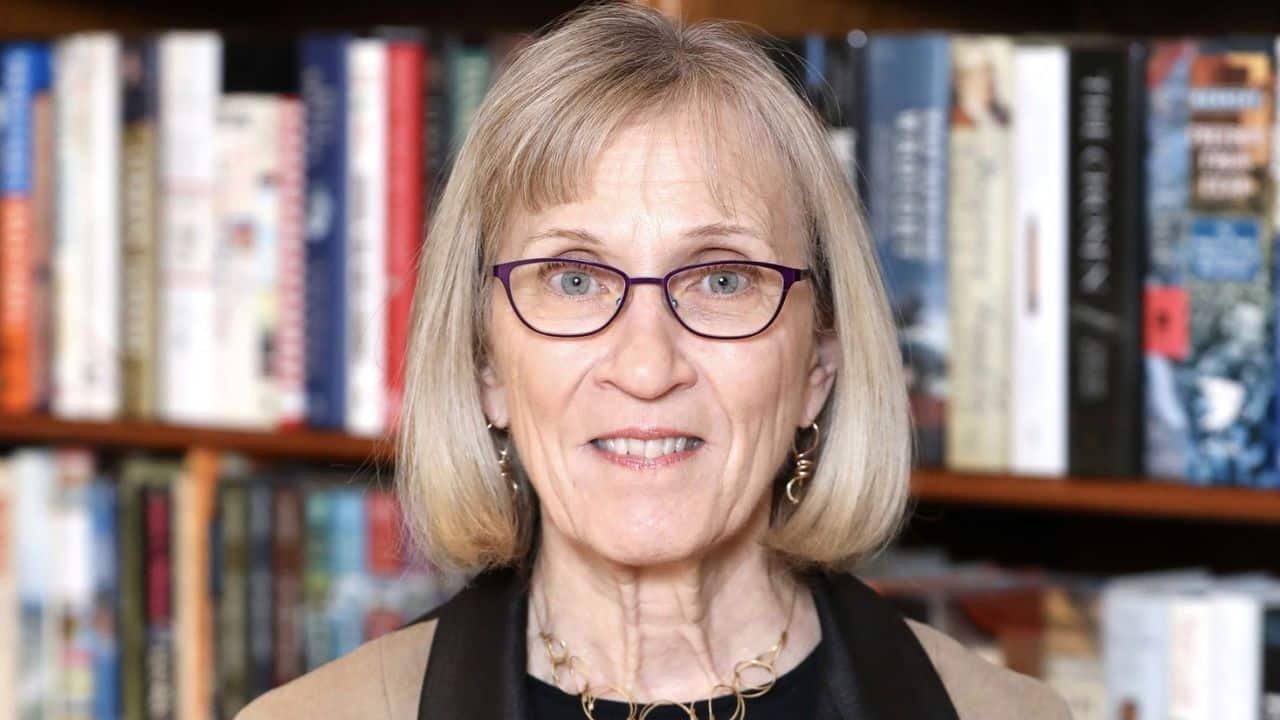
    An economic historian and Harvard professor, Claudia Goldin, has been awarded with the Nobel Prize in economics for her work examining the gender pay gap.

    Goldin’s unprecedented research highlights the fact that women, despite their higher academic qualifications, are paid less than men; and that mostly this difference arises after childbirth.

    “This year’s Laureate in the Economic Sciences, Claudia Goldin, provided the first comprehensive account of women’s earnings and labour market participation through the centuries,” the Royal Swedish Academy of Sciences said on Monday.

    “Her research reveals the causes of change, as well as the main sources of the remaining gender gap.”

    After Elinor Ostrom in 2009 and Esther Duflo in 2019, Goldin is the third woman to be awarded the Nobel Prize in economics — a category with the lowest number of female laureates.

    Goldin’s research examines data tracing 200 years of women’s participation in the workforce in the United States.

    As per her research, a woman’s role in the job market and her pay are, in part, decided by individual decisions, including educational choices, as well as broad social and economic changes.

    The prize committee highlights that while much of the earnings gap historically could be explained by differences in education and occupational choices, Goldin “has shown that the bulk of this earnings difference is now between men and women in the same occupation, and that it largely arises with the birth of the first child”.

  • Jailed Iranian activist Narges Mohammadi wins Nobel Prize

    Jailed Iranian activist Narges Mohammadi wins Nobel Prize

    A jailed Iranian women’s rights advocate, Narges Mohammadi, is the winner of the 2023 Nobel Peace Prize for her fight against the oppression of women and advocacy for social reform.

    She was awarded the prestigious prize on Friday, while she is till behind bars, for her efforts to promote human rights and freedom for all”, as stated by the Norwegian Nobel Committee.

    “Her brave struggle has come with tremendous personal costs. Altogether, the regime has arrested her 13 times, convicted her five times, and sentenced her to a total of 31 years in prison and 154 lashes,” head of the Norwegian Nobel Committee, Berit Reiss-Andersen, said in Oslo during the announcement.

    51-year-old Mohammadi is an Iranian human rights activist who has played a leading role in the campaign for women’s rights and the abolition of the death penalty in the country.

    She is currently serving a number of sentences in Tehran’s Evin prison, adding up to about 12 years of jail, including charges of spreading anti-state propaganda.

    Mohammadi is the deputy head of the Defenders of Human Rights Center, a non-governmental organisation led by Shirin Ebadi, the 2003 Nobel Peace Prize laureate.

    The New York Times approached her after she was named the winner. “I will continue to fight against the relentless discrimination, tyranny and gender-based oppression by the oppressive religious government until the liberation of women,” she stated.

    “I also hope this recognition makes Iranians protesting for change stronger and more organised. Victory is near.”
    On the contrary, Tehran has accused the Nobel committee of politicising the issue of human rights.

    “The action of the Nobel Peace Committee is political move in line with the interventionist and anti-Iranian policies of some European governments,” Nasser Kanaani, a spokesperson for Iran’s Foreign Ministry, said.

    “The Nobel Peace committee has awarded a prize to a person convicted of repeated law violations and criminal acts, and we condemn this as biased and politically motivated,” he added in a statement carried by state media.

  • Noor Mukadam and Sara Inam’s fathers demand speedy trial

    Noor Mukadam and Sara Inam’s fathers demand speedy trial

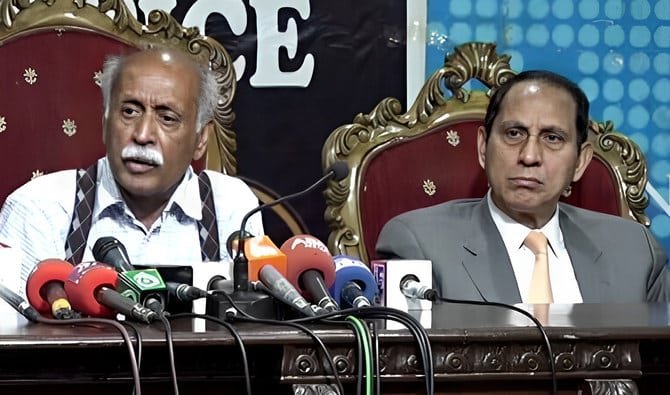
    The fathers of Noor Mukadam and Sara Inam, victims of two high-profile murders, held a news conference in Islamabad on Sunday, demanding that legal proceedings in their daughters’ cases be sped up.

    Sunday also marked a year since 37-year-old economist Sara Inam was found dead after allegedly being killed by her husband, Shahnawaz Amir.

    Both the grieving fathers also stressed on the safety and rights of women in Pakistan.

    Sara Inam’s father, Engineer Inam Rahim, said, “We were hoping this would take about six months since these were open-and-shut cases.”

    He also urged the media to continue highlighting the cases in newspapers and on television channels.

    “We request you to continue to highlight these cases since that will raise our hopes of getting justice,” he said, reminding the press that Sara was victimised by her husband who only wanted her wealth and killed her.

    Similarly, Noor Mukadam’s father, former diplomat Shaukat Ali Mukadam, also urged the authorities to endure prompt action.

    Noor Mukadam was murdered in July 2021 by her friend Zahir Jaffer, who was later sentenced to death. He filed an appeal with the Supreme Court in April this year and the case has remained pending since then.

    “The courts will lose their credibility if such cases continue to remain pending in them,” Noor’s father said.

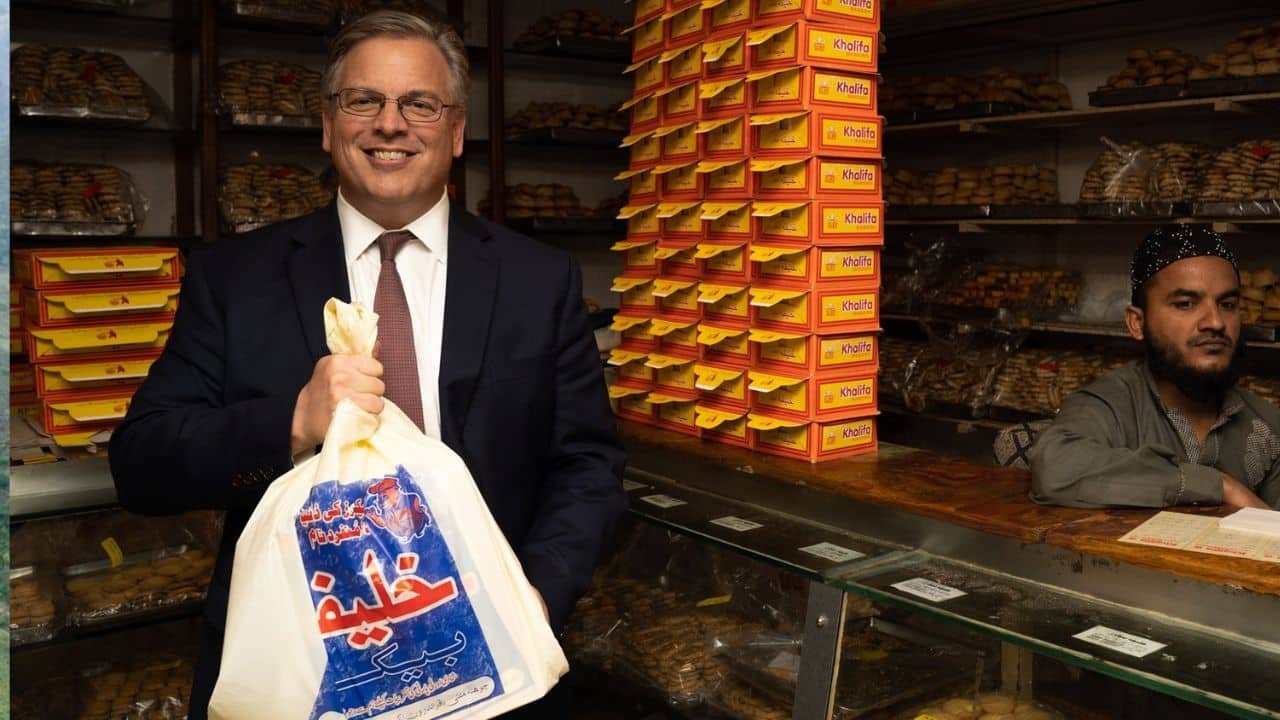
  • Khalifa nan-khatai lover, US Ambassador Donald Blome wants more women in the Pakistani workforce

    Khalifa nan-khatai lover, US Ambassador Donald Blome wants more women in the Pakistani workforce

    US Ambassador to Pakistan, Donald Blome, visited Lahore from September 4-6 and The Current got the opportunity to sit down with him and have a little chat.

    And yes, you read it correctly. The ambassador is a lover of Khalifa nan-khatai. He told us that he discovered the biscuits last year when he came to Lahore. Later, during his February trip, he even stopped by Khalifa Bakers in the Walled City.

    Visit to Lahore
    Over the course of his latest tour, Ambassador Blome visited PepsiCo’s FritoLay Snack plant and NetSol Technologies Ltd. While the focus of the ambassador’s trip was to foster the economic ties between the United States (US) and Pakistan, special emphasis was placed upon the importance of human rights and inclusive workspaces — particularly in regards to women.

    “It is not just a matter of simply hiring — there are things you have to change, and ensure a welcoming environment for women with different needs and different requirements to excel in the workforce,” he pointed out.

    Playing a leading role in corporate social responsibility, American-based companies have not only created employability in Pakistan, but they endeavour to cater to the local communities through initiatives that actively work towards women’s empowerment as well as education, health, disaster relief, and skills development.

    Ambassador Blome cited a USAID programme in partnership with PepsiCo that aims its attention on women farmers of Pakistan who are working in one of the more difficult areas, toiling under a strenuous work environment.

    Cultural Barriers
    Taking into consideration the socio-domestic constraints that often restrict women from growing in their careers, Ambassador Blome believes that practical initiatives can make workplaces more inviting for women in Pakistan.

    “It is the simple things; like having child care facilities, providing safe transportation — beyond that is developing a culture that ensures that equal chance is given to women to advance within their jobs and careers, and that they are valued in the same way every other employee is valued.”

    He further stated that he hopes American firms like PepsiCo, which has advanced gender parity in managerial roles globally, are exemplary models providing a leadership structure for the local businesses.

    “A lot of things work through to get there. But many Pakistani companies are also trying to head in that direction,” Ambassador Blome acknowledged.

    Success stories
    While a number of US businesses have actively countered gender inequality, Ambassador Blome particularly highlighted the digital sector as a success. He mentioned that not only more women are being employed by IT firms but certain institutes have been accommodating by providing opportunities for flexible work like allowing to work partly at home, partly in office.

    NetSol Technologies, an American software company, is known for being an “equal opportunity employer with the largest concentration of female employees in Lahore”.

    This year, they took an initiative to encourage women back into workspaces — women who are married or left the job after having a baby. This was carried out by creating women-exclusive jobs which catered them through on-office facilities.

    Ambassador Blome, however, also hailed a number of “impressive” Pakistani women-led organisations that are in the lead when it comes to facilitating women.

    “It is a whole constellation of different issues that come together,” he underlined.

    “If companies are able to make that work [i.e. create inclusive workspaces], it would be incredibly effective because it brings unique talents and energy, and it is something badly needed for Pakistan. The participation of women in force is too low here and it hurts the country in many ways — to forgo this incredible resource the country has.”

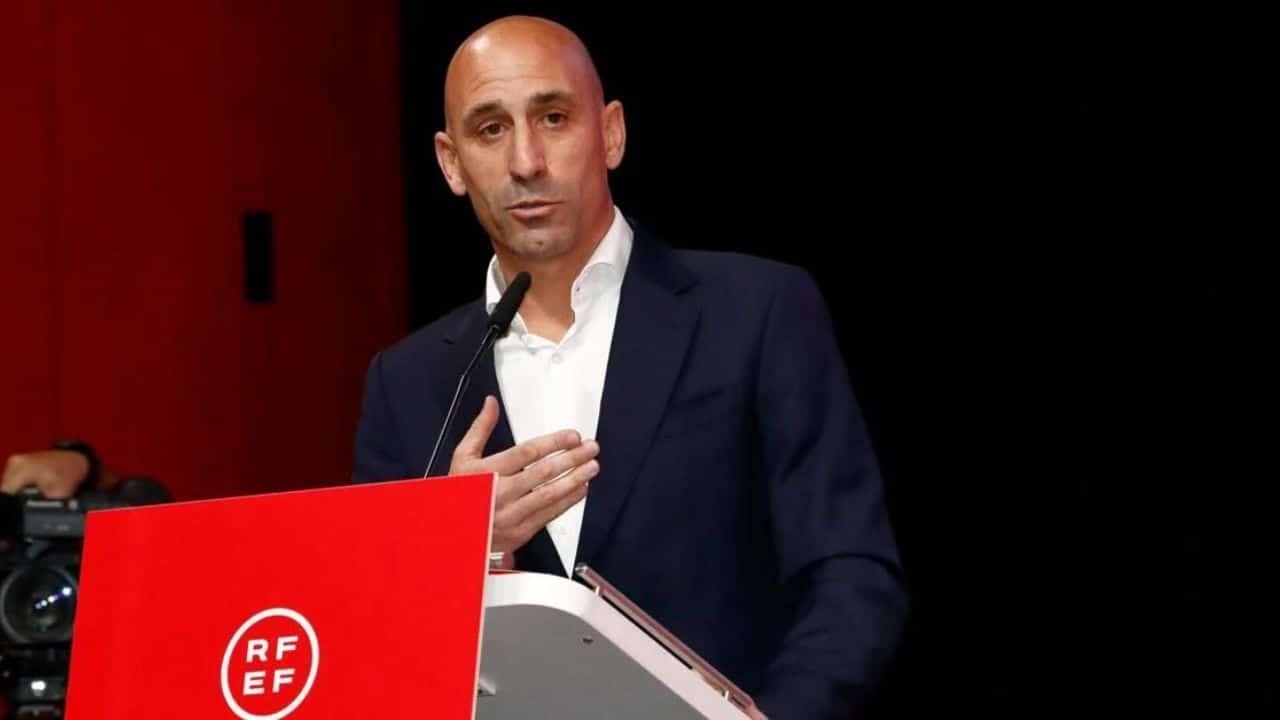
  • FIFA suspends Spain soccer chief Luis Rubiales amid row over kiss with Women’s World Cup winner

    FIFA suspends Spain soccer chief Luis Rubiales amid row over kiss with Women’s World Cup winner

    FIFA has provisionally suspended Luis Rubiales, the president of the Spanish soccer federation, from “all football-related activities” over his controversial kiss with Women’s World Cup winner Jenni Hermoso, as per CNN.

    Rubiales has been refusing to stand down over the incident, which happened at the medal ceremony last Sunday after Spain won the tournament.

    World soccer’s governing body FIFA said Rubiales was initially suspended for 90 days and also said that neither Rubiales nor the Spanish football federation were allowed to contact Hermoso in order to preserve her “fundamental rights.”

    UEFA and the Royal Spanish Football Federation (RFEF) have also been informed of the decision, FIFA said, adding that further information would be provided when disciplinary proceedings had been concluded.

    Spanish soccer boss Luis Rubiales on Friday refused to quit for grabbing star player Jenni Hermoso’s head and kissing her on the lips after Spain’s Women’s World Cup victory, leading 56 national team members to mutiny and the government to denounce his “macho actions”.

    In a joint statement sent via their FUTPRO union, all 23 of the cup-winning squad including Hermoso, as well as 32 other squad members said they would not play internationals while Rubiales remains head of the Royal Spanish Football Federation (RFEF).

    In the same statement, Hermoso denied Rubiales’ allegation that the kiss he gave her at the medal ceremony after Spain beat England 1-0 in the World Cup final in Sydney, Australia, was consensual.

    “I do not tolerate it when my word is put into doubt and less so when words that I have not said are invented,” she wrote.

    At an emergency meeting of the federation called for Friday Rubiales had been widely expected to stand down. But instead he said he refused to quit and complained that “false feminists” were “trying to kill me”.

    He called the kiss a “little peck” that was “spontaneous, mutual, euphoric and consensual”. He also claimed that he asked Hermoso if he could kiss her and that she said “OK”.

    “Is a consensual peck going to take me out of here? I won’t resign. I will fight until the end,” said Rubiales, 46, drawing applause from the predominantly male audience.

    The government, which cannot sack Rubiales, will seek to have him suspended using a legal procedure before a sports tribunal, the head of the state-run sports council CSD, Victor Francos, told reporters.

    “We want all this to be a ‘Me Too’ of Spanish soccer,” Francos said.

    Criticism of Rubiales’ behaviour after Spain’s win has built throughout the week, and acting Labour Minister Yolanda Diaz called his speech on Friday “unacceptable”.

    She wrote on social media: “The government must act and take urgent measures: impunity for macho actions is over. Rubiales cannot continue in office.”

    Acting Equality Minister Irene Montero said the state prosecutor and the CSD should act to protect Hermoso.

    FIFA opened disciplinary procedures against Rubiales on Thursday after Hermoso said in a statement her union was working to defend her interests and that such acts should “never go unpunished”.

    ‘ATTACKING FEMINISM’

    Rubiales’ comments on Friday and the applause he received at the event were widely scorned on social media.

    In a post on X, journalist Javier Gallego Crudo described the meeting as “an assembly where a man, cornered by his own misogynist actions, ends up attacking feminism… blames the woman and is applauded by other men. No better illustration of patriarchy”.

    The government said it had started a proceeding to take Sunday’s incident before a sports tribunal. If it can be proven that the kiss was non-consensual, Rubiales could even be tried under a sexual violence law introduced by the ruling Socialists last year.

    A tribunal would have seven members, three of them women, and Francos said the CSD could suspend Rubiales during the investigation if the tribunal agrees.

    Gender issues have become a prominent topic in Spain in recent years. Tens of thousands of women have taken part in street marches protesting sexual abuse and violence.

    The coalition government has presided over legal reforms including around equal pay, abortion, sex work and transgender rights.

    “This is unacceptable. It´s over. We’re with you, teammate Jenni Hermoso,” fellow player Alexia Putellas said on X after Friday’s federation meeting.

    Some male players also protested.

    Borja Iglesias of Real Betis, who last played for Spain in 2022, said on X he would not put himself forward for selection for the national team “until things change and these kinds of acts don’t remain unpunished”.

    At the event on Sunday, Rubiales was also seen grabbing his crotch in celebration while standing next to Queen Letizia in a box at the stadium, for which he apologised on Friday.

    The international football players union FIFPro said in a statement it had written to UEFA, where Rubiales is vice president, requesting that it start disciplinary proceedings. UEFA declined to comment.

    “I am embarrassed by the shame that it continues to be for Spanish football to have a president of the (RFEF) who continues to cling to office,” FIFPro President David Aganzo said.

    Rubiales met with key federation members shortly before the assembly and told them about his plans not to resign, according to a federation source.

    The only person who objected was Rafael del Amo, president of the national committee for women’s football, who said he would step down from his roles, which also included the vice presidency of the federation.

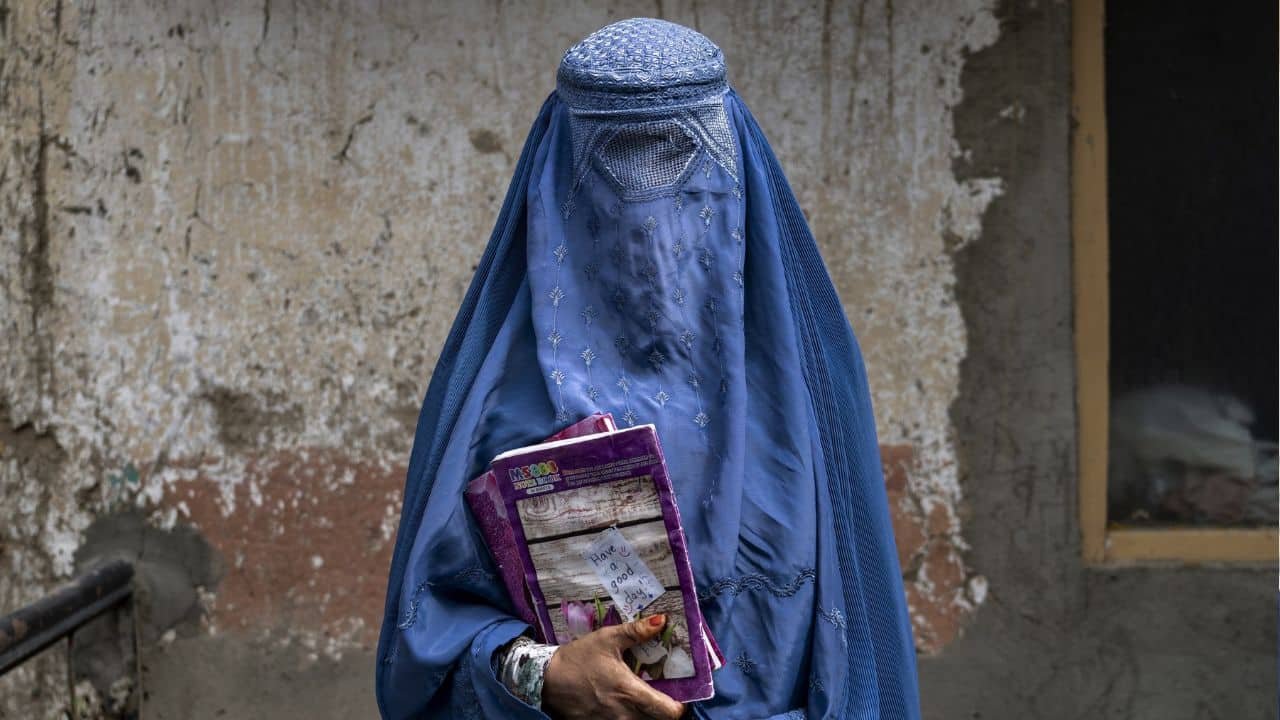
  • Afghan women under Taliban rule: two years later

    Afghan women under Taliban rule: two years later

    15 August 2023 marked two years of the fall of Kabul when the Taliban seized the capital, capturing the government in Afghanistan in 2021.

    While the Afghan government tried to ward off the assault for the longest time, the inevitable took place, leaving many sections of society devastated. Among them were women who knew what the Taliban takeover would mean for their freedom.

    “We are going to allow women to study and work within our framework. Women are going to be very active in our society,”, the Taliban had promised in their first press conference following their takeover. But as many feared, these words never became a reality.

    So, what have the Afghan girls and women endured since 15 August 2021?

    In March 2022, a ban on girls’ secondary education was imposed moments after the education ministry reopened schools for both girls and boys. The ban further barred girls from joining universities.

    Women were denied entry in the job market. This includes exclusion from NGOs as well as the government sector. Ban on beauty salons left women even more helpless. While Afghanistan’s economy has been in shambles, families have been struggling to make ends meet and with women’s exclusion from the job market, especially sole breadwinners like widows or single mothers, are in serious financial crisis. Out of options and desperation, some women have resorted to the profession of nursing and midwifery just to escape the four walls of their house and earn.

    Not only Afghan women cannot leave their house without a male chaperone (a mahram), but it is mandatory for them to wear burqas. They are also not allowed to wear make-up or heels, and are barred from accessing public places such as parks, gyms, marketplace etc.

    Having nothing to do with their lives as a result of numerous socio-political restrictions, young girls are forced into marriage. Others are sold in order to cover finances or compensate for debts. Parents fear for their daughters’ lives as they often know little about the families they are married into or sold to, but they find themselves to be powerless.

    There is a sense of fear and trauma amongst young girls and women which is leading to mental health issues.

    Following the takeover, valiant Afghan women have, nonetheless, taken their fight to the streets and have protested time and again. Resultantly, they have been threatened and even beaten, but two years on, their anger trumps fear and their struggle continues.