Tag: women

  • Court orders ‘rapist’ to wash women’s clothes for six months

    Court orders ‘rapist’ to wash women’s clothes for six months

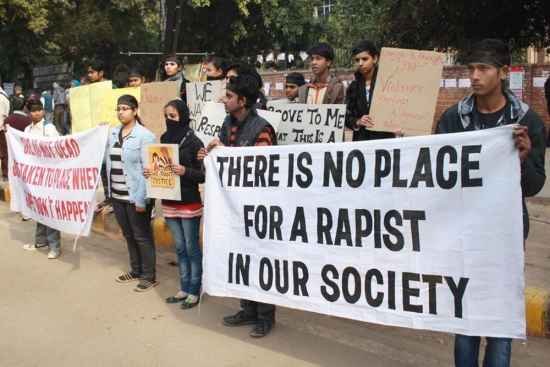
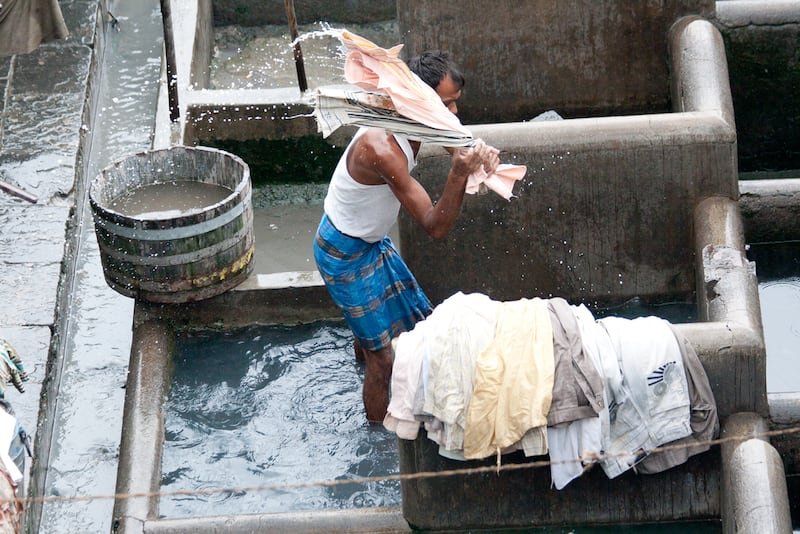
    A man in Bihar, India, accused of attempted rape was granted bail on the condition that he will wash and iron the clothes of all women in his village for six months.

    As per reports, the 20-year-old Lalan Kumar will have to buy detergent and other products to provide six months of free laundry services to about 2,000 women in the village of Majhor, a court said on Wednesday.

    Kumar, who washes clothes for a living, was detained in April on charges including attempted rape, Santosh Kumar Singh, a police officer, said.

    No date has been set for his trial.

    “All the women in the village are happy with the court decision,” Nasima Khatoon, the village head, said.

    “It is historic. It will boost respect for women and help to protect the dignity,” added Khatoon, one of the villagers who will monitor Kumar.

    Women in the village said the order had made a positive effect by making crime against women a subject of discussion in their community.

  • Taliban acknowledge PM Khan’s efforts for peace in Afghanistan

    Taliban acknowledge PM Khan’s efforts for peace in Afghanistan

    Taliban spokesperson and Deputy Minister for Information and Culture Zabiullah Mujahid praised Prime Minister Imran Khan and appreciated his efforts to promote peace in the war-torn country.

    Speaking to Afghan media in Kabul, Mujahid said countries were criticising the Taliban government for human rights violations without recognising it.

    “We think this is a unilateral point of view,” he stressed.

    On the other hand, Taliban expanded their interim cabinet but failed to appoint any women, despite the international outcry that followed their initial presentation of an all-male cabinet.

    The international community had categorically stated that recognition of the Taliban government would not be possible until it gives women and minorities their due rights.

    Zabihullah Mujahid defended the latest additions to the cabinet, saying it included members of ethnic minorities, such as Hazaras, and that women might be added later.

    Mujahid was also asked about the recent restrictions imposed on girls and women, including a decision not to allow girls in grades six to 12 to return to classrooms for the time being.

    He suggested this was a temporary decision, and that “soon it will be announced when they can go to school”. He said plans were being made to allow their return but did not elaborate.

  • UK’s Emma Raducanu wins US Open in historic final

    UK’s Emma Raducanu wins US Open in historic final

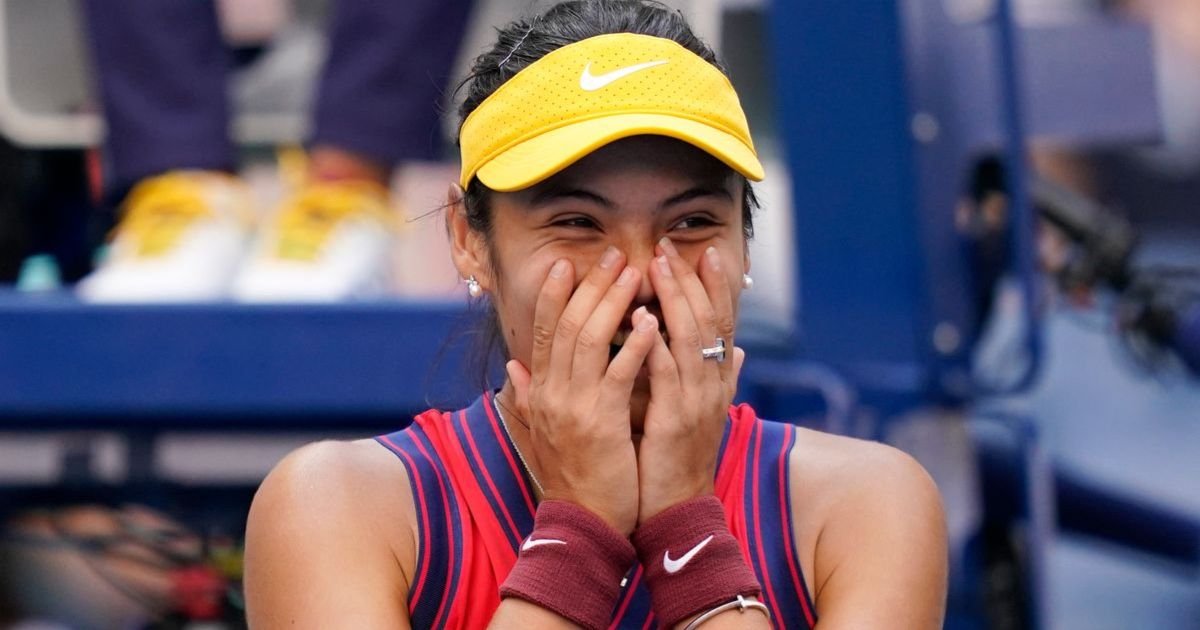
    United Kingdom’s (UK) Emma Raducanu’s extraordinary run at the US Open finished in glorious fashion in New York as the 18-year-old became Britain’s first female singles Grand Slam champion after 44 years.

    According to details, Raducanu, the first qualifier ever to reach a Grand Slam final, once again rose to the occasion, beating the 19-year-old Canadian Leylah Fernandez 6-4, 6-3 with a remarkable display of big hitting and composure. Just three months after making her debut on the main women’s tour, Raducanu became the youngest Grand Slam singles champion since 17-year-old Maria Sharapova won Wimbledon in 2004.

    She is also the first woman ever to win the title in only her second Grand Slam tournament.

    Raducanu had made her Grand Slam debut at Wimbledon, where she became the youngest British woman in the open era to reach the fourth round. As the world No 150, she is the lowest ranked player ever to win the US Open, though Kim Clijsters did not even have a world ranking when she won the title in 2009, having just returned to competition after having a baby. Raducanu will now climb to No 24 in next week’s updated world rankings list.

    Having come through qualifying, she lifted the title by winning nine matches in the space of 17 days and without dropping a set in any of them.

  • Judicial reforms and the question of representation

    What could have been a historic moment in the history of Pakistan was lost to politics of deflection by the Bar and the placement of arbitrary power for the process of judicial appointments in the hands of the Chief Justice(s) and the members of the Judicial Commission of Pakistan (JCP) on September 9, 2021, when the possibility of Judicial Commission of Pakistan (JCP appointing its first-ever female to the apex court in the 74 years since Pakistan’s independence failed to achieve the requisite majority for Justice Ayesha A. Malik’s nomination as a judge of the Supreme Court. As a result, Pakistan to date has had no female representation or voice at the highest forum of justice in the country and remains the only country in the region to hold this unfortunate record.

    Given that the courts invariably deal with matters of public policy and adjudicate on fundamental rights that are to be accessed by the most marginalised groups, communities, and persons, including women and minorities, it is vital for there to be more inclusion, transparency, and representation to promote access to justice and build public confidence and trust in the justice system of the country.

    What transpired on September 9, however, must be viewed in the context of the historical issues surrounding the judicial nominations and appointments process, the rather unhelpful digression into the seniority versus merit, junior versus senior debate, and the overall state of representation of women and minorities in the justice sector. The larger socio-political concerns and overarching considerations of patriarchal structures can also not be divorced from the controversy the system and its stakeholders find themselves in.

    Every few years, the question of judicial appointments goes through a similar cycle of division and deflection and is placed within the larger political context of its time. Prior to the 18th Amendment, the process of judicial nominations was centered around the recommendation of a panel by the Chief Justice to the president who selected a suitable candidate from therein. Even though the president had immense discretion to select a candidate from the panel, the central role, however, remained of the Chief Justice of a given court who alone had the power to recommend the panel up to the president for such appointments. This was further cemented in the Al-Jehad Trust Case 1996 in which the courts held that the recommendations of the Chief Justice would ordinarily be binding on the president, except where the president departed from the recommendations, in which case the reasons for his decision would be justiciable. The executive discretion of the president was, therefore, curtailed to a point where it was rendered practically ineffectual. This was done on the grounds of maintaining the independence of the judiciary from political influence.

    After the 18th Amendment to the Constitution of Pakistan, the process for appointments of the higher judiciary was further amended and appointments via a Judicial Commission plus Parliamentary Committee was envisaged instead. The Commission, it was believed, would have a wider composition and representation of stakeholders from both Bench and Bar, including ex-officio members such as the Attorney General of Pakistan, Federal Minister for Law and Justice, senior judges, former judges, and senior advocate of the Supreme Court nominated by the Pakistan Bar Council to promote greater consensus among the stakeholders within the legal profession.  However, no criteria or principles were formulated to base the nominations on. Instead, Rule 3 of Judicial Commission of Pakistan Rules, 2010, placed the power to initiate nominations for consideration by the JCP in the hands of the Chief Justice of the respective court in what is critiqued to be an absolute discretion devoid of any content and objective standards making the entire exercise an arbitrary and non-transparent exercise of power. Even the deliberations within the JCP and the eventual reasons of decision for accepting or rejecting a given nominee are not disclosed.

    Over the years, this lack of transparency in the process on the whole and arbitrary power to initiate nominations has resulted in increased speculation and tension between the Bench and the Bar, especially within the circles that find themselves underrepresented within the current structure and system.

    The calls for greater democratisation of the process once again became louder and relevant when Justice Muhammad Ali Mazhar, the then judge of the Sindh High Court, was nominated for appointment as a judge of the Supreme Court in July 2021. Being fifth in seniority, the assertions for ‘overlooking’ the senior-most judges, i.e. the then Chief Justice of the Sindh High Court, Justice Ahmed Sheikh, came to the fore by the Sindh Bar. Whilst critiquing the process as arbitrary and calling for its reform, they also persisted in demanding that seniority be applied as an interim measure until an objective criterion was formulated. Implications of ethnic tensions were also raised as was the possibility of judicial engineering for political engineering, which led to a massive and organised campaign of the bar against the JCP. The situation on the ground became more complicated when the Chief Justice of Pakistan put forth the name of a female judge, fourth in seniority from the Lahore High Court, for appointment as a judge of the Supreme Court. It was alleged that her gender was being used to neutralise the sentiment against the appointment of junior judges and to justify the earlier nomination of the then Justice Ali Mazhar of Sindh High Court, which was being resisted.

    Several distinct issues appear to have been conflated, which is what led to one of the most intensive and intellectually vigorous legal debates within the community in years. Several notable scholars, and senior lawyers including Salman Akram Raja, Feisal Naqvi, Salahuddin Ahmed, Hamid Khan, and Justice (R) Nasira Iqbal, engaged with this debate in public and shared their respective and divided opinions on the matter.

    The division appeared to be more in relation to specific strategies and interim solutions that the Bar had proposed re-adopting the seniority principle as opposed to the actual need for reform in the process on which there was largely a consensus. Most stakeholders — even with an alternative point of view — agreed that the arbitrary process needs to be retired in favour of greater transparency but disagreed that the seniority principle is that measure of transparency even in the interim. They based this on the grounds that there was no seniority principle that was being violated, to begin with, because the Constitution under Articles 177 and 193 and the Supreme Court judgement PLD 2002 939 SC makes no reference to the right of senior-most judge for such nominations. The appointments to the Supreme Court are in any case to be viewed as fresh appointments and not as ‘elevations’ — therefore, the question of continuing on basis of age and seniority does not arise. They were also of the view that while the process needed reforms to promote transparency and representation, the seniority principle would still not be the guarantee of representation or inclusion. They highlighted the dangers of entrenching seniority as a principle as that would make ‘elevation’ to the Supreme Court a matter of right for senior-most judges which, once established, would be very difficult to reform in favour of inclusion and representation at the Bench. In this way, insistence on seniority could self-defeat the entire ethos and momentum for actual reforms that were supposed to be based on the objective of achieving greater transparency and representation.

    The bar eventually organised to create pressure on the JCP and held several meetings to adopt a collective way forward to challenge the arbitrary exercise of power and to insist the stakeholders work towards developing the criteria for nominations. Strangely, they also held a primarily all-male lawyers convention in Karachi in August to collectively oppose the existing nominees even though there was no irregularity as they had been nominated in line with the existing process in place at the time.

    Justice Ali Mazhar, fifth in seniority, was nevertheless appointed as a judge of the Supreme Court. Justice Ayesha A. Malik’s nomination, fourth in seniority, however, could not be so approved as the JCP also remained divided.

    This dichotomy further brought to fore the need for developing the criteria for judicial nominations as Justice Ayesha Malik’s loss was pinned on the unfettered discretion of the JCP to appoint or not to appoint judges as per their whims in absence of clearly defined and scrutable criteria.

    The issue, however, was never as simple as a matter of seniority versus merit. The lack of representation in the profession at both Bench and Bar is a much more complex challenge that requires a complete overhaul of the entire system. Reforms are required at multiple levels.

    For instance, the JCP itself lacks the inclusivity and representation in its composition, as do the Bar Councils, the Attorney General office, the office of Federal Ministry of Law and Justice, senior and former judges and advocates of Supreme Court that have the support of the Pakistan Bar Council. This lack of diversity is indicative of the structural barriers that have led to the marginalisation of women and minorities in the justice system. It is a lot like the pot calling the kettle black.

    With only 4 women out of 205 members represented in the provincial Bar Councils with none at the Pakistan Bar Council, the Bar needs to do better to be more inclusive — at least when arranging conferences on matters that impact all members of the legal community, including women. However, we do not see a similar rage for reforms in that case. In fact, the years of practice for eligibility to run as candidates was increased by five years via the Legal Practitioners and Bar Councils Amendment in 2018, which had a disproportionate impact on women and their prospect of candidacy in Bar elections held in 2020. This, in turn, had an impact on eligibility for candidacy as members of the Pakistan Bar Council, the apex body of lawyers with a say in the JCP as the candidates are elected indirectly by the electoral college composed of members of provincial Bar Councils. There has been no female Attorney General or a female Federal Minister of Law and Justice since 2010 when the JCP was first established. Despite there being seats for appointing former judges to JCP, in the past 10 years, none of the former female judges have been a part of the composition of JCP in that capacity either and neither has any female advocate Supreme Court been supported by the Pakistan Bar Council as their representative at the JCP.

    If we take an even larger spectrum, the marginalisation of women begins much earlier. It could start as early as from homes, to law schools where female students have been discouraged from pursuing litigation and other ‘hard’ fields citing the non-suitability of those areas for their gender. Most female law graduates were not encouraged to go to courts even though this is now changing and so it would often be years before they would obtain their license to practice. This delay had an impact on their seniority as well as in the time it takes to complete the list of cases in which the counsel has represented clients, which is needed for advancement in the profession for instance, as an advocate of the Supreme Court.

    Any reforms based on the underlying objective of transparency and restoring public confidence in the legal system must, therefore, be holistic and representative at all levels. In this regard, the letter by Attorney General for Pakistan dated September 9, 2021, is a welcome initiative as he has expressed willingness to engage with the legal community on the issue of developing the criteria for judicial appointments and has proposed that affirmative action be taken for representation of women at the Supreme Court. This would be a welcome first step and be in line with Article 25 of the Constitution of Pakistan.

  • KP to establish separate jails for women

    KP to establish separate jails for women

    The Khyber Pakhtunkhwa government has decided to establish separate jails for women across the province, Dawn has reported.

    Mr Shafiullah, Special Assistant to the Chief Minister for prisons, said a proposal for women’s jails had been mooted as part of the jail reforms project.

    He said that after the CM’s approval, the home department will conduct a feasibility study to determine potential locations for the separate jails. He added that that female convicts have challenges due to a lack of facilities in jails.

    According to the CM’s aide, there are currently 160 female detainees languishing in various jails, with 35 of them having been convicted and 125 cases pending in various courts.

  • Senate Committee approves Anti-Rape bill, abolish virginity  test

    Senate Committee approves Anti-Rape bill, abolish virginity test

    The Senate Standing Committee on Law and Justice, chaired by Senator Syed Ali Zafar, on Wednesday approved the Anti-Rape (Investigation and Trail) Bill, 2021 stipulating the formation of special courts to hear rape cases.

    The National Assembly passed the bill on June 10 after that it was moved by Law Minister Dr Farogh Naseem on June 15. It will now be tabled in the Senate for approval, as per DAWN.

    The bill has the following clauses:

    The provision of the virginity test has been removed.

    If one is proven guilty, they could face a death sentence, life imprisonment, or undergo chemical castration.

    Investigation officials could also face a penalty if they tried to mislead case proceedings in any capacity.

    The suspects will be provided facilities to prove their innocence.

    Instead of retired ones, serving judges will be appointed to the special courts.

    Opposition reaction

    PPP’s Mustafa Nawaz Khokhar suggested that the parliament must monitor the performance of special courts means that the legislature could make changes to the law if issues continue to transpire.

    His party mate Raza Rabbani said he didn’t believe that constitution of special courts was required for hearing rape cases.

    Furthermore, Azam Nazeer Tarar of the PML-N said similar courts were also established in the past, but they didn’t very helpful.

    Prior to this last year after the motorway incident, President Arif Alvi approved the anti-rape ordinance and had said that special courts would be established throughout the country for speedy trials of sexual assault suspects. The courts would have to wrap up the cases within four months.

  • PM Khan briefs nation on three years of Naya Pakistan

    PM Khan briefs nation on three years of Naya Pakistan

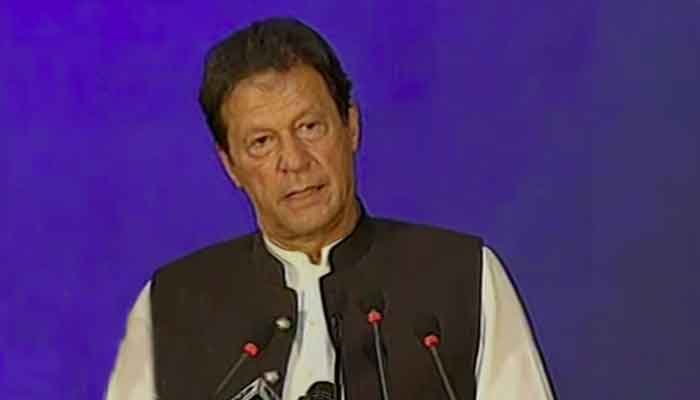
    Prime Minister Imran Khan on Thursday presented a charter of his party’s performance so far at the Jinnah Convention Centre in Islamabad.

    Talking about his career as a cricketer, PM Khan explained how his life as a sportsman, “where there are standing ovations one moment and curses the next”, prepared him for a life of struggles.

    “Until you go through struggles, you cannot do anything big,” the prime minister said. “No leader became big with a shortcut. Quaid-e-Azam was a big leader. He struggled in his life and people will always remember him [for that].”

    Mentioning Pakistan’s clash with India in the aftermath of the Pulwama incident, PM Khan thanked the army for effortlessly protecting the people of Pakistan.

    “I appreciate our army and air force. As they (Indian fighter jets) came into our territory and launched an offensive, we realised the [power] of our army,” said the premier.

    The premier blamed a “mafia” for defaming state institutions. “I also criticised the army in the past,” he said. “Judiciary and army also make mistakes but it doesn’t mean we should [expect] them to topple the democratic government.”

    “We know the Indian lobby is trying hard to defame Pakistan Army. They are implying that the Taliban won because of Pakistan Army.”

    “The NCOC (National Command and Operation Center) team comprising Asad Umar and Dr Faisal [Sultan] took great decisions and we survived the worst of Covid.”

    “In our tenure, Punjab’s anti-corruption has recovered Rs450bn so far,” he claimed. “NAB (National Accountability Bureau), in its 18 years before we came to power, had recovered Rs290bn and in the last three years, they recovered Rs519bn. All hue and cry are because of this reason.”

    The premier reminded his audience of the efforts made to “empower women” in rural areas and stressed the need to educate women, adding that “this is what we are trying to do”.

    “We are also working on inheritance laws to ensure women get their due share in the property,” he added.

  • Video: Meera makes shocking comments in her TikTok debut, stirs controversy

    Video: Meera makes shocking comments in her TikTok debut, stirs controversy

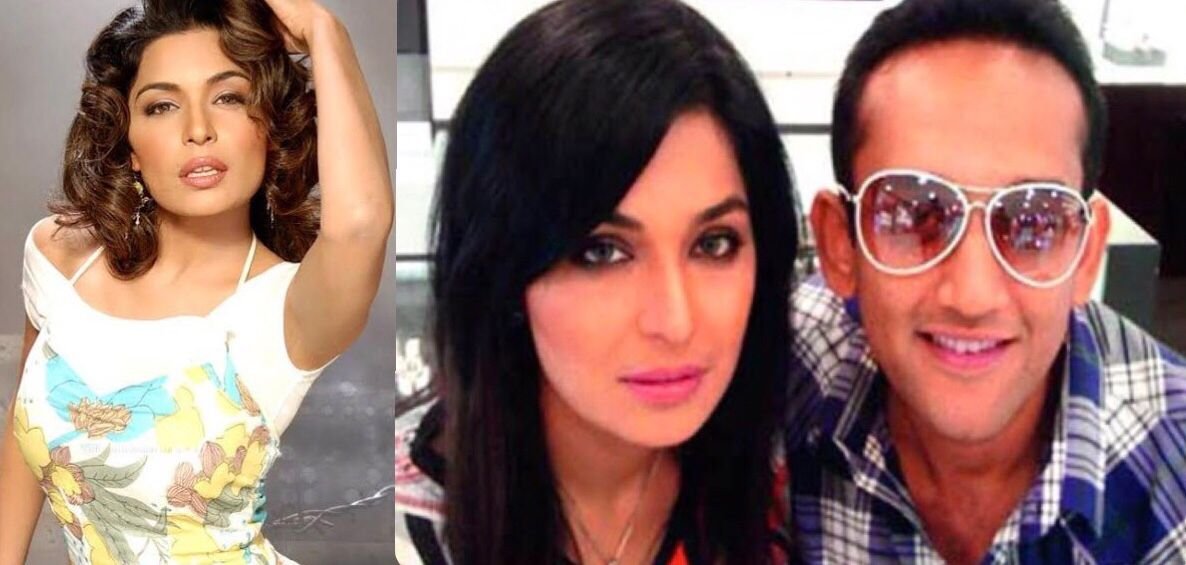
    Actor Meera is the latest celebrity to join the video sharing app TikTok’s bandwagon. The Baaji diva has recently shared a slightly controversial video which she concluded by saying, ‘Itni izzat karien aurat ki ke aik din wo apko khud hi chairnay pe majboor hojaye’.

    She recently grabbed headlines for referring to ‘Javelin Thrower’ Arshad Nadeem as a ‘cricketer’.

    The Load Wedding hero, Fahad Mustafa stated in a recently resurfaced interview that he was taken aback when she told him to go get a water bottle for her. The Parey Hut Love star acted as if Fahad is a spot boy or a servant on the event. Fahad mentioned that he felt very strange as he was an established actor by then and Meera knew who he was. He said that despite her mistreatment, he provided her with a water bottle.

    The Jawani Phir Nahi Aani 2 actor also confessed that once he lost his cool on Meera when she appeared on his morning show as a guest. Fahad revealed that it was one of those rare moments when he had to lash out on a female actor as she was being rude on the live show, Meera reverted back in anger too.

    Although when the Naagin star met him after a while on a flight, she pretended as if nothing ever happened.

  • Ban sources responsible for spreading obscenity and nudity demand ulema

    Ban sources responsible for spreading obscenity and nudity demand ulema

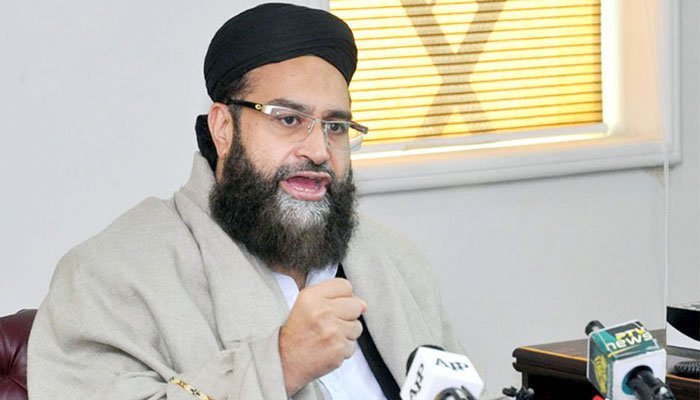
    Religious scholars (ulema) have condemned the rape of a girl in a seminary in Rawalpindi and demanded that perpetrators of such detestable crimes should be given punishment in public through speedy trial, reported Dawn.

    In a joint declaration issued after attending a consultative meeting, ulemas expressed grief over the rising incidents of child abuse and women harassment in Pakistan and said that the prime minister and chief justice of Pakistan should take immediate action against the culprits and order their speedy trials.

    They urged the Pakistan Electronic Media Regulatory Authority (PEMRA), Pakistan Telecommunication Authority (PTA), and Ministry of Information to block porn websites and pornographic and nude content and advertisements on social media.

    The joint declaration said that the rules of Shariah are clear for both men and women. It is obligatory for both men and women to cover themselves properly and avoid obscenity and nudity. Shariah does not allow a man to touch or harass a woman, the declaration said.

    The joint declaration said that the rising incidents of abuse and harassment of boys and girls and the state of fear and intimidation prevailing among women demand from all sections of society, especially the government and judiciary, to ban and close all such sources responsible for spreading obscenity and nudity in society.

  • Pakistan has failed its women

    Pakistan has failed its women

    Just this week, we wrote about the heart-wrenching incident of sexual assault and harassment of a woman at Minar-e-Pakistan on August 14. As if this was not enough, two new videos surfaced yesterday — one in which a woman was forcefully kissed by a man when she was travelling on a Chingchi rickshaw on August 14.

    The man jumped on the Chingchi while it was stuck on the road due to traffic and tried to kiss the woman and we heard another woman’s scream, who was sitting with her. Another video shows a mob trying to harass a woman at Minar-e-Pakistan and she is only saved because she keeps waving a stick to disperse them and keep them at bay. 

    When we say that the women of Pakistan feel unsafe, we hear that these are just odd incidents and should not be used to distort the image of Pakistan. What exactly is the image of Pakistan if women of the country are being harassed, assaulted, and attacked every single day, in multiple incidents? These are not odd incidents. These incidents and their aftermath depict the reality of Pakistan: women are blamed after each incident.

    A TikToker gets sexually assaulted by hundreds of men for more than two and a half hours at Minar-e-Pakistan and no one helped her but she is blamed for going there for a meet and greet session with her fans. So, is a meet and greet session now forbidden for women in Pakistan, and does it warrant hundreds of men sexually assaulting a woman? When Noor Mukadam was beheaded, the women of Pakistan demanded justice. But there were those who started blaming a dead woman for being killed: ‘Why did she go there, why was she with a man alone, she had no family values.’ These were the disgusting comments being made to justify — JUSTIFY — a gruesome murder of an innocent woman. 

    When we hear such comments even after the most heinous crimes, it shows that Pakistan is no place for women. We do not respect our women. We do not like independent women. We dislike opinionated women. We justify crimes against women. We blame women for society’s ills. 

    Our leaders pass extremely violent and misogynistic comments against their women opponents and are still lauded instead of being reprimanded. When our top leader issues a rape apology, he is defended by women parliamentarians. When such is the attitude of the people on top, imagine what message it gives to the common people. They think they can do anything with women and get away with it. And they do get away in almost all cases. 
    This is our sad reality. Dear women of Pakistan, we are sorry. We have failed you.