Tag: women

  • Vanity projects and double standards

    Women in public life are judged on what they wear rather than what they do.”

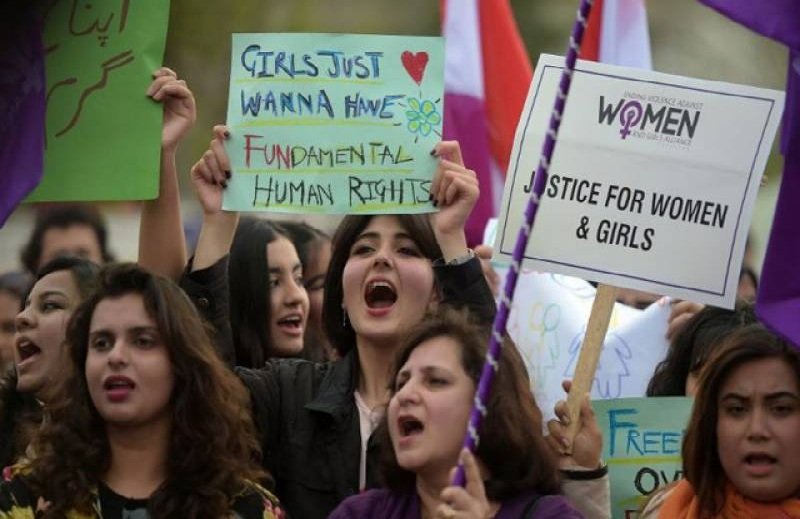
    The runup to International Women’s Day in Pakistan has been marked by a heated national debate: not about the sorry state of women’s status in the country, but about the witty and audacious slogans raised in connection with Sunday’s Aurat March.

    The absurdity of the debate about Aurat March is characterised by the terrible misogyny it reveals in terms of women’s choices, particularly in relation to their bodies and their appearance. And here it is pertinent to take a step back and recognise just how deeply ingrained preconceptions about women’s appearance and sartorial choices are in Pakistan — and how, to some extent, all of us are guilty of this.

    For me, the most telling thing is the different way in which male and female politicians are regarded and judged and the very different standards to which they are held.

    Most young people will not remember this, but not so long ago, the Sharif brothers sported gleaming pates. Then over a decade ago, they had whatever work is required done and then they sprouted hair on the top of their heads. Nobody really commented on this even though it was essentially a vanity undertaking.

    I wrote about this on my blog on BBC Urdu, pointing out the complete double standards at play: Benazir Bhutto’s appearance had been routinely criticised and her clothes, shoes, gait, hairdo and makeup were something that nearly everybody in Pakistan — men or women — would hold forth upon. My blog which was titled Naye Baal, Nayee Zindagi pointed this out but much of the feedback it generated had an outraged tone telling me how dare I “criticise” these wonderful men — even though all I was doing was pointing out the double standards.

    “Nearly every woman politician in Pakistan is careful to cover her head in public and to look modest, yet the Vawdas and Khans in the political arena will wear tight jeans and designer garb or any other less-than-occasion-appropriate attire yet arouse no comment and suffer no public backlash at all.”

    Bhutto was the first woman elected Muslim prime minister in the world and she achieved this at the very young age of 35. Yet, most of the public discourse around her was less about her policies or her politics and more about her clothes or her looks. People discussed, ad infinitum, the possibility that she might have had plastic surgery as if it was a matter of grave national importance. There was endless holding forth upon this by armchair experts who insisted, authoritatively, that her face looked different than in her early photos. Implicit in all of this commentary was the idea that Bhutto was somehow a terrible, vain and wealthy person if she had had any “work” done.

    Yet, when the Sharifs got new hair, nobody even batted an eyelid.

    Now fast forward to the present day where botox and hair regrowth procedures are becoming more and more common in Pakistan. Notice how little comment there is when a male politician or TV personality appears with a suddenly creaseless forehead or with jet black hair. No surprise, no comment, no embarrassment.

    The prime minister, Imran Khan, had a small bald patch about 14 years ago, but now he periodically appears with slightly thicker hair and nobody seems to comment on it or on any small changes to his face. I’m not saying that we need to comment on people’s appearance or their choices about that appearance, I’m just pointing out that the prevalent view is that men can do what they want but women’s appearance or clothes are considered something that everybody simply MUST criticise.

    These attitudes are, of course, linked up with a primitive social view that “honour” reposes in the body of the woman and she is a possession that might be “stolen” or “lost”. As a possession, she must be controlled by a man because there is a perception that if she is “free”, society will collapse and “immorality” or “fahashi” will prevail.

    Nearly every woman politician in Pakistan is careful to cover her head in public and to look modest, yet the Vawdas and Khans in the political arena will wear tight jeans and designer garb or any other less-than-occasion-appropriate attire yet arouse no comment and suffer no public backlash at all. Educational institutions will have a very strict dress code and rules for females, but be lenient with the males. It is always the women who have to be conscious of what they wear, how they walk or who they speak to.

    Times are changing, but there still is a long way to go because the people who are guilty of this sort of double standards are not just the chauvinists or the religious right — it is nearly everyone. These attitudes are now normalised and are so ingrained in our society that even educated, reasonable people — both men and women – are guilty of such behaviour. But the more aware of these double standards we can become, the more we will be able to overcome them.
  • ‘Why I march’: 90 per cent people hold bias against women, study reveals

    ‘Why I march’: 90 per cent people hold bias against women, study reveals

    Almost 90% of the global population irrespective of gender holds some prejudice against women, indicated a United Nations (UN) study released ahead of International Women’s Day.

    The UN Development Programme studied 75 countries representing 80% of the world’s population and found that nine in 10 people — including women — hold such beliefs.

    The prejudiced views include: that men are better politicians and business leaders than women; that going to university is more important for men than women; and that men should get preferential treatment in competitive job markets.

    The percentage of those holding at least one sexist bias was largest in Pakistan — where 99.81% of people held similar prejudices — followed by Qatar and Nigeria, both at 99.73%.

    Countries with the lowest population of those with sexist beliefs were Andorra, at 27.01%, Sweden with 30.01%, and the Netherlands, 39.75%.

    France, Britain, and the United States each came in with similar scores, 56%, 54.6%, and 57.31% of people, respectively, holding at least one sexist belief.

    The numbers show “new clues to the invisible barriers women face in achieving equality” despite “decades of progress,” the UN Development Programme said in a statement accompanying the report.

    “The work that has been so effective in ensuring an end to gaps in health or education must now evolve to address something far more challenging: a deeply ingrained bias — among both men and women — against genuine equality,” UNDP Administrator Achim Steiner said.

    The agency called on governments and institutions to change discriminatory beliefs and practices through education.

    Beyond inequalities in education, health, and the economy, the statement also called out one of the report’s most chilling findings: 28% of people believe it is okay for a man to beat his wife.

  • ‘Women participation in economic activities on the rise in Pakistan,’ says IMF

    IMF’s new report “Women in the Labour force: The role of fiscal policies” highlights an average of 2pc rise of the female workforce in Pakistan and 1pc decrease in India, DAWN reported.

    According to the IMF’s staff report, women in most countries do not have the same opportunities to participate in economic activities as men have. This gender inequality has reduced to a good extent, but the average of female labour participation is below the male rate.

    Globally, about on-quarter of countries experienced a decline in female force participation. Countries such as India and Sri Lanka facing an average annual decrease of one per cent between 1990 and 2018, whereas Pakistan, Peru and Spain experienced an average annual increase of 2pc.

    READ: Want to know how much money the PSL winning team will take home?

    The report also says “Many countries have adopted fiscal policy measures to promote gender equality since the mid-1980s. Countries use tax and expenditure policies to address gender inequality and the advancement of women in areas such as education and economic empowerment. Fruthermore, in 2018, at least 80 countries have used gender-responsive fiscal policy interventions to reduce gender inequality.

    READ: Kaala Jadu: Jemima shares poster of herself, PM Imran and Bushra Bibi

    Women’s economic empowerment is the key to growth and productivity. Greater participation of women in the labour force also brings greater diversity that can foster new ideas for production and management, boosting aggregate productivity.

  • US imposes strict visa rules for pregnant women to control ‘birth tourism’

    US imposes strict visa rules for pregnant women to control ‘birth tourism’

    The Trump administration on Thursday announced new visa rules to restrict birth tourism, in which women travel to the United States to give birth so their children can get US citizenship.

    According to the rules in the Federal Register, applicants will not be given tourist visas if they are determined by consular officers to be coming to the US only to give birth.

    It is a bigger hurdle to overcome, proving they are travelling to the US because they have a medical need and not just because they want to give birth here. Those with medical needs will be treated like other foreigners coming to the US for medical treatment and must prove they have the money to pay for it including transportation and living expenses.

    “Closing this glaring immigration loophole will combat these endemic abuses and ultimately protect the United States from the national security risks created by this practice,” White House press secretary Step­hanie Grisham said in a statement.

    While the new rules deal specifically with birth tourism, the Trump administration also has turned away pregnant women coming over the U.S.-Mexico border as part of a broader immigration crackdown. Those women were initially part of a vulnerable group that included others like small children who were allowed in, while tens of thousands of other asylum seekers have been returned to Mexico to wait out their cases.

    While President Trump’s administration has been confining all forms of immigration, Trump has been particularly worried by the issue of birthright citizenship anyone born in the US is considered a citizen, under the Constitution.

    The Republican president has criticized the practice and threatened to end it, but scholars and members of his administration have said it’s not so easy to do.

    Regulating tourist visas for pregnant women is one way to get at the issue, but it raises questions about how officers would determine whether a woman is pregnant, to begin with and whether a woman could get turned away by border officers who suspect she maybe just by looking at her. Critics of the new policy say it could put pregnant women at risk.

  • Regressive roles perpetuate myths

    Regressive roles perpetuate myths

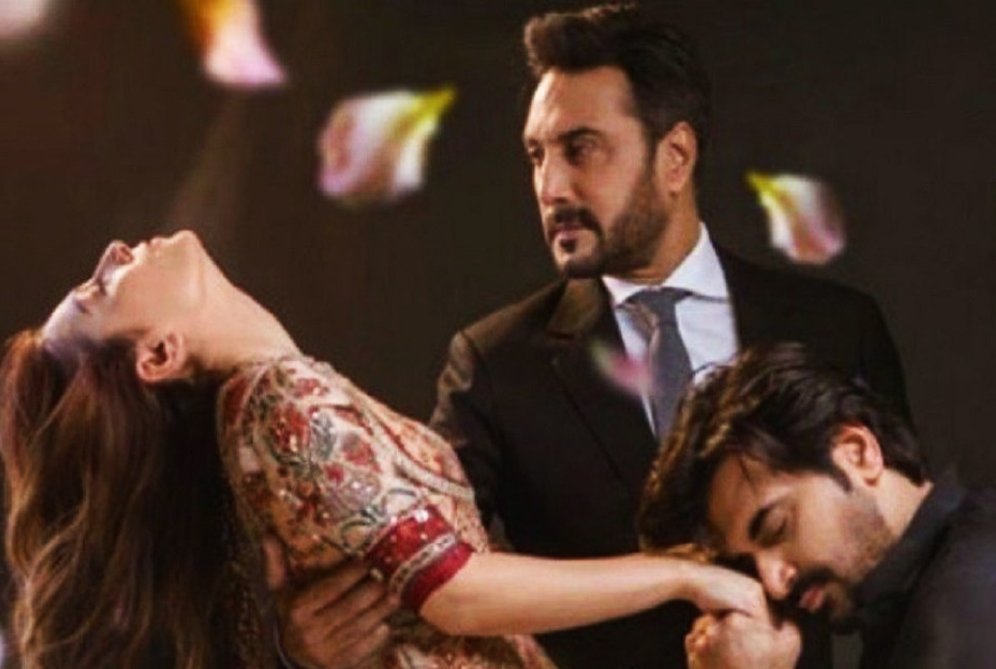
    If you are an avid follower of Pakistani serials/dramas, the one thing that is common in almost all of them is how women are portrayed.

    There is a ‘good girl’ who is a homemaker, wears eastern clothes, who will sacrifice everything for family, who is often seen in the kitchen cooking food or cleaning the house, who hardly steps out of the house unless it’s with her husband and/or family, who will forgive her husband for many things, including domestic violence or infidelity or both.

    Then there is the ‘bad girl’, who is more often than not a working woman, who wears western clothes, drives a car, goes out on her own, is ambitious and ‘conniving’. Divorced women are either shown as bad girls or sad girls.

    We often wonder how educated writers can write such stuff and why educated women actors can take up such roles.

    Actor Hina Bayat in an interview with Fifi Haroon for BBC Urdu once said, “ “Most scriptwriters today are women who have never seen the inside of an office. In their real-world, working women don’t exist so they don’t write them into their fictional worlds either – except perhaps as negative characters or mothers who ignore their children.”

    This explains why the writers write what they do to a certain extent.

    As for the actors, maybe there is not much they can do when acting is their bread and butter and these are the roles that are in the market. We are not blaming the actors, but we do believe that if there is a market for plays like ‘Udaari’, then why do we need plays like ‘Jhooti’ that perpetuate falsehoods about domestic violence.

    We need more progressive writers. Otherwise, these dramas will keep feeding our already patriarchal and misogynist society.

    Lest we forget, when 20-year-old law student Dua Mangi was kidnapped from Karachi on November 30, 2019, it highlighted a dark side of Pakistan that we often ignore, i.e. extreme misogyny.

    BBC did a story on the Mangi case titled, ‘Dua Mangi: Slut-shamed in Pakistan for being abducted’. The story talked about the inappropriate remarks regarding Dua’s dressing and comments on how she was out at night with a male friend were discussed more than the actual incident of kidnapping.

    It was tragic to see that there was more outrage online over Dua’s clothes, her friend and why she was out at night than over the actual crime. It should have been a moment of introspection for us. Instead, we ignored it once again. By ignoring or not calling out such perverted behaviour, we normalise misogyny. Horrid practices like ‘honour killing’ and ‘Vani-Swara’ are not frowned upon; instead, they are dismissed as tribal culture.

    When women and young girls are used to settle family disputes, it is a crime, not tribal culture.

    That our society is prevalently misogynistic is no secret as this vile misogyny has always been on display when it comes to crimes against women.

    When General (r) Musharraf was asked in an interview with the Washington Post about the high-profile gang rape case of Mukhtaran Mai, he said, “You must understand the environment in Pakistan… this has become a money-making concern. A lot of people say if you want to go abroad and get a visa for Canada or citizenship and be a millionaire, get yourself raped.”

    When heads of a state of a country can think like this and say it out loud to an international media organisation, we can imagine the state of overall apathy and insensitivity regarding women.

    Meesha Shafi’s sexual harassment case against Ali Zafar is another case in point. The kind of abuse that Meesha got online shows why it is hard for Pakistani women to talk about sexual abuse let alone coming out in public with the details.

    It doesn’t matter if the woman is Mukhtaran Mai, Meesha Shafi or Dua Mangi, she will get abused. Victim blaming and victim shaming has become the norm. It seems as if being a woman is some sort of a crime. According to a report by Media Matters for Democracy, “95 per cent of women journalists feel online violence has an impact on their professional choices, while 77 per cent self-censor as a way to counter online violence.”

    This is the reality of Pakistan – where women are the culprits even after being harassed, raped, kidnapped, shot at and even after being murdered. A country where ‘Aurat March’ triggers ‘ghairat’ but where the kidnapping of a young girl cannot even elicit apathy.

    This is why we don’t need regressive roles for women in dramas. This is why we don’t need to portray working women who are independent and strong as the ‘bad girls’ or ‘vamps’. This is why we need good writers who don’t demonise women or stereotype them. This is what we ask of our entertainment industry.

  • Women’s museum to be set up in Islamabad

    The National Commission on Status of Women (NCSW) and Higher Education Commission (HEC) have signed a principal agreement to set up a women’s museum in Islamabad.

    According to reports, the aim of establishing this museum is to preserve women movements throughout history and to provide a resource for newly enfranchised women to enter public life.

    The museum will support and protect education, research and training on the roles and contributions of women.

    NCSW is striving for the development of women’s libraries, museums and archives.

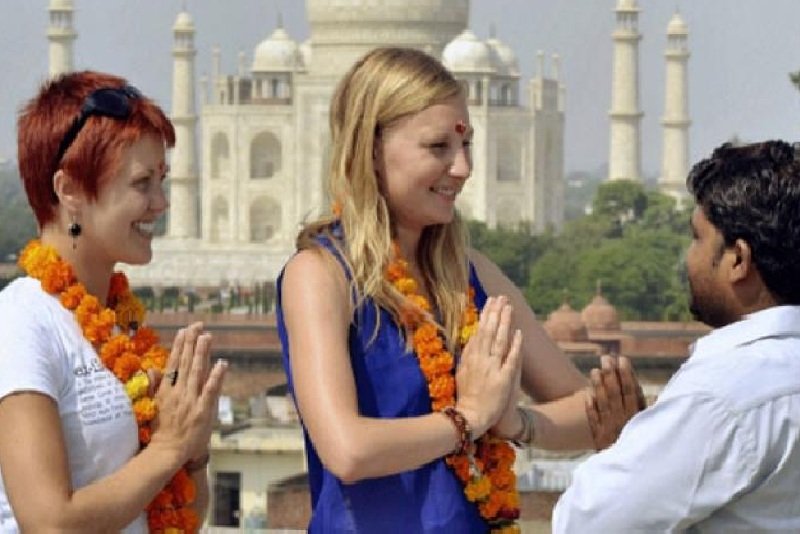
  • US, UK govts issue safety travel advisory for women citizens visiting India

    US, UK govts issue safety travel advisory for women citizens visiting India

    India is fast building a reputation of being an unsafe place for women, resulting in the United States (US) and United Kingdom (UK) governments issuing a detailed information sheet for survivours of rape and sexual assault for its citizens travelling or staying in India, Times of India reported.

    The advisory by the British government to their citizens was released on its websites, and stated that rape and sexual assault survivours should insist on a police report. It also added that the police are not bound to provide an English translation, but the survivour could get the statement read and explained in English before signing it.

    Referring to this, Kartikeya Tripathi, a lecturer from University College London (UCL), said that in an unfortunate case, if a British national is sexually assaulted in India, the advisory tells them about their rights and that it needs to be dealt with by a female police officer, which many are not aware of.

    Also, the US government’s India travel advisory, which was issued earlier in March 2019 and which places India at ‘level 2’ security, advises travellers to ‘exercise increased caution’. It also stated that Indian authorities report rape as one of the fastest-growing crimes in India, and violent crime, such as sexual assault, has occurred at tourist sites and in other locations.

    The advisories have explained everything in detail, and also urge women to be aware of their rights when they are visiting India.

  • Aurat March 2020 receives backlash on social media

    The poster Aurat
    March was met with rape and death threats after it was upload on social media
    last week.   

    Aurat March
    (women march) calls for women, transgender, and other suppressed gender groups
    to raise voice against injustice and deeply embedded patriarchy in our society.
    Unfortunately, within an hour of upload – the post was bombarded with crushing
    sexist and misogynist comments

    While talking to
    Express Tribune, the organizers said that they can take little action against
    such response on social media.

    “The maximum we
    can do is to report it on Facebook,” said the organizers adding, “We’ll stand
    for the cause and call out this unjust treatment – those who’re posting threats
    will not get away with all this.”

    The Aurat March
    team said that they are partnering with legal teams to tackle bullying and
    threats. 

    It is ironic that
    these people are getting uncomfortable because suppressed genders are demanding
    equal rights and better treatment in society, whereas when people like Khadim
    Hussain Rizvi outrageously abused and curse publically – the only concern for
    people is the inconvenience in traveling and day to day life.

  • CJP says Supreme Court will soon get female judges

    Chief Justice Pakistan Asif Saeed Khosa has revealed that the judiciary is working towards inducting female judges in the Supreme Court.

    Addressing the concluding session of Women Judges Conference in Lahore, Justice Khosa said that more than 300 female judges are working in the district courts of Pakistan and that they are doing a brilliant job.

    “Our women judges have proven their abilities through their verdicts and by the way they have handled complex cases,” said Justice Khosa, adding, “We have as many as 300 women judges in district courts and we hope to soon have at least one or two in the Supreme Court. I had the opportunity to propose two names and they are being actively considered.”

    Justice Khosa said that the top court is working on women’s rights and with time, the differences between male and female judges will be eliminated, adding that women must be empowered for the society to develop.

    Explaining that the Constitution ensures equal rights and treatment to all citizens including minorities, Justice Khosa said that they are encouraging women to enter the judiciary.

    Lahore High Court Chief Justice Muhammad Shamim Khan, while addressing the conference, said that “the judiciary plays an important role in structuring and restructuring of the society.”

    Justice Shamim said that gender-based violence courts were being established in Punjab to protect the rights of women and children.

  • Chinese company to provide millions of job, business opportunities to Pakistani women

    Chinese company to provide millions of job, business opportunities to Pakistani women

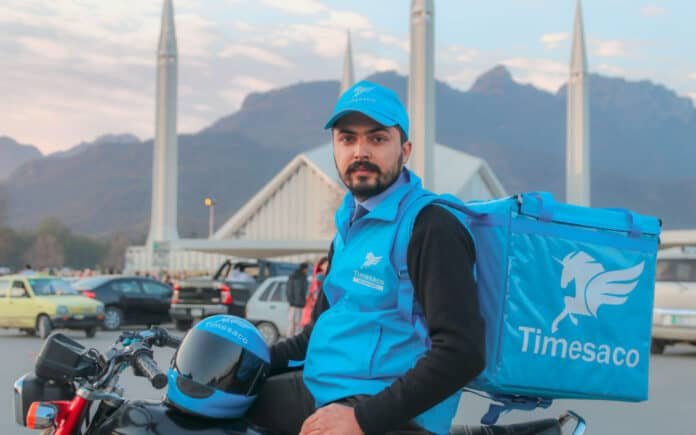
    Chinese services company, Timesaco, will be providing millions of jobs and business opportunities to women through different e-commerce platforms in six major cities of the country, Associated Press of Pakistan (APP) reported.

    Reports quoted Timesaco Chief Executive Officer (CEO) Donald-Li as saying that the company plans to introduce different e-commerce platforms for women, through which they will be able to do different online businesses.

    He said Timesaco’s e-services platform would create millions of jobs for women and help them start their own businesses without any investment.

    Li said that Timesaco’s platform will uplift women living in poverty and facing greater challenges in earning a steady income, educating and feeding their children.

    Earlier it was reported that the company is looking to invest $600m in the country in service sectors. Eyeing opportunity in the country’s transport business, Timesaco has prepared to launch a new ride-hailing service called Buraq Taxi Service across 10 major cities on August 10.

    Devised using a comprehensive strategy to take on the current titans in the market, the taxi service will provide five types of services to customers, including taxi service, heavy cargo delivery, orders delivery, moving automated teller machines (ATM) and vehicle advertisement facilities.