Tag: workers

  • Five May 9 suspects arrested again after bail from SC

    Five workers of Pakistan Tehreek-e-Insaf (PTI) involved in the May 9 riots, who were earlier granted bail by the Supreme Court, have been arrested again under 16 MPO (Punjab Maintenance of Public Order Ordinance, 1960).

    The MPO order was issued by the Deputy Commissioner of Rawalpindi after which they were arrested. Last night, they were released from Adiala Jail in Rawalpindi after the suspects submitted their surety bonds.

    The five suspects — Owais, Saifullah, Nasrullah, Kamran and Waqas — were booked in the May 9 violence case registered at the New Tow Police Station.

    Scores of PTI workers were arrested across the country after the May 9 incident following the arrest of Imran Khan from court premises.

    Last week, a three member bench granted relief to five suspects and emphasized that authorities must differentiate who are the real terrorists. Their surety bonds were worth Rs 50,000 each.

  • ‘Most painful Eid for me’: Imran Khan reminiscences about jailed party leaders, workers

    ‘Most painful Eid for me’: Imran Khan reminiscences about jailed party leaders, workers

    Pakistan Tehreek-e-Insaf (PTI) chairman Imran Khan, while wishing Eid to fellow countrymen, has said that this is the most painful Eid for him, as his party leaders and workers are in jail for exercising their constitutional right to protest peacefully. 

    “Eid Mubarak to my Pakistanis. This is the most painful Eid for me. Around 10,000 of our workers and supporters are jailed and being treated as criminals for exercising their constitutional right to protest peacefully,” he wrote.

    “Our brave leaders including women leaders, Dr Yasmin Rashid and Aliya Hamza are in jail and refusing to leave PTI. 16 of our workers shot dead and 8 others suspected to have been killed but cannot be confirmed because relatives have gone underground because of the fear of police. 50 others suffered bullet wounds,” the tweet added.

    “Shockingly no mention of the use of this excessive force by security forces on unarmed protesters. And no independent investigation to ascertain what really happened on 9th May. Instead, by peddling a one sided anti-PTI official narrative, a reign of terror has been unleashed on anyone associated with the party with only one aim to dismantle it before elections.”

    He further wrote, “InshAllah PTI and the nation will come out of this dark phase much stronger. Also, there’s been a total clampdown on the media with all those critical of this fascist government facing its wrath. Imran Riaz Khan has been abducted and his whereabouts unknown for over 40 days now, and 5 of our respected journalists who have had to flee the country, we remember them too on this Eid.”

  • Gas supply to industrial sites suspended for two days

    Gas supply to industrial sites suspended for two days

    The gas crisis has grown worse in the economic hub of Pakistan as the duration of gas load-shedding in Karachi industries was extended for up to two days.

    The industrial sites in Karachi will be facing two-day gas load-shedding instead of one.

    According to the information obtained, all industrial facilities and captive power plants in Karachi will not be supplied gas for two days.

    From December 17 to December 19, seven industrial zones and captive power plants were instructed to refrain from using Sui Southern Gas Company’s (SSGC) gas supplies on Saturday and Sunday.

    In addition to conducting unannounced raids on all industrial sites, the SSGC surveillance teams will also take legal action against those who violate the rules.

    Imtiaz Shaikh, the energy minister for Sindh, criticised the gas load-shedding on December 13 and claimed that although the province is generating more natural gas than it needs, it is still being denied its legitimate right.

    Imtiaz Shaikh, the energy minister, demanded that Sindh be given preference over other parts of the country in the provision of natural gas.

    “We will take the matter to court if required,” Sindh’s energy minister said. “We are also considering raising the issue in the Council on Common Interest (CCI),” he said.

    He said that the chief minister had discussed Sindh’s case regarding the gas issue during discussions between the state and federal governments. He expressed hope that the prime minister will pay attention to the situation.

    The provincial minister stated that when additional petrol is provided to the province, Karachi’s industry will resume operation.

    The most natural gas-producing province in Pakistan, Sindh, is now experiencing a severe natural gas shortage for home, industrial, and commercial customers.

  • Bangladesh’s GDP is expected to reach $1 trillion by 2040 due to a fast-growing consumer market

    Bangladesh’s GDP is expected to reach $1 trillion by 2040 due to a fast-growing consumer market

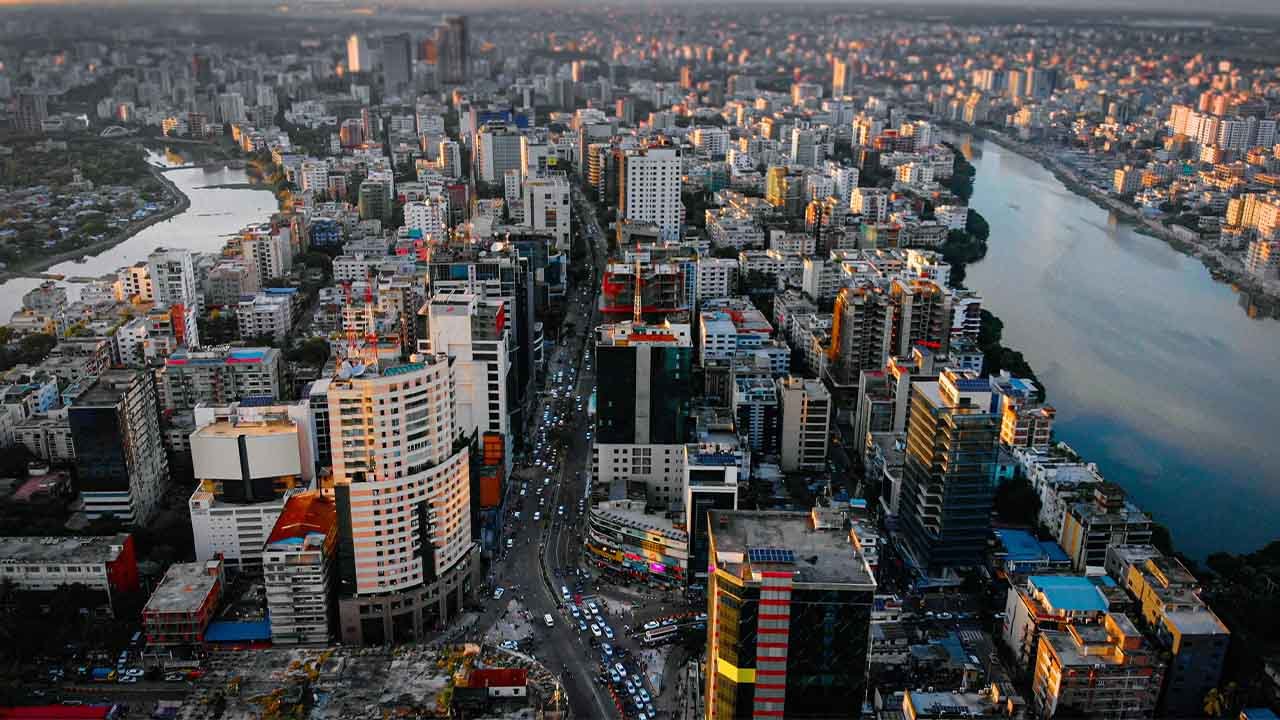
    Bangladesh is on track to have a $1 trillion economy by 2040, owing to consumer confidence, innovation in growing economic sectors, and a young, energetic workforce.

    According to a Boston Consulting Group (BCG) analysis released on Friday, the South Asian country has beaten rivals including India, Indonesia, Vietnam, Philippines, and Thailand with average annual growth of 6.4 per cent between 2016 and 2021.

    The domestic consumer market in Bangladesh is expected to expand to be the ninth-largest in the world. The survey also noted that between 2020 and 2025, a quickly growing middle class and wealthy class are expected to increase significantly, with a thriving gig economy supporting a workforce where the average age is only 28, according to Bloomberg.

    “The country could have easily been overshadowed by its neighbor to the northeast — China — or its continental cousin to the west — India — but in this region of economic powerhouses, Bangladesh stands tall,” BCG wrote.

    In 2015, Bangladesh moved up the income scale from poor to lower-middle income. Bangladesh’s GDP per capita is already larger than its neighbour, even though it is five years later than India. By 2031, the country hopes to reach upper middle income status.

    Some obstacles still exist. According to BCG, recent liquidity problems, as well as pressures from foreign exchange and inflation, could shorten growth. However, Bangladesh has made steps to prepare its $416 billion economy for a prosperous few decades, provided it keeps its average growth rate around 5 per cent.

    According to a BCG survey study, 57 per cent of respondents “continue to feel that, especially as the nation shifts to a skill-based economy, the next generation would have better lifestyles than themselves.”

    “Though the economy faces some near-term volatility, we are confident that this highly resilient economy will continue to demonstrate robust growth in the long term,” the report said.

  • Workers protest, beaten at biggest iPhone factory in China

    Workers protest, beaten at biggest iPhone factory in China

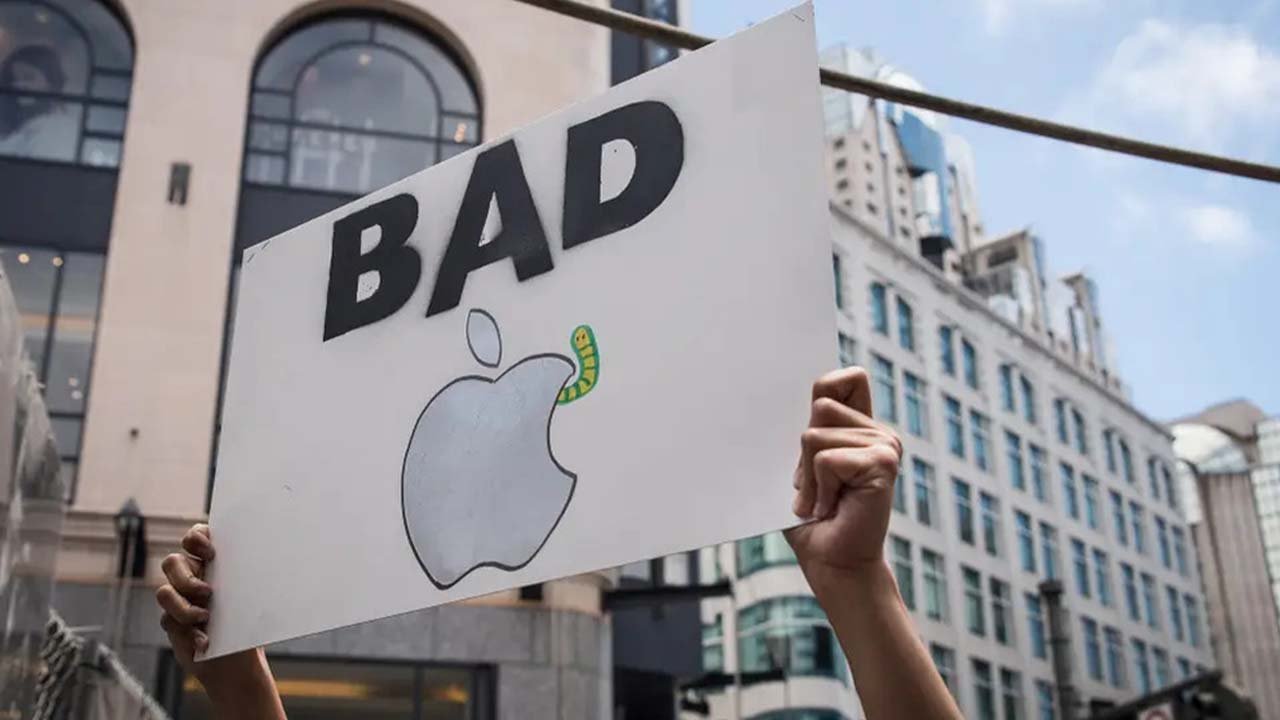
    Workers at the world’s biggest Apple iPhone factory were beaten and detained in protests over pay amid anti-virus controls, as tensions mounted over Chinese efforts to combat a renewed rise in infections.

    Hundreds of workers may be seen marching down a road in daylight in videos posted on Weibo and Twitter that AFP has confirmed. Some of the workers are being confronted by riot police and those wearing hazmat suits.

    A man with blood on his face was shown in a nighttime video as someone off-camera yelled, “They’re striking people, hitting people. Do they possess morals? Geolocation data that displayed recognisable features, such as a building and barricades close to staff housing on the factory compound, helped AFP verify that video in part.

    In another video, testing booths for Covid-19 were destroyed, and a car was on its side.

    In one daytime video, a loudspeaker could be heard stating, “All workers kindly return to their lodging, do not mix with a small minority of unlawful elements,” as multiple fire trucks were parked near residential buildings and were encircled by police wearing hazmat suits.

    Wide swaths of the population in China have grown weary and resentful as a result of the country’s relentless zero-Covid policy; some have spent weeks being locked up in industries and universities or unable to leave their homes.

    By Wednesday noon, the Weibo hashtag “Foxconn riots” appeared to be blocked, but some text posts discussing extensive demonstrations at the factory were still accessible.

    Requests for comment on the most recent unrest from AFP went unanswered from Foxconn or Apple.

    In the place of the fleeing workers, the firm has offered large bonuses and other incentives for employees who stayed as the local government bussed in fresh labourers in a bid to keep the factory afloat.

    Apple this month admitted the lockdown had “temporarily impacted” production ahead of the holiday season at the Zhengzhou factory, the Taiwanese company’s crown jewel that churns out iPhones in quantities not seen anywhere else.

    Foxconn is China’s biggest private sector employer, with over a million people working across the country in about 30 factories and research institutes.

    China is the last major economy wedded to a strategy of extinguishing Covid outbreaks as they emerge, imposing lockdowns, mass testing and lengthy quarantines despite the widespread disruption to businesses and international supply chains.

    The policy has sparked sporadic protests throughout China, with residents taking to the street in several major Chinese cities to vent their anger against snap lockdowns and business closures.

  • Labourers demand increase in monthly wages, pensions

    Labourers demand increase in monthly wages, pensions

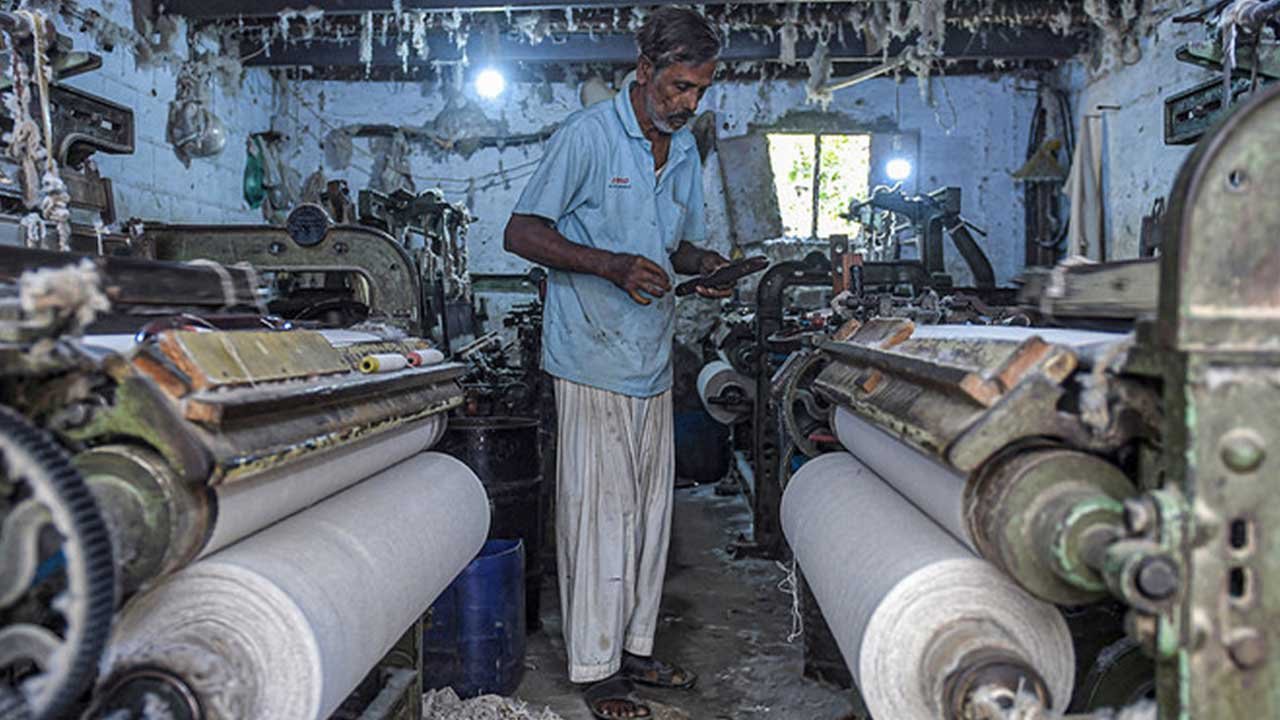
    On May 15, the provincial president of the Muttahida Labour Federation (MLF) in Peshawar, Muhammad Iqbal stated that the current price hikes had made life difficult for poor workers but the government had remained silent.

    He remarked that the provincial and federal governments should enhance monthly wages and the Employees’ Old-Age Benefit Institution pension in relation to the country’s current price hikes and inflation, speaking during a protest gathering staged in honour of May Day here at Shobra Chowk.

    The leader was of the view that workers had played a critical part in the country’s progress, but that each subsequent government had crushed them under one excuse or another. He claimed that the government and investors had teamed up to close down industrial units in the province as part of a well-planned plot.

    Read more: Pakistan’s textile exports surge by 30 per cent

    Iqbal said that the authorities should take measures to protect the rights of lower-paid strata and labourers in order to ease their lives.

  • ‘Naya Pakistan Housing Scheme’ was made in ‘Purana Pakistan’, alleges journalist

    ‘Naya Pakistan Housing Scheme’ was made in ‘Purana Pakistan’, alleges journalist

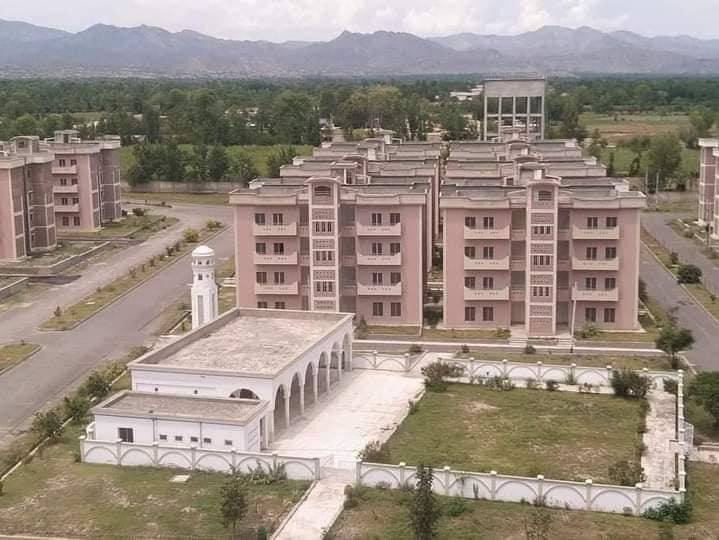
    Prime Minister Imran Khan inaugurated a low-cost housing colony for labourers and industrial workers on Wednesday.

    The PM said the housing scheme for workers in Peshawar was launched in 2011 but it remained incomplete since then as it was not a priority because it was meant for the poor labourers. He said he wanted to see how much the condition of the poor had improved after the five-year tenure of the PTI government. This new project has now been put under the ‘Naya Pakistan Housing Scheme’.

    However, a report by journalist Izharullah sets the record straight about the origins of the scheme.


    The labour colony in the Regi Lalma area of Peshawar was approved in 2008 during the Pakistan People’s Party (PPP) regime. Work on the project began in 2011, with a total of 1,200 flats. However, in 2013, construction of 1,000 additional flats was approved.

    The project was funded by the Workers’ Welfare Board, an organisation working for the welfare of workers, and funding for it was obtained from the Workers’ Welfare Fund set up under the same board.

    Addressing the inaugural function, PM Imran Khan said that the government had launched a ‘new Pakistan housing scheme’ under which the working class and the poor would get houses.

    At the time the colony was approved, there was a PPP-Awami National Party coalition government in Khyber Pakhtunkhwa. Work on the labour colony began in April 2011, and was completed in 2020. Some work is still pending though.

    These flats were approved for labourers in Hattar, Peshawar, Takht Bai, and Haripur. These projects were later inaugurated in 2013 by the then PPP Provincial Labour Minister Sher Azam Wazir. The old name plates have been removed and the housing scheme has been inaugurated once again.

    Special Assistant to Chief Minister Khyber Pakhtunkhawa, Kamran Bangash, tweeted that about half of the flats were started in 2011, while the rest were started in 2013. “However, due to the Workers Welfare Fund being a federal department, the funds of Khyber Pakhtunkhwa were cut off during the Nawaz era,” tweeted Bangash.


  • British retailer Boohoo probes Pakistan suppliers for ‘underpaying’

    British retailer Boohoo probes Pakistan suppliers for ‘underpaying’

    British online fashion group Boohoo is under fire for allegedly exploiting Pakistani workers. The brand said on Wednesday that it is investigating a Guardian report that its suppliers were underpaying workers in Pakistan.

     The Guardian reported that employees at two factories in Faisalabad making clothes for Boohoo were earning Rs10,000, or £47 ($62) per month that is below the legal monthly minimum wage for unskilled labour of Rs17,500.

    The report added that it had video and photographic evidence to support the claims of potential safety issues such as parking of the motorbikes in the indoor areas next to flammable materials. In the rush to produce clothes for the western market, insiders claimed workers would sometimes do 24-hour shifts.

    Responding to the allegations, Boohoo said it had called upon inspection and compliance specialists Bureau Veritas to probe the claims on the ground in Faisalabad.

    “As we have previously stated, we will not tolerate any instance of mistreatment or underpayment of garment workers,” Boohoo added in a statement.

    Earlier this year, Boohoo has been accused that one of its suppliers in England paid workers much less than the national minimum wage.

    “Any supplier who does not treat their workers with the respect they deserve has no place in the Boohoo supply chain,” its statement added.

    Another factory whose working conditions are criticised in the report, Madina Gloves, strongly refuted the allegations.

    “The situation on the ground is completely different. The reporter never visited my factory and I challenge him to bring forward a single quote from the workers of the factory. I am considering taking him to the court,” the owner Muhammad Saleem Shahzad told AFP.

    Shahzad added that since the article had published, he had already received calls from three different UK clients to cancel orders.

    “I want to ask what service this report has done to my employees who are going to lose their job now?”

    The Guardian report comes after Boohoo in November appointed Brian Leveson to help “deliver long-lasting and meaningful change” to the group’s supply chain and its business practices.

    Leveson is best known for heading a 2012 inquiry into UK media standards following the hacking of celebrities’ phones by the now-closed News of the World tabloid, which was owned by Rupert Murdoch.