Tag: World Bank

  • Govt plans to increase gas and electricity prices in January

    Govt plans to increase gas and electricity prices in January

    The interim Finance Minister, Dr Shamshad Akhtar, announced during a press conference that the caretaker government is planning to increase electricity and gas tariffs in January to address the circular debt issue, in line with the International Monetary Fund’s (IMF) Stand-By Arrangement (SBA). 

    The circular debt in the power and gas sectors, currently exceeding 4 per cent of the Gross Domestic Product, requires urgent action for reduction. 

    Dr Akhtar also discussed tariff revisions with the IMF and the potential imposition of additional taxes on sectors like real estate and retail, emphasizing that final decisions are pending. 

    She highlighted the necessity for a new short-term IMF program and anticipated a medium-term program under the Extended Fund Facility (EFF) after the SBA concludes. 

    Regarding the external financing gap, Finance Secretary Imdad Bosal expressed optimism that a successful IMF review would unlock programme and project loans from multilateral lenders. 

    He anticipated approvals in December for loans from the World Bank, Asian Development Bank, Asian Infrastructure Investment Bank, and Islamic Development Bank. 

    Bosal assured that there is no external financing gap, and the improved ratings post-review would attract foreign loans. 

    Dr Akhtar stated that the World Bank is expected to disburse $2 billion during the current fiscal year, contributing to foreign exchange reserves along with the $700 million tranche approval from the IMF, bringing the total disbursement under the SBA to $1.9 billion out of $3 billion. 

    The approval for the second tranche from the IMF’s Executive Board is anticipated within a month.
  • World Bank projects only 1.7% growth for Pakistan in FY 2023-24 amid economic challenges

    World Bank projects only 1.7% growth for Pakistan in FY 2023-24 amid economic challenges

    The World Bank has issued a cautious outlook for Pakistan’s economy in the fiscal year 2023–24, projecting a modest growth rate of 1.7 per cent.

    The report, titled “South Asia Development Update Towards faster, cleaner growth,” highlights the fragile economic situation in Pakistan.

    Several factors have contributed to this fragility. The US dollar value of imports decreased by 26 per cent in August 2023 due to low demand and import controls, resulting in input shortages and a 15 per cent decline in industrial production by June 2023.

    Additionally, the economy shrank by 0.6 per cent in the fiscal year 2022–23 due to the impact of 2022 floods, high inflation, and balance of payments challenges.

    Import controls, initially aimed at reducing the trade deficit, hindered the supply of industrial materials and stifled growth.

    While these controls have been removed as part of an IMF lending programme, Pakistan still faces inflationary pressures, tight fiscal policies, and extensive flood damage. Foreign exchange reserves remain low, leaving the country vulnerable to external shocks.

    Pakistan is not alone in its economic struggles. Bangladesh, Pakistan, and Sri Lanka are all facing acute crises with ongoing balance-of-payments issues. These countries have begun implementing IMF-supported policies to address capital outflows and debt sustainability.

    Global factors, such as rising prices due to the end of the pandemic and Russia’s invasion of Ukraine, have exacerbated the challenges faced by these nations, leading to increased current account deficits and currency depreciations. To combat this, import controls have been imposed.

    In Pakistan, consumer price inflation stood at 27 per cent in August, down from a peak of 38 per cent in May, thanks to a stabilised exchange rate and a decline in food prices caused by the previous year’s floods. To address high inflation, the central bank raised its benchmark interest rate to 22 per cent in June.

    Pakistan and Sri Lanka are experiencing severe financial stresses, with low foreign reserve coverage and weak asset quality in both banking and non-banking sectors. The report also highlights the need for investment reforms in several South Asian countries to encourage growth.

    Restrictive import measures in Bangladesh, Pakistan, and Sri Lanka, although aimed at stabilising the external sector, have led to import shortages and economic downturns. Lowering these barriers to trade and capital flows could help boost long-term productivity.

    Lastly, despite adopting debt ceilings and deficit targets, many South Asian countries have high government debt-to-GDP ratios, with Pakistan experiencing fluctuations in government spending during election years.

    In summary, the World Bank’s report paints a cautious picture of Pakistan’s economic prospects, emphasising the need for sustained reforms and addressing various challenges to achieve stable and sustainable growth.

  • 40% children in Pakistan suffer from malnutrition

    40% children in Pakistan suffer from malnutrition

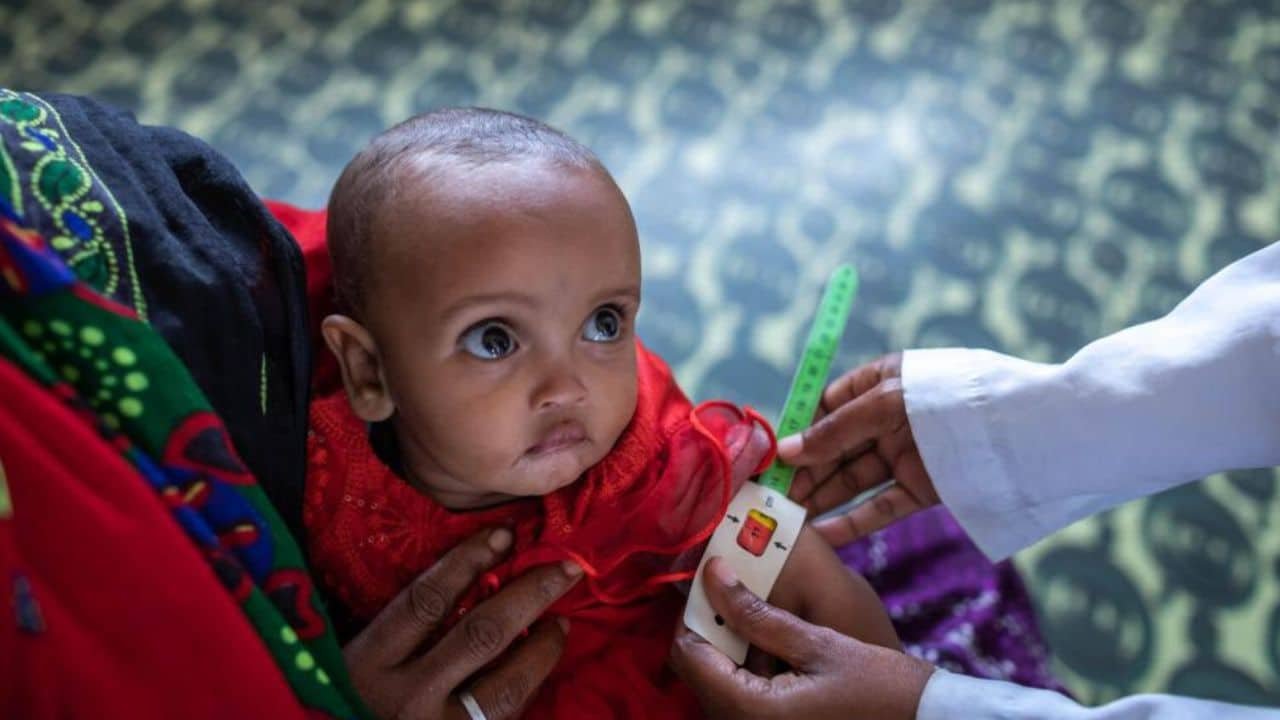
    A recent report by the World Bank has revealed that 40 per cent of children in Pakistan are suffering from food insecurity, adding that most children under the age of five do not have access to clean water and do not have toilet facilities.

    The report also highlights the significance of the first 1000 days after birth that are very important for the mental health of the child because 80 per cent of the child’s mind is formed during this period.

    45 per cent of the Pakistani children who die under five years of age are due to lack of food.

    Additionally, while many children are raised with livestock animals, those who are malnutritioned consume dirt containing livestock waste.

    The World Bank report also reveals that about 50 per cent of the drinking water of Sindh contains bacteria while mothers working with livestock feed their children without washing their hands due to lack of hygiene.

    The World Bank said that comprehensive data on child malnutrition in Pakistan needs to be collected, and programs on child nutrition need to start on an urgent basis.

  • World Bank proposes tax reforms with 3% GDP growth projection for Pakistan

    World Bank proposes tax reforms with 3% GDP growth projection for Pakistan

    The World Bank has advised Pakistan to implement taxes on the agricultural and real estate sectors and merge the income thresholds for salaried and non-salaried individuals to create a progressive Personal Income Tax (PIT) system.

    If agriculture income and property taxes are effectively enforced, they could contribute 3 per cent of the GDP annually, totaling over Rs3 trillion. The World Bank is awaiting approval for a $350 million allocation for Pakistan under RISE-II, with the meeting date yet to be confirmed.

    Currently, the annual income threshold for salaried individuals is Rs600,000, and for non-salaried income, it stands at Rs400,000, both exempt from taxes.

    The World Bank emphasises the urgency of Pakistan’s fiscal situation and the need to generate revenue and reduce expenditures, recommending taxing the wealthy while protecting the poor.

    The World Bank proposes simplifying the income tax structure by aligning it for both salaried and non-salaried individuals, ensuring progressivity without suggesting a reduction in the current nominal threshold.

    They acknowledge the importance of considering inflation and labour market changes in recent data when reforming the income tax structure.

    The focus of the recommended tax reforms should fall on higher income brackets and include a comprehensive tax package and expenditure reforms to address unsustainable fiscal deficits.

    These reforms involve cutting down on subsidy expenditures, eliminating regressive tax exemptions, and increasing the taxation of high-income earners, particularly in agriculture, property, and retail sectors, to enhance the progressivity of the tax system.

    Regarding a question about lowering the current exemption threshold for salaried workers earning below Rs50,000 monthly, the World Bank’s lead economist clarified that the bank does not recommend a reduction in the current nominal threshold.

    Instead, the emphasis is on streamlining the income tax structure for both salaried and non-salaried individuals to ensure progressivity while protecting the poor during the reform process.

  • World Bank reverses suggestion to tax Pakistanis earning below Rs50,000 

    World Bank reverses suggestion to tax Pakistanis earning below Rs50,000 

    The World Bank has retracted its previous recommendation to include individuals earning less than Rs50,000 in the tax system. This reversal comes as the Federal Board of Revenue (FBR) reports that the salaried class has outperformed exporters and the real estate sector in tax contributions over the last three months. 

    The World Bank clarified its stance, stating that it does not endorse reducing the existing nominal tax threshold. The initial suggestion may have been misleading, according to their spokesperson. The organisation now acknowledges that their recommendation was based on 2019 data and should be updated to account for the recent surge in inflation rates and changes in the labour market to safeguard the interests of low-income groups. 

    The World Bank’s previous analysis, which used 2019 data, indicated the potential for a lower tax exemption threshold for salaried individuals within a reformed income tax structure. However, this analysis needs to be revised to reflect current economic conditions. The goal is to ensure that low-income earners are not adversely affected. 

    The World Bank also noted that their recommendation in the Pakistan Development Update (PDU) should have been more explicit about the necessity for new analysis using up-to-date data to inform tax reform decisions. 

    In addition to these points, the Washington-based lender reiterated its suggestion for comprehensive tax reforms aimed at creating a more progressive tax system and placing a greater tax burden on higher-income individuals.

    According to The News, these reforms would involve reducing subsidies, eliminating regressive tax exemptions, and increasing taxation for individuals with higher incomes. The World Bank also recommended improvements in the taxation of agriculture, property, and retail sectors. 

    The statement from the World Bank emphasised that any adjustments to tax thresholds should be based on recent survey data and designed to protect the income levels of those with lower earnings. 

    The initial World Bank suggestion had raised concerns among individuals earning Rs50,000 or less, who are currently exempt from direct taxes. These concerns were driven by the backdrop of soaring inflation and an increased cost of living that has placed significant strain on this income group. 

  • Pakistan’s economy to recover, but challenges remain: World Bank

    Pakistan’s economy to recover, but challenges remain: World Bank

    Pakistan’s economic outlook, as per the World Bank’s ‘Pakistan Development Update,’ is challenging. The report projects a gradual recovery in real GDP growth, expecting it to reach 1.7 per cent in FY24 and 2.4 per cent in FY25. However, it warns that this recovery is contingent on implementing IMF measures, securing external financing, and maintaining fiscal discipline.

    The report highlights the dire poverty situation in Pakistan, with an estimated 39.4 per cent of the population living below the Lower-Middle Income Country poverty threshold in FY23, compared to 34.2 per cent in FY22. Factors contributing to this include economic slowdown, floods in 2022, import restrictions, political uncertainty, rising global commodity prices, and reduced investor confidence.

    The fiscal deficit remains a concern. While some easing of import restrictions may widen the current account deficit, a weaker currency and higher domestic energy prices could sustain inflation. The report emphasizes the importance of comprehensive fiscal reforms, including reducing tax exemptions, broadening the tax base, improving public expenditure quality, reforming the energy sector, and managing public debt more effectively.

    The World Bank stresses that addressing these challenges is crucial for long-term recovery and recommends strengthening institutions and systems to achieve fiscal and debt sustainability. The report echoes concerns about external shocks, political instability, and debt servicing challenges, underlining the need for prudent economic management and reforms.

    The Asian Development Bank (ADB) predicts a modest GDP growth recovery to 1.9 per cent in FY24, following a contraction of 0.3 per cent in FY23, with persistent price pressures. Overall, Pakistan faces a complex economic landscape that demands immediate attention to fiscal reform, poverty alleviation, and resilience to external shocks.

  • IMF spokesperson urges fair taxation and protection for vulnerable in Pakistan

    IMF spokesperson urges fair taxation and protection for vulnerable in Pakistan

    The International Monetary Fund (IMF) has emphasised that its $3 billion Standby Arrangement (SBA) programme with Pakistan serves as a critical policy framework. This framework addresses both domestic and international economic imbalances while also facilitating financial support from various donors, including the refinancing of outstanding debts.

    According to Geo, during a recent press conference held at the IMF headquarters in Washington, DC, Julie Kozack, the spokesperson for the global lender, fielded questions regarding the IMF’s engagement with Pakistan. These inquiries encompassed Pakistan’s request for relief and permissions within the existing agreement, specifically in relation to rising energy costs, notably electricity bills.

    In response to concerns about potential human rights implications, particularly for minority populations and the vast number of people living below the poverty line (an estimated 92 to 95 million), the IMF spokesperson emphasised that the programme received approval on July 12. It is a nine-month standby arrangement amounting to $3 billion, designed to support the economic stabilisation programme of the Pakistani government.

    The core objectives of this programme revolve around providing a policy framework to address both domestic and external economic imbalances, along with establishing a structure to secure financial support from various donors, both multilateral and bilateral. This includes securing fresh financing and addressing upcoming debt obligations.

    The IMF outlined that policy efforts are focused on implementing the fiscal year 2024 budget, formulating appropriate monetary policies to combat inflation, and continuing reforms to enhance the sustainability of the energy sector.

    These reforms are ultimately geared towards fostering higher, more inclusive, and more resilient economic growth. They also aim to bolster social development and climate resilience by strengthening public financial management, improving tax administration, and enhancing the prioritisation of public investments.

    Furthermore, these efforts are conducted in collaboration with partner institutions, not only the IMF but also the World Bank and the Asian Development Bank, underscoring a collective commitment to Pakistan’s economic stability and development.

    Kozack also highlighted IMF Managing Director Kristalina Georgieva’s strong stance on poverty and inequality. She emphasised the importance of wealthier segments of society bearing a fair tax burden, particularly in a context where Pakistan’s tax-to-GDP ratio is notably low.

    The IMF’s commitment extends to safeguarding the interests of the poor and vulnerable members of society within the programme’s framework, aligning with the goal of achieving a more equitable and inclusive society.

  • World Bank urges urgent economic reforms in Pakistan to tackle rising poverty

    World Bank urges urgent economic reforms in Pakistan to tackle rising poverty

    The World Bank has issued a grave warning regarding Pakistan’s economic state, urging the nation to take swift action. They propose taxing key sectors like agriculture and real estate while reducing wasteful expenditures to stabilise the economy. This endeavour aims for a significant fiscal adjustment, equivalent to over 7 percent of Pakistan’s economic size.

    The World Bank also revealed alarming statistics, with poverty levels surging to 39.4 percent in the last fiscal year, pushing an additional 12.5 million people below the poverty line. Currently, nearly 95 million Pakistanis live in poverty.

    To address these challenges, the World Bank has drafted a set of policy recommendations in collaboration with stakeholders, focusing on low human development, unsustainable fiscal practices, overregulation in the private sector, and issues in the agriculture and energy sectors.

    Immediate measures include raising the tax-to-GDP ratio by 5 percent and reducing expenditures by about 2.7 percent of GDP, primarily targeting previously protected sectors.

    Tobias Haque, the lead country economist at the World Bank, underscores the need for substantial policy changes, given Pakistan’s economic and human development crises.

    According to Express Tribune, the World Bank’s recommendations encompass a range of fiscal reforms, including the removal of tax exemptions, increased taxation on real estate and agriculture, and mandatory use of CNIC for transactions.

    Furthermore, the institution advises cutting energy and commodity subsidies, implementing a single Treasury account, and adopting temporary austerity measures for short-term savings. Medium-term savings entail streamlining federal spending and enhancing the quality of development expenditures.

    Najy Benhassine, the country director for Pakistan at the World Bank, emphasises the importance of political consensus and domestic solutions to address Pakistan’s challenges.

    The World Bank highlights the need to address the human capital crisis, reduce energy subsidies, and promote inclusive, sustainable, and climate-resilient development in Pakistan. These measures are imperative to stabilise the nation’s precarious economic situation and alleviate the growing poverty crisis.

  • FBR increases ‘green channel’ clearance to 66% for imports and exports

    In a significant advancement in trade facilitation, the Federal Board of Revenue (FBR) has decided to increase the clearance of imports and exports through the “green channel” facility from 35 per cent to 66 per cent.

    A meeting was convened at the FBR Headquarters on Thursday to assess the progress of the Pakistan Raises Revenue Program during the previous financial year.

    The meeting recognised the significant achievements made in the past four years under the Pakistan Raises Revenue Program, particularly in the areas of sustainable revenue mobilisation, taxpayer facilitation, and cost reduction for businesses. A major milestone was achieved through the harmonisation of Sales Tax laws and procedures among provinces and the federal government, benefiting taxpayers and all revenue authorities.

    Other notable achievements included reducing the cost of doing business by streamlining withholding lines from 58 to 33, elevating the share of imports and exports processed through the green channel from 35 per cent to 66 per cent, and expanding the tax base.

    Emphasising the importance of the next objective, the meeting highlighted the need to launch a Single Portal to facilitate Sales Tax Return filing. It was acknowledged that FBR’s commitment to transparency had led to the publication of detailed tax expenditure reports.

    Both parties agreed to sustain their focus on upgrading the IT infrastructure and automating FBR processes to ensure timely completion of project targets. Mr Asim Ahmad commended the dedication and contributions of both teams involved in the initiative.

    The meeting was attended by Najy Benhassine, Country Director of the World Bank, and Mr Asim Ahmad, Chairman of the Federal Board of Revenue. Also present were members of the World Bank team, including Gailius Draugelis, Operations Manager; Tobias Haque, Lead Country Economist; Lucy Pan, Senior Economist; Irum Touqeer, Public Sector Specialist; and Shabih Ali Mohib, Manager. Additionally, Member Reforms of FBR, Ardesher Tariq, and other project team members participated in the discussion.

    The Country Director of the World Bank expressed appreciation for the progress made and regarded the harmonisation of the Goods and Services Tax (GST) as a flagship achievement of FBR. A mutual commitment to continued cooperation in pursuing the reform agenda under the project was reaffirmed by the FBR and World Bank.

  • APCC likely to propose Rs900-1,000 billion macroeconomic framework for budget 2023-24

    APCC likely to propose Rs900-1,000 billion macroeconomic framework for budget 2023-24

    The Annual Plan Coordination Committee (APCC) is poised to recommend a substantial macroeconomic framework and the size of the federal development outlay amounting to approximately Rs900-1,000 billion for the fiscal year 2023-24. This recommendation comes ahead of the upcoming budget and is expected to shape the economic policies and priorities of the country for the next fiscal year.

    In an effort to address the Sustainable Development Goals (SDGs), the government plans to allocate Rs90 billion for the controversial Sustainable Development Goals Achievement Programme (SAP) specifically designed for parliamentarians. This proposed allocation is a significant increase from the revised estimates of Rs111 billion allocated in the outgoing financial year.

    Moreover, the government is currently working towards raising the allocation of the SDG Achievement Programme even further, aiming to reach Rs116 billion for the ongoing fiscal year. Notably, parliamentarians from Balochistan and Sindh provinces have primarily presented flood-related schemes under this program during the current fiscal year. The World Bank and Asian Development Bank (ADB) are also contributing $3 billion in loans for flood-related initiatives, highlighting the need to establish mechanisms that prevent overlap and ensure optimal utilization of funds.

    A substantial portion of the development schemes in Sindh and Balochistan, ranging from 50 to 60 per cent, focused on flood-related projects during the outgoing financial year. However, concerns have been raised about one political party, a significant ally of the ruling coalition, demanding that funds on behalf of their parliamentarians be channeled through the party’s political leader for distribution among its members.

    According to The News, the APCC, scheduled to meet today in the Ministry of Planning, will consider approving the macroeconomic framework, which includes a targeted real GDP growth rate of 3.5 per cent and a Consumer Price Index (CPI)-based inflation rate of 21 per cent for the budget of 2023-24. These figures are based on a working paper prepared by the Ministry of Planning and reflect the government’s economic outlook and goals for the upcoming fiscal year.

    The Ministry of Finance has provided an indicative budget ceiling of Rs700 billion for the Public Sector Development Programme (PSDP) in the next budget. However, the Minister for Planning, under the guidance of Prime Minister Shehbaz Sharif, aspires to increase this amount to Rs800 billion. Additionally, a proposed allocation of Rs200 billion for the Viability Gap Fund (VGF) through public-private partnerships (PPP) would bring the total PSDP size to a proposed Rs1,000 billion at the federal level for the upcoming financial year.

    In an effort to address infrastructure needs, the share of the National Highway Authority (NHA) in the proposed PSDP is expected to decrease, ranging from Rs90 billion to Rs100 billion, due to the NHA’s inability to fully utilise the allocated funds in the ongoing financial year. The government is also considering allocations for flood mitigation and reconstruction efforts, as well as the inclusion of the Diamer Basha Dam project in the upcoming budget for 2023-24.

    As the APCC finalises its recommendations and the budgetary process unfolds, the government aims to strike a balance between addressing developmental needs, achieving SDGs, and ensuring efficient utilization of funds for the benefit of the nation.