Tag: World Bank

  • World Bank commits $213 million for Balochistan’s flood recovery and climate resilience

    World Bank commits $213 million for Balochistan’s flood recovery and climate resilience

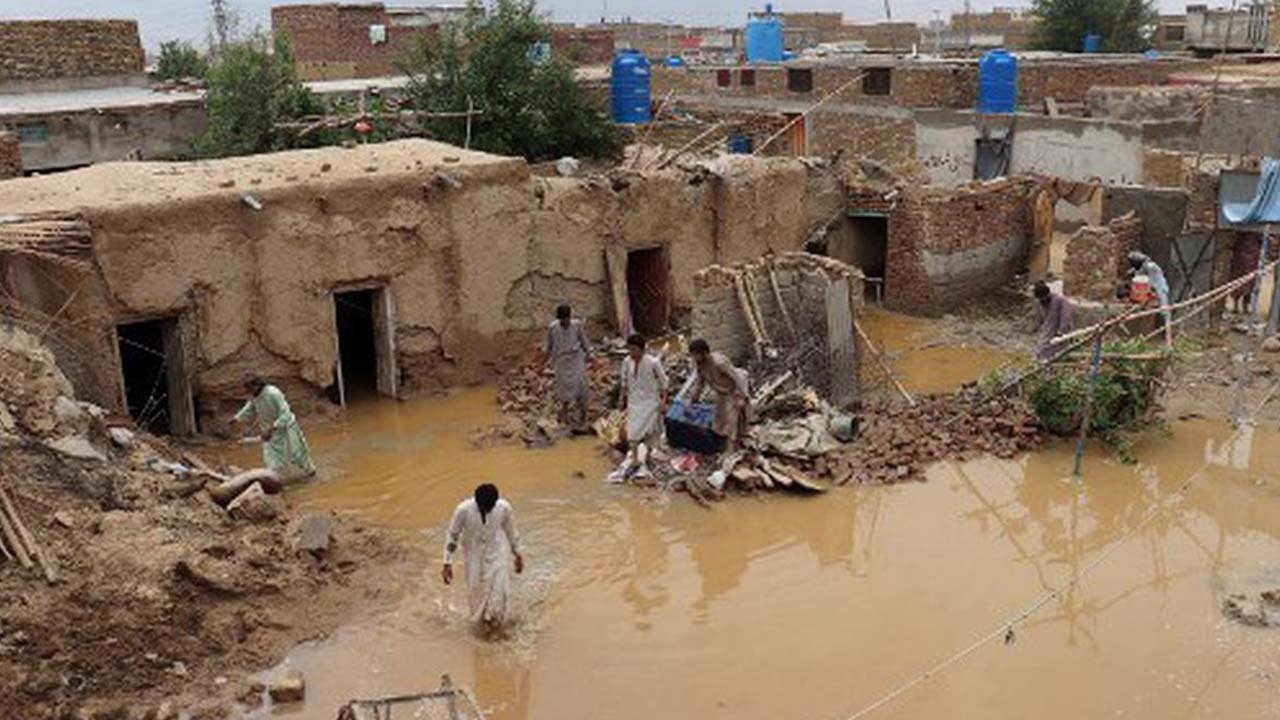
    The Board of Executive Directors of the World Bank has granted $213 million in funding to Balochistan for the purpose of improving livelihoods, essential services, and risk protection in communities that were affected by the devastating floods in 2022.

    This financial assistance is part of a larger program established in collaboration with the government to address the aftermath of the floods and build a climate-resilient Pakistan.

    Najy Benhassine, the World Bank Country Director for Pakistan, expressed the organization’s commitment to closely cooperate with the Government of Balochistan in supporting the affected communities. The World Bank aims to provide livelihood support and rehabilitate irrigation and flood protection infrastructure.

    These efforts will not only restore the livelihoods of the affected population but also enhance their resilience to potential future climate-related disasters and natural hazards. The project aligns with the comprehensive package of post-flood rehabilitation and resilient reconstruction program agreed upon with the authorities.

    The floods of the previous year were a result of record monsoon rains in the southern and southwestern regions of Pakistan, compounded by glacial melt in the northern areas. The calamity affected nearly 33 million people in the country, which has a population of 220 million. Tragically, the floods claimed over 1,700 lives and caused substantial damage to homes, crops, bridges, roads, and livestock.

    The Integrated Flood Resilience and Adaptation Project (IFRAP) outlined by the World Bank will provide housing reconstruction grants to approximately 35,100 homeowners. It will also focus on restoring essential services by rehabilitating damaged community infrastructure and facilities, such as water supply systems, irrigation networks, roads, and community facilities.

    Balochistan, with its geographical location, socioeconomic background, and vulnerability to climate change, faces significant risks from natural disasters. Yoro Sidibe, a Senior Water Specialist at the World Bank, emphasized that the project aims to provide economic opportunities to the affected communities while ensuring social inclusion and participation. Additionally, it will enhance institutional capacity for preparedness and response to future disasters.

    The World Bank expects that the Integrated Flood Resilience and Adaptation Project will benefit approximately 2.7 million people in selected communities across Balochistan’s calamity-declared districts. The project’s objectives include the restoration of degraded watersheds and the strengthening of institutional capacity at both the provincial and local levels.

  • Japanese car companies consider establishing hybrid vehicle plants in Pakistan

    Japanese car companies consider establishing hybrid vehicle plants in Pakistan

    Japan has urged Pakistan to allow the import of manufacturing equipment for vehicles due to the shortage of dollars, which has affected the issuance of letters of credit to Japanese companies operating in the country.

    Japanese firms are considering the establishment of hybrid vehicle plants in Pakistan, with plans to export the vehicles from the country in the future.

    During a meeting between Ambassador Wada Mitsuhiro and Finance Minister Senator Ishaq Dar at the Finance Division, the Ministry of Finance issued an official statement. The Vice Chairman of Toyota, Shinji Yanagi, SAPM on Finance Tariq Bajwa, finance secretary, and senior officers were also in attendance.

    The finance minister briefed the envoy on the economic challenges and priorities of the government and emphasized that Japan is one of its major development partners. The cooperation between the two countries will strengthen in multiple fields for mutual benefit. The finance minister also welcomed the investment plans of Japanese companies in Pakistan.

    Ambassador Mitsuhiro praised the government’s pragmatic policies and actions and expressed confidence in the country’s economic policies. Meanwhile, a World Bank delegation led by Mamta Murthi, Vice President of the World Bank for Human Development, met with Dar at the Finance Division.

    Murthi emphasized the importance of investing in human capital, particularly in education, health and nutrition, social protection, population control, and women’s development. She also highlighted the importance of local ownership and community participation in implementing development projects.

    The finance minister briefed Murthi on the government’s policies and programs related to key areas of human development to uplift the masses and eliminate poverty in the country. He expressed the government’s commitment to work with the World Bank to achieve their shared goals of sustainable development in Pakistan.

  • Pakistan’s IMF bailout programme revival delayed: blame game between Pakistani authorities and IMF

    Pakistan’s IMF bailout programme revival delayed: blame game between Pakistani authorities and IMF

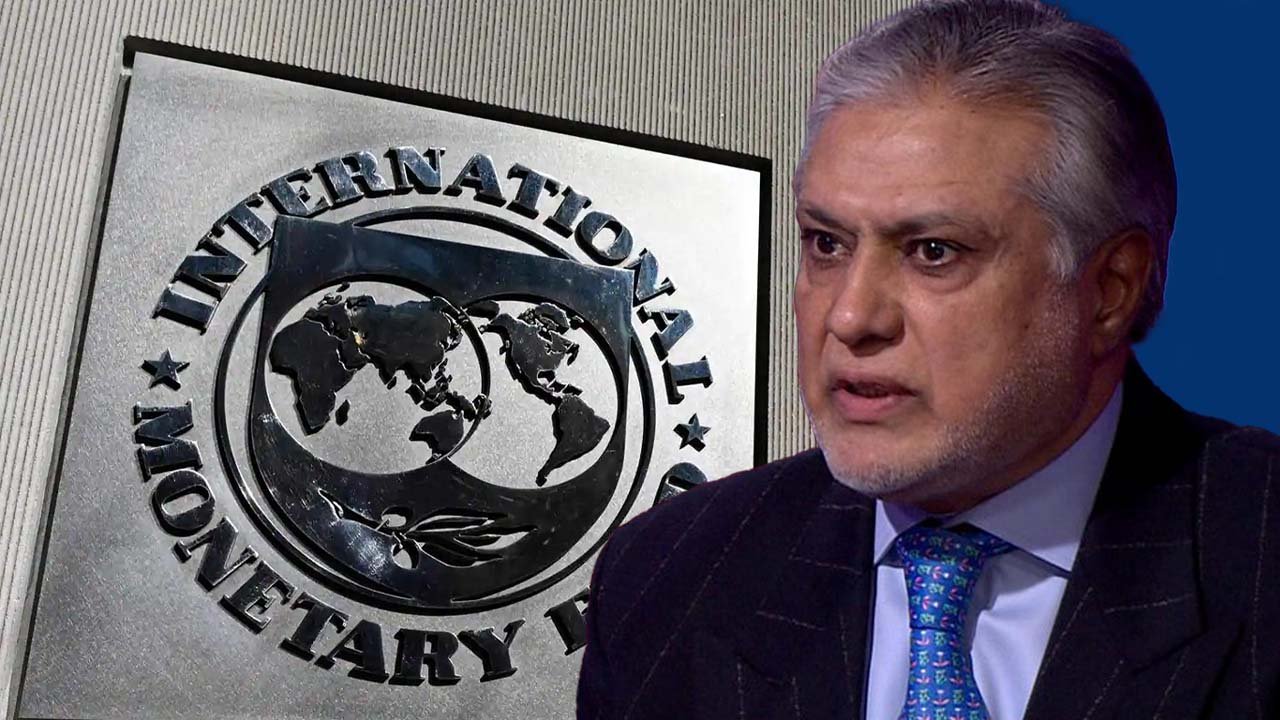
    Pakistani authorities and the International Monetary Fund (IMF) are blaming each other for the delay in reviving the IMF bailout programme. The IMF approved a $6.5 billion bailout package for Pakistan in 2019, of which $1.1 billion is still outstanding.

    However, issues related to fiscal policy adjustments have delayed the release of the funds since November. The delay has raised concerns as Pakistan has less than a month’s worth of foreign exchange reserves and needs the IMF package to avert defaulting on external payment obligations.

    With the expiry of the existing IMF programme on June 30, 2023, Pakistan’s options for reviving the IMF programme are shrinking with every passing day.

    While Pakistani authorities argue that the IMF is playing politics, IMF sources say they are still waiting for confirmation on the remaining $2 billion from the World Bank and Asian Infrastructure Investment Bank, as well as seeking commercial loans from banks.

    According to Geo, Dr Khaqan Najeeb, former adviser Ministry of Finance, has called for short-term measures, such as funding from friendly countries, the revival of the IMF programme, clarity on programme completion dates, and work on the budget for 2023-24 to be undertaken to avoid Pakistan being near the brink of default.

  • World Bank and IMF spring meetings to address global economic uncertainties and climate change

    World Bank and IMF spring meetings to address global economic uncertainties and climate change

    On Monday, the 2023 spring meetings of the World Bank Group and the International Monetary Fund (IMF) commence in the US capital to examine the “uncertainties and risks weighing heavily” on the global economy. The meetings, which run from April 10 to 16, will take place at the IMF and World Bank headquarters and will focus on the impact of climate change, which is endangering lives and livelihoods worldwide.

    Finance ministers and central bank governors from around the world will attend the meetings to reconnect with international financial leaders, and some may hold one-on-one meetings with officials from the US Treasury and State Department. Pakistan will be represented at the meetings by the secretaries of finance and economic affairs, as well as the State Bank governor, in place of Finance Minister Ishaq Dar.

    An official statement outlining the issues to be discussed at the meetings indicated that “stubborn inflation, the cost-of-living crisis, and slower growth effects” are causing harm to the poor and most vulnerable. The statement further highlighted that record-high debt is impeding the progress of developing countries, and that the consequences of climate change are threatening lives and livelihoods globally. According to Dawn, experts are urging the World Bank and the IMF to create a comprehensive strategy to address the challenges that developing nations are facing.

    A picture on the UN Foundation’s website illustrates the widespread devastation caused by last year’s floods in Pakistan, prompting international financial institutions to devise a new mechanism to “assist communities affected by (climate change) catastrophes.” The caption beneath the photo emphasised that “many lives were lost, and millions lost their homes, with one-third of the country submerged.”

    According to a World Bank study released shortly after the floods, “Pakistan urgently requires substantial investment in climate resilience to safeguard its economy and reduce poverty.”

  • Ishaq Dar cancels trip to the US for IMF and World Bank spring meetings

    Ishaq Dar cancels trip to the US for IMF and World Bank spring meetings

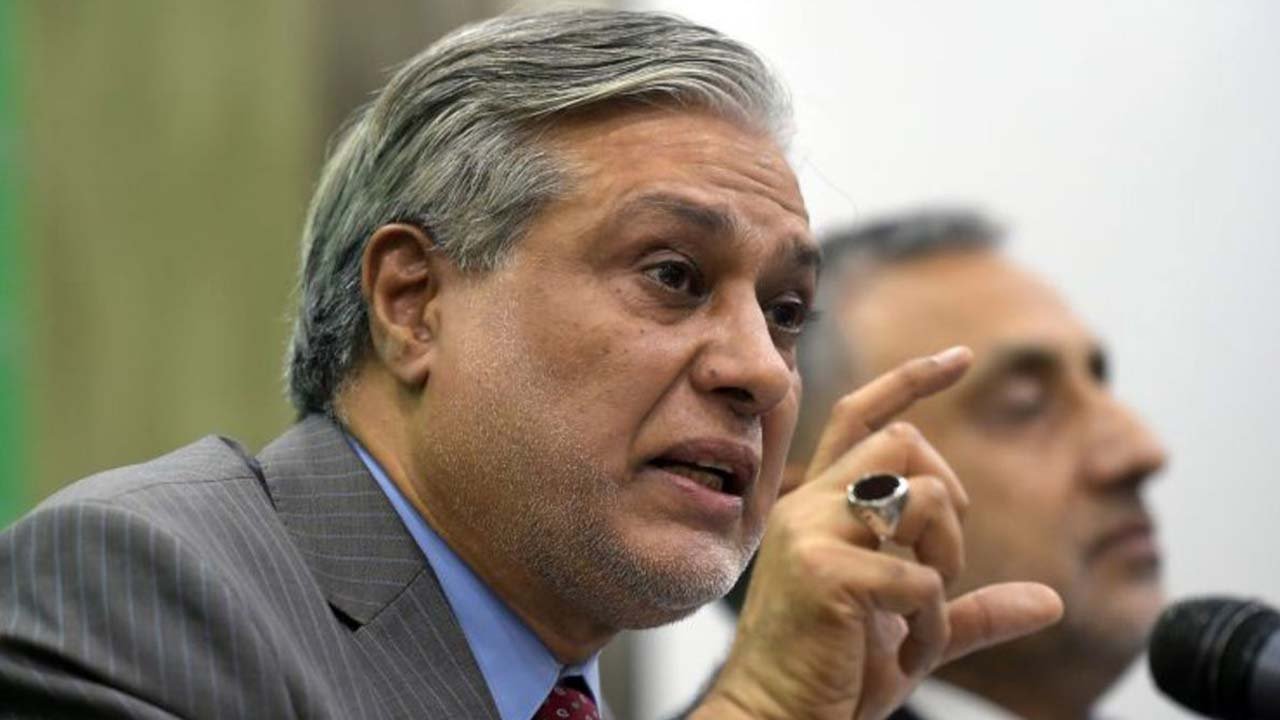
    Finance Minister, Ishaq Dar, has cancelled his scheduled trip to the United States next week to meet with the International Monetary Fund (IMF) and World Bank. The reason cited for the pull-out is the “domestic state of affairs” in the country, as the deepening political uncertainty has made it difficult for Dar to attend the World Bank-IMF spring meetings that were supposed to take place in Washington from April 10 to 16.

    Dar’s original plan was to address concerns about the government’s continuity, future economic plans, and bridging the trust deficit with multilateral lenders. However, with his withdrawal, the Minister of Economic Affairs, Sardar Ayaz Sadiq, will also not travel to the United States. The government will now be represented by Finance Secretary Hamed Yaqoob Sheikh and Economic Affairs Secretary Kazim Niaz at the WB-IMF spring meetings.

    The decision by the finance minister to withdraw may also result in the cancellation of meetings with his Saudi Arabian counterpart and the UK state minister for development. Dar was supposed to begin his trip on Monday with a meeting with Nathan Porter, the IMF’s Mission Chief in Pakistan, which was critical as Pakistan and the IMF were no longer actively negotiating following the government’s decision to announce petrol subsidies.

    Besides the IMF and WB, Dar was scheduled to meet with representatives from the three international credit rating agencies that had downgraded Pakistan. The finance ministry had also scheduled meetings with foreign commercial banks to persuade them to release loans.

    However, the Pakistan delegation may still get to meet with IMF’s deputy managing director Antoinette Sayeh, who follows Pakistan closely. It is uncertain whether a meeting with Managing Director Kristalina Georgieva would take place or not. Some reports have cited diplomatic protocol issues that prevent low-ranking dignitaries from meeting presidents/directors/leaders of various multilateral institutions and finance ministers from various countries.

  • World Bank lowers Pakistan’s growth forecast tighter financial conditions

    World Bank lowers Pakistan’s growth forecast tighter financial conditions

    Pakistan’s current-year growth forecast has been significantly reduced by the World Bank due to tighter financial conditions and limited fiscal space. The country’s economy is now expected to grow only 0.4 per cent in the current year, compared to the October 2022 forecast of 2 per cent growth.

    This bleaker forecast assumes that an agreement is reached with the International Monetary Fund for bailout funds. Pakistan’s fiscal year runs from July to June, and the country expects its economy to grow 2 per cent in FY23, although the country’s central bank chief has warned that this forecast could face downward pressure.

    Pakistan has been in economic turmoil for months, with an acute balance of payments crisis. Talks with the IMF to secure $1.1 billion in funding as part of a $6.5 billion bailout agreed upon in 2019 have not yet yielded fruit. Lower economic output and high prices in Pakistan have led to stampedes and looting at flour distribution centres set up across the country. The World Bank attributed the greater food insecurity for South Asia’s poor to elevated global and domestic food prices.

    The World Bank also lowered its 2023 regional growth forecast to 5.6 per cent from 6.1 per cent in October, citing rising interest rates and uncertainty in financial markets as putting downward pressure on the region’s economies. Most countries have raised interest rates at a rapid pace since the war in Ukraine last year led to choking supply chains and stoked inflation globally.

    Sri Lanka’s economy is forecast to contract by 4.3 per cent this year, reflecting the lasting impact of the macro debt crisis, with future growth prospects heavily dependent on debt restructuring and structural reforms. In January, President Ranil Wickremesinghe said Sri Lanka’s economy could contract by 3.5 per cent or 4.0 per cent in 2023 after shrinking by 11 per cent last year.

    The World Bank also lowered its forecast for India’s economic growth in the current fiscal year to 6.3 per cent from 6.6 per cent, due to the expected negative impact of higher borrowing costs on consumption. The current fiscal year began on April 1.

  • Ishaq Dar to attend IMF, World Bank meetings in US

    Ishaq Dar to attend IMF, World Bank meetings in US

    Finance Minister of Pakistan, Ishaq Dar, will lead a delegation to the United States to attend the annual spring meeting of the Breton Wood Institutions (BWIs), comprising the International Monetary Fund (IMF) and World Bank, from April 10 to 16.

    The delegation includes officials from the Finance and Economic Affairs Division and the State Bank of Pakistan (SBP) governor. The delegation is expected to present new proposals to the IMF and World Bank for the provision of dollar inflows.

    IMF and Pakistan will also discuss the possibility of combining the remaining 10th and 11th reviews under the Extended Fund Facility (EFF) program, worth $6.5 billion, if the pending 9th review is completed. The EFF program, signed in 2019, is set to expire on June 30, 2023, and cannot be extended beyond the deadline.

    The delay in the 9th Review’s completion, scheduled for December 2022, has resulted in the delay of the 10th Review, which was to start in February 2023. The 11th Review was scheduled to begin on May 3. The delay in the 9th Review will increase the cost of correcting the situation.

    The government of Pakistan has taken difficult decisions to revive the IMF program, but there is no easy solution to the country’s ailing economy. The IMF is seeking verification from Pakistan’s bilateral friends, including Saudi Arabia, the UAE, and Qatar, to provide additional assistance of $6 billion until the end of June 2023.

    SBP’s foreign exchange reserves currently stand at $4.2 billion, which is insufficient to meet obligations related to foreign debt servicing, including principal and markup. It remains to be seen how the completion of the bailout program will proceed, given the delay in the 10th Review.

  • Jinnah, Allama Iqbal, and Islamabad airports to be outsourced by govt

    Jinnah, Allama Iqbal, and Islamabad airports to be outsourced by govt

    The government has approved a draft to outsource three of its major airports in a bid to boost its dwindling foreign exchange reserves.

    The Economic Coordination Committee (ECC) of the government considered a summary presented by the Ministry of Aviation regarding the engagement of the International Finance Corporation (IFC), which is part of the World Bank Group, as a transaction advisor for the outsourcing process.

    The airports that will be outsourced are the Jinnah International Airport Karachi, Allama Iqbal International Airport Lahore, and Islamabad International Airport.

    The committee, headed by Finance Minister Ishaq Dar, initiated the outsourcing process under the Public-Private Partnership Act-2017 to engage private investors/airport operators to run the airports, develop associated land assets, and enhance commercial activities. The committee also approved the draft Transaction Advisory Agreement (TASA) reached with the IFC by the Pakistan Civil Aviation Authority (PCAA) for the outsourcing of the airports after a detailed discussion.

    The details of the partnership or any agreement have not been made official. According to officials, Pakistan has been in talks with Qatar to jointly run terminals at the three airports.

    Prime Minister visited Doha last year to seek Qatari investment in the country’s energy and aviation sectors, and the Qatar Investment Authority pledged $3 billion to Pakistan.

    Pakistan’s national flag carrier is struggling with accumulated losses of nearly Rs400 billion Pakistani rupees, and the government hopes that outsourcing the airports will help attract direct foreign investment and provide world-class facilities to passengers.

  • Pakistan received over $48 billion in bailout loans from China between 2008-2021

    Pakistan received over $48 billion in bailout loans from China between 2008-2021

    A study published on Tuesday revealed that China has spent $240 billion rescuing 22 developing countries between 2008 and 2021. This amount has increased in recent years as more countries struggled to repay loans taken for the building of “Belt & Road” infrastructure.

    The researchers, from the World Bank, Harvard Kennedy School, AidData, and the Kiel Institute for the World Economy, found that almost 80 per cent of the rescue lending was made between 2016 and 2021, primarily to middle-income countries such as Pakistan, Argentina, and Mongolia. However, lending has decreased since 2016 as many projects failed to generate expected financial dividends.

    The report also highlighted that Beijing’s ultimate objective was to rescue its banks, which is why it engaged in the risky business of international bailout lending. Chinese loans to countries in debt distress increased from less than 5 per cent of its overseas lending portfolio in 2010 to 60 per cent in 2022.

    Argentina received the highest amount of bailout money with $111.8 billion, followed by Pakistan with $48.5 billion and Egypt with $15.6 billion, while nine countries received less than $1 billion.

    According to Reuters, the People’s Bank of China (PBOC) swap lines accounted for $170 billion of the rescue financing, including in Suriname, Sri Lanka, and Egypt. Bridge loans or balance of payments, supported by Chinese state-owned banks, amounted to $70 billion. Rollovers of both types of loans totaled $140 billion. However, the study criticized some central banks for potentially using the PBOC swap lines to artificially pump up their foreign exchange reserve figures.

    China is currently negotiating debt restructurings with several countries, including Zambia, Ghana, and Sri Lanka. However, it has been criticized for holding up the processes. In response, it has called on the World Bank and International Monetary Fund to offer debt relief as well.

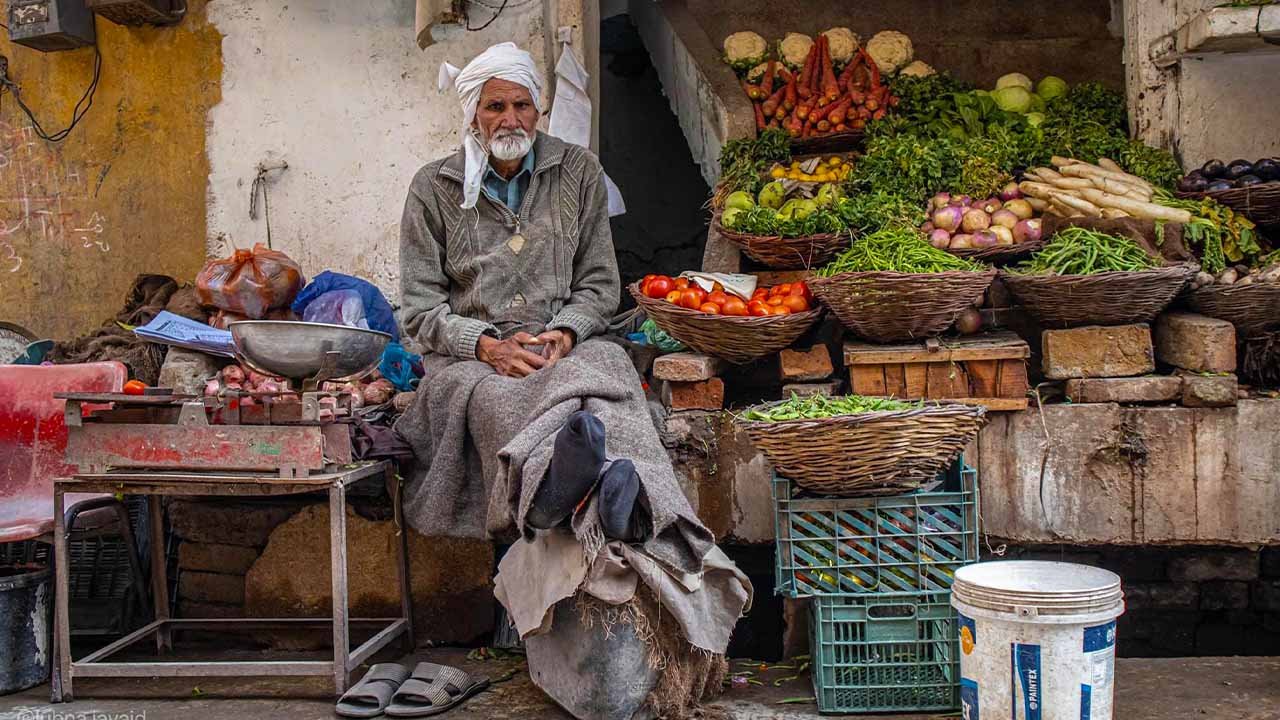
  • Pakistan faces second-highest food price inflation in South Asia: World Bank report

    Pakistan faces second-highest food price inflation in South Asia: World Bank report

    According to the World Bank’s “Food Security Update,” the consumer price inflation for food items in Pakistan in February 2023 on a year-on-year basis was 45.1 per cent, which is the highest in South Asia after Sri Lanka, which experienced 54.4 per cent inflation.

    The report further states that domestic grain and wheat flour prices remained volatile across South Asia at the beginning of 2023, and were well above their year-earlier levels. Specifically, in Pakistan, wheat flour prices in January 2023 reached record highs and were 20 to 140 per cent higher year on year.

    The high prices of food items have been attributed to several factors, including generally stagnant production since 2018, stock losses and disrupted trade flows due to the 2022 floods, high agricultural input and transportation costs, and high headline inflation, according to the Food and Agriculture Organization of the United Nations (FAO).

    The report noted that India, Bangladesh, and Nepal experienced year-on-year consumer price inflation for food prices of 6.2 per cent, 7.8 per cent, and 5.6 per cent, respectively, in January 2023. Rice production increased in 2022 in several countries, including India, despite reductions in Pakistan and Tanzania, according to the report.

    The US Department of Agriculture predicts a 4.5 per cent contraction in rice shipments due to a decrease in exports from Pakistan, Thailand, the United States, and Vietnam, which will more than offset an increase from India. Moreover, domestic food price inflation remains high around the world.

    According to Brecorder, the latest month between October 2022 and February 2023, for which food price inflation data are available, shows high inflation in almost all low- and middle-income countries, with inflation levels above 5 per cent in 94.1 per cent of low-income countries, 86 per cent of lower-middle-income countries, and 87 per cent of upper-middle-income countries, with many experiencing double-digit inflation.

    Furthermore, about 87.3 per cent of high-income countries are experiencing high food price inflation, and the countries affected most are in Africa, North America, Latin America, South Asia, Europe, and Central Asia, according to the report.