Tag: World Bank

  • Pakistani traders threaten to launch nationwide protests if new taxes imposed

    Pakistani traders threaten to launch nationwide protests if new taxes imposed

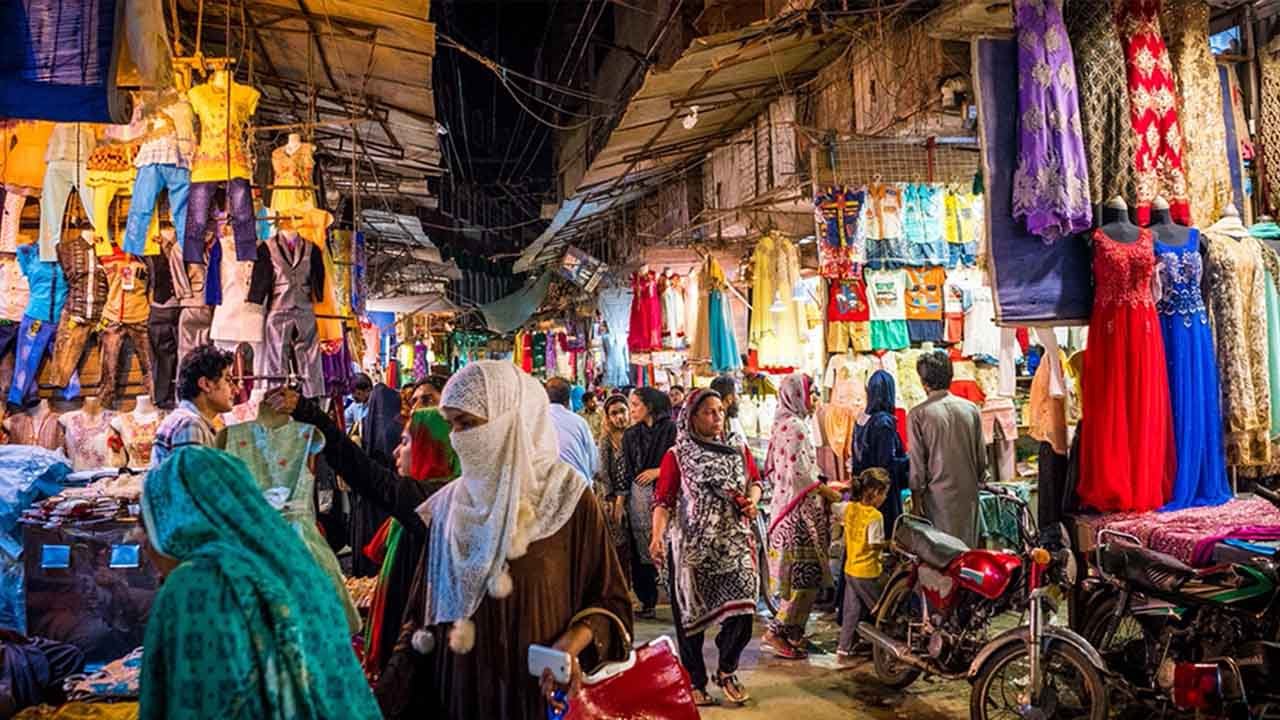
    Traders in Pakistan have threatened to launch a nationwide protest in response to the government’s potential imposition of new taxes to meet the International Monetary Fund’s (IMF) conditions. The Central Organisation of Traders has called for the government to reduce the salaries of army generals, judges, and parliamentarians instead.

    On Saturday, representatives of the Central Organisation of Traders spoke to the media in Islamabad and announced their plan for a protest movement starting on February 13th if the new taxes are introduced. The leaders of the organization warned the government that the current economic situation in the country cannot withstand further taxation of the general public and the trading community.

    They expressed dismay that the state of the economy of a nuclear country was in dire straits and the situation was worsening with each passing day, and said that the public should not suffer because of the “flaws or crimes committed by the leaders of this country.”

    “Our reaction will be severe if more taxes worth billions of rupees were imposed, as being reported in the media,” Kashif Chaudhry, the organisation’s president, said, asking the stakeholders, including the ruling elites, to make “sane decisions” if they want to improve the economy.

    Mr Chaudhry has proposed that the government reduce the expenses of high-level officials such as the President, Prime Minister, legislators, judges, army officers, and bureaucrats. He believes the government should immediately decrease “non-productive expenditures” by half.

    The trader representatives have also made demands of the government. They have called for the creation of both short-term and long-term economic policies and for more consistent income tax collection across all sectors, instead of imposing billions of dollars in new taxes.

    “I assure the government that the business community was ready to contribute to steering the country out of the current economic crises and we traders are ready to pay fixed taxes,” he said.

    Khawaja Salman Siddiqui, the chairman of the organization, criticized Finance Minister Ishaq Dar. According to Siddiqui, Dar was appointed by the PML-N to stabilize the economy and prevent the depreciation of the rupee, but he failed to deliver on his responsibilities.

    Mr Siddiqui said putting an artificial cap on the dollar’s rate led to a wide gap between the interbank and open market rates, and despite the demand to remove the cap, Mr Dar “remained stubborn and did not listen to anybody.”

    Other speakers called for the implementation of the decision of the Federal Shariat Court to make Pakistan’s economy interest-free to “eradicate exploitation in the system.”

    According to Dawn, the speakers also suggested an amnesty program that would allow wealthy individuals to repatriate their foreign wealth. The government could then borrow money from these individuals and provide them with profits instead of taking loans from the International Monetary Fund (IMF) and World Bank with unfavorable conditions.

  • World Bank cuts Pakistan’s GDP growth forecast from 4% to 2%

    World Bank cuts Pakistan’s GDP growth forecast from 4% to 2%

    Due to the unstable economy and floods, the World Bank predicted that Pakistan’s economic growth would drop by half, falling by 4 per cent to 2 per cent, during the current fiscal year.

    According to the Bank’s latest report, “Global Economic Prospects,” Pakistan is experiencing growing economic woes, especially those caused by the recent flooding as well as ongoing policy and political uncertainties.

    “Pakistan faces mounting economic difficulties and Sri Lanka remains in crisis. In all regions, improvements in living standards over the half-decade to 2024 are expected to be slower than from 2010-19,” the World Bank stated in Global Economic Prospects released on Tuesday.

    Pakistan’s currency declined by 14 per cent between June and December, and its national risk premium climbed by 15 per cent over this same time frame due to the nation’s low foreign exchange reserves and rising sovereign risk.

    It went on to say that growth is anticipated to pick up to 3.2 per cent in the fiscal year 2023–24 (FY24), still under previous forecasts, as the country implements policy measures to stabilise macroeconomic conditions, inflationary pressures subside, and reconstruction after the floods gets underway.

    According to the analysis, Pakistan’s recent floods are thought to have cost the country damage equal to 4.8 per cent of GDP.

  • Donors pledge more than $10 billion for Pakistan flood recovery at Geneva conference

    Donors pledge more than $10 billion for Pakistan flood recovery at Geneva conference

    Pakistan has secured over $10.5 billion in pledges from international creditors at the one-day International Conference on Climate Resilient Pakistan in Geneva, which will help the cash-strapped country recover from last year’s devastating floods.

    By the end of the first plenary session, Pakistan had received pledges totaling $8.57 billion, and in the second session, it had secured more than $2 billion.

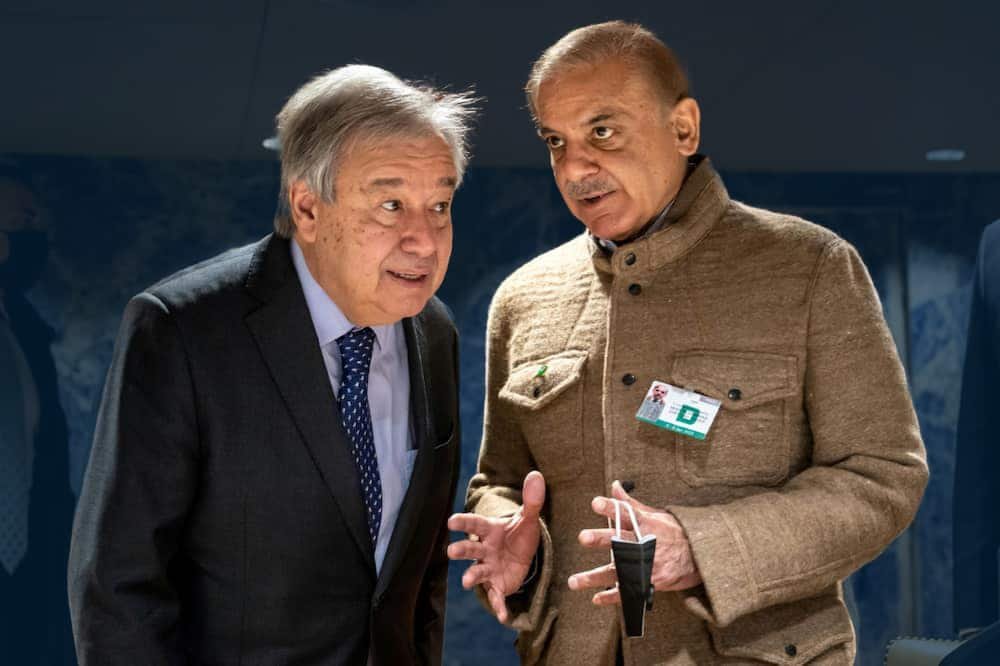
    UN Secretary-General Antonio Guterres urged the international community to help Pakistan build climate-resilient infrastructure and to grant access to the knowledge and resources needed to survive future catastrophes.

    The delegations recalled their support for the emergency relief operations during the conference and reaffirmed their commitment to Pakistan’s people in support of a strong recovery, rehabilitation, and reconstruction.

    All donations pledged at the Geneva conference

    • Islamic Development Bank: $4.2 billion
    • World Bank: $2 billion
    • Asian Development Bank: $1.5 billion
    • Asian Infrastructure Investment Bank: $1 billion
    • Saudi Arabia: $1 billion
    • France: $384 million
    • China: $100 million
    • United States: $100 million
    • EU: $93 million
    • Germany: $88 million
    • Japan: $77 million
    • United Kingdom: $10 million
    • Azerbaijan: $2 million

    The attendees voiced their solidarity and pledged financial support for the ongoing humanitarian activities as well as the achievement of the goals and key areas. The meeting was co-hosted by Pakistan and the UN.

    The World Bank has pledged $2 billion, the Asian Infrastructure Investment Bank has pledged $1 billion, and the Islamic Development Bank Group has pledged $4.2 billion over three years.

    Furthermore, Asian Development Bank has pledged $1.5 billion, while the European Union has offered $93 million, Germany has pledged $88 million, China has pledged $100 million, Japan has pledged $77 million, and so on. The French government has committed $345 million, and the United States Agency for International Development has offered $100 million.

    Saudi Arabia has also committed $1 billion to assist Pakistan in reconstruction efforts.

  • Nearing default and lying about phone calls? Not good Pakistan, says IMF

    Nearing default and lying about phone calls? Not good Pakistan, says IMF

    The International Monetary Fund (IMF) stated on Sunday that Managing Director Kristalina Georgieva and Prime Minister Shehbaz Sharif spoke on the latter’s request, a claim that suggests Islamabad has continued to engage in politics while being on the verge of default.

    “The call took place in response to a request by the Prime Minister of Pakistan to discuss the International Conference on resilient Pakistan,” Esther Perez, the resident representative of the IMF told The Express Tribune.

    On Friday, the PM’s office issued an official handout stating that “the IMF managing director phoned premier Shehbaz on the phone” following his address at the Hazara Electric Supply Company’s (HAZECO) inaugural ceremony. The PM had also stated in his address that the managing director of the Fund had called him.

    As the country makes dubious claims of strength and has just $4.5 billion in foreign exchange reserves, it appears that the administration is still not ready to change its ways.

    Only three weeks’ worth of imports may be covered using the remaining funds. Pakistan has paid back $8.5 billion in debt during the past three months (January through March). Included in this is a $2 billion loan to the UAE for which the government is attempting to obtain a rollover.

    Given the long-standing animosity between the two parties, such factually erroneous claims might make it harder for Pakistan to persuade the IMF.

    Due to its propensity to make pledges while receiving a loan tranche but then break them after the tranche has been released, the country has had a rough history with the IMF. This has led to a significant gap.

    A spokesperson of the IMF in a statement to the media also said that “the Managing Director had a constructive call with Prime Minister Sharif in the context of the International Conference on Resilient Pakistan to be held in Geneva on Monday, January 9.”

    The MD once more conveyed her sympathies to those who were directly impacted by the floods, and it was also said that she backed Pakistan’s attempts to create a more robust recovery.

    Additionally, the PM asserted on Friday that an IMF delegation will visit Pakistan in a matter of two to three days.

    “I asked her to send an IMF team for the completion of the pending 9th review of the programme so that the next loan tranche is released. She assured that the mission will visit [Pakistan] in the next two to three days,” Shehbaz had said.

    However, in its statement to the media, the IMF spokesperson said that the IMF “delegation is expected to meet with Finance Minister Ishaq Dar on the sidelines of the Geneva conference to discuss outstanding issues and the path forward”.

    The self-claimed deadline, which ends on Monday, for the 9th review mission’s arrival in Pakistan was not mentioned in the statement.

    On Saturday, it was revealed that due to significant debt repayments, Pakistan’s official foreign exchange reserves have for the first time dropped to a perilous level of $4.5 billion.

    The sources in the finance ministry also stated that no dates for the IMF review mission had been decided upon as of the PM’s address.

    Additionally, the prime minister said that Georgieva had asked if Saudi Arabia and China were aiding Pakistan.

    After thereafter, Pakistan’s interior minister Rana Sanullah said that even foreign countries won’t assist without the IMF’s protection.

    “If we back out from these [IMF] conditionalities, then our economic survival will become next to impossible and even our friendly countries cannot extend financial help to us,” Sanaullah had said in Faisalabad.

    The interior minister had said that if the current administration tried to adhere to the strict requirements of the IMF, inflation would soar, prices would soar, and the economy would suffer.

    Since the 9th review negotiations between Islamabad and the Fund have not concluded as of yet, a $1.1 billion loan tranche has been withheld.

    In order for the World Bank and the Asian Infrastructure Investment Bank (AIIB) to disburse their funds, Pakistan is eager to finish the ninth review.

    Disagreements about import restrictions, currency rate regulations, demands for the imposition of more taxes, and raising energy costs to pay off over Rs500 billion in circular debts have caused the discussions to be postponed.

  • World Bank approves $1.69 billion financing for flood-hit Sindh

    World Bank approves $1.69 billion financing for flood-hit Sindh

    The Board of Executive Directors of the World Bank approved funding for five projects totaling $1.692 billion on Tuesday in order to support those residing in Sindh, Pakistan’s flood-affected areas.

    According to Geo, out of the five initiatives, three support rehabilitation, home reconstruction, and the restoration of crop production for vulnerable populations, according to a statement released by the World Bank. Two of the three projects have a combined value of $500 million, while the third is worth $292 million.

    “Sindh was the province worst affected by the 2022 floods. There were huge damages to the housing, health, and agriculture sectors and people lost their livelihoods. Beyond the rehabilitation and reconstruction of damaged houses and infrastructure, our engagement in the flood response effort is an opportunity to strengthen resilience, and reform institutions and governance structures”, said Najy Benhassine, World Bank Country Director for Pakistan.

    The “Sindh Flood Emergency Rehabilitation Project,” which will cost $500 million, will prioritize creating short-term livelihood opportunities and enhancing the province’s ability to respond to emergencies.

    “The project will help restore and improve critical irrigation and flood protection infrastructure, water supply schemes, roads, and related infrastructure. At least 2 million people—approximately 50 per cent of whom are women—in the most flood-affected districts will benefit from the restoration and the resilient reconstruction of critical infrastructure”.

    About 100,000 households will get short-term financial support through a community-level cash-for-work program.

    “The $500 million Sindh Floods Emergency Housing Reconstruction Project will support owner-driven and multi-hazard resilient reconstruction of core housing units. A housing subsidy will provide reconstruction and restoration grants for 350,000 housing units (almost 20 per cent of the total housing rehabilitation needs for Sindh). Cash grants will be provided for houses with structural damage to partially finance reconstruction or restoration. “

    To increase access to water and sanitation, twin pit latrines and simple rainwater collection systems will also be provided.

    Furthermore, the $292 million approved for the “Sindh Water and Agriculture Transformation Project” will enhance integrated water resource management, boost agricultural water productivity, and enable farmers who were impacted by the flood to resume crop production.

    “More than 385,000 households (approximately 1.9 million people) are expected to benefit from the project. As an immediate response to the floods, the project will provide cash transfers to approximately 300,000 flood-affected farming households to help restore crop production through the purchase of seeds, fertilizer, and other critical inputs. In the medium term around 70,000 households will benefit from improved irrigation services and agricultural support that will help boost farming income. An estimated 14,000 households will receive direct financial benefits from the pilot smart subsidy schemes targeting small- and medium-sized farmers,” the WB said.

    By improving access to and use of mother and child health services, the Sindh Strengthening Social Protection Delivery System Project ($200 million) will also boost the province’s social protection delivery system. As part of the project, the Federal National Database Registration Authority will be aligned and connected, and conditional cash transfers (CCTs) will be given to 1.3 million mothers and their kids to support better maternal and child health outcomes, particularly in the wake of service disruption caused by the floods.

    The CCTs will be made available to Sindh’s bottom 15 districts, selected depending on the Multidimensional Poverty Index (MPI), and will cover 65 per cent of the province’s total flood-affected areas. They are intended to help lessen the effects of the floods, particularly food insecurity, and to maintain access to maternal and child health services open.

    The Sindh Integrated Health and Population Project have been granted $200 million by the lender. The project will assist in raising the standard and uptake of fundamental nutrition, and maternal, neonatal, child, and adolescent health care. Additionally, it will aid in the repair and reconstruction of health infrastructure that was harmed during the floods and impeded the provision of these services.

    The initiative would enhance the population’s access to high-quality healthcare services in Sindh’s flood-affected settlements as well as in distant and peri-urban areas, particularly for women, girls, and children.

    “The World Bank will continue to support the Government and people of Pakistan to recover from the recent flood emergency and strengthen long-term resilience to such climate-related shocks,” the statement concluded.

  • Aanay waalay dinon mein koyi barra toofaan barpa ho sakta hai: Hamid Mir

    Aanay waalay dinon mein koyi barra toofaan barpa ho sakta hai: Hamid Mir

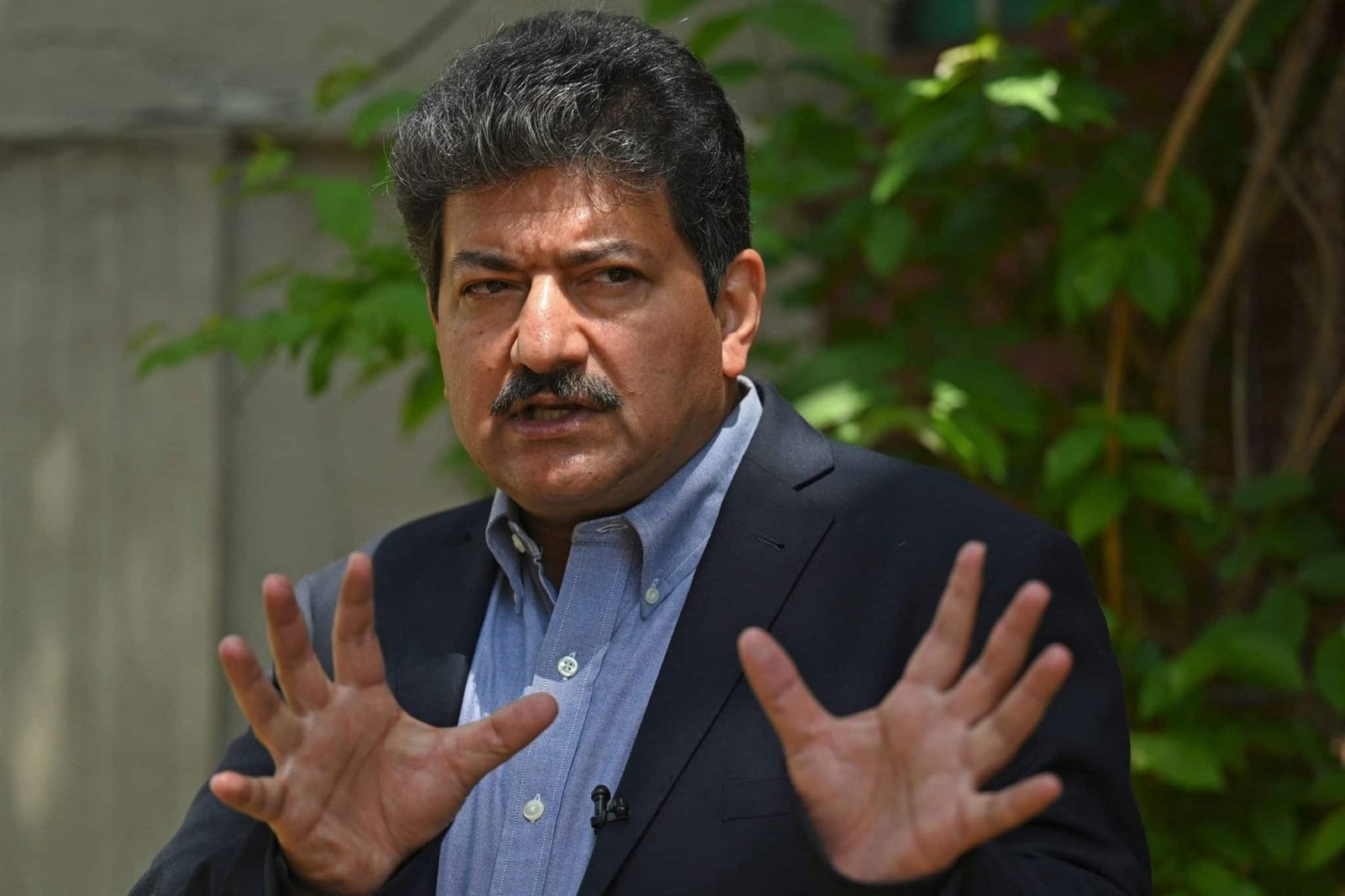
    Senior journalist Hamid Mir has warned that all is not well in Islamabad and a big storm may hit the corridors of power in the near future.

    While speaking on Geo News’ programme Geo Pakistan, Mir said, “Maujooda haqoomti ittehaad mein sab kuch acha nahin hai aur Islamabad mein honay waali siyaasi garma garmi aanay waalay dinon mein koyi barra toofaan barpa kar sakti hai” (All is not well within the incumbent coalition government. The political heat in Islamabad could create a big storm in the coming days).

    Mir said that if Pakistan Tehreek-e-Insaf (PTI) Chairman Imran Khan dissolves the Khyber Pakhtunkhwa (KP) and Punjab Assembly, then the heat in Islamabad can create a huge storm.

    He was of the view that junior coalition parties could also force Prime Minister (PM) Shehbaz Sharif’s government to hold general elections.

    Separately, differences can also be seen within Pakistan Muslim League-Nawaz (PML-N) as Finance Minister Ishaq Dar and his predecessor Miftah Ismail put forward their conflicting views on the state of Pakistan’s economy.

    While Dar argued that the country’s performance criteria are up to the mark and “complete” for the International Mone­tary Fund’s (IMF) ninth review, Ismail insisted that the default risk wouldn’t subside unless the Fund came to the table.

    Mulk mein default ka khatra hai, says Miftah Ismail

    Miftah Ismail said on Tuesday that there is still a threat of the country defaulting until the government completes the IMF ninth review. On the contrary, Dar said that he was not concerned whether the IMF team arrived or not for the ninth review, asserting that the IMF could “not dictate” the government.

    Appearing on Geo News’ programme ‘Aaj Shahzeb Khanzada Kay Saath”, Miftah rang alarm bells, stating that Pakistan is in jeopardy. “It has gone back in jeopardy and as long as IMF is not back on the table, the threat of default will remain high,” he emphasised.

    Moreover, he believed that the path Pakistan is on might take the country toward default urging the incumbent government to take steps to prevent that from happening.

    On the show, the former minister blamed Khan for the ongoing economic crisis. He said, “Khan is responsible for pushing Pakistan towards default; he is the one who broke his promise with the IMF; Khan is the one who wanted to derail the IMF programme when we tried to revive it under PM Shehbaz Sharif’s leadership.”

    When asked that the incumbent finance minister Ishaq Dar has said several times that IMF is being unreasonable, Miftah responded that first we need to take a good look at ourselves.

    “When the IMF gives you a loan, this means they are helping you out. We need to look at ourselves, why did we go to the IMF previously. Dealing with the IMF is not an easy task,” Miftah said. He reiterated that if the IMF didn’t come to the table, “It will be very difficult to save Pakistan from a default”.

    He stressed that the country needed to take action on certain matters to bring the IMF mission to Pakistan, saying that funds from neighbouring countries could only last the country for weeks.

    Earlier this month, Pakistan ended its immediate default risk when the State Bank of Pakistan (SBP) made a payment of $1 billion for sukuk bond.

  • ADB set to approve $1.5 billion loan for Pakistan today

    ADB set to approve $1.5 billion loan for Pakistan today

    A $1.5 billion programme loan for Pakistan is slated to be approved by the Asian Development Bank (ADB) on Friday (today) as part of the BRACE (Building Resilience with Active Countercyclical Expenditure) programme.

    According to Geo, the Board of the ADB will meet in Manila to discuss whether to approve a $1.5 billion programme loan for Pakistan. It is anticipated that this loan will be disbursed after receiving permission next week, assisting Islamabad in replenishing its depleting foreign exchange reserves.

    Additionally, it is anticipated that the Asian Infrastructure Investment Bank (AIIB) will approve $500 million in co-financing, bringing the total distribution to $2 billion for the current month.

    With a projected current account deficit of $10 to $12 billion and an external debt servicing obligation of $22.9 billion, Pakistan needs $34 billion for the current fiscal year. On the flip side, the terrible floods made the already bad situation with the economy even worse.

    Pakistan suffered losses of $32.4 billion, according to the group of international donors, which also included the World Bank, ADB, UNDP, and EU. Pakistan also needed $16.2 billion for building expenditures.

    An official document states that the $1.5 billion BRACE programme loan will assist Pakistan in responding to the deepening macroeconomic crisis exacerbated by the Russian invasion of Ukraine and the catastrophic floods that have affected close to 33 million people. Prior to the latest floods, Pakistani officials had already begun work on this programme loan.

    The amount of countercyclical actions taken by the government to lessen the negative effects of cumulative external shocks, particularly on the poor and vulnerable, comes to around $2.4 billion.

  • US officials take notice Ishaq Dar’s heckling incident at airport

    The Foreign Office (FO) of Pakistan said that United States (US) officials had taken notice of an incident in which Finance Minister (FM) Ishaq Dar was heckled at the Dulles International Airport in Washington DC.

    FO Spokesperson Asim Iftikhar Ahmad recalled the time when Saudi authorities raised the issue when the government delegation was targeted by certain individuals during the visit.

    On Thursday, Dar was harassed at the airport and people can be heard chanting “chor”. This was followed by an exchange of abusive words from both sides.

    Dar is currently in the US on a four-day visit to attend the annual meetings of the International Monetary Fund (IMF) and the World Bank.

    It is pertinent to mention that this is not the first time that a Pakistan Muslim League-Nawaz (PML-N) leader has been harassed.

    Prior to this incident, Minister of Information Marriyum Aurangzeb was heckled and harassed by a group of PML-N’s political opponents in London while she was in a coffee shop.

    In July, Federal Minister for Planning and Development Ahsan Iqbal was harassed by a group of PTI supporters when he went to a restaurant in Pakistan.

  • IMF to help Pakistan after World Bank and UNDP assess flood damages

    IMF to help Pakistan after World Bank and UNDP assess flood damages

    The International Monetary Fund stated that it is awaiting the assessment reports from the World Bank and UNDP as well as the economic destruction brought on by the country’s severe flooding before determining how it might assist Pakistan.

    According to Geo, the international lender announced that as part of the preparations for the upcoming review, it will also dispatch a delegation the following month after the annual meetings.

    But the IMF made it clear that it would hold off until the UNDP and World Bank completed their assessments of the damages.

    At a news conference in Washington on Thursday, Jihad Azour, the IMF’s Director of the Middle East and Central Asia Department, stated that “We were saddened by the loss of human as well as livelihood in Pakistan with the flood, and we present, and we reiterate our condolences to the people of Pakistan. The Fund has been very supportive of Pakistan over the last few years. We have a programme with Pakistan that has been extended and increased in size.

    According to Azour, the Fund took these actions to provide Pakistan more flexibility during the Covid-19 crisis in order to help the government deal with the confluence of shocks.

    When talking about subsidies, the director remarked “Targeted subsidies that promote certain products have not been found to be highly beneficial. It has shown to be extremely regressive, “added he.

    Azour said that the Fund urges Pakistan and other nations to stop giving out ineffective subsidies that waste money. He further emphasised that the IMF supports nations in allocating these resources to those who are in most need.

  • IMF lowers growth prediction for FY23, cautions ‘the worst is yet to come’

    IMF lowers growth prediction for FY23, cautions ‘the worst is yet to come’

    The International Monetary Fund (IMF) on Tuesday warned that the worst was yet to come as it further cut its projection for global economic growth to minus 2 per cent amid persistently increasing inflation.

    According to Dawn, the global lender of last resort projected Pakistan’s GDP growth rate at 3.5 per cent and inflation at about 20 per cent in its World Economic Outlook (WEO) 2023 – Countering the Cost-of-Living Crisis with the caveat that “the 2022 projections for Pakistan are based on information available as of the end of August and do not include the impact of the recent floods.”

    The fund forecasted Pakistan’s current account deficit at 2.5 per cent of GDP for the current fiscal year, down from 4.6 per cent last year, and the unemployment rate at 6.4 per cent on the same basis. Therefore, all of these projections are based on dated information that has drastically changed over the past two weeks.

    The Asian Development Bank estimated Pakistan’s growth rate to be 3.5 per cent late last month, compared to the World Bank’s projection of 2 per cent last week.

    According to the IMF, its projections call for global growth to decline from 6 per cent in 2021 to 3.2 per cent in 2022 and then further to 2.7 per cent in 2023, which is 0.2 per cent below the July forecast, with a 25 per cent chance that it will dip below 2 per cent.

    The three greatest economies—the United States, the European Union, and China—will continue to stagnate, while more than one-third of the world economy will contract this year or the following year. It said that Russia’s invasion of Ukraine was still seriously destabilising the world economy and that “in short, the worst is yet to come.”

    The fund urged international decision-makers to maintain their composure while storm clouds formed. It blamed the lasting consequences of three strong forces—the Russian invasion of Ukraine, a cost-of-living crisis brought on by persistent and expanding inflation pressures, and the downturn in China—for the severe economic challenges the world economy is currently facing.

    According to the WEO, worldwide inflation would increase from 4.7 per cent in 2021 to 8.8 per cent in 2022 before falling to 6.5 per cent in 2023 and 4.1 per cent by 2024. With more variation in emerging markets and developing nations, upside inflation shocks have been most common in advanced economies.

    The fund recommended emerging market officials to batten down the hatches right away. IMF access to preventative instruments should be urgently considered by eligible nations with strong policies who want to increase their liquidity reserves.

    As too many low-income countries were in or on the verge of debt distress, the countries should also try to reduce the effects of upcoming financial instability by a combination of preventative macroprudential and capital flow measures, where appropriate.

    The IMF stated that in order to prevent a wave of sovereign debt crises, the Group of Twenty’s Common Framework’s progress toward orderly debt restructurings for the most impacted was urgently required. Time could be rapidly running out.