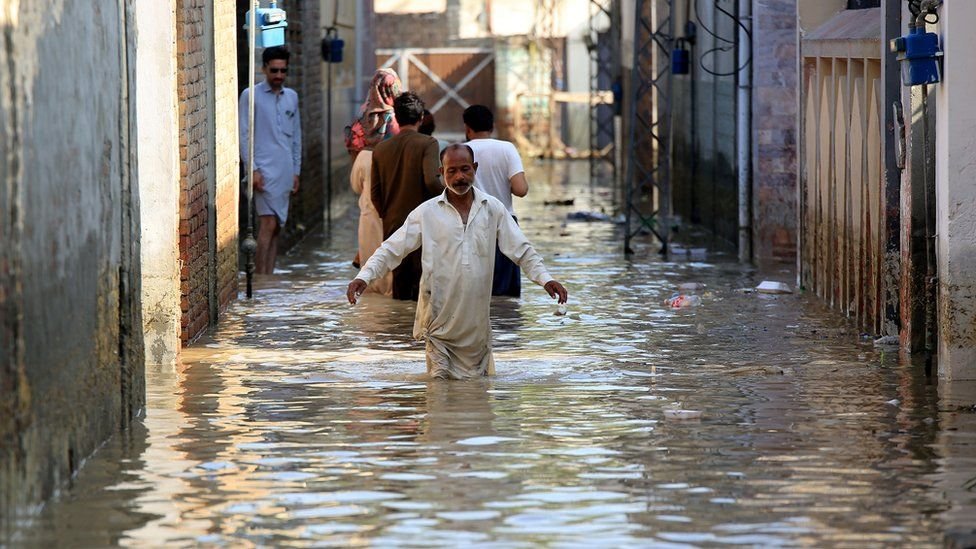
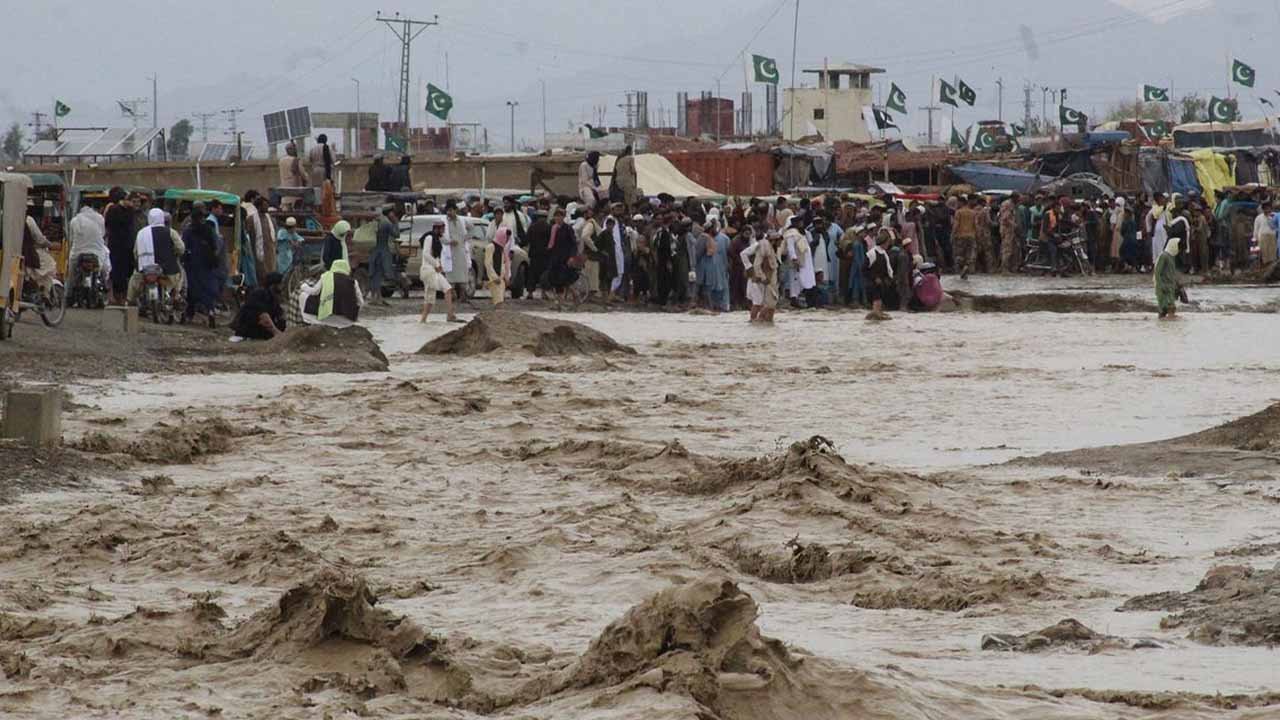
The World Bank has said that catastrophic monsoon flooding linked to climate change may push between six and nine million Pakistanis into poverty.
Unprecedented monsoon rains that hit Pakistan this year resulting in 1,700 fatalities, two million destroyed homes, and a third of the country being under water.
In shabby tent cities and dispersed settlements close to the still waters that devoured their possessions and way of life, eight million people are still without a home.
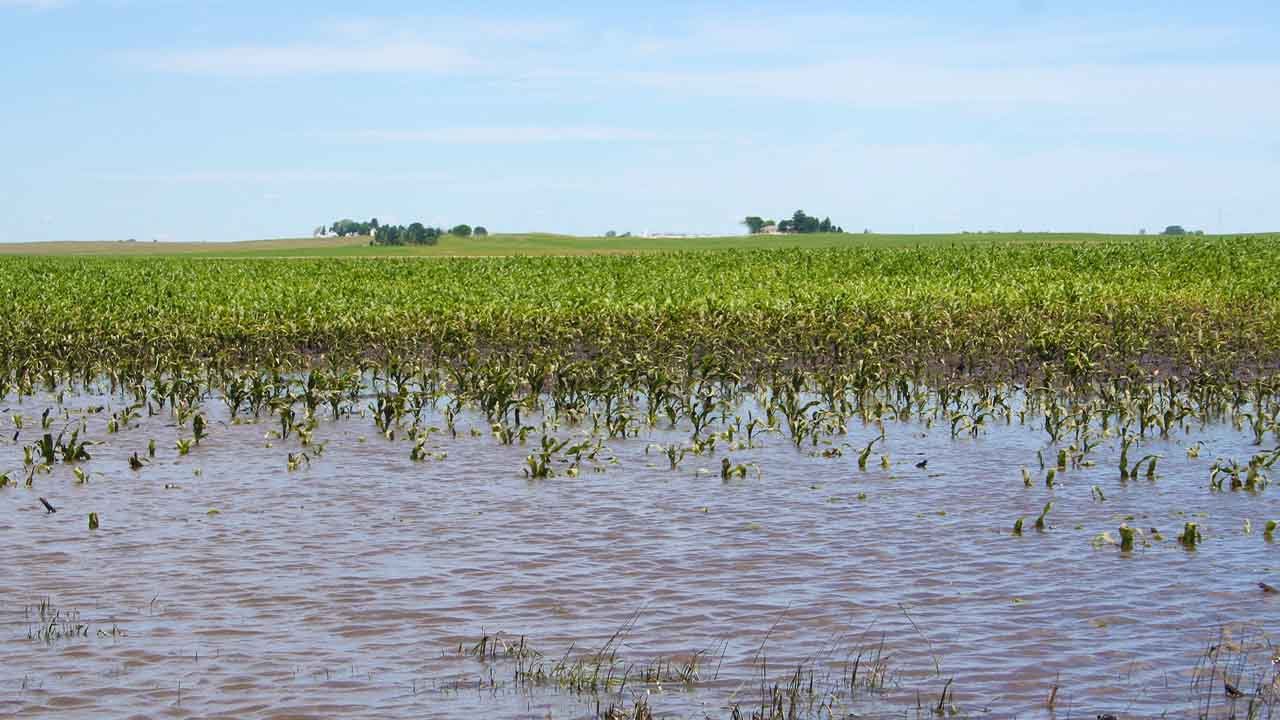
“The recent floods are expected to have a substantial negative impact on Pakistan’s economy and on the poor, mostly through the disruption of agricultural production,” said Najy Benhassine, the World Bank’s Country Director for Pakistan. “The Government must strike a balance in meeting extensive relief and recovery needs, while staying on track with overdue macroeconomic reforms. It will be more important than ever to carefully target relief to the poor, constrain the fiscal deficit within sustainable limits, maintain a tight monetary policy stance, ensure continued exchange rate flexibility, and make progress on critical structural reforms, especially those in the energy sector.”
As many as 33 million people of the 220 million South Asian nation have been affected in some way by the floods that swept away houses, roads, railways and bridges and submerged around 4 million acres of farmland.
The World Bank has proposed $2 billion in finance to jump-start infrastructure restoration and rebuilding following severe flooding.
Martin Raiser, the new Vice President of the World Bank for the South Asia Region, revealed that he had just returned from his first official trip to the country that had been devastated by floods and reaffirmed his commitment to helping the Pakistani people as the floods wreaked havoc all over the nation.
The international lender expressed regret for the loss of lives and livelihoods and stated that they were collaborating with the federal and provincial governments to offer prompt relief.
A World Bank official also disclosed that monies from ongoing World Bank-financed programmes are being repurposed to address immediate needs in the areas of health, food, shelter, rehabilitation, and cash transfers.
The Prime Minister, Shehbaz Sharif, has been requesting a freeze on loan repayment from the Paris Club and others, claiming that there is a huge discrepancy between what is being requested and what is actually available. He also asked the head of the UN and the leaders of Europe to help.
Recently, the PM of Pakistan visited New York City for the UNGA. In his speech, the PM emphasised Islamabad’s predicament following the flooding disaster and pleaded with world leaders to band together and take action before it’s too late.
In an attempt to help Pakistan’s flood-affected farmers, the World Bank will provide financial support of $22.2 million.
A delegation led by the World Bank’s South Asia Regional Director for Sustainable Development, John A Roome, met with the Federal Minister for National Food Security and Research, Tariq Bashir Cheema.
The discussion at the meeting focused on the farmer community and food security, as well as the rehabilitation and relief operations in the flood-affected areas.
According to the minister, rain and flooding have wreaked havoc on the agricultural industry and destroyed the farming community. In order to restore normalcy, he claimed that at this crucial moment, all attention is being paid to restoration efforts in the flood-affected districts.
He mentioned the government’s intention to provide subsidies for fertiliser and seeds to help the impacted farmers. According to the idea, the federal government will cost-share with the provinces to give farmers discounted inputs for the upcoming Rabi season.
“We plan to provide subsidized wheat and edible oil seeds, and one fertilizer bag per acre to farmers in the calamity-hit areas,” he said.
Provincial governments and the National Disaster Management Authority will handle the disbursement. He believed that with this support, farmers will be able to stand up again.
According to John A. Roome, the World Bank would assist Pakistan by funding initiatives aimed at rebuilding the devastated neighbourhood. He consented to assist the World Bank’s Locust Emergency and Food Security (LEAFS) initiative in rehabilitating the farming community in the afflicted districts and locust-stricken regions. He said that the World Bank is assisting the farming community by collaborating with provincial agriculture agencies.
He stated that he would ask the World Bank Group Board to extend aid to Pakistan as it attempts to recover from the damage brought on by unheard-of floods. The minister also praised the World Bank Group’s support at a time when assistance was most needed for the country.
Prime Minister (PM) Shehbaz Sharif is scheduled to visit the United States of America (USA) this month from September 19- 24 to attend the 77th session of the United Nations General Assembly.
During this visit, he may have a meeting with US President Joe Biden. Both PM Shehbaz and Foreign Minister (FM) Bilawal Bhutto-Zardari will attend the dinner reception hosted by President Biden for heads of state and government of countries attending the General Assembly.
Apart from this, PM will meet the head of the International Monetary Fund (IMF) and the President of the World Bank (WB) in New York. He will also address the United Nations General Assembly (UNGA) on September 23.
It is pertinent to mention that this year’s UNGA session is significant because this will be the first in-person summit of world leaders since 2019. For the last two years, sessions were held virtually due to the Covid-19 pandemic.
Since US President Biden’s election, relations between Pakistan and the US have cooled down. Former PM Imran Khan also has repeatedly accused the US of outsing him from power, a charge denied repeatedly by US officials and Pakistan’s establishment.
The World Bank (WB) has announced complete financial and technical support to different green initiatives on environmental conservation and protection of climate taken by Prime Minister (PM) Imran Khan, said the Bank’s Country Director Najy Benhassine.
PM Imran launched several projects on climate conservation and afforestation programmes for Clean Green Pakistan.
The country Director informed PM’s aide Malik Amin Aslam that funding of US $120 million pledged for PM Imran Khan’s Green Stimulus initiative has already been approved and can be utilised by the country to increase green jobs in the country for those rendered unemployed due to the COVID-19 crisis by engaging them in the country’s green projects.
He further added that the World Bank management is profoundly impressed with PM Imran’s vision for Clean Green Pakistan and other projects, particularly the world’s largest 10 Billion Tree Tsunami Project (TBTTP).
“Having been impressed with the marvellous green initiatives of the incumbent government of PM Imran, we at the World Bank are mulling over replication of Pakistan’s green initiatives in other countries in different parts of the world,” Najy Benhassine said.
PM’s aide informed the delegation further that another ambitious Protected Areas Initiative (PAI) had also been launched under the umbrella programme ‘Green Pakistan’, which aims at the conservation and promotion of nature-based solutions and the creation of additional 5,000 green jobs for the community members in the protected areas.
Najy Benhassine praised the initiatives and assured that his organisation would utilise financial, technological, and knowledge resources to support Pakistan.
Executive Directors at the World Bank have approved $600 million for the Crisis-Resilient Social Protection Program (CRISP) that will help the Pakistani government expand the Ehsaas Program. The Ehsaas Program is an initiative taken by Prime Minister (PM) Imran Khan for poverty alleviation and to protect vulnerable households in Pakistan.
Amidst the COVID-19 pandemic, tens of thousands of families across Pakistan face economic hardship, particularly workers in the informal sector.
World Bank Country Director Najy Behassine, speaking about the project, said: “Such workers barely have savings to use in crises and they are not covered by existing social safety net program. This investment will enable Ehsaas program to develop a more efficient and adaptive social protection system for crises and resilience to future shocks.”
As per details, CRISP will facilitate the Ehsaas social protection programs so that aid may reach informal workers, particularly women through an innovative approach. It will provide a platform through which the government can rapidly respond to support the most affected households during an economic crisis.
“In the event of a crisis, a more flexible and dynamic social protection system can significantly reduce the time needed to respond to peoples’ needs as well as supporting a faster recovery,” said Amjad Zafar Khan, Task Team Leader for the Crisis-Resilient Social Protection program.
CRISP will also improve the capacity of the social registry to maintain up-to-date accurate household data and exchange data among social programs while providing greater beneficiary choice in the biometric payment systems.
Pakistan has improved its position in the World Bank’s Ease of Doing Business Index for the second year in a row.
According to the latest rankings released by the global organization, Pakistan has improved its position by an impressive total of 28 points, surging from 136th place to 108th on the rankings. The World Bank report calls this an “unprecedented improvement”, and it is highly indicative of the country managing to exceed even its own expectations yet again.
Out of the six reform areas highlighted in the 2020 edition of the report, Pakistan made the highest improvement in the “Starting a Business” indicator, which is an area largely being revolutionized by the Securities and Exchange Commission Pakistan (SECP).
Pakistan’s ranking in this indicator has improved from 130 to 72 and is placed at second position in South Asian countries in terms of ease of starting a business.
The improvement, according to the SECP, is primarily due to the integration of e-services with the Federal Board of Revenue (FBR) and the Employees Old Age Benefits Institution (EOBI) at the federal level and with business registration portals of Punjab and Sindh at the provincial level.
After this integration, SECP’s e-services offer a one-window facility for company registration with FBR, EOBI, provincial employees social security institutions, the labour department and excise and taxation departments of Punjab and Sindh.
As a result of this reform, the number of procedures to start a business, as recorded in the Doing Business Report 2020, have been reduced from ten to five and Pakistan has managed to rank “among the top ten reformers globally”.
Pakistan emerging as an increasingly business-friendly nation is massively good news for the local hustle culture and the entrepreneurship environment that has rapidly been garnering interest over the past few years.
In the previous two years, Pakistan had started to pick its pace at a slightly high point and the economy had started to improve. Both the current account along with the non-oil current account had continued to improve after exchange rate reforms while sectors with the highest forward linkages i.e cement, iron and steel, had started to show an upward spike in production.
The fiscal side also seemed to strengthen over a period of time while growth in revenue collections at all levels, especially direct taxes, was also witnessed.
However, with the ongoing coronavirus pandemic raising its ugly head, the meager growth achieved is now threatened.
According to a World Bank (WB) assessment, the global impact of COVID-19 can reach $347 billion (0.4 per cent of Global GDP). Nearly all regions suffer a double-digit decline in trade volumes in 2020, with exports from North America and Asia hitting the hardest. But it is important to note that this hit was majorly experienced by countries with sizable exports due to trade problems while Pakistan has a low global value chains (GVC) exposure to the world, especially to People’s Republic of China (PRC), which means it has suffered lesser trade disruptions so far.
Trades have fallen steeper in sectors with complex value chains, particularly electronics and automotive products.
According to Urban Unit’s spatial industrial data, currently, 18 per cent of the industries in Pakistan are operational. These include the fertilizer industry, agriculture, agriculture spare parts and export industry, all of which are operating under conditions of following certain standard operating procedures (SOPs) developed by the Punjab government. However, strict monitoring from the government will also be required as an exemplary practice of these SOPs which will further encourage the authorities to open up other capital-intensive sectors.
On the monetary side, there are several efforts made by the government. Under a federal package, a Rs100 billion relief package has been provided to small and medium-sized enterprises (SMEs) and the agriculture sector along with concessional loans. Money is allocated to lower the input cost for farmers along with a Rs12,000 monthly package with facilities of panagahs [shelter homes] and langar centers [soup kitchens].
The Punjab government has also implemented tax reductions as all forms of GST have been removed from online platforms, businesses and services related to HR; deferment of tax has been implied for properties and CVT & stamp duties have been reduced to 2 per cent on property transactions, construction industries, hospitals and medical consultants. In addition to these, the State Bank of Pakistan (SBP) has provided relaxation in export schemes (EFS & LTFF) and has enhanced liquidity for exporters while providing extensions in the time period to ship and import goods against advance payment.
The central bank has also reduced its interest rate from 13.5 per cent to 9 per cent.
However, there are some further actions that the government can take in order to improve the current economic situation. A regulatory framework can be adopted keeping in view some of the best international practices from where many risk management practices can be learnt to determine the best price discovery (for example, the United States has dropped the interest rate to 0 per cent).
Secondly, allowing ease of entry for institutional capital in order to broaden the depth of the market i.e. attracting FDIs in newly established special economic zones in Faisalabad, Bhalwal, Vehari and Rahim Yar Khan by simplifying provincial and federal procedures. Thirdly, the role of aggregators, producers and organisations can be improved for better price negotiations for SME’s.
Fourth, access to foreign capital should be made easier and distortions should be minimised by developing linkages with the international markets. That means ease of doing business index, logistic performance index and reduced lead time for exports should be commenced. Lastly, e-markets should be developed where participants can access both international and domestic markets. An e-commerce policy at the provincial level must be put in place with incentives to increase documentation of economy and online trade at B2B B2C and C2C levels.
It is to be noted that Pakistan is not alone in this economic downfall. It is vital to have a positive outlook on the situation and prepare for the future with better resilience. Effective policies and active preparedness can give impetus to the post-pandemic industrial revival.
“Wishing all our Christian citizens a happy Easter. Please stay safe and keep your families safe during the COVID-19 pandemic by praying and celebrating at home; and by observing the national safety protocols,” tweeted Prime Minister (PM) Imran Khan earlier today. The reality of coronavirus hits you hard when you read this tweet. Churches not just all over the country, but also in major parts of the world, are closed due to the coronavirus outbreak.
A World Bank (WB) report on South Asia released last night is alarming. It says that Pakistan, India, Bangladesh, Afghanistan and other smaller countries may have so far reported relatively few coronavirus cases but they could be the next hotspots.
“The economic outlook for South Asia is dire. South Asia will likely experience the worst economic performance of the last 40 years… for Pakistan, Afghanistan and Sri Lanka, the full range of their forecast GDP growth for this fiscal year is in negative territory,” says the report. It says that Pakistan may face a recession for the first time in 68 years.
The report further states that the crisis will reinforce inequality in South Asia. This is something that the premier has constantly been worried about. The poorest of the poor will suffer the most is what he kept telling us about in his addresses to the nation as well as media briefings and interactions.
This is indeed a catch-22 situation. Like his counterparts in other South Asian countries, PM Imran is in unchartered territory and is trying to deal with the pandemic by learning from other countries’ successes as well as mistakes and also by keeping in mind the local ground realities. He seemed confused about lockdown initially but later, and maybe soon enough, realised that there was no other choice. The federal government, as well as the provincial governments, will decide tomorrow (Monday) whether lockdown in the country should be extended.
Many reports suggest that it may be extended till April 21.
As the WB report suggests, smaller nations like Pakistan could be the next hotspot for coronavirus. Lockdowns may have helped to a great extent but we also need aggressive testing. Unfortunately, it hasn’t happened as we don’t have enough testing kits. Reports suggest some of these testing kits have also turned out to be faulty and/or substandard. Not having enough kits also points to another aspect, i.e. protectionism. The Global Trade Alert project says at least 69 countries have banned or restricted the export of protective equipment, medical devices or medicines during the pandemic while the World Health Organization (WHO) has warned protectionism could limit the global availability of vaccines.
While the federal and provincial governments in Pakistan are doing their best under the circumstances and with the resources at hand, the real challenge lies in finding a cure for coronavirus. These are difficult times indeed and the predictions related to the coming months are not too bright either.
Since it might soon be too late for all precautionary measures, stay home and stay safe for yourself and your dear ones.
To improve social and health indicators in Pakistan, World Bank has approved $300-million financial package, including a loan of $200-million, reported Express Tribune.
The loan has been approved under the Punjab Human Capital Investment Project that will strengthen services regarding health and social protection for poor and vulnerable households in various districts in Punjab.
World Bank Country Director for Pakistan Illango Patchamuthu said that “investing at the start of life, especially for girls and women, is essential to empower citizens to thrive.”
He further added, “the project would help the Punjab province to invest in early years now to create a productive workforce for the future. The project is also aimed at increasing the quality and uptake of health services, including maternal care, immunisation and childbirths attended to be qualified professionals, reaching up to 18 million people.
It will provide early childhood education and skills training for young parents and will improve systems to more efficiently manage economic and social inclusion programmes.”
The recent Human Capital Index (HCI) has highlighted that an average girl born in Pakistan will have realized only 40% of her overall human capital potential by the time she turns 18.
Pakistan’s high stunting rate among children under five and poor educational and learning outcomes also highlights the challenging human capital outcomes.