Tag: World Health Organization

  • No need to wear masks, says World Health Organization

    No need to wear masks, says World Health Organization

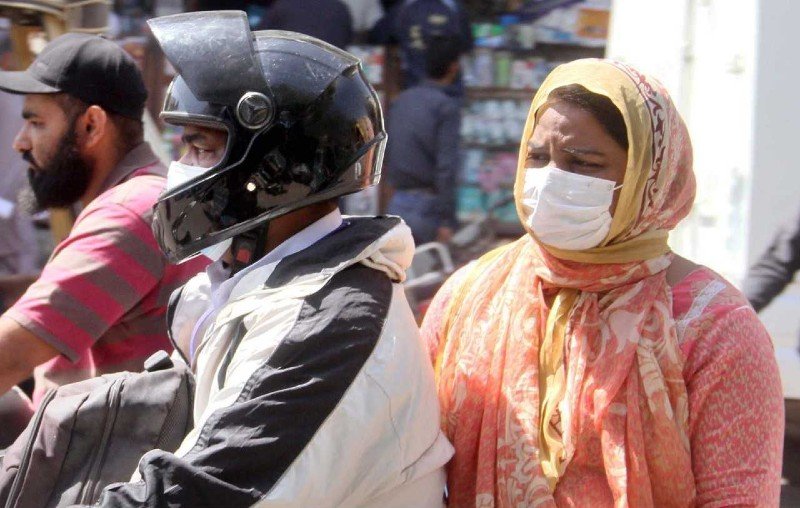
    The World Health Organisation (WHO) has reiterated its advice to people to not wear face masks if they were either not infected by the coronavirus or not caring for a patient of the new coronavirus — COVID-19, CNN reported.

    In a media briefing, WHO Emergencies Program Executive Director Dr Mike Ryan said there was “no specific evidence to suggest that the wearing of masks by the mass population has any potential benefit”.

    “In fact, there’s some evidence to suggest the opposite in the misuse of wearing a mask properly or fitting it properly,” he added. “There also is the issue that we have a massive global shortage.”

    Dr Ryan, a former trauma surgeon who has worked very closely with patients during Ebola outbreaks, stressed that people most at risk were those working at the frontline.

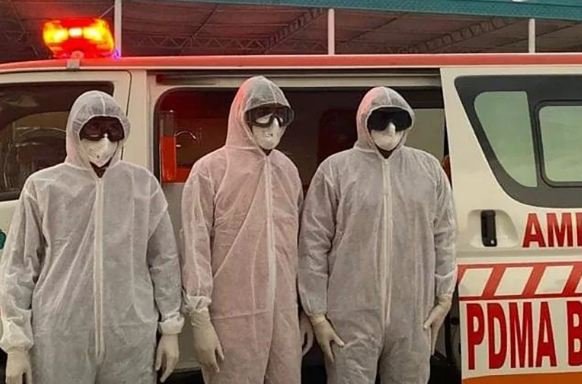
    “Frontline health workers […] are exposed to the virus every second of every day. The thought of them not having masks is horrific,” he added.

    Dr Maria Van Kerkhove — an infectious disease expert and the WHO top official’s colleague — echoed Dr Ryan’s comments, saying it was crucial to “prioritize the use of masks for those who need it most”.

    “In the community, we do not recommend the use of wearing masks unless you yourself are sick and as a measure to prevent onward spread from you if you are ill,” Dr Van Kerkhove noted, adding that masks were only suggested for those who were sick and in self-quarantine or those living with coronavirus-positive patients and caring for them.

  • Hamza Shehbaz ‘avoids coronavirus’ in meeting with ex-Punjab Assembly speaker

    Hamza Shehbaz ‘avoids coronavirus’ in meeting with ex-Punjab Assembly speaker

    As the new coronavirus — COVID-19 — continues to spread across the globe and the infections tally in Pakistan reaches 94, many, including Pakistan Muslim League-Nawaz (PML-N) leader Hamza Shehbaz, have been spotted avoiding direct physical contact such as handshakes, and resorting to new, cooler ways of greeting others.

    A viral photo on Monday showed the leader of opposition in the Punjab Assembly (PA) greeting PML-N leader and ex-speaker of the provincial house, Rana Muhammad Iqbal Khan, with an elbow bump instead of a handshake during a meeting in the former’s chamber.

    The two had met on Saturday to discuss the current political and economic situation of the country. PML-N Punjab lawmakers and local leaders were also in attendance.

    While Hamza might be the first prominent Pakistani to be spotted resorting to an elbow bump amid coronavirus fears, he is not the first political leader in the world to be doing so.

    United States (US) President Donald Trump was last week seen elbow bumping health executive Bruce Greenstein following a press conference during which a national emergency in response to coronavirus outbreak was declared.

    Here are a few other leaders avoiding physical contact as per the guidelines of the World Health Organization (WHO):

    Indian Prime Minister (PM) Narendra Modi being welcomed by Bharatiya Janata Party (BJP) President JP Nadda as he arrives to attend a party meeting in New Delhi.
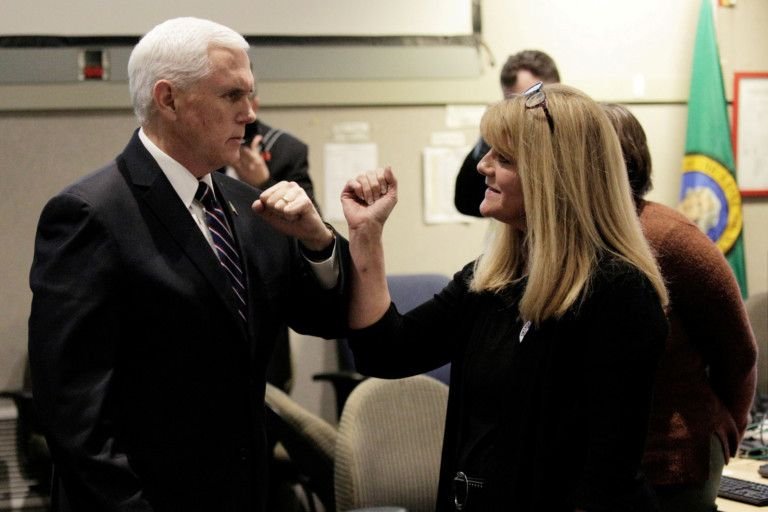
    US Vice President Mike Pence, who heads the government’s coronavirus task force, greets a woman at the Washington State Emergency Operations Center during a tour.
    Union parties leader Alexander Dobrindt greets German Chancellor Angela Merkel in a Buddhist style to avoid a handshake in times of coronavirus.

    Globally, more than 6,000 people have died and more than 156,000 have been infected by COVID-19 as the disease spreads rapidly to new territories.

  • Pakistan’s handling of coronavirus among world’s best: WHO country head

    Pakistan’s handling of coronavirus among world’s best: WHO country head

    The World Health Organisation (WHO) Country Head Dr Palitha Gunarathna Mahipala, praised Pakistan’s efforts in tackling coronavirus, noting that the country had come  up “with one of the world’s best National Response Program against the virus”.

    While talking to media in Karachi during his visit to hospitals and labs, he said, “At a time when other countries were reporting cases, Pakistan was keeping the virus at bay, which is something quite praiseworthy.”

    READ MORE: CORONAVIRUS DAILY UPDATES

    “Pakistan has timely come up with one of the world’s best National Response Program against COVID-19 and it is being implemented very effectively. Authorities are doing their job and now it is the responsibility of the people to follow the instructions and take preventive and precautionary measures to avoid contracting the viral disease”, Dr Mahipala said while speaking to The News.

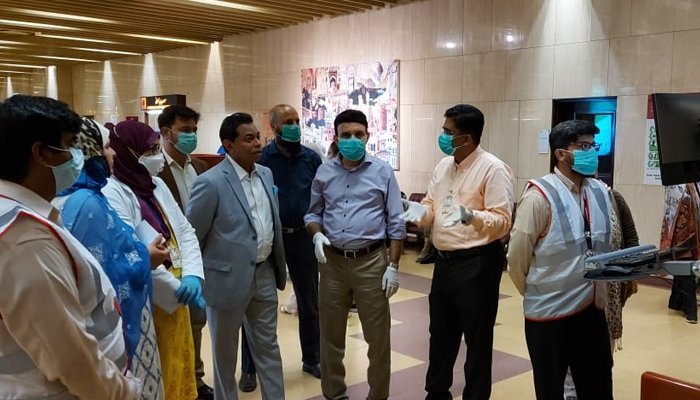
    He inspected the isolation ward of the Jinnah Postgraduate Medical Centre (JPMC) In Karachi and was satisfied with the steps taken by the institute. He also visited Dow University of Health Sciences (DUHS) Oja Campus and said that their lab and isolation facility was, “a world-class diagnostic and treatment facility”.

    RELATED: Pakistani couple distributes free coronavirus prevention kits in UK

    “At the moment, Pakistan has seven diagnostic labs which are capable of conducting 15,000 tests, but there is a need for more diagnostic facilities in case the number of suspected patients go up,” he said, adding that authorities had even established a mobile diagnostic facility that had been sent to Taftan to test and diagnose suspected cases coming from Iran. Even countries with superior health systems like South Korea and Italy had failed to contain the virus but Pakistani authorities timely responded to the pandemic and took preventive measures earlier on, he said.

    READ MORE: Coronavirus: Indian media reports fake claim, says top Pak army officers infected

    He urged people to wash their hands with soap and use a ‘coughing etiquette’ while coughing. He also said that 67% of the patients who were tested positive with COVID-19 had cough with temperature and difficulty in breathing.

  • A health emergency

    A health emergency

    Coronavirus has taken the world by storm. The World Health Organization (WHO) says that Europe is now a new epicentre of the global pandemic. According to WHO, more than 132,500 people have been diagnosed with COVID-19 in 123 countries around the world, among which is Pakistan with 29 cases in Sindh, Gilgit-Baltistan and Islamabad.

    At least one infected patient is in a critical condition, reports have claimed.

    “Europe has now become the epicentre of the pandemic, with more reported cases and deaths than the rest of the world combined, apart from China,” said WHO Director General Dr Tedros Adhanom Ghebreyesus. “More cases are now being reported every day than were reported in China at the height of its epidemic.”

    The United States (US) has declared a national emergency due to the spread of coronavirus. Pakistan, too, is taking some measures now that the pandemic is spreading across the globe. Sindh government has been the most vigilant and its health department has proven to be the most efficient during the crisis.

    The way the Sindh government is monitoring people travelling from abroad to setting up isolation wards to test those with coronavirus symptoms is something all other provinces should emulate.

    During his visit to Karachi, WHO country representative in Pakistan, Dr Palitha Gunarathna Mahipala, said that Pakistan had in time come up with one of the world’s best national response programmes against the new coronavirus and it is being implemented very effectively. While there is a fear that other provinces are not equally proactive, which might lead to serious consequences, the good thing is that the federal government is taking the issue seriously and has ordered that educational institutions, cinemas and even marriage halls will remain closed for three weeks.

    Religious congregations and sports and cultural festivals have also been suspended for three weeks. PSL matches will take place without spectators while some foreign players have also left. We need more diagnostic labs as we only have seven at the moment in Pakistan, which can conduct up to 15,000 tests. If the suspected number of cases goes up, we need to be ready. While public gatherings are banned, we hope that the people take the coronavirus outbreak seriously as all of us are at risk.

    We need to take preventive measures in order to keep ourselves and our loved ones safe.

  • Reddit announces new tool to prevent suicide

    Reddit announces new tool to prevent suicide

    Almost 800,000 people commit suicide every year, which makes a fatality rate higher than wars, cancer or homicide, says the World Health Organization (WHO).

    In view of the aforementioned staggering figures, Reddit — an American social news aggregation website — has announced a new tool for suicide prevention by teaming up with Crisis Text Line — a global not-for-profit organisation providing free confidential crisis intervention.

    According to the details of the service that will be effective from March 10 this year, it will allow users to report those, who they believe are at risk, so that Reddit can provide them with prevention resources.

    The reported user will get a private message with suicide prevention resources and a recommendation to text ‘CHAT’ to 741741 — the number for the Crisis Text Line.

    Once the Reddit user has reached out to the text line, a trained crisis counselor will be available for support.

    This is not the first time a social media platform has offered to provide suicide prevention help. as Facebook, Twitter and Snapchat also have pages listing global suicide prevention resources.

  • Coronavirus myths flooding your WhatsApp? Here’s what is actually true

    Coronavirus myths flooding your WhatsApp? Here’s what is actually true

    The WhatsApp inbox of almost every Pakistani user has been flooding with myths regarding the new coronavirus — COVID-19 — since first two cases of the disease in the country were confirmed by the government last night.

    While the World Health Organization (WHO) has already declared an emergency following the global outbreak of the novel virus that has so far claimed over 2,700 lives and left around 81,000 others infected, here are some myth busters you need to know while maybe ignoring all those forwarded messages on WhatsApp.

    Does the new coronavirus affect older people, or are younger people also at risk?

    According to the WHO, people of all ages can be infected by the new coronavirus (2019-nCoV). Older people and people with pre-existing medical conditions (such as asthma, diabetes, heart disease) appear to be more vulnerable to becoming severely ill with the virus. 

    WHO advises people of all ages to take steps to protect themselves from the virus, for example by following good hand hygiene and good respiratory hygiene.

    Are antibiotics effective in preventing and treating the new coronavirus?

    No, antibiotics do not work against viruses, only bacteria.

    The new coronavirus is a virus and, therefore, antibiotics should not be used as a means of prevention or treatment. However, if you are hospitalised for the COVID-19, you may receive antibiotics because bacterial co-infection is possible.

    Can eating garlic or putting on sesame oil help prevent coronavirus?

    Garlic is a healthy food that may have some antimicrobial properties. However, there is no evidence from the current outbreak that eating garlic has protected people from the new coronavirus.

    As for sesame oil, it does not kill the new coronavirus. There are some chemical disinfectants that can kill the 2019-nCoV on surfaces. These include bleach/chlorine-based disinfectants, either solvents, 75% ethanol, peracetic acid and chloroform.

    However, they have little or no impact on the virus if you put them on the skin or under your nose. It can even be dangerous to put these chemicals on your skin.

    Are there any specific medicines to prevent or treat the new coronavirus?

    To date, there is no specific medicine recommended to prevent or treat the new coronavirus, however, chloroquine phosphate — used for the treatment of malaria — has so far proven to be the most effective drug against the virus.

    Those infected with the virus should receive appropriate care to relieve and treat symptoms, and those with severe illness should receive optimised supportive care. Some specific treatments are under investigation, and will be tested through clinical trials. WHO is helping to accelerate research and development efforts with a range or partners.

    Can pets at home spread the coronavirus?

    At present, there is no evidence that companion animals/pets such as dogs or cats can be infected with the new coronavirus. However, it is always a good idea to wash your hands with soap and water after contact with pets. This protects you against various common bacteria such as E.coli and Salmonella that can pass between pets and humans.