Tag: world

  • VIDEO: Reporter asks Biden’s spokesperson to show ‘evidence’ that Russia is starting a war in Ukraine

    VIDEO: Reporter asks Biden’s spokesperson to show ‘evidence’ that Russia is starting a war in Ukraine

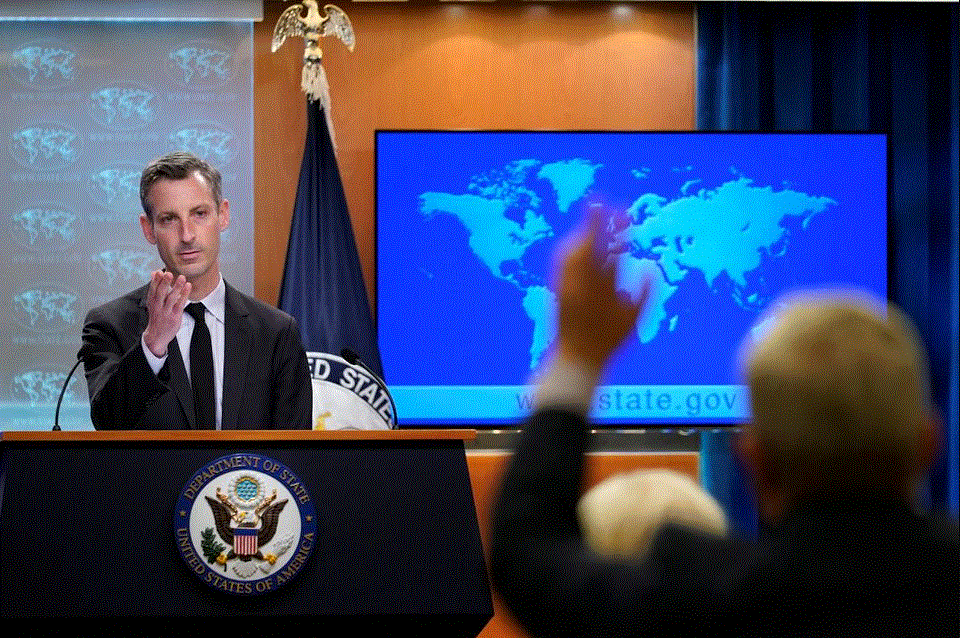
    United States (US) State Department Spokesperson Ned Price was questioned by Associated Press (AP) reporter Matt Lee about the evidence behind US officials’ belief that Russia intended to release an elaborate propaganda video on Ukraine in order to justify beginning a war.

    A heated argument between the two [Price and Lee] can be heard in a video. Lee demanded Price to show the evidence to which he responded by saying that the information came from US intelligence, thus is classified.

    “Okay, well, where is it? Where is this information?” Lee asked. Price responded by asking Lee if he would want a printed-out transcript of the briefing.

    “That’s not evidence, that’s you saying it. I would like to see some proof that shows that the Russians are doing that,” Lee continued the argument.

    Following the press briefing, Price said that he and Lee have had their fair share of sparring sessions. “Nothing but respect for him, which I underscored in a call to him after the briefing,” he added.

    Russia has long resisted Ukraine’s move towards European institutions, and the North Atlantic Treaty Organisation (NATO) as it shares a border with Ukraine.

    Russian President Vladimir Putin and Ukraine’s Volodymyr Zelensky have denied the news of an invasion. However, the US argued that Russia has no explanation for the troops posted close to Ukraine.

  • No transport for women travelling without hijab, male relative: Taliban

    Afghanistan’s Taliban leadership has announced that women who seek to travel long distances should not be offered transport if they are not wearing hijab and are not accompanied by a close male relative, reports Agence France-Presse (AFP).

    The guidance was issued on Sunday by the country’s Ministry for the Promotion of Virtue and Prevention of Vice. The ministry spokesman Sadeq Akif Muhajir told AFP: “Women travelling for more than 72 kilometers (km) should not be offered a ride if they are not accompanied by a close family member.”

    Previously, the government had also called on women TV journalists to wear hijabs while presenting. They also directed people to stop playing music in their vehicles.

    Taliban also banned women from acting in dramas due to which they received immense backlash.

    Since August, the Taliban have been imposing severe restrictions for women in the country despite promising the fulfillment of their rights.

    However, activists hope that the Taliban’s battle to gain international recognition and get aid flowing back into Afghanistan will lead to them making concessions to women.

  • ‘Asal ghussa toh NZ par tha, India raaste mein aagaya,’ Fawad Ch on Pak win

    Information Minister Fawad Chaudhry expressed his happiness over New Zealand’s defeat against Pakistan. In a video message shared on social media, the minister can be heard saying, “Asal ghussa toh New Zealand par tha, yeh India raaste mein aagaya.”

    Pakistan defeated New Zealand by 5 wickets in the Super 12 fixture of the ongoing T20 World Cup in a nerve-wracking match. Pakistanis were looking forward to the match because in September, the New Zealand team had unilaterally postponed the series with Pakistan minutes before the first match was scheduled to start at the Rawalpindi Cricket Stadium, a move that had shocked fans and officials.

  • Sirbaz Khan becomes first Pakistani to scale nine of world’s 14 highest peaks

    Sirbaz Khan becomes first Pakistani to scale nine of world’s 14 highest peaks

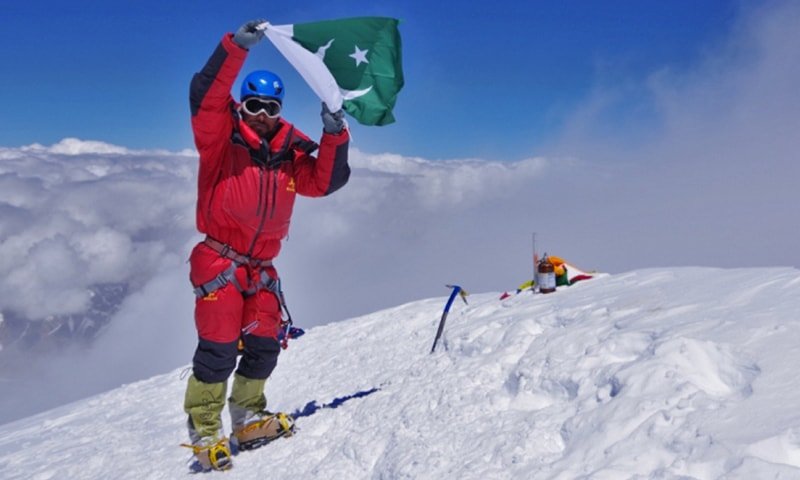
    Mountaineer Sirbaz Khan summited the 8,167-metre-high Dhaulagiri mountain in Nepal on Friday, stated Alpine Club of Pakistan Secretary Karrar Haidri. The mountaineer has become the first Pakistani to summit nine of the world’s highest 14 peaks, each having the height of more than 8,000 meters, Dawn reported.

    Sirbaz was part of the 19-member ‘SST-Dhaulagiri I Expd. 2021 Autumn’ expedition organised by trekking company Seven Summits Trek.

    According to Seven Summit Trek officials, the climbers scaled the world’s seventh highest peak on Friday morning, with Sirbaz raising Pakistan’s flag upon reaching the mountain’s top.

    Read More: Shehroz Kashif summits 8000 meters Manaslu in Nepal

    Dhaulagiri, which forms part of the Himalayas mountain range, is commonly known as one of the hardest peaks to climb due to its steep sides and bitterly cold climate.

    Soon after the news broke, social media users congratulated the climber for his achievement.

    Sajid Ali Sadpara, the son of late Mohammad Ali Sadpara and a climber himself, tweeted: “Lots of congratulations to Sirbaz Khan to climb Dhaulagiri. After climbing Daulaghiri he is first Pakistani to summit nine 8000 mountains.”

    The 32-year-old mountaineer hails from the Aliabad area of Hunza in Gilgit-Baltistan and began his climbing career in 2016.

  • Baby starved for two days found alive

    Baby starved for two days found alive

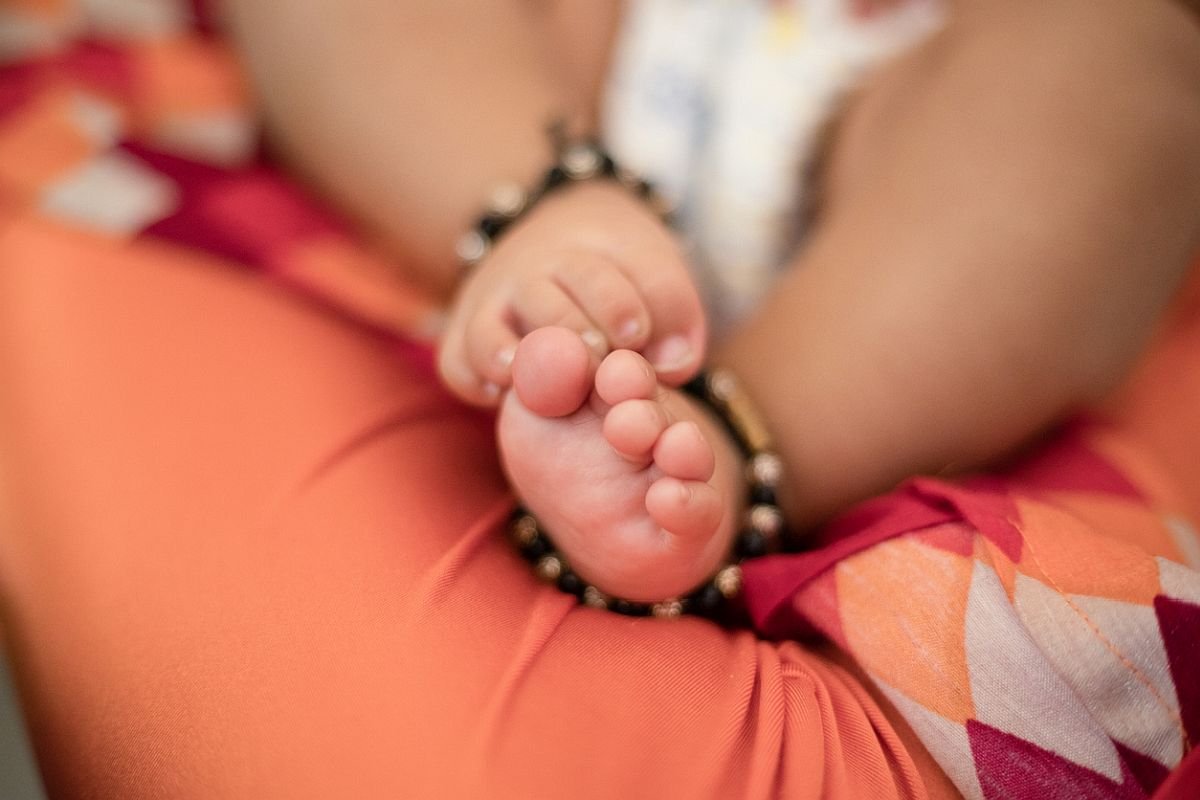
    A less than one-year-old baby boy was found miraculously alive on Monday, hungry and lying down with his dead mother, in Pimpri-Chinchwad, Maharashtra. The mother had reportedly been dead for two days as no one reached out.

    29-year-old Sarawasti Rajesh Kumar was suspected to have died on Saturday, which means the baby had been not fed since then.

    “The baby was lying next to her silently… he was not crying,” said an official investigating the case. Due to the alarming situation of COVID-19 in India, the neighbours were hesitant to come near the body or even hold the baby.

    Police constables, Sushila Gabhale and Rekha Waze, who arrived at the scene then fed him.

    “The child had a little fever when we showed him to the doctor. He told us to feed him well, the rest is fine” said their colleague Rekha. They also took him to hospital where he tested negative for COVID-19.

    As per details, the woman was living with her husband, who had gone to their native place in Uttar Pradesh, and their child. The family lived on rent while the owners of the house lived at a distance. Since the landlords were COVID positive, they did not check on Kumar until a stench started emanating from the room. Authorities immediately alerted the husband of his wife’s demise.

    While it is not clear how the woman died, Police Inspector Prakash Jadhav of Dighi told the Indian Express that they “found some pills next to her body.”

    “We suspect the woman committed suicide by consuming the pills. Her body has been sent for post-mortem to YCM Hospital. The viscera has been preserved…the cause of death is not known so far,” said the official.

  • Men with COVID-19 three times more likely to need intensive care than women: study

    Men with COVID-19 three times more likely to need intensive care than women: study

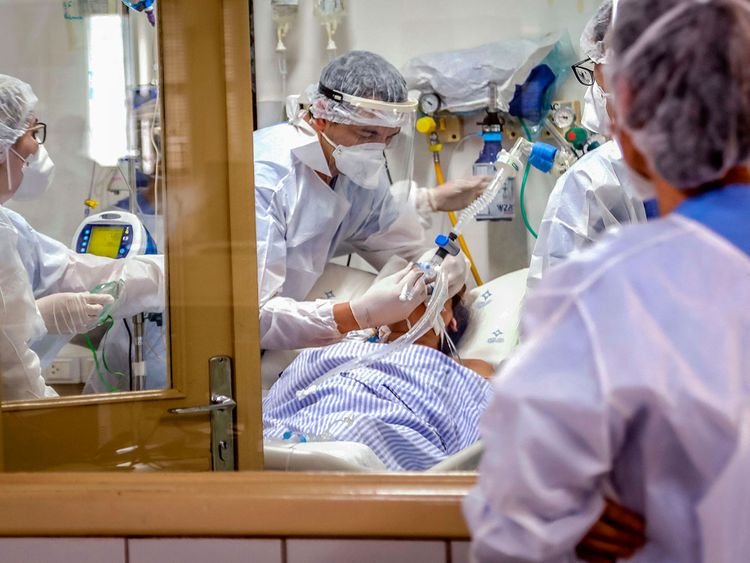
    Men infected with COVID-19 are three times more likely to require intensive care than women and are at significantly higher risk of dying from the virus, scientists said Wednesday.

    Researchers analysed over three million confirmed coronavirus cases from 46 countries and 44 states in the US between January 1 and June 1, 2020.

    They found that the risk of Sars-Cov-2 infection was the same for women and men, as “exactly half” of the confirmed cases were male patients.

    But men are almost three times more likely than women to be hospitalised in an intensive care unit and are 39 percent more likely to die from the virus, the study said.

    “These data may help doctors to recognise that sex is a risk factor for severe disease when managing patients,” co-author Kate Webb told AFP.

    “Sex is an under reported variable in many studies and this is a reminder that it is an important factor to consider in research,” the Cape Town University researcher said.

    The trend is global – aside from a few exceptions – and can mostly be put down to biological differences, researchers said.

    “Sex differences in both the innate and adaptive immune system have been previously reported and may account for the female advantage in Covid-19,” the authors said.

    Women naturally produce more type I interferon proteins that limit the abnormal immune response known as a cytokine storm, believed to play a role in provoking severe forms of Covid-19.

    The “female” oestradiol hormone may also help women to fend off grave forms of the virus, as it boosts the response of T cells – which kill infected cells – and increases the production of antibodies, the study said.

    “In contrast, the male sex hormone testosterone suppresses the immune system,” the authors noted.

    Sex-based differences in co-morbidities associated with severe Covid-19 may put men at outsize risk, they wrote in the study, published in Nature Communications.

    But data to account for the role of other medical conditions is lacking, they added.

    In addition, the authors noted the similarity in the proportions of women and men with hypertension and diabetes globally, “the most common reported comorbidities in hospitalised Covid-19 patients.”

    The findings may have implications for future vaccines, the authors said.

    Webb noted previous vaccines to other infections have shown differences in response between women and men.

    “It is still to be determined whether the same will be true for Sars-CoV-2 vaccines,” Webb said.

    “But we hope that our paper highlights the need to include sex as a variable when considering vaccine research.”

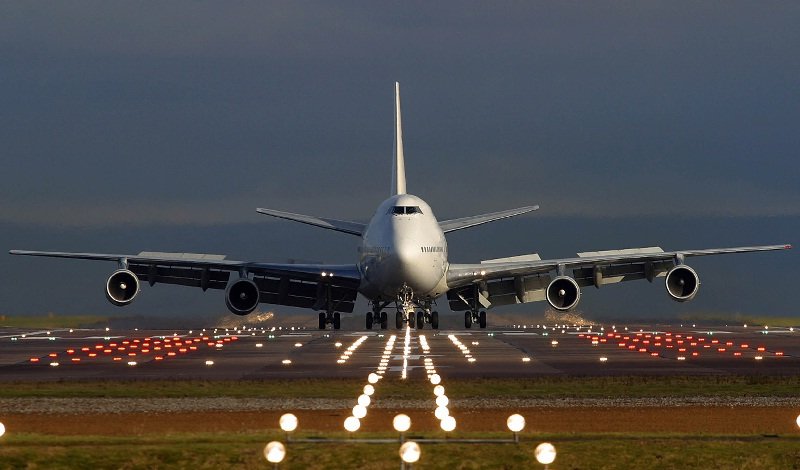
  • Aviation in hot water

    Aviation in hot water

    “The cat is out of the bag and the current government faces another uphill task to make amends within the aviation industry.”

    The aviation industry has transformed due to various kinds of security threats that have emerged over time. Starting from 2001 after the 9/11 hijackings, airports around the world tightened their screening of passengers, and pilots began locking their cockpits. Ever since a detonator was caught inside a passenger’s shoes, passengers have been told to take their shoes off at security checkpoints. The increasing threats have led the United States (US) to spend nearly $100 billion on revamping airport security. A few years later, the second threat surfaced in the United Kingdom (UK) when a terror plot to smuggle explosive liquids on to planes was uncovered in 2006, after which the number of liquids allowed on flights was restricted.    

    The latest security threat that has wreaked havoc is the coronavirus pandemic that emerged in China in late 2019. The industry had been growing over the decade and was estimated to earn more than $800 billion in revenue until 2020 hit, and things took an ugly turn. Approximately seven million flights were canceled between January and July as people stopped booking flights and thousands of planes that needed to be grounded struggled to find parking spots. Many travelers and foreigners were left stranded in various countries around the world and even stuck at airports when countries closed their borders.   

    A century ago, when the Spanish Flu struck, air travel was in its infancy. As a result, the effect on flights was minimal. Now, air travel is the most popular mode of transport with approximately 40 million flights a year and billions of travelers.    

    The virus has bogged down the entire flying process and made it more painstaking because masks and social distancing are mandatory. Airlines now need to follow new protocols such as leaving seats between passengers to ensure social distancing — this adds to the losses being faced by many airlines.

    “The virus, however, is not the only problem the industry will be facing this year thanks to Pakistan’s Federal Aviation Minister, Ghulam Sarwar.”

    The devastating impact of COVID-19 will not dissipate until a few years. The damage has compelled airlines to seek multi-billion-dollar bailouts from their respective governments. Airlines such as Lufthansa and Thai Airways were saved through bailouts.

    The virus, however, is not the only problem the industry will be facing this year thanks to Pakistan’s Federal Aviation Minister, Ghulam Sarwar.   

    On May 22, an Airbus A320, operated by Pakistan International Airlines (PIA) and en route from Lahore to Karachi, crashed moments before attempting a second landing, which led to the death of 97 passengers. Luckily, two passengers managed to survive the crash. The damage did not end there. When the aviation minister was expected to present the crash report, he went on to bring to light the pilots’ licensing issue that was still under investigation.    

    The revelation by Pakistan’s aviation minister unveiled a new type of security threat that jolted the entire aviation industry. Speaking on the floor of the National Assembly, the minister announced that 262 out of 860 Pakistani licensed pilots, who are working within Pakistan and abroad, had fake licenses and certificates. He repeated the number in a press conference the next day but added that the 262 pilots’ credentials were “suspected” to be fake.    

    This unprecedented revelation made frontlines, astonished the entire aviation industry, and damaged whatever little credibility the Civil Aviation Authority (CAA) had, since it is responsible for providing legitimate licences and certifications, hence ensuring travelers’ safety.

    “[Aviation minister’s] announcement rang alarm bells and dealt a heavy blow to the faltering national carrier. Now, not only PIA, but the entire CAA, needs to prove that it is capable of ensuring that its pilots are airworthy.”

    As soon as the news broke out, the European Union (EU) and the United Kingdom (UK) barred Pakistani commercial planes from entering their airspace. The European Union Air Safety Agency (EASA) issued letters to airline operators in member countries to suspend PIA’s authorisation to operate in the EU for six months. The US Department of Transportation also revoked the PIA’s authorisation to conduct flights to and from the country due to safety concerns.    

    The announcement rang alarm bells and dealt a heavy blow to the faltering national carrier. Now, not only PIA, but the entire CAA, needs to prove that it is capable of issuing legitimate licences and certificates while ensuring that its pilots are airworthy. It will definitely take a long time to recover, but the fact that such a thing could occur has alerted aviation authorities around the world. 

    Pakistan has been struggling to improve its image in the international world while being scrutinised by the Financial Action Task Force (FATF) and monitored by the International Monetary Fund (IMF). This incident might lead to the country being closely investigated by other organisations, such as the International Civil Aviation, which will be liable for ensuring that trained and certified pilots are flying planes around the world. With the Pakistani passport already being ranked among the worst in the world, the repercussions of this announcement will only cause its ranking to drop further, wiping out whatever efforts had been made to improve the country’s global image in the past. 

    It is heartbreaking to see PIA, which helped set up Emirates by leasing its aircraft and training its staff, in such a dilapidated state. Even though the coronavirus had pushed a large number of airlines towards bankruptcy, PIA’s poor global image and tarnished reputation will solely be responsible for its ill fate. The cat is out of the bag and the current government faces another uphill task to make amends within the aviation industry.

  • Iran blames Pakistan for spread of coronavirus

    Iran blames Pakistan for spread of coronavirus

    With the coronavirus death toll in Iran rising to 15 among 64 reported cases, Tehran has allegedly blamed Islamabad for the epidemic, saying it was brought to the country by Pakistani nationals illegally crossing into Iranian territory.

    The outbreak of the 2019 novel coronavirus — a severe acute respiratory syndrome named ‘COVID-19’ by the World Health Organization (WHO) — is an ongoing pandemic that originated in the central Chinese province of Hubei’s capital city, Wuhan.

    The virus, as of February 25, has claimed 2,663 lives with over 25,000 recoveries. COVID-19 spreading to other parts of Asia, the Middle East, Africa, North America and Europe, has infected more than 80,000 people globally.

    In Hubei, the number of cases appears to be stabilising, according to government figures. But the number of people infected elsewhere in the world is rising quickly, with clusters in South Korea, Italy, Iran and a cruise ship docked in Japan.

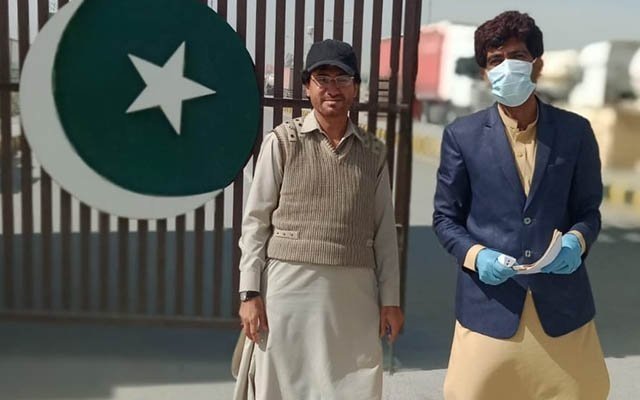
    While Pakistan International Airlines (PIA) has suspended flight operations to China and Japan till March 15 due to the outbreak, Pakistan has closed its border with Iran after casualties from the deadly coronavirus were reported on Monday.

    The outbreak in Iran began in the city of Qom, an often-visited religious destination.

    According to authorities, Islamabad has suspended trade activities across the western border and barred citizens from travelling to Iran through the five existing border gates. The border town of Taftan in Balochistan has been quarantined for screening, while a 100-bed tent hospital has been set up in the area for pilgrims coming back from Iran, officials told The Current.

    “The government is in close contact with Iranian authorities to save Pakistani pilgrims from coronavirus,” Federal Minister for Religious Affairs and Interfaith Harmony Noorul Haq Qadri said in a statement. He added that his ministry had deployed a special team in Taftan to protect Pakistani pilgrims returning from Iran.

    Amid Pakistani actions aimed at what the government calls “continuing to successfully avoid” an outbreak of the novel coronavirus, Iranian officials have claimed it reached the country with Pakistani, Afghan and Chinese nationals illegally crossing the border to enter Iran.

    “It is not possible for the virus to reach Iran otherwise,” an Iranian official said on the condition of anonymity. They added that Afghanistan had also confirmed its first infection, so the possibility of the virus reaching the country via its northern neighbour, could not be ruled out either.

    The claims were, however, contradicted by government sources.

    They said these “unverified” claims were untrue and being made by some local Iranian media agency, but it was not the time for blame game. “Coronavirus is a real threat. Every country in the region and the world is at risk. We all need to pool together our resources and fight it instead of shifting blame on one country or the other.”

    Government sources also said that both Pakistani and Iranian health advisers and their ministers knew each other for a long time. “Cooperation is quite good between the two health ministries and the governments are in close touch with each other. They are satisfied with the mutual assistance.”

    NO CORONAVIRUS IN PAKISTAN’:

    Speaking to The Current, National Institute of Health (NIH) Focal Person Dr Muhammad Salman rejected the claims and clarified that for Pakistan to be responsible for the pandemic in Iran, there should’ve been any cases on this side of the border first.

    “Pakistan has in a scientific way, and while using evidence-based public health measures, dealt with the threats of a coronavirus outbreak in the country, and not even a single case has surfaced until now,” he said and reiterated that all such claims were false.

    He maintained that Dr Zafar Mirza had been on the frontline in curbing the potential risk, and owing to the efforts of the government, Pakistan was safe until now despite the virus affecting neighbouring Afghanistan, Iran and reportedly even India.

    CORONAVIRUS:

    In late December, a cluster of pneumonia cases of unknown aetiology was reported by health authorities in Wuhan. The initial cases mostly had epidemiological links to the Huanan Seafood Wholesale Market and consequently, the virus is thought to have a zoonotic origin.

    The virus that caused the outbreak is known as SARS-CoV-2, a new virus which is closely related to bat coronaviruses, pangolin coronaviruses and SARS-CoV-1.

    The earliest reported symptoms occurred on December 1, 2019, in a person who had not had any exposure to the Huanan Seafood Wholesale Market or to the remaining 40 of the first cluster detected with the new virus.

    Of this first cluster, two-thirds were found to have a link with the market, which also sold live animals.

    A large response, both in China and globally, followed an increase in cases in mid-January 2020, bringing travel restrictions, quarantines and even curfews.

    Examples include the quarantine of the British cruise ship, Diamond Princess, in Japanese waters; the curfew of over 780 million people in China, a voluntary curfew in South Korea, and the curfew of a dozen towns with over 50,000 people in Italy.

    The outbreak has been declared a Public Health Emergency of International Concern (PHEIC) by the WHO, and airports, as well as train stations, have implemented body temperature checks, health declarations and information signage in an attempt to identify carriers of the virus.

    Among the wider consequences of the outbreak are concerns about potential economic instability and incidents of racism against people of Chinese and East Asian descent, which have been reported in several countries.