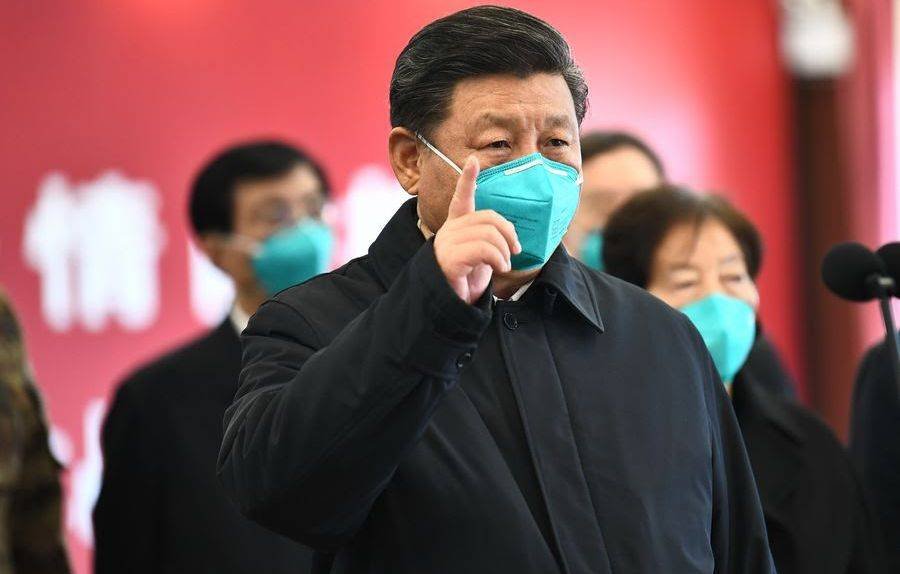
Tag: XI Jinping

  • ‘China will always stand firmly with Pakistan’; Xi Jinping vows to stand with ally

    “No matter how the international landscape may change, China will always stand firmly with Pakistan,” President Xi Jinping has said in a statement reiterating China’s steadfast support for Pakistan.
    The statement was given as part of a congratulatory message at the CPEC celebration ceremony held in Islamabad on Monday, where the Chinese Vice-president He Lifeng was also present as part of a three day visit to Pakistan.

    Talking about mutual ties, President Xi also stressed that China and Pakistan will keep enhancing overall planning. China will work with Pakistan to further develop CPEC into an exemplary project of high-quality Belt and Road cooperation, he stated.
    “Since its launch in 2013, China and Pakistan have been advancing CPEC under the principle of extensive consultation, joint contribution and shared benefits, and have achieved a number of early harvests,” he added.

    Earlier today, both the countries signed six agreements to promote mutual cooperation.
    The document establishing the joint cooperation committee of the China Pakistan Economic Corridor (CPEC) was signed by China’s Vice Chairman of the National Development and Reforms Commission and Minister for Planning and Development Ahsan Iqbal.

  • Beijing: US Secretary of State & Chinese officials hold ‘candid and constructive’ talks

    Beijing: US Secretary of State & Chinese officials hold ‘candid and constructive’ talks

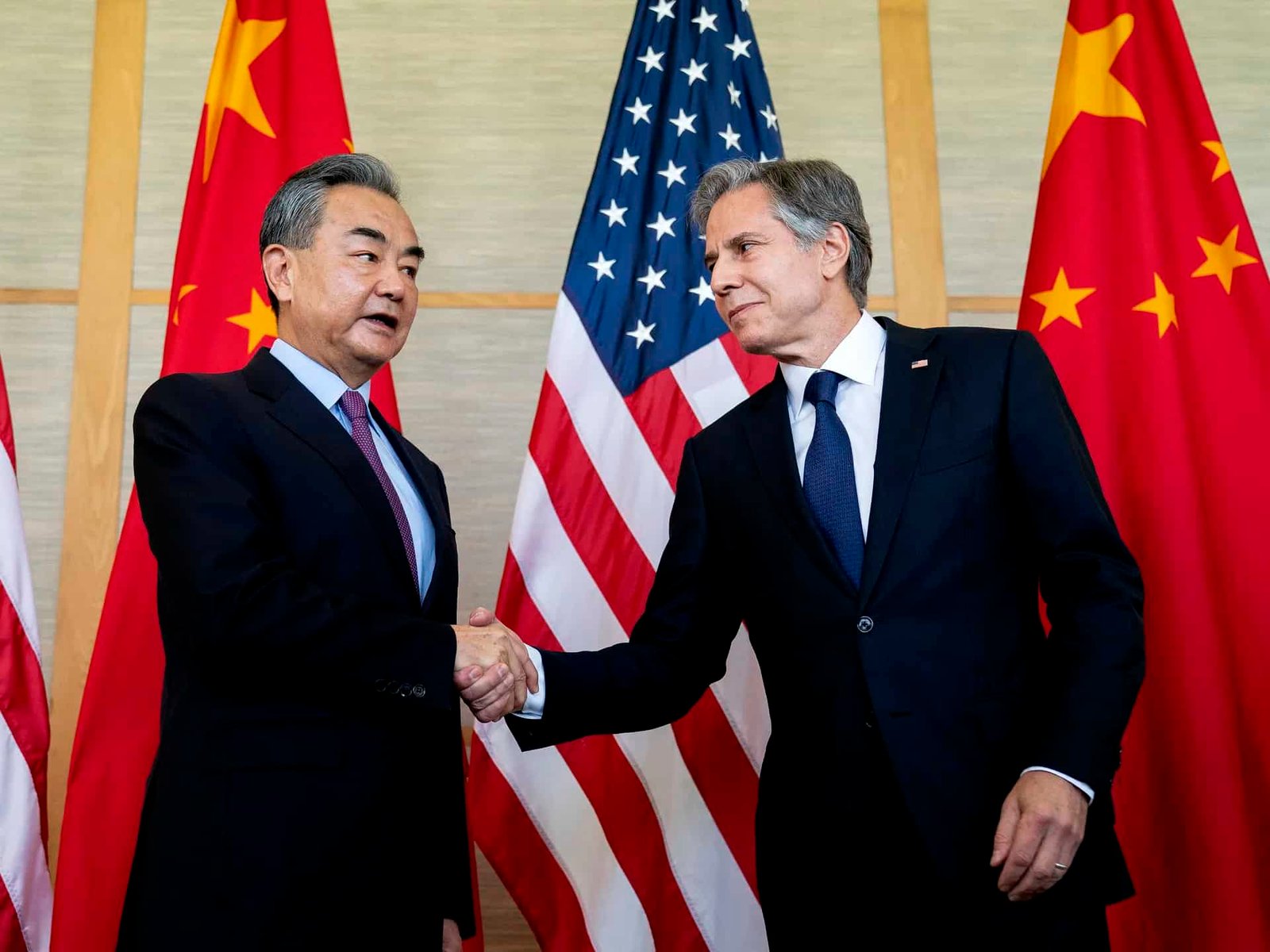
    US Secretary of State Anthony Blinken met with Chinese officials during a rare trip to Beijing, as relations between the two superpowers continue to deteriorate. Blinken is the first man of his post to meet Chinese leader, Xi Jinping, since 2018. Both Blinken and Chinese Foreign Minister Qin Gang described the talks, held on Sunday, as “candid and constructive”.  

    Representatives of the two states ‘seemed to agree on little beyond keeping the conversation [of diplomacy] going’ as reported by Reuters. They did not appear to make concrete progress on disputes that include Taiwan, trade, human rights and fentanyl. 

    According to the State Department, Blinken stressed the “need to reduce the risk of misperception and miscalculation,” thereby underscoring the importance of open communication channels to manage their competition.

    Describing the US-China relationship as being at its lowest point since diplomatic relations began, China’s top diplomat Wang Yi said the root cause was the United States’ incorrect perception of China.

    “We must take a responsible attitude toward the people, history and the world, and reverse the downward spiral of US-China relations,” Wang was reported to have said during the meeting, as released in a statement by China’s foreign ministry. 

    Xi Jinping hails ‘progress’

    On Monday, Blinken met with Chinese leader Xi Jinping. Their meeting could be instrumental in facilitating a summit between Xi and U.S. President Joe Biden later this year.

    The visit reflects attempts from both states in ensuring disputes between the economic superpowers do not develop into outright conflict. 

    Xi praised the talks as “progress” between the two superpowers. Biden said he hoped to meet the Chinese leader again after their lengthy meeting in November, during the G20 summit in Bali, Indonesia. 

    “I’m hoping that, over the next several months, I’ll be meeting with Xi again and talking about legitimate differences we have but also how there’s areas we can get along,” Biden said, as reported by The Guardian.  

    It is likely that the two leaders will be in attendance at the next G20 summit, which is to be held in New Delhi in September. Xi is also invited to travel to San Francisco in November, to attend the Asia-Pacific Economic Cooperation forum.

  • Chinese President Xi Jinping scolds Canadian PM Justin Trudeau over media leaks

    Chinese President Xi Jinping scolds Canadian PM Justin Trudeau over media leaks

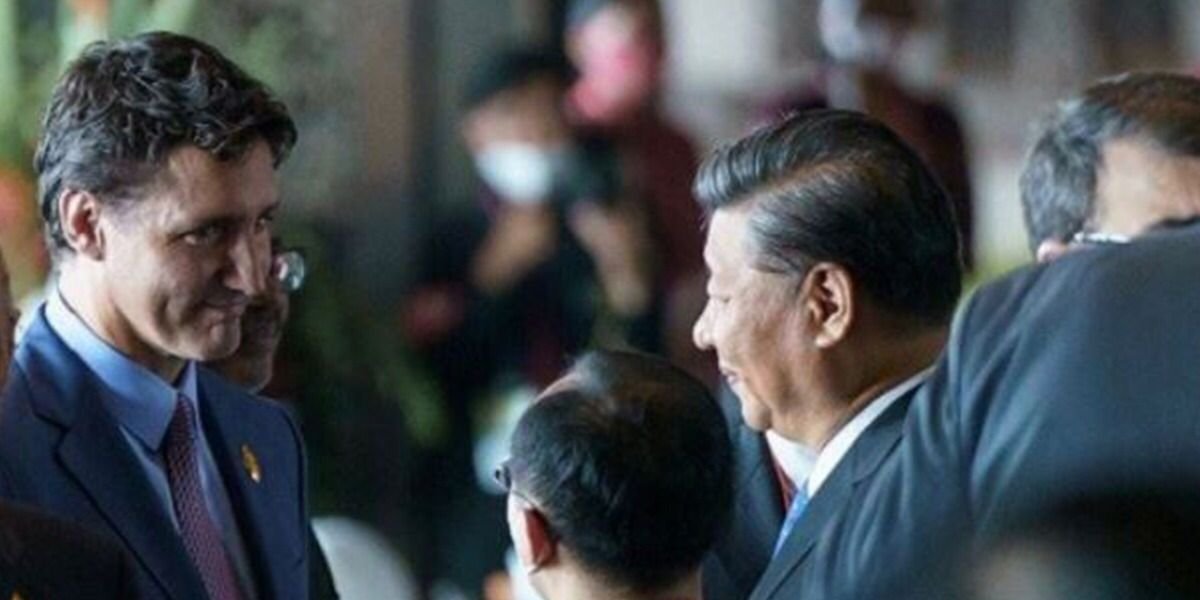
    Chinese President Xi Jinping scolded Canadian Prime Minister (PM) Justin Trudeau in an on-camera dressing down at the G20 summit.

    Xi Jinping on Wednesday criticised PM Trudeau in person over alleged leaks of their closed-door meeting at the G20 summit, a rare public display of annoyance by the Chinese leader.

    In video published by Canadian broadcasters, Xi and Trudeau can be seen standing close to each other and conversing via a translator at the summit on the Indonesian island of Bali.

    “Everything we discussed has been leaked to the papers. That is not appropriate,” Xi remarks.

    Speaking evenly and wearing a slight smile, he says: “And that’s not the way (our discussion) was conducted, was it?”. As Trudeau listens in silence, the Chinese President addresses him directly, “If there is sincerity, we can have conversations based on an attitude of mutual respect. Otherwise, the results will be unpredictable.”

    Xi then appears to try to walk past Trudeau, but the Canadian leader replies: “In Canada, we believe in free, open and frank dialogue, and that is what we will continue to have.

    “We will continue to look to work constructively together, but there will be things we disagree on,” he tells Xi.

    Raising his hands, Xi cuts him off, saying bluntly: “Create the conditions. Create the conditions.” He then broadens his smile, barely looking at Trudeau as he shakes his hand and leaves his counterpart to make his way out of the room.

    Neither the Chinese foreign ministry nor state media have published anything on talks between Xi and Trudeau. The two held a 10-minute informal meeting on the sidelines of the G20 summit on Tuesday.

  • ‘Jimmy Jimmy Aja Aja’, other desi songs played at Shangai Cooperation Organisation

    ‘Jimmy Jimmy Aja Aja’, other desi songs played at Shangai Cooperation Organisation

    Shanghai Cooperation Organisation (SCO) came to an end on Friday in Samarkand, Uzbekistan where at one point, eight world leaders attended the summit to the sounds of 80s Bollywood songs.

    A video was posted by journalist Sidhant Sibal on Thursday in which Indian songs “Jimmy Jimmy Aja Aja” and “I’m a disco dancer” were being played to welcome the SCO delegates.

    This year’s summit was hosted by Uzbekistan from September 15-16. Many historic meetings took place at the SCO including the one between Pakistan PM Shehbaz Sharif and Russian President Vladimir Putin for the first time. Other memorable moments included PM Shehbaz interacting with officials in Tajiki, before starting a formal meeting with the country’s president.

    A highly anticipated meeting between Chinese President Xi Jinping and Putin also took place. Xi called Putin his “old friend”, but the mutually endorsing speeches of the two authoritarian heavyweights were muted.

    As expected, Indian PM Narendra Modi and his Pakistani counterpart Shehbaz Sharif did not have a one-on-one meeting as relations between the rival neighbors remained cold.

  • PM Khan visits China, ‘pitch book’ prepared to convince China to invest in Pak

    PM Khan visits China, ‘pitch book’ prepared to convince China to invest in Pak

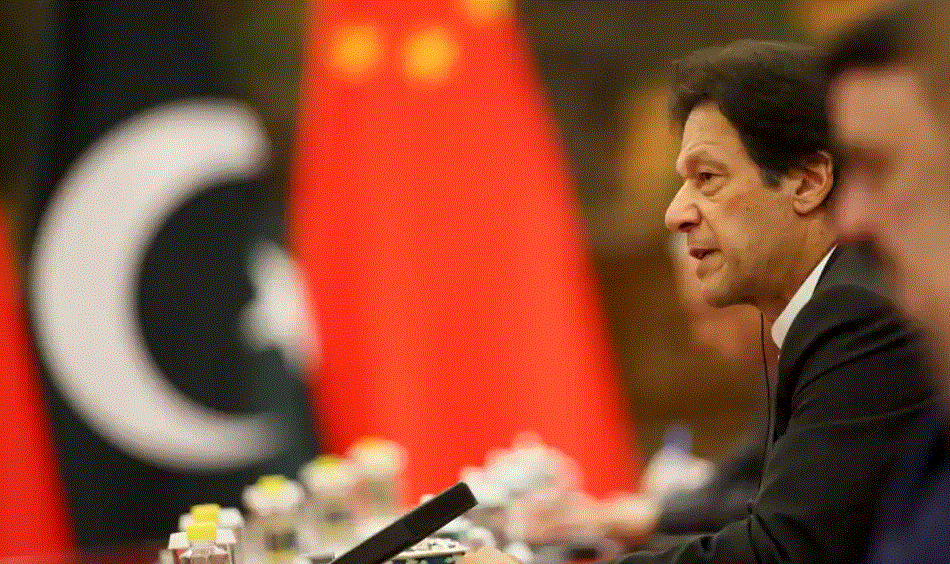
    Prime Minister (PM) Imran Khan has left for China on a four-day official on Thursday to attend the ceremony of the Olympic Games Beijing 2022 where he will meet Chinese President Xi Jinping and Premier Li Keqiang. PM Khan is accompanied by a high delegation including China Pakistan Economic Corridor (CPEC) Special Assistant Khalid Mansoor.

    Prime Minister Office (PMO), in a tweet, said, “The visit would mark the culmination of celebrations commemorating the 70th anniversary of the establishment of diplomatic relations between and with more than 140 events organized to showcase the resilience of the All-Weather Strategic Cooperative Partnership.”

    This visit would be PM Khan’s fourth visit to China. Previously, he went on a two day (October 8-9) visit to China in 2019, before the Covid pandemic.

    Prior to the premier’s departure, cabinet members who are accompanying him termed this visit to China of great significance.

    Foreign Minister (FM) Shah Mahmood Qureshi revealed that many Chinese companies are “desirous” of investing in Pakistan. According to him, the visit will further expand bilateral relations and promote high-level exchanges.

    Finance Minister Shaukat Tarin stated that it is a “very important” trip politically and economically. He added that China would be asked to relocate some of its required industry needs to Pakistan.

    Meanwhile, National Security Adviser (NSA) Moeed Yusuf stressed that the trip is important in regards to solving the Afghan crisis. He said that the issue will be discussed during the visit as well.

    Federal Minister for Information and Broadcasting Chaudhry Fawad Hussain, while highlighting the years of friendship between both countries, said “Pak-China relations are deeper than the oceans and higher than the Himalayas.”

    Planning Minister Asad Umar said the trip has come at a “very important time”. A special book has been prepared which will explain why Pakistan is a prime destination for investment and will be presented to the Chinese leadership, Umar shared via Twitter.

  • CPEC to come down crashing? Foreign media report claims ‘most serious disagreement’ between Pakistan, China

    Pakistan and China are embroiled in their most serious disagreement relating to the Belt and Road Initiative, causing the annual bilateral summit of the China-Pakistan Economic Corridor (CPEC) to be delayed, the world’s largest financial newspaper has claimed.

    The Joint Cooperation Committee (JCC) is CPEC’s principal decision-making body. It is jointly chaired by Pakistan’s minister for planning, development and special initiatives and the vice chairman of China’s National Development and Reform Commission.

    The first JCC meeting was held in August 2013 and the last in November 2019. The 10th JCC was scheduled for early 2020, but remains postponed.

    Initially, the COVID-19 pandemic was the reason, but later disagreements between the two countries over the Main Line 1 (ML-1) railway project and special economic zones became the main points of disagreement, Nikkei Asia has learned from informed sources.

    Asad Umar, Pakistan’s minister for planning, development and special initiatives, told local media in November that the 10th JCC would be held the following month. However, officials in the Planning Commission of Pakistan, who asked not to be named, recently told Nikkei that the meeting will not take place for at least three months — by far the longest JCC gap to date.

    ML-1 is the largest CPEC project and worth $6.8 billion. China is expected to lend $6 billion of this, which Pakistan wants to borrow at a concessional interest rate of less than 3%.

    China offers a mixture of concessionary and commercial loans for such projects. This could significantly increase the aggregate interest rate Islamabad will face, according to the planning commission officials.

    “China is reluctant to lend money for ML-1 because Pakistan has already sought debt relief to meet G-20 lending conditions and it is not in a position to give sovereign guarantees,” Nasir Jamal, a senior journalist in Lahore covering business and the economy, told Nikkei. He said Beijing’s appetite for lending money for large infrastructure projects has diminished because these projects are vulnerable to local politics that delay returns on investment for China. That has hindered agreement on the finance framework for ML-1.

    Andrew Small, a senior trans-Atlantic fellow with the Asia program at the German Marshall Fund, a U.S. think tank, said China tends to base its decisions about interest rates for loans to Pakistan on a couple of criteria. Firstly, do low-interest rates encourage projects that do not make sense financially? Secondly, what precedents are set for other countries looking for similar concessions?

    “China is much more comfortable deferring payments or providing new financing than it is offering concessional rates in the first place,” Small told Nikkei. He said this approach provides Beijing with greater leverage and control even if they are willing to be very flexible at the back-end.

    With host countries under pressure to repay at higher rates, China trades payment deferments in return for influence, which helps it get more favorable arrangements.

    The delayed JCC meeting and unsettled ML-1 financial framework is complicating matters for Pakistan. Early this month, Pakistan Railways asked the government for 11 billion rupees ($69 million) to provide ML-1 security. Without the Chinese financing framework being agreed by the JCC, it is hard for Islamabad to come up with such a large amount given the state of the economy and severe budgetary constraints.

    The other major disagreement between Beijing and Islamabad delaying the JCC meeting relates to SEZs. In the second phase of CPEC scheduled for 2020 to 2025, Chinese companies are due to start producing goods in Pakistan and exporting from there.

    Currently, the industrial cooperation framework for the SEZs is limited to a memorandum of understanding without detailed modalities. Matters such as tax exemptions and requirements for employing local labor have not been finalized. These need to be agreed by China for confirmation at the JCC. The Board of Investment of Pakistan submitted the draft agreement for the industrial cooperation framework to the Chinese government last month and is still awaiting a response.

    In December 2020, during a meeting of the Joint Working Group on Industrial Cooperation under CPEC, Asim Ayub, the project director for industrial cooperation at the Board of Investment, pressed for early signing of the industrial cooperation framework agreement.

    The seriousness of the delay is clear from China’s unprecedented reluctance to schedule a JCC meeting. In the past, JCCs were always held in time, and China agreed to Islamabad’s requests most of the time. Some experts believe the delay is evidence that CPEC is derailing.

    According to Small, there were plenty of announcements about CPEC last year, but actually setting deals in motion was another matter. “The optics do matter to China so I still expect them to figure out terms in the end, and certainly to keep some narrative of continued progress alive,” Small told Nikkei. “But that doesn’t mean they’re willing to agree on something that doesn’t make sense for other reasons just to speed things up a little.”

    Pakistan is currently renegotiating its $6 billion extended fund facility with the International Monetary Fund (IMF), which was suspended in April 2020. The IMF reportedly will only resume the program if Pakistan does not take out any new commercial loans, and that is one of the reasons it is looking for concessions on loans for the ML-1 project.

    An important long-term implication of this case for other BRI countries could be that China will be more wary of lending to countries that have entered loan agreements with global lenders such as the IMF.

    Hasaan Khawar, an Islamabad-based public policy analyst, views the situation from a different perspective. “The back-and-forth with China by Pakistan on the interest rate and additional guarantees for the ML-1 project is a good sign,” he told Nikkei. “The Pakistani side is appraising the terms carefully and trying to negotiate a better deal.”

    The report originally appeared on Nikkei Asia

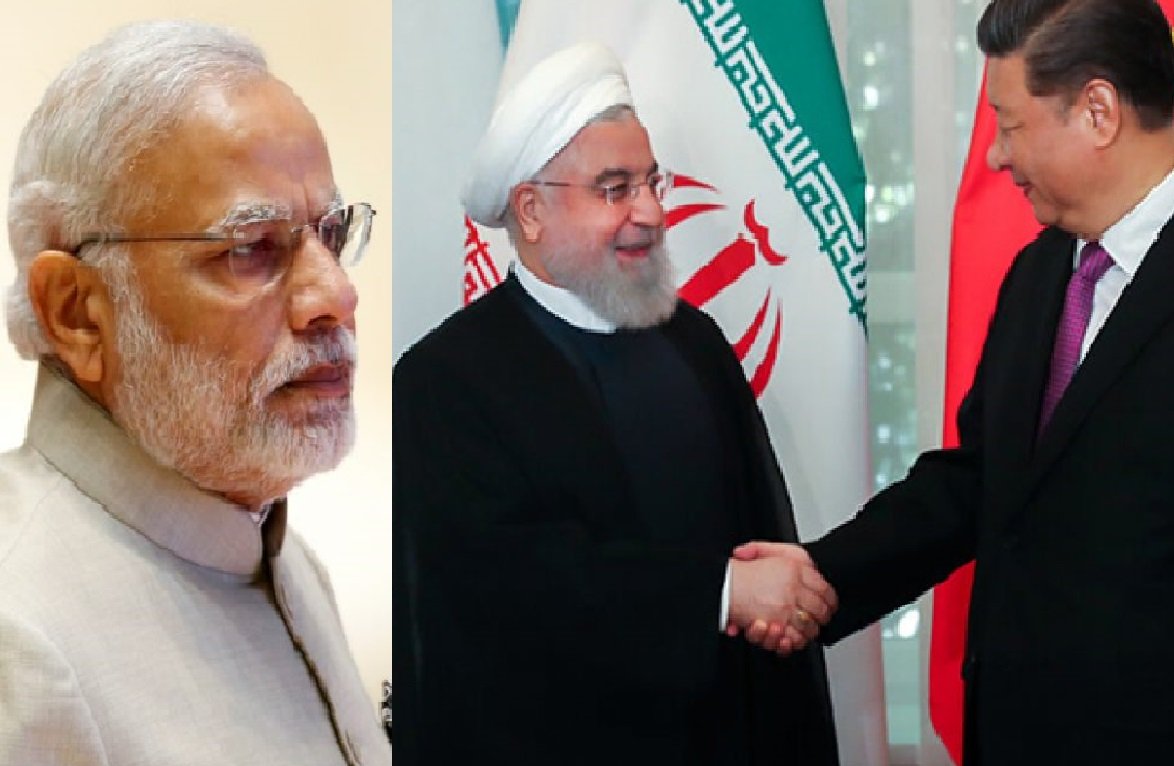
  • Friendship ended with India, now China is Iran’s best friend?

    Friendship ended with India, now China is Iran’s best friend?

    After being “dropped” from a key rail project in southeastern Iran along the border with Afghanistan, India is also set to lose an ambitious gas field project in the country that had been in the pipeline for the past 10 years. 

    India’s Ministry of External Affairs has said in a statement that Tehran would develop the Farzad-B gas field in the Persian Gulf region “on its own” and might engage India “appropriately at a later stage”.

    Last week, Masoud Karbasian, managing director of National Iranian Oil Company (NIOC), told reporters that a new operator had been roped in to develop the gas field, replacing India’s ONGC.

    The field, estimated to possess 21.7 trillion cubic feet of natural gas reserves, 12.8 trillion cubic feet of natural gas and 212 million barrels of gas condensates, was discovered in 2008 by a consortium of three Indian companies — ONGC, Oil India Limited and Indian Oil Corporation.

    According to the deal, the Indian side was supposed to develop the field but they abruptly stopped work in 2012, following the intensification of sanctions against Iran.

    After sanctions were eased in 2015 following the signing of a nuclear deal between Iran and Western countries, India showed its willingness to return to the project.

    However, things again fell apart amid the reinstatement of US sanctions on Iran in May 2018, which further “discouraged” India from making headway in the project, said sources familiar with the issue who requested not to be named.

    “By May 2018, the two sides had made tremendous progress and agreed on key details of the project,” the sources said. “However, the US sanctions played the spoilsport.”

    The two sides had disagreements among themselves as well, particularly on the number of pipelines to be laid and financial investment in the development plan, according to reports.

    In May 2019, Iran’s oil minister, Bijan Namdar Zanganeh, said his ministry had devised a plan to finance the development of the Farzad-B gas field.

    The NIOC had asked the Indian side to submit a financial plan for the field’s development. However, Tehran was “not impressed” with the plan and asked for a new one, said the sources. India had reportedly made a $5.5 billion investment plan

    In August 2019, after slow progress by the Indian side to submit a new plan, Karbasian said Iran would proceed with another operator for the project.

    India’s External Affairs Ministry, however, said the “follow-up bilateral cooperation” was impacted by “policy changes on the Iranian side”.

    This was, however, not the only blow that Iran has served to India as just earlier this week it had “dropped” India from a rail project after the Indian side showed reluctance to start work due to US sanctions.

    The memorandum of understanding to construct the 628-kilometre railway line from the port city of Chabahar to Zahedan was first discussed between the two sides in May 2016.

    It came on the sidelines of the signing of a trilateral agreement between India, Iran and Afghanistan to develop a transport and trade corridor from India to Afghanistan through the Chabahar port in southeast Iran. The port has been operational since 2016 and has been exempted from US sanctions.

    India’s External Affairs Ministry dismissed the reports that Iran excluded it from the rail project as “speculative,” saying Tehran was to “nominate an authorised entity to finalise outstanding technical and financial issues”. The matter, it said, was “still awaited”.

    “IRCON was appointed by [the] Government of India to assess the feasibility of the project. It was working with CDTIC, an Iranian company under their Ministry of Railways in that regard. IRCON has completed the site inspection and review of the feasibility report,” the ministry said in a statement on Thursday, referring to the state-run Indian infrastructure firm undertaking the project.

    “Detailed discussions were thereafter held on other relevant aspects of the project, which had to take into account the financial challenges that Iran was facing. In December 2019, these issues were reviewed in detail at the 19th India-Iran Joint Commission Meeting in Tehran.”

    An official from Iran’s Ports and Maritime Organisation has also denied the reports. However, he said Iran “has not inked any deal with India” for the construction of the Chabahar-Zahedan railroad.

    Both the developments come amid China-India tensions over a territorial dispute in the Ladakh region and as Beijing, sensing America’s internal political difficulties amid social justice protests and poor COVID-19 response, reportedly approves a $400 billion economic and security deal with Tehran.

    In addition to massive infrastructure investments, the agreement envisions closer cooperation on defense and intelligence sharing, and is rumored to include discounts for Iranian oil. If finalised, China would gain massive influence in this geopolitically critical region.

    The US is likely to push back against this partnership, which threatens its security and energy interests in the Middle East and Eurasia. According to Forbes, it is an open secret that Washington’s foreign policy interests constantly clash with those of Tehran and Beijing.
  • ‘Chinese president orders army to prepare for war’

    ‘Chinese president orders army to prepare for war’

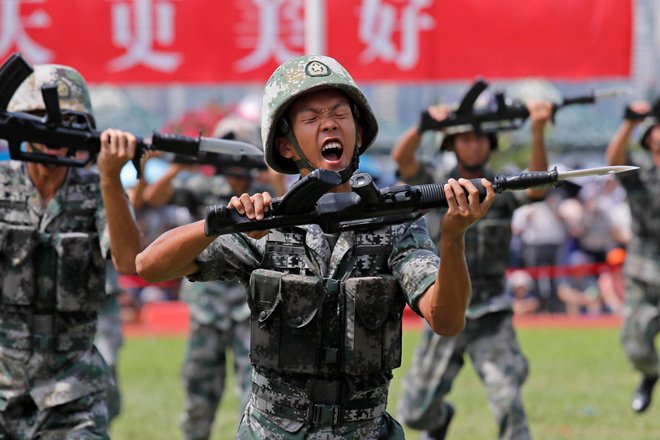
    Chinese President Xi Jinping has ordered his army to strengthen the training of its troops and “prepare for war”, foreign media outlets reported.

    The Chinese president said that it was important to “comprehensively strengthen the training of troops and prepare for war”, “resolutely safeguard national sovereignty” and “safeguard the overall strategic stability of the country”.

    Xi’s speech comes amid rising tensions with the United States (US) and escalating clashes with the Indian army at the Ladakh border. Both armies are said to have deployed additional troops in sensitive areas along the boundary with experts predicting a lengthy standoff.

    As per a report by ThePrint, Beijing has also increased up security on its side of the Line of Actual Control (LAC) by locating an estimated 1,200 to 1,300 troops near the Pangong Lake.

    Xi, who chairs China’s powerful Central Military Commission (CMC), made the comments at a meeting of the delegation of the People’s Liberation Army (PLA) and People’s Armed Police Force (PAPF) on the sidelines of the annual session of the National People’s Congress (NPC), the country’s parliament.

    He emphasised on preparing for a military struggle “…to flexibly carry out actual combat military training, and to comprehensively improve our military’s ability to carry out military missions”.

    “This epidemic prevention and control struggle is a practical test for national defence and military reform, fully embodies the effectiveness of the reform, and also puts forward new requirements for reform,” he added.

    Two days back, Chinese diplomat Wang Yi, criticised the efforts of some US politicians to fabricate “rumours” and “stigmatise” China to blame it for the pandemic.

  • ‘China let coronavirus become a pandemic’

    ‘China let coronavirus become a pandemic’

    Top officials of the Chinese government by January 14 knew that the coronavirus outbreak in Wuhan could snowball into a pandemic, yet they kept the world in dark from the unfolding catastrophe for the next six days, The Associated Press (AP) has reported on the basis of retrospective infection data.

    The report cited Chinese media and claimed there was enough data to prove that COVID-19 was spreading person-to-person as people who had never been to Wuhan’s animal market contracted the disease as early as December, yet the Chinese government hid the fact from the public and the World Health Organisation (WHO).

    President Xi Jinping warned the public on the seventh day — January 20 — but by that time, more than 3,000 people had been infected during almost a week of public silence internal documents revealed.

    That delay from January 14 to January 20 was neither the first mistake made by Chinese officials at all levels in confronting the outbreak, nor the longest lag, as governments around the world have dragged their feet for weeks and even months in addressing the virus.

    But the delay by the first country to face the new coronavirus came at a critical time — the beginning of the outbreak. China’s attempt to walk a line between alerting the public and avoiding panic set the stage for a pandemic that has infected more than 2.1 million people and taken more than 147,000 lives.

    Zuo-Feng Zhang, an epidemiologist at the University of California, has said that had they taken action six days earlier, there would have been much fewer patients and medical facilities would have been sufficient. “We might have avoided the collapse of Wuhan’s medical system.”

    Moreover, the Chinese Center for Disease Control had stopped registering any cases from Wuhan’s local hospitals from January 5 to 17. However, thousands of patients were admitted to hospitals not just in Wuhan but all over China during that period.

    It is understood that doctors in local hospitals feared that they might receive the same punishment for rumor-mongering as the eight doctors, including Dr Li Wenliang, who tried to alert the public before any official authorities.

    It’s uncertain whether it was local officials who failed to report cases or national officials who failed to record them. It’s also not clear exactly what officials knew at the time in Wuhan, which only opened back up last week with restrictions after its quarantine.

    But what is clear, experts say, is that China’s rigid controls on information, bureaucratic hurdles and a reluctance to send bad news up the chain of command muffled early warnings.

  • ‘China manipulated number of COVID-19 infections for president’s visit’

    ‘China manipulated number of COVID-19 infections for president’s visit’

    The number of novel coronavirus patients in Wuhan, the epicenter of China’s virus outbreak, was manipulated in time for President Xi Jinping’s visit last week, a local doctor was quoted as saying by Tokyo-based Kyodo News.

    According to the Japanese media outlet, a number of symptomatic patients were abruptly released from quarantine early while a portion of testing was suspended.

    China’s health authorities had last Thursday reported no new cases of coronavirus in Wuhan, marking the first time for the city to have no instances of local transmission since the viral epidemic began late last year.

    But the doctor, who works at a quarantine facility, said the government tally “cannot be trusted.”

    The number of patients currently undergoing treatment is deliberately being reduced in an effort to show the Xi government’s success in combatting the epidemic, he said.

    The doctor, whose responsibilities include determining whether a patient is discharged from a hospital, expressed strong concerns that if the truth remains hidden from the public, another outbreak could occur.

    Guidelines from the National Health Commission stipulate that patients must test negative for the virus twice and be cleared for pneumonia via a computerised tomography — imaging through X-rays or ultrasound — scan before being discharged.

    But according to the doctor, from around the time of Xi’s visit, even though his patients still exhibited signs of pneumonia, the patients were released from quarantine at the discretion of a “specialist” from the epidemic prevention and control authority.

    From then on, the criteria for discharging patients became loose, and “a mass release of infected patients began,” he said.

    Also, patient interviews with those exhibiting symptoms such as fever were simplified, and blood tests to detect antibodies produced during infection were discontinued. As a result, “suspected patients were released back into society,” he said.

    Xi, on March 10, made his first visit to the central Chinese city of Wuhan since the outbreak began, emphasizing the government’s achievements in its epidemic prevention and control efforts.

    According to the National Health Commission, nearly 58,000 people have been discharged from hospitals in Hubei Province, where Wuhan is the capital. Beginning in mid-March, the number of new infections in Wuhan has stayed below a dozen patients a day.