Tag: zoo

  • Pakistan horror zoo is reborn as rehab centre

    Pakistan horror zoo is reborn as rehab centre

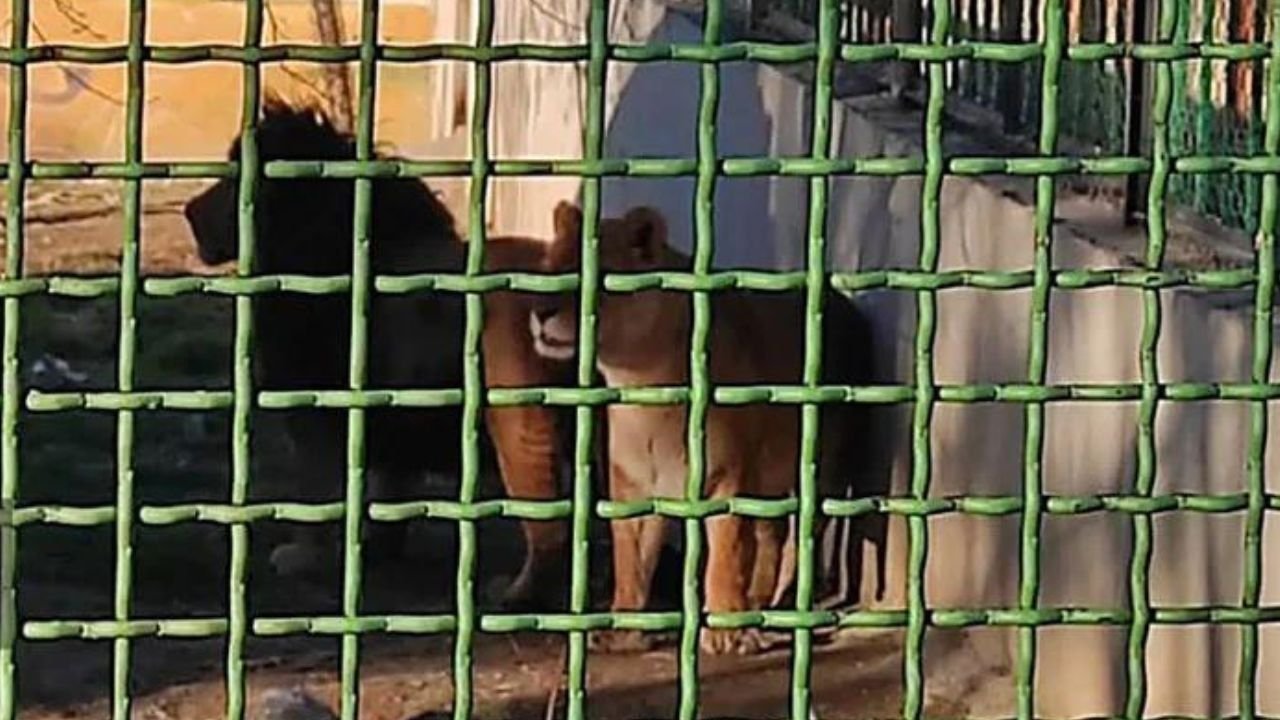
    Islamabad, Pakistan – Before it was forced to close over its “intolerable” treatment of animals, the Islamabad Zoo was home to neglected elephants and underfed lions pacing back and forth behind the bars of their enclosures.

    Now, four years later, it is a rehabilitation centre for Pakistani wildlife, providing a refuge for motherless leopard cubs, tigers seized from owners who kept them as status symbols, and bears forced to dance — or fight — for the amusement of crowds.

    “The whole energy of the place has changed ever since the zoo was emptied… The care shows, look around,” Rina Saeed, the head of Islamabad Wildlife Management Board (IWMB), told AFP.

    The zoo found international notoriety in 2016, when the singer Cher launched a campaign to remove its shackled Asian elephant Kaavan, the last in the country and dubbed the world’s loneliest elephant.

    But Kaavan’s treatment wasn’t an isolated incident — two lions died at the facility when zookeepers attempted to force them from their pen by setting fire to piles of hay. And over the years, hundreds of animals listed on the zoo’s inventory simply vanished.

    Pakistan’s climate change ministry said it was “seriously concerned” about the “intolerable and inhumane” treatment of animals at the zoo in 2020 — the same year the courts ordered it shut and Kaavan was moved to Cambodia.

    Within months of its closure, a small rescue centre began to take root at the facility, and now evidence of its past as a tourist attraction is fading — silence hangs over the empty, overgrown parking lot and the shabby ticket stand sits idle next to a swing set.

    “Now it is a proper rehabilitation centre with over 50 animals,” Saeed said, adding that the team had rescued more than 380 animals.

    ‘Unrecognisable’

    The IWMB team rescues animals from across the country, recently taking in two indigenous leopard cubs poached from their mother, bears once forced to fight dogs in underground competitions and monkeys made to dance for tips.

    Amir Khalil, a veterinarian who directs the global animal welfare organisation Four Paws, which oversaw Kaavan’s relocation, recently made an emotional return to the zoo, saying it “now holds hope”.

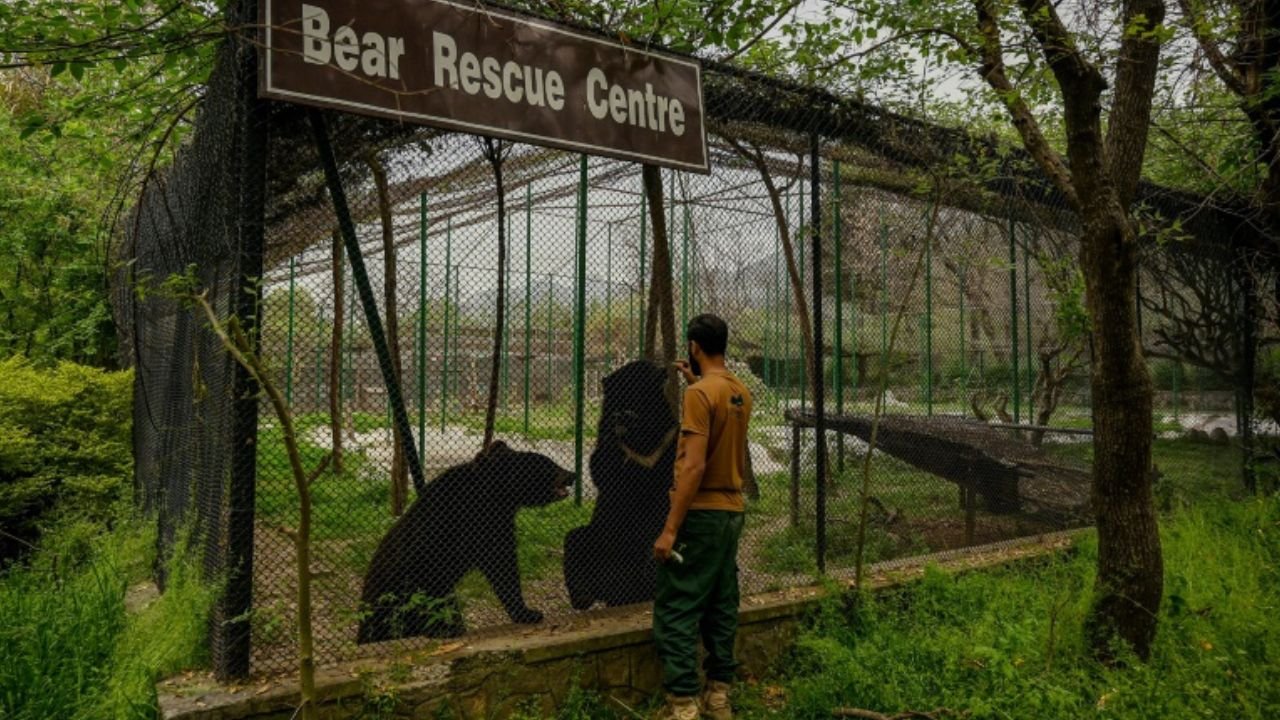
    Vets from the Austria-based NGO had come to the centre to see after three black bears whose claws had been removed by their previous owners, treating them in the shadow of an abandoned Ferris wheel in the zoo’s former cafe — now a makeshift clinic.

    “This place is unrecognisable,” Khalil told AFP while inspecting one of the animals, an overweight former dancing bear called Anila.

    Anila was also suffering from a nose infection from a ring pierced through her snout to help keep her under control.

    “We hope this place turns out to be a place for animals with a better future,” Khalil said.

    Last year the IWMB seized a tiger cub with broken bones from a vet clinic in an upscale neighbourhood in the capital, later relocating the animal to South Africa.

    Owning a wild cat is a symbol of wealth in Pakistan even though it is illegal in some parts of the country.

    “We think animals are toys,” said Ali Sakhawat, deputy director of research and planning at the IWMB.

    The animals brought to the centre are not only physically injured but also mentally traumatised.

    “We keep them occupied to help them erase the memories of the trauma inflicted by poachers,” Aneis Hussan, a wildlife ranger, told AFP as he played with Daboo, one of the rescued black bears.

    “The bears you’ve observed here exhibit signs of joy — roaming freely, climbing trees — a stark contrast to the captivity that deprived them of happiness,” Hussan added.

    Bumpy quest for survival

    Wildlife authorities are pushing for new laws targeting poachers and bear baiters who regularly trap and traffic wild animals.

    A new Islamabad Nature and Wildlife Management Act would strengthen animal protections, but Saeed says it still “needs the president’s signature”.

    The last presidential order on animal welfare — restricting bear baiting — was passed over 20 years ago by President Pervez Musharraf.

    “No one in the government listens, I have gotten old trying to make them understand how important this is,” Safwan Ahmad, vice chairman of the non-profit Pakistan Wildlife Foundation, told AFP.

    IWMB wants to establish a permanent sanctuary at the site of the rehabilitation centre, but the local authority that owns the land intends to reopen the facility as a public zoo.

    “There is one (zoo) in almost every city worldwide,” said Irfan Khan Niazi of the environmental department of the Capital Development Authority, which oversees planning and development in Islamabad.

    “Just because rules were not followed once does not mean it would happen again”, he added.

    “No matter how many zoos we make for kids, this won’t teach them that animals are to be taken care of,” said IWMB’s Sakhawat.

    “Wild animals are to be kept in the wild, not cages”, he added.

    stm/ecl/smw/tym

    © Agence France-Presse
  • He hippo in Japan zoo turns out to be a she

    He hippo in Japan zoo turns out to be a she

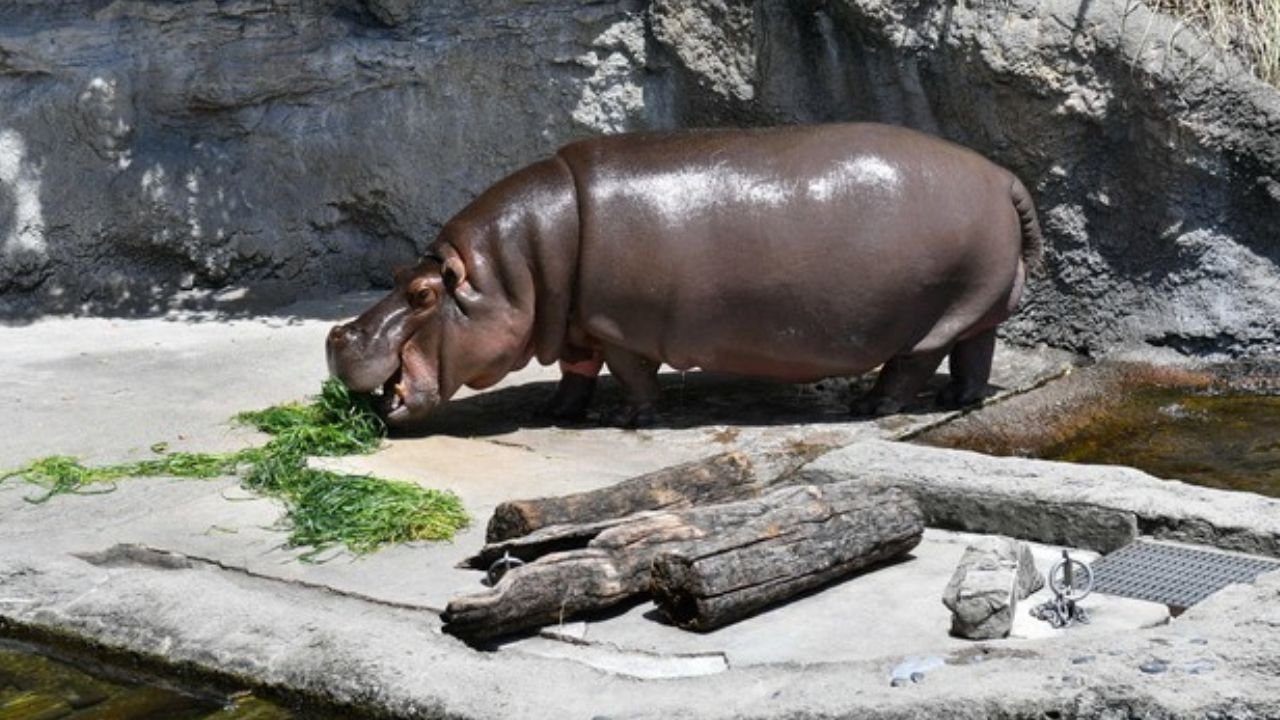
    Tokyo (AFP) – Betrayed by its DNA and unmanly toilet habits, a hippopotamus in Japan thought for seven years to be a he is in fact a she, the zoo where the wallowing giant lives said Tuesday.

    The 12-year-old came to Osaka Tennoji Zoo in 2017 from the Africam Safari animal park in Mexico, where officials attested on customs documents that the then five-year-old was male.

    But zookeepers long scratched their heads, a spokeswoman told AFP.

    In particular, Gen-chan did not display the typical male hippo behaviour of splattering faeces around while defecating — with a propeller-like tail motion — in order to mark territory.

    Nor did it make courtship calls to females and zookeepers were unable to visually identify any male genitalia, a dangerous task in such a large and potentially aggressive beast.

    “Therefore, we requested a DNA test at an external institution, and the result showed it was female,” the zoo said in a statement posted last week.

    “We will keep doing our best to provide comfortable environment to Gen-chan, so everyone, please come and see,” it said.

  • Indian extremists angered by lions named ‘Akbar’ and ‘Sita’

    Indian extremists angered by lions named ‘Akbar’ and ‘Sita’

    Hindutva extremism has penetrated into every aspect of Indian life, including zoos.

    Extremist organisation, Vishwa Hindu Parishad (VHP), has filed a case against keeping a lion named Akbar and another named Sita in the same cage in West Bengal.

    The lions brought to the West Bengal Safari Park were named by the management.

    The Hindu organisation says that the authorities have hurt their religious sentiments by the two animals being housed together because they have names coming from different religions.

    The VHP has filed a petition against the forest department in the Kolkata High Court, which will be heard on February 20.

  • Pakistan zoo shut down after mystery tiger attack

    Pakistan zoo shut down after mystery tiger attack

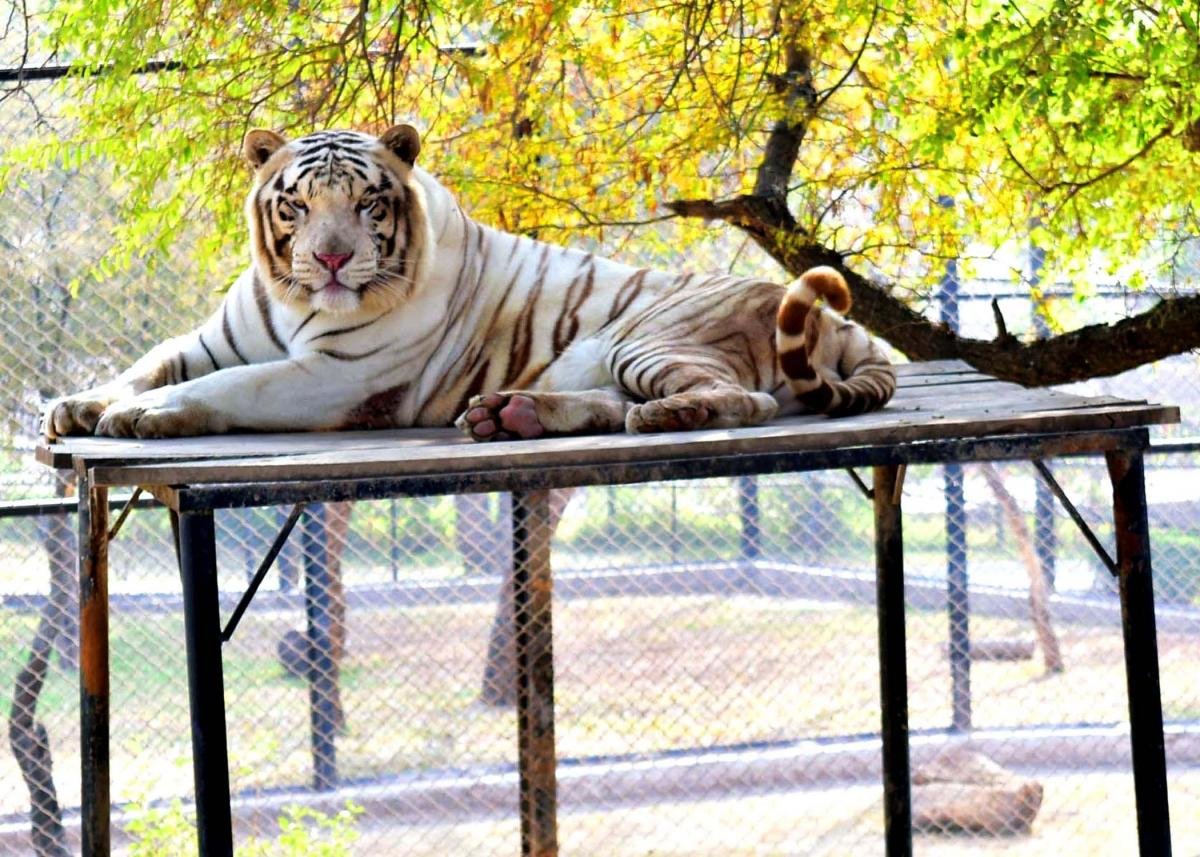
    AFP – Lahore: A zoo in Pakistan has been shut down after a man was mauled to death by tigers in an attack discovered during routine cleaning, officials said Thursday.

    The body was found on Wednesday morning in Bahawalpur’s Sherbagh Zoo in the eastern province of Punjab after staff spotted one of the three tigers with a shoe in its mouth.

    “The zoo is closed right now as we determine how the man got in,” Ali Usman Bukhari, a senior officer of the province’s wildlife department, which operates the zoo, told AFP.

    The condition of the body suggests the attack happened late Tuesday night.

    “The autopsy report has not been released, however evidence gathered from the enclosure points towards him being alive when he was attacked by the tigers,” Bukhari said.

    “The tigers did not go out of the den to attack the man, he jumped into their enclosure,” he said.

    “If we find a security lapse, we will address it. If need be, we will hire private security guards.”

    The victim has not been identified and no family member has come forward to claim the body.

    Speaking to media outside the zoo after the body was discovered on Wednesday, senior local government official Zaheer Anwar said all staff had been accounted for.

    “Our assessment so far is that this appears to be a lunatic, because a sensible person would not jump into the den,” he said.

    “You can see the den is secured. There are stairs behind the den, maybe he jumped from there.”

    The three tigers present in the den when the body was discovered have been restricted to a smaller space while evidence is collected.

    The zoo was built in 1942 by the ruling royal family of the former princely state of Bahawalpur and costs adults 50 rupees (18 cents) to enter.

    Pakistan’s zoos are generally in a poor condition and frequently accused of disregarding animal welfare.

  • ‘Janwaron say bad dua lenay say behtar hai’: Hamza Ali Abbasi joins rallying cry to shut down zoos across Pakistan

    ‘Janwaron say bad dua lenay say behtar hai’: Hamza Ali Abbasi joins rallying cry to shut down zoos across Pakistan

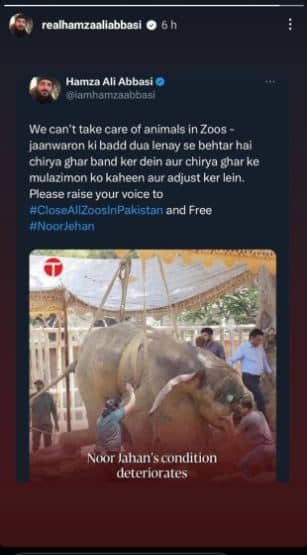
    Actor Hamza Ali Abbas has joined the chorus of voices calling for zoos across Pakistan to be shut down. As the country watches veterinarians try to save the life of one of Karachi Zoo’s elephants, Noor Jehan, celebrities have lent support to the demand that the animals be shifted to sanctuaries.

    Taking to Instagram, the ‘Maula Jatt’ actor shared a clip of a post by Express Tribune, slamming authorities for not caring about the welfare of the animals:

    “We can’t take care of animals in zoo’s- it is better than to receive curses from animals that we should ban zoos and send the animals to a safer place.”

    Abbasi’s criticism comes after countless celebrities, including Grammy award winner Arooj Aftab, raised their voices to support animals and shut down zoos. Aftab re-shared a clip from her interview with The Current where she had talked about the abysmal conditions of animals in Lahore’s zoo, calling for better facilities to be set up for animals.

    Just as Noor Jehan improved, she fell into a concrete pond built inside her shelter, leading to worsening of her condition. Authorities had remained in contact with the animal welfare organization Four Paws to coordinate for her treatment.

    Yesterday, The Nation reported that Minister of Climate Change and member of Pakistan People’s Party (PPP) Sherry Rehman, had advised Sindh government to shut down Karachi Zoo, and for the animals to be moved to enclosures where they are provided with proper facilities.

  • It’s time to close the zoos in Pakistan

    It’s time to close the zoos in Pakistan

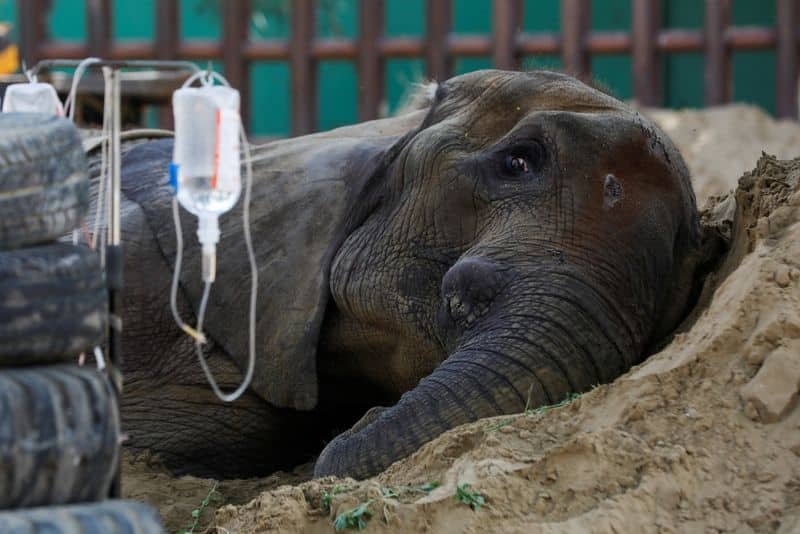
    Noor Jehan, an elephant in Karachi Zoo, is critically ill after the 17-year-old fell in a pond in a small enclosure. She has since been lying visibly weak with limited motion on a mound of sand, propped up against the only tree inside the enclosure. Noor Jehan’s condition is a reminder that we have imprisoned animals in cages for the entertainment of the people. We humans are the reason that the animals suffer and bear so much torture and pain.

    Wild animals are unlikely to survive or live happily in an artificial environment like the ones we provide them at the zoos. Moving them from their natural habitat and from their community puts them under great stress. It is no secret that animals in Pakistani zoos are kept in poor conditions.

    The wildlife parks and zoos of Pakistan are characterised by a weak governance system. The animals lying in the zoos and wildlife parks of Pakistan are ignored with regard to their physical and mental well-being. They are not properly provided with adequate nutritional food and are seldom treated effectively for their physical ailments. There are about 10 public zoos, 25 private zoos and 28 wildlife parks in Pakistan. Neither of these are authorised by any recognised association of zoos and aquariums. The animals kept in these zoos are often neglected. Not only is their food and nutrition ignored but several other environmental issues thwart their well-being. Several zoos lack veterinary professionals, owing to which the animals do not get ample medical help whenever required. Some animals die due to lack of adequate required treatment adding to the plight of the zoos of Pakistan.

    This brutality towards animals has been there because of continuous negligence being directed towards them. This isn’t the first time we are witnessing the suffering of animals at zoos and this definitely doesn’t seem to be the last time either. In 2020, American singer Cher arrived in Pakistan to send off Kaavan, an elephant in Islamabad Zoo she had spent years trying to free, before his move to a Cambodian sanctuary. Animal rights advocates had campaigned for the 36-year-old Asian elephant to be rescued from grim conditions.

    Minister for Climate Change, Sherry Rehman, has said that there is a no-zoo Islamabad model of rescue and rehab centre and transition sanctuary, in the federal capital. The Islamabad zoo where the bears and the elephant were kept have now been closed. Pakistan should stand firmly against any kind of animal cruelty and take timely action to stop it.

    We all need to stand up for the animals and treat them right. It took one Noor Jehan to make us realise that zoo animals suffer from continued neglect and will continue to die and go through pain if our policies don’t change. So if, we cannot take care of our animals, we should close the zoos and free the animals. We Pakistanis don’t deserve them.

  • Sri Lanka considering exporting 100,000 monkeys to China

    Sri Lanka considering exporting 100,000 monkeys to China

    Sri Lanka’s Agriculture Minister, Mahinda Amaraweera, has instructed officials to examine China’s proposal to import 100,000 toque macaque monkeys, which are native to Sri Lanka and classified as endangered by the International Union for Conservation of Nature (IUCN).

    The monkeys will be displayed in over 1,000 Chinese zoos with the minister suggesting that Sri Lanka might be able to meet the request due to the large macaque population in the country.

    As per a Sri Lankan news portal, a meeting was held on Tuesday to discuss the possibility of sending monkeys to China under the first phase of the programme. Agriculture Minister Mahinda Amaraweera led the meeting, which was attended by officials from the Agriculture Ministry, Department of National Zoological Gardens, and Department of Wildlife Conservation.

    During the meeting, it was revealed that the current monkey population in Sri Lanka has grown to almost 3 million and that the monkeys were causing significant damage to local crops.

    Despite Sri Lanka’s ban on almost all live animal exports, the country is currently considering fulfilling China’s request for macaque monkeys, as the country grapples with its worst economic crisis.
    Sri Lanka is also looking to fulfill China’s request due to the fact that Beijing is one of Sri Lanka’s major bilateral lenders.

  • Four Paws has reached Pakistan to treat elephant Noor Jehan

    International animal welfare group Four Paws has reached Karachi on April 4 to examine and begin treatment of ailing elephant, Noor Jehan. In a press release posted on their website, Four Paws revealed that since 2021, they have been strongly recommending that both elephants Noor Jehan and Madhubala are shifted from Karachi Zoo, as the facility does not comply with international standards of providing habitable living conditions for animals.

    “However, no such measures to relocate them have been taken,” the post read.

    The team was led by the head of the organization, Dr Amir Khalil, along with  Dr Frank Göritz and Prof Dr Thomas Hildebrandt from the Leibnitz Institute for Zoo and Wildlife Research (IZW), and Dr Marina Ivanova from FOUR PAWS. Khalil spoke to journalists about Noor Jehan’s condition yesterday, as reported by Dawn and Express Tribune.

    He said that Jehan needs a detailed medical examination which includes endoscopy, ultrasound and X-rays, in order to provide proper insight into her condition.

    “We don’t know what went wrong with her. But, her condition has deteriorated very fast within a few weeks. She has got swelling on her hind legs as well as genital parts and she could barely walk. Right now, she has a 50-50 chance for survival,” he said.

    Khalil went on to reveal that their team was setting up a crane, wench and a fire brigade to help the animal remain stable and upright during surgery:

    “Our greatest concern is not to let the animal fall down. We fear that if Noor Jehan falls down, she it will not get up again. We will find out tomorrow whether it’s a fracture, trauma or an infection.”

    Today, the Karachi Metropolitan Center (KMC) spoke to DAWN and revealed that they were ready to facilitate the team in every way to help the elephants, and were making preparations to send them to Safari Park:

    “We are with Four Paws. All departments are ready to arrange any logistics needed for medical procedures. We are also making preparations to shift both zoo elephants to Safari Park within a month as per experts’ recommendation,” said Dr. Saif-ur-Rehman, Karachi Administrator.

    Rehman went on to add that Noor Jehan had been suffering from a neurological deficiency for the past two or three months which had impacted her hind legs. The government did not have the facilities for the treatment Noor Jehan needed in Pakistan which is why the international group was approached to help diagnose her illness and provide a solution.

    “The kind of treatment Noor Jehan requires isn’t available in Pakistan. So, we approached the international group to help us diagnose her illness and suggest and offer treatment, if possible,” Dr Rehman said.

  • Heatwave emergency declared in Rawalpindi Zoo

    Heatwave emergency declared in Rawalpindi Zoo

    Ayub National Park Zoo in Rawalpindi has declared a heatwave emergency to safeguard animals from heatstroke and dehydration amid an extraordinary surge in temperature in Rawalpindi and Islamabad. It has been decided to install air-conditioners for animals if the temperature reaches 50 degrees Celsius.

    To prevent heatstroke in lions, bears, monkeys, zebras, deer, wolves, birds, and tigers, water ponds have been installed in their cages, as well as air-coolers and extra fans with ice blocks in their night barracks.

    Army Heritage Foundation Director-General Brig (retd) Asif Akhtar while talking to The Express Tribune said that unusually high temperatures have increased the risk of heatstroke and dehydration in animals and birds, thus the zoo administration has declared an emergency to preserve animals and birds from the heatwave’s detrimental consequences.

    Jungle World Zoo Deputy Director Major (retd) Salman explained that as the temperature rises, the animals’ feeding patterns alter, and the veterinary staff adjusts their nutrition accordingly.

    “Lions, bears, tigers, deer, zebras, monkeys, puma, and wolves are fed a variety of vitamins and minerals in water to protect them from heatstroke and dehydration,” he said.

    In the current situation, the zoo administration has urged visitors not to disturb the animals in cages, as the current heatwave is already causing them harm.

  • Giraffe dies at Lahore Zoo

    Giraffe dies at Lahore Zoo

    A male giraffe, who had been sick for the last seven months, died at Lahore Zoo on Friday. As per the zoo officials, the nine-year-old giraffe had stopped eating to its full capacity.

    Punjab Wildlife Headquarters Deputy Director Muhammad Mudassar, while talking to Dawn, said that the exact cause of death would be determined after the post-mortem report, but the giraffe was suspected of having a blood infection.

    A total of three giraffes were procured by the Lahore Zoo in 2018. However, one of the female giraffes died soon after her arrival. Now only one female giraffe is left in Lahore Zoo. A giraffe costs around Rs40m to Rs50m, according to zoo officials. The zoo will now make arrangements for the giraffe to be paired.

    Six giraffes have been imported into the Lahore Zoo since 2007, and five of them have died prematurely due to various reasons.