Author: newsdesk

  • Pakistani rupee drops by more than Rs18 against US dollar due to delay in IMF deal

    Pakistani rupee drops by more than Rs18 against US dollar due to delay in IMF deal

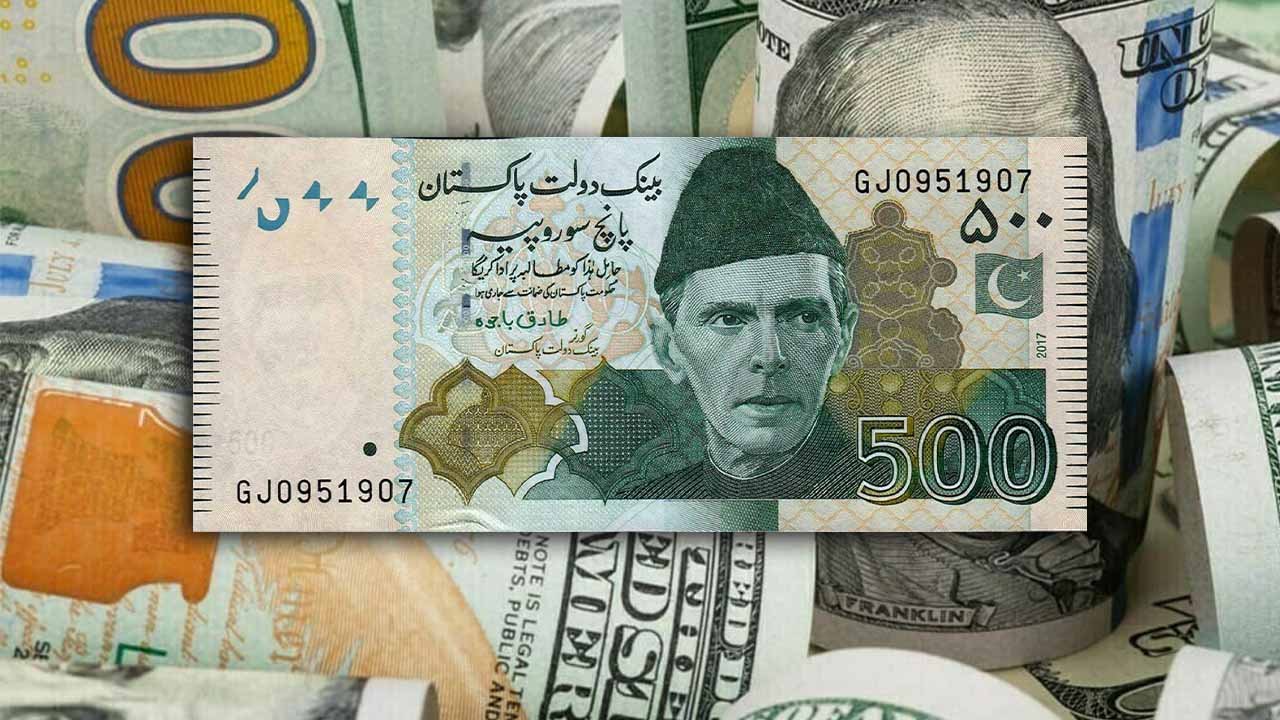
    Pakistani rupee (PKR) experienced a significant decline of over Rs18.8 against the US dollar in the interbank market during intra-day trade, ahead of the monetary policy review and delay in the International Monetary Fund (IMF) deal.

    At approximately 11:40 am, the greenback was being traded at Rs285 against the local currency, compared to its previous day’s closing of Rs266.11.

    Zafar Paracha, the General Secretary of ECAP, expressed concern over the delay in the agreement with IMF and the lender’s demand to peg the currency rate with that of the grey market, which has resulted in market uncertainty.

    In his opinion, the current rate is too high and should not have risen to this extent. He also noted that the greenback was being traded at Rs290 in the grey market a day earlier.

    Adnan Asghar, a currency market expert, stated that the delay in the deal between Pakistan and the IMF has contributed to the depreciation of the rupee.

    He added that the uncertain political situation has also been a factor in the decline of the rupee’s value. Asghar warned that the country is approaching a default situation due to this delay.
  • Inflation in Pakistan reaches nearly 50-year high, raising concerns for citizens

    Inflation in Pakistan reaches nearly 50-year high, raising concerns for citizens

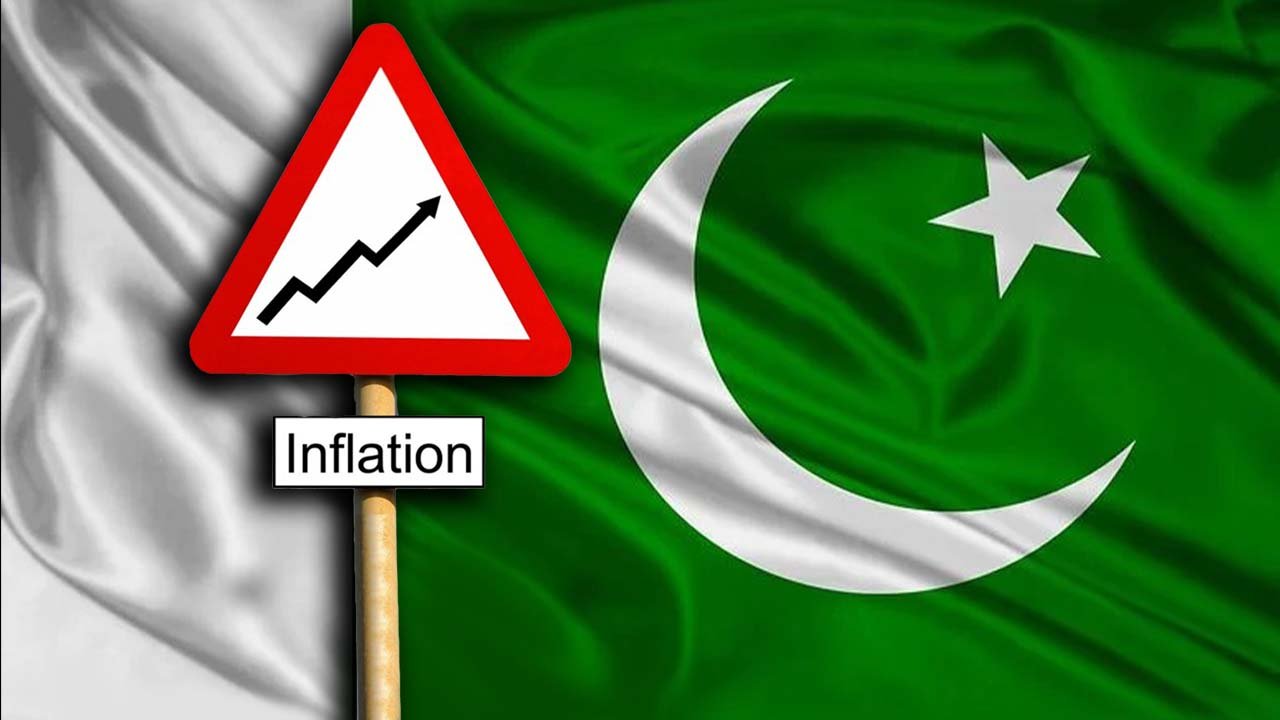
    Pakistan’s inflation, as measured by the consumer price index (CPI), surged to a record-breaking 31.5 per cent in February, largely driven by steep price hikes in food, housing, and transportation groups. This concerning development was recently reported by the Pakistan Bureau of Statistics (PBS), and has heightened expectations of an increase in interest rates during the upcoming monetary policy committee (MPC) meeting, which the central bank has scheduled for March 2.

    The February inflation rate marks the highest figure since available data dating back to July 1965, surpassing the previous record of slightly over 29 per cent in April 1975. The unexpected pace of price increases has surpassed the finance ministry’s expectations, who had projected an inflation range of 28 per cent to 30 per cent just a day before the report.

    According to Geo, the monthly inflation rate surged by 4.3 per cent in February compared to January, primarily due to increased average prices of food items such as poultry, fruits, pulses, oil, vegetables, ghee, LPG, gas charges, and domestic petroleum products.

    The inflation reading raises concerns that the government will need to review its strategy to secure the critical $1.1 loan tranche from the International Monetary Fund (IMF). Despite repeated efforts, the government has been unable to regain lost ground with the IMF and is continually delivering financial shocks to the people.

    According to PBS, the inflation rate rose in both urban and rural areas. Urban inflation increased to 28.8 per cent in February, while rural inflation soared to 35.6 per cent compared to the same month last year. In February of the previous year, urban inflation was recorded at 11.5 per cent, while rural inflation was at 13.3 per cent.

  • Malala Yousafzai: ‘Activism needs to go beyond just working with an NGO’

    Malala Yousafzai: ‘Activism needs to go beyond just working with an NGO’

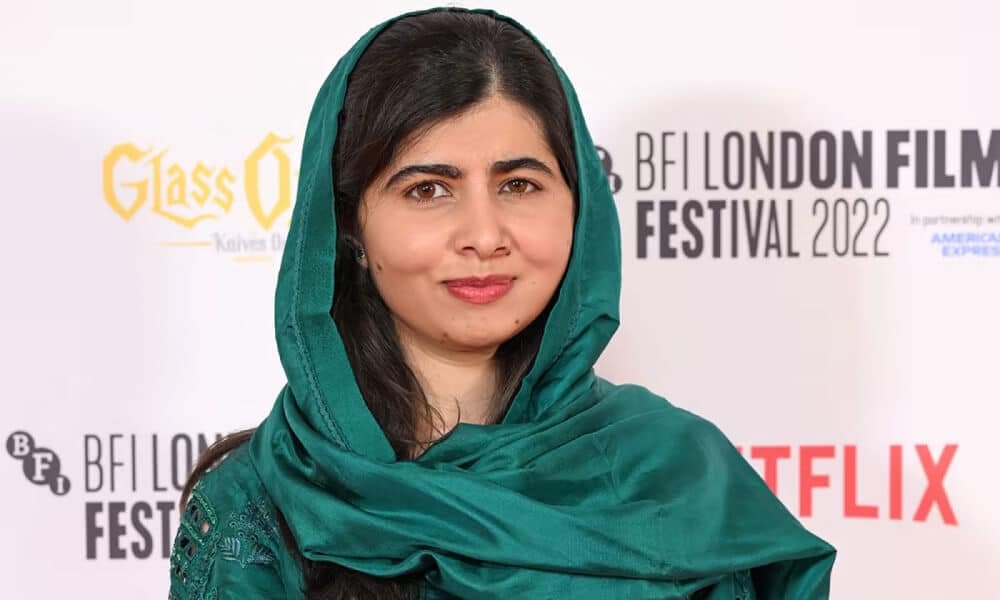
    Social activist and film producer Malala sat down with Joyland screenwriter and director Saim Sadiq for an interview on Sky News, where she spoke about the reason that prompted her to become a producer for the film. The Nobel Prize winner revealed that storytelling was an important part of activism:
    “In my next phase of activism, I have to look at other means of storytelling as well. Activism needs to go beyond just working with an NGO. We need to find other ways in which we challenge the social norms that deny women their basic rights.”

    Yosafzai also reflected on why it was important that the main character of the film, Biba, was played by the trans actress Alina Khan, so that the story could accurately reflect the plights of the trans community.

    “The screen helps us to connect with people and really helps us to be more tolerant with others. I was so grateful that Saim made sure that the trans role is played by a trans woman. This was critical. Everyone’s story is important and it deserves to be told by them. And a trans person should be given the rights that everyone else is given,” she said.

    The Nobel laureate said that it was unfortunate that we don’t want people to talk about issues and don’t want these stories to make it to the screen. “I hope we can challenge that,” she stated.

    The ban on ‘Joyland’ came up in the discussion when director Saim Sadiq reflected back on how the film ‘‘turned out to be a big act of resistance.”
    “I realised when the film was being released, that there are a lot of people who are very uncomfortable with just the existence of this film,” he said.

    “Banning the film is perhaps the fastest way to make activism work and to get everybody to talk about the issues we want them to talk about.”

  • Minister gifts garland made of dollars and gold tiara to secretary on wedding

    Sindh Minister for Revenue Makhdoom Mehboub Zaman gifted a garland made of dollars and a gold tiara to his private secretary Saif Ali Shah at his wedding ceremony in Hyderabad.

    Apart from the minister, Member of National Assembly (MNA) Makhdoom Jameel uz Zaman and other officials also participated in the wedding ceremony held in Hyderabad.

    The pictures of the groom wearing the garland while sitting with the minister have gone viral on social media.

  • UAE hints at acting as bridge between India and Pakistan

    UAE hints at acting as bridge between India and Pakistan

    United Arab Emirates (UAE) Ambassador to India, Abdulnasser Jamal Alshaali, in an interview with The Hindustan Times said that his country has played a role in the past in addressing tensions between India and Pakistan, though any future role it might play would be up to both neighboring countries. 

    Talking to Foreign Editor at The Hindustan Times, Rezaul Hasan Laskar about Pakistani Prime Minister (PM) Shehbaz Sharif’s remarks about asking the UAE to help build a bridge with India, the ambassador said his country has “played such a role in the past”, but future endeavours will depend on both India and Pakistan.

    He also talked about expanding the gulf country’s relationship with India, saying that UAE is engaged in technical discussions to finalise a rupee-dirham arrangement for trade as part of the efforts to build on the free trade agreement signed by the two countries last year.

    He also said that UAE is keen on revisiting the arrangement for flights to India and introducing flights to more Indian destinations to help bring down airfare.

    He said: “If you check the price of a ticket today, it’s more than 50 per cent higher than it used to be a few years back or it used to be pre-Covid. That’s already a market signal that we need to pay attention to because we are talking about this entire relationship and aviation is a crucial point in expanding this relationship.”

    When asked about UAE’s plans to invest in food parks and renewable energy in India under the I2U2 framework, Jamal said the conversation between the Gujrat government and UAE is going on.

    In recent times, both countries have grown close. In November 2022, UAE Foreign Minister Sheikh Abdullah bin Zayed Al Nahyan visited India to further strengthen its bilateral relationship with India.

  • Hadiqa Kiani has built 100 homes for flood victims in Balochistan

    Hadiqa Kiani has built 100 homes for flood victims in Balochistan

    After devastating floods wrecked havoc in Sindh and Balochistan in 2022, singer and actor Hadiqa Kiani announced a new initiative ‘Vaseela-E-Rah’ which was set up to provide rehabilitation facilities for flood victims.

    Today, Kiani took to Twitter to proudly share the success of her project, having built over at least a 100 homes, a maternity clinic, grocery store and primary school for children in Balochistan.

    “As many of you know, I have been in Balochistan for the past few days…by the grace of Allah + your support, we have completed the 1st phase of our project. 100 houses are complete and now occupied by flood victims, a maternity clinic, a grocery store and a primary school..”

    The actress further reflected how watching her initiative grow was a blessing, and will continue to put her efforts in providing relief to more flood victims:
    “Coming back to Balochistan & seeing this progress is a blessing and I am so grateful we could play our part. Vaseela-E-Raah was a mission of mine to complete, a promise I made to my mother and to the people of Balochistan, IA we will continue our efforts!”

  • Shaista Lodhi wants more dramas about older people falling in love

    Shaista Lodhi wants more dramas about older people falling in love

    Dr. Shaista Lodhi spoke to BBC Urdu about her on-air drama ‘Samjhota’, which revolves around an elderly man getting married for the second time to a divorcee, after his first wife passes away.

    Lodhi revealed that she wanted to do this drama because it explored the kind of stigma elderly people face, and encouraged them to remember that they can restart their lives after retirement.

    “Whenever I’m offered a project, I try to make sure that it is on a subject that can be relatable for a lot of people…So when I heard about this story, I felt like I should do it because we need to address this issue in our society…It showed that at a certain age when we think our elderly mother and father are only around to take care of our children, but instead you’ll witness the love story between these two main characters in the drama. I thought this was such a great example being set. The other thing is in our society at a certain age our parents are left lonely while we get busy building our own lives. We seem to think that our parents can’t find a new partner after their own spouse and they don’t have a life of their own. We are busy with our own life, we aren’t able to give them any time, or the responsibilities we have as their child. We also can’t imagine if our father gets married for the second time. So I thought this would be food for thought for our society, and I liked the script and decided to take it on.”

    She also talked about the ways ‘Samjhota’ breaks away from formulae drama, and brings the love story between an elderly couple to the forefront.

    “It’s incredibly important that we remind our elderly that life doesn’t end when you grow old. Once they age, we restrict them in a box, and I don’t think any other drama has taken a step to discuss this topic…If our father is coughing, why do we want to send our house help to get him a glass of water and cough syrup? Instead, why don’t we show our father getting up and keeps working in this age so he can prove that he is an active part of the social set up. We snatch this energy from elderly people by telling them that they’re retired so they must sit at home…Don’t you think that as a society we are cruel to the growing segment that we call ‘elderly’ because we completely ignore them? We ignore children the same way we ignore our elderly. We only cater to the middle ground because that is the only way we can get ratings.”

    On the feedback she has been receiving on ‘Samjhota’, Lodhi said a lot of people meet her on planes and continuously ask her questions about her dramas, and have praised her for her performance.

    Listen to the full interview here:

  • Pakistan’s finance ministry predicts high inflation to persist

    Pakistan’s finance ministry predicts high inflation to persist

    As per the Finance Ministry’s monthly economic update and outlook for February, inflation is projected to range from 28 per cent to 30 per cent in the near future, before gradually subsiding. The report cites several reasons for this, including an uncertain political and economic environment, currency depreciation, a recent increase in energy prices, and higher administered prices.

    The report notes that interest payments will contribute to total expenditures, constraining the fiscal space available for normal operations, investments, and social and structural policies.

    While the State Bank of Pakistan (SBP) has been implementing a contractionary monetary policy, it is expected that inflationary pressures will take some time to ease. The federal government, in collaboration with provincial governments, is closely monitoring the demand-supply gap of essential commodities and taking necessary measures to stabilise prices.

    The resumption of an economic stabilization program will aid in achieving economic and exchange rate stability and provide an opportunity to benefit from falling international commodity prices. This will also help control cost-push inflation and allow the government to pass on lower commodity prices to domestic consumers.

    The report notes that favorable weather and the use of inputs by farmers should help meet the 28.4 million-ton wheat target, while disbursements under the Kissan package should positively impact agricultural productivity and overall economic activity. The cyclical pattern of large-scale manufacturing (LSM) in Pakistan is positively correlated with the cyclical position of the country’s main trading partners. In December 2022, LSM activity was as expected, with no unexpected shocks observed in that month.

    However, the international economic environment remains uncertain, as evidenced by the Composite Leading Indicators (CLI) in Pakistan’s main export areas, which were somewhat negative compared to historical standards.

    The ministry anticipates that LSM will increase in January compared to the previous month, partly due to seasonal factors. The ministry forecasts that LSM output may marginally decline on a YoY basis, mainly due to the high base effect in the reference period

  • Kings vs Zalmi: stats you need to know

    Rawalpindi cricket ground will host its first match of HBL PSL 8 on Wednesday, between rivals Peshawar Zalmi and Karachi Kings. Both teams are currently placed at the bottom of the points table.

    Babar Azam, top run scorer for Zalmi and the captain of the team, was previously a core member of Karachi Kings and leading the team in the last season. But the team did not perform well under his captaincy and lost all the important matches of PSL 7.

    Mohammad Amir, Karachi Kings’ frontline pace bowler, has been overtly critical of Babar Azam in several live televsion shows and on micro-blogging site Twitter. Even Imad Wasim, skipper of Karachi Kings, took a dig at Azam’s batting and leadership skills without being too vocal.

    The verbal gymnastics before the start of this PSL season renders the match between KAR and PES all the more interesting.

    It is too early to gauge their current position in the table. Ideally, both teams would want to earn two crucial points to stabilise their standing. Historically, when it comes to their head-to-head in the last five meetings, Zalmi have enjoyed an upper hand while winning all five encounters between the two.

    The Imad Wasim-led Karachi Kings will aim to overcome their failures and try to obtain a result in their favour in the much-awaited clash.

    Experts says that Peshawar Zalmi will be the favourite of today’s match but Imad led Kings will also fight for  crucial points to strengthen their place.

    Playing XI for Peshawar Zalmi

    Mohammad Haris (wk), Babar Azam (c), Saim Ayub, Tom Kohler-Cadmore, Rovman Powell, James Neesham, Dasun Shanaka, Wahab Riaz, Sufiyan Muqeem, Usman Qadir, Arshad Iqbal

    Playing XI Karachi Kings

    P Matthew Wade (wk), James Vince, Tayyab Tahir, Shoaib Malik, Imad Wasim (c), Ben Cutting, Irfan Khan, Aamer Yamin, Muhammad Musa, Tabraiz Shamsi, Akif Javedlaying XI for Karachi Kings

  • FIA registers Rs849m money-laundering case against Farah Gogi

    FIA registers Rs849m money-laundering case against Farah Gogi

    The Federal Investigation Agency (FIA) has registered a money-laundering case worth Rs849 million against Farhat Shehzadi aka Farah Gogi, a close aide and friend of former First Lady, Bushra Bibi, Geo News has reported.

    The money-laundering and kickbacks case was sent to FIA by the Anti-Corruption Establishment (ACE).

    The first information report (FIR) says that unusual transactions worth millions were found to have taken place in Farah Gogi’s accounts, allegedly through corruption and bribery. The money was then sent out of the country.

    The FIR also states that the money was made through transfers of government officials including deputy commissioners and police.

    Gogi allegedly also used her influence in the awarding of government contracts including one contract worth Rs80 million via the XEN of Sheikhupura, receiving kickbacks in the deal.