Author: newsdesk

  • PTI welcomes supreme court’s verdict while govt says it doesn’t require review

    PTI welcomes supreme court’s verdict while govt says it doesn’t require review

    Political parties from across the spectrum are reacting to Supreme Court’s (SC) verdict in the Punjab and Khyber Pakhtunkhwa (KP) elections suo moto case.

    Pakistan Tehreek-e-Insaf (PTI) Fawad Chaudhry welcomed the verdict, saying, “It’s a victory for the Constitution”.

    The Supreme Court, the PTI leader added, has bound the federation to provide all sorts of support with security and provision of funds for carrying out polls.

    When asked whether elections will happen on April 9, as earlier suggested by President Arif Alvi, he responded by saying that the Election Commission of Pakistan (ECP) proposed in court that the commission can make the elections possible on April 25.

    He also said that if the government doesn’t agree to the SC’s verdict, the top court will send the government home under Article 187.

    He also added that all five judges endorsed the principle of the election within 90 days. During a media talk, the PTI leader stressed that “Election is the foundation of the state.”

    On the other hand, Awami Muslim League Chief Sheikh Rashid congratulated the nation on the verdict and asked the country to “prepare for the elections”.

    He hoped that PTI is going to form governments in KP and Punjab

    From the government side, Federal Law Minister Azam Nazeer Tarar said that there is no need to review the decision of the Supreme Court’s verdict, nor is it a matter that requires interpretation.

    He said that petitions are still being heard in High Courts, and the interpretation of the decision can also be seen there.

    He also stressed that the verdict is quite clear. However, the law minister took a jibe at President Alvi, saying that he breached the constitution by giving a date for the elections in both provinces.

    Earlier today (Wednesday), the top court directed all relevant authorities to hold elections within 90 days.

    The decision was passed three-two in favour of the verdict by the five-member bench, with Justice Mansoor Ali Shah and Justice Jamal Khan Mandokhail giving dissenting notes.

  • Man jailed for slapping wife during live TikTok video

    Man jailed for slapping wife during live TikTok video

    A Spanish man who slapped his wife on a live TikTok video was sentenced to a year in jail on Monday. However, the victim had declined to file a complaint against him.
    The man was found guilty of violence against women by a court in the northern city of Soria, with the court barring him for three years from getting a gun and from being within 300 meters (1,000 feet) of his wife or contacting her.
    .
    Images of the husband striking his wife in the face so forcefully that she turns around and starts crying went viral in Spain.

    The incident occurred in the early hours of January 28 during a TikTok “battle” between the woman and three men. TikTok “battle” is a real-time competition amongst streamers where the winner is chosen by viewers.

    “The defendant assaulted his wife publicly and openly, in front of thousands of people, with the aim of undermining her physical integrity and humiliating her in public,” the court ruled.

  • Imran Khan suspends Jail Bharo Tehreek, decides to prepare for elections

    Imran Khan suspends Jail Bharo Tehreek, decides to prepare for elections

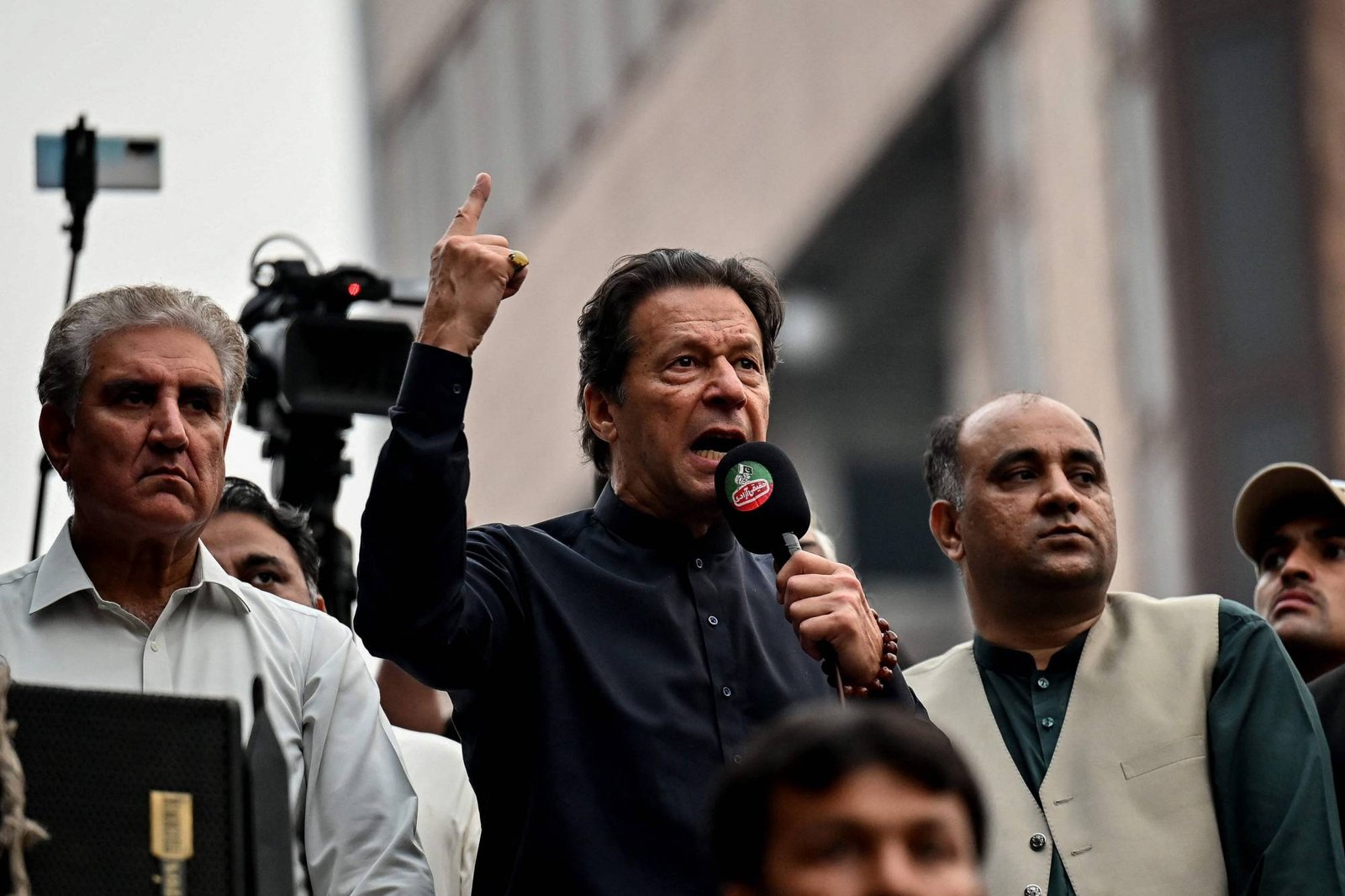
    Pakistan Tehreek-e-Insaf (PTI) Chairman Imran Khan has announced to suspend his party’s Jail Bharo Tehreek (Voluntary Arrest Movement).

    Taking to Twitter, Khan said, “We welcome the Supreme Court (SC) judgement. It was responsibility of SC to uphold Constitution & they have valiantly done that through their judgement today. It is an assertion of Rule of Law in Pak.”

    “We are suspending our Jail Bharo movement & moving forward with election campaigns in KP & Punjab,” tweeted Khan.

    It is pertinent to mention here that the announcement comes right after Supreme Court of Pakistan has directed all relevant authorities to hold elections in Punjab and Khyber-Pakhtunkhwa (KP) within 90 days.

    Reading out the verdict reserved on Tuesday evening, Chief Justice Umar Ata Bandial said that the Election Commission of Pakistan (ECP) should suggest a date for polls to President Arif Alvi.

    “Elections must be held within 90 days of the dissolution of the assembly,” the verdict says, emphasizing that it was the constitutional responsibility of the Governor to announce an election date.

  • Djokovic makes history with 378th week as World No 1

    Djokovic makes history with 378th week as World No 1

    On Monday, Novak Djokovic surpassed Steffi Graf’s all-time record for the most weeks as the world No 1 tennis player with a total of 378 weeks. Djokovic returned to the top spot five weeks ago after winning the Australian Open and tying Rafael Nadal’s all-time men’s record of 22 majors. This was his first time back at No 1 since June 2020.

    Djokovic expressed his pride in being among legendary names, saying “It’s surreal to be that many weeks No 1… I’m proud of it.” The top 5 players with the most weeks as the world No 1 are Djokovic (378), Graf (377), Martina Navratilova (332), Serena Williams (319), and Roger Federer (310).

    Djokovic first reached the No 1 ranking at 24 years old on July 4, 2011, after winning his third grand slam and first at the All England Club by beating Nadal in the Wimbledon final. Since then, Nadal has spent only 107 weeks at No 1 out of a total of 209, compared to Djokovic’s 378. Federer, who holds the record for most consecutive weeks at No 1 with 237 from 2004-08, has been No 1 for only 25 weeks since Djokovic first debuted in the top spot.

    Djokovic’s first test after setting this record is the Dubai Championships, where he will face qualifier Tomáš Macháč in the round of 32.

  • Babar Azam is bigger diamond than Kohinoor: Shahdab Khan

    Babar Azam is bigger diamond than Kohinoor: Shahdab Khan

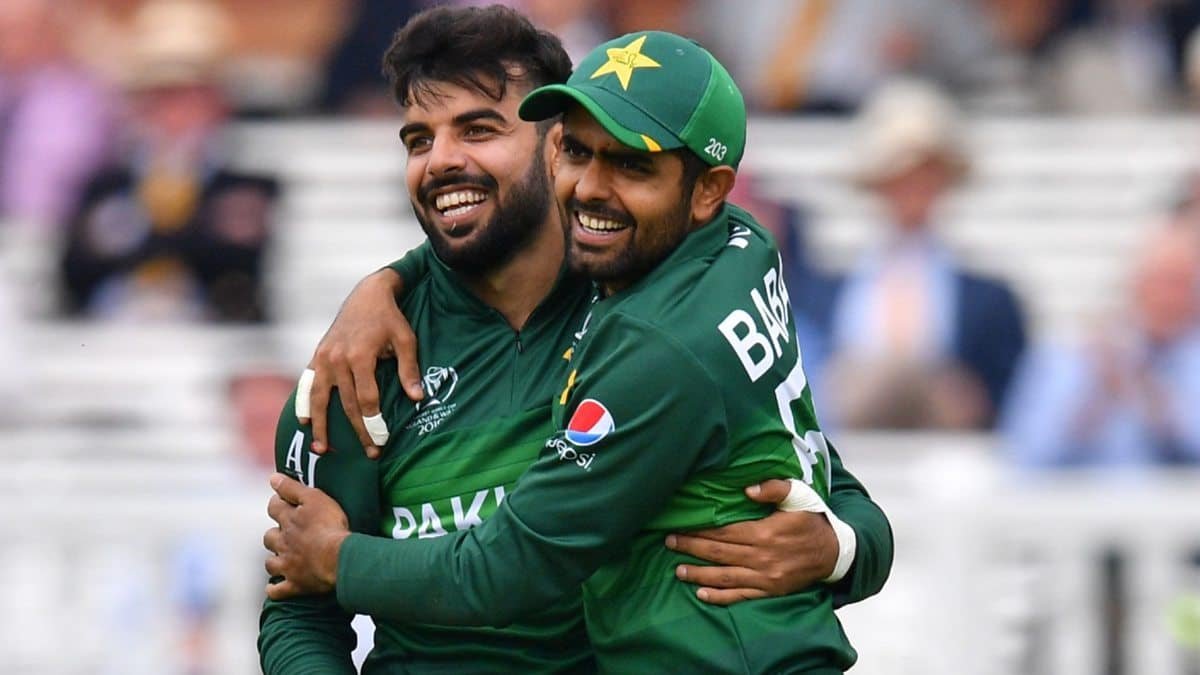
    Pakistan cricket team has failed to win a single test at home under Babar Azam’s captaincy however all-rounder Shahdab Khan has said that the nation is being unjust to Babar Azam.

    Babar Azam has been criticized in the past few months by former cricketers and fans for his captaincy.

    Shadab, in a recent interview with a local TV channel, defended his captain, asking Pakistanis to realize how valuable Babar is and desist from unnecessarily criticizing him.

    “I think we are doing injustice with such a diamond. Pakistan has been blessed with such a big diamond. He [Babar] is a bigger diamond than Kohinoor,” Shadab said.

    “As a nation, we are not valuing Babar for what he is worth and are pressurizing him. At the end of the day, he is human. We should respect him the way the world respects him,” he added.
    The all-rounder was also surprised by the criticism of Babar’s leadership qualities by former cricketers.

    “I am surprised when people doubt him as a captain or a leader. He is Pakistan’s biggest player. Our nation should respect him the way we respect him in the team,” he concluded.

    The Pakistan captain recently received the ICC Cricketer of the year award for his performances in the year 2022.

  • Supreme Court orders to hold polls within 90 days both in Punjab and KP

    Supreme Court orders to hold polls within 90 days both in Punjab and KP

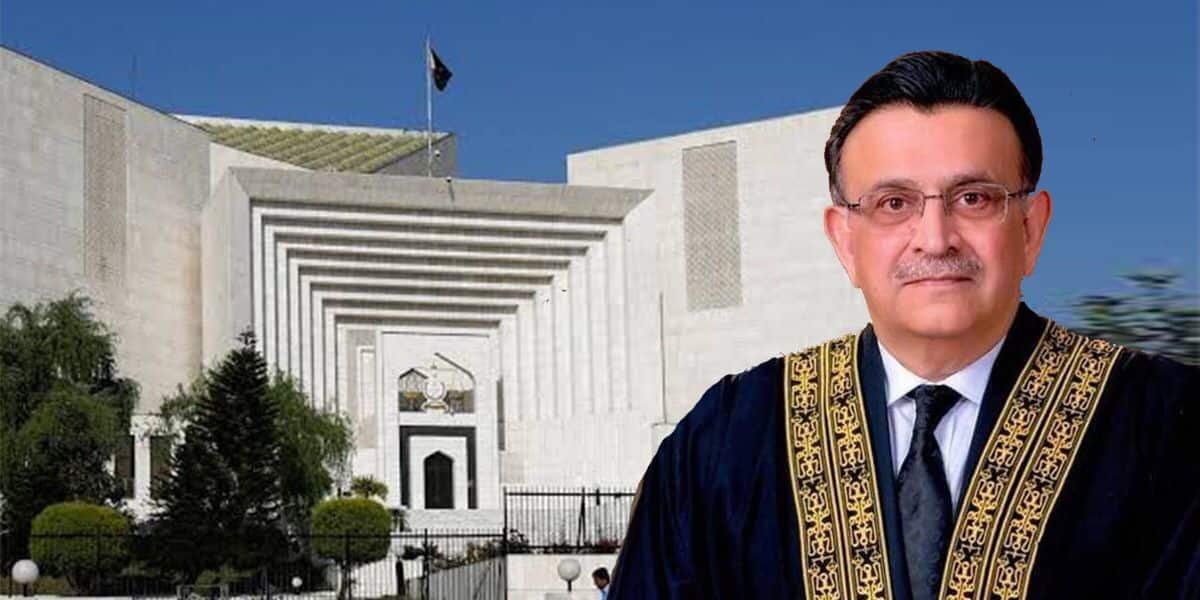
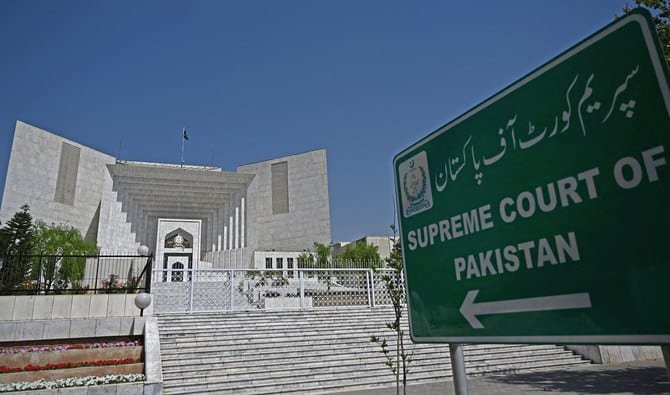
    The Supreme Court of Pakistan has on Wednesday directed all relevant authorities to hold elections in Punjab and Khyber-Pakhtunkhwa (KP) within 90 days.

    The decision was passed three-two in favour of the verdict by the five-member bench, with Justice Mansoor Ali Shah and Justice Jamal Khan Mandokhail giving dissenting notes.

    Reading out the verdict reserved on Tuesday evening, Chief Justice Umar Ata Bandial said that the Election Commission of Pakistan (ECP) should suggest a date for polls to President Arif Alvi.

    “Elections must be held within 90 days of the dissolution of the assembly,” the verdict says, emphasizing that it was the constitutional responsibility of the Governor to announce an election date.

    “Parliamentary democracy is a salient feature of the Constitution. There can be no parliamentary democracy without Parliament or the provincial assemblies. And there can be neither Parliament nor provincial assemblies without the holding of general elections as envisaged, required and mandated by and under the Constitution and in accordance therewith,” the top court remarked.

    The court order stated, “In situations where the assembly is not dissolved by order of the governor, the constitutional responsibility of appointing a date for the general election that must follow is to be discharged by the president.”

    “The Election Commission must proactively be available to the president or the governor, and be prepared for such consultation as required for a date for the holding of general elections,” the order said.

    The court directed President Arif Alvi to announce the date of the Punjab election after consulting with the Election Commission of Pakistan (ECP), and directed the KP governor to announce the date for polls in his province.

    It further said that in ordinary circumstances, the general election in Punjab ought to be held on April 9 — the date given by the president — but because there were delays in the announcement of the poll date, it might not be possible for the province to meet the 90-day deadline.

    “The Election Commission is therefore directed to use its utmost efforts to immediately propose, keeping in mind ss. 57 and 58 of the 2017 Act, date to the president that is compliant with the deadline. After consultation with the ECP, the President shall announce a date for holding the general election to the Punjab Assembly.”

    Meanwhile, the SC directed the KP governor to appoint a date for elections in the province after consulting the ECP.

  • ‘Inka leader toh ghar baitha huva hai’: Justice Nasira Iqbal slams Jail Bharro Tehreek

    Justice (R) Nasira Iqbal has criticised the ongoing Jail Bharro Tehreek (voluntary arrest movement) initiated by Pakistan Tehreek-e-Insaf (PTI), saying that she is unable to understand the purpose behind it.

    Justice Nasir, mother to incarcerated PTI leader Waleed Iqbal, was asked by Voice.pk whether she will file bail for her son, said: “Did I ask him to go? I told him that this act is not appropriate”.

    Not mincing her words when it came to PTI Chairman Imran Khan, Justice Nasira said, “Jo leader in ka bana huva hai, woh toh ghar betha huva hai bail before arrest li huvi ha” (Their leader is sitting at home and has obtained bail before arrest).

    She quoted Gandhi as an example, stating that he was an actual leader who gave his arrest first. She said that while Imran himself is at home, he has asked others to present themselves for arrest.

    The judge was of the view that instead of the movement, they all should be focusing on campaigning for elections. She predicted that elections are going to take place in the next 40 days.

    She also talked about the other PTI leaders who are being kept in different jails. She said that at first, they all were in Kot Lakhpat Jail, however, later they were transferred because of space constraints.

  • Supreme Court to announce verdict tomorrow at 11am in elections suo motu case

    A five-member bench of the Supreme Court (SC) has reserved its verdict and said that it would announce the verdict in the elections suo motu case tomorrow (Wednesday) at 11am.

    The hearing of the case has been completed.

    Last Wednesday, the top court took suo motu notice of the delay in holding elections in Punjab and Khyber Pakhtunkhwa.

    SC orders PTI and govt to consult on elections dates themselves and inform court

    Earlier, the apex court directed Pakistan Tehreek-e-Insaf (PTI) and the coalition government to sit together and decide on a date for elections in Khyber Pakhtunkhwa and Punjab by 4pm today (Tuesday).

    In this regard, the top court directed Shireen Mazari and Fawad Chaudhry to consult with their party chairman, Imran Khan—who has been making appearances before various courts since Tuesday afternoon— and coalition partners’ lawyers to consult with their leaders and update the court.

    The instructions were issued after a five-member bench resumed hearing the apex court’s suo motu proceedings regarding the delay in the provincial polls.

    During the hearing on Tuesday, Chief Justice of Pakistan (CJP) Umar Ata Bandial stated that none of the institutions, other than the court, had the authority to extend elections further than 90 days.

    The CJP also said that the court wanted to wrap up the proceedings today. “Our entire work is on halt because of this case,” he added and adjourned the hearing.

    The hearing has resumed again.

    Bench toot gaya: Five judges resume SC hearing after four recuse themselves from suo motu

    On February 27, SC resumed the hearing regarding election date suo motu notice.

    The bench, which previously included nine SC judges, has been reconstituted to a five-member bench after four judges disassociated themselves. Justice Ijaz Ul Ahsan, Justice Sayyed Mazahar Ali Akbar Naqvi, Justice Athar Minallah and Justice Yahya Afridi recused themselves from hearing the case.

    A five-member bench has now started listening to the hearing of the case. Chief Justice of Pakistan (CJP) Umar Ata Bandial has said that the case has to be wrapped up by 9:30 tomorrow.

    At the previous hearing, the coalition parties — Pakistan Muslim League-Nawaz (PML-N), Pakistan People’s Party (PPP) and Jamat-e-Ulema Islami-Fazl (JUI-F) — had presented a note in the apex court asking two SC judges, Justice Ahsan and Justice Naqvi, to recuse themselves from the case.

    CJP Bandial said that four members of the bench have disassociated themselves from the bench. “The remaining bench, however, will continue hearing the case.

    “We will continue the hearing for the interpretation of the Constitution because what the Constitution says depends on its interpretation,” he stated.

    CJP Bandial also pointed out that the note of one of Justice Mandokhail had emerged on social media even before the verdict was released. “We will take precautions so that such an incident does not recur in the future.”

    The CJP also addressed the issue of Justice Jamal Khan Mandokhail’s objection note being leaked on social media, assuring that measures would be taken to prevent such incidents from occurring in the future.

    He remarked that whatever written in the Constitution was conditional on the interpretation of it, noting that the case was critical and warranted swiftness.

    Starting out his arguments, PTI’s counsel Barrister Ali Zafar said that the chief minister of Punjab sent a summary regarding dissolution of assembly to the governor.

    However, he said that the governor did not comply to it following which the assembly automatically dissolved after 48 hours.

    The counsel argued that the Election Commission of Pakistan (ECP) had requested the date of polls from the governor, who refused, citing that he was not the one who dissolved the assembly.

    Zafar said that President Arif Alvi summoned chief election commissioner for finalizing the date for polls however he did not show up.

    Following this, the lawyer said that the president unilaterally announced the dates for elections in both provinces.

    He emphasized that the Constitution clearly stipulated that elections could not exceed 90 days after the dissolution of the assembly.

    Justice Muhammad Ali Mazhar remarked that there was a difference between automatic dissolution of assembly and that performed by the governor.

    Barrister Zafar commented that there was a need for someone to intervene in matters of public interest and therefore, the president announced the date.

    In response, Justice Mandokhail asked whether the president unilaterally announced the election date or if he was instructed by someone else.

    The counsel clarified that the president had provided details regarding the election date in his letter. Additionally, Zafar highlighted that the president had sent two letters to the election commission, with the first one dated February 8 requesting the announcement of the election date.

    He added that the main issue at hand was related to the announcement of the election date, which nobody seemed to be prepared for.

    The chief justice then asked if the ECP had responded to the president’s first letter, to which the counsel replied in the negative.

    During the hearing, PPP’s lawyer Farooq H Naek highlighted that they had filed a petition for the formation of a full court.

    The chief justice responded by stating that they would decide on the matter after hearing the counsel’s arguments.

    Barrister Zafar maintained that the elections could not be delayed for ten years. The court inquired about the progress in KP and asked if the governor could write a letter seeking consultation on the election date citing terrorism.

    The lawyer responded by stating that, according to him, the governor does not possess such authority.

    Justice Mazhar asked if the elections could be delayed due to terrorism, to which Justice Ali remarked that the decision on whether the polls would occur could only be taken when a date was fixed for the electoral exercise.

    Justice Mazhar then stated that the entire month was wasted on consultations.

    Justice Mandokhail inquired if the law and order situation could hamper the organization of the election, to which the CJP responded by reminding everyone that the assemblies in 2013 and 2018 completed their five-year terms.

    The DG Law added that the president could only fix the date for the polls once the assemblies completed their term.

    Justice Munib Akhtar remarked that the advice of the chief minister was implemented in KP but not in Punjab.

    The CJP stated that holding elections was the ECP’s job, while Barrister Zafar pointed out that Articles 218, 219, and 222 of the Constitution declared the election commission responsible for holding elections.

    Justice Mandokhail asked who was responsible for announcing the election date, to which Barrister Zafar said that the same question was before the court.

    He went on to say that the ECP gets the right to announce the date if Articles 218 and 219 were read jointly.

    The hearing was adjourned for a short break and set to resume at 4pm.
  • Quaid-i-Azam University closed for indefinite period

    Quaid-i-Azam University closed for indefinite period

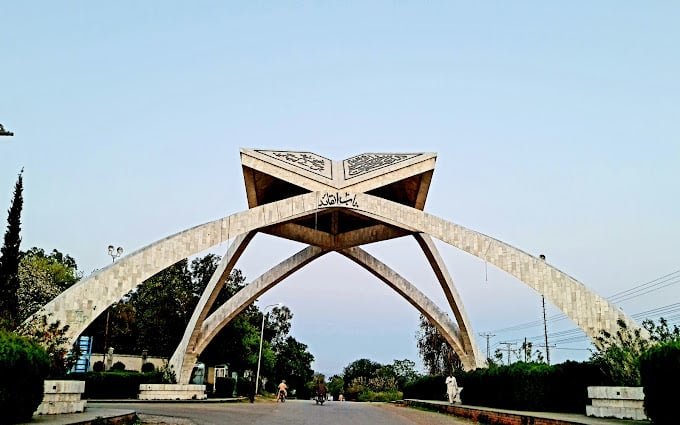
    The Quaid-i-Azam University (QAU) Islamabad campus has been shut down indefinitely following a violent altercation between two student groups on Monday.

    According to reports, several students were injured in the fight. Gehram, Danish, Wasim Shahzeb, Murad, Yahya, Mubarik, Faisal, Qasim, Mahmood, Farooq, Kamran,

    Jehanzeb, and Zikria are among the injured students. To control the situation, authorities had to send out sizable contingents of FC and police.
    Boys and girls staying in hostels have been directed to leave the buildings.

    https://twitter.com/rajaqaiserahmed/status/1630207459703898113?ref_src=twsrc%5Etfw%7Ctwcamp%5Etweetembed%7Ctwterm%5E1630207459703898113%7Ctwgr%5E1f4cc3710eba38d995d30202cdebaa1b6f4b3d36%7Ctwcon%5Es1_&ref_url=https%3A%2F%2Fwww.samaaenglish.tv%2Fnews%2F40028385

  • Shaukat Yousafzai, father of 13 children from two wives, forgot name of youngest son on live TV

    Shaukat Yousafzai, father of 13 children from two wives, forgot name of youngest son on live TV

    Pakistan Tehreek-e-Insaf’S (PTI) provincial spokesperson Shaukat Yousafzai revealed in a morning show that he has fathered 13 children in total.

    During an appearance on HUM News, Yousafzai revealed that he has two wives and 13 children, including 10 daughters and three sons.

    The hosts asked Yousafzai if he could say the names of all his children in one go. Yousafzai smiled and started naming his children. However, Yousafzai could only name 12 as he forgot the name of his youngest son.