Category: Business

The most important business news, explained in a young, easy to understand way. News that affects young career professionals.

  • Prime Minister Shehbaz Sharif targets tax evasion amid rising public criticism

    Prime Minister Shehbaz Sharif targets tax evasion amid rising public criticism

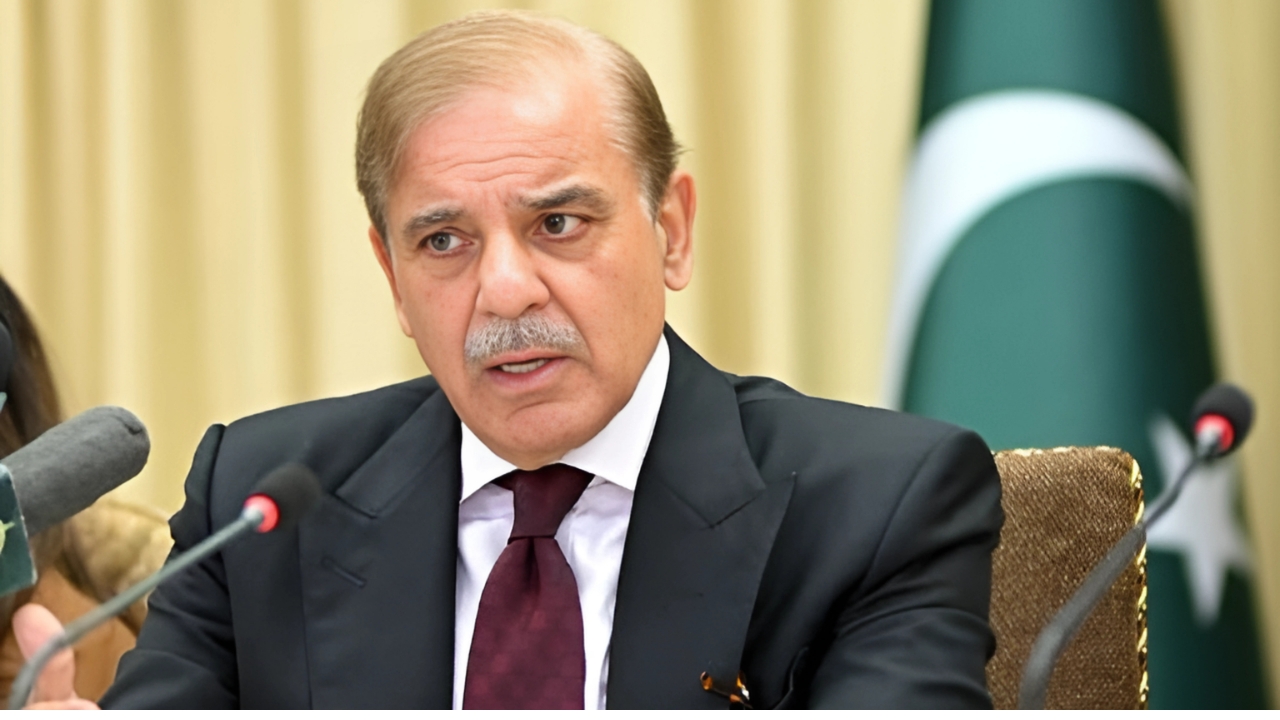
    Prime Minister Shehbaz Sharif has instructed relevant authorities to take action against tax defaulters, evaders, and any party that is facilitating them, according to a report by Dawn News. 

    The prime minister was briefed by the finance ministry regarding the country’s economy and a recent high-profile meeting with the International Monetary Fund (IMF). Shehbaz Sharif’s meeting with the finance ministry was reportedly attended by several important ministers, including Muhammad Aurangzeb, Ahad Cheema, Attaullah Tarar, Dr. Mussadik Malik, and PM’s coordinator Rana Ahsan Afzal, among many others.

    In his meeting with the finance ministry, Sharif emphasised the importance of holding tax evaders accountable – as compliance with tax laws will “play a role in the national progress”. He stressed the link between economic growth and tax compliance: An issue Pakistan has always struggled with.

    The severity of non-compliance can be noted by the FBR’s goal to collect at least 10 billion rupees from traders. However, the government failed to meet this target by almost one million per cent – which is an alarmingly large gap between the objective and collection. This is because the FBR was only able to collect a measly one million rupees from traders due to compliance issues.

    Despite these setbacks, Mr Sharif noted that the economy was showing signs of stability, which was highlighted by the booming stock market. He attributed this revival of the economy to government measures, which he claimed have also increased levels of foreign investment.

    Aside from matters of taxation, the finance ministry also outlined the steps that are already being taken to curb tax evasion and punish those involved in facilitating such practices. Moreover, the meeting also included a briefing on economic indicators and inflation, to which Mr Sharif expressed great satisfaction.

    This is because, in just the past year, the inflation rate has plummeted from an uneasy 38 per cent to a more acceptable seven per cent. Moreover, the interest rate has also fallen from 22% to 15%, which spells great news for businesses and unemployed individuals as the expansion of businesses will create job opportunities.

    In the meeting, Mr Sharif stressed how providing relief to the public remains a top priority, stating that all available measures are being employed to honour public commitments. Despite these efforts, PM Shehbaz’s popularity has been challenged by public criticism over high taxes on energy, which have significantly raised energy costs.

    While many Pakistanis simply view the existing tax levels as burdensome, it is important to note that Sharif’s focus on enforcement regarding tax inequalities is impartial, as tax evaders of any kind are not to be shown any leniency regardless of their background.
  • Punjab expected to achieve Rs630 billion cash surplus

    Punjab expected to achieve Rs630 billion cash surplus

    Despite missing the International Monetary Fund’s (IMF) cash surplus by a staggering Rs182 billion, hope still remains for Punjab. 

    Reports quoted provincial Information Minister Azma Bokhari as saying the IMF still believes that Punjab will be able to achieve the predetermined cash surplus of Rs630 billion by the end of the year.

    Bokhari was pleased to report that the IMF has officially recognised Punjab’s efforts to achieve a budget surplus. This was evident by IMF backing the government’s claim regarding the surplus.


    Additionally, Bokhari also addressed claims that had been circulating against the government. Said claims suggested that the provincial government had invested in a United Arab Emirates (UAE) based fund.

    The minister, however, firmly refuted the same, stating that no such matter had been discussed during the IMF’s meetings with officials from the government of Punjab.

    It may be noted that the reason for the shortfall of surplus in the previous quarter of the fiscal year was primarily the repayment of commodity related loans that had reduced the amount of money the provincial government could post as surplus.

    However, owing to the repayment of the loan, the next surplus will be greater by a large magnitude. This is due to the fact that interest payments will not have to be doled out on the expired loans. Besides that, reports said, the funds that had been used to clear the loans can now be booked as a budget surplus.


    This endorsement from the IMF spells great news as it comes at a time when the federal government in Islamabad is missing its objectives set out by the IMF. For instance, Islamabad failed to the IMF stipulated condition that was set to ensure that the Federal Board of Revenue (FBR) would collect at least Rs2.652 trillion in taxes.


    Moreover, the FBR was supposed to collect at least Rs10 billion rupees from traders as per one of the 40 IMF conditions. However, the government failed to meet the target by almost one million per cent. This was because the FBR was only able to collect a measly Rs1 million from traders.


    While assurances from the IMF for achieving a cash surplus of 40 billion rupees is likely to motivate Punjab’s lawmakers to continue following the roadmap set out by the global lender, the government is also showing a willingness to strictly adhere to austerity measures.

  • Tax free cotton imports threaten livelihoods of 1.3 million farmers across Pakistan

    Tax free cotton imports threaten livelihoods of 1.3 million farmers across Pakistan

    Cotton farmers grow worried with each bale of cotton that reaches Pakistani shores at the behest of the textile sector. It might be the final straw for the already struggling industry, as imports are crucial with cotton production having fallen by approximately 50 percent.

    Cotton farmers are already facing neglect at the hands of the government in terms of ‘minimum support prices’ (MSP).

    The MSP refers to the lowest guaranteed price that farmers can receive if they are unable to sell their produce in the market. This neglect by the government can be attributed to the International Monetary Fund (IMF), which views the existence of MSPs as a significant burden on the cash-strapped nation.

    In fact, the IMF has set a condition to remove MSPs entirely by 2026.

    While this sounds like bad news for cotton farmers, this is not even the worst part.

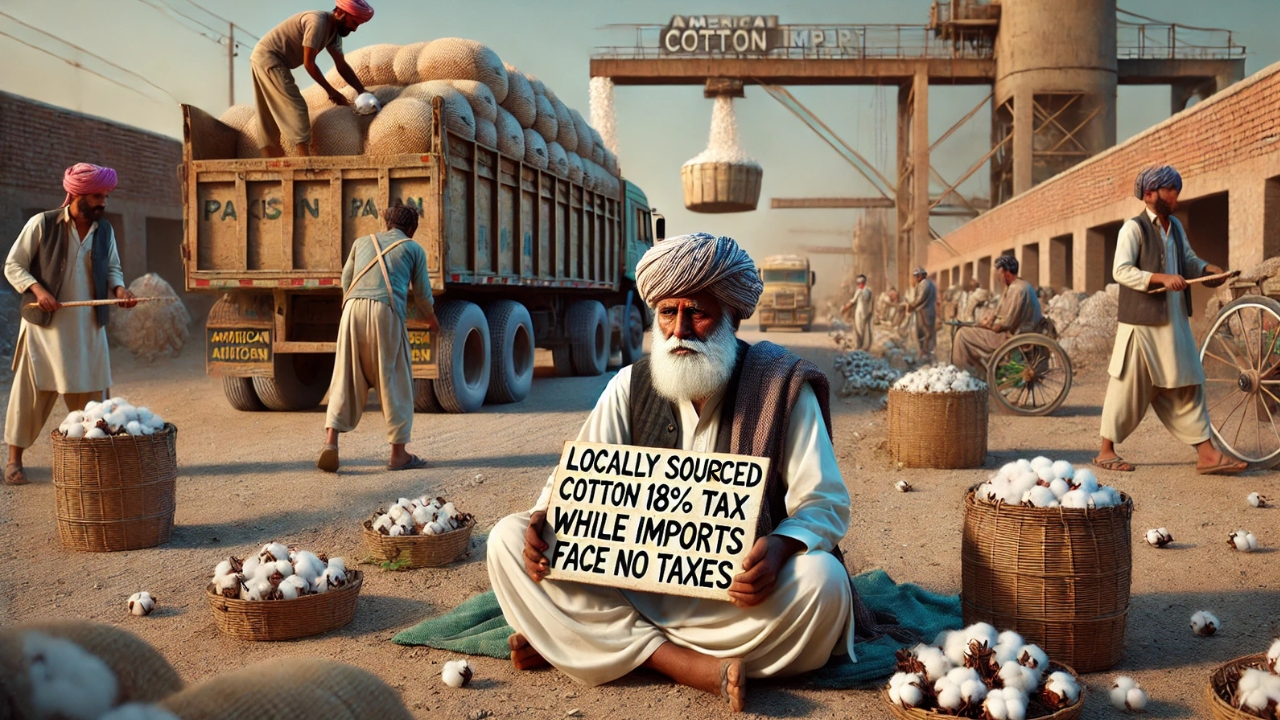
    The kicker here is that textile manufacturers have to pay an 18 per cent sales tax if they are to source cotton locally while no such taxes exist on imports. As such, business owners in the textile sector are now gravitating towards imported cotton and yarn.

    While imports are helping increase profit margins for textile exporters, cotton farmers could be getting pushed to the brink of financial destitution. This should ring alarm bells in Islamabad because importing cotton and yarn tax-free might endanger the livelihoods of a staggering 1.3 million farmers.

    The situation is so severe that yarn is even being imported from India via the United Arab Emirates (UAE). Bureaucratic red tape surrounding yarn imports from India and cotton shipments taking up to 44 days to arrive from the United states, brew inefficiency in the local industry.

    This inefficiency can be eliminated if textile manufacturers source cotton locally as it will reduce travel times associated with imports. However, the textile industry seems to be willing to bear the longer travel times if they can get cotton for a lower cost.

    This could possibly drive local farmers out of the agricultural sector entirely.

    In the worst case, the closure of farms in the light of cheaper imports will drive over a million farmers off of the six million acres they currently cultivate. It is possible that the unemployment rate in Pakistan might then surge beyond the already high 6.3 per cent.

    Moreover, as imports rise, so will the import bill. For the State Bank of Pakistan (SBP), this will be a huge set back that has been consistently working hard to build up its foreign reserves. Just this week, SBP reserves rose by $84 million to cross $11.26 billion but the trend of rising imports may nullify the gains that the SBP has achieved.

    Experts, however, are predicting that the textile sector will be favoured over cotton farmers as it accounts for approximately 60 per cent of national exports. It will be interesting to note now how cotton farmers will navigate the uncharted waters of unfavorable taxation policies ahead of them.

  • Islamabad High Court shields banks from a 15 per cent tax on low private lending

    Islamabad High Court shields banks from a 15 per cent tax on low private lending

    Bank owners breathed a major sigh of relief as the Islamabad High Court (IHC) ruled in their favour by providing temporary relief from a tax they were set to pay. While this was a major win for banks, the same can’t be said for the government and other businesses.

    While the government had set the (advance deposit ratio of 50 per cent, it was discovered that the average ADR was actually resting 12 per cent below that threshold. In simple terms, banks have been extending too little credit to the private sector for business activities.

    The formal financial system has shown a tendency to direct their loans to Islamabad, as handing out loans to the government is considered safer. However, this has come with its own set of problems for the government.

    Islamabad had been eying the 197-billion-rupee tax revenue that banks would need to pay, especially given their low levels of lending to the private sector. With courts stepping in to protect banks, the government is likely to miss out on billions of rupees, which is a major issue for the cash-strapped nation.

    It is interesting to note that this is not the first time that banks have been able to sidestep these taxes. In 2023, Islamabad gave the green light to suspend the additional taxes that were levied upon banks.

    With this year being no different than the last, it seems as if banks will continue to not lend money to private businesses. If the precedence is set that banks can just sidestep government regulations, this will detrimentally impact businesses.

    This is because apprehension about lending money to the private sector will result in limited growth of businesses. With loans being slashed by the State Bank of Pakistan (SBP), to 15 per cent, businesses have shown greater interest in utilising debt to fuel their expansion plans. However, they can’t scale up the scope of their operations with banks exercising stringent lending practices.

    Moreover, experts are predicting that the lending practices witnessed in the past few years is likely to result in a serious drop in business confidence. This is because when businesses realise that the formal credit market exists to serve not them but the government only, their faith in lending institutions will most likely be irreparably damaged.

    While this is a victory for private banks, it is undoubtedly going to sow the seeds of discontentment within businesses. This distaste for credit-fueled growth may result in businesses seeking investments that require them to give up equity.

    It will be interesting to note now if the next gavel strike will serve businesses in their hour of need or if It will serve the interests of banks.

  • Farmers’ safety net: How insurance can protect a sector contributing 23% to GDP

    Farmers’ safety net: How insurance can protect a sector contributing 23% to GDP

    Islamabad has encouraged state-owned insurance companies to work more closely with the agricultural sector in a bid to increase insurance coverage for deserving areas. If put into motion, the implications of this suggestion will be far-reaching – for both businesses and the economy.

    As it stands, the prized agricultural sector employs over 36 per cent of the workforce, makes up 23 per cent of the national GDP and brings in an impressive eight billion dollars in export earnings. However, it remains highly neglected by insurance companies, which could prove problematic.

    The severity of this neglect can be realized by SECP (Securities and Exchange Commission of Pakistan) statistics, which state that insurance companies’ total earnings from non-life sectors is just a measly two per cent. This shows that only a minority of those in the agricultural sector are insured.

    With state-owned insurance companies now expected to step into and operate in under-covered areas, it would be fair to say that the profit margins of private insurance companies will largely remain unaffected. This is because if private companies lose out on insurance contracts, it won’t be tough to replace these farmers as many would be willing to sign on.

    While insurance companies will likely remain unaffected, this policy recommendation, if implemented, will serve to enormously benefit many in the agricultural sector. This is because having insurance plans protects farmers from bearing the financial loss of crop failures.

    Crop failures have remained common in Pakistan due to frequent droughts and, more recently, flooding. In the past 24 years, Pakistan has been hit with five droughts, which have resulted in significant losses in farmers’ yields. However, the flooding experienced in 2022 resulted in massive nationwide crop failures, which wouldn’t have hit farmers as hard as they did if they had been insured.

    The floods devastated crop yields, resulting in an estimated yield loss of 61 per cent to sugarcane and 88 per cent to cotton, and in just Sindh alone, rice yields fell by an estimated 80 per cent. The loss to livestock, which makes up 63 per cent of the agricultural sector GDP, was severe, too. Crop failures of this magnitude are enough to put any small farmer out of business if they aren’t insured.

    What’s more interesting is that the root of the problem for farmers starts before they even set foot in the agricultural space. In economics theory, rational actors prefer having consistent income streams.

    However, this consistent source of income is challenged by the crop failures experienced in farming, as a good yield nets a tidy profit while a crop failure brings in no income. As such, the lack of insurance impedes the entry of businesses interested in commercial farming.


    If state-owned insurance companies throw a lifeline at under-covered areas, it will help out the agricultural sector and the farmers who call it home. For now, all eyes are on the decision-makers who can pull the strings to put this plan in motion.

  • PC Board rejects Rs10bn bid for PIA, floats new proposals

    PC Board rejects Rs10bn bid for PIA, floats new proposals

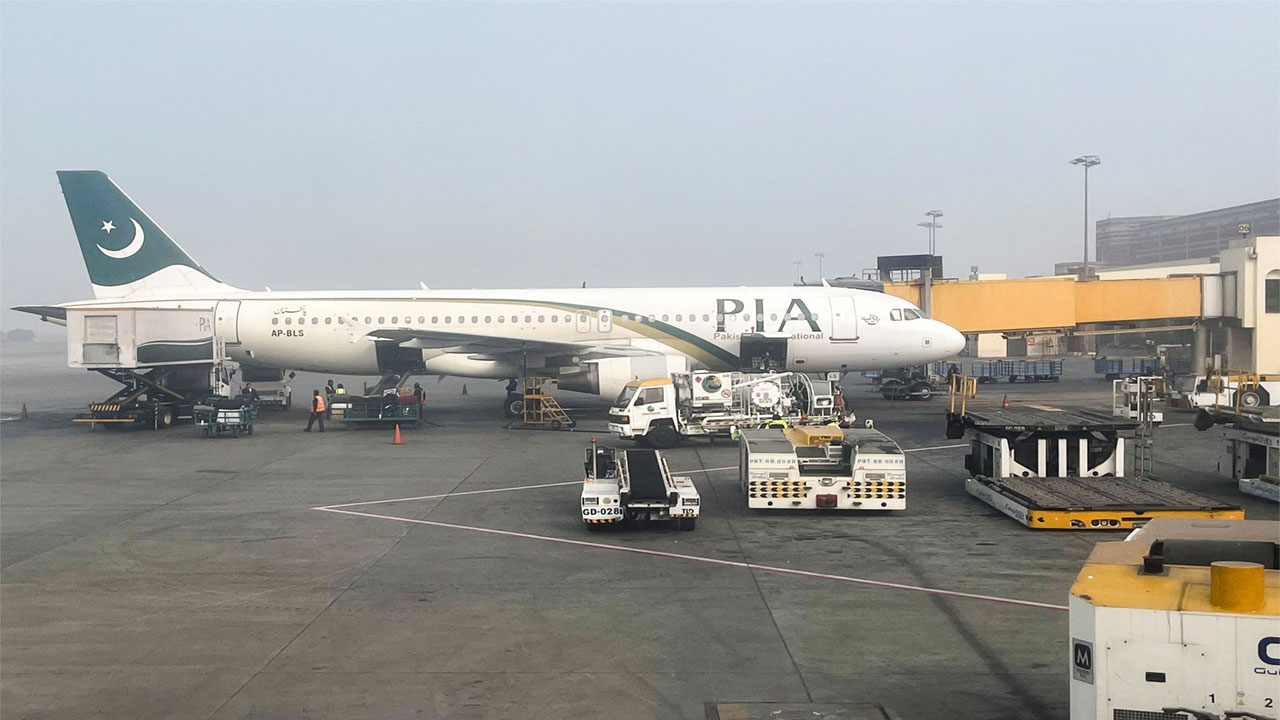
    The Privatisation Commission (PC) Board on Wednesday rejected the latest bid for the national carrier, Pakistan International Airlines (PIA), presenting new proposals for the airline’s privatisation.

    New proposals will now be forwarded to the cabinet committee and the federal cabinet for approval.

    The Blue World City consortium, the only bidder, had placed a bid of Rs10bn against the minimum price of Rs85.03bn. The Shehbaz-led government had pre-qualified six groups in June, but only the real estate development company participated in the final bidding process.

    The decision to reject the lowest bid and new proposals came during a meeting chaired by Privatisation Minister Abdul Aleem Khan. Several privatisation initiatives were reviewed and key recommendations were approved.

    The minister stressed that all privatisation efforts, including those for PIA, must adhere to legal protocols while prioritising the national interest.

    “The final decision on the privatisation of institutions like PIA rests with the cabinet committee and steps must be taken to enhance future bidding processes, Khan maintained.

    The minister also directed officials to expedite the privatisation of PIA and other public entities and emphasised the importance of learning from the current PIA privatisation process to improve future efforts.

    There are some media reports that the federal government is also working on a new plan for privatisation, which involves the sell-off of the cash-strapped national carrier to either Qatar or Abu Dhabi under a government-to-government (G2G) agreement.

    It is worth mentioning that the Khyber-Pakhtunkhwa (KP) government and local business community have also shown interest in buying the PIA.

  • Fuel prices expected to rise: Pump owners rejoice as millions tighten their belts

    Fuel prices expected to rise: Pump owners rejoice as millions tighten their belts

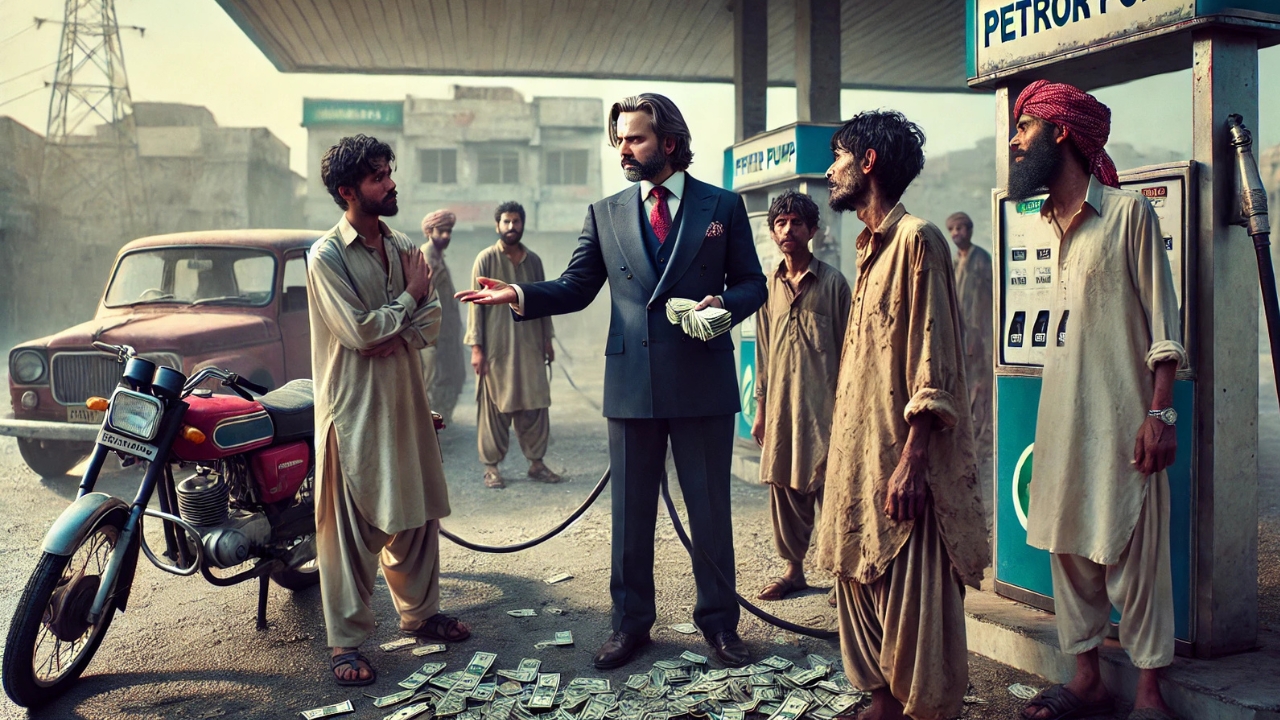
    Pump owners are preparing to celebrate, as oil companies have allegedly submitted a proposal to the Oil & Gas Regulatory Authority (OGRA) to revise fuel prices. However, this spells bad news for travel buses and apps like Yango, which might see a hike in their fare.

    Reportedly, petrol prices are expected to be revised by 2.5 rupees per litre, kerosene oil by 5.54 rupees per litre, and light diesel oil (LDO) by 5.9 rupees per litre and the most significant of all, High-speed diesel (HSD) by 5.91 rupees.

    Experts are claiming that the reason behind the projected rise in price is an increase in petroleum prices in the international market. Since imports cover 80 per cent of the domestic demand for oil, Pakistan is highly vulnerable to the ever-changing oil prices.

    However, if that were true, prices should have dropped instead because, in the last month, the price of oil has dropped by a quarter in the international market. It is, therefore, unlikely that the primary motivation behind the expected rise in local prices is linked to global prices.

    An alternate explanation could be Islamabad’s crackdown against the illegal smuggling of diesel across the Pakistan-Iran border. This could increase demand at local fuel stations as Iranian diesel ceases to be sold in the black market. The crackdown against smuggling will undoubtedly greatly increase the profit margins of local fuel stations as they will see more traffic flowing through them now.

    It is to be noted that fuel is a good that is inelastic in demand. Simply put, any hikes in fuel prices are not likely to cause a reduction in consumption as it is considered a necessity. Moreover, it is unlikely that vehicles are utilizing multiple fuel sources (barring the age-old combination of Petrol-CNG), which makes it impossible to switch to a cheaper alternative.

    It is this very principle that will allow business owners involved in the trade of fuel to benefit from the expected rise in prices – as prices of each barrel of crude oil have actually fallen by 25 per cent in the last month.

    However, these profits will come at the cost of the rest of the economy. People will still have to consume petrol and other such products regularly. The higher prices will result in a decline in the purchasing power of customers. This would spell bad news for non-fuel businesses, as a higher proportion of the consumer budget would be allocated towards the purchase of fuel, which would mean fewer revenues for non-fuel businesses.

    This is likely to cause businesses to suffer as their customers will have less money to spend on their products.

    Moreover, businesses are expected to suffer as transport costs of goods from warehouses to stores will rise. Businesses will either have to absorb these extra costs, resulting in a drop in profits, or this additional cost will have to be passed onto consumers in the form of higher prices, resulting in a rise in inflation.

    While it’s not a win either for businesses or customers, it’s great news for businesses trading fuel. It will also be interesting to note whether the tax levied on fuel by the government sees a change or not as IMF conditions continue to remain unmet. The answer will be unfurled by the winds of time.

  • Debt-to-GDP falls to six-year low, boosting business optimism

    Debt-to-GDP falls to six-year low, boosting business optimism

    Lawmakers in Islamabad felt relieved when the State Bank of Pakistan (SBP) announced the debt-to-GDP ratio had fallen to just 65.7 per cent in September. This figure is in stark contrast to the 94 per cent debt-to-GDP ratio in 2020, A time when Islamabad was struggling to pull the nation out of the economic quagmire it found itself in.

    Islamabad has achieved this feat by aggressively implementing import controls, restructuring debt and increasing tax collection levels. Restrictions on imports in the past few years have reduced the trend of financing imports via loans. Meanwhile, lawmakers have consistently been on the lookout to reprofile and restructure Pakistani loans to get better conditions on preexisting loans.

    However, policymakers are not the only ones celebrating, as the drop in debt-to-GDP ratio spells great news for businesses, too.

    With over 90 per cent of the domestic economy depending upon consumption, a drop in consumer-based taxes will greatly boost the growth of the economy. This is because reduced taxes will translate into a fall in the prices of goods, causing an increase in consumers’ purchasing power.

    The government has already proposed tax breaks for New energy vehicles (NEVs), and business owners across the country are hoping for a decline in taxes for their sectors, too.

    The fall in prices due to potential tax cuts is expected to bring about an increase in consumption levels as goods and services will seem more affordable to customers. Businesses are the primary beneficiaries of this expected rise in consumption levels. This is bound to increase profit margins for business owners.

    These increased profit levels, in turn, will allow businesses to expand the scope of their operation in the most organic of ways. This is because this trajectory of expansion does not require business owners to take on any debt or to give up an ownership stake to finance new ventures.

    Aside from taxation concerns, a drop in the debt-to-GDP ratio is expected to increase government expenditure. This is especially true for projects which are currently not being pursued due to the austerity measures set in place by international lenders such as the IMF (International Monetary Fund).

    As it stands, all provincial governments are expected to maintain a fiscal surplus. In simple terms, this is the inflow of funds, and the government should exceed the outflow. With the debt-to-GDP ratio dropping, the government will have more breathing room when it comes to borrowing funds for projects. This will spell great news for businesses that rely on government contracts to make a living.

    Economic indicators have been moving in a positive direction recently, which is a great win for Islamabad. What experts are wondering is if Pakistan has finally broken free from the chains of economic destitution or if it will fall back into the vicious cycle of borrowing. Time shall tell.

  • Smog hits business activities: Warnings and fines issued

    Smog hits business activities: Warnings and fines issued

    Business owners in Punjab have been hit hard by government environmental regulations. With AQI levels crossing 2000 in Multan and Lahore following close behind, authorities must do everything in their power to improve the air quality – even if it’s at the expense of business activity.

    Shopping Malls

    Punjab has directed shopping malls to install air purification systems indoors to combat the worsening air quality. However, the cost of a high-end HVAC system can reach as high as 50 million rupees per kanal. This price is so high that most small shopping malls might not be able to afford it. 

    However, for commercial establishments that can afford this equipment, the cost may not be entirely borne by the owners themselves. Since the majority of the shops in malls are rented out, businesses operating within the mall may see a rise in their rents in the coming months. This is because mall owners might try to recuperate the losses they incurred in paying for an air purification system.

    For business owners, the higher rents will create a dilemma. They will have to either raise their costs to maintain their profit margins or have to absorb the extra cost in the form of reduced profit levels. Either way, the choice is not easy for businesses as they lose out. 

    Brick kilns and Industrial activity

    Brick kilns have been hit hard by government regulations, too. A large number of brick kilns have been found in violation of environmental regulations due to the large amount of smoke that they emit. As such, 890 kilns have been noted to be in violation of regulations and have received warnings from the government. These warnings can turn into hefty fines if they don’t comply, which will severely impact the construction sector.

    Since bricks are the staple input of construction projects across Pakistan, widespread fines on kilns will be detrimental to the construction sector. This is because the imposition of fines will cause bricks to cost more than usual. The result will only be a fall in the profit margins of construction companies that use bricks by the hundreds of thousands.

    Aside from kilns, industrial activity in general is facing warnings and fines. District Authorities have reported a total of 312 industry-related environmental regulation violations. While the crackdown on industrialists will undoubtedly help the environment, the government should consider helping out. This could be done by handing out subsidies and guidance on the adoption of more environmentally friendly business practices. 

    Transport

    While authorities are down on smoke-emitting vehicles in general, businesses may experience the effects twofold: Payment of fines and increased business costs. 

    Travel busses and other commercial travel via private channels (i.e. Indrive and Yango) are also expected to be negatively impacted as traffic police officials are stopping high smoke-emitting vehicles and fining them – even impounding vehicles at instances. These businesses already operate on slim margins and an excessive fine can mean the difference between employment and a lack thereof.

    Moreover, for businesses that require the transport of goods from supplier warehouses to stores, rising fines imply a chance of extra costs. Businesses can simply avert this cost by making their trucks compliant with environmental regulations, but that comes at a cost.

    Purifier and mask manufacturers

    Manufacturers of air purifiers are bound to see an increase in the sale of their products. Experts are predicting massive sales volumes and profits for air purifier producers. Manufacturers such as Royal fans and Tamoor fans are expected to log sizable profits due to the deteriorating air quality index across Pakistan.

    As for KN-95 masks, profit margins are expected to rise once again for local manufacturers as they are purchased in even higher quantities than air purifiers – as they are considered to be cost-effective and can be used outdoors too.

    While other industries are expected to suffer, many predict great growth levels for mask and air purifier manufacturers. The measures taken by the government are tough for businesses; however, they are necessary to ensure the welfare of the general public. For now, all eyes are on Islamabad to see what lawmakers do next to tackle this precarious issue.

  • Brain drain to wallet gain: Remittances expected to hit 34 billion dollars

    Brain drain to wallet gain: Remittances expected to hit 34 billion dollars

    Businesses watch with great pleasure as the endless inflow of remittances hits a four-month high. With the monthly remittance figure crossing $3 billion, there will be significant positive implications for both businesses and the economy as a whole.

    This remittance rush was to be expected, though, as over two million Pakistani citizens emigrated out of Pakistan in the past three years to seek better employment opportunities.

    The concept of brain drain – migration of skilled and educated people to other countries for better opportunities – is perceived to be a negative thing.

    For a country like Pakistan, however, it is also a blessing in disguise.

    The inflow of foreign reserves keeps the economy afloat by reducing Pakistan’s current account deficit. With Islamabad’s persistent efforts, the current account deficit sits at a low of $681 million in FY 23-24 i.e. 79 per cent lower than the previous year. With the high inflow of foreign reserves that Pakistan is experiencing now from remittances, the current account just might end up being balanced.

    The remittance situation is so positive that experts have begun to compare it to the large inflows that were seen during the Pakistan Tehreek-e-Insaf (PTI) led government.

    Under former Prime Minister Imran Khan, remittances surged past $31 billion to an all-time high in 2022. However, remittances are projected to cross an astounding $34 billion.

    While this would be great news for lawmakers, the real winners here will be the businessmen of the nation. This is because these large inflows of money are often sent back to Pakistan with the intention of helping struggling family members back home. 

    This money can then be used to purchase goods and services from businesses in the local economy. These increased sales directly translate into an increase in the profit levels of business owners.

    Overseas Pakistanis have also historically sent money back home for the purchase of land or the construction of houses. The recent rise in remittances will help save the real estate and construction sectors.

    The real estate market has seen a severe slump. Even the largest residential societies have seen their plots of land diminish in value and price. 

    Overseas Pakistanis, however, are usually looking to make long-term investments. This lower price tag is precisely what makes purchasing land an attractive proposition – as it will appreciate over time.

    If this remittance money is directed towards the purchase of land, the country might see a revival of the real estate sector. Moreover, expatriates’ construction of houses will invaluably benefit businesses involved in the provision of building materials and supplies.

    For now, Pakistan benefits from each outbound flight carrying emigrants.

    After all, the remittance levels are of huge help to Pakistan, but only time will tell if the inflows of foreign reserves were worth the price that had to be paid: Brain drain.