Category: Lifestyle

The lifestyle of millennials is underreported in our mainstream media. The Current’s lifestyle news covers social events and issues that are unique.

  • ‘Modest dress code’: Peshawar university bans wearing jeans on campus

    ‘Modest dress code’: Peshawar university bans wearing jeans on campus

    The Shaheed Benazir Bhutto Women University (SBBWU), Peshawar has introduced a new “modest” dress code for its students by banning them from wearing jeans and tights on the campus.

    The university’s registrar office issued a formal notification in which students have been asked to strictly adhere to the new dress code.

    “Students have to wear knee-length kurtas, shalwars, and white dupattas, which has been made compulsory for them as per the new dress code,” the notification read.

    The university directed students to wear their cards on university premises, warning them that the new code had been introduced after approval from the registrar office and violators would be fined Rs1,000.

    In March 2021, the Kohat University of Science and Technology (KUST) also introduced a dress code, asking girl students to wear abaya.

    In a notification issued on March 9, the KUST administration directed its male students to either wear white shalwar kameez or grey dress pants with black shoes.

    Female students had been asked to wear white shalwar with any kameez of full sleeves, scarf, dupata, chaddar, black abaya and black shoes. In the winters, they had to wear black sweaters, coats or plain jackets with black abayas.

  • Taliban shut down women-run radio station for ‘playing music’ during Ramzan

    Taliban shut down women-run radio station for ‘playing music’ during Ramzan

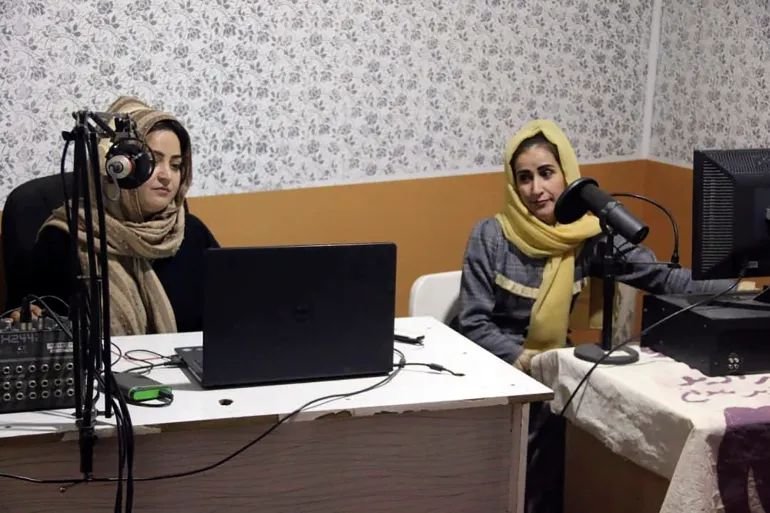
    Taliban have shut down a women-run radio station in Afghanistan for playing music in the month of Ramzan.

    The radio station named ‘Sadai Banowan’ employed eight staff members, six of them female.

    The women-run radio station was started 10 years ago.

    According to Moezuddin Ahmadi, the director for Information and Culture in Badakhshan province, the station was shut down for repeatedly violating “laws and regulations of the Islamic Emirate”.

    “If this radio station accepts the policy of the Islamic Emirate of Afghanistan and gives a guarantee that it will not repeat such a thing again, we will allow it to operate again,” he added.

    However, station head Najia Sorosh has denied any violation, calling it a ‘conspiracy’.
    The Taliban “told us that you have broadcast music. We have not broadcast any kind of music,” she said.

  • Ramzan Miracle: ‘Mystery baby’ from Turkey earthquake reunited with mother previously declared dead

    Turkey’s ‘miracle baby’, rescued after nearly 128 hours under the rubble in the Turkey earthquake, has been reunited with her mother who was previously believed to be dead.

    The baby was handed over to her mother Yasemin Begdas at a hospital in the city of Adana, where she is receiving treatment.

    The baby had been named Gizem (Mystery) by the medical authorities who took care of her.

    “54 days of longing is over. Vetin Begdaş, who was rescued from the wreckage after 128 hours and named Gizem Bebek by our nurses, was reunited with her mother after 54 days. Vetin is now our baby too. As the Ministry, our support will always be with you,” Turkey’s Ministry of Family and Social Services, Derya Yanık tweeted.

    The baby’s father and two brothers lost their lives in the earthquake. The death toll from the February 6 earthquake and subsequent tremors in Turkey and Syria has risen to at least 44,000 according to Disaster and Emergency Management Authority (AFAD).

  • City Police Officer Islamabad directs all SHOs to disclose assets

    City Police Officer Islamabad directs all SHOs to disclose assets

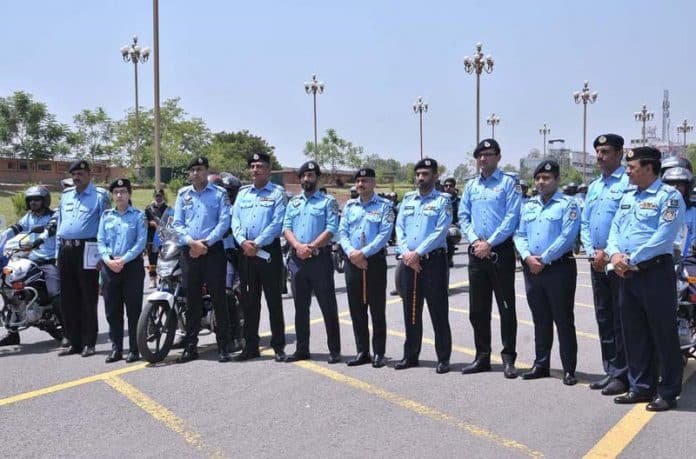
    On Sunday, City Police Officer (CPO) Operations Syed Shahzad Nadeem Bukhari instructed all station house officers (SHOs) to disclose their assets. The CPO also directed that biometric attendance should be ensured in all wings of the operations division, and biometric machines should be installed as soon as possible.

    He added that the weekly performance of each officer will be reviewed, and investigation officers should meet plaintiffs in all cases. These instructions were given at a meeting held to review crime and performance at the divisional level, which was chaired by the Inspector General of Police (IGP) Islamabad Dr Akbar Nasir Khan.

    It is worth noting that police officers across the country, especially SHOs, face allegations of corruption due to the unlimited powers they hold as the head of police stations. CPO Bukhari urged present and former SHOs to work together to make a concrete action plan to deal with crime, with the main target being criminals and proclaimed offenders. He also instructed the officers to ensure the cleanliness of police stations and to make the patrolling system more efficient.

    According to Dawn, the IGP reviewed the crime performance at the divisional level and directed officers to adopt comprehensive strategies to prevent crime in their respective areas. He suggested that safe city monitoring should be implemented at the police station level to help SHOs trace criminal elements early. The IGP also instructed SHOs to spend more time in police stations and a special plan should be made to eliminate serious crimes, especially street crime, and drug trafficking, particularly in educational institutions. The details of buyers of stolen goods should also be collected, and postmortems should be done on every dead body.

    Moreover, the IGP urged the acceleration of the crackdown on illegal weapons, and the completion of challans of under-investigation cases as soon as possible and submitted to relevant courts. He also emphasised that more personnel were being provided in police stations, and special campaigns against offenders should continue, with offenders brought to justice. The IGP also listened to the problems of all the SHOs and promised to solve them on a priority basis.

  • Subha utha nahi jata? Don’t worry, researchers back up your laziness with scientific explanation

    Subha ka alarm miss hojata hai chahe kitni dafa time set karo?

    If you can’t wake up in the morning, you’re not alone. And now you have a scientific explanation that is more respectable than good old laziness.
    Researchers have concluded that there is a logical explanation behind why you can’t seem to become a morning person- and it all boils down to the way genes function, as Wired has reported.

    Previous research done by a group of biologists who later went on to win the Noble Prize in 2017 showed that human bodies have a total of 24 genes known as the ‘period genes’ which determine the human body clock.

    Now, research published by New Communications has concluded that there are actually 351 genes, which can determine whether a person is an early bird or a night owl. According to Michael Weedon, a bioinformatics at the University of Exeter Medical School:

    “Depending on how many of those genes you carry, you can be anywhere on the scale of ‘morningness’. But our research showed that the top five per cent with the most of those 351 genes go to sleep on average 25 minutes earlier than the five per cent who carry the least.”

    Furthermore, the study further looked into where those genes are more likely to be switched on in the body, because different parts of our body carry different tissues. Samuel Jones from the University of Exeter Medical School explained:

    “The genes we found to be related to our circadian rhythms tend to be switched on a lot more in the brain and in the retina,” he explained. “This helps us map what parts of the body are important in creating morning and evening people.”

    The scientists went on to explain how the genes are activated inside our brain. In a specific zone of the hypothalamus known as suprachiasmatic nucleus (SNC), an oscillator which sets our body time of the day, in accordance to the diffferent signals it receives from the environment.

    An important signal for the SNC to activate is light, because once the retina signals that it is night time, our brain releases a sleep-inducing hormone called melatonin, which is our cue to fall asleep.

  • Govt to send one million Pakistanis abroad for employment

    Govt to send one million Pakistanis abroad for employment

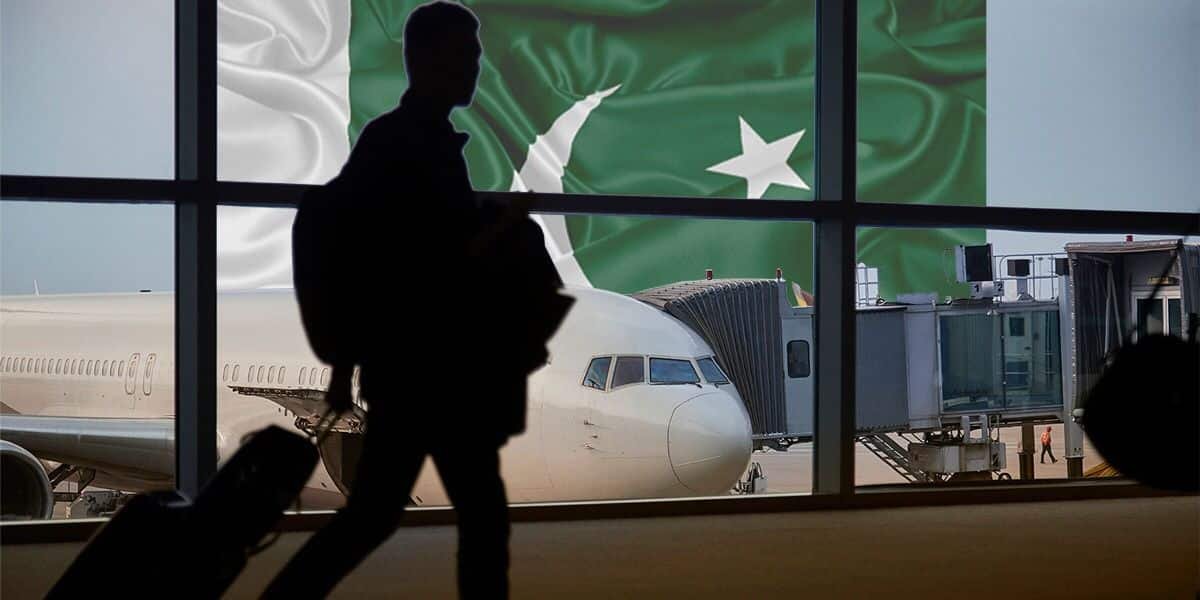
    The Government of Pakistan will send 1 million citizens abroad for employment, Tikka Sani has reported for Samaa. Federal Minister for Overseas Pakistanis and Human Resource Development, Sajid Hussain Turi, while talking to Samaa said that the ministry is working on signing work visa agreements with fifty countries including Germany.

    He continued by adding that Saudi authorities are coming to Pakistan soon to issue visas and citizens who pass technical training tests will be able to get the visa.

    The minister further said that Japan has also opened visas for Pakistani workers while South Korea has a demand for 10,000 skilled workers from Pakistan.

    The Federal Minister for Overseas Pakistanis said that 27,000 blocked passports of overseas Pakistanis have also been restored.

  • Historian gets mistaken for actor Tom Holland, gets swamped by messages from Bollywood fans

    Ever thought getting mistaken for a celebrity would be a life changing adventure? Turns out reality is far more bizarre than fiction.

    At the launch of the Nita Mukesh Ambani Cultural Center, or as we call it ‘Ambani Gala’, celebrities from all over the world showed up dressed to the nines and had the time of their life. Present among them were Hollywood model Gigi Hadid, and actors Zendaya and Tom Holland rubbing shoulders with the who’s who of Bollywood.

    Holland, renowned for playing Spiderman, only has one social media account on Instagram. However, as photos of the actor posing with Indian celebrities showed up online, Bollywood fans didn’t realise that the Marvel superstar is not on Twitter.

    They tagged another Tom Holland in their tweets, a historian from London.

    The case of mistaken identity later kickstarted a hilarious sequence of Bollywood fans spamming Holland with pictures of an event he definitely did not attend.

    Twitter users found this mistake extremely funny.

    I mean who wouldn’t want to be mistaken for a Marvel star?

  • The high cost of not automating healthcare records can be death

    The high cost of not automating healthcare records can be death

    Shafiq* is a middle-aged Pakistani man, working as a driver for a household in Lahore. His son has just been diagnosed with early-stage lung cancer. He finally manages to take time off to take his son to an oncologist in a government hospital. The oncologist asks for all the lab reports of the patient. Shafiq hands over a heavy file. It turns out, one of the reports has been misplaced. The doctor tells Shafiq to come back after getting his son’s lab work done again. Shafiq now has to find the money to pay for more testing and also has to plead with his boss to give him another day off. Meanwhile, his son’s condition is only getting worse.

    When a healthcare system has no proper infrastructure for medical record keeping, the result is waste and medical errors. For example, the cost of repeat lab work will either be borne by Shafiq if he goes to a private lab or by the taxpayer if he opts for a government one. Repetition of tests will also use up limited laboratory resources and delay the test results of other patients. Shafiq’s story also points out another avenue of concern: medical misdiagnoses. Generally, a primary care physician, or family doctor, ensures an individual’s health through keeping family histories, doing annual health screenings and ensuring immunisations. These doctors maintain all this information is the form of electronic medical records. Shafiq’s son had no such family doctor to track his smoking habits or note the prevalence of cancer in his family history. In fact, the first doctor he saw gave him antibiotics for what he diagnosed as a bacterial infection of the lungs.

    In a country with less than 125,000 government hospital beds for more than 200 million people, there is little room for such errors. According to the World Health Organisation (WHO), Pakistan has one of the lowest per capita current health expenditures among Eastern Mediterranean countries, second only to Afghanistan. Because of our chronic debt issues, our healthcare spending will likely remain dismal. In such an environment, technology is a relatively inexpensive tool that can be used to improve efficiencies and better population health.

    Pakistan’s larger cities are home to a select few secondary and tertiary care hospitals, which are meant to provide inpatient care, ambulatory services and specialist care. The major swathe of the country, however, does not have access to these hospitals. In rural areas, the major public health facilities are small establishments called Basic Health Units (BHUs). In the more than 5,500 BHUs across Pakistan, outpatient facilities are provided to ordinary citizens. Contrastingly, the private sector is dominated by specialist care with doctors running their own independent clinics. Here, primary care is seen as neither lucrative nor prestigious. Patients do their own guesswork at diagnosing their problems and then decide which specialist they should see.

    But be it private or public, most doctors in Pakistan are reliant on pen and paper for record keeping. Patients like Shafiq* are meant to keep these physical records safe in a folder and bring them to each appointment. According to one doctor practicing in a government-run tertiary hospital in Lahore, the only records their hospital keeps is the patient’s admission date, discharge date and what kind of operation was performed. Any blood tests, imaging or other notes go into a black hole of patient data. 

    This is all set to change in the province of Punjab. The government is in the process of completing its transition from physical registers to electronic medical records in BHUs across the province.

    Khalid Sharif is Manager MIS in the government’s Health Information and Service Delivery Unit (HISDU). His unit aids the primary and secondary health department in developing and running health dashboards, inventory management systems and mobile applications.

    “Electronic Medical Records (EMR) came about because we wanted to be able to assess our performance as a department,” he said. “Before this, we had no credible way of knowing any metrics like doctor-patient ratios or the number of daily births.”

    The process began in around 2017, when they began testing out earlier versions of EMR in select BHUs. Now, they are running the multi-module application across more than 2,500 BHUs.

    “We expect to be fully paperless in about one and a half month’s time,” he said.

    Each employee at a BHU logs in using their computerised national identity card (CNIC) number and has access to a different module of the system. When a patient comes in, they are registered using their CNIC number. The receptionist takes the patient’s vitals and adds them to their profile. Then, when the patient goes to the doctor’s office, the doctor select a diagnosis and prescribes medicine. Finally, the medicine dispenser checks off the prescription he/she is filling, which automatically updates inventory records.

    “If someone doesn’t have a CNIC we have created another option,” Sharif said. “They can use a relative’s CNIC and we can select their relationship to the CNIC holder.”

    Dr. Faiza Ahmed* has been practicing as a health officer at a BHU near Faisalabad for the last couple of years. When I visited her, they were partially using the EMR system. Out of the 150 patients that had been to the BHU that day, they had electronically registered around 90 of them.

    Most of her patients, especially women, don’t bring along CNICs. But she has made it a point to especially encourage expectant mothers to bring along their own or a relative’s CNIC so that she can track the health of mothers and babies. “This way, I can see a patient’s data even if she had her baby six months ago,” she said. “I can see if she was hypertensive or diabetic back then and how her child was doing back then.”

    Dr. Ahmed has not received instructions to go paperless and she is skeptical of the idea.

    “It’s practically impossible to register all 200 patients because of resource limitations,” she told me. “Internet speed in this area is also very slow.”

    When I asked Khalid Sharif about this, he said that they had already address this issue by creating an offline version of the software which automatically uploads the data when the internet reconnects. However, Dr Ahmed said that the offline version is not functional yet.

    Another reason why the system might feel tedious to Dr Ahmed is because they are currently running two parallel systems. The EMR system has been designed with the idea of print receipts. When the midwife sends the patient off to the doctor, they are supposed to bring their registration slip along. Similarly, the doctor is supposed to print out a prescription slip and hand it to the patient. However, Dr. Ahmed contended that the BHU cannot afford to thermally print slips for every patient. So currently they are both logging data online and writing all the information manually on pieces of paper to give to the patients.

    “I think there’s always resistance to change — everyone gets used to a certain system and doesn’t want to get out of it,” Zara Ansari, a consultant for the government, said. “As with any new data system, it takes time, but this is definitely the future.”

    Zara Ansari is a senior consultant at ACASUS, a management consultancy firm that is assisting the health department with the rollout of electronic medical records. Ansari and her team have been giving trainings to doctors to make them comfortable with the new system. They have also been analysing data for the government to monitor the level of compliance that each BHU is showing.  

    “We started off by assigning lax targets so people can be onboard with actually doing this and then progressively over time making it more strict,” she said. “As of recently, we will be monitoring to see which facilities are doing completely paperless entry.”

    There are of course caveats to this new age technology. There is not a lot of clarity around the privacy of the date being collected and how it will be kept safe. There seem to be no conversations happening around data privacy or patient confidentiality in government halls. 

    Caveats and all, Punjab is making a step forward into modern healthcare. How successful they will be is something only time can tell.

    (*Names have been changed to protect privacy)

  • Proposed French bill will require influencers to disclose filters used on their pictures

    A new law proposed by the French Finance Minister Bruno Le Maire will soon ban social media influencers from uploading photos without mentioning re-touches or filters they have added to them.

    The new law seeks to curtail cosmetic surgery, keeping in mind its ill effect on the mental health of teenagers. The law states that any new picture or video uploaded will also include the filters added to it in the caption or description, while all promotions of cosmetic surgery will be banned.

    Penalty for revoking this law could include up to two years in prison and $32,525 in fines, while the influencer responsible for breaking the law would also be banned from using social media or profiting from being an influencer.

    Speaking to a French website, Le Maire said that the law was not an attempt to restrict influencers. It was to create a system that protects them as well as consumers.

    This is not the first time France has taken strict measures to tackle the rise of inaccessible beauty standards. In 2017, the country passed a law requiring any commercial photo that has been re-touched to change the model’s body to be labeled as ‘photographie retouchée’ (retouched photograph).

  • ‘More mouths to feed than we can cope with’: Street Kitchen ‘Khana Ghar’ feeds millions of Pakistanis amid inflation

    Due the ongoing inflation crisis in Pakistan, food and petrol prices have risen astronomically, leading to many families finding it difficult to afford basic necessities like rice or flour. Writing for The Guardian, Zofeen T Ebrahim has covered the story of the street kitchen ‘Khana Ghar’ set up in Karachi’s poorest district by Parveen Saeed, who has been serving food to families for the past 22 years.

    Opening up to The Guardian, Saeed said that the kitchen has become even more busy since Ramzan began, as more families have arrived to receive one-month food rations:

    “But we can only give one bag to one family, and we need their ID cards to check that,” she said. “There are more and more mouths to feed than we can cope with.”

    Saeed, who had received the Pride of Performance award in 2021, sells salan and roti to families for only Rs 3. Before the Covid-19 lockdown, the kitchen provided meals for 6,000 people, but afterwards it rose to 7000, and now currently stands at 8,200.

    Saeed revealed that people stand in line for long hours in order to eat, because the ongoing political and economic instability has made it difficult for people to make a living:

    “These people are not beggars, they have become destitute..where are the jobs?”

    “Food prices have hit the sky. It is heartbreaking as they have waited for a couple of hours, only to leave empty-handed.”

    The newspaper also spoke to some of the regulars who visit Khana Ghar. Former construction worker Mohammad Shakeel, a father of six, suffered a head injury and broken wrists after which finding work became incredibly hard. He said the food was a ‘Godsend’ because “with a kilo of flour costing 150 rupees, we would not be able to survive the jump in food prices.”

    A widow who has been relying on Khana Ghar to feed her polio ridden daughter and toddler grandson said, “Had it not been for Parveen, we would have died from hunger.”