Category: Uncategorized

  • The collective effervescence of Shah Rukh Khan

    The collective effervescence of Shah Rukh Khan

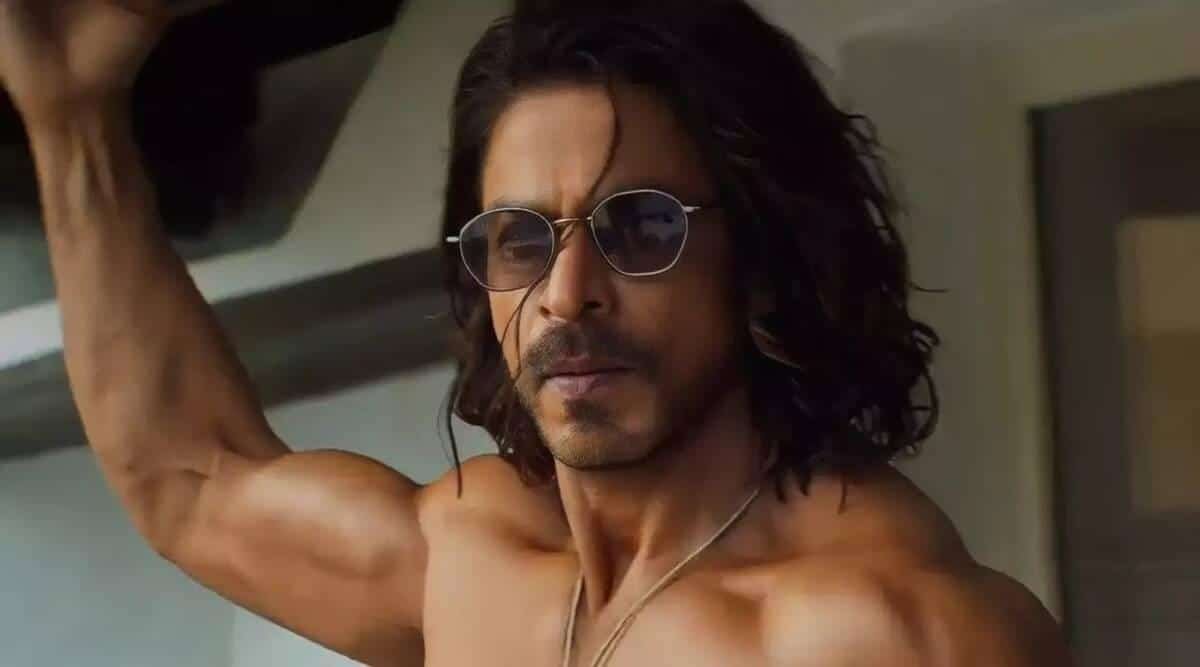
    ‘Pathaan’ is a frustrating film because it does not want to make things too difficult but it also does not want to take the easy way out. It does not mind being silly but it certainly will not become stupid. Perhaps to resolve these contradictory impulses, it chooses to be a fan-service film, something that requires a certain amount of blind faith on part of the audience but also a deep and nuanced knowledge of the world the star who helms it inhabits.

    ‘Pathaan’ is first and foremost a ritual. According to sociologist Émile Durkheim, when a community or society comes together and simultaneously communicates the same thought and participates in the same action, it represents a collective effervescence. That is, the group members experience a loss of individuality and a unity with gods, where the god and the society are the same and the clan itself transfigures into a symbol, the totem pole around which they gather with strong emotion.

    So what can the film offer to non-fan viewers like this author, who have the background knowledge but not the blind faith?

    If you are not part of this collective effervescence, you might be tempted to perceive the scene, the totem, the group as separate entities but it is simply impossible to extricate one from the others. The only way to understand ‘Pathaan’ is to view the film, the star, the fandom and the world it emerges from as one composite whole even if you are outside of that experience.

    Khan is a pathaan (son of a Khudai Khidmatgar no less) and, through this film, he insists that he must be seen as no more than an orphan of Indian cinema. Left as he was as a baby in a movie theatre, pathaan has no history and no identity beyond the service of Indian society. That he found a family outside Indian borders – in the film, this is represented by an Afghan village – holds for him deep emotional resonance, but ‘Pathaan’ and Shah Rukh Khan are, first and foremost, lost at and found by Indian cinema. And the Indian in him has a lot to get off his chest – or, do I mean his abs? – and will, unfortunately, exclude his non-Indian fans at least for the purposes of this film.

    This is not the first time a Shah Rukh film and the man became indistinguishable from one another. In ‘My Name is Khan’ (MNIK), Shah Rukh urged an increasingly Islamophobic world to not see all Muslims as terrorists. Moving on from what now seems like innocent times when the deeply problematic discourse of “good Muslims and bad Muslims” retained some currency, India now finds itself at a stage where proving one’s patriotism through a trial by fire (for example, in ‘Chakde India’) will bear no results. The Khan of ‘Pathaan’ is the older, weary and (literally and figuratively) broken version of the man in MNIK and Chakde. He has given up trying to prove his patriotism – if you are not yet convinced, you are unlikely to ever be. If you happen to be one of those blessed with blind faith, this film will not only help you reiterate your beliefs, it will also give you renewed energy to go out into the world filled with hate, despair and anger.

    John Abraham, who plays the antagonist Jim in the film, mentioned in a post-release press conference that Shah Rukh Khan is not a man but an emotion. This film, which is also the star, the nation and its audience all at once, is similarly an emotion. This is why it does not make the treatment of very complex issues difficult or easy. The issues are presented as Indians experience them.

    For me, it was still jarring to sit through the throwaway lines on Pakistan when criticism of the Indian state remains muted and one can well imagine the frustration that led Fatima Bhutto to write that Bollywood, as a whole, appears to be ‘obsessed with Pakistan’. Indian films have been steadily churning out plots where Pakistanis are represented as not only “nasty” but also gullible and even moronic. But, for Indians, who have been subjected to phallic slogans like “ghar mein guss ke maareinge” (we will invade your homes to kill you) in the recent past, the film comes as almost a relief. ‘Pathaan’ is at least not a chest-thumping agent of chaos – whether it is in India or Afghanistan, on-screen he is only trying to protect people. Whether he should have participated in the American invasion of Afghanistan at all is not a question the movie is interested in – just as it shies away from actually taking a political position on the abrogation of Article 370 that forms the impetus of the conflict presented in the film.

    It is in this almost desperate attempt to avoid taking overt stands on polarising debates that the film becomes reluctantly nuanced. While some lazy lines suffice to illustrate that only a handful of Pakistan’s military establishment have, to quote the ISI agent Rubai (played by Deepika Padukone), gone berserk, the blame for the imminent threat lies with the soulless and even callous Indian bureaucracy and a particular version of nationalism that pervades public discourse today. Jim is a narcissist for whom love for the nation used to be an extension of love for self and, now that his love has soured, he cannot but mock the selfless love that ‘Pathaan’ holds on to despite being betrayed and hurt. Most of their conversations centre on this differing attitudes towards nationalism, offering Khan ample opportunity to respond to the real-life attacks the Indian state and its narcissistic nationalists have subjected him to in recent years. The camera lingers on his dark brooding face as he expresses, in turn, his quiet disappointment with state’s priorities (while listening to Jim’s backstory), the shock of betrayal (as Rubai leaves him behind) and abject resignation (when he finally decides to go rogue). The emotions spill over the frame and become a testament to the life of India’s most famous and openly religious Muslim man under the tyranny of Hindu nationalism.

    While Bhutto’s criticism is well-taken, movies like ‘Pathaan’ – and ‘Raazi’, which she also mentions – emerge from a specific political struggle within India and must be seen as a challenge to the rampant hate rather than carriers of the same hateful messaging. Pakistan in ‘Pathaan’ serves as an empty signifier that it has been in films like ‘Uri’ where the larger plots are aimed at othering the Indian Muslims through an invocation of an external threat. But, in a crucial difference, ‘Pathaan’ brings attention back from the neighbouring country to the internal struggle in India that was provoking such excessive obsession in the first place. It is as if the filmmakers are telling us that it is impossible to speak on Indian nationalisms without underlining the disproportionate space Pakistan occupies in public imagination.

    While Jim is explicit about his motivations, Rubai’s backstory leaves a lot unsaid. Rubai’s father was a journalist somewhere in West Asia who “asked too many questions” and, as a child, she was forced to witness his waterboarding by agents of an undemocratic regime. As memories of the father’s torture merge with her own waterboarding at the hands of Indian agents she had actually helped, the signifier of Pakistan is emptied out and her story becomes one of Indian journalists who, in recent times, had “asked too many questions” with national interest at their heart and paid the price for the same.

    It may still be too unrealistic to ask Pakistanis not to be offended by ‘Pathaan’ since it is probably no consolation that the film does not address them at all. The totem of Shah Rukh holds great emotional resonance across South Asia and the world and, while the film tells us that he cherishes ‘his family’ outside India, ‘Pathaan’ is targeted at the Indian society – as a collective – that loves him and, yet, as the film sees it, has betrayed him.
  • Court grants protective bail to Imran Khan

    Court grants protective bail to Imran Khan

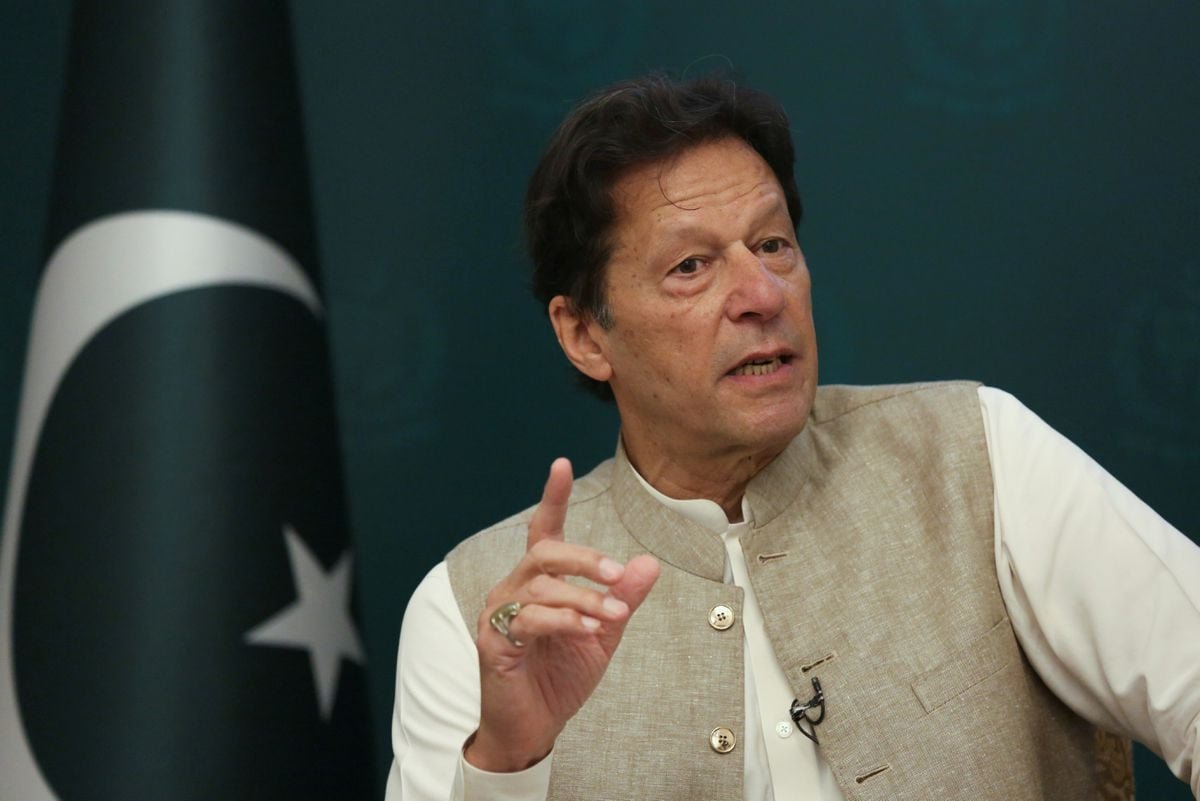
    The Lahore High Court (LHC) has finally approved protective bail till March 3 for Pakistan Tehreek-e-Insaf (PTI) Chairman Imran Khan in a case pertaining to protests outside the Election Commission of Pakistan (ECP).

    Earlier in the evening, amid tight security, Khan made his way to the courtroom from his house in Zaman Park. He appeared before the judges after being called in numerous times.

    ‘Impossible’ for Khan to step out of car to reach courtroom

    Khan was present within the premises of the LHC, however, leaders of his party said that it would be difficult for him to go towards the courtroom itself.

    Senior leader Shah Mahmood Qureshi claimed there are “thousands” of people present inside the compound while alleging that security arrangements are almost “non-existent”. He said it is “impossible” for Imran to step out of his car and reach the courtroom.

    Court gives IK a last chance to appear by 5pm today

    Earlier today, the high court gave a last chance to Khan to appear before the court by 5pm today as he faces the possibility of arrest ahead of his appearance.

    The court had disposed the former Prime Minister’s appeal for exemption from appearance for protective bail, citing doctors’ advice about the leg injury he suffered after being shot in November 2022 in Wazirabad.

    According to multiple media reports, Federal Investigation Agency (FIA) has constituted a four-member team to arrest the PTI head in a separate case related to foreign funding received by his party. Media reports suggest that Khan might be arrested by a Lahore FIA team before his appearance at LHC, and then will be handed over to an Islamabad FIA team.

    The FIA team has reportedly also held consultations with lawyer bodies so that the arrest is not disrupted.

  • President Alvi sets April 9 as election day for Punjab and KP

    President Alvi sets April 9 as election day for Punjab and KP

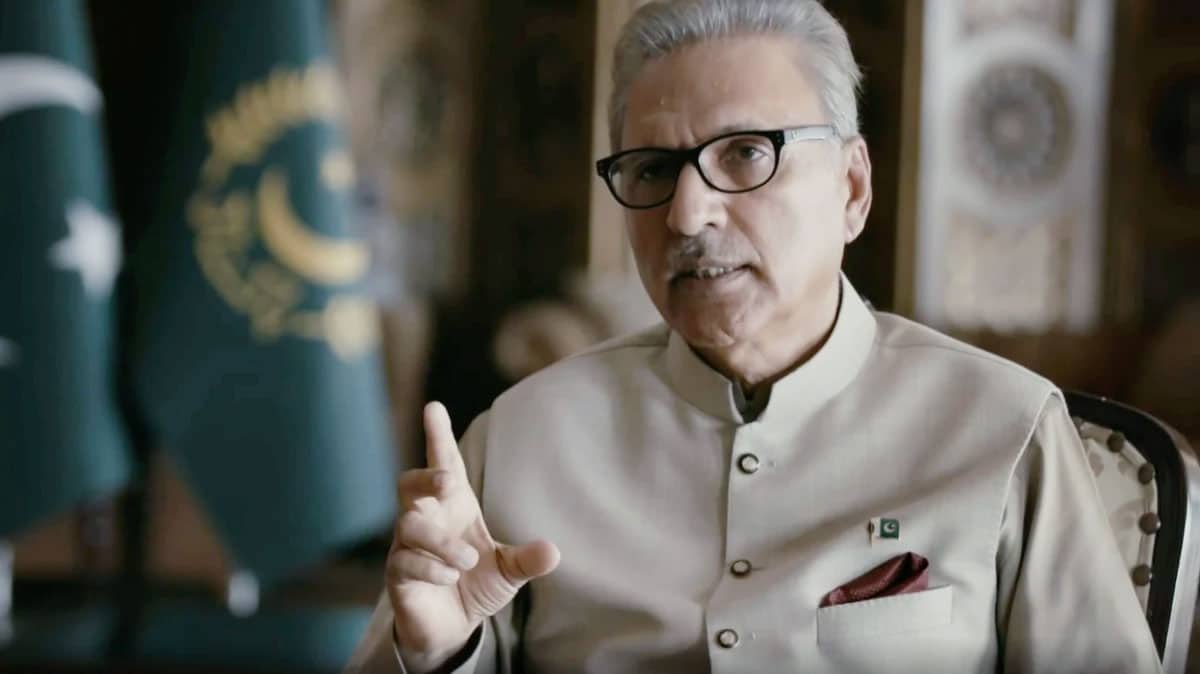
    President Dr Arif Alvi has announced that elections in Punjab and Khyber Pakhtunkhwa (KP) will be held on April 9.

    It is pertinent to mention here that Section 57(1) of the Elections Act, 2017 says that the president is entrusted to announce the election date after consulting the Election Commission of Pakistan (ECP)

    Earlier today, ECP said no to meeting President Alvi when he invited the commission to consult with him, citing that the matter of elections is sub judice.

    ECP says no to meeting with President Alvi

    On Monday, ECP, in a letter addressed to Alvi, has stated that the matter of deciding a date for elections is subjudice, hence, it cannot participate in a meeting on this issue with the president.

    The development comes days after Alvi wrote a letter to Chief Election Commissioner (CEC) Sikandar Sultan Raja, inviting him for an “urgent meeting” to discuss and consult on the election date in Punjab and Khyber Pakhtunkhwa (KP). The meeting was set to take place today (Monday, February 20).

    Two federal ministers, Rana Sanaullah and Marriyum Aurangzeb, have defended the ECP.

    In a statement issued on Monday, Information Minister Marriyum Aurangzeb said the Presidency has become “Awan-e-Sazish” [centre of conspiracy], adding that the government will not allow it to become “Imran Khan’s Tiger Force”. She also advised Alvi against becoming a puppet of the former Prime Minister.

    Meanwhile, in a tweet, Interior Minister Rana Sanaullah lambasted Alvi, stating that, “ECP is not your slave,” and adding that “Imran is now using the head of state [Alvi] for conspiracy”.

    President Alvi asks ECP for urgent meeting to consult on Punjab, KP’s election dates

    Earlier, in a letter to ECP, the president expressed displeasure over the “apathy and inaction” of the Election Commission of Pakistan (ECP) on not responding to his earlier letter as yet. The first letter was sent on February 8.

    The president stated that he had waited anxiously that the ECP would realise its constitutional duties to proceed and act accordingly, but was extremely dismayed by the commission’s “approach on this important matter”.

    The meeting will take place on February 20 (Monday).

    The president’s official Twitter account said that the two will discuss Section 57(1) of Elections Act, 2017 which details that the president is entrusted to announce the election date after consulting the ECP.

    Punjab and KP assemblies were dissolved in January to pave way for fresh elections.

    It is pertinent to mention that Pakistan Tehreek-e-Insaf (PTI) has been asking for the elections since the ouster of their chairman Imran Khan as Prime Minister.

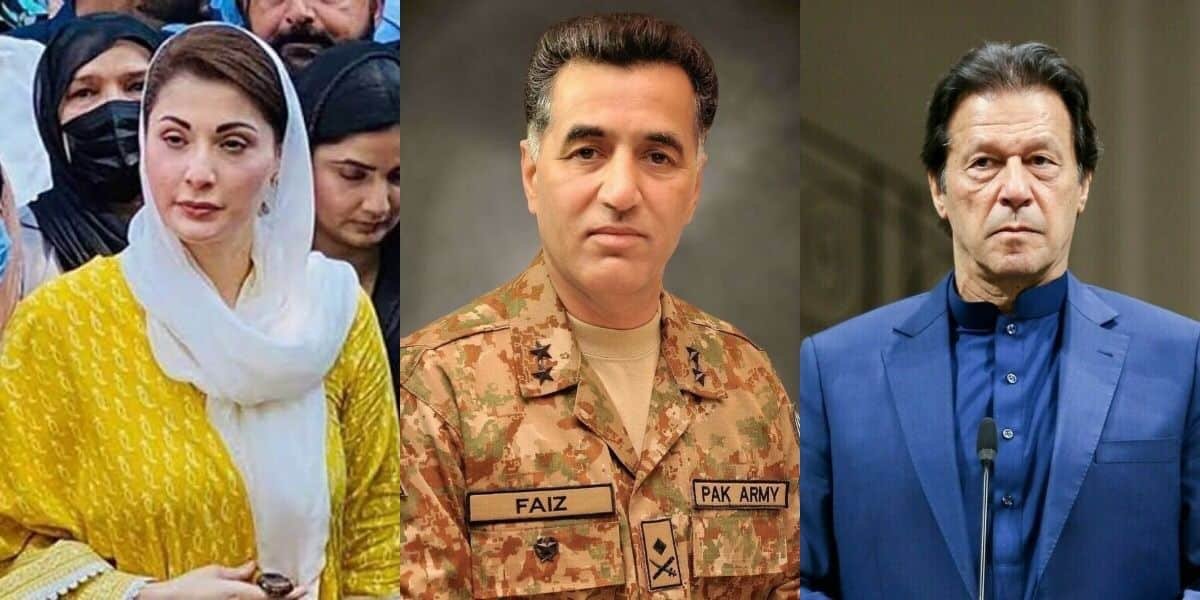
  • Imran is still being facilitated by traces that Faiz Hameed left: Maryam Nawaz

    Imran is still being facilitated by traces that Faiz Hameed left: Maryam Nawaz

    Pakistan Muslim League-Nawaz (PML-N) senior Vice President and Chief Organiser Maryam Nawaz, while talking exclusively to Geo News’ programme “Jirga with Saleem Safi” shed light on the ongoing political crisis and emerging differences between her and the party’s senior leader Shahid Khaqan Abbasi.

    Claiming that the new setup in the establishment is neutral, Maryam Nawaz said that there are elements associated with Lieutenant General (retd) Faiz Hameed that are helping Pakistan Tehreek-e-Insaf (PTI) Chairman Imran Khan because their interests are interlinked.

    She said that due to this support, Khan doesn’t appear before the court despite being called numerous times.

    Maryam deemed the content of the alleged audio leaks of former Punjab chief minister Chaudhry Pervaiz Elahi as “bench fixing”.

    “I said long ago that bench fixing is happening. Elahi’s leaked audio is its evidence,” she stated.

    All set for elections, says Maryam Nawaz

    Reflecting upon the provincial elections in Khyber Pakhtunkhwa (KP) and Punjab, which is the core demand of PTI, Maryam said that she and her party are all set for elections.

    When asked if the party was avoiding polls, Maryam stated: “Who said [we are] running away from elections? I am in front of the public and preparing for the polls.”

    She added that all the places that she has visited recently are a part of the election campaign. “We are preparing for the polls. Everyone wants a ticket from PML-N,” she claimed.

    The party’s chief organiser said that there is a list of people who wants PML-N’s tickets from all four provinces.

    Shahid Khaqan’s departure from PML-N would be an insult to me: Maryam Nawaz

    Addressing the rumours of a rift between her and former PML-N senior vice-president Shahid Khaqan Abbasi, Maryam said that she had a detailed conversation with him for two and a half hours about his resignation.

    Maryam said that Abbasi’s departure from the party will be an “insult to me, not to him”; however, Khaqan told her that she is like a sister to him. “He wanted to give me some space. I will not let Abbasi go, nor is he going anywhere,” she maintained.

    Don’t believe in revenge: Maryam Nawaz

    When asked that there are apprehensions that Maryam might take revenge when she comes to power, the PML-N senior vice president said, “I don’t have to do anything, they already are suffering because of their own deeds.”

    She said that she doesn’t believe in revenge and won’t do what Khan’s government did in the past to her party. Moreover, she said that now both the establishment and Khan are busy exposing each other.

    Maryam assures Nawaz’s return

    Maryam again assured party followers that her father, PML-N supremo Nawaz Sharif, will come back. She said: “This is Nawaz Sharif’s homeland and he will return to the country.”

    “Fake cases were lodged against him and he not only appeared before the law [judiciary] but also accepted the victimisation with dignity in the larger interest of the country,” she said.

  • Are actors responsible for educating their audiences?

    Once again, the Pakistani entertainment industry is stirring up reminders of why people should stop viewing their content because even they don’t want to own up to the material they work on.

    Actor Danish Taimoor appeared on a celebrity talk show yesterday where he was questioned about his choice of dramas for the past few years, and the criticism his characters are subjected to. Taimoor firmly responded to the rumors by saying that he was an actor, not a teacher. ‘It’s not my job to educate an audience,” he said.

    These kind of statements are usually used to reject society’s expectations. It is not a person’s responsibility to dress the way society wants or to keep imposing restrictions on themselves that hinders their creativity, just so that society remains happy. But when it comes to filmmakers, the line is rather crooked.

    Sorry Mr Taimoor, but when you chose to become an actor and get involved in dramas, you inadvertently become an educator. Films are a platform that educates our audience on issues, and as a person with a public position, the onus does fall on you to be mindful that the kind of message your dramas are sending not harmful.

    Perhaps we should widen the screen to remember what was the kind of content that Taimoor was being questioned on. His past few dramas like Kaisi Teri Khudgarzi and Ishq Hai had attracted widespread criticism for featuring abusive, toxic male leads who were projected as romantic heroes regardless of the way they stalked, coerced and pressurized the female characters to marry him. One of the most memorable examples was a scene in Ishq Hai, where Taimoor’s character holds a gun to his head and starts counting down from 10, threatening the girl that he would shoot himself unless she agrees to marry him.

    Can we allow our actors and other members of the entertainment industry to dissuade their responsibility while depicting such triggering scenes that show a woman being kidnapped, threatened and pressurized in to marriage? Especially in a country like Pakistan where the rape conviction rate is less than 5%, and a recent report that was presented to the National Assembly of Pakistan showed that between 2019 to 2021, more than 3,987 women were killed because of domestic violence? More women in Pakistan are turned away from their families, and the courts in order to bring their abusers to justice because they’re told by public officials, including our own entertainment bretheren, that their wounds don’t matter. Because our screen writers and actors have pushed the narrative through their work that belittles and demoralizes women who aren’t passive or submissive.

    But Taimoor isn’t the first person to respond to criticism with this statement, as so have other members of the acting fraternity as a complete justification to their choice of dramas. When Fahad Mustafa was questioned about his choice to produce Dunk, a drama that revolved around fake sexual harassment allegations, he had responded with the same remark. “I don’t run a school, I am an actor so it’s not my job to educate audiences.” Even another roundabout way to defend the choice of drama was from Yasra Rizvi who had outshone with her brilliant performance in the web series ‘Churails’ but then was one of the main performers in ‘Dunk’. Defending her decisions on her Instagram page, the actor stressed that “Actors who play rapists and murderers are not ACTUALLY rapists and murderers and they are not condoning or justifying such actions in real life by playing said characters.”

    Any sane person watching Akshay Kumar play a broke man in Hera Pheri knows that he actually doesn’t live in a crammed room with three other people, but is playing a character. Your audiences aren’t dumb and they aren’t here to just be entertained, but they are absorbing the message you are sending through playing that characters on screen. Because the reason why the entertainment industry is being held responsible for the kind of material they are churning out is because theirs’ is a powerful medium through which we educate our audiences. Films have the power to reach out across countries and to the masses who are sitting at home and watching it on screens. Actors are not merely just entertainers who get to perform in front of an audience, but they are powerful individuals with platforms that have the power to change and influence ideals that no politician or public official can do so. When our entertainment industry consistently put drama after drama where women are being beaten, and churning out regressive messages, they don’t get to wonder in shock that why is the there a never ending rape pandemic in Pakistan, and how more women are posing a threat to their lives if a video of them dancing on Tik Tok goes viral. It’s because our dramas and filmmakers need to realize that they have a social responsibility to be mindful of the message they are sending out to their audiences.

    Especially for celebrities like Mansha Pasha who had said in defense of Rizvi, that “Actor’s aren’t echo chambers”, then there won’t really be any point of the entire profession. Activism is not a toy you can pick and drop when it pleases your image. Despite public appearances at marches and protests for women’s rights, it is ultimately your films and dramas that define what kind of social issues you are advocating for. So regardless of how you may protest how much of a feminist you are, it is the women from backgrounds less privileged than yours who suffer more because of your stance. The reason why the rise of the right wing government BJP is able to cement their stance and consolidate their anti-Muslim stance was through peddling their narrative with the power of films and influential celebrities.

    Actor Sania Saeed reflected on why more drama creators need to remember that their content isn’t just providing entertainment, but it is also projecting out messages that the audience will follow. In an interview with Something Haute, she spoke about why art has an essential political role in society:

    “Television shows want dense topics they feel can be understood by audiences quickly and will also be easily made and accepted by the people. I feel that this has become a business formula now to write television series, and we have started pressurizing our artists and writers to adjust to this….I do believe that art has a role beyond entertainment which is to help expand our mindsets.”

    The responsibility to educate the masses isn’t something that an actor gets to avoid, but it is attached with every form of entertainment they are sending out to their audience. So to Danish Taimoor, Fahad Mustafa, and other members of the acting industry, it is your responsibility to ensure that your films are not peddling dangerous narratives that hinder the efforts being made by women, transgenders and other minorities to regain their humanity within Pakistan.

  • Sheikh Rashid to be formally charged on March 2 in Zardari allegations case

    Awami Muslim League (AML) chief and former Interior Minister Sheikh Rashid will be formally charged on March 2 by a district and sessions court in Islamabad for accusing former President Asif Ali Zardari of plotting an assassination attempt on Imran Khan, the chairman of Pakistan Tehreek-e-Insaf (PTI).

    The court has also ordered that the former interior minister’s appears before the judge on the said date.

    Rashid requested the court to set March 15 as the date for indictment. However, the judge said that the high court has given its orders and the date cannot be extended.

    Court grants bail to Sheikh Rasheed in Zardari remarks case

    On Thursday, Rashid was granted bail in this case by Islamabad High Court (IHC).

    The high court approved his application and passed an order to submit surety bonds worth Rs50,000.

    Earlier, a district and sessions court of Islamabad rejected his bail, after which he approached the high court.

    In the early hours of February 2, Rashid was arrested from his home in Islamabad and was later handed over to police on a two-day physical remand.

    Rashid was also booked in another case in Karachi for allegedly using inappropriate language against Pakistan People’s Party (PPP) Chairman and Foreign Minister Bilawal Bhutto-Zardari.

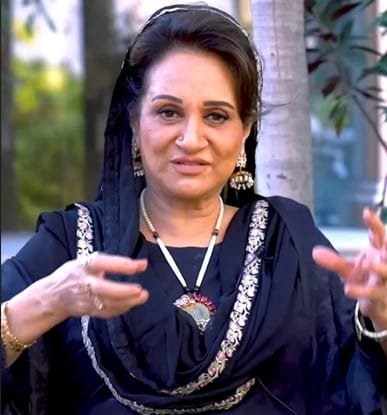
  • ‘I don’t feel comfortable with slapping scenes’: Bushra Ansari

    ‘I don’t feel comfortable with slapping scenes’: Bushra Ansari

    Bushra Ansari’s currently winning hearts as the strict mother-in-law on the ARY drama ‘Tere Bin’, however it seems like the actor isn’t too comfortable with the character’s cold, selfish nature. Especially in a particular scene where her character Maa Begum slaps Meerab for dancing.
    In a behind the scenes interiew, Ansari confessed that she finds slapping scenes quite difficult to perform:
    “The one thing that I don’t like is slapping people, and I get incredibly upset over it. Not just girls, but with boys as well I have to give a lot of re-takes. In a lot of previous dramas I had to slap actors like my own son. I slapped Wahaj, Ahsan Khan and then Mikaal Zulfiqar…Just one thing I would change about her character is how much she slaps people. Because it breaks my heart. Allah karay I never have to come across such a situation.”
    Ansari also explained the mindset and personality of Maa Begam, and elaborated on how when Meerab began dancing at her wedding, she challenged this mindset which is why she was slapped.
    “I (my character) have a set of rules like ‘this is my house, this is my family and these are my rules, and this isn’t right that my daughter-in-law is dancing at wedding. But no one would find this to be proper, as this is a part of our own culture… I see women now days are dancing at their wedding and wearing full makeup. Back in our days we had a tradition that a bride would wear no makeup so that her face would glow.”

    You can watch the complete interview here:

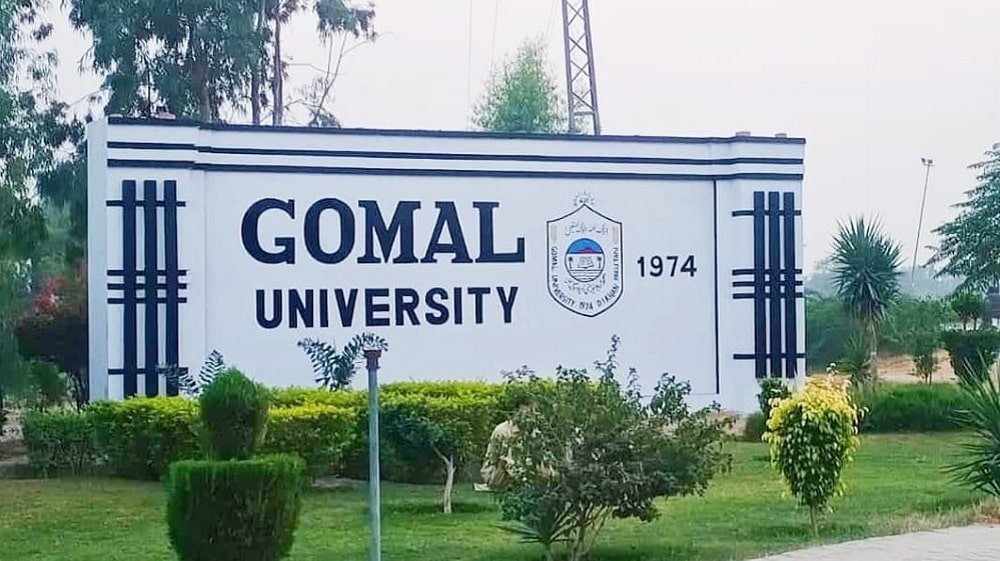
  • Female and male students can’t sit together at KP’s Gomal University

    Female and male students can’t sit together at KP’s Gomal University

    Gomal University in Khyber Pakhtunkhwa’s (KP) Dera Ismail Khan has implemented a total ban on joint gatherings of male and female students on campus “in any ground or roads”.

    The university also issued a notification in this regard on Wednesday which reads: “gathering/coupling (male and female) is totally banned in any ground, roads etc. beyond the premises of department.”

    The university also directed female students to “be careful” and limit themselves just to their classrooms and department common rooms.

    Moreover, it also warned of strict action against those students found violating the rules.

    Interestingly, the notification was issued the day after Valentine’s Day (February 14).