Blog

  • Budget 2023-24: Silent Budget, Fading Democracy

    Amidst endless political turmoil, with inflation standing at 38 per cent in May and the country teetering on the brink of default, Finance Minister Ishaq Dar presented the budget for the fiscal year 2023-24 on Friday. There was no Opposition present in parliament to suggest amendments. The budget was presented without the chaos we usually witness during budget speeches.

    Whatever semblance of Opposition we have, did criticise the coalition government for presenting a budget that appeases the International Monetary Fund (IMF). However, the chances of an IMF bailout appear slim, and if the bailout does not materialise, the threat of default is significant.

    In the next fiscal year, external payments of 25 billion dollars are required, which cannot be arranged without the IMF, as no international organisation will provide funds without the IMF’s involvement.

    It is also pertinent to mention here that no target from the previous budget was achieved. The growth target was set at 5 per cent, but it remained at 0.28 per cent, an abysmally low rate. The inflation target was set at 11.5 per cent, but it remained at 29 per cent, an astonishingly high rate.

    Budget deficit exceeded the target by Rs2.2 trillion, and the upcoming fiscal year has a tax target of Rs9.2 trillion, out of which 80 per cent, or Rs7.3 trillion, will be spent on paying interests alone.

    Pakistan Tehreek-e-Insaf (PTI) has rejected the budget, claiming that it offers no relief for the poor. Maybe if they had stayed in parliament and expressed criticism on the floor of the House, their objections could have had a stronger impact and they could have had a significant influence on shaping the budget. PTI’s criticism from outside parliament, without any actual impact, highlights the crucial role of the Opposition’s presence in such situations.

    A functioning democracy relies on the active participation of the Opposition to ensure the budget serves the interests of all citizens. The current scenario calls for a commitment to democratic values and for an Opposition that can help to effectively shape policies. The presence of Opposition in parliament is not just a symbol of a healthy democracy, it is a prerequisite for balanced decision-making, inclusive policies, and a stronger, more prosperous Pakistan.
  • ‘3 billion allocated to finance films, health insurance for artists’: Marriyum Aurangzeb

    ‘3 billion allocated to finance films, health insurance for artists’: Marriyum Aurangzeb

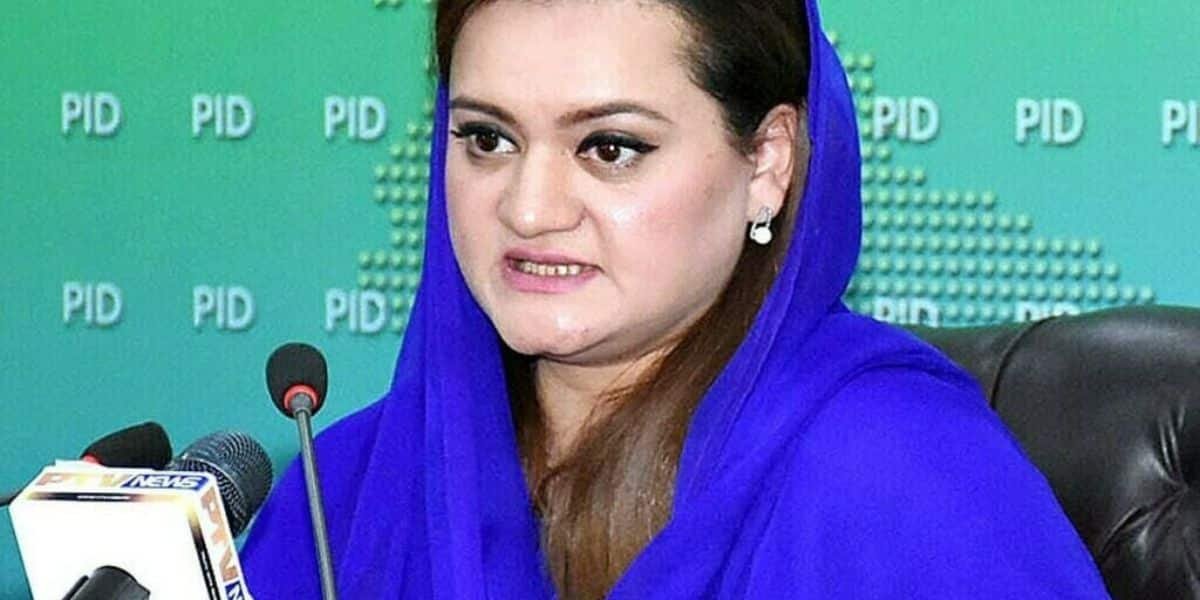
    The Federal Minister for Information and Broadcasting, Marriyum Aurangzeb, announced in a tweet two days ago that for the first time ever, the federal government has allocated at least Rs3 billion for the Film Finance Fund while Rs1 billion will be used to provide health insurance for artists.

    The minister highlighted the necessity of the move in playing a major role in the growth of the film industry, and in providing security for performing artists.

    Here is the complete tweet:

    “I am equally delighted to announce that funds have been allocated both for the Film Finance Fund and for Artists’ Health Insurance for the first time ever. Rs 2 bn have been allocated for the Film Finance Fund and Rs 1 bn for the Artists’ Health Insurance. I am certain that, jointly, these measures will play a major role in the growth of our film industry and improvement in the welfare of our nation’s Artists. This will play a key role in the promotion of Pakistan’s narrative, heritage and culture through films, as well as the growth of screen tourism in Pakistan.”

    In May, Aurangzeb had inaugrated PTV’s National Film Production Institute in Islamabad. At the ceremony, Aurangzeb revealed that the project will help in promoting Pakistan’s narrative worldwide, through screen tourism via the National Film, Culture Policy 2018, which states that cinema houses in the country will also be restored.

  • 41 years later, ‘Ankahi’ is still more progressive than current drama serials

    41 years later, ‘Ankahi’ is still more progressive than current drama serials

    If we were to tell you that a drama is on air on Pakistani screens, showcasing a feisty, independent woman who stands up against forced marriages, is living with her single mother and uncle but never laments about not being married or plots 24/7 to entrap a man? You would say petrol is mulk mein sasta hojaye ga, but Pakistani dramas kabhi itnay achay nahi thay.

    We’re sorry to tell you that there was a time when Pakistani dramas were progressive and revolved around empowered women who never waited for a man, but were powerful and independent. Despite airing decades ago, more and more Pakistani women are watching classical dramas from PTV, and expressing their shock at the kind of empowering, witty women in these shows who never tolerated abuse, or the horrifying kind of things Pakistani dramas today think that all women want.

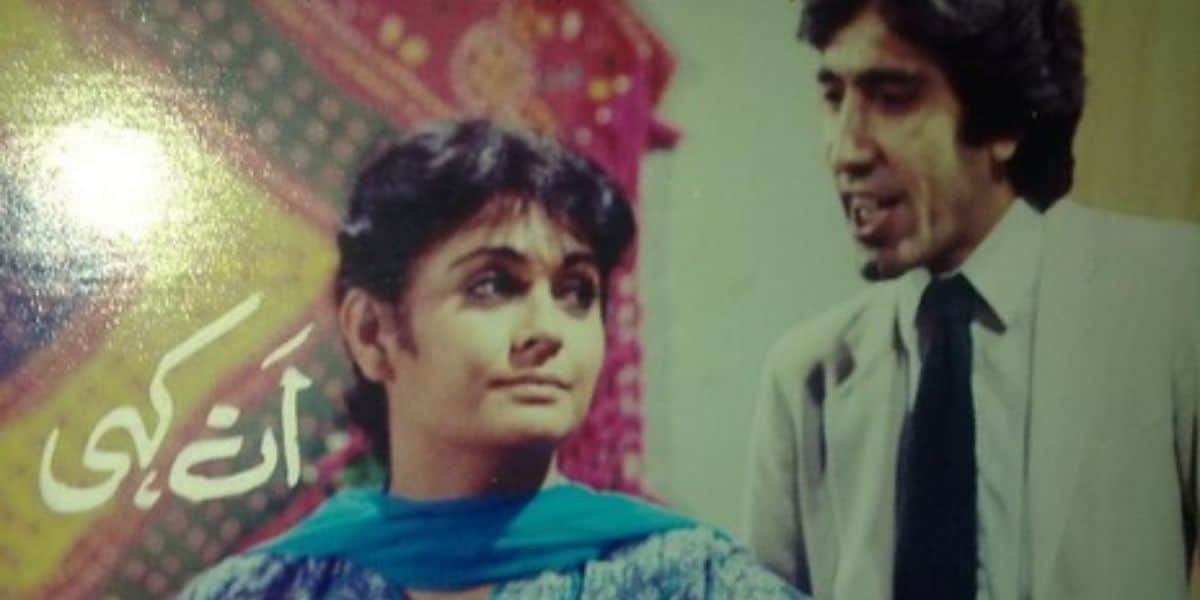
    Take ‘Ankahi’ penned by the brilliant Haseena Moin in 1982, decades ago and yet appealing to a mass audience with its main lead, Sana (played by Shehnaz Sheikh) who dreams of being rich, is clumsy yet endearing, outspoken about standing up for her rights, takes on the task to become financially independent and starts working despite the opposition she faces from her relatives.

    Did we imagine that what would pave the way after the women of Haseena Moin like Sana, Sunia, and the countless women from her drama’s- would be Umera Ahmed’s Khirad? A woman who set romantic standards that despite being neglected, kicked out of her home while pregnant, you forgive the man and every thing is good in the end.

    There is certain charm in the way PTV classical dramas from the minds of writers like Syed Mohammad Ahmed, Moin and Anwar Maqsood still appeal to audiences. They wrote over a variety of topics, covering a variety of issues like domestic violence (Sitara Aur Mehru Nisa), family planning (Aahat) and even light hearted rom-coms about women trying to pursue the men they love (Tum Se Kehna Tha). These dramas were upfront about bringing stories about women, and the issues they face to the spotlight, regardless of how absurd it may seem. Aahat discussed how women in Pakistan are pressurised to give birth to sons, are taunted when they have families full of girl children, and even didn’t shy away from depicting what post partum depression looks like, when the mother (played by Sania Saeed) is quickly returning home after giving birth, despite being forbidden by her doctor, and how she is made to endure the separation from her daughter because of the pressure her family puts on her. And as Moin put it herself, more rebellious women challenging the patriarchy was the onus:

    “I created the bold woman character as a counterpoint to all male writers who were showing women as a miserable victim, crushed by the system, eternally self-sacrificing, nurturing, serving her husband even though he visited prostitutes. Oh, it was so degrading! I like writing rebellious characters, and I keep repeating them so that there is an impact. The only thing is, my mode is comic and my words are never harsh. During many interviews, I have been asked why I show strong women characters. It annoys me. Do they ask male writers, why they show strong male characters?”

    Fast forward to the year 2023, censorship is at an all time high, and it was the implication of consensual sex that set PEMRA after ‘Tere Bin’ after a string of scenes depicted domestic violence, stalking, slapping, attempted suicide- too long of a list to get into.

    A few days ago, during an appearance at Mazaak Raat, Syed Mohammad Ahmed spoke about how writer’s today are more munshi than writers. They lack the creative freedom they had in the past to write about topics of their choice, and how the fixed formulae of creating a hit drama involved women being battered and abused, rather than rebelling against the patriarchy.

    Listening to this and watching as one of the currently hit dramas in Pakistan revolves around two cousins getting married, and the woman being demonised because she wanted to marry rich, there’s no way to stop the despair from hitting in. The hole left by Haseena Moin will be difficult to fill, as the entertainment industry keeps its head buried in the sand.

  • ‘Dead on Arrival’ or ‘The End’? Aleem Khan responds to SMQ’s comments about JKT’s party

    Pakistan Tehreek-e-Insaf (PTI) Vice Chairman Shah Mahmood Qureshi has termed the launch of the newly established political party of Jahangir Khan Tareen, Istehkam-e-Pakistan, as “dead on arrival”.

    He made the comments while speaking with journalists outside an anti-terrorism court (ATC) in Lahore on Saturday.

    “I would only say this much about it. When you take a patient, after an incident, to a hospital’s emergency. For instance, the Services Hospital is close by. You take them to an emergency.”

    “The doctors conduct their examination, after which they declare them dead. So I will only say this is a launch which is dead on arrival,” he said.

    Abdul Aleem Khan, who has also joined Tareen’s party, responded to Qureshi’s comment saying that people know which party’s launch is dead on arrival, and which party is ending.

    Jahangir Khan Tareen, formally established the political party on Thursday in Lahore. Former PTI leaders Imran Ismail, Aleem Khan and Ali Zaidi were also present at the press conference to announce the launch.
    The party comprises more than 100 former National Assembly members and leaders of PTI.

  • Shoaib Akhtar is not interested in a second marriage

    Shoaib Akhtar is not interested in a second marriage

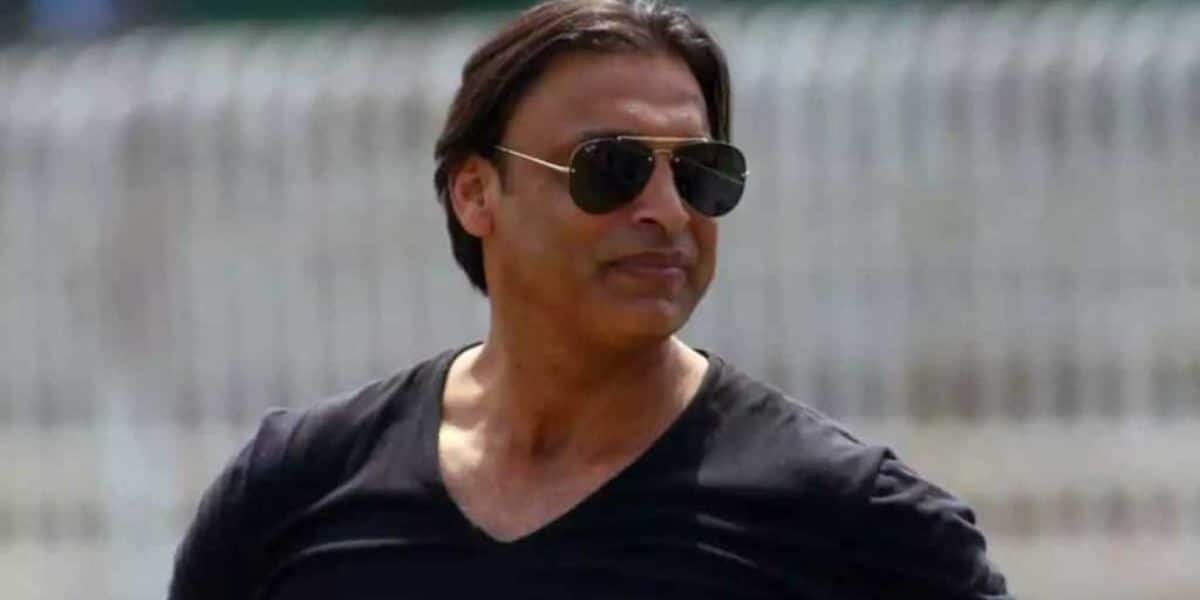
    Former fast bowler Shoaib Akhtar recently appeared on Hafiz Ahmed’s podcast where he opened up about whether he would get married for a second time.

    The speedster rejected the idea of marrying again, saying that he would remain committed to his wife. The cricketer said that although Islam allows men to marry multiple times, it also encourages men to remain faithful and kind to their wives:

    “You can get married four times, but I believe that once you’re attached to someone, they have left their home for you so you should leave your things for them as well. Be nice to her, kind to her. You should be an inspiring figure to her. You should have a strong character and shouldn’t pressurise her to do anything. I’m always straight forward and honest, I take care of my children and teach them the Quran.”

    The cricketer, who tied the knot with Rubab Khan in 2014, talked about the arranged marriage his parents had set up for him, when they met his wife’s parents during Hajj:

    “My mother had met my wife’s mother during the time they were completing Hajj, and during this visit she had taken a lot of care of my mother. When my parents came back, during that moment my mother introduced me to a girl and told me ‘This is your wife’, and I agreed to marry her.”

    Akhtar said they had a simple nikkah ceremony, which wasn’t open to public, with just a few people from his family and from his wife’s family.

    Akhtar went on to reveal that he is quite different from his conservative wife because of his liberal views, but he has never pressurised her to do anything that she doesn’t want to, including asking her to make media appearances:

    “My family doesn’t like coming on tv. My wife is very conservative, even though I am very liberal, very open minded. I keep asking her to go out and eat something, and she refuses.”

    Akhtar also added that he respects his wife’s preference which is why he doesn’t speak about their personal life during media appearances, to keep supporting her choice to remain a private figure.

  • Eight cases of rape reported in Lahore in last 48 hours

    Eight cases of rape reported in Lahore in last 48 hours

    Eight cases of rape have been registered in Lahore in last 48 hours, Dawn has reported.

    A housemaid was raped in Defence Lahore, after being promised a job against an attractive salary package. The woman got pregnant after the rape, leading to her husband kicking her out of the house.

    In a separate incident, a man kidnapped a 14-year-old girl from Muzaffargarh, took her to Lahore, and raped her.

    One woman was gang raped in Quaid-e-Azam Industrial area, another was raped in Sabzazar.

    Another woman was allegedly raped in Green Town area of Lahore.

    As per the details, the suspects involved in rape incidents also take money from the the survivors by blackmailing them.
    Last year in June, Punjab government declared a rape emergency in the province, following an increase in rape and sodomy cases in the province.

  • This resurfaced advertisement about partition from Google India is moving Twitter to tears

    This resurfaced advertisement about partition from Google India is moving Twitter to tears

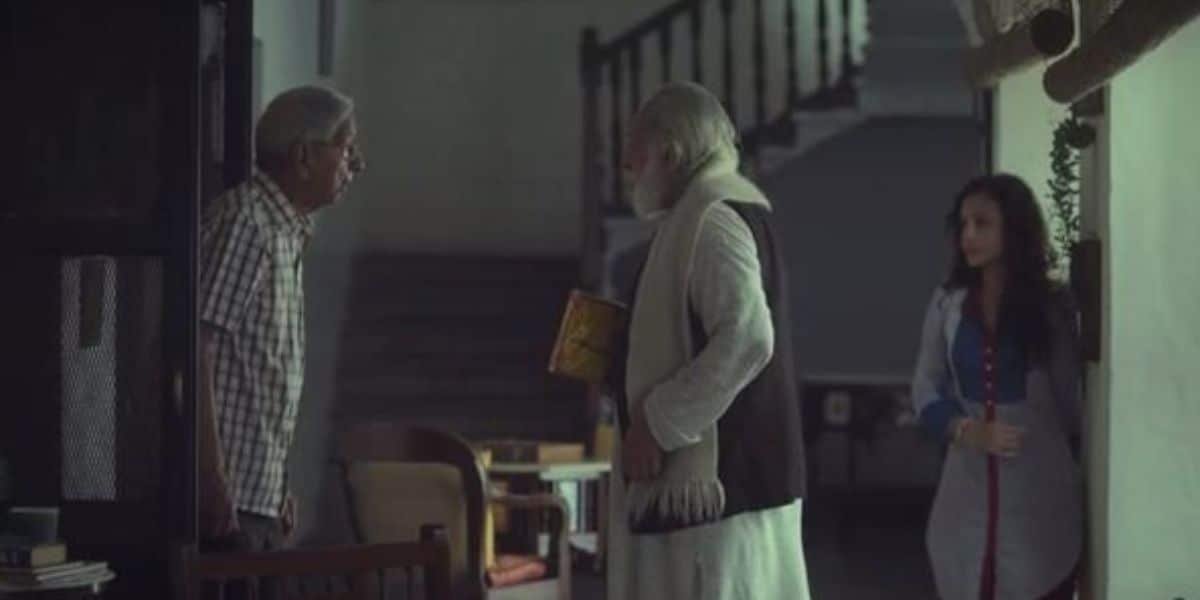
    An advertisement titled ‘Reunion’ made by Google India in 2013 has resurfaced on Twitter. The ad was about two long lost friends from India and Pakistan who are reunited with the help of their grandchildren.

    The advertisement revolves around two grandchildren who listen to their grandfathers recall being friends and living in Lahore, until partition took place, driving them apart. The grand daughter from India then tries hard to connect with the friend from Pakistan, and books tickets to get the two to unite.

    A twitter thread by an Indian twitter user asked followers about the best advertisements they had ever seen. In reply, a user shared the ad, moving Twitter to tears.

    The partition between India and Pakistan is still like an open wound. It is nice to remember that despite political tensions between the two countries, people remain united by love.

    “This never fails to bring a lump in my throat and moisten the eyes,” wrote a user.

    “Actual tears rolling down my eyes.” wrote another user.

    “Now why is Google making me tear up on a Friday afternoon”.

  • ANF seizes heavy amount of drugs in country wide operations

    ANF seizes heavy amount of drugs in country wide operations

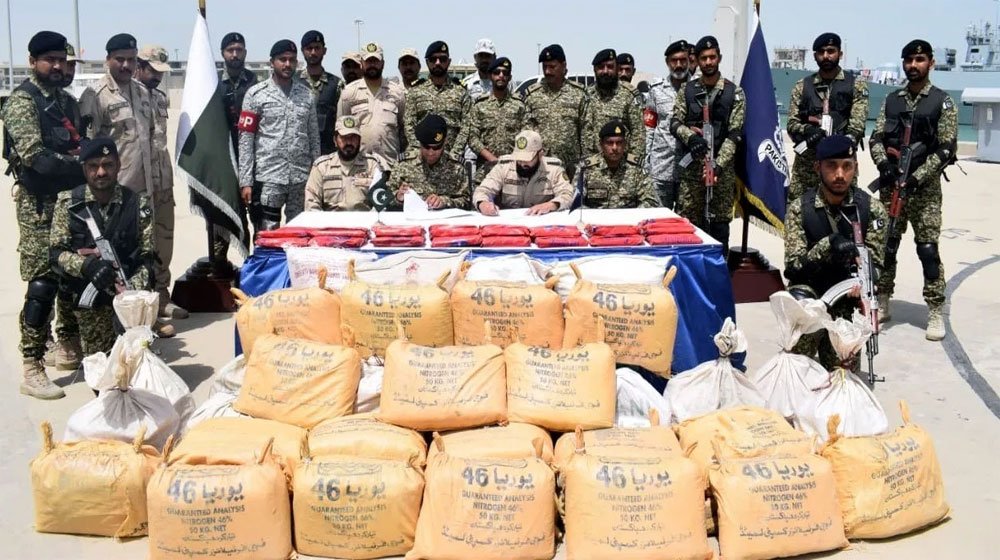
    The Anti-Narcotics Force (ANF) on Saturday arrested five drug peddlers and seized a huge cache of drugs in operations across the country.

    According to the ANF spokesman, the ANF carried out multiple operations in various parts of the country. The force foiled a major drug smuggling attempt from Quetta to Punjab and also recovered 180 kg of hashish from a truck full of onions near Dera Ghazi Khan.

    He said two suspects, who were residents of Pishin, were apprehended by the ANF team. In another operation, 500 grams of heroin was recovered from a suspect who belongs to Sialkot near Wazirabad Road in Hafizabad district of Punjab.

    Another operation was conducted at Indus Chowk near Gadap Town in Karachi, where 51 kgs of hashish was recovered from a car. It was being smuggled from Quetta to Karachi, he added.

    The spokesperson further said 371 kg of heroin and 221 kg of morphine were recovered from an uninhabited area of Pishin and also 10 kg of hashish was recovered from a rickshaw at Airport Road in Quetta.

    He said cases have been registered against the arrested suspects under the Anti-Narcotics Act and further investigation is underway.

  • Budget 2023-24: How much tax will you pay on your salary?

    Budget 2023-24: How much tax will you pay on your salary?

    Finance Minister Ishaq Dar presented a comprehensive budget proposal of Rs14.46 trillion for the fiscal year 2023-24, emphasising an expansionary approach. One of the key highlights of the proposal was a substantial increase in the salaries of government employees, aimed at providing much-needed relief.

    In order to ensure that the burden on the salaried class remained unchanged, the coalition government decided not to make any alterations to the existing tax slabs, which were approved in the previous year’s Finance Bill of 2022.

    Outlined below are the tax slabs for different income brackets:

    1. Income below Rs600,000 per year (Rs50,000 per month):

       – No tax will be deducted.

    2. Income between Rs600,000 to Rs1.2 million per year (Rs50,000 to Rs100,000 per month):

       – Tax will be levied at a rate of 2.5 per cent on the amount exceeding Rs600,000.

    3. Income between Rs1.2 million to Rs2.4 million per year (Rs100,000 to Rs200,000 per month):

       – Tax will be levied at a rate of Rs15,000 plus 12.5 per cent on the amount exceeding Rs1.2 million.

    4. Income between Rs2.4 million to Rs3.6 million per year (Rs200,000 to Rs300,000 per month):

       – Tax will be levied at a rate of Rs165,000 plus 20 per cent on the amount exceeding Rs2.4 million.

    5. Income between Rs3.6 million to Rs6 million per year (Rs300,000 to Rs500,000 per month):

       – Tax will be levied at a rate of Rs405,000 plus 25 per cent on the amount exceeding Rs3.6 million.

    6. Income between Rs6 million to Rs12 million per year (Rs500,000 to 1,000,000 per month):

       – Tax will be levied at a rate of Rs1.005 million plus 32.5 per cent on the amount exceeding Rs6 million.

    7. Income exceeding Rs12 million per year (exceeding Rs1,000,000 per month):

       – Tax will be levied at a rate of Rs2.955 million plus 35 per cent on the amount exceeding Rs12 million.

    These tax slabs have been carefully designed to ensure a fair and balanced approach to income taxation, considering various income brackets. By maintaining consistency with the previous year’s tax slabs, the government aims to alleviate the burden on the salaried class while still generating the necessary revenue for public welfare and development initiatives.

    Overall, the budget proposal presented by Finance Minister Ishaq Dar reflects the government’s commitment to supporting government employees and maintaining a progressive tax system that promotes economic growth and fairness.

    Tax slabs Annual income Monthly income Tax rate
    Slab 1 Below Rs600,000 Below Rs50,000 No tax deducted
    Slab 2 Rs600,000 – Rs1.2 million Rs50,000 – Rs100,000 2.5 per cent of the amount exceeding Rs600,000
    Slab 3 Rs1.2 million – Rs2.4 million Rs100,000 – Rs200,000 Rs15,000 + 12.5 per cent of the amount exceeding Rs1.2 million
    Slab 4 Rs2.4 million – Rs3.6 million Rs200,000 – Rs300,000 Rs165,000 + 20 per cent of the amount exceeding Rs2.4 million
    Slab 5 Rs3.6 million – Rs6 million Rs300,000 – Rs500,000 Rs405,000 + 25 per cent of the amount exceeding Rs3.6 million
    Slab 6 Rs6 million – Rs12 million Rs500,000 – Rs1,000,000 Rs1.005 million + 32.5 per cent of the amount exceeding Rs6 million
    Slab 7 Above Rs12 million Above Rs1,000,000 Rs2.955 million + 35 per cent of the amount exceeding Rs12 million
  • Budget 2023-24 prioritises promoting economic growth, says Ishaq Dar

    Budget 2023-24 prioritises promoting economic growth, says Ishaq Dar

    Federal Minister for Finance and Revenue, Ishaq Dar, delivered a comprehensive assessment of the FY2023-24 budget during a post-budget press conference in Islamabad. He highlighted the distinctive nature of this budget compared to previous traditional budgets, emphasising its focus on fostering economic growth.

    Dar shared that the coalition government is committed to addressing the concerns of traders before finalising the federal budget in parliament. In order to accomplish this, he announced the formation of two committees to address business-related issues and technical matters.

    These committees, customary within the Federal Board of Revenue (FBR), will be established by the FBR chairman by Monday. Their purpose is to ensure comprehensive consideration of any overlooked aspects and provide a platform for individuals to voice genuine reservations.

    The finance minister refuted claims of introducing new taxes this year and emphasised the government’s efforts to provide substantial relief. He defended the allocation of Rs950 billion and Rs200 billion from the Public and Private Partnership mode, considering it a notable achievement. Dar reiterated the budget’s departure from traditional approaches, with a strong emphasis on fostering progress and economic growth.

    Dar expressed the government’s determination to rectify past economic losses by promoting employment opportunities, curbing inflation, and generating more jobs. Consequently, he anticipated a decrease in the policy interest rate.

    Read more: Govt allocates only Rs97 billion for education in budget 2023-24

    The minister projected inflation to be around 21 per cent in the upcoming fiscal year (2023-24), while estimating government expenditure at Rs14,040 billion.

    Addressing the power sector, Dar allocated over Rs1900 billion exclusively for its development. He stressed the importance of implementing necessary reforms to improve this sector. He also clarified that no new subsidies would be introduced in the renewable energy sector, despite its prominence in the budget.

    Furthermore, the minister addressed rumors regarding the withdrawal of edible oil, refuting such claims and affirming that no such action had been taken.