Blog

  • Delhi University to remove chapter about Alama Iqbal from political science textbooks

    A chapter about Allama Iqbal in a book recommended for Political Science syllabus has been removed by Delhi University, after a discussion at the Academic Council meeting.

    According to Indian news organization ANI, the Vice Chancellor, Yogesh Singh, said that those who laid the foundation to break India should not be taught to students:

    “Iqbal wrote songs supporting the ‘Muslim League’ and the ‘Pakistan Movement’. Iqbal was the first to raise the idea of the partition of India and the establishment of Pakistan and said that instead of teaching about such people, we should study our national heroes.”

    The right-wing student movement Akhil Bharatiya Vidyarthi Parishad has welcomed the motion, saying Iqbal was a ‘fanatic theological scholar’ who was responsible for the partition of India.

    “Delhi University academic council decided to scrap fanatic theological scholar Mohd Iqbal from DU’s political science syllabus. It was previously included in BA’s sixth-semester paper titled ‘Modern Indian political thought. Mohammad Iqbal is called the ‘philosophical father of Pakistan’. He was the key player in establishing Jinnah as a leader in Muslim League. Mohammad Iqbal is as responsible for India’s partition as Mohammad Ali Jinnah is.”

  • Honda Pakistan reports 90% drop in profits, reflecting struggling state of auto industry

    Honda Pakistan reports 90% drop in profits, reflecting struggling state of auto industry

    Honda Atlas Cars Pakistan Limited (HACPL), one of the leading car manufacturers in the country, reported a significant decline of 90 per cent in its annual net profit due to rising expenses, reflecting the struggling state of the auto industry and the country’s economy.

    The company’s net profit for the fiscal year ending on March 31 was reported to be Rs260.141 million, a sharp decrease from Rs2.509 billion in the previous year.

    Consequently, the company did not distribute any dividends for that period. Earnings per share also witnessed a decline, coming in at Rs1.82/share compared to Rs17.58/share in the previous year.

    Honda Atlas Cars stated that its revenue for the year dropped to Rs95.087 billion, down from Rs108.047 billion the previous year. The cost of sales remained relatively stable at Rs87.926 billion compared to Rs102.515 billion during the same period last year. On the other hand, the company’s other income increased to Rs2.321 billion, compared to Rs2.004 billion in the previous year.

    However, the company experienced a surge in other expenses, which rose to Rs4.929 billion from Rs984.045 million, adversely impacting profit margins.

    Arif Habib Ltd, a brokerage firm, attributed the significant decline in profit to lower volumetric sales and increased finance costs, which rose by 6.5 times on a year-on-year basis. The auto industry, which heavily relies on imports, has been severely affected by the country’s economic conditions.

    Honda was among the manufacturers that had announced plant closures. However, on May 16, it was reported that Honda Atlas Cars planned to resume production activities after a months-long halt. The decision was made following an improvement in the accessibility of trade finance facilities for the supply chain.

    The government of Pakistan, facing low foreign exchange reserves, implemented stringent measures, including restrictions on letters of credit (LCs) for the import of completely knocked down (CKD) units and raw materials used by the auto industry.

    According to Geo, Honda stated that with the company’s consistent efforts and the slight improvement in trade finance accessibility, they are now preparing to gradually resume production in the coming weeks.

    Since March 9, the company had suspended its production activities. The auto industry has encountered significant setbacks due to non-production days, reduced consumer affordability resulting from higher interest rates and vehicle prices, currency devaluation, and escalating petrol prices. These plant shutdowns have also led to layoffs in the industry.

  • ‘Then stop singing Urdu ghazals solely’: Twitter is puzzled at Arooj Aftab’s problem with being called an ‘Urdu’ singer

    Arooj Aftab has everyone in a pickle with a tweet where she asked her followers to stop associating her with Pakistani music, or calling her an ‘Urdu singer’.

    The Grammy award winning singer had tweeted:

    “Pakistani singer arooj aftab…… Urdu singer arooj aftab….. arooj Aftab’s amazing Urdu singing… like. It’s fine I guess? But can a person of color musician ever just get to be without this tag to whatever someone else is presuming is our root or heritage.”

    Twitter users were confused by this because as some pointed out, she had built up fame in Western countries using Urdu ghazals like ‘Mohabbat’.

    One user had written:

    “Nobody calls you an urdu singer in pakistan. they call you that in majority english speaking countries, where your claim to fame was an urdu ghazal. your lyrics didn’t come to that audience naturally. they recognize you geographically. we all do that with foreign language music.”

    But Aftab had to clarify in her next tweets that she was not being anti-Pakistani, nor was she criticising her own roots, but her tweets were addressing the Western media who push her into a georgraphical context, which makes it easier for her to be gate-kept.

    “Oh f***k this tweet really awakened the “she’s anti Pakistani!!!” sentiment. Great. I’m not talking about erasing or disowning roots and heritage. while touring eu/uk at the moment, I feel like pushing back on being ONLY allowed to exist in a geographic and linguistic context. This makes it easy for them to other-ize, exclude us and overlook what is achieved, and to gate keep/ glass wall what is further achievable.”

  • Finance Ministry hits out at Atif Mian’s ‘nonsensical’ label for Pakistan’s economic policies

    Finance Ministry hits out at Atif Mian’s ‘nonsensical’ label for Pakistan’s economic policies

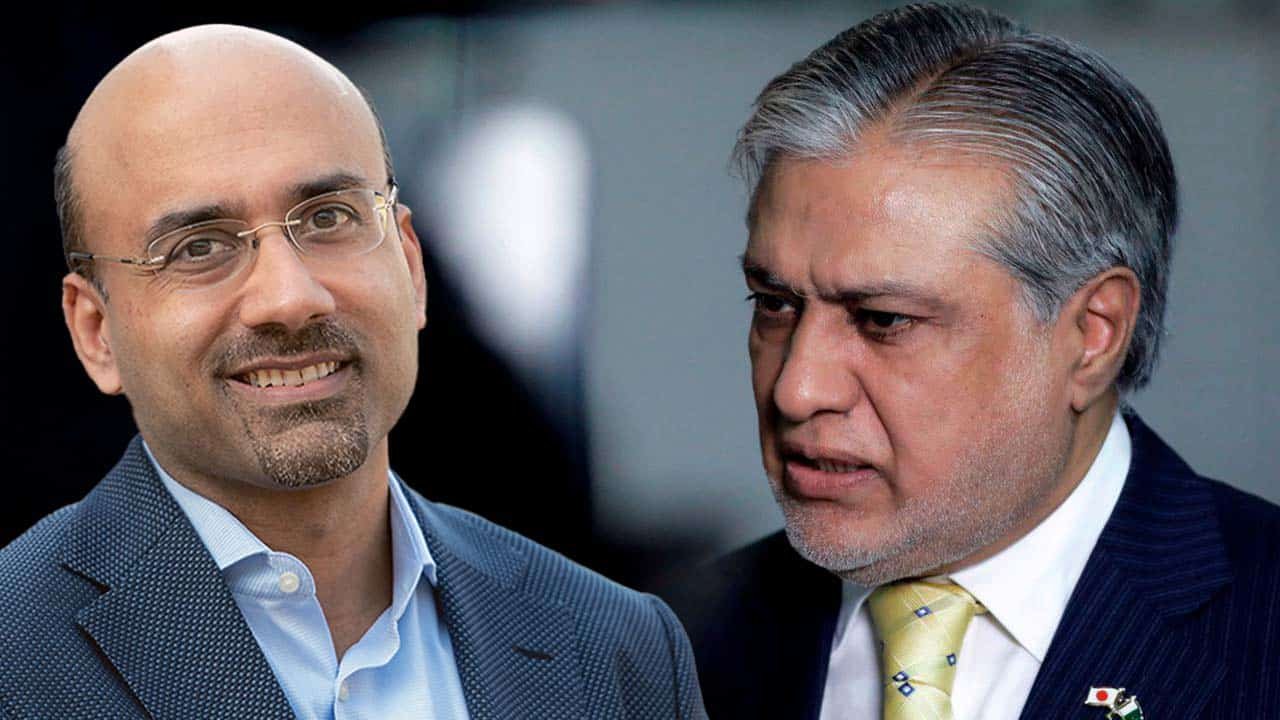
    The Ministry of Finance strongly responded on Saturday to recent remarks made by Pakistani-American economist Atif Mian, criticising his lack of practical understanding of economics.

    Mian had labelled the government’s economic policies as ‘nonsensical’ and suggested that Pakistan should take decisive actions to restructure its economy, citing Ghana and Sri Lanka as examples. In response, the Ministry of Finance dismissed Mian’s comments as a veiled suggestion of default and argued that his critique was purely theoretical, lacking practical insight into economics.

    The ministry refuted Mian’s comparison of Ghana and Sri Lanka, pointing out that Pakistan’s economy and population are significantly larger, making the analogy misplaced.

    Regarding Pakistan’s debt structure, the ministry clarified that less than 10 per cent of the debt consists of commercial bonds/sukuks, with the next maturity due in April 2024. The majority of the debt is owed to multilateral and bilateral creditors, who have not indicated any risk of default.

    The ministry expressed disappointment that Mian overlooked the significant reforms undertaken by Pakistan in the past nine months. These reforms included market exchange rate adjustments, interest rate modifications, mid-year taxation to improve the fiscal position, levies on petroleum products, and non-monetisation of the fiscal deficit. These actions were implemented under an unprecedented IMF programme.

    Despite the delay in reaching a staff level agreement with the IMF, the ministry assured that Pakistan’s economy would continue on the path of reform towards stability and sustainable growth.

    The ministry dismissed Mian’s unwarranted comments on nominal exchange rates, stating that Pakistan’s real exchange rate is estimated to be 15 per cent undervalued, reflecting improving fundamentals.

    In terms of petroleum prices, the ministry highlighted that historically, Pakistan has sold petroleum products at significantly lower prices compared to regional countries. Imposing additional taxes on consumers, especially given the recent price hikes and rising inflation, would be unwise.

    The ministry attributed Pakistan’s current economic crisis to international shocks, including the COVID-19 pandemic, the Ukraine war, and devastating floods. It emphasised that the present government has successfully overcome the challenges inherited from an overheated economy and breached IMF conditionality. The current account deficit has been significantly reduced, indicating progress in balancing payments.

    Lastly, the ministry pointed out that Mian failed to consider the unprecedented political challenges faced by Pakistan. It concluded by expressing optimism that with the likelihood of political stability emerging soon, a major economic turnaround is expected.

    Overall, the Ministry of Finance strongly rebutted Mian’s criticism, emphasising the government’s commitment to reforms and the resilience of Pakistan’s economy.

  • Justice Isa raises questions over Bandial’s order to stop audio leaks proceedings

    Justice Isa raises questions over Bandial’s order to stop audio leaks proceedings

    Future Chief Justice of Pakistan (CJP) Justice Qazi Faez Isa adjourned the hearing of a commission to investigate the audio leaks which allegedly involved senior judges and their families a day after CJP Umar Ata Bandial’s order to stop all proceedings.

    However, during the hearing today, Justice Isa, who was heading the commission, raised questions on the decision handed out yesterday.

    Commenting on one of the key issues raised in the petitions filed in the SC yesterday, the judge observed that privacy always belongs to the home.

    “One cannot peep into someone’s house; however, there are CCTV cameras on the streets, are they also against privacy?” he asked.

    He said that the commission was doing nothing that would be considered a breach of anyone’s privacy.

    Defending the commission, he said it should, at least, be determined who was releasing the audios and whether they were real or not.

    He further said that there is talk of giving money to a judge in an audio leak, but the investigation has been stopped.

    “It is written in the oath that I will perform my duties according to the constitution and law,” he said.

    “This inquiry commission has been formed under a law — the Commission of Inquiry Act,” he further remarked, adding that people have to do certain things in life that they do not like.

    Further adding that the judges have to conduct such “painful investigations”, he said: “If this commission was not allowed under oath, I would have excused myself.”

    After this, Pakistan Muslim League-Nawaz (PML-N) Senior Vice President Maryam Nawaz attacked CJP Bandial for stopping the investigation of the audio leaks. It is pertinent to mention that one of the many audio leaks allegedly features Bandial’s mother-in-law talking to a Pakistan Tehreek-e-Insaf member’s wife.

    “Bandial deserves to be punished for making a mockery of the law and making a spectacle of the judiciary to save his family”, Maryam said in a tweet.

  • At least 9 killed after avalanche hits Gilgit Baltistan’s Astore region

    At least 9 killed after avalanche hits Gilgit Baltistan’s Astore region

    At least 9 people were killed and 26 were injured in an avalanche in the Astore district of Gilgit Baltistan on Saturday.

    The accident occurred in the Shounter Top area of the district.

    Local police have confirmed the death toll while also expressing concerns that the number of victims could rise as rescue operations go on. Many individuals are still believed to be buried under the debris.

    Locals gathered to provide support and aid to those affected by the disaster.

    Chief Minister of Gilgit Baltistan Khalid Khurshid Khan expressed sorrow over the fatalities and has ordered complete rescue operations.

  • Indian food inspector drains dam to find fallen phone

    Rajesh Vishwas, a member of the Indian government, was suspended after he gave an order to empty a water reservoir in order to retrieve his phone, BBC reported on Saturday.

    The food inspector was taking a photo when his phone, which was valued at roughly $1,200, fell into the Kherkatta Dam in Chhattisgarh.
    Millions of gallons of water had to be pumped out of the dam. The process of draining the dam took three days.

    Vishwas has said in a video statement that after local divers failed to find it, he paid for a diesel pump to be brought in.

    The process was halted after an official from the water resource department arrived following a complaint.

    “He has been suspended until an inquiry. Water is an essential resource and it cannot be wasted like this,” Kanker district official Priyanka Shukla told an Indian newspaper.

    However, Vishwas insisted that he had not abused his authority and that the water had been drained because it was “

  • Coca-Cola, with an alliance of Beverage Manufacturers in Pakistan, appeal to the Government for a fair and broad-based tax regime and an immediate withdrawal of unprecedented Federal Excise Duty

    Coca-Cola, with an alliance of Beverage Manufacturers in Pakistan, appeal to the Government for a fair and broad-based tax regime and an immediate withdrawal of unprecedented Federal Excise Duty

    Pakistan’s aerated beverage industry is grappling with a significant decline in volume, estimated at 35% to 40%, following the introduction of a 7% Federal Excise Duty (FED) in the February 2023 mini-budget. This latest tax increase has pushed the total FED on the industry to an unsustainable 20%, marking a staggering 50% surge from the previous rate of 13%. The repercussions are reverberating throughout the manufacturing chain, with an expected loss of thousands of jobs. If these regulatory challenges persist, businesses may be compelled to consider shutting down their operations, resulting in a further blow to government revenues, estimated at an annual loss of PKR 6-8 billion in FED collection.

    The beverage industry in Pakistan is already burdened with one of the highest tax rates globally, with a 20% FED that surpasses the average levy imposed on the food and beverage sector. Despite these challenges, the aerated beverage industry has stepped up as a key investor, contributing an estimated $200 million to bolster the country’s foreign exchange reserves during a time of Forex shortage. However, the recent tax measures have hindered the government’s revenue collections from this industry, leaving a negative impact.

    According to the Half-Year Report for 2022-2023 published by the State Bank Board of Directors, several sectors, including the beverage industry, have experienced negative growth. From the first half of the fiscal year 2022 to the same period in 2023, the beverage industry alone has contracted from 5% to a significant negative growth rate of -8.3%.

    The adverse economic consequences resulting from these measures have garnered attention from trade bodies such as the Pakistan Business Council, American Business Council, and various Chambers of Commerce. These associations recently presented their recommendations to Senator Saleem Mandviwalla, Chairman and Convener of the Senate Committee on Finance and Revenue. In a consultative session held on May 23, 2023, Coca-Cola, representing the industry, voiced concerns regarding the discriminatory nature of the tax applied in February 2023. The tax does not consider per-capita sugar consumption, resulting in an unfair burden on the beverage industry, which only accounts for approximately 6% of the country’s sugar consumption.

    The beverage sector, which operates transparently and in compliance with regulations, now urges the government to reassess its taxation policy. Specifically, the industry is calling for the immediate withdrawal of the 7% tax introduced in the mini-budget, as it was initially presented as a temporary, stop-gap measure. The industry maintains that a fair and broad-based tax regime would not only alleviate the burden on the beverage industry but also contribute to Pakistan’s economic stability and foster growth.

    The appeals made by Coca-Cola and other beverage manufacturers underscore the urgent need for a comprehensive review of the taxation policy affecting the industry. Striking a balance between tax obligations and recognizing the substantial investments made by these companies is vital to creating a conducive business environment and ensuring the long-term sustainability of Pakistan’s beverage sector.

  • Jhang father kills daughter in the name of honour

    Jhang father kills daughter in the name of honour

    Trigger warning: Murder

    A father has allegedly killed his daughter in the name of honour by setting her on fire in Jhang, Punjab.
    As per the details, the father took help of his other children to kill Masooma Bibi.

    The girl was shifted to hospital in critical condition, where she breathed her last after giving a statement.

    The deceased accused her siblings and father of orchestrating the heinous act.

    Police have registered the case and have arrested six suspects, including the father.

  • India seeks death penalty for Kashmir separatist Yasin Malik

    India seeks death penalty for Kashmir separatist Yasin Malik

    India’s National Investigation Agency (NIA) has moved Delhi High Court, seeking the death penalty for Jammu Kashmir Liberation (JKL) Front chief Chief Yasin Malik.

    The hearing is due on Monday.

    Following the news, Yasin’s wife Mushaal, said in a tweet, “Modi wants to hang my husband but I’m afraid Modi’s actually hanging his entire political career down the drain. Don’t think this Will ever silence us”.

    Yasin was arrested in 2018, months before New Delhi cancelled the held state’s special status of Kashmir on August 5, 2019.

    Last year, Malik pleaded guilty for funding the separatist movement. He was then sentenced to life imprisonment and is currently serving time in jail.