Blog

  • Italy gave China protective equipment to help with coronavirus, then China made them buy it back: report

    Italy gave China protective equipment to help with coronavirus, then China made them buy it back: report

    At the peak of the COVID-19 outbreak in China, Italy had donated personal protection equipment (PPE) to Beijing and now when Rome is in dire need of the same, China is making them buy it back, a report in The Spectator has claimed.

    According to reports, after the new coronavirus made its way to Italy, decimating the country’s significant elderly population, China told the world it would donate PPE to help Italy stop its spread.

    Reports later indicated that China had actually sold, not donated, the PPE to Italy. A senior Trump administration official told The Spectator that it was much worse than that as “Beijing forced Italy to buy back the supply that it gave to China during the initial outbreak”.

    “Before the virus hit Europe, Italy sent tons of PPE to China to help China protect its own population,” the administration official explained.

    “China then has sent Italian PPE back to Italy — some of it, not even all of it… and charged them for it,” he added.

    Unfortunately, China’s diplomacy in the wake of the pandemic outbreak has been slippery.

    Much of the supplies and testing kits that China sold to other countries have turned out to be defective.

    Spain had to return 50,000 quick-testing kits to China after discovering that they were faulty.

    In some cases, instead of apologising or fixing the issue, China has blamed others for the defective equipment. It reportedly told the Netherlands to “double-check the instructions” on its masks, after the country had complained that half of the masks did not meet safety standards.

    “China has a special responsibility to help because they are the ones who began the spread of the coronavirus and did not give the information required to the rest of the world to plan accordingly,” the official said, adding that China’s “disinformation campaign” of lying to the world about the seriousness of its COVID-19 outbreak further delayed the response by other countries.

  • Police arrest man for selling fake coronavirus relief forms

    A man was caught on Sunday for taking money from residents and distributing fake Coronavirus Relief Fund forms in return in Pakpattan.

    According to the police, the suspect, identified as Raheel Babar, was recently fired from his job as a police constable. He confessed to his crime in police custody.

    “Babar had brought a fake police uniform from Sahiwal after which he came here and fooled residents into filling these fake forms,” the police deputy superintendent said.

    Babar charged Rs300 for each form. The police detained identity cards from him as well.

    A case has been filed against him. The DSP added that strict action will be taken against him.

  • VIDEO: Pakistan opens up first coronavirus drive-thru screening, testing facility

    VIDEO: Pakistan opens up first coronavirus drive-thru screening, testing facility

    The Sindh government has opened up Pakistan’s first drive-through coronavirus screening and testing facility in Karachi, as part of its attempts to stem the spread of the pandemic in the province, where the toll is rising, AFP reported.

    Established in the Jahangir Kothari Parade area of Clifton, the testing centre will enable suspected patients to get themselves tested without having to wait in long hospital queues.

    The doctors, paramedical staff and other personnel deployed at the facility have been provided with all the necessary protective equipment and gear to safeguard against the virus, a press release said.

    According to the Sindh government, people who visit the testing station will be registered and given a number, but for the test to be conducted, they should possess a travel history or certain symptoms of the virus.

  • Tiger at New York’s Bronx Zoo tests positive for coronavirus

    A tiger at New York’s Bronx Zoo has tested positive for COVID-19.

    According to the zoo management, it is believed that the four-year-old Malayan tiger Nadia may have contracted the virus from a caretaker who was asymptomatic at the time.

    Nadia along with her sister Azul, two Amur tigers and three African lions all developed dry coughs but are expected to fully recover, the Wildlife Conservation Society that runs the city’s zoos said in a statement.

    “We tested the cat out of an abundance of caution and will ensure any knowledge we gain about COVID-19 will contribute to the world’s continuing understanding of this novel coronavirus,” the statement read, adding “Though they have experienced some decrease in appetite, the cats at the Bronx Zoo are otherwise doing well under veterinary care and are bright, alert, and interactive with their keepers.”

    “It is not known how this disease will develop in big cats since different species can react differently to novel infections, but we will continue to monitor them closely and anticipate full recoveries.”

    All four of the zoos and the aquarium in New York — whose virus death toll has topped 4,000 — have been closed since March 16.

    The zoo emphasized that there is “no evidence that animals play a role in the transmission of COVID-19 to people other than the initial event in the Wuhan market, and no evidence that any person has been infected with COVID-19 in the US by animals, including by pet dogs or cats.”

    Chinese disease control officials had identified wild animals sold in a Wuhan market as the source of the coronavirus pandemic that has infected well over one million people worldwide.

    According to the US Department of Agriculture website, there had “not been reports of pets or other animals” in the United States falling ill with coronavirus prior to news of the tiger Nadia.

    “It is still recommended that people sick with COVID-19 limit contact with animals until more information is known about the virus,” the department’s website says.

    In late March a pet cat was discovered infected with the novel coronavirus in Belgium, following similar cases in Hong Kong where two dogs tested positive for COVID-19.

    All of those animals are believed to have contracted the virus from the people they live with.

    The Bronx zoo said preventative measures were in place for caretakers as well as all cats in the city’s zoos.

  • Deepika Padukone’s quarantine playlist features a Pakistani song

    Deepika Padukone’s quarantine playlist features a Pakistani song

    As we all self-isolate, everyone is taking to social media to share their favourites including recipes, seasons, movies and songs. Deepika Padukone also shared a list of songs which are currently on her quarantine playlist and we were surprised to see a Pakistani song on it.

    Turns out Abida Parveen and Rahat Fateh Ali Khan’s Chaap Tilaak is on her list. Have to say Deepika has got a great taste in music.

    Chaap Tilak featured in Season 7 of Coke Studio. It was produced by Strings.

    Other songs on her playlist included Arjit Singh’s Tujhe Kitna Chahanay Laga Hoon (Kabir Singh), Kabira (Yeh Jawaani Hai Deewani), Laal Ishq (Ram Leela), Channa Mereya (Ae Dil Hai Mushkil) and Agar Tum Saath Ho (Tamasha) among others.

  • Time for kindness

    Time for kindness

    With at least 1.2 million confirmed cases and 64,000 deaths across the globe, the new coronavirus aka COVID-19 pandemic is continuing to take a toll on the world. The economic impact is so huge that it is being compared to the Great Depression.

    Managing Director of the International Monetary Fund (IMF) Kristalina Georgieva says this is an economic crisis like no other. “Never in the history of the IMF have we witnessed the global economy coming to a standstill. It is way worse than the global financial crisis.”

    Countries are fast realising that the impact of this virus is so huge — and unpredictable at the same time — that whatever they do may not be enough.

    First, it was about creating and spreading awareness as not many were taking it seriously. Then came the lockdowns, partial or complete, in many countries. Now there are some other stark realities that people are facing; financial woes being one of them. Social-distancing is a privilege. Not everyone can afford it. Lockdowns have helped contain the spread to a certain extent but the economic impact on daily wagers, the lower middle class and many others will be quite harsh. Thus, governments and private citizens must step in to help. 

    A Facebook post doing the rounds about a university van driver in Pakistan is heartbreaking. According to the post, the driver has been calling up students asking for his monthly charges but not many are responding to his calls/texts. We need to understand that in these tough times, we must help those who are less privileged than us. Those who have given leave to their domestic staff must pay their salaries — and if possible, an advance salary as well. Help those around you who you think need it. Buy rations or donate to charities and organisations like the Edhi Foundation that are doing credible work and helping people in these troubling times. 

    Another tragic aspect is that those who fall victim to corona have to deal with the illness alone — away from family and friends — in order to keep others safe from the virus. Burying those who die of coronavirus has also become an ordeal. Family members and friends can only say goodbye from a distance. Funerals in the time of coronavirus are quite different. Coronavirus has changed the world so drastically that people cannot even grieve together anymore. These are the new realities until a cure is found. 

    We will keep learning new things with each passing day. We will see the world change. People will be hungry, frustrated, desperate, scared, depressed, angry and much more. But we must be kind and understanding for this is what humanitarianism is all about. Be human! Be safe.

    FOLLOW THIS LINK FOR LATEST CORONAVIRUS UPDATES FROM PAKISTAN

  • Danish Taimoor thanks the women in his life

    Danish Taimoor thanks the women in his life

    The lockdown induced by the coronavirus pandemic has made us all take a step back from our hustling lives and has forced us to spend time at home. This has opened our eyes to many little things that often go unnoticed such as the amount of effort our mothers or wives and sisters put in to ensure that the house is running in smooth order.

    Danish Taimoor noticed this as he isolated at home following which he decided to pen a thank you note to all the women in his life including his mother, wife, Ayeza Khan and daughter, who have made him who he is today.

    https://www.instagram.com/p/B-jlyojHFMm/

    Meanwhile, here’s what Ayeza had to say about Danish’s note:

    https://www.instagram.com/p/B-jn3BrhCay/

    Danish and Ayeza are one of television’s most-loved couples and their latest drama together Meharposh aired on Geo this weekend. It got rave reviews and was reportedly the highest-rated first episode of any Pakistani drama.

    https://www.instagram.com/p/B-j_x1EnCwj/
  • Nestlé Pakistan pledges Rs 100 million to support vulnerable communities during COVID-19 pandemic

    To meet the nutritional needs of both affectees and frontline workers during these times, Nestlé Pakistan has committed 100 million rupees in the national response to the COVID-19 pandemic. As part of the pledge, Nestlé Pakistan will give product and cash donations, which will include 4 million servings of milk, iron-fortified dairy products, baby cereals, water and juices.

    Sharing details, CEO Nestlé Pakistan Samer Chedid said, “We will be mobilizing relief to medical facilities (quarantine centres) and food-delivery organisations serving vulnerable families, worth 100 million rupees, in the form of product and cash donations, through national and provincial disaster management authorities and local governments.”

    “We have also joined hands with reputable NGOs in response to their COVID 19 emergency appeals to support deserving people across Pakistan. We have invited all our employees to step forward and donate one day’s salary for supporting people going through hard times. The donation intimations by employees will be matched by Nestlé Pakistan,” Chedid said.

    Chedid also emphasized on the additional safety measures Nestlé was undertaking internally. “We are making sure that we keep our employees healthy and safe, and that they follow the most stringent safety protocols at all our manufacturing and warehouse facilities, as advised by the World Health Organisation.”

    Nestlé Pakistan is also working to ensure that their food and beverage products are available for consumers across Pakistan, in line with the strategic roadmap laid out by Prime Minister Imran Khan and respective provincial leaderships.

  • Blog: Knee Jerk – Plan of Action

    Blog: Knee Jerk – Plan of Action

    Typical Ration Bag: Rs1,600
    Includes: Flour, oil, sugar, rice, lentil and a soap

    “We’re building a stockpile. The word stockpile by definition means not for immediate use. It means you’re preparing for a battle to come and you have to have the equipment and you have to have it now. I can tell you this, if you wait to prepare for the storm to hit, it is too late, my friends. You have to prepare before the storm hits. And in this case, the storm is when you hit that high point, when you hit that apex. How do you know when you’re going to get there? You don’t. There is no crystal ball but there is science and there is data and there are health professionals who have studied this virus and its progress since China. Listen to them and follow the data to develop one coordinated plan,” said Governor Andrew Cuomo of New York in a press briefing on coronavirus on March 30.

    I witnessed the nation coming together when the deadly 2005 earthquake hit northern Pakistan. It devastated entire communities in Khyber Pakhtunkhwa (KP) and Azad Jammu & Kashmir (AJK). The 7.6 Richter scale quake wreaked havoc and misery to 400,000 families when at least 80,000 lost their lives. 90% of the affectees were from difficult-to-access rural areas in the mountains.

    Pakistan had in recent times not seen such extensive devastation and was hardly prepared to handle such a disaster. But the nation witnessed an unprecedented surge of sympathy for the affected communities when people from all over the country and the world rushed for assistance.

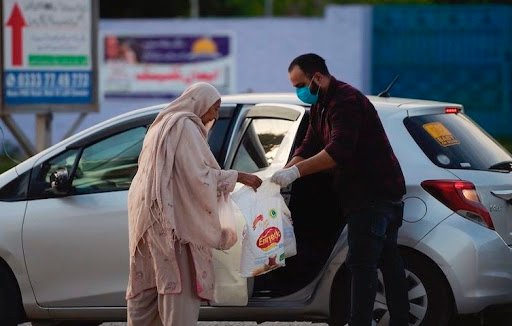
    Today, amid the coronavirus pandemic, an unprecedented lockdown is in place. And as all of us reflect on our daily lives, I hear nonprofits, independent guerrillas and civil society members coming forward and donating and collecting ration bags for daily wage affectees or families living under the poverty line. Several good-hearted folks have come together and started the drive by spreading the word on social media platforms to support the cause.

    Each cause has a different price and structure of distribution. We can select packages for a week, a month and so on. But what’s next? 

    My question is: where is the map of action for the households or the system where it’s equally, ethically and socially distributed? How are we deciding what neighbourhoods need the most? 

    Arif Hasan and I were are in an anti-encroachment WhatsApp group, where he said, “It’s frightening to see how everyone will end up washing for 20 seconds in a country where water is a contested property.”

    Celebrities and social media influencer’s are following a global practice of how to deal with COVID-19. Whereas we need to rethink of global south issues and practice a regional solution. Standards come from international forums, but they need to be localised and regionalised. 

    If today non-profit organisations and independent ration collectors are designing packages and sending mass messages to collect funds to feed the affectees, then maybe we also need to study and collect per household data and map the areas where any organisation is not distributing.

    What we need is a holistic plan for preparedness for disaster or unprecedented situational circumstances. This is the time when we need platforms to come together and work closely with local authorities and develop a strategy or a masterplan, through breaking down clusters, focusing on vulnerable communities and involving organisations.

    In our provincial context, where the Sindh government has shown a strong sense of perspective in times like these, maybe this is when we need to reflect and look for local strategic plans and grassroots level data analysis for future disaster distribution methodology, where civil society’s intervention is not just out of goodwill but equality and social systems. Where collaboration can be meaningful, and data sharing becomes a common practice.


  • Imran vows to go after profiteers as he delivers on promise of probing sugar, wheat crises

    Imran vows to go after profiteers as he delivers on promise of probing sugar, wheat crises

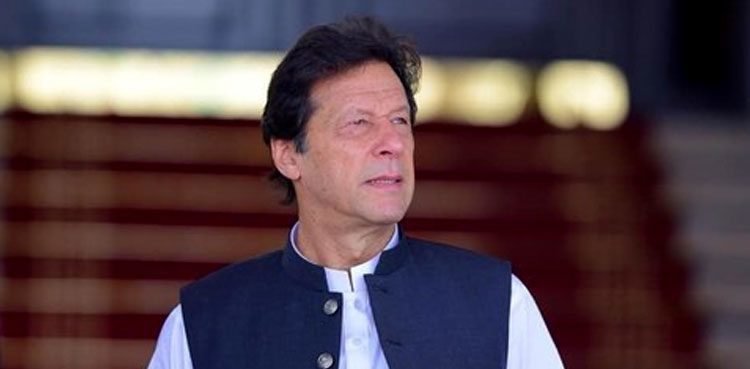
    Fulfilling his promise of ensuring transparency and accountability in governance, Prime Minister (PM) Imran Khan has not only made the inquiry reports into the sugar and wheat shortage public but also ordered the formation of a commission to conduct a forensic audit of the sugar mills, including JDW that is owned by Pakistan Tehreek-e-Insaf (PTI) senior leader Jahangir Tareen.

    As per the details, a report by the Federal Investigation Agency (FIA) on Saturday claimed that top PTI members were among those who gained from the recent sugar crisis in the country. An investigation into the crisis had been ordered by Prime Minister Imran Khan in February.

    Among the people named in the FIA report are Tareen and Makhdum Omer Shehryar, a relative of Minister for National Food Security Khusro Bakhtiar, Geo reported.

    According to the report, sugar price was increased from Rs 55 per kg in December 2018 to Rs 71.44 per kg in June 2019, despite the fact that the General Sales Tax (GST) increase was implemented from July 1, 2019. After the export of sugar in January 2019, its price started increasing immediately in the local market.

    The major beneficiaries of the subsidy offered by the government on export of sugar include RYK Group, owned and controlled by Shehryar, which availed 15.83 per cent of the total export subsidy amounting to Rs3.944 billion. Chaudhry Munir and Pakistan Muslim League-Quaid (PML-Q) senior leader Moonis Elahi are also partners in this group.

    JDW Group owned and controlled by Tareen availed 12.28 per cent of the total export subsidy amounting to Rs3.058bn, while Hunza Sugar Mills availed 11.56 per cent of the total subsidy amounting to Rs 2.879bn. Hunza Sugar Mills is owned by Muhammad Waheed chaudry, Idrees Chaudhry and Saeed Chaudhry.

    Sugar mills owned by the Sharif family availed 5.91 per cent of the total export subsidy amounting to Rs1.472bn.

    The document does not mention under whose influence the Punjab government issued subsidies to sugar mills or why the Economic Coordination Council (ECC) approved the decision to export sugar.

    Reacting to the report, Federal Minister for Planning, Development and Special Initiatives Asad Umar said he has faith that whatever the situation, PM Imran “will ensure justice”.

    Tareen, PTI’s former general secretary, said that out of the Rs3 billion subsidy to the sugar mills, Rs2.5 billion were given when the Pakistan Muslim League-Nawaz (PML-N) was in power.

    Meanwhile, it has been reported that the commission due to submit its report on April 25 has started working and nine teams are already on the ground for carrying out forensic analysis of 10 sugar mills, including Alliance Sugar mills Ghotki, Al-Arabia Sugar Mills Sargodha, Al-Moiz 1 Sugar Mills DI Khan, Al-Moiz 2 Sugar Mills Mianwali, Hamza Sugar Mills RY Khan, Hunza 1 and Hunza 2 Sugar Mills Faisalabad and Jhang, and JDW 1,2, and 3 Sugar Mills RY Khan and Ghotki.